Do you need help in another language? We will get you a free interpreter. Call 808-369-3580 to tell us which language you speak.
您需要其它語言嗎?如有需要,請致電 (808-369-3478), 我們會提供免費翻譯服務
您需要其它语言吗?如有需要,请致电 (808-369-3478), 我们会提供免费翻译服务
En mi niit alilis lon pwal eu kapas? Sipwe angei emon chon chiaku ngonuk ese kamo. Kokori (808-369-3478) omw kopwe ureni kich meni kapas ka ani.
Makemake `oe i kokua i pili kekahi `olelo o na `aina `e? Makemake la maua i ki`i `oe mea unuhi manuahi. E kelepona (808-369-3478)`oe ia la kaua a e ha`ina `oe ia la maua mea `olelo o na `aina `e.
Masapulyo kadi ti tulong iti sabali a pagsasao? Ikkandakayo iti libre nga paraipatarus. Awaganyo ti
(808-369-3478) tapno ibagayo kadakami no ania ti pagsasao nga ar-aramatenyo.
다른언어로 도움이 필요하십니까? 저희가 무료로 통역을 제공합니다. (808-369-3478)로 전화해서 사용하는 언어를 알려주십시요
Kwoj aikuij ke jiban kin juon bar kajin? Kim naj lewaj juon am dri ukok eo ejjelok wonen. Kirtok
(808-369-3478) im kwalok non kim kajin ta eo kwo melele im kenono kake.
E te mana'o mia se fesosoani i se isi gagana? Matou te fesosoani e ave atu fua se faaliliu upu mo oe. Vili mai i le numera lea (808-369-3478) pea e mana'o mia se fesosoani mo se faaliliu upu.
¿Necesita ayuda en otro idioma? Nosotros le ayudaremos a conseguir un intérprete gratuito. Llame al (808-369-3478) y diganos que idioma habla.
Kailangan ba ninyo ng tulong sa ibang lengguwahe? Ikukuha namin kayo ng libreng tagasalin. Tumawag sa (808-369-3478) para sabihin kung anong lengguwahe ang nais ninyong gamitin.
‘Okú ke fie maʻu tokoni ʻi ha lea fakafonua ʻe taha? Temau kumi haʻo taha fakatonulea taʻetotongi. Telefoni ki he (808-369-3478) ke fakahā mai ʻa e lea fakafonua ʻokú ke lea aí.
Bạn có cần giúp đỡ bằng ngôn ngữ khác không ? Chúng tôi se yêu cầu một người thông dịch viên miễn phí cho bạn. Gọi (808-369-3478)nói cho chúng tôi biết bạn dùng ngôn ngữ nào
Gakinahanglan ka ba ug tabang sa imong pinulongan? Amo kang mahatagan ug libre nga maghuhubad. Tawag sa (808-369-3478) aron magpahibalo kung unsa ang imong sinulti-han.
Hazardous Material – Guard members trained to respond
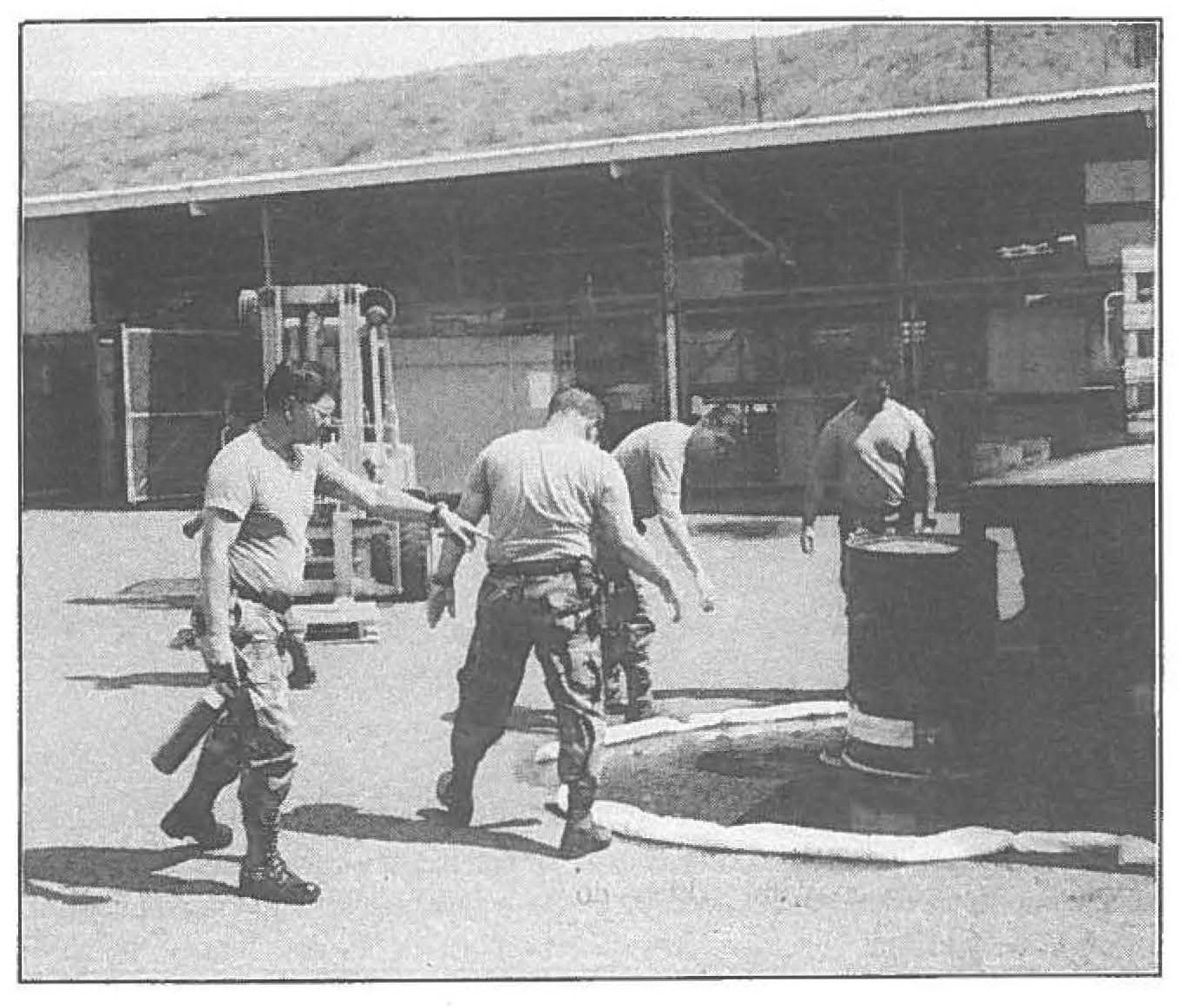
IT’S A WHOPPER! – Hawaii Army National Guard members (L-R) Spec. Gary Costales, Command Sgt. Maj. Francisco Latorre. Jr., Sgt. Carty Raquedan, Sgt.1st Class Leslie Yamamoto, Spec. Albert Makanani, and Master Sgt. Al Wong hurry to contain a simulated spill when this 55 gallon drum “fell” off its pallet while being loaded on a flatbed truck. The exercise was an annual awareness refresher course on hazardous waste operations and emergency response, or HAZWOPER. (Picture from the 1996 December Pūpūkahi)
In meeting compliance with Army regulations, the HIARNG environmental office initiated a hazardous material incidental spill response exercise. The spill scenario allowed personnel to practice spill response to quantities generally less than 55 gallons. The spill drill was held in conjunction with the on-site refresher training on initial response to hazmat incidents conducted on Oahu, Hilo, Maui, and Kauai during the month of September. The fire department’s first responders were invited to observe the drill, introduce themselves to unit leaders, and performed a pre-emergency plan of HIARNG maintenance and aviation facilities. Their participation provided an excellent opportunity to develop a better working relationship towards mitigating hazmat emergencies and understanding the response capabilities of each facility. Training was completed by 212 Federal and State employees, including Air Guard personnel on the neighbor islands.
Environmental program seeks to improve Guard awareness
The Hawaii Army National Guard Environmental Office is implementing the Integrated Training Area Management (ITAM) program on lands used for military training. This program complements the natural resource ecosystem management program.
ITAM includes four basic components:
Land Condition Trend Analysis (LCTA) includes flora and fauna surveys, and establishment of monitoring plots to determine trend and changes over time.
Training Requirements Integration (TRI) includes matching training requirements with areas which can best withstand the impacts.
Environmental Awareness (EA) includes the development of education material which inform the users of the training area’s environmentally sensitive areas and ways to minimize training impacts.
Land Rehabilitation and Maintenance (LRAM) develops methods to rehab areas affected by training activities. A geographic information system (GIS) will integrate data from this program.
Ms. Hedy Hager, an intern with the ORISE program, will assist with the implementation of the ITAM program.
LRAM projects are currently underway at Ukumehame (Maui) and Kekaha (Kauai) Firing Ranges. The plan is to use native species to replace existing plants and prevent soil erosion. Each site will have a botanical garden for educating the community and guard members. Also, HIARNG plans to sponsor a student internship program to plant and maintain species. For more information call Maj. Ron Swafford at 737-3462
Crater’s endangered plants, animals given second chance during Earth Day 1997
By Melissa M. Dumaran Natural Resource Manager, Environmental Office
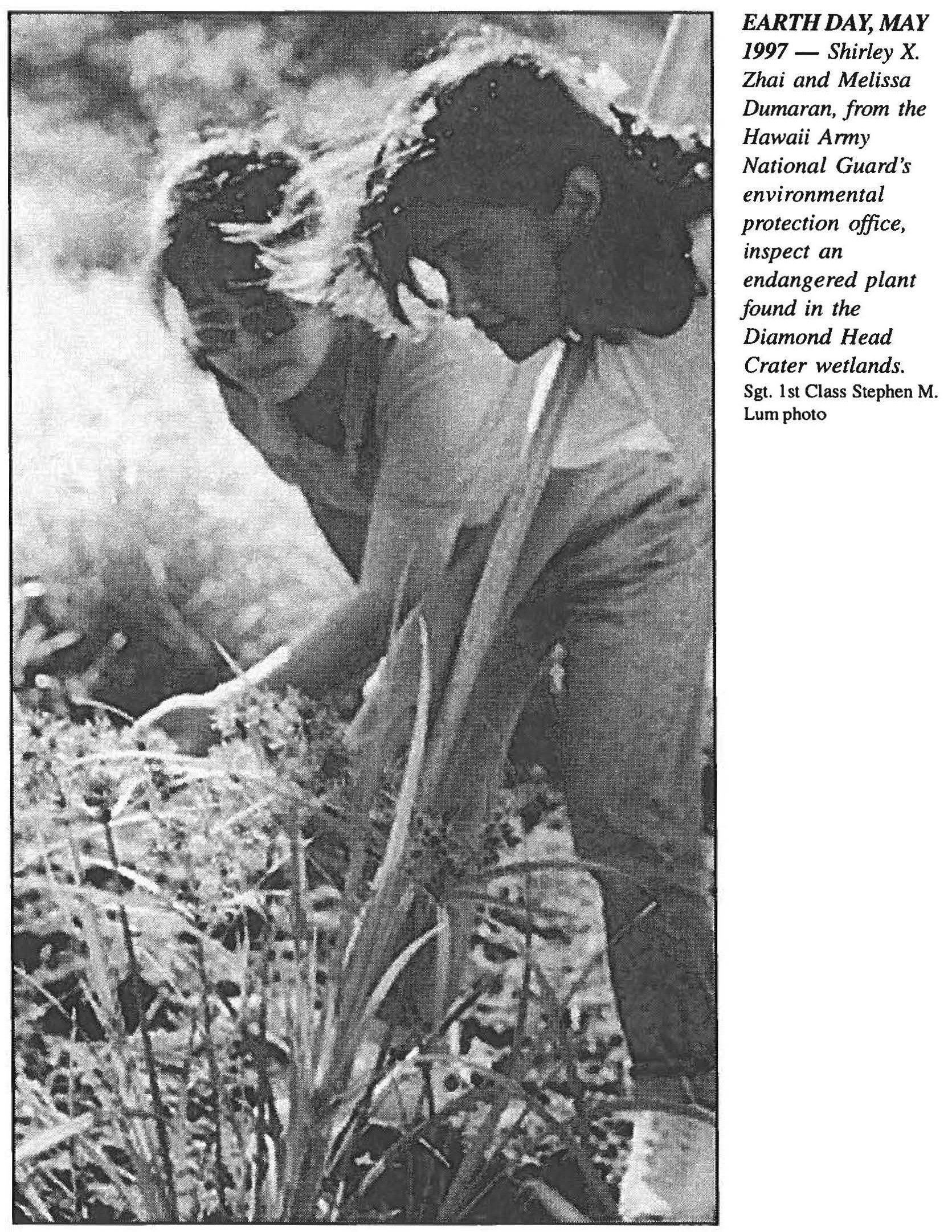
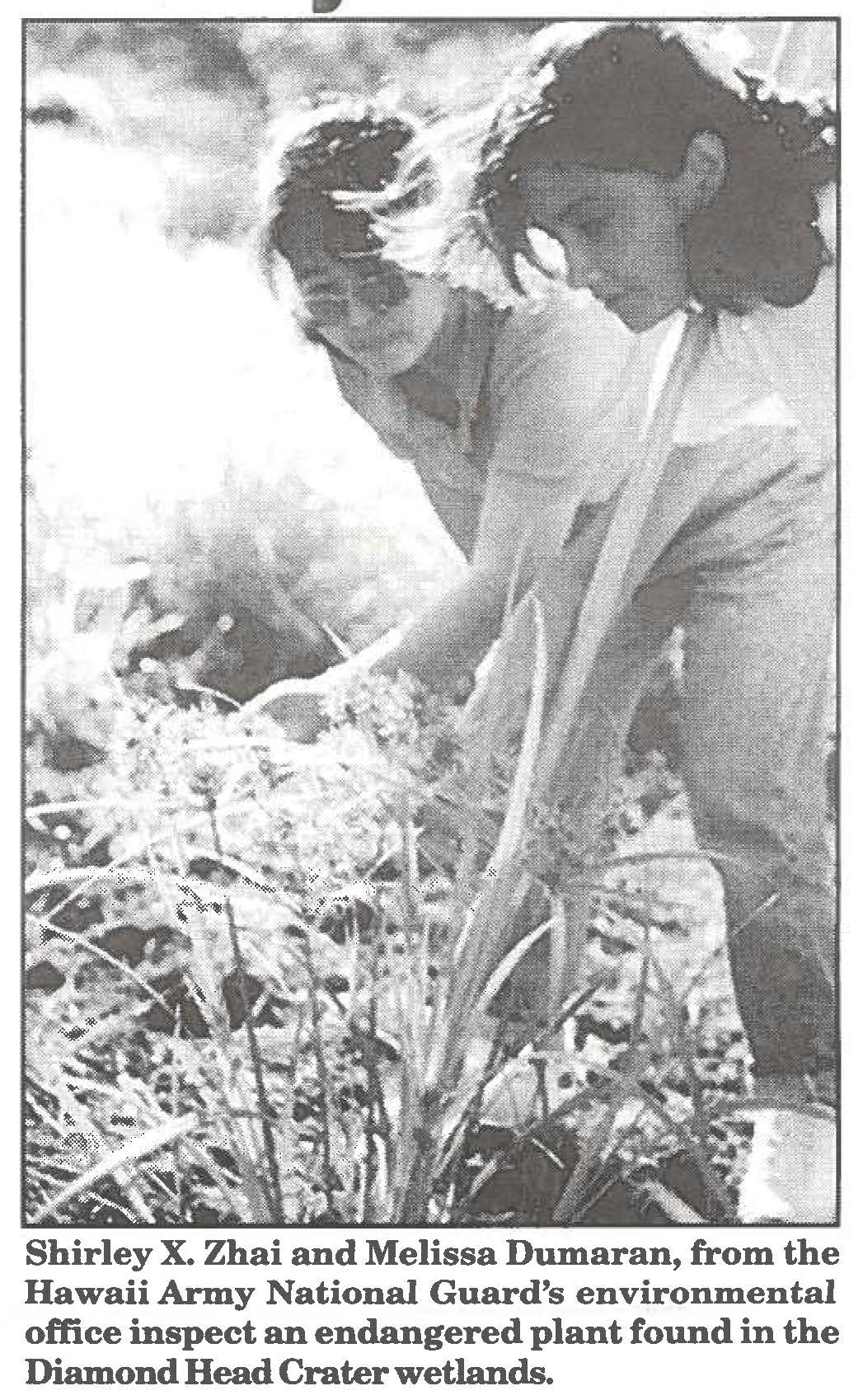
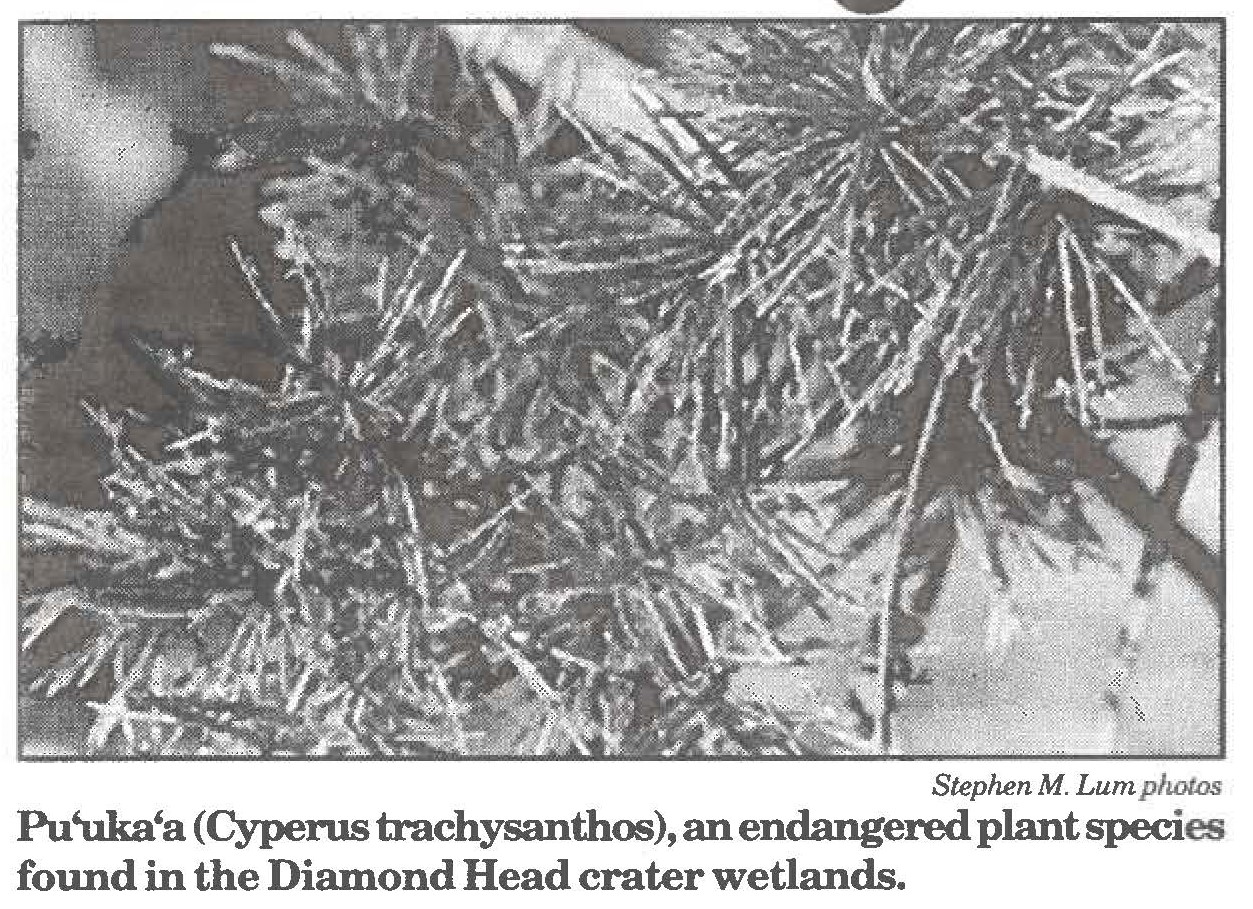
Shirley X. Zhai and Melissa Dumaran, from the Hawaii Army National Guard’s environmental office inspect an endangered plant found in the Diamond Head Crater wetlands.Pu’uka’a (Cyperus trachysanthos), an endangered plant species found in the Diamond Head crater wetlands.(Pictures from the 1997 Summer Pūpūkahi)
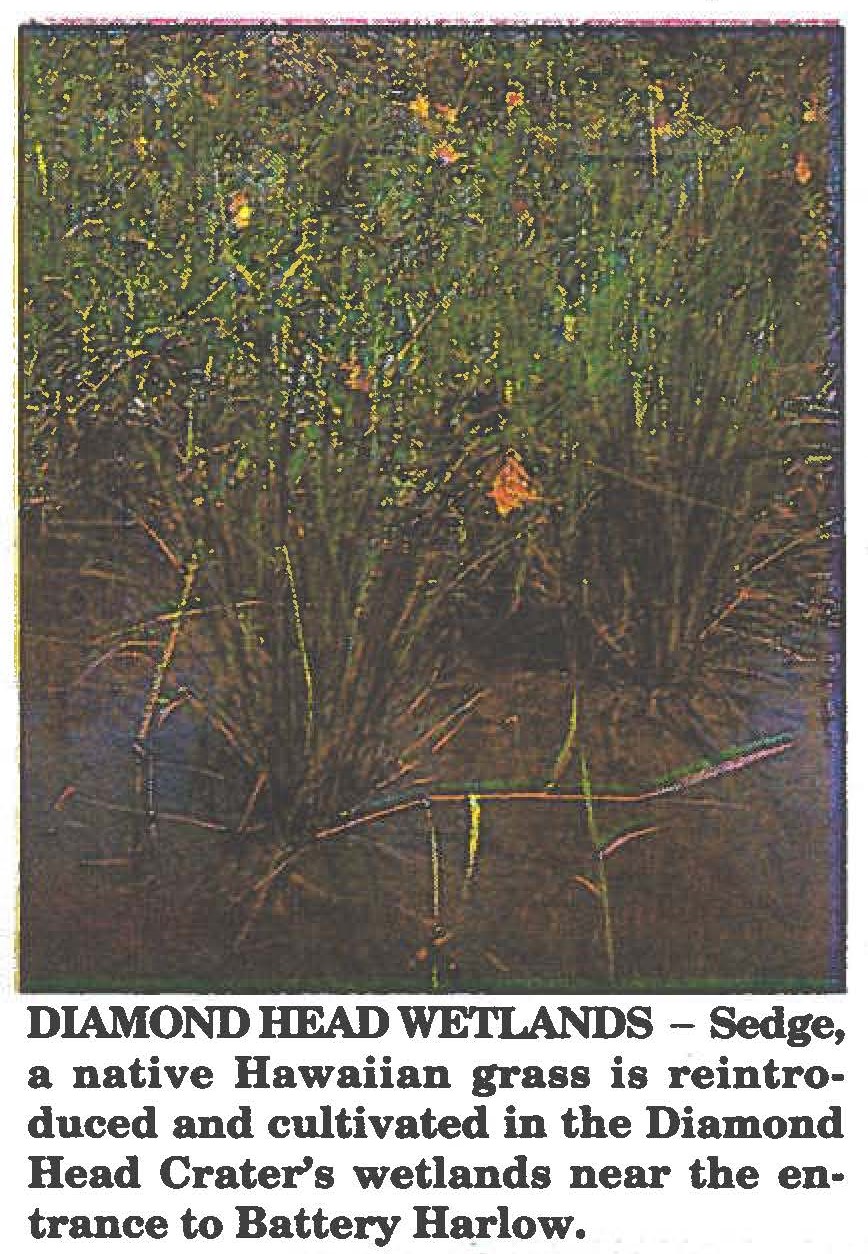
DIAMOND HEAD CRATER-Shovels, picks and hoes broke ground, April 22, at Diamond Head Crater’s wetland for weed clearing to enhance the growth of two recently discovered rare plants. Biologists, botanists, environmental managers and interested volunteers led a joint effort between the Hawaii Army National Guard, the U.S. Fish and Wildlife Service and the State Department of Land and Natural Resources (DLNR) to protect the two rare and endangered species of endemic sedges, or grasslike plants.
David Hopper, biologist of the Wildlife Service, and Derral Herbst, botanist of the Army Corp’s Environmental Division, discovered one of the species last summer while performing a state-wide biological survey ofHIARNG’s training areas and facilities. Pu’uka’a (Cyperus trachysanthos) is a federally protected endangered plant that appears to favor the damp soils of a wetland in the crater basin. Despite numerous weeds, years of herbicide spraying, weed-whacking and trampling by vehicles, the plant is managing to persist near the Guard-operated pumping station.
The crater’s “landlord,” DLNR, works closely with its chief tenant, the Hawaii Army Guard, to maintain one of Hawaii’s most visable treasures.
The discovery in April of kili’o’opu (Torulinium odoratum subspecies auriculaium) growing beside pu’uka’ais remarkable, considering it was thought to be extinct. Not sighted since 1939 at Maui’s Ukumehame Gulch, 19 plants of kili’o’opu extend along the wetland, which is approximately three acres.
In addition, two endangered waterbirds the Hawaiian Coot (Fulica alai) and Guallinule (Gallinula chloropus sandvicensis)-have been seen swimming in the marsh. It is unknown whether the birds are nesting there or are simply temporary visitors. Their presence, however, marks an important discovery for biologists concerned with the ever-shrinking marsh habit at available for Hawaii’s endangered waterbirds.
The presence of three endangered species and one species previously thought to be extinct is important in determining the species’ natural range and how to best protect them. Hawaii is currently the endangered species capital of the country, with over one-third of the nation’s listed species. Military lands comprise no less than five percent of the State which include many types of native ecosystems. The crater’s endangered species provide a unique opportunity for the Guard to demonstrate its leadership role in environmental stewardship
Currently, the Hawaii Army Guard’s Environmental Section is proposing a Diamond Head Restoration Plan that would protect the crater’s endangered species, revegetate with native plants, and provide a visitor viewing center for native Hawaiian ecosystems. The idea is especially fitting, considering the number of tourists who visit the crater’s trail daily. The Division of State Parks, Forestry and Wildlife, and the HIARNG are developing a partnership for conservation and restoration. The Fish and Wildlife Service is also interested in providing funding for endangered species recovery. Upon leaving the crater and relocating to Naval Air Station Barbers Point, the Army Guard will hand over the plan to the state and federal agencies for further implementation.
The Hawaii Army National Guard (HIARNG) environmental section is responsible for ensuring compliance and training of 26 environmental protocols identified by the National Guard Bureau (NGB) as predominant environmental regulatory areas.
The regulatory areas consist of conservation, pollution prevention, compliance, restoration, and integrated area training management. The protocols within these areas include, but are not limited to: clean air, safe drinking water, substance control, hazardous materials/waste, recycling, asbestos/radon/noise abatement, national historic preservation, cultural/natural resources, and endangered species. Specific projects include: oil/water separators, solid waste recycling, hazardous waste testing/disposal/ minimization, secondary containment, cultural and natural resources/endangered species monitoring, environmental baseline surveys, training, and initial response equipment. The office is developing educational programs and materials for soldiers and commanders about natural and cultural resources on installations and local training areas.
All projects are authorized, approved and 100% federally funded by NGB and support HIARNG’s compliance requirements. The FY98 budget was $2,232,700 as compared to a FY97 budget of $914,609.
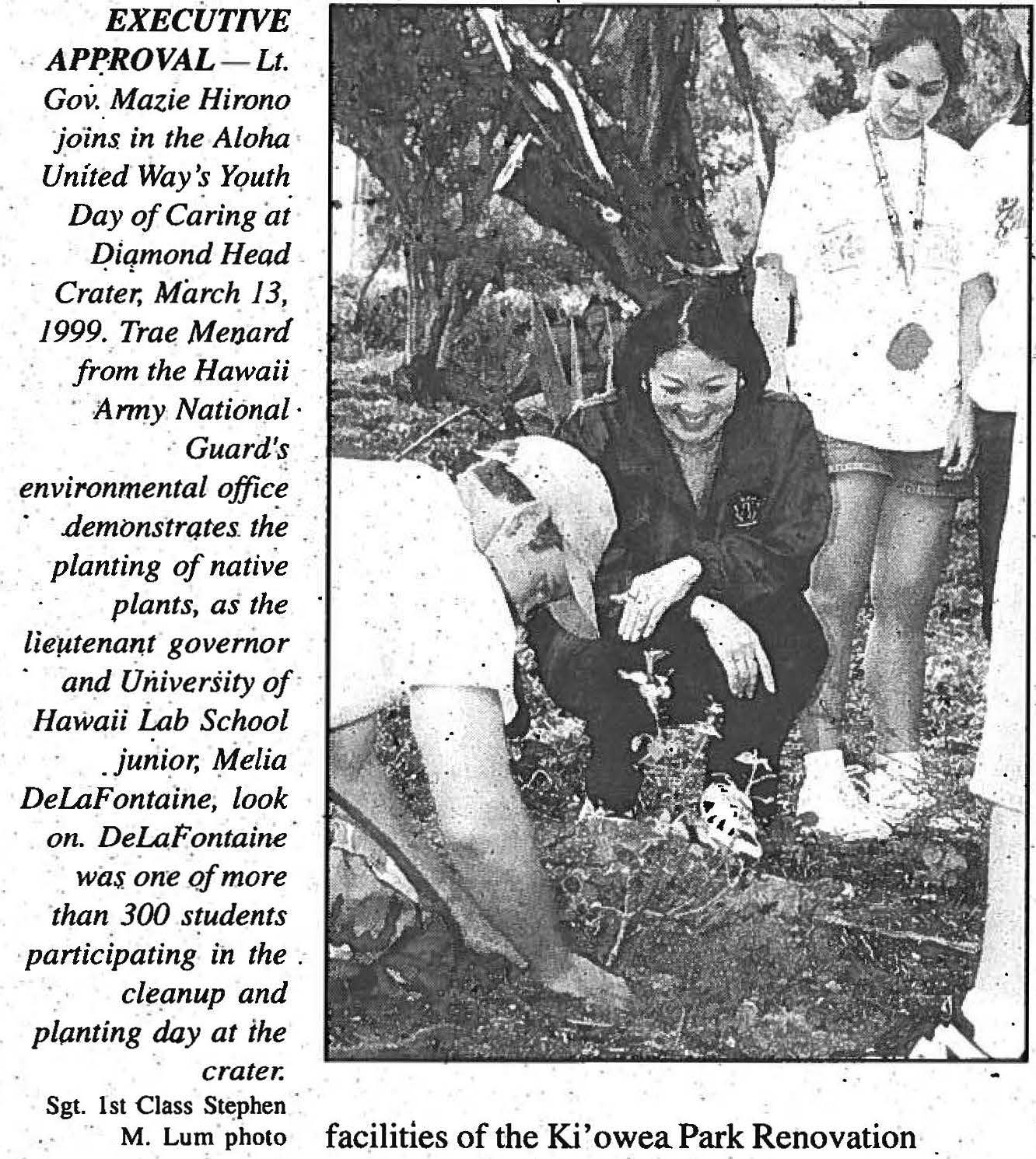
EXECUTIVE APPROVAL- Lt. Gov. Mazie Hirono joins in the Aloha United Way’s Youth Day of Caring at Diamond Head – Crater, March 13, 1999, Trae. Menard from the Hawaii Army National Guards environmental office demonstrates the planting of native plants, as the Lieutenant governor and University of Hawaii Lab School junior, Melia DeLaFontaine look on DeLarontaine war one of more than 300 students participating in the cleanup and planting-day at the crater. Sgt. 1st Class Stephen M. Lum photo(Picture from the 1999 Annual Report)
The HIARNG Environmental Office was a cosponsor in this year’s Youth Day of Caring. More than 500 students from over 15 schools were joined by volunteers and officials from private, county and state agencies, in cleaning up and restoring Diamond Head Crater’s Battery Harlow, the fire break road, and 22nd Avenue. The project entailing clearing trash and debris, planting over 350 native plants, and general landscaping.
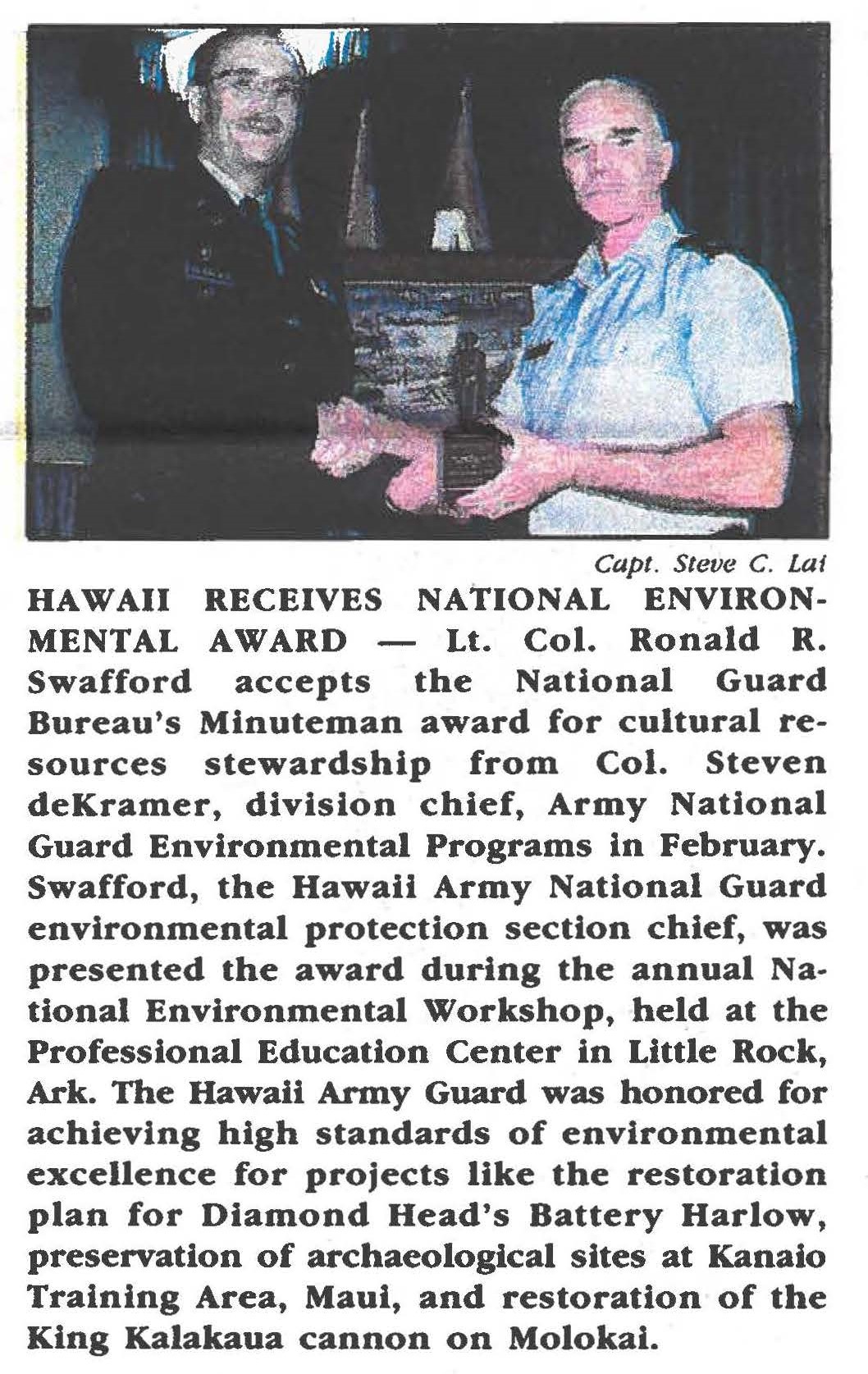
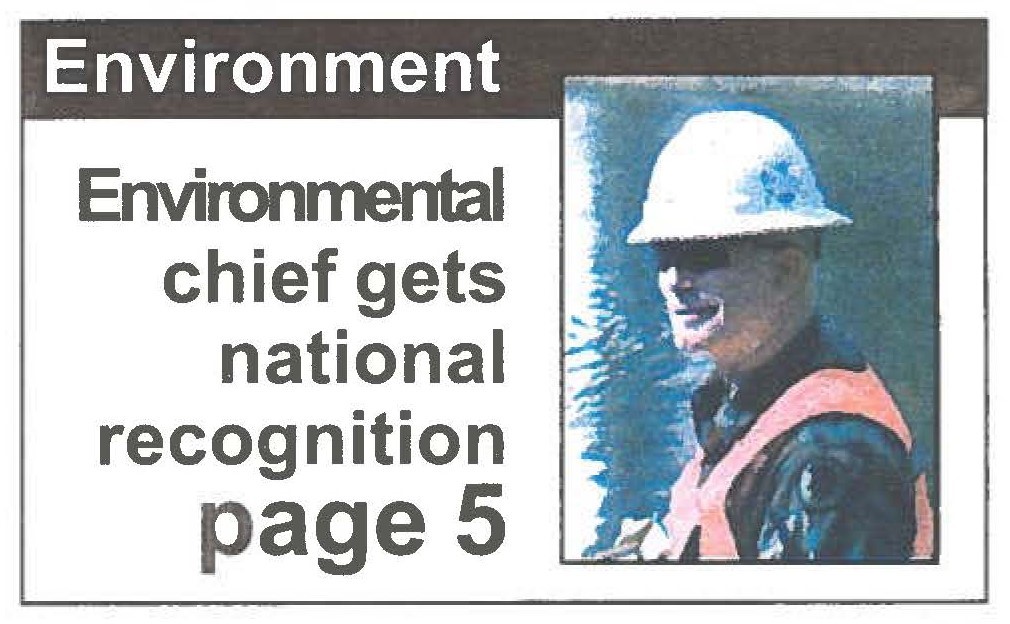
NGB’s- Minuteman Award for cultural resource stewardship: HIARNG’s Environmental Section. The HIARNG was honored for achieving high standards of environmental excellence projects such as the restoration plan for Diamond Head’s Battery Harlow, preservation of archaeological sites at the Kanaio Training Area on Maui, and the restoration of the King David Kalakaua cannon at the Molokai Armory. Accepting the award was Lt. Col. Ronald R. Swafford, the HlARNG’s environmental specialist.
The Hawaii Army National Guard (HIARNG) Environmental Office highlights for FY99 feature an unprecedented level of collaboration between HIARNG Environmental and other federal, state, and local environmental agencies including: The University of Hawaii, U.S. Fish & Wildlife Service, National Park Service, Department of Land & Natural Resources, Youth For Environmental Services, Bishop Museum, Maui Pineapple Co., and the Nature Conservancy.
HIARNG, Environmental Office received National Guard Bureau (NGB) recognition for its outstanding Natural Resources conservation Team and installation achievements including: Acquisition of $216,000 in federal grant monies to fund alien species eradication and water shed protection projects.
By Sgt. 1st Class Stephen M. Lum and Melissa M. Dumaran
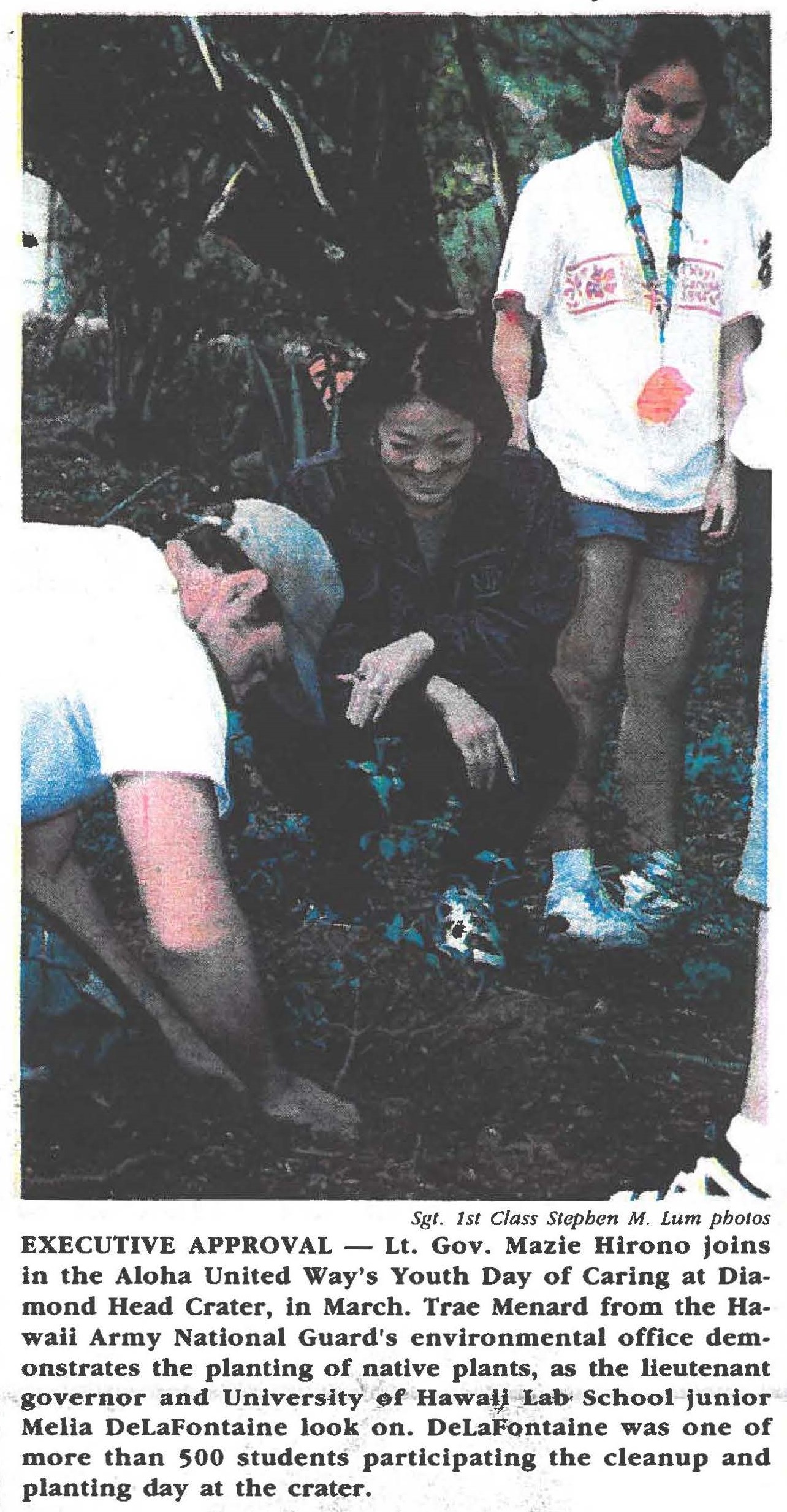
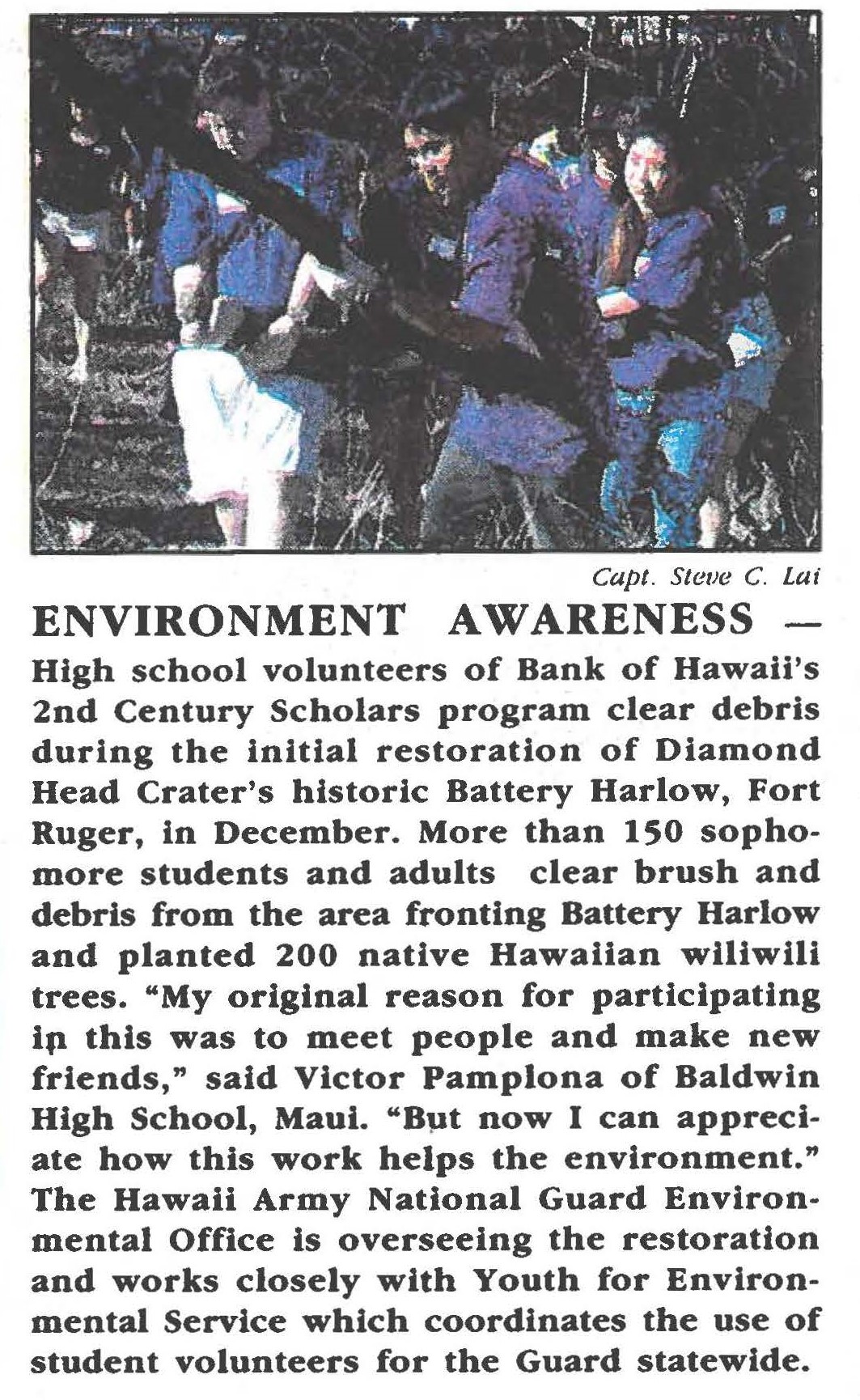
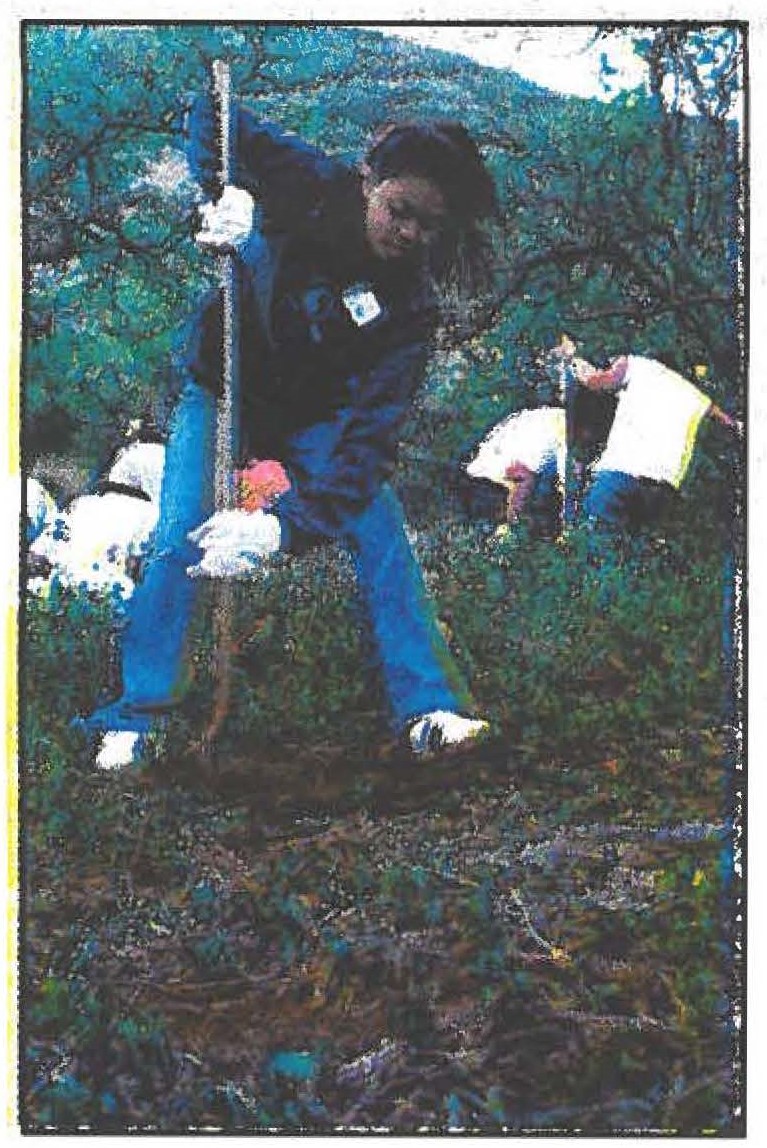
EXECUTIVE APPROVAL – Lt. Gov. Mazie Hirono joins in the Aloha United Way’s Youth Day of Caring at Diamond Head Crater, in March. Trae Menard from the Hawaii Army National Guard’s environmental office demonstrates the planting of. native plants, as the lieutenant governor and University of Hawaii Lab School junior Melia DeLaFontaine look on. DeLaFontaine was one of more than 500 students participating the cleanup and planting day at the crater.HAWAII RECEIVES NATIONAL ENVIRONMENT AL AWARD – Lt. Col. Ronald R. Swafford accepts the National Guard Bureau’s Minuteman award for cultural resources stewardship from Col. Steven deKramer, division chief, Army National Guard Environmental Programs in February. Swafford, the Hawaii Army National Guard environmental protection section chief, was presented the award during the annual National Environmental Workshop, held at the Professional Education Center in Little Rock, Ark. The Hawaii Army Guard was honored for achieving high standards of environmental excellence for projects like the restoration plan for Diamond Head’s Battery Harlow, preservation of archaeological sites at Kanaio Training Area, Maui, and restoration of the King Kalakaua cannon on Molokai.ENVIRONMENT AWARENESS High school volunteers of Bank of Hawaii’s 2nd Century Scholars program clear debris during the initial restoration of Diamond Head Crater’s historic Battery Harlow, Fort Ruger, in December. More than 150 sophomore students and adults clear brush and debris from the area fronting Battery Harlow and planted 200 native Hawaiian wiliwili trees. “My original reason for participating in this was to meet people and make new friends,” said Victor Pamplona of Baldwin High School, Maui. “But now I can appreciate how this work helps the environment.” The Hawaii Army National Guard Environmental Office is overseeing the restoration and works closely with Youth for Environmental Service which coordinates the use of student volunteers for the Guard statewide.VOLUNTEERS OF ALOHA – Sidney Basuel, Farrington High School freshman, digs a hole for the planting of native plants during Aloha United Way’s Youth Day of Caring at Diamond Head Crater, in March.Community cleans, replants Crater pages 5(Pictures from the 1999 Spring Pūpūkahi)
Taking pride in your community was what the Youth Day of Caring was all about. More than 500 students cleared trash and wood debris, pulled weeds and planted 350 native plants in and around Diamond Head Crater in the fifth annual Aloha United Way event, cosponsored by the Hawaii Army National Guard’s environmental office.
The students were joined by 75 adults from AUW, Hawaii National Guard Counterdrug Office, Youth for Environmental Service, Department of Land and Natural Resources-state parks division, and City and County parks department.
Armed with shovels, buckets and massive amounts of energy the students from more than 15 Oahu schools spent four hours at three sites: Battery Harlow, fire break road, and 22nd Avenue.
On hand to open the event was Lt. Gov. Mazie Hirono and Btjg. Gen. Edward L. Correa Jr. , the Hawaii Army National Guard commander.
The lieutenant governor not only took the time to thanked the students for caring for their community, but also helped planted the first cuttings of the day.
Correa said the Hawaii Guard’s good neighbor policy includes helping the community help themselves to improve our home . . . our environment.
Twenty Counterdrug staff members help supervise students, drove vehicles haul trash, move wood debris and delivered plants and water (via water buffalo) to various locations. The City and Country spreader converted the logs into wood chips used to aerate plants like the wiliwli and ilima being planted at the various locations.
HIARNG, its contractor Youth for Environmental Service (YES), and DLNR provided field staff supervision and safety, plant materials and supplies. AUW volunteer staff registered the students and assisted in the coordination for fo,od, water, entertainment.
The YMCA, Leo Club and student council were some of the student organizations who used the Youth Day of Caring a community service project.
Students like Farrington High School freshman Sidney Basuel said the event not only gave them a change to give back to their community, but an opportunity to meet people, learn a little Diamond Head history and some landscaping techniques.
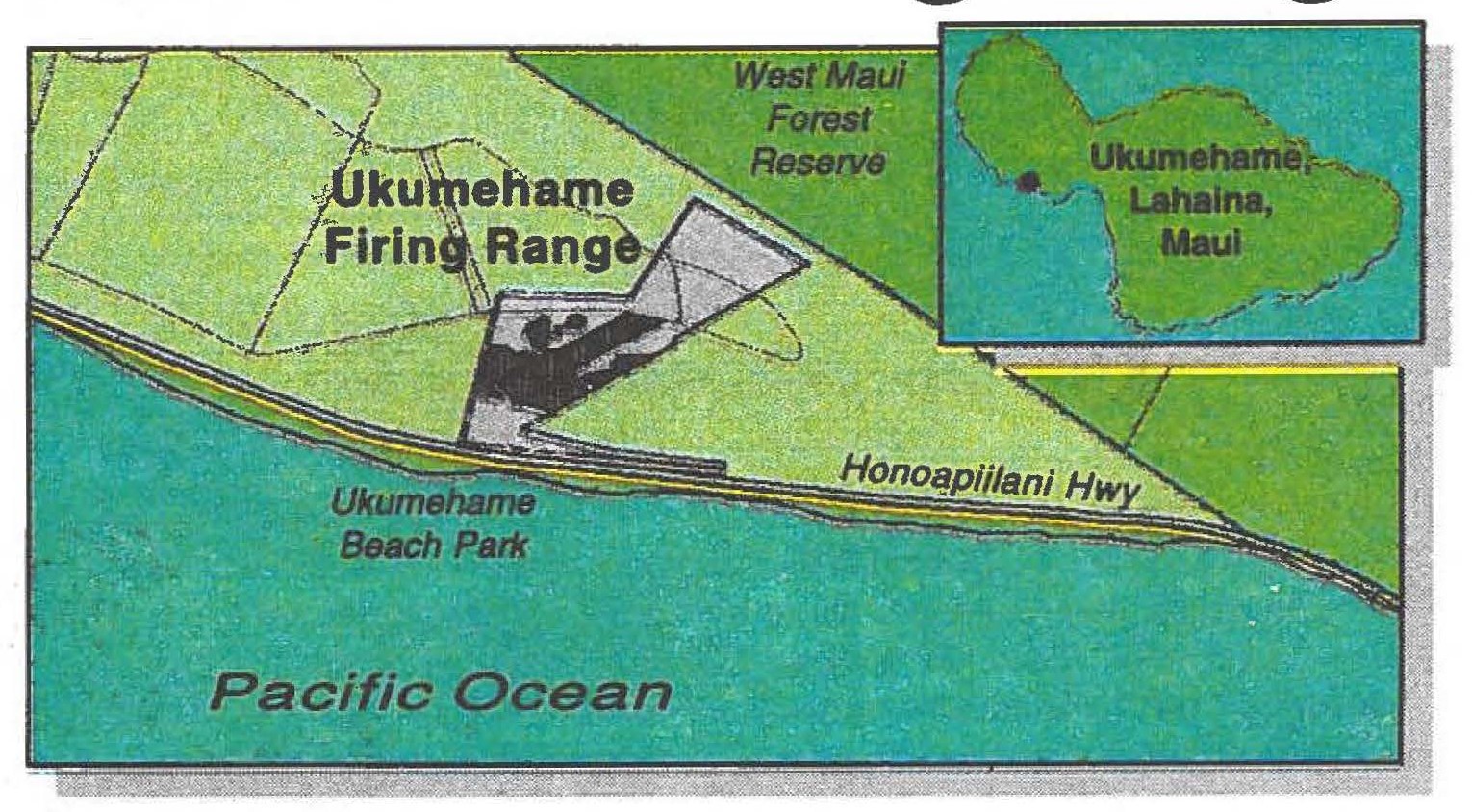
When the Hawaii Army National Guard started construction of the Ukumehame Firing Range on Maui in 1988 they never thought they’d run into so many problems. What initially started out as a few environmental compliance issues snowballed into a big swampy mess. But by going back to correct the problems the soldiers and personnel from the Environmental Office they say actually make improvement on the land.
After the State received the land in 1986 they got the go-ahead to start the construction of the range. When they initially started to grade the land they scraped off the topsoil from the surface and built up berms along the sides of the lane. Unfortunately, because of a high water level in the area, the lane started to fill up with runoff water and it then officially became a wet land. All wetlands are covered under the Clean Water Act. To make matters worse not only had it become a protected wetland but also several endangered water birds began settling in the area, mainly the Hawaiian Stilt, who prefer the mudflat and shallow wetland areas. The berms also became a problem. They had no vegetation, after a few heavy rains they began to erode and contaminating the water. That one small project just became three rather large environmental issues
Environmental Section assess compliance solutions
The Guard and the Environmental Office’s first step was to assess the situation and find a solution that is legal and beneficial hot only to the Guard but the environment. The question was how was the Guard going to be able to protect the land but also use the land for its intended use of a firing range.
“We try to incorporate the Army Guard’s training needs into our environmental plans. We just want to bring the range into compliance. This should go hand in hand with their original objective for the use of the range,” said Trae Menard, ecosystems manager. “When they originally got the EO for the range, part of the stipulation was that they would landscape the area anyway. That would be the environmental compliance need to eliminate the erosion.”
To bring the compliance issues into order the National Guard has decided to maintain the area as a wetland by planting seeds of native wetland plants. They will also have started to seed the berms this fall to eliminate the erosion. They also hope to have a well drilled within the year for irrigation and firefighting purposes. Fire also has been a major concern for the range with so many plants and grasses susceptible to brush fires.
Land impact to be minimized
“We want to minimize the Guard’s impact on the land. If all this is done properly and there is continual maintenance there probably will be no impact,” Menard said. “Our presence of a firing range increases the probability of a fire but drilling the well is a control to fight any possible fires. This has been an interesting project, we have had to think laterally and consider all
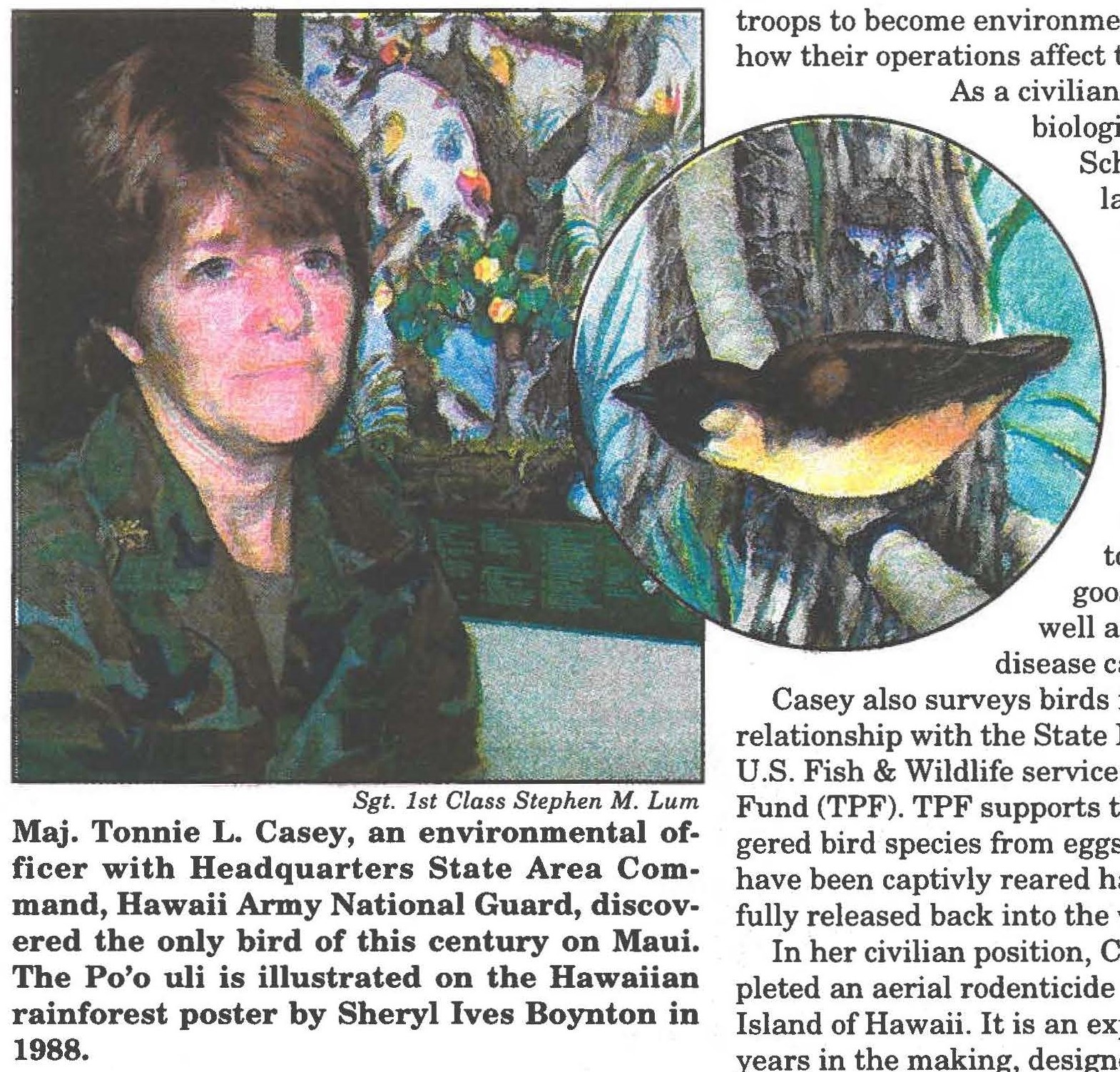
Maj. Tonnie L. Casey, an environmental officer with Headquarters State Area Command, Hawaii Army National Guard, discovered the only bird of this century on Maui. The Po’o uli is illustrated on the Hawaiian rainforest poster by Sheryl Ives Boynton in 1988. Officer made “find of the century” page 10(Pictures from the 1999 Summer – Fall Pūpūkahi)
With the Millennium approaching, not many can claim that they made the find of this century, but one Hawaii National Guard soldier holds that title.
In 1973, while on a scientific expedition to study the unexplored Koolau Forest Reserve ecosystem on the island of Maui, Tonnie L.C. Casey and her other team members sighted the Po’o uli, the only previously unknown bird discovery of this century. Casey, who is now a major in the Hawaii Army National Guard’s environmental office, was the ornithologist, a branch of zoology that studies birds, with the eight-person team of University of Hawaii undergraduate students working on a National Science Foundation grant in the forest reserve above the Waihoi Valley from May-November 1973.
As first describer, Casey was given the honor of naming the bird. “I followed the tradition of naming Hawaiian birds by their physical characteristics,” she said. “I called it Melamprosops phaeosoma, meaning black face, brown body.”
“I also wanted to give the bird a Hawaiian name and asked Mary Kawena Pukui, Hawaiian linguist at the University of Hawaii at Manoa, for help. Pukui named the bird, Po’o uli, which means black head (black mask).”
The Po’o uli is about the size of a sparrow and has only been found on Maui in altitudes of 5,000 to 7,000 feet. Casey said there are only three living birds presently known, but a search for others continues. Casey went on to earn a Bachelor of Science degree from the University of Hawaii at Manoa and a Masters in Zoology and Entomology at Colorado State University.
She began her military career with the U.S Army in 1984 and came to the Army National Guard in 1991. She became a helicopter pilot so she could gain easier access to remote areas to study the birds.
Casey commanded the Hawaii Army Guard’s Combat Enhanced Capability Aviation Team (CECAT) before joining the environmental section in 1998. For the past ten years she’s primarily flown the Vietnam-era UH-lH Iroquois (Huey) troop carrier helicopter.
Presently, she is part of the Hawaii Army Guard environmental protection program, which deals with how National Guard training affects the environment. Her advice will help with the safe construction of training lanes for the infantry units, ensuring minimal damage to the plants and animals. Casey also plans to help units educate troops to become environmentally sensitive to how their operations affect the environment.
As a civilian, she is a wildlife biologist for Kamehameha Schools Bishop Estate lands. Her duties include conservation of endangered species of plants and animals, which include dealing with weed problems and predator control of herbivores and small mammalian predators, such as mongooses, rats, feral cats, as well as mosquitoes as disease carriers.
Casey also surveys birds in a cooperative relationship with the State Division of Wildlife, U.S. Fish & Wildlife service and the Peregrine Fund (TPF). TPF supports the raising of endangered bird species from eggs. Young chicks that have been captivly reared have also been successfully released back into the wild.
In her civilian position, Casey has just completed an aerial rodenticide drop on the Big Island of Hawaii. It is an experimental project six years in the making, designed to eradicate the small mammal populations to help the endemic plants and animals to survive and thrive. It’s based on a technique she learned from her New Zealand colleagues.
Hawaii is still rich with wildlife even though 40 percent of the native Hawaiian bird species have become extinct since the state’s discovery in 1778 by Captain Cook. Unfortunately, Hawaii has the negative distinction of being the “extinction capitol of the world,” more than all other states in the Union.
Casey has dedicated her life to the conservation and preservation of Hawaii plants and wildlife as a Guard member and as a civilian.
The HIARNG worked hand in hand with other governmental and private organization to identify and preserve archaeological and cultural items. The project data from the Educational and Training Facility and Keaukaha Military Reservation was shared with the State Office of Historical Preservation and the U.S. Air Force, which added significant information to their databases. The HIARNG also identified endangered plants and species that exist within the training area. Awareness training for HIARNG soldiers was promoted through the preparation and distribution of the Commander’s Handbook, calendars, and posters. The HIARNG continues its productive partnership with the University of Hawaii, U.S. Fish and Wildlife Service, National Park Service, Department of Land and Natural Resources, Youth for Environmental Services, Bishop Museum, Maui Pineapple Company, and the Nature Conservancy
In the community, the HIARNG Environmental Office is partnered with the Department of Land and Natural Resources and the Youth for Environmental Services. This partnership focuses on Hawaii’s youths and their participation and involvement to preserve the beauty of Hawaii. The office hosted a number of environmental youth service projects at Diamond Head State Monument involving youth volunteers from around the state.
The HIARNG Environmental Office was presented with a number of prestigious national and local awards in FY 2000 for environmental excellence and management:
2000 Governor’s Team of the Year Award
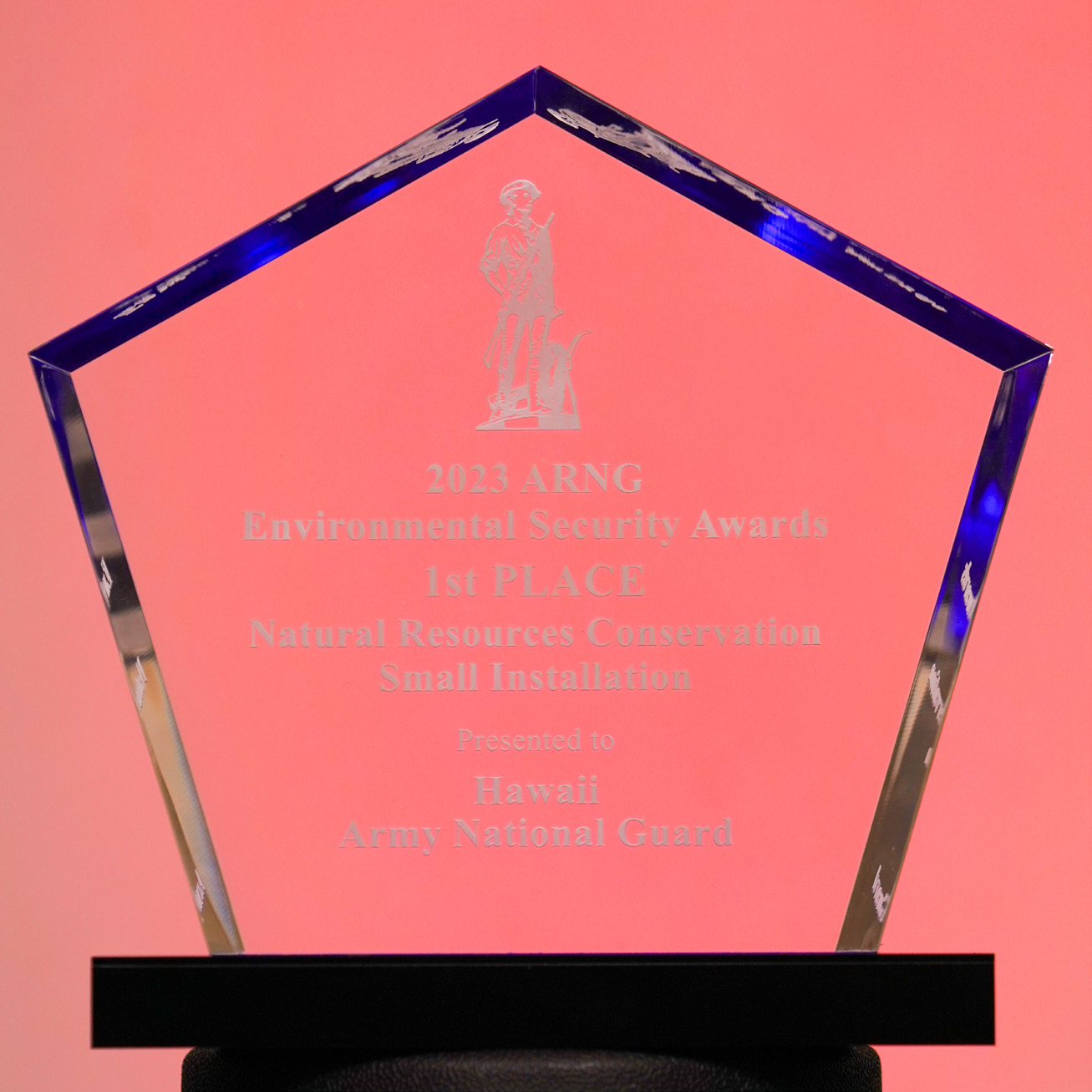
Secretary of Defense Environmental Security Award, National Resources Conservation
Secretary of the Army, Natural Resources Conservation Small Installation Award
National Guard Bureau Eagle Award, U.S. Environmental Protection, Region 9, Outstanding Environmental Achievement
Earth 2000 Award
Commendation from the Environmental Council, State of Hawaii
The Hawaii Army National Guard Environmental Office highlights for feature an unprecedented level of collaboration between the Hawaii Guard office and other federal, state, and local environmental agencies, including the University of Hawaii, U.S. Fish & Wildlife Service, National Park Service, Department of Land & Natural Resources, Youth For Environmental Services, Bishop Museum, Maui Pineapple Co., and the Nature Conservancy. HIARNG Environmental Office received National Guard Bureau recognition for its outstanding Natural Resources conservation Team and Installation achievements, includingacquisition of $216,000 in federal grant monies to fund alien species eradication and watershed protection projects.
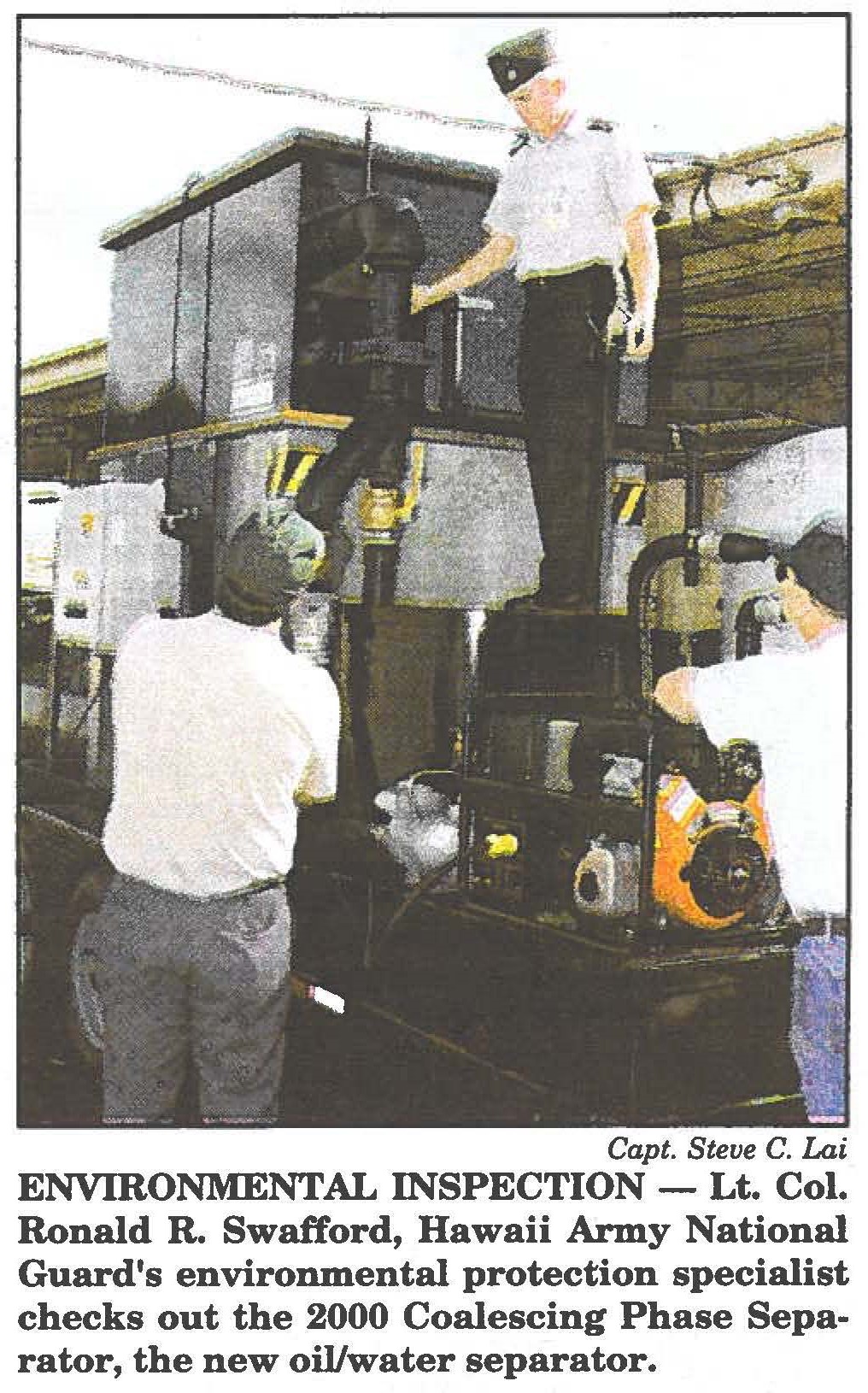
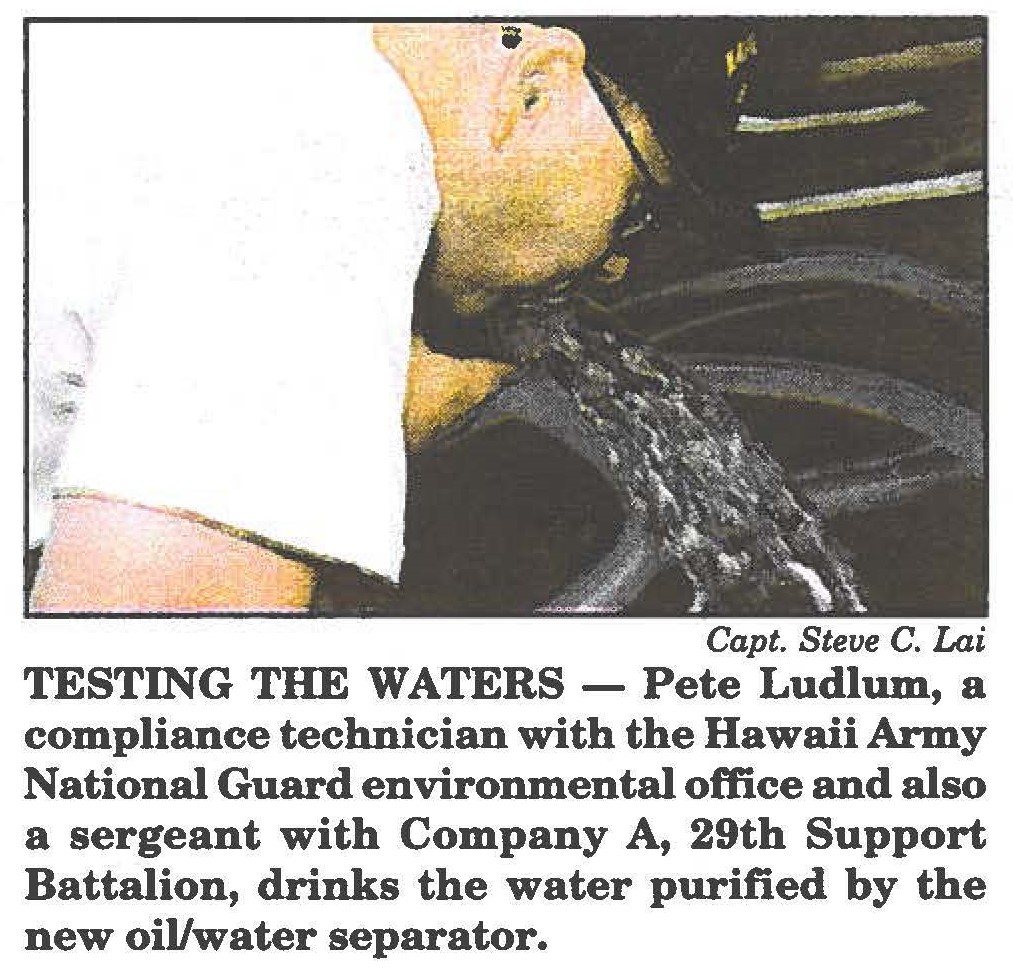
ENVIRONMENTAL INSPECTION – Lt. Col. Ronald R. Swafford, Hawaii Army National Guard’s environmental protection specialist checks out the 2000 Coalescing Phase Separator, the new oil/water separator. TESTING THE WATERS – Pete Ludlum, a compliance technician with the Hawaii Army National Guard environmental office and also a sergeant with Company A, 29th Support Battalion, drinks the water purified by the new oil/water separator. (Pictures from the 2000 January – February Pūpūkahi)
Environmental issues have become one of the top priorities for units out doing field-training exercises. Especially when the military runs so much heavy equipment and machinery over its training areas, which can often damage and pollute the landscape.
One of the major environmental compliance factors is what to do and how to clean up when there is a fuel spill or any contaminated run off from the machinery in the ground. Normally after field usage each piece of machinery must be cleaned and washed off before returning from the field and put into storage. The U.S. military realized they couldn’t just spray the vehicles down and let the run off water seep back into the soil because of the possible fuel, oil, paint and other pollutants that may also be washed off causing soil contamination. They have installed wash racks for all military vehicles at many military installations. Unfortunately, these wash racks are not at every training site and they are expensive to install and maintain.
Portable oil and water separators available
The Hawaii Army National Guard recently found a solution to those problems. They are one of the first National Guard units purchased the self-maintaining and cheaper oil and water separators. Instead of having to travel, if there is one nearby, to a designated permanent wash rack area the two new trailer mounted separators can be set up in the field or other accessible areas where they can wash vehicles, collect the run off water and run it through the separator.
Each is on a trailer that weighs about 12,000 pounds and it can be towed behind a two-ton truck, which makes it very portable and deployable to training areas. Its very environmentally friendly because it runs on a generator with either fossil fuel, natural gas or a normal power supply which draws less then 20 amps which is less then a blow dryer to power the two pumps; a sump pump and a transfer pump. The units are self-maintaining with the lone exception of changing out a filter when it’s clogged up and the carbon used for filtration should be replaced every couple of years.
How the separator works
How it works is the unit or maintenance shop will set up a washing operation, they will have a pit for run off water and sludge collection. The separator has a pick-up sump that the water flows through to the separation containers, the oil floats to the top, water below and solids sink to the bottom. Water is then pumped out of the coalescing unit and it goes either one of two directions, to the sewer treatment system or through a transfer pump into another secondary filtration system. In the secondary it’s a cotton sock filter, which will catch the bigger particles in the water. Finally, it flows out through the carbon filters and it is now clean water, which can be discharged. If the water is run through the entire filtration system on the trailer, it is cleaned down to ten microns which means it can be discharged into a sanitary sewer system though the Guard most likely wouldn’t discharge it there.
Mobile wash rack cheaper to operate
Each unit is also cheaper to run then a normal permanent wash rack station. It costs about $100,000 to $150,000 to put a wash rack in the ground, versus each trailer which costs only about $60,000.
“These machines are very easy to use, you just set up your wash rack and flip a switch, it does all the work and the water comes out clean enough to drink,” said Pete Ludlum, compliance technician with the Hawaii Army Guard Environmental Office and also a sergeant with Company A, 29th Support Battalion.
“In my 17 years in the military I’ve never seen a piece of equipment like this, it’s the wave of the future. It’s cheaper, portable, easy to use and environmentally compliant.
The separator most likely won’t be used yet by the Guard units training in the field by themselves but mostly by the maintenance units and shops, after cleaning and working on vehides.
Both Organizational Maintenance Site, Combined Support Maintenance Shop along with the support battalion have looked at the operation of each trailer and are looking into ways to integrate them into usage.
Every year in April the whole nation celebrates a special day to help conserve, restore and save our fast fading natural resources and the environment.
Earth Day 2000 on April 22nd marks the 30th anniversary of this special event. It’s sponsored nationwide by the U.S. Army and other local, state and federal agencies.
This year, the Hawaii Army National Guard will be doing its part by helping to restore Diamond Head State Monument, one of Hawaii’s most recognizable and precious landmarks.
Guard members and volunteers will work together to clear debris and plant native species of foliage at specified areas around the Diamond Head Crater. This project and other like it at Diamond Head are intended to restore balance to the ecosystem damaged years ago by the introduction of nonnative plant species that have taken over.
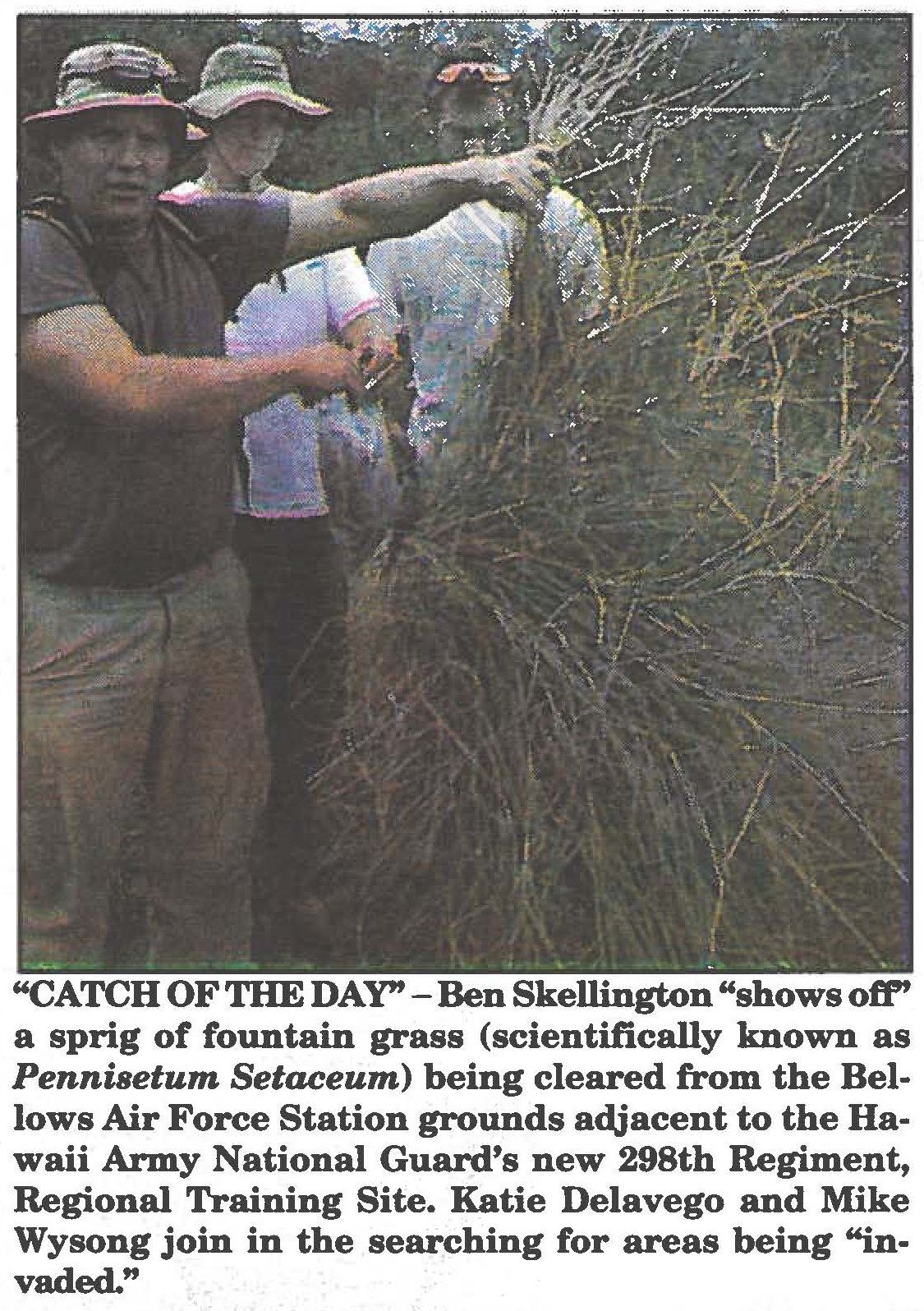
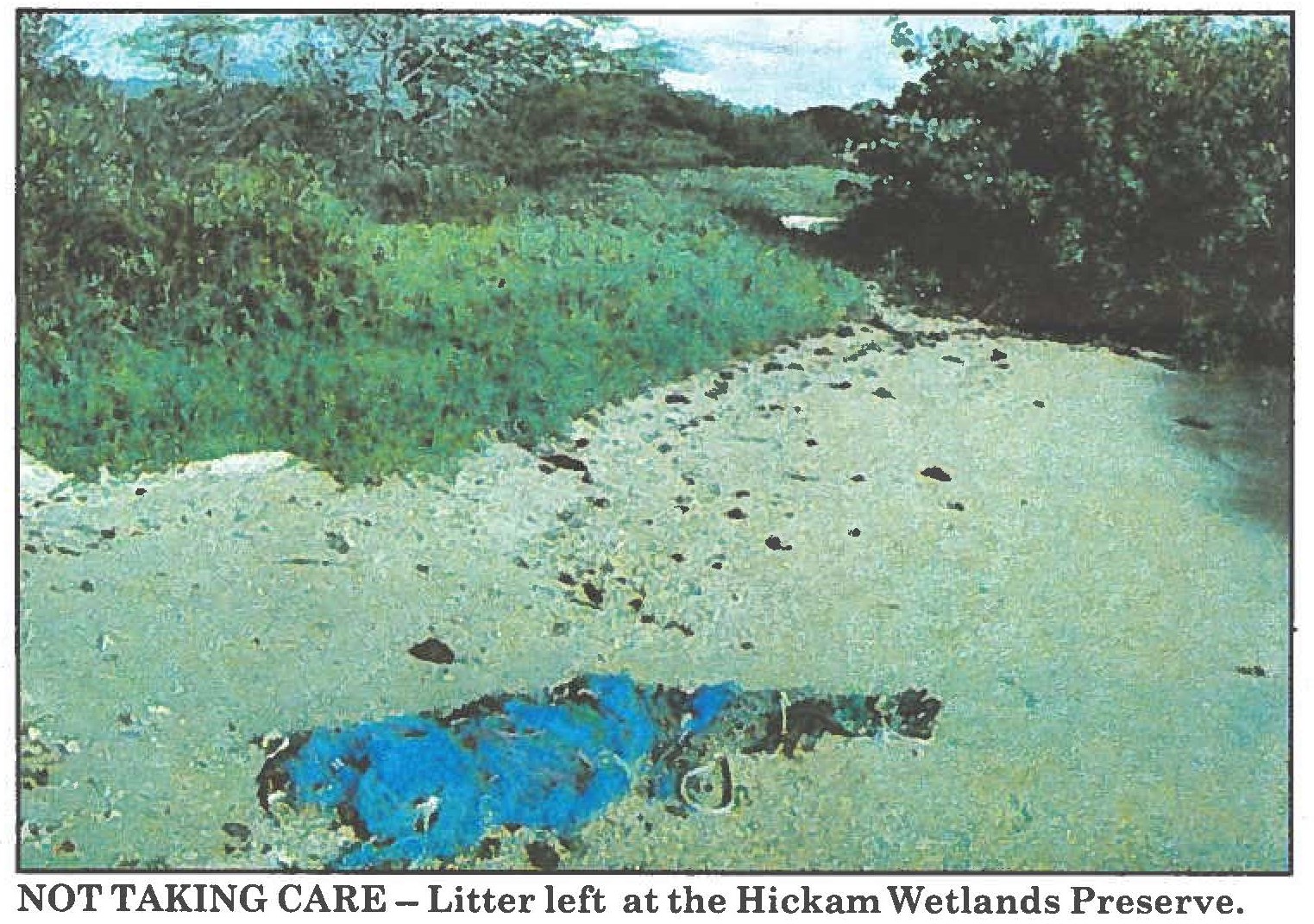
Today the encroachment of fountain grass and litter alongside the monument is a visible reminder of the work left to be done before our famous Diamond Head is fully restored with native Hawaiian species and cleaned up.
Army and Air Guard members, units, Department of Defense and State workers along with their families and civilian youths are encouraged to do their part on Earth Day by volunteering to help out for a few hours.
The terrain at Diamond Head is rocky and uneven; volunteers are urged to bring a hat, work gloves and wear a pair of sturdy boots.
When: Saturday, April 22, 9 a.m. – 12 noon
Where to meet: Diamond Head Crater parking lot near Battery Harlow
Who: Hawaii National Guard members, family and civilian youth volunteers
What to bring: hat, work gloves and wear sturdy boots
For more information or to sign up call Capt. Steve Lai at the Environmental Public Affairs Office at 773-4241.
DOD honors Hawaii Army Guard environmental program
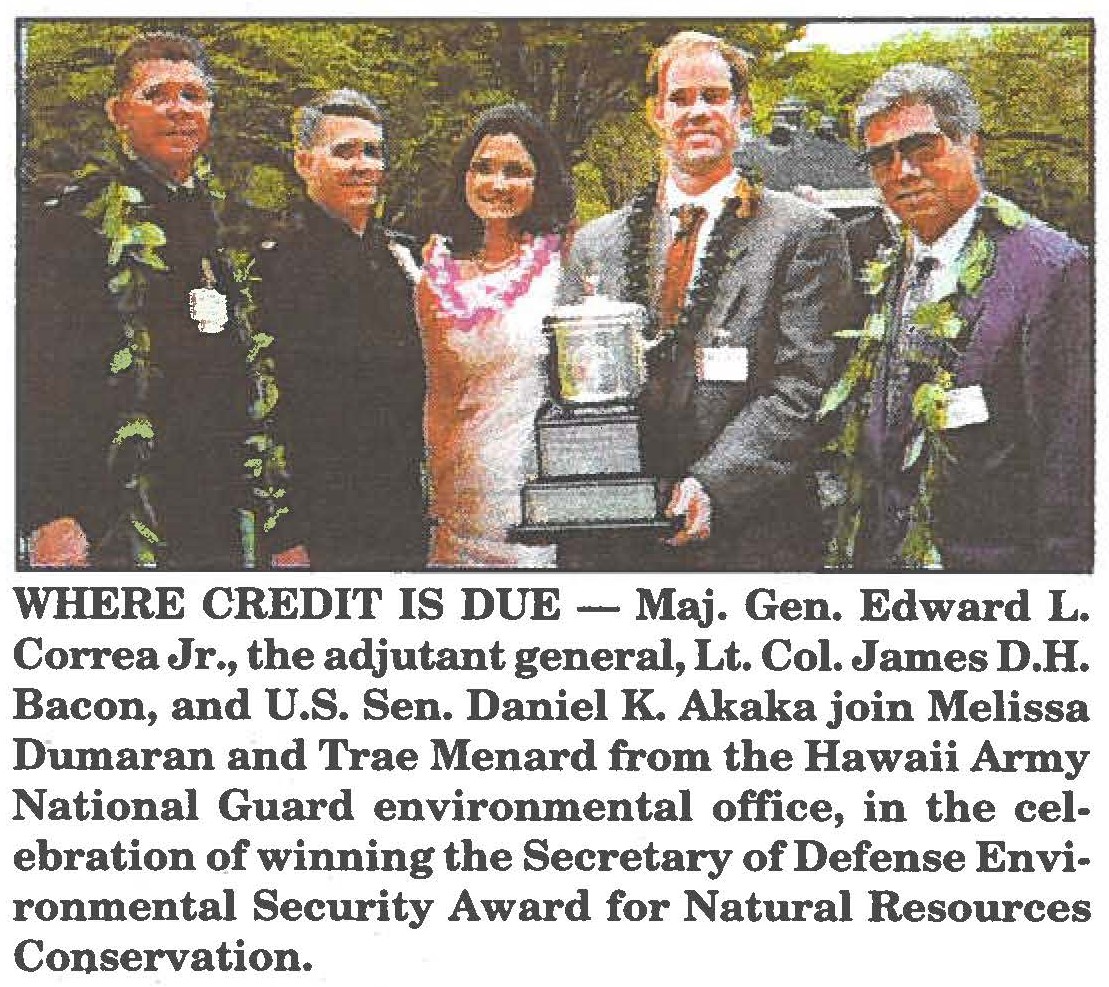
WHERE CREDIT IS DUE – Maj. Gen. Edward L. Correa Jr., the adjutant general, Lt. Col. James D.H. Bacon, and U.S. Sen. Daniel K. Akaka join Melissa Dumaran and Trae Menard from the Hawaii Army National Guard environmental office, in the celebration of winning the Secretary of Defense Environmental Security Award for Natural Resources Conservation. (Picture from the 2000 March – June Pūpūkahi)
The Hawaii Army National Guard’s Environmental Program received the fiscal 1999 Secretary of Defense Environmental Security Award for Natural Resources Conservation, small installation category. Hawaii Army Guard’s environmental office representatives, Melissa Dumaran and Trae Menard, accepted the award from the Secretary of Defense at the Pentagon ceremony in April. Hawaii’s program beat out all other military branches in its category this year, while garnering an unprecedented three national awards including recognition from the National Guard Bureau and Department of the Army.
Secretary of the Army Louis Caldera honored the Hawaii Guard in January with his own Secretary of the Army Environmental Award.
He recognized the Hawaii Guard for providing realistic military training on 34 sites throughout the Hawaiian Islands, while protecting a wide variety of species and promoting sustainable practices in land use.
The program is responsible for some of the most biologically diverse lands in the United States.
Maj. Gen. Robert L. Van Antwerp, the Army chief of staff for installation management, praised the Hawaii Guard for its achievement in both competitions, saying “the Hawaii Army National Guard competed against the best people and organizations in the Department of Defense and captured the top award in its category. They exemplify the National Guard Bureau’s commitment to environmental stewardship.”
The land managed by the Hawaii Guard contains at least 33 rare, threatened or endangered species and five distinct habitat types.
Nearly 40 percent of all plants and animals on the endangered species list reside in Hawaii, many of which are not found anywhere else in the world.
The Hawaii Guard is faced with the challenge of balancing the needs of its 3,100 members to achieve realistic military training while still protecting the sensitive ecosystems of the Hawaiian islands.
A panel of nonmilitary and Army natural resources management experts, including representatives from the Nature Conservancy and the U.S. Fish and Wildlife Service, judged competitors for the Natural Conservation award.
In addition to outstanding program management, the Hawaii Army National Guard demonstrated technical expertise in support of military readiness and community partnerships.
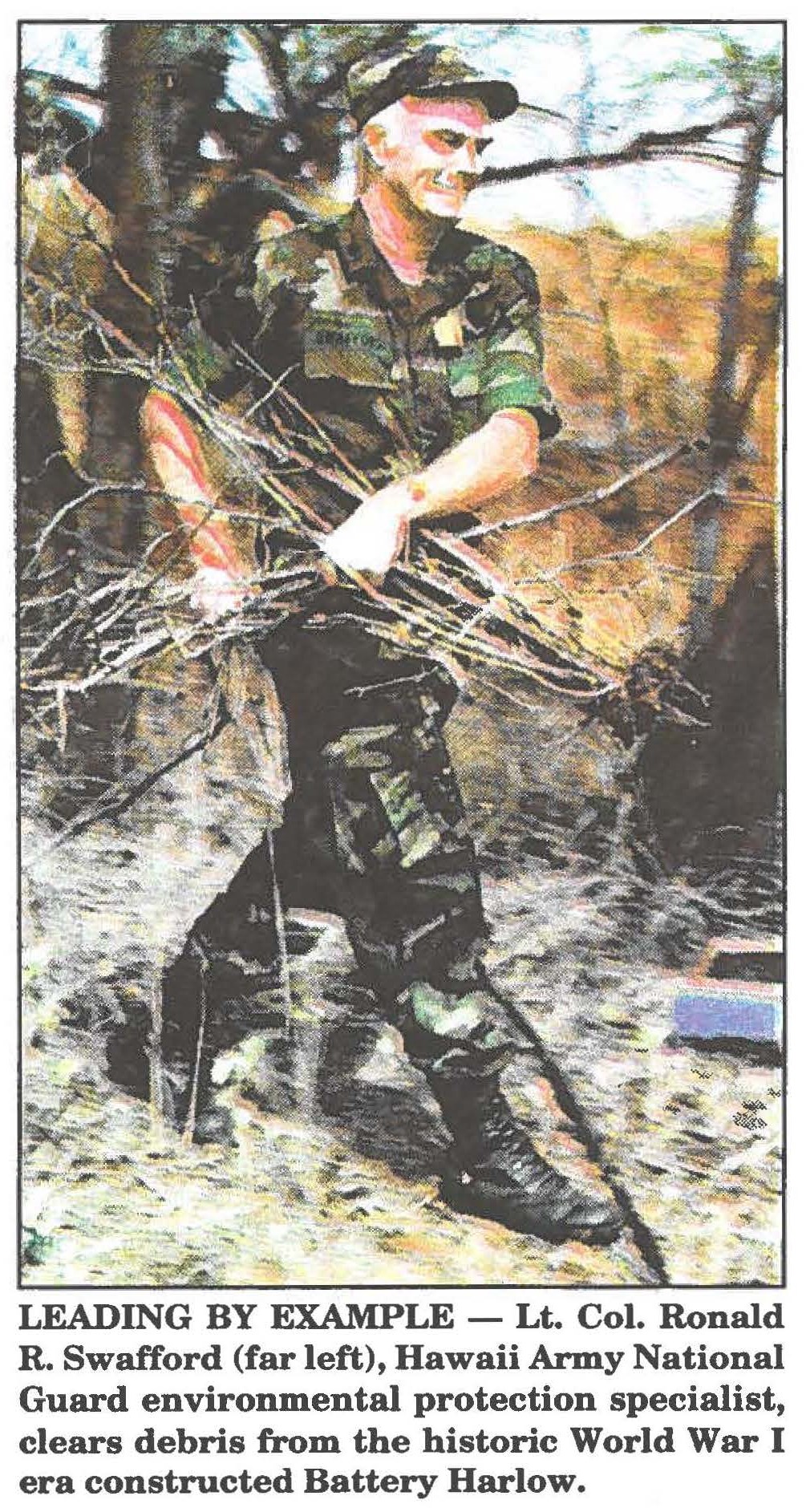
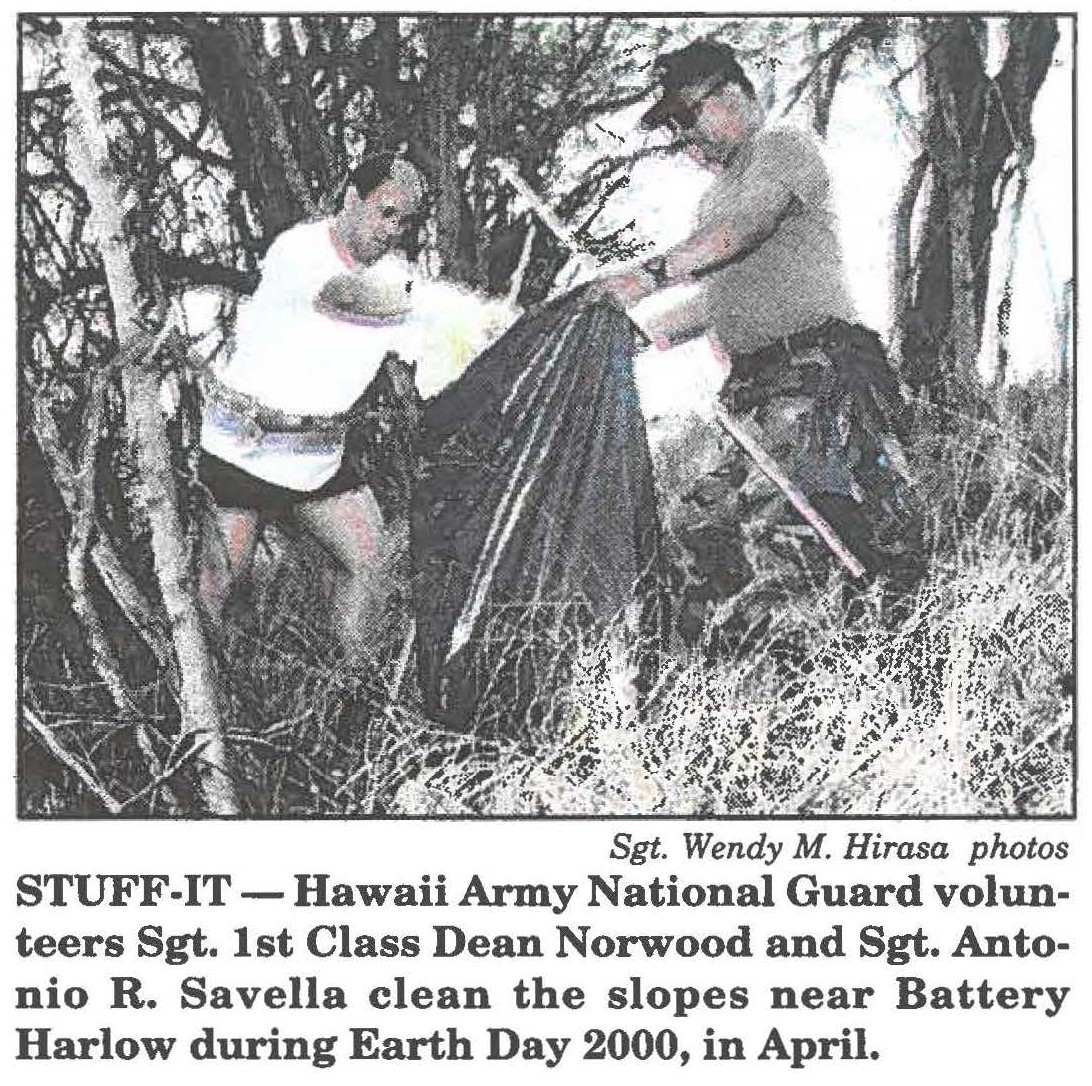
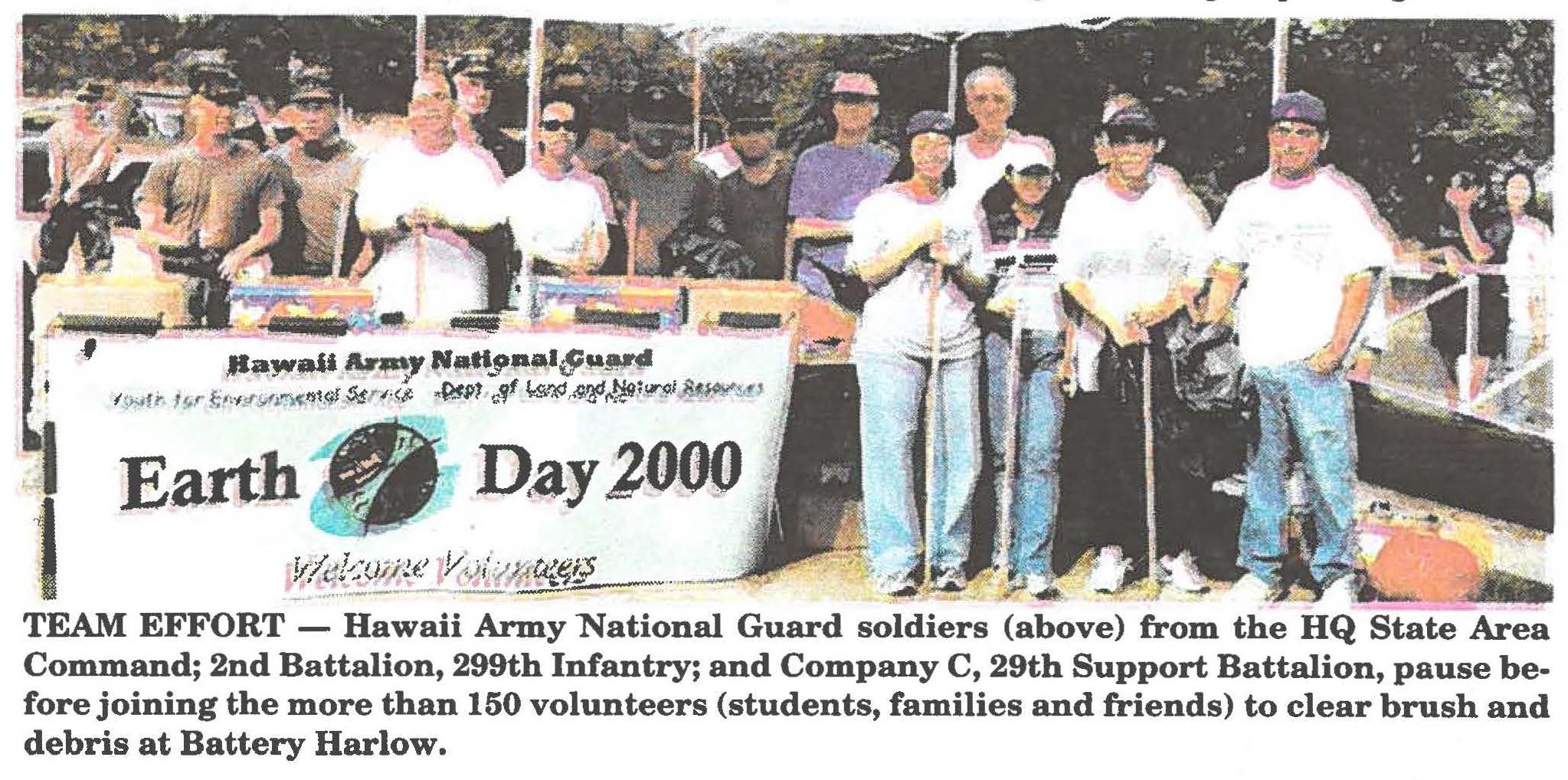
LEADING BY EXAMPLE – Lt. Col. Ronald R. Swafford (far left), Hawaii Army National Guard environmental protection specialist, clears debris from the historic World War I era constructed Battery Harlow.STUFF-IT-Hawaii Army National Guard volunteers Sgt. 1st Class Dean Norwood and Sgt. Antonio R. Savella clean the slopes near Battery Harlow during Earth Day 2000, in April.Guard continues caring for our aina page 5TEAM EFFORT – Hawaii Army National Guard soldiers (above) from the HQ State Area Command; 2nd Battalion, 299th Infantry; and Company C, 29th Support Battalion, pause before joining the more than 150 volunteers (students, families and friends) to clear brush and debris at Battery Harlow.(Pictures from the 2000 March – June Pūpūkahi)
Steps are taken to restore Diamond Head Monument
In celebration of April’s annual Earth Day, 150 youth volunteers, 25 Guard members and another 25 volunteers gathered at Fort Ruger alongside the slopes of Diamond Head to help clean the monument.
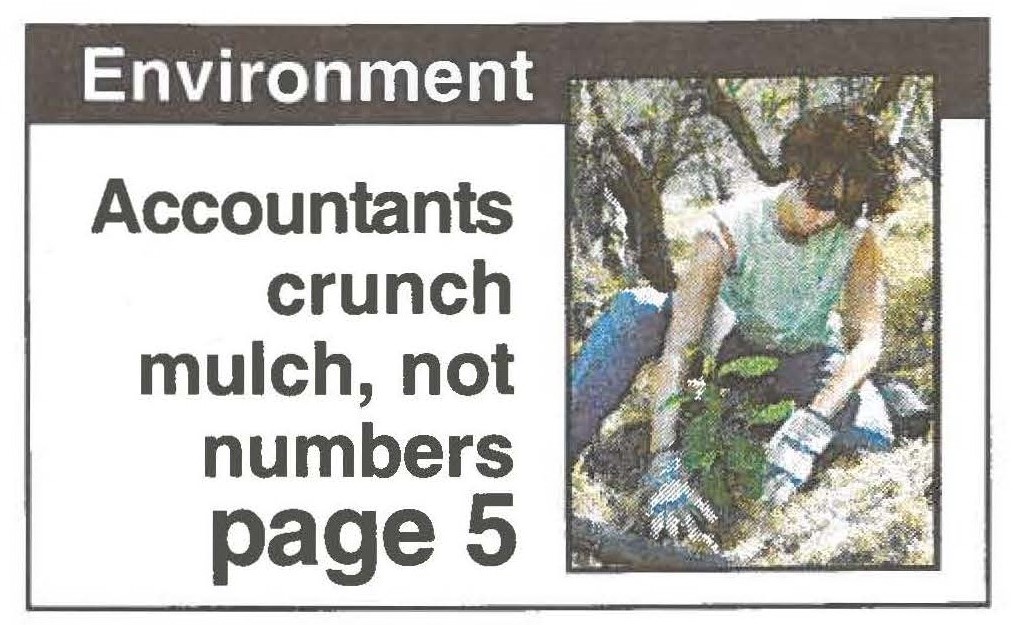
The Hawaii Army National Guard Environmental Office sponsored the event not only to clean but also to make people aware about conservation efforts. The volunteers cleared weeds, dead foliage and garbage off the slopes. They planted native Hawaiian plants and spread mulch to keep the invasive plants out of the areas and give the native plants a chance to grow. The youth volunteers from Youth Environmental Services (YES) mainly worked on the upkeep of the Peace Gardens, a garden planted last year by children from all over the world in an effort to show a worldwide partnership in conservation. They also weeded, planted and placed rocks along the walkway through the garden.
”The turnout was great; we achieved our objectives. We wanted to weed the area and remove the invasive, spread mulch to pervade aliens and the reinvasion,” said Trae Menard, an environmental specialist with the Hawaii Army Guard. “It’s a great way to get our message out; we want to conserve Hawaii’s legacy by conserving plants and animals that are native to Hawaii.”
The volunteers this year were treated to a hot dog lunch and gathered to sign an Earth Day 2000 poster that has been put on display. The volunteers also had some help from Hawaii’s Lt. Gov. Mazie Hirono, who came and worked alongside the children at the Peace Garden.
Because Earth Day is an annual event, plans are already in the works at the Environmental Office for next year’s celebration. Anyone interested in future activities can call the office at 808-733-4214 for information. . . .
Kudos to our environmental team I want to add my congratulations to Lt. Col. Ronald R. Swafford and the other members of his environmental team. Being selected to receive the Secretary of Defense award means that our Army Guard environmental program is the best of the best throughout the entire Department of Defense – active duty, Guard or Reserve – in its category. This is the first time in the history of the Hawaii Army National Guard that it has garnered an award of this caliber. Outstanding effort!
The HIARNG Enviromental Office is under the auspices of the FMO. The mission of the Environmental Office is to ensure that the HIARNG’s policies and plans comply with existing federal and state laws and regulations. The program ensures that operations, programs, and activities are consistent with the stewardship principles for compliance, prevention, restoration and conservation.
The HIARNG worked hand in hand with other governmental and private organizations to identify and preserve archaeological and cultural items. The project data from the Educational and Training Facility and Keaukaha Military Reservation was shared with the State Office of Historical Preservation and the U.S. Air Force, which added significant information to their databases. The HIARNG also identified endangered plants and species that exist within the training area. Awareness training for HIARNG soldiers was promoted through the preparation and distribution of the Commander’s Handbook, calendars, and posters.
With an annual budget of $2,482,400, the HIARNG environmental officer conducted the following projects: clean air, safe drinking water, substance control, hazardous materials/waste, recycling, noise abatement, national historic preservation, cultural/natural resources, endangered species monitoring, archaeological and historic mitigation, restoration, integrated training area management, and environmental awareness training. During the year, NGB conducted a comprehensive inspection of HIARNG in 17 environmental compliance protocols in such areas as spill prevention, cultural resources and hazardous material storage. There were no notices of violations or warning letters, a noteworthy accomplishment as no other state has achieved an assessment of this level.
Earth Day 2001 at Battery Harlow, Diamond Head State Monument, involved community members, Guard volunteers, and three Boy Scouts troops from around Oahu. They cleared brush and planted 500 native Hawaiian plants to restore the ecosystem of this wellknown landmark.
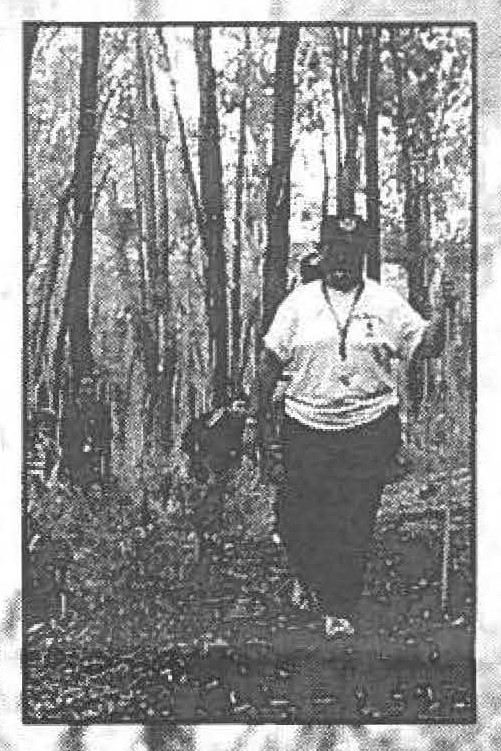
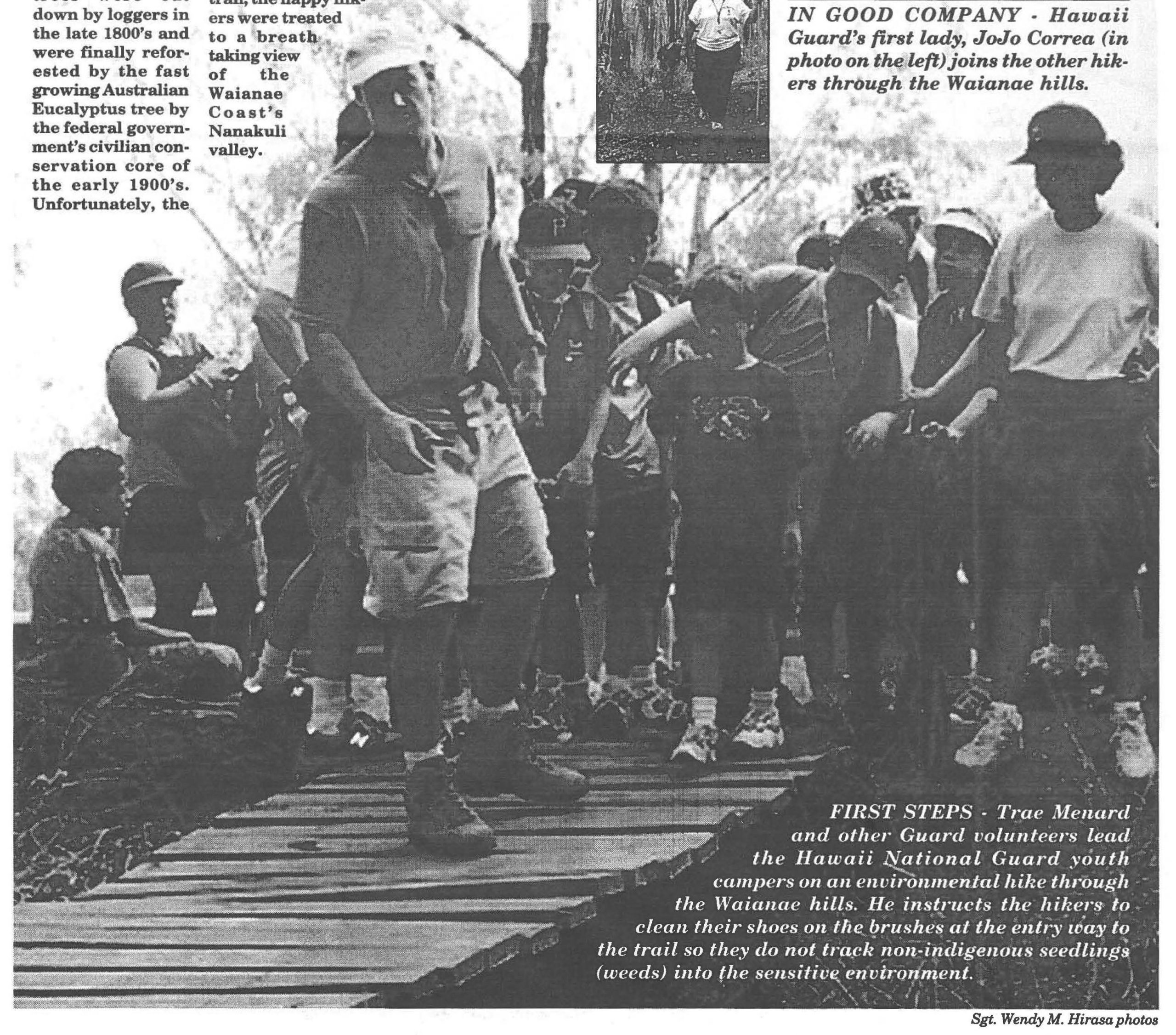
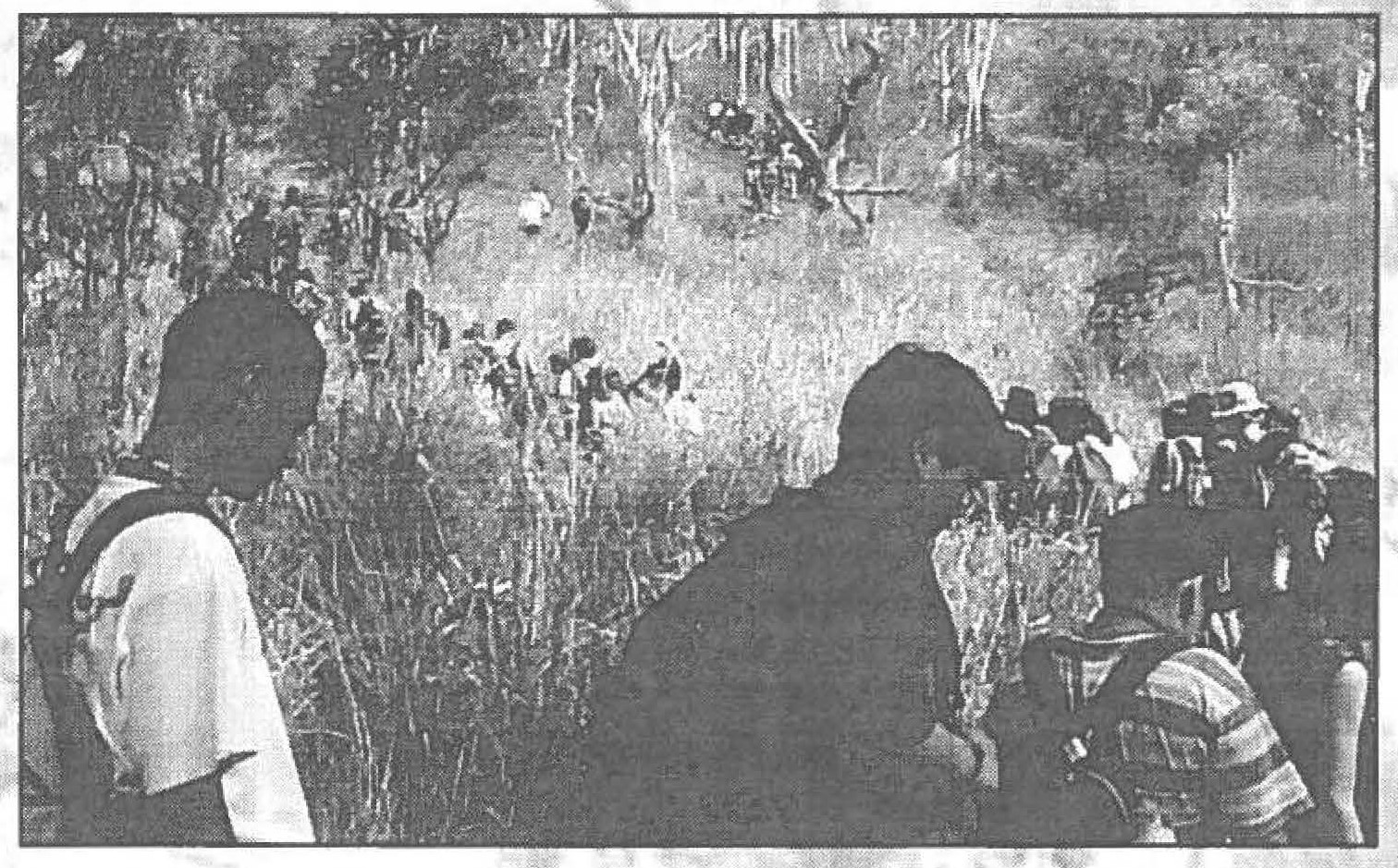
IN GOOD COMPANY – Hawaii Guard’s first lady, JoJo Correa joins the other hikers through the Waianae hills. FIRST STEPS – Trae Menard and other Guard volunteers lead the Hawaii National Guard youth campers on an environmental hike through the Waianae hills. He instructs the hikers to clean their shoes on the brushes at the entry way to the trail so they do not track non-indigenous seedlings (weeds) into the sensitive environment. Hike into Waiane ridge educates campers Hike into Waiane ridge educates campers Hike into Waiane ridge educates campers (Pictures from the 2000 July – September Pūpūkahi)
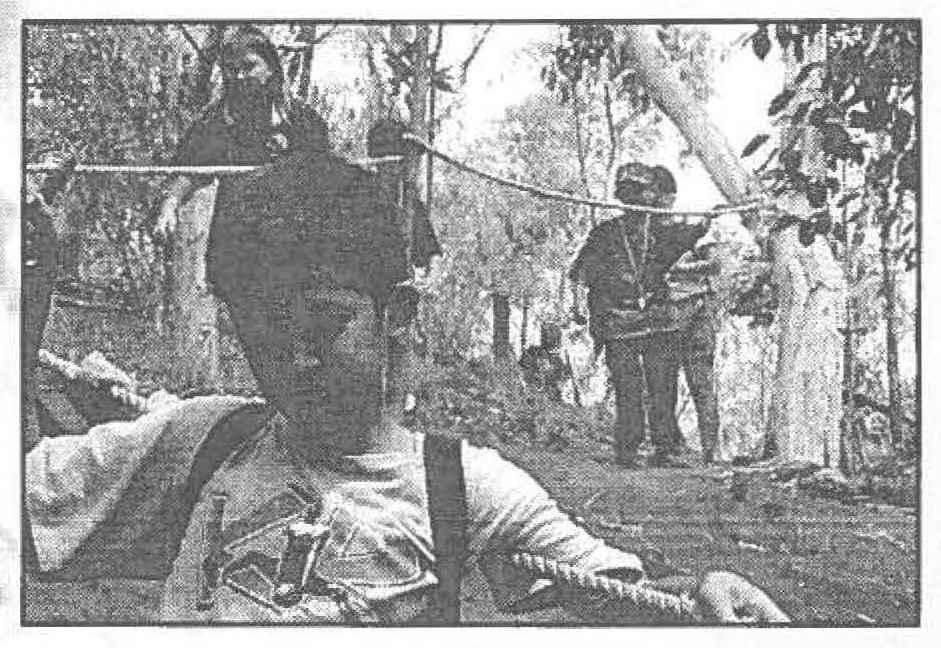
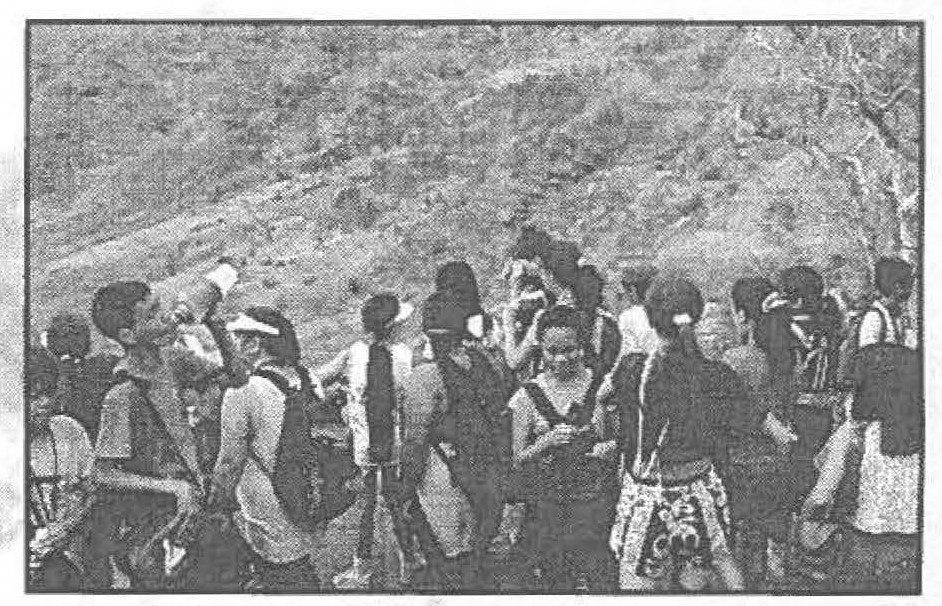
Field ecologist with the award winning Hawaii Army National Guard Environment Office, brought the idea of taking care of our aina (land) home during a June two mile hike in the hills of Waianae above Nanakuli. Sixty campers and, volunteers strung out through the trail which included rough and steep terrain with rope guidelines to maintain safety.
Menard shared how the native forest of Sandalwood trees were cut down by loggers in the late 1800’s and were finally reforested by the fast growing Australian Eucalyptus tree by the federal government’s civilian conservation core of the early 1900’s. Unfortunately, the Australian trees are flammable, and suppress the, growth of the native plants. At the end of the trail, the happy hikers were treated to a breath taking views of the Waianae Coast’s Nanakuli valley.
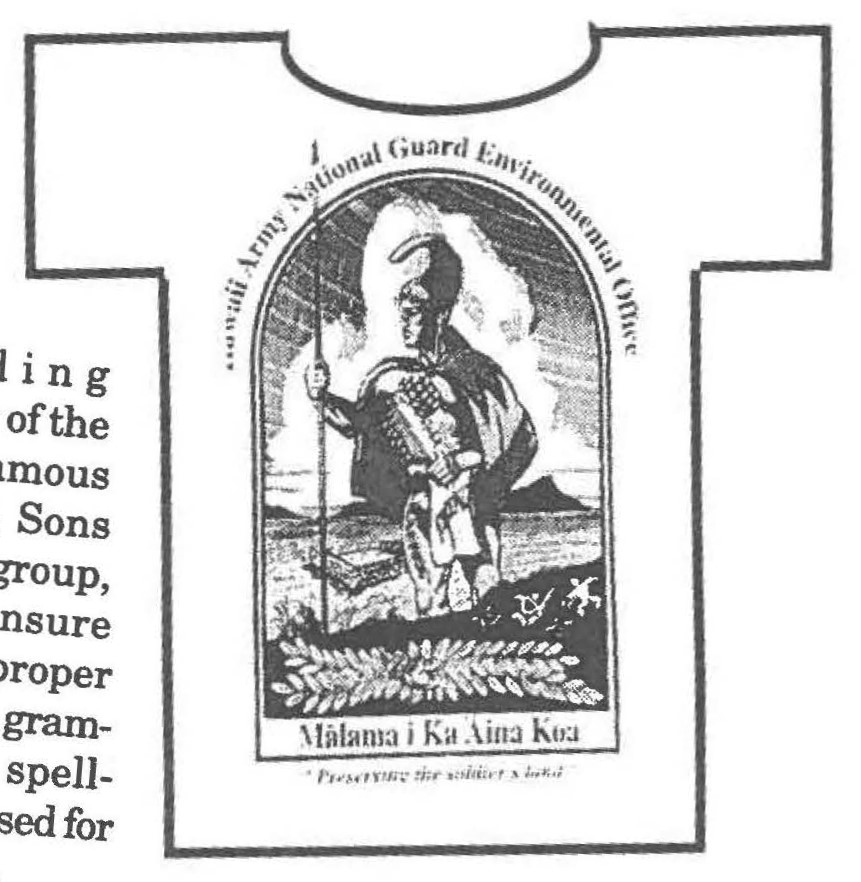
Cultural, environmental sensitivities play role in logo design, office motto
Cultural, environmental sensitivities play role in logo design, office motto (Pictures from the 2000 October- December Pūpūkahi)
In July 2000, the Hawaii Army National Guard Environmental Office commissioned local artist Nicholas Black to design a logo for the environmental program that was as unique as the program itself. Using information provided by the environmental staff, Black combined the elements of strength and stewardship by embodying the spirit of the program in a decorated and adorned warrior figure. In the design, he brandishes the spear – a simple but effective tool and one of many that helps him protect the land he surveys. In the foreground, representing our natural resources is the endangered ‘ohai, a rare Hawaiian plant located at Kanaio Training Area, Maui. Above the plant are Hawaiian petroglyphs representing our tewardship of the many cultural resources found on HIARNG training lands. In the background and in the view of our warrior is an ancient stone emplacement representing our Guard facilities, statewide. Diamond Head Crater resides in the far background symbolizing the high level of visibility that all efforts at preserving our environment has in the state of Hawaii.
Office motto Malama i Ka Aina Koa “Preserving the soldier’s land”
Sgt. 1st Class Louis “Moon” R. Kauakahi, from the Hawaii National Guard’s Human Resources Office and cofounding member of the world famous Makaha Sons musical group, helped ensure that the proper Hawaiian grammar and spelling were used for our motto.
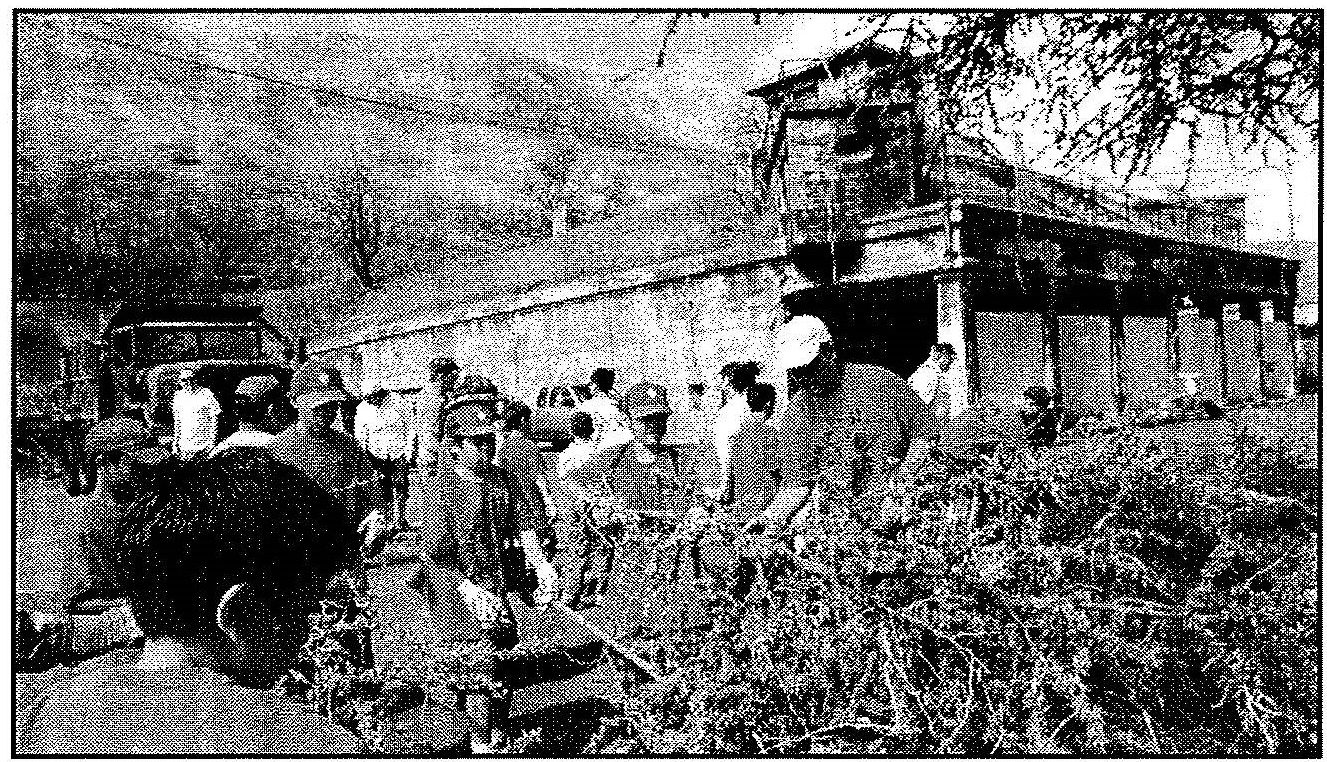
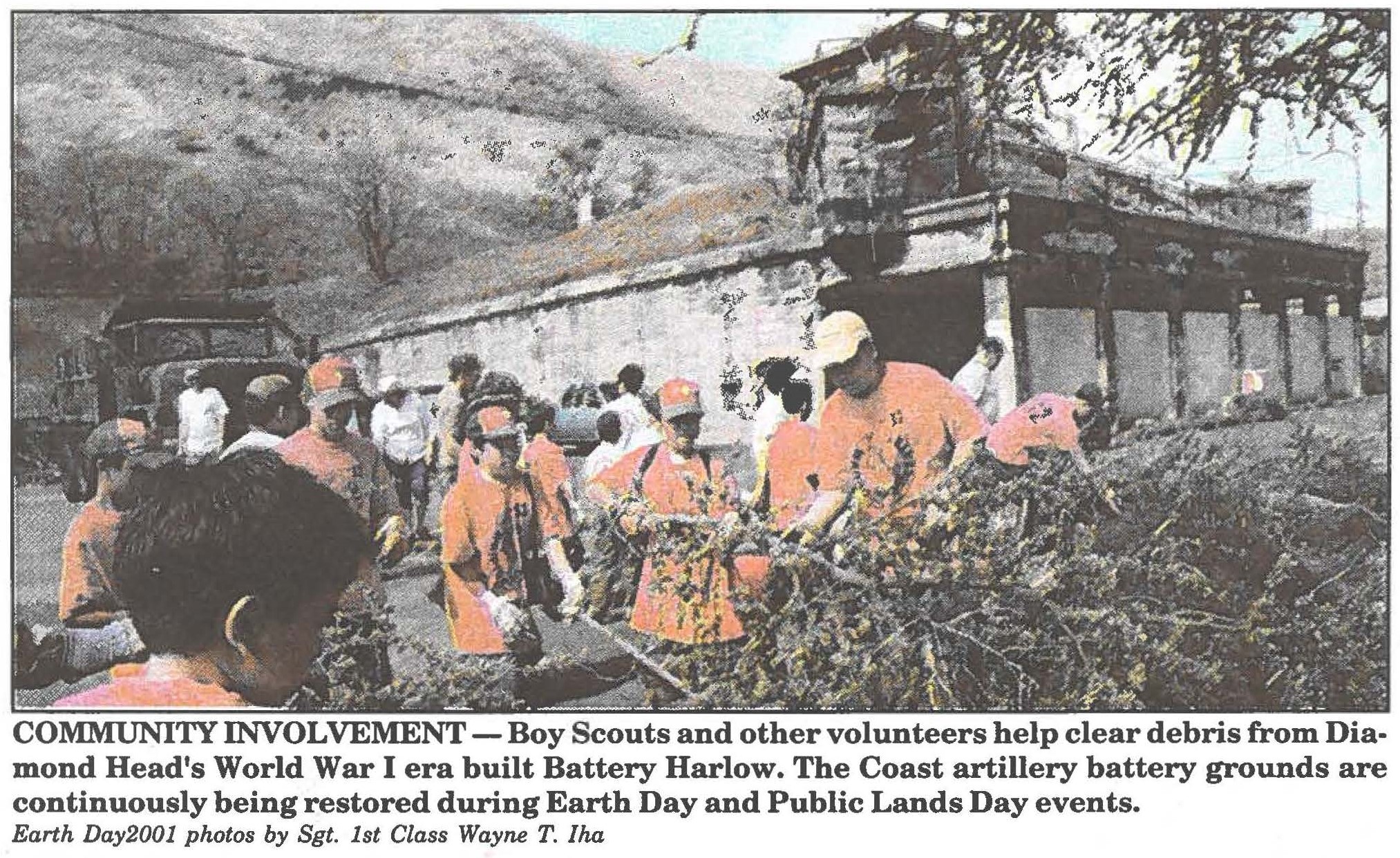
EARTH DAY RESTORATION – Boy Scouts and other volunteers help clear debris from Diamond Head’s World War I era Battery Harlow. The coast artillery battery grounds are continuously being restored through the direction of the Hawaii Army National Guard environmental office. Sgt. 1st Class Wayne T. Iha photo(Picture from the 2001 Annual Report)
The State of Hawaii Environmental Council recognized HIARNG’s excellent efforts in establishing and achieving its environmental goals for the year 2000. The HIARNG completed a three-year ecosystem research project at Kanaio Training Area, Maui, by incorporating pollution prevention initiatives into unit activities and field training exercises. As a result, the National Guard Bureau recognized the HIARNG’s environmental team for achievements in the land management of installations statewide.
The HIARNG’s environmental team was further recognized by being selected for the prestigious Year 2000 Governor’s Award as the State Team of the Year. Gov. Benjamin J. Cayetano acknowledged the HIARNG environmental team for its commitment to protecting the diverse resources in the environment while fulfilling its military mission.
The Hawaii Army National Guard Environmental Office highlights feature an unprecedented level of collaboration between the Hawaii National Guard office and other federal, state, and local environmental agencies, including the University of Hawaii, U.S. Fish & Wildlife Service, National Park Service, Department of Land & Natural Resources, Youth For Environmental Services, Bishop Museum, Maui Pineapple Co., and the Nature Conservancy. The HIARNG Environmental Office received National Guard Bureau recognition for its outstanding Natural Resources Conservation Team and Installation achievements, including receiving federal grant monies to fund alien species eradication and watershed protection projects.
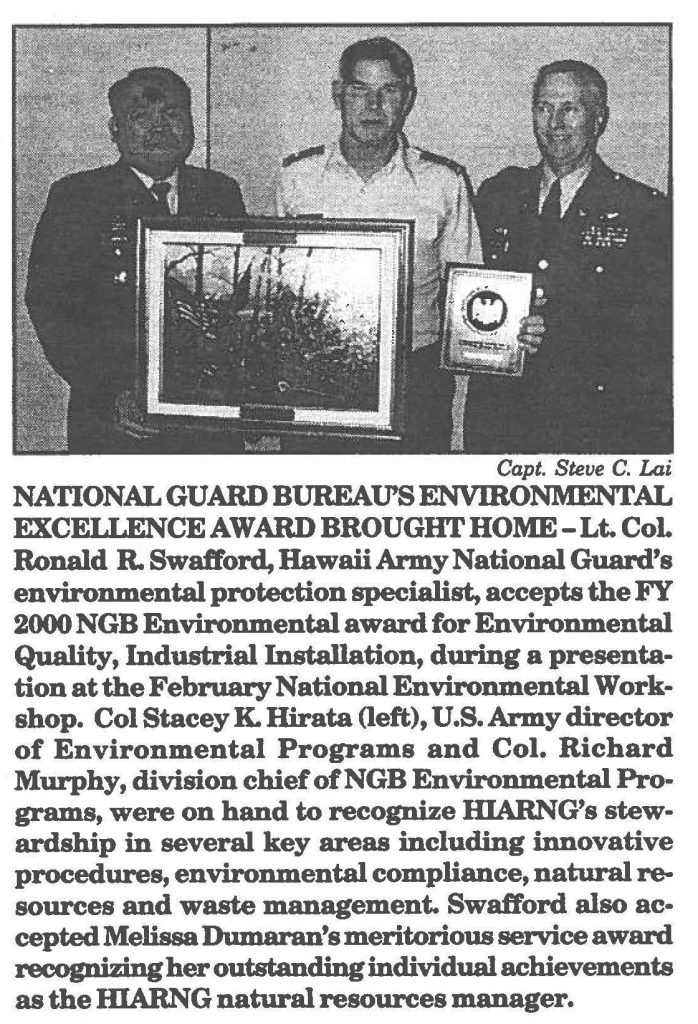
NATIONAL GUARD BUREAU’S ENVIRONMENTAL EXCELLENCE AWARD BROUGHT HOME-Lt. CoL Ronald R. Swafford, Hawaii Army National Guard’s environmental protection specialist, accepts the FY 2000 NGB Environmental award for Environmental Quality, Industrial Installation, during a presentation at the February National Environmental Workshop. Col Stacey K. Hirata (left), U.S. Army director of Environmental Programs and Col. Richard Murphy, division chief ofNGB Environmental Programs, were on hand to recognize IDARNG’s stewardship in several key areas including innovative procedures, environmental compliance, natural resources and waste management. Swafford also accepted Melissa Dumaran’s meritorious service award recognizing her outstanding individual achievements as the HIARNG natural resources manager.(Picture from the 2001 January – March Pūpūkahi)
New millennium map reading made easier
By Cadet Wendy R. Cook
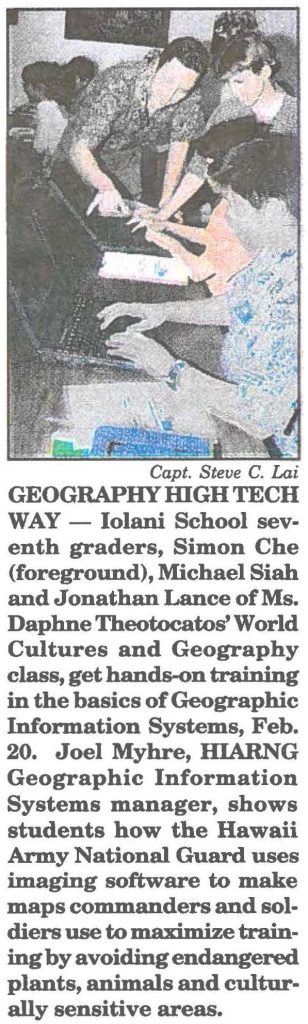
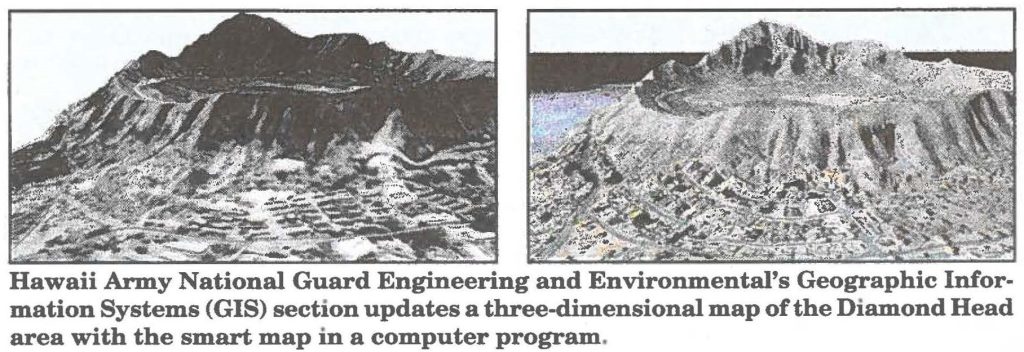
GEOGRAPHY HIGH TECH WAY – lolani School seventh graders, Simon Che (foreground), Michael Siah and Jonathan Lance of Ms. Daphne Theotocatos’ World Cultures and Geography class, get hands-on training in the basics of Geographic Information Systems, Feb. 20. Joel Myhre, HIARNG Geographic Information Systems manager, shows students how the Hawaii Army National Guard uses imaging software to make maps commanders and soldiers use to maximizing training by avoiding endangered plants, animals and culturally sensitive areas. Map reading made easier page 5 Hawaii Army National Guard Engineering and Environmental’s Geographic Information Systems (GIS) section updates a three-dimensional map of the Diamond Head area with the smart map in a computer program. (Pictures from the 2001 January – March Pūpūkahi)
As technology advances so does the equipment and resources used by the military. Very soon soldiers may be doing away with maps and compasses for land navigation and using more advanced ways to find locations and directions. With the help of Geographic Information Systems (GIS), the Hawaii Army National Guard engineering and environmental departments have been tapping into those technological advances.
The GIS is a smart map in a computer program or software with many different layers of maps incorporated into one and with three-dimensional views. It often includes actual aerial photographs, topographical and grid maps so a person can see what is really there from the photographs, the topography and the exact grid location all at once.
Although still in development, GIS has its advantages over the basic paper map. Raw paper maps aren’t easily updated and it is often years before new ones are printed, whereas the GIS is constantly being updated.
“It’s easier to analyze the data, store and organize,” said Joel Myhre, environmental GIS coordinator. With the GIS, we get a better analysis so we can combine a lot of the roads, lines and topography. We take very simple data layers and add the satellite and aerial photos to them. Ideally, you could create a custom map before going out, a map that is high focused just in your area or lane.”
System more accurate
Measuring is more accurate and if something needs close inspection, it’s simple to zoom in and out on a particular object or area of a map rather was than having accession to a map that covers a large area holding much specific information. GIS developed in the last 10 years and is still growing with more advances every year.
“Within the next six months, we will have delivered the imagery, color infrared imagery and air photos that will have resolution of a quarter of a meter, that is less than one foot,” Myhre said.
With information that is easy to update and so specific, the environmental department intends to use the system to track land changes. They will be able to track plant growth or receding, invasive species and any changes made to the land over time whether manmade or natural. It will be a visual history of the land. For example, they can track the restoration of Battery Harlow on Diamond Head. But, there are many other uses for GIS that the Guard will access including tracking demographics.
Working in cooperation with other agencies
In cooperation with the Pacific Disaster Center and Civil Defense Depot they have already mapped Pohakuloa Training Area and are trying to get data for all the island chain sites. At the moment, the Guard is working on collecting all the information for Diamond Head and Keaukaha Military Reservation with the training areas on Bellows Air Force Station scheduled to be done in the next couple of years.
“In the next year, the thrust is to get real accurate information on the ranges, because the of the Department of the Army’s Range Rule,” Myhre said. The Army wants to get an accurate report on the number of inactive and active ranges, particularly the boundaries and fence lines.”
Although every soldier won’t be able to have access to a computer with GIS capabilities, there is a push to get as much of the information and resources from GIS as possible with general map production, large map scanning and printing and producing more selective detailed maps of specific lanes.
Environmental staff’s quest: Save our aina’s endangered species
Story and photo by Cadet Wendy R. Cook
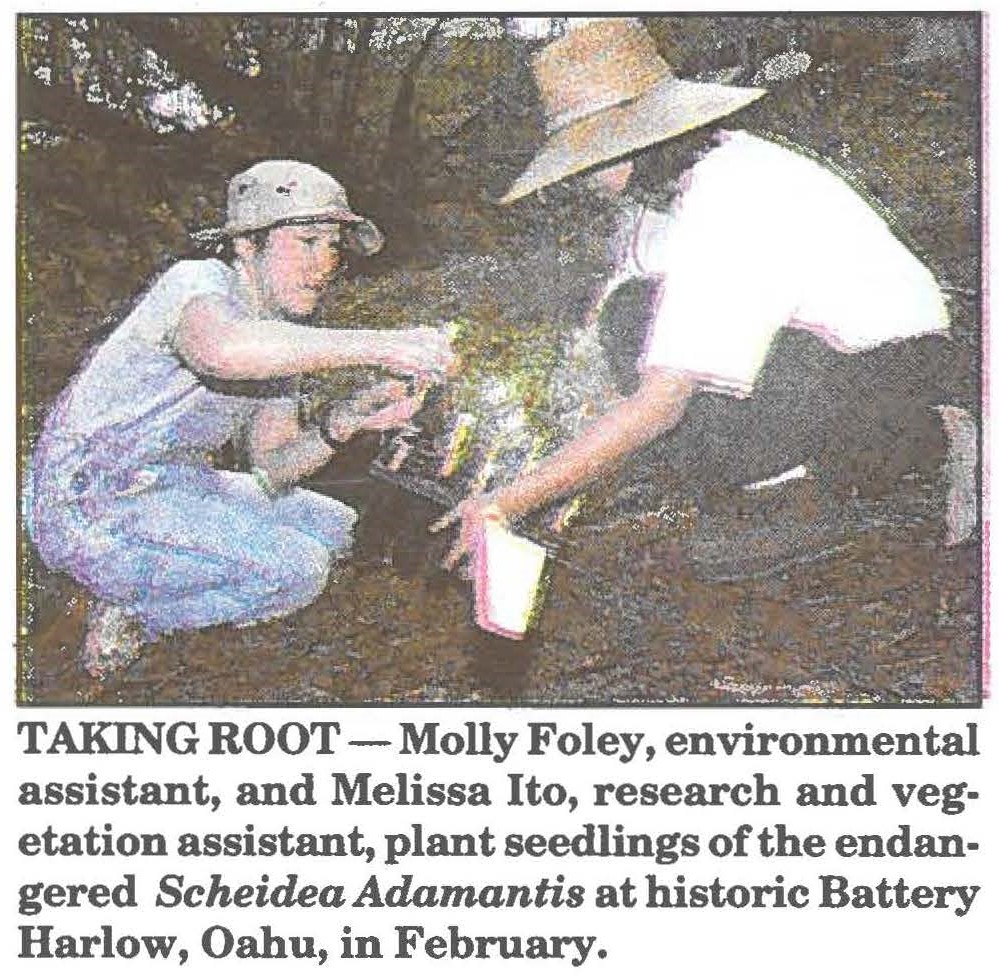
TAKING ROOT-Molly Foley, environmental assistant, and Melissa Ito, research and vegetation assistant, plant seedlings of the endangered Scheidea Adamantis at historic Battery Harlow, Oahu, in February. (Pictures from the 2001 January – March Pūpūkahi)
It is the plant that almost slipped into extinction. As Diamond Head Crater undergoes renovations to accommodate more visitors, the Hawaii Army National Guard is making sure the rare and endangered Schiedea Adamantis sticks around for future generations.
The Schiedea Adamantis is a native Hawaiian plant so rare it does not even carry a common name. Currently, the only naturally occurring population in the world is found on the rim of Diamond, Head, near the southern shore of Oahu. There is also a small population at Koko Head Crater, but it is not a naturally occurring population and doesn’t produce viable seeds.
The natural population has been at critical levels in the last few years. Menard and the environmental staff of the Hawaii Army Guard saved this rare native Hawaiian plant from extinction.
Menard started monitoring the plant in 1998 when the Hawaii Guard hired him to be their new ecosystems manager.
“The numbers have taken a dive in the last 10 years,” Menard said. “In 1990 there were about 244 plants on the rim. In 1997, there were 60 to 80 living plants, and in 1998, there were 30. Last year, the number of living plants was approximately 20. In October, the number went down to 11. That trend proved to me that something had to be done or we would lose the plant forever,” he said. “Recently, I went up there and counted zero living plants.”
At one time, the plant probably populated much of the southern parts Oahu, but by the time the first botanist arrived, it was only found at Diamond Head Crater. Causes of its demise most likely stem from feral animals, fire, urban development, climate instability, and fluctuations in rainfall.
“It doesn’t need a lot of rain, but we’ve had really dry years, which definitely caused the demise,” said Menard
California scientists aid In restoration
After realizing how quickly the plant was disappearing, Menard continued monitoring the dwindling population and contacted University of California Irvine botanists, Steve Weller and Ann Sakai. The two had been studying the plan and had plans and funding to restore it. Menard teamed up with the botanists and their work took root as they scattered 100,000 seeds yielding 100 seedlings. The team had to design a sprinkler system, which they mounted along the rim of Diamond Head crater, to give the seedlings a chance to survive against the dry, windy, and harsh southern Oahu climat.e. Unfortunately, nothing from that batch survived.
“At that point, we needed to do something,” Menard said. “We realized we might get more success if we restore it to an area with a more amiable environment with consistent access to water. That site is Battery Harlow, which is straight down the slope from the site where the plants had been living.”
With that idea in mind, Menard contacted Weller again. But, this time, he was equipped with a greenhouse full of plants and was conducting research to maximize the genetic diversity of the plants. In all, Menard and his group of environmental assistants, planted 50 seedlings at Battery Harlow, 32 of which are still alive. He received another package of seeds last summer and, with the help of endangered species horticulturist Bill Garnet, has prepared them to be planted at the historic Battery Harlow site. About 400 seedlings were grown and as of this date, 88 plants have been put in the ground.
”If we establish a population at Battery Harlow down slope from the native population, these plants will grow and produce seeds to continue the restoration of the species,” Menard said.
“Furthermore, we’re starting an effort to get water back up to the rim to see if any of the seeds or dead plants will germinate or stimulate growing up there. “We also want to out-plant adult plants along the rim in an attempt to recover the species.”
Volunteers wishing to help restore and conserve Battery Harlow can participate in this year’s Earth Day event, 9 a.m. to 12 p.m. Sunday, April For more information, please contact Capt. Steve Lai at 733-4214.
Story by Cadet Wendy R. Cook and Sgt. 1st Class Stephen M. Lum
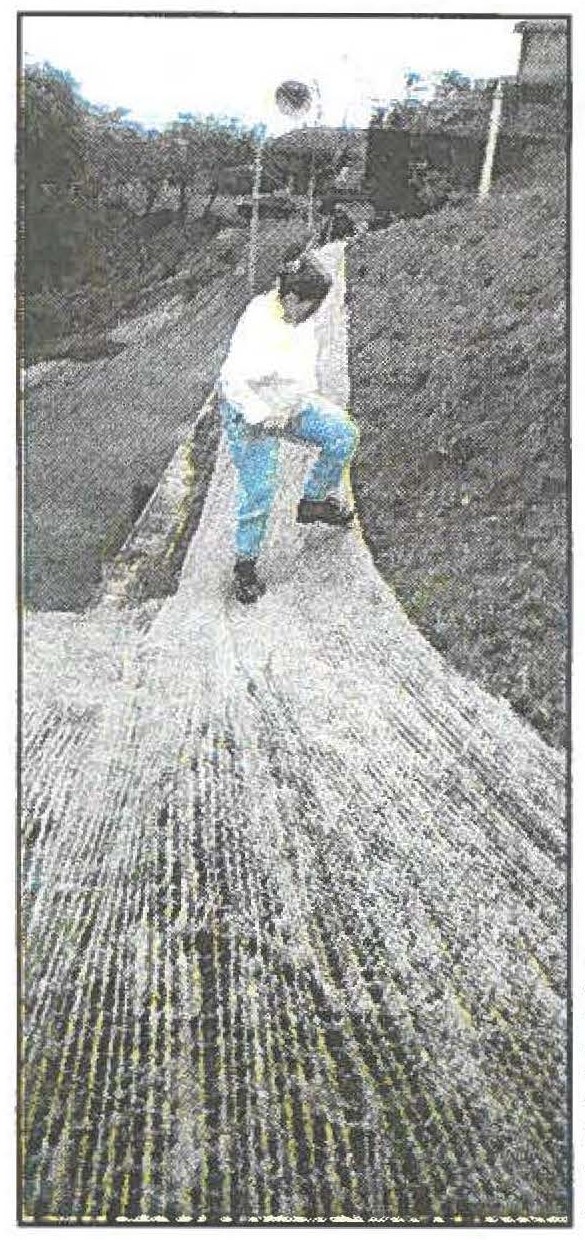
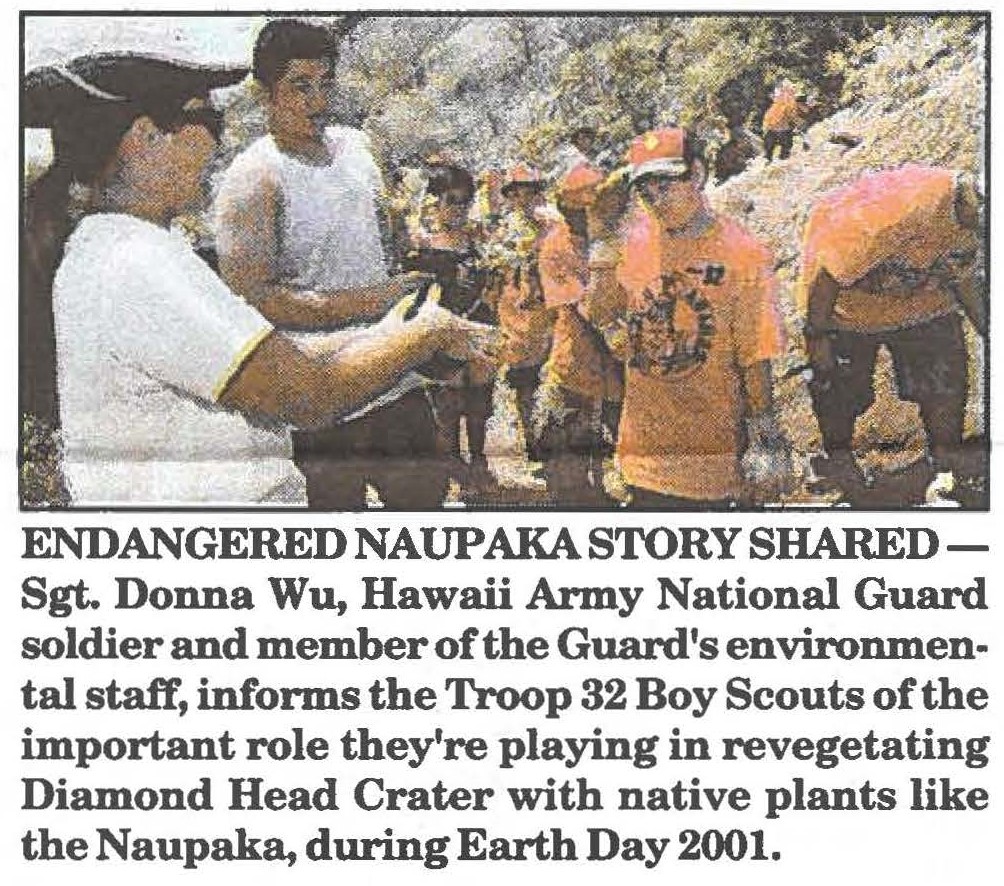
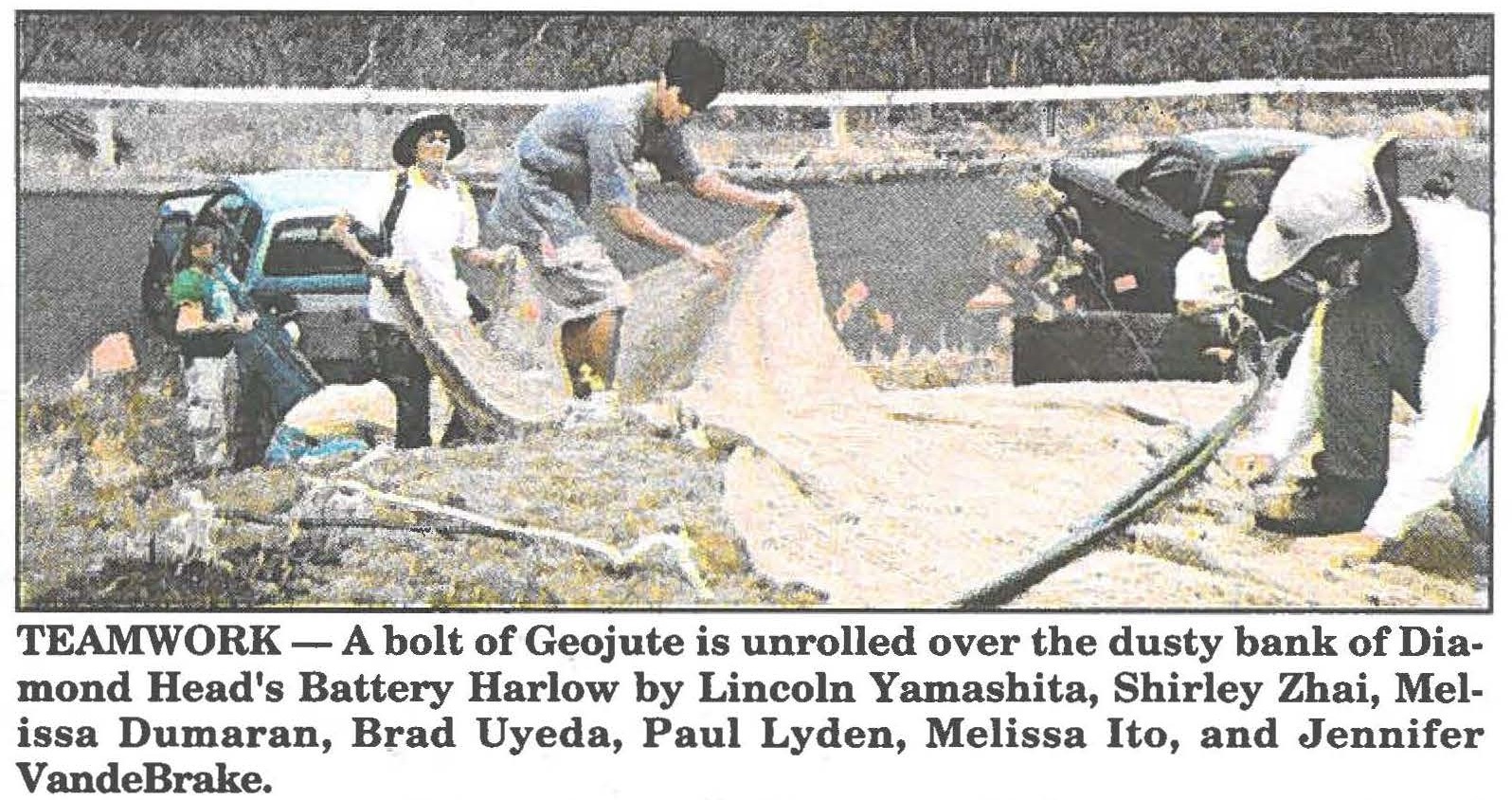
Jennifer VandeBrake (left), a compliance technician with the Hawaii Army National Guard Environmental Office, pushes in a pin to hold the geojute in place at Diamond Head’s Battery Harlow. Geojute photos by gt. 1st Class Stephen M. LumTAKING ROOT-Molly Foley, environmental assistant, and Melissa Ito, research and vegetation assistant, plant seedlings of the endangered Scheidea Adamantis at historic Battery Harlow, Oahu, in February.ENDANGERED NAUPAKA STORY SHARED Sgt. Donna Wu, Hawaii Army National Guard soldier and member of the Guard’s environmental staff, informs the Troop 32 Boy Scouts of the important role they’re playing in revegetating Diamond Head Crater with native plants like the Naupaka, during Earth Day 2001.COMMUNITY INVOLVEMENT- Boy Scouts and other volunteers help clear debris from Diamond Head’s World War I era built Battery Harlow. The Coast artillery battery grounds are continuously being restored during Earth Day and Public Lands Day events.Restoration of Battery Harlow on track page 5TEAMWORK – A bolt of Geojute is unrolled over the dusty bank of Diamond Head’s Battery Harlow by Lincoln Yamashita, Shirley Zhai, Melissa Dumaran, Brad Uyeda, Paul Lyden, Melissa Ito, and Jennifer VandeBrake.(Pictures from the 2001 April – June Pūpūkahi)
Preservation and restoration are the watch words of the Hawaii Army National Guard Environmental Office. It’s putting those words into action by sponsoring the annual Earth Day project to restore Battery Harlow.
Preserving the past for the future
Battery Harlow is a World War I mortar emplacement located on the side of Diamond Head crater in the former Fort Ruger area. The crater’s ecosystem was damaged many years ago when human contact brought many non-native plant species to the area, most notably the fountain grass which spreads quickly and overtakes many of the native plants to the area. It also dries quickly and becomes a fire hazard. Efforts to restore the area have included planting of a garden along the slopes, clearing the fountain grass and other nonactive species, reintroducing native species by planting and some minor landscaping of the area. There have also been efforts by the office’s cultural awareness section to restore and preserve what is left of the historic Battery Harlow itself.
Volunteers given ecology lessons
The Earth Day 2001 project in April, brought together volunteers from Hawaii Guard, their families and even a few civilian volunteers who walked by and joined the effort. However, the largest group of volunteers came from the Boy Scouts Troops 32, 49 and 101. The boys and their leaders had spent the previous night camping inside the crater, learning about the fragile ecosystem and completing their project by helping to clear the debris and plant. They also spread mulch and watered the newly-planted species.
The effort to restore the area has been kept up by the Hawaii Army National Guard for the last few years. Clean up projects are held semiannually in celebration of Army Earth Day and National Public Lands Day. Volunteers are always welcome to assist in the upkeep of the area in between and during the events.
Hawaii Army Guard’s environmental spokesman, Capt. Steve. C. Lai, said, “the Hawaii Guard welcomes the opportunity to get involved in preserving our environment. We encourage residents and organizations in the proximity of Diamond Head to support and participate in our preservation efforts here.”
Geotextiles protecting “our” lands
Using geotextile, the Hawaii Guard’s full-time environmental staff has again taken a proactive role in the protection of our fragile ecosystem. Nine tons or 1,000 meters of the jute weaved mesh were laid on 10 acres of Maui’s Ukeme hame firing range berms by the staff last year. The project, completed in a week, took 347 man-hours.
In May, 10 staffers took a day to lay geojute over an acre of soil surrounding Battery Harlow.
The porus fabric mesh slows down the erosion of dried sparse foliage areas, while replanting ofnative fauna and irrigation help to restore the lands.
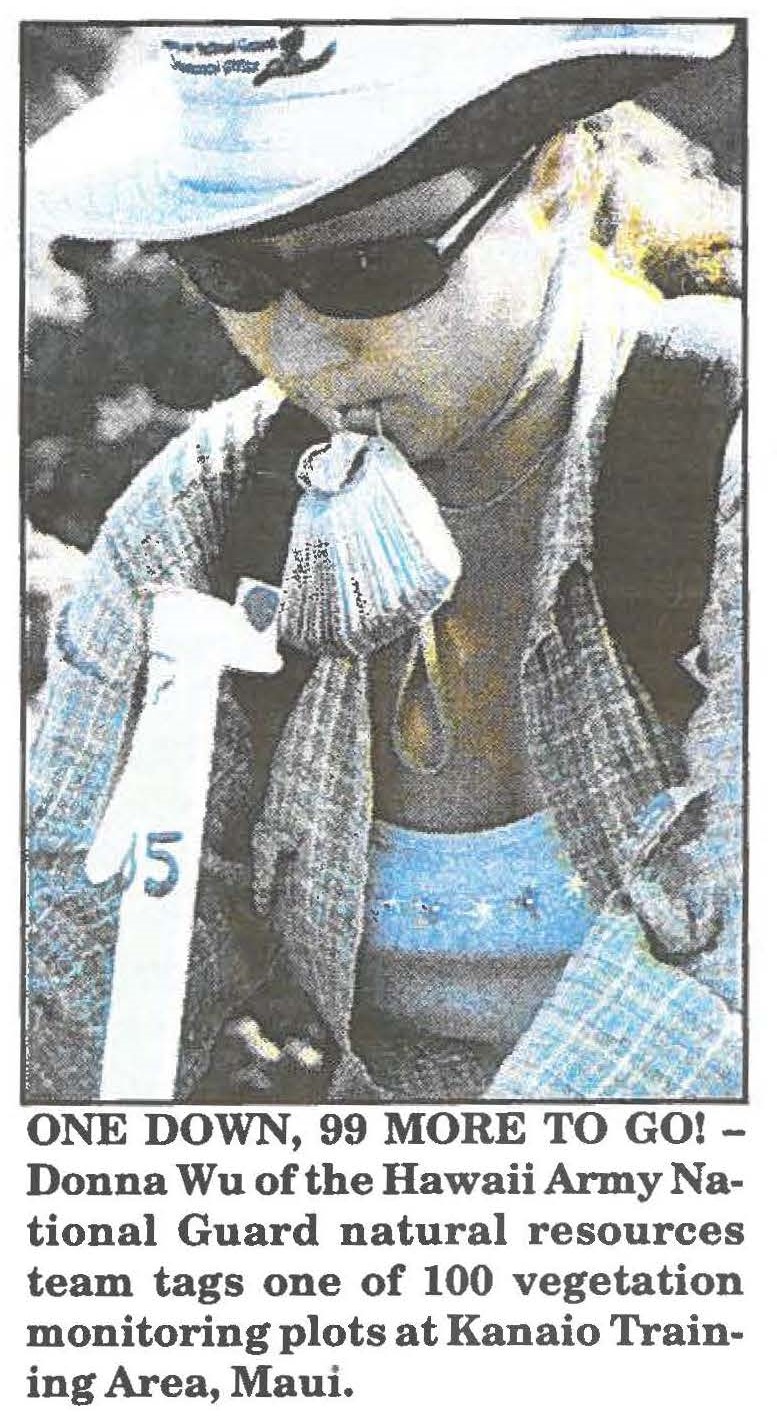
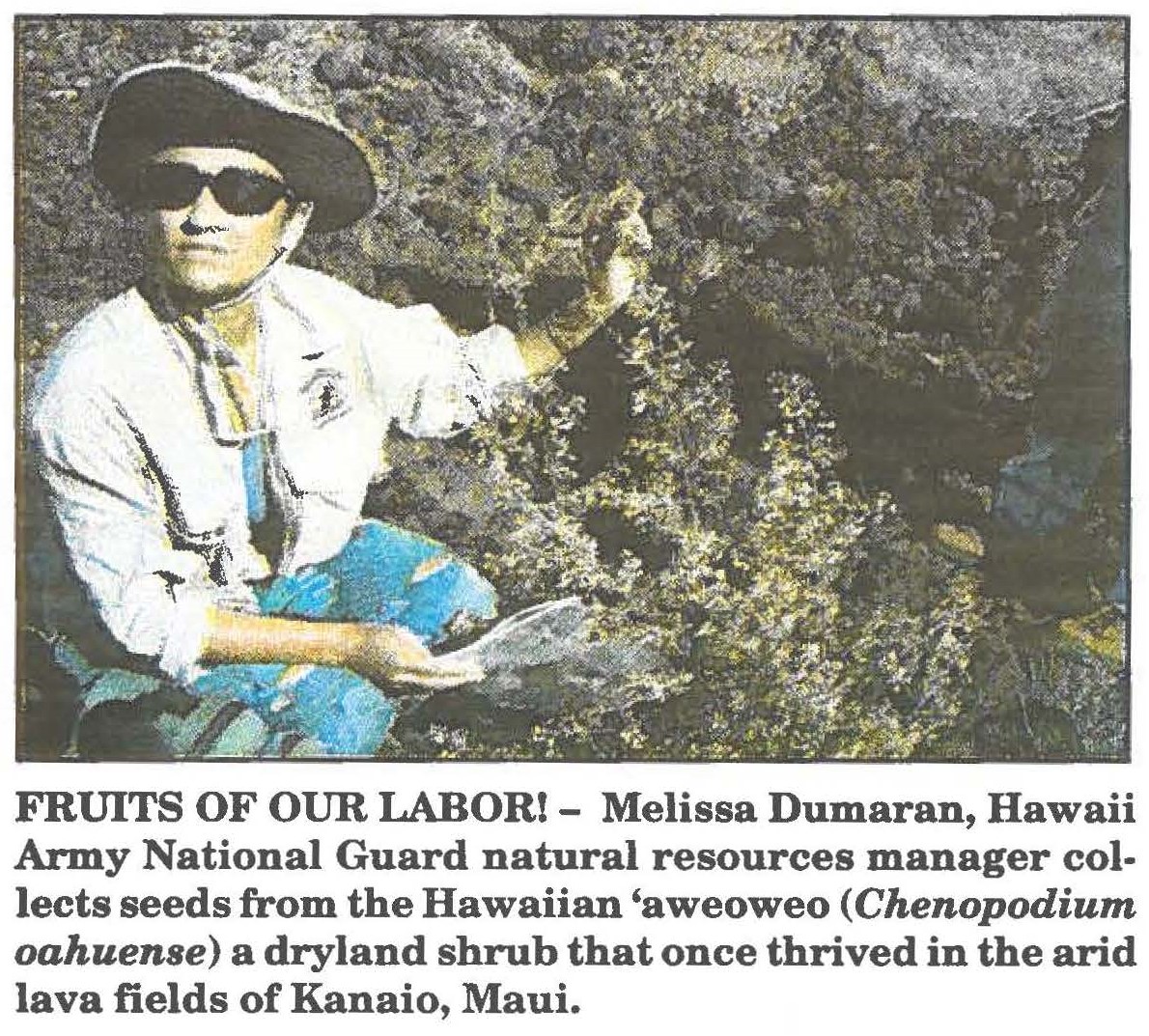
ONE DOWN, 99 MORE TO GO! – Donna Wu of the Hawaii Army National Guard natural resources team tags one of 100 vegetation monitoring plots at Kanaio Training Area, Maui.FRUITS OF OUR LABOR! – Melissa Dumaran, Hawaii Army National Guard natural resources manager collects seeds from the Hawaiian ‘aweoweo (Chenopodium oahuense) a dryland shrub that once thrived in the arid lava fields of Kanaio, Maui.Conservation team helps save native plants page 5(Pictures from the 2001 July – September Pūpūkahi)
Hawaii Army National Guard conservationists were able to shut the door on feral animals destroying native plants.
In a remote and arid lava field, a team of Hawaii Guard environmental conservationists witnessed the return of a dry land shrub that once thrived in this area. The conservationists collected data in and around Kanaio Training Area, a 20-acre exclosure on the south shore of the island of Maui.
In 2000, Hawaii Guard personnel fenced an eight-acre area of Kanaio and seeded it in the hopes that the fence would protect the area from the ravages of foraging feral goats. On a trip this August to the area, they found their seedlings sprout, shoots form and begin to thrive in the area once again proving that the fence is effective against browsing goats.
“This is an amazing and unexpected discovery,” said Melissa Dumaran, the Hawaii Army Guard natural resources manager. “We are now seeing native Hawaiian plants seed and reproduce in an area devoid of plants for many years.”
Hawaii Army National Guard environmental conservation team members and student volunteers count the number of new seedlings and shoots within each of the 100 square meter plots at Kanaio.
The ‘aweoweo shrub (Chenopodium oahuense) was an abundant plant that provided native mammals a source of food and water before feral goats were released in the area many years ago. When the more robust European mammals were introduced to the islands, their browsing habits and population growth eventually stripped the region of its vegetation, thus altering the entire ecosystem in this area.
“What we see inside the exclosure validates that we can in fact reverse this affect,” said Jordan J okiel, the environmental team’s integrated training area management manager. “The exclosure shows us what can happen when we eliminate animal browsing in seed scattering and the development of new populations of self sustaining plants using resources such as water,” he said.
The information gathered here is made available by Guard environmental team for use on private, military or ranch lands by the National Park Service, The Nature Conservancy, the Division of Forestry and Wildlife, the Fish and Wildlife Service, and the conservation community at large.
Fort Ruger’s historical sites being restored
By Cadet Wendy R. Cook and Lincoln C. Yamashita
Coastal defense established in 1900s
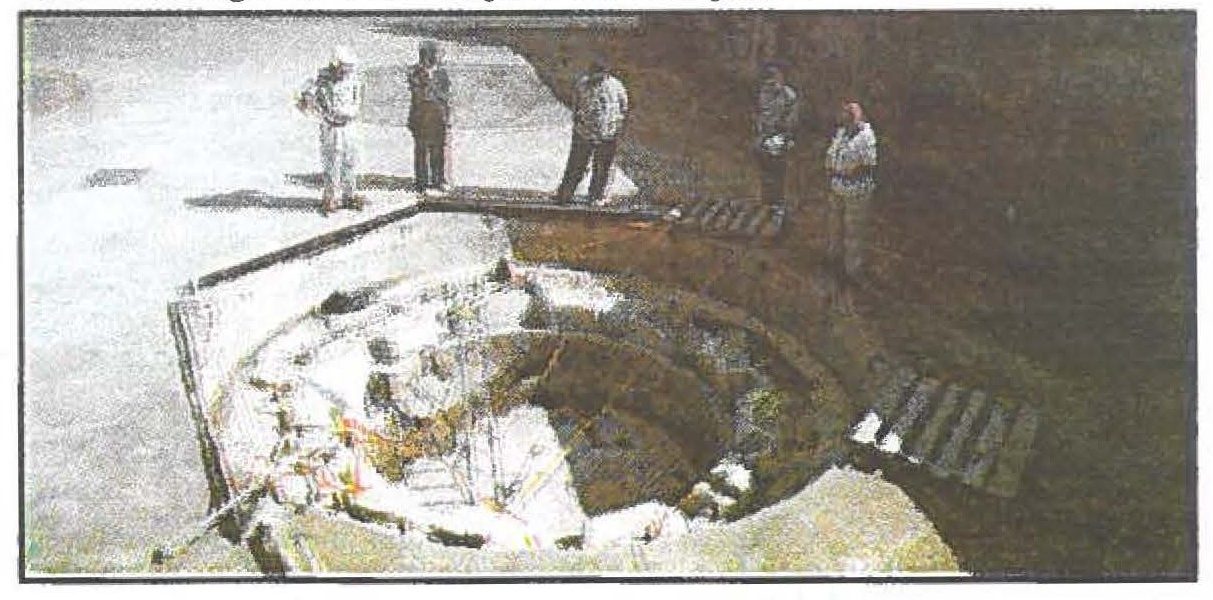
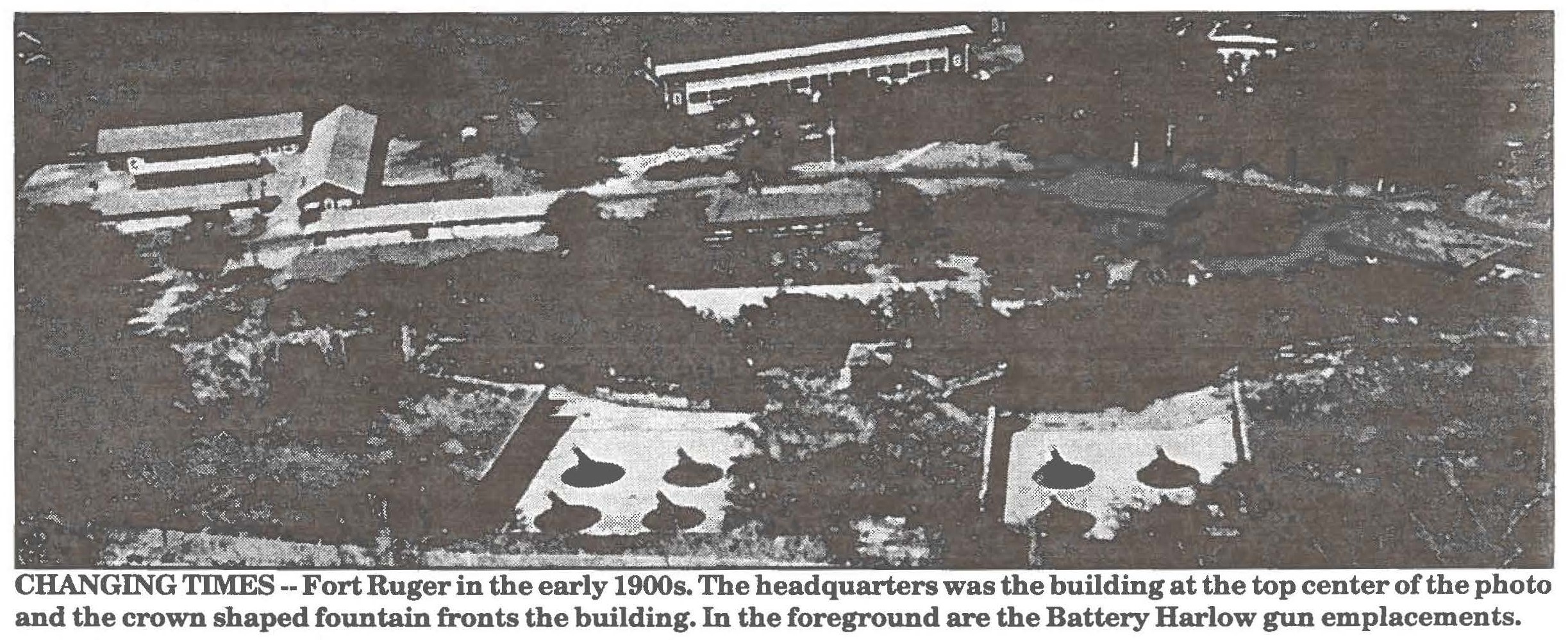
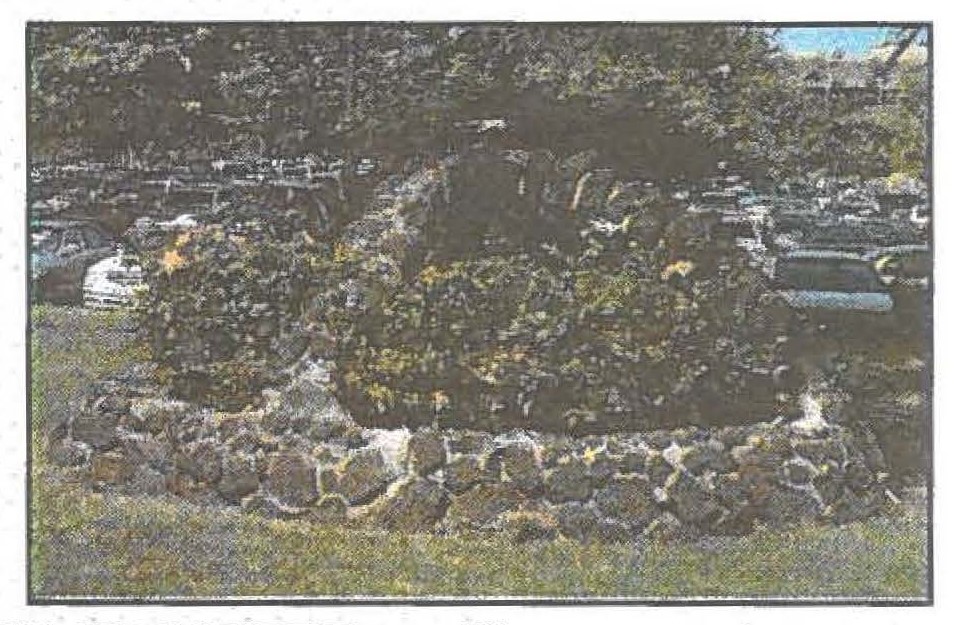
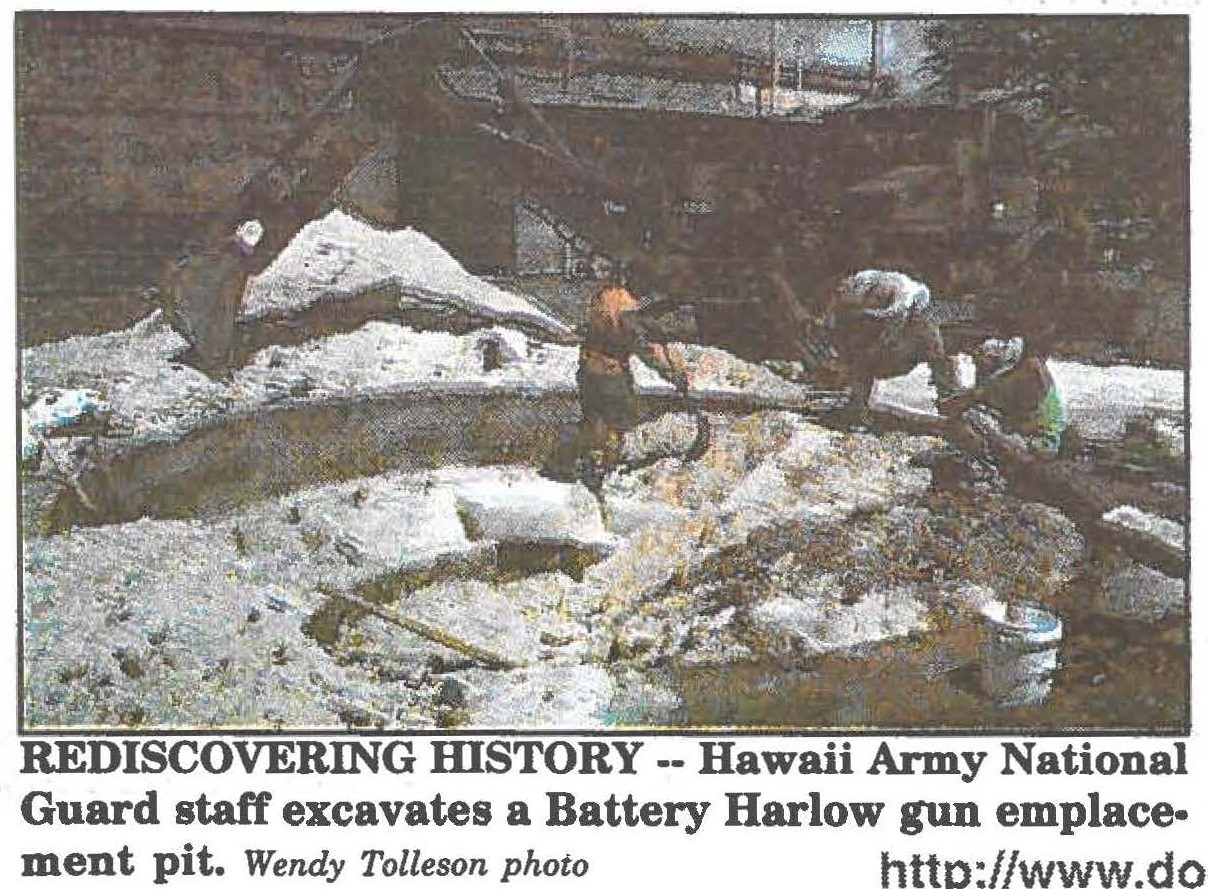
TREASURES UNCOVERED Wendy Tolleson, an environmental staff archaeologist, provides an informational tour of Battery Harlow. Sgt. 1st Class Stephen M. Lum photoCHANGING TIMES — Fort Ruger in the early 1900s. The headquarters was the building at the top center of the photo and the crown shaped fountain fronts the building. In the foreground are the Battery Harlow gun emplacements.CHANGING TIMES — Fort Ruger in the early 1900s. The headquarters was the building at the top center of the photo and the crown shaped fountain fronts the building. In the foreground are the Battery Harlow gun emplacements.TREASURES UNCOVERED — The crown fountain affronting Kapiolani Community College is now a planter. Sgt. 1st Class Stephen M. Lum photoREDISCOVERING HISTORY — Hawaii Army National Guard staff excavates a Battery Harlow gun emplacement pit. Wendy Tolleson photo(Pictures from the 2001 October – December Pūpūkahi)
In a 1905 address to the U.S. Congress, Pres. Theodore Roosevelt designated Hawaii as “the most important point in the Pacific to fortify in order to conserve the interests of this country.” Roosevelt appointed the Secretary of War, William H. Taft, to head a National Coast Defense Board, which was to review and improve coastal defenses in areas including Los Angeles, Hawaii, the Philippines and the Panama Canal.
The War Department Government Order No. 74 established the Artillery District of Honolulu in 1909 to protect Honolulu Harbor. Four forts constructed were Fort Ruger along Diamond Head, Fort DeRussy in Waikiki, Fort Kamehameha now surrounded by Hickam Air Force Base and Fort Armstrong at the harbor’s entrance. Included in the coastal defense were five batteries, seven fire control stations, and two tunnels.
Fort Ruger established
In 1906 the federal government set aside 755 acres around Diamond Head for exclusive use of the military. Fort Ruger Military Reservation was established in 1909 and named after Maj. Gen. Thomas H. Ruger, a Civil War officer. It was built between 1906 and 1921
There were extensive developments and construction of fortifications, gun mounts and observation fire control stations, headquarters, and living quarters.
University of Hawaii system’s Kapiolani Community College now occupies a large portion of the former Fort Ruger.
Much of the fort became part of the Diamond Head State Monument. In 1965, it was designated as a historic site to be managed by the Department of Land and Natural Resources. In 1968, Diamond Head earned the distinction as a national landmark and the boundaries were extended. In 1975, the State Monument was included under the State’s Historic Preservation Law. There are currently over 500 acres of land within the Diamond Head State Monument.
Surviving today are some of the reinforced concrete structures; a guard house, Battery Harlow, four-story fire control station foundation, 12 sixpound gun foundations, Battery Birkhiemer and Battery Some of the tunnels and batteries are today occupied by the Hawaii Army National Guard and State Civil Defense.
Batteries built in Diamond Head
Battery Harlow was the first fortification at Fort Ruger and the earliest of three mortar batteries built on Oahu during the era when attacks by sea were considered a threat to national security. Construction began in April 1907 on the north facing slope of Diamond Head and it was completed, March 1910.
The battery was used to fire over the crater into the ocean at a distance of eight to 10 miles. The guns were 1906 type battery. Each mortar M-1890 was 11 feet long and 12 in caliber. The east bunker contains two stories, one is below ground level. The bunkers were secured by massive iron doors and barred windows.
Battery Harlow has three bunkers, two mortar pits with four 12-inch mortar tubes each and a massive earth parapet. The central bunker housed the command post on the top floor and beneath it the plotting room, two sending stations, sets of control shafts, display stations for data transmission and elevation/azimuth for fire control.
Between the central and outer bunkers lay two large courtyards and mortar pits.
Along with several other structures it has been designated as part of the Fort Ruger historic district. The equipment was dismantled after World War II and has been in disrepair. The east and west bunkers are used today as storage space.
Fountain now a “planter”
Today what is left of a lava rock fountain built in 1911 stands in front of Kapiolani Community College as a remnant of the early Fort Ruger era. It was built in the shape of a crown as respect for the Hawaiian Royalty. The fountain is circular in shape with a pair of intersecting round arches, supported by a pier in the center. The fountain fronted Fort Ruger post headquarters building. About 30 years ago some restoration was completed on the lava rock fountain, it was re-mortared and converted into a flower box planted with bougainvillea. The cement mortar has now begun to crumble and crack again leaving the structure in sore need of repair.
Restoration continuing
Efforts to restore the historic area of Fort Ruger are being conducted by the Hawaii Army National Guard’s Environmental Office. The office is responsible for the restoration and preservation not just of the natural resources but also the cultural. Some of their efforts include weeding, picking up trash, and replanting species native to the area. They recently dug up the fill of one gun emplacement at Battery Harlow and currently have plans to restore the facility by painting, replacing safety railings. The cultural section continues to stage educational and informational tours and illustrations to groups in the public. They also sort through many of the artifacts and documents found around the area or that were stored in the batteries themselves. All items found of interest or artifacts are logged and documented for historical preservation.
The ecosystem around and inside of the crater is very fragile. Already it has succumbed to invasive, non-native species like Kiawe trees, Haole Koa and fountain grass. Events are held throughout the year to help clean up the trash left behind by humans as well as weed out the invasive species, plant native species in their place and nurture them through growth by mulching and watering. Two of the larger annual events to clean up the site are held during Earth Day in April and National Public Lands Day in late September. Other smaller events are held through out the year by the employees and other groups who volunteer.
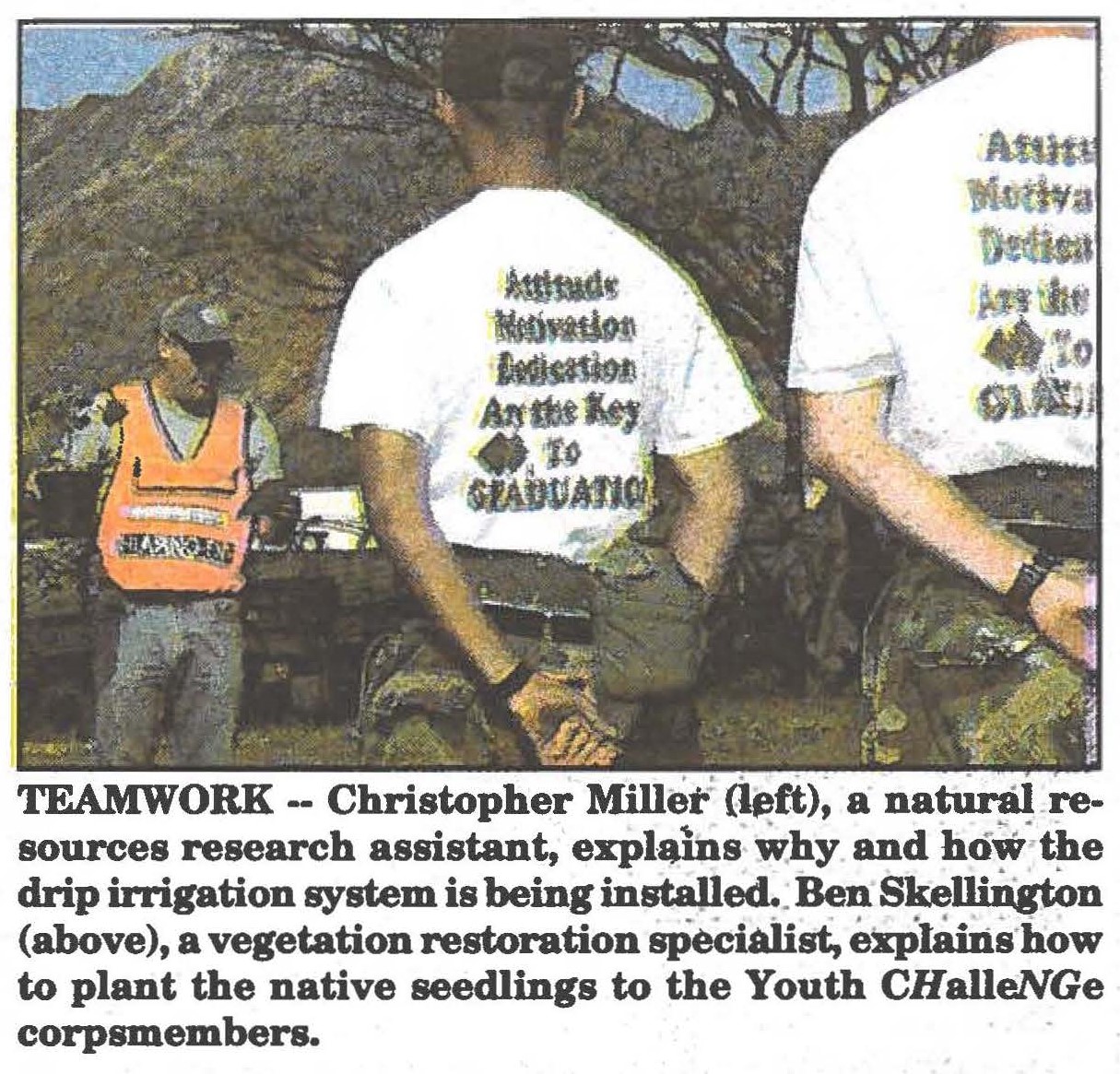
The clean up and restoration of the grounds resides mostly on the Environmental Office employees and volunteers for such events. Long time supporters and volunteers of the restoration include groups such as the Youth CHalleNGe, University of Hawaii graduate students, Hawaii National Guard soldiers and their families as well as the Boy Scouts who often receive merit badges for science, leadership and history for their participation.
For those interested in learning more about Fort Ruger and Diamond Head area or would like to volunteer their services, they can contact the Hawaii Army National Guard Environmental Office at 733-4214.
By Cadet Wendy R. Cook and Sgt. 1st Class Stephen M. Lum
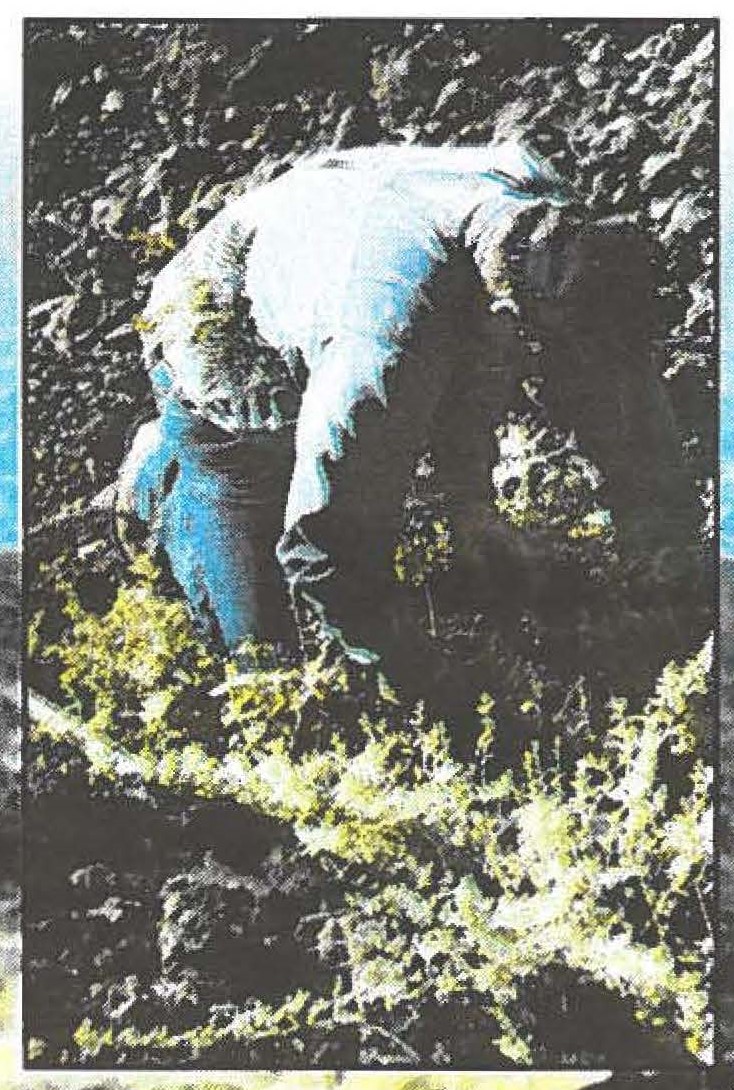
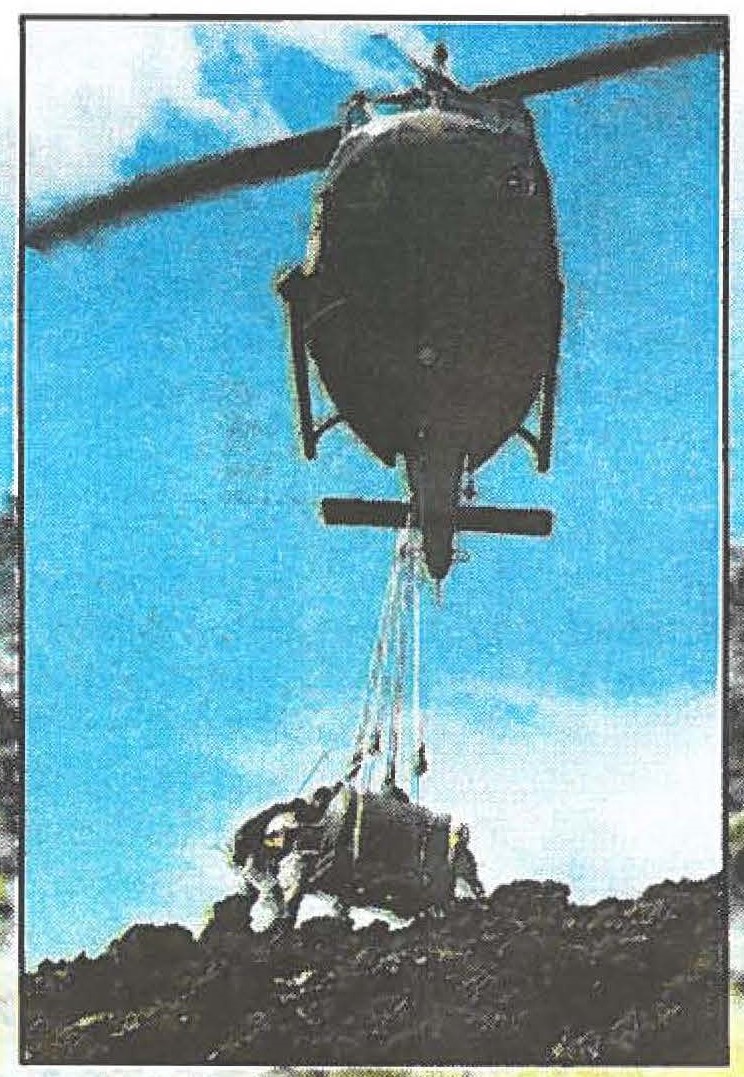
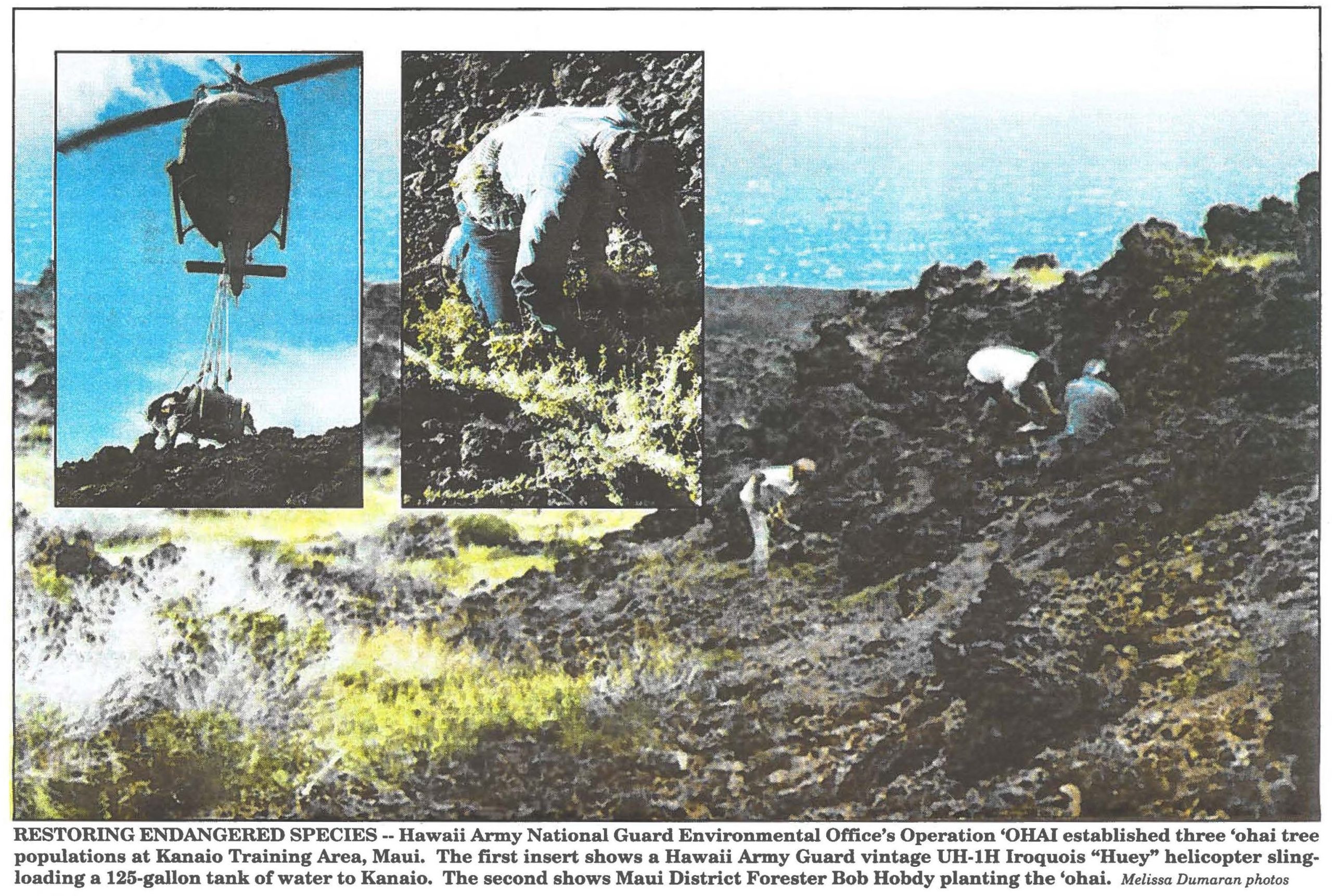
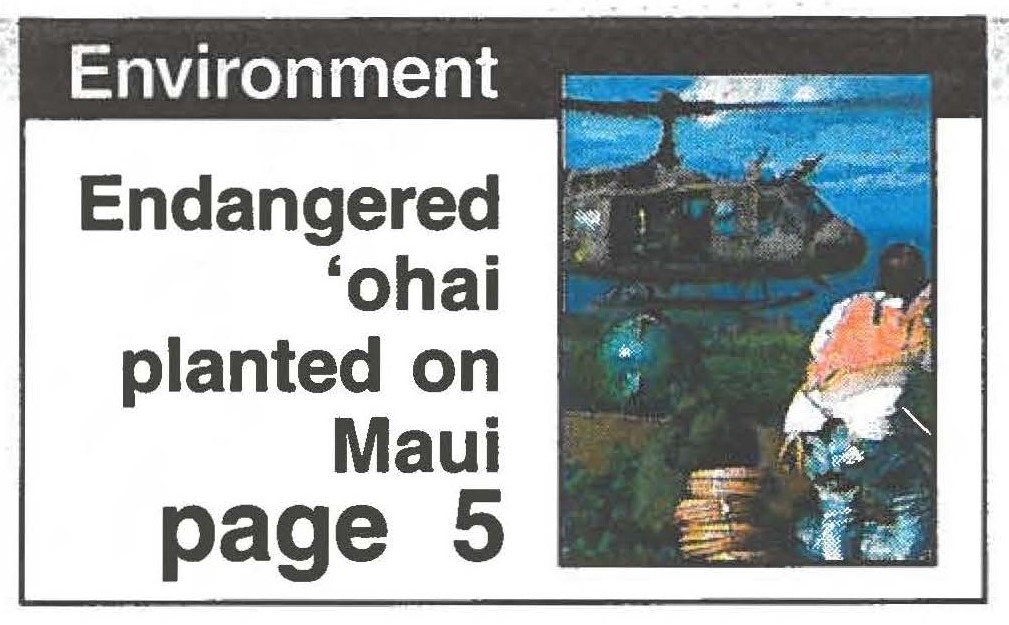
RESTORING ENDANGERED SPECIES — Maui District Forester Bob Hobdy planting the ‘ohai. Melissa Dumaran photoRESTORING ENDANGERED SPECIES — A Hawaii Army Guard vintage UH-lH Iroquois “Huey” helicopter sling-loading a 125-gallon tank of water to Kanaio. Melissa Dumaran photosHawaii Guard reforest ‘ohai in Kanaio, Maui RESTORING ENDANGERED SPECIES — Hawaii Army National Guard Environmental Office’s Operation ‘OHAI established three ‘ohai tree populations at Kanaio Training Area, Maui. Melissa Dumaran photos Endangered ‘ohai planted on Maui page 5 (Pictures from the 2002 January – March Pūpūkahi)
Hawaii Army National Guard’s natural resources program and aviation division, and various partners banded together to plant ‘ohai trees in Maui’s Kanaio Training Area, in late January. Partners from the government and private sector donated labor, in-kind services and materials.
Proactive environmental mission
One of the Hawaii Army Guard Environmental Office missions is to maintain the native habitat for the plants, trees and animals of each of the Guard’s training areas. Compounding the difficulty is that Hawaii houses the highest number of endangered species in the United States, according to a 1998 study by the U.S. Fish and Wildlife Service. Of those endangered species, 263 are plants.
As outlined in the Endangered Species Act of 1966, congress requires all Departments of Interior, Agriculture and Defense to protect listed endangered species. All federal agencies are required to undertake programs for the conservation of endangered and threatened species. They are also prohibited from destroying or modifying a species “critical habitat.”
“The Hawaii Guard natural resources program’s area of responsibility includes 28 locations in Hawaii,” said Melissa Dumaran, natural resources coordinator.
”Kanaio is one of seven areas we manage directly.” Kanaio is a remote rocky and arid wind swept area on the island of Maui. The area has suffered in the “interest of progress.” Damage created by deer, goats and weeds introduced into the area have contributed to the condition of Kanaio.
Reeducation, changing the mindset of our leaders and soldiers is another mission of the Environmental Office. With the help of the local community, the National Guard and other organizations, will preserve these lands for future generations.
Endangered species identified
One of the most endangered species found at the National Guard’s Kanaio Training Area is the ‘ohai tree. The Environmental Office’s goal: to prevent the extinction of endangered dry forest ‘ohai tree (Sesbania tomentosa var. arborea).
The ‘ohai tree is a beautiful, silvery plant with red flowers, known only from two locations in the world, Maui and Molokai. The tree, which can grow to nearly 10 feet tall and has a life of about 20 years, was down to just seven species on Kanaio, Maui and small populations on two other sites on Molokai. The small tree is usually a very durable plant but due to drought, fire, invasive weeds and grazing by deer and goats, the tree population had diminished over the years.
Plan to propagate sprouted
Over the past five years, the Hawaii Guard and their partners have assisted with the recovery of this species through seed collection, greenhouse plant propagation, construction of fenced preserves to keep animals out of the ‘ohai habitat, and the scattering of 60,000 seeds of 18 different coastal and dry forest species. This current out-planting effort adds 15 times the number of individuals occurring in the wild.
Project coordinator Dumaran began work on the restoration of the tree several years ago, but lack of funding delayed the project until now.
Plan becomes reality
In late January, Dumaran and fellow coordinator Jordan Jokiel finally had a chance to help restart the ‘ohai population on Maui. Nearly 150 new seedlings were planted in five areas. Fences and a watering system were also erected to help protect the growing seedlings until they can get a foothold back on the hillside. Dumaran now feels confident that the trees have a better chance of survival and reproduction.
Coordinating the project was no small feat with all the participating groups:
Hawaii Army National Guard UH-lH Iroquois “Huey” utility helicopter sling-loaded 150 endangered ‘ohai trees and five 125-gallon tanks of water (weighing 1000 pounds each). Use of the Wheeler Army Airfield based UH-lH, better known as the Vietnam-era Huey, was coordinated in conjunction with a mission on Maui already on the schedule.
Ulupalakua Ranch provided manpower and 750 gallons of water, use of roads, irrigation lines, camping shelters and technical expertise.
Haleakala National Park’s Exotic Plant Management Team, Nature Conservancy, Maui Invasive Species Committee, and Forestry and Wildlife Division of the State Department of Land and Natural Resources provided personnel, water jugs and Global Positioning System-mapped locations of 96 out-planted endangered plants.
University of Hawaii Botany Department provided labor and technical support.
Other contributing organizations were the Emergency Environmental Work force, U.S. Geological Survey Biological Resources Division, and UH student volunteers.
By Master Sgt. Stephen M. Lum and retired Lt. Col. Lincoln Yamashita
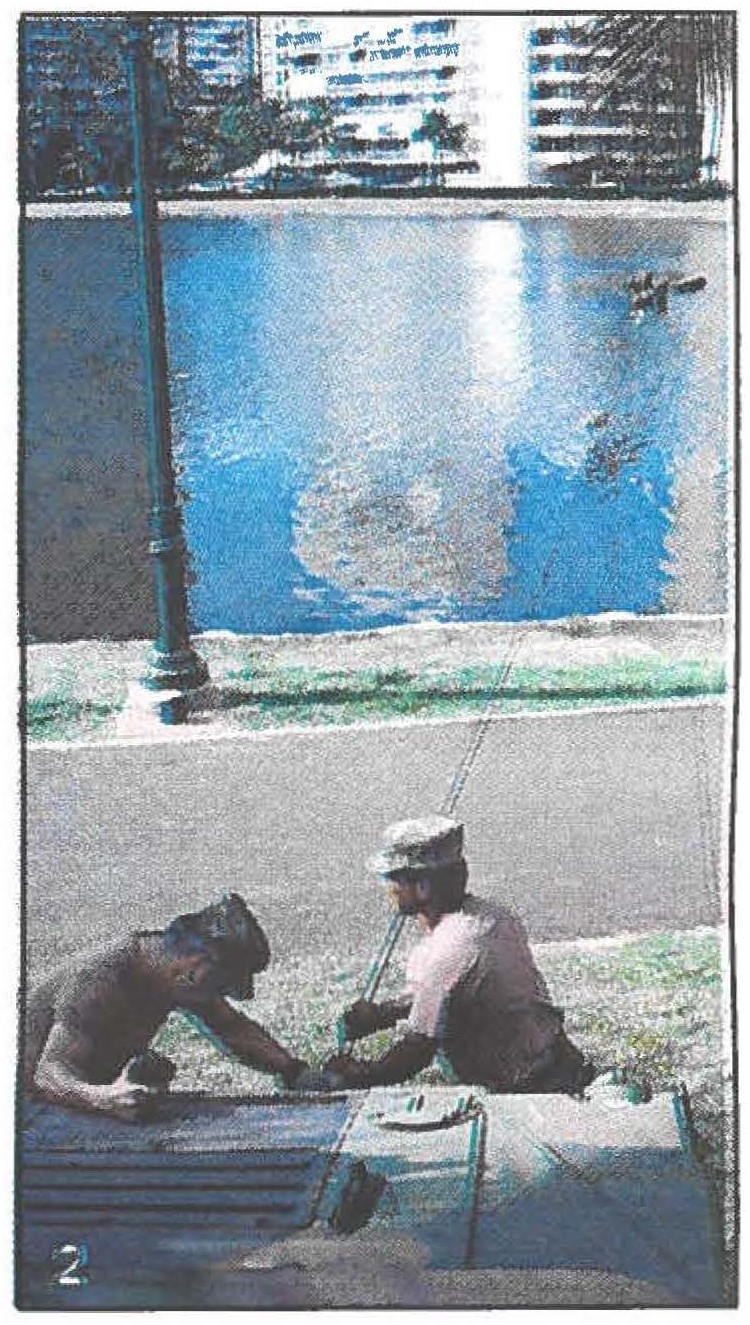
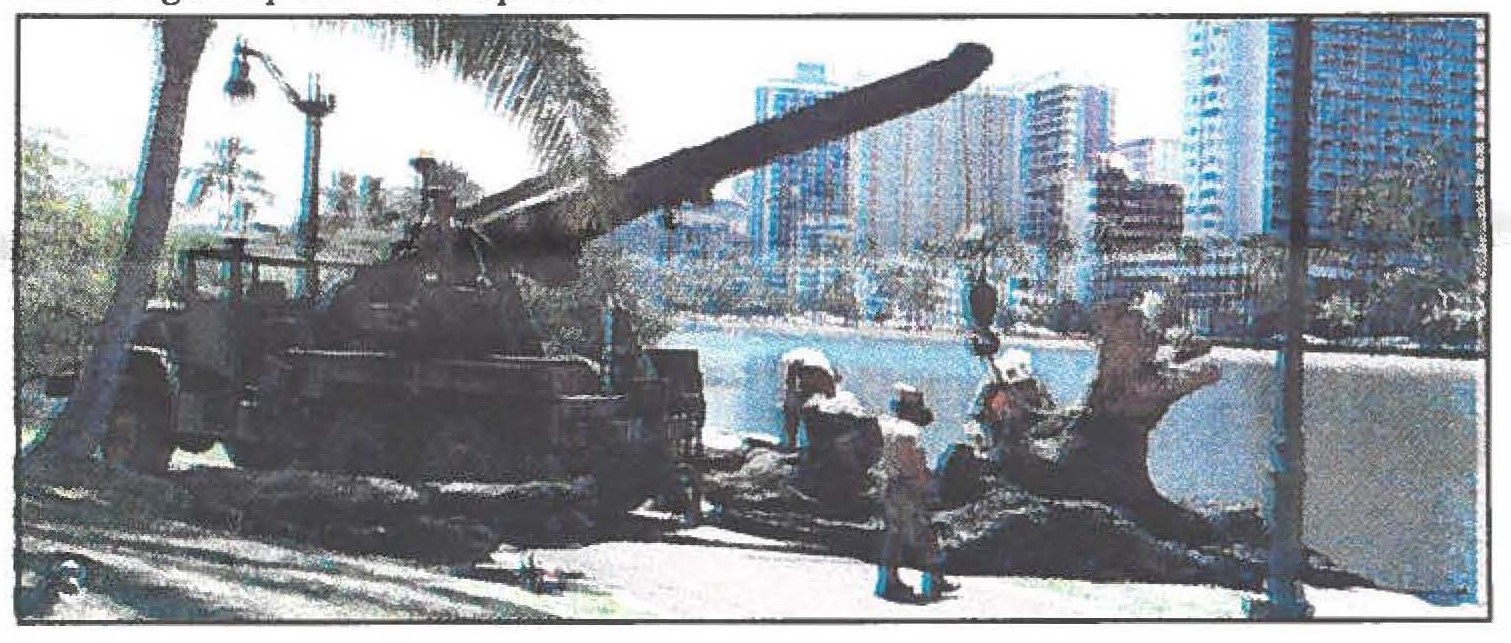
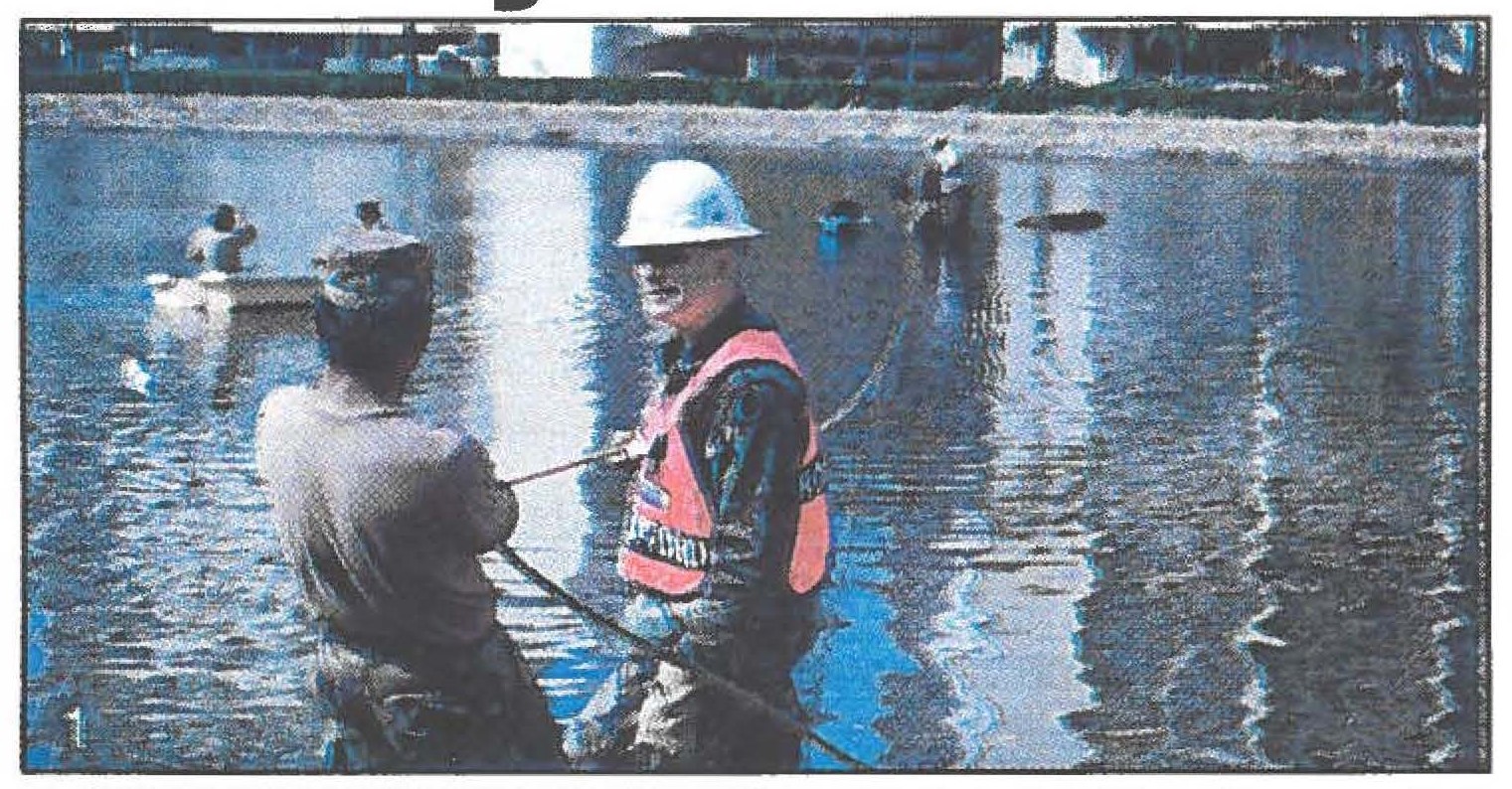
ACCOMPLISHING THE MISSION — Master Sgt. Bruce H. Hidano and Batatas use the bummer’s winch to drag in the stump. Master Sgt. Stephen M. Lum photoACCOMPLISHING THE MISSION — Master Sgt. Samuel J. Lono, Chief Warrant Officer Paul N. Kahunahana, Bastatas and Swafford remove chain from 5-ton wrecker’s winch which pulled the Ala Wai log hazard on shore. Master Sgt. Stephen M. Lum photoACCOMPLISHING THE MISSION — Sgt. 1st Class Damaso R.J. Bastatas and Lt. Col. Ronald R. Swafford keep the rope taunt, while Sgt. Antonio R. Savella and Master Sgt. Samuel J. Lono paddle out to help retired Lt. Col. Lincoln Yamashita secure the other side of the line to the tree stump lodged in the middle of the Ala Wai Canal. Master Sgt. Stephen M. Lum photo(Pictures from the 2002 April – June Pūpūkahi)
Earth Day 2002 activities were destined to be the usual cleanup and planting activities, but Mother Nature made cleaning up a winching task. A winter storm uprooted a tree in Manoa Valley and washed down to the calm waters ofW aik.iki’s Ala Wai Canal. The obstruction in the middle of the canal, used daily by canoe and kayak paddlers, was an accident waiting to happen.
During the Ala Wai Watershed Association’s stream clean up of the environment, volunteers collected assorted trash, bed frames, shopping carts and tires. The only major obstacle in their way was a tree stump stuck in the mud in the middle of the Ala Wai.
Community asks for help
The association asked their State Senator Les Ihara for help and direction. Barbara Natale, Ihara’s legislative aide, and A WW A board member and special events chair, called the Hawaii National Guard and coordinated directly with Lt. Col. Ronald R. Swafford, the Hawaii Army National Guard’s environmental protection specialist.
Reconnaissance done
Swafford said, “My preliminary assessment estimated the stump to be about 15 feet long, with roots sticking out about three feet. The tree was stuck in the middle of the canal, 60 feet from either side of the bank. With pictures and data in hand, I approached Chief Warrant Officer Paul N. Kahunahana and Master Sgt. Bruce H. Hidano, from the Combined Support Maintenance Shop in Diamond Head.”
Kahunahana and Hidano did their own reconnaissance and determined what equipment and personnel would be needed to do the job. They decided a hummer with winch and a 5-ton wrecker with a winch would be the primary tools of implementation.
Swafford kept all concerned parties informed on the timetable, personnel, equipment and safety concerns.
Additionally, armed with a flat bottom boat, a kayak, rope, steel cable, floats, chains, chainsaw and other miscellaneous items, the crew set off to the Ala Wai on April 19.
Engineering feat accomplished
Master Sgt. Samuel J. Lono, Sgt. 1st Class Damaso R.J. Bastatas, Sgt. Antonio R. Savella, and retired Lt. Col. Lincoln Yamashita, joined Swafford, Kahunahana and Hidano at the canal.
The four and a half hour operation began with Lono, Savella and Yamashita paddling to the stump and figuring where to chain the stump.
During the execution phase, Yamashita said they found out that the monkey pod tree trunk and root structure was more like 30 feet long, 20 feet wide and 12 feet tall.
Yamashita fastened the chain near the four-foot width of the stump. Rope was attached to the cable, along with a float and towed by boat by Lono and Savella. Yamashita attached the cable to the chain.
Under the direction and watchful eyes of Kahunahana, the on shore team of Hidano and Savella used the hummer’s winch to drag the stump in 50 feet, where it ran aground in the mud again.
Cables were then attached from the 5-ton wrecker, operated by Lono and Bastatas, as well as the hummer. They were able to drag the stump until it again got stuck in the mud near the edge of the bank.
The wrecker team attached the chain to the boom and lifted the stump partially out of the water.
Swafford used the chainsaw to dislodge an eight-foot root from the stump.
The wrecker and hummer crews attached the cable at better vantage points and pulled the stump close enough to cut another chunk of the stump. Between the wrecker’s boom and the hummer’s winch the stump was lifted on shore.
Honolulu City and County workers cut up the stump the next day and hauled it away.
The Hawaii Guard removal of what the Ala Wai Watershed Association has nicknamed “Log-Nessie”, saved the taxpayers thousands of dollars, while giving the Guard soldiers practice training in dislodging debris from small scale natural “disasters.”
TAKING CARE OF THE LAND — Leilehua High School 9th grader Maylene Macanas plant and mulch indigenous fauna at Battery Harlow during April’s Earth Day 2002. Macanas was among the 50 Hawaii Sierra Club High School Hikers club members who joined the Environmental Office’s refurbishing of the Diamond Head monument.TAKING CARE OF THE LAND — Hawaii Army National Guard’s Environmental Office staffer Ying “Joy” Zhang plant and mulch indigenous fauna at Battery Harlow during April’s Earth Day 2002. (Picture from the 2002 April – June Pūpūkahi)
EarthDay 2002 presented the environmental staff with another opportunity to educate the public on the historical wonders of Battery Harlow and to get in touch with Hawaiian nature. One hundred students, advisors and volunteers from the Hawaii Sierra Club High School Hikers joined in a four hour field service project.
Earth Day, first celebrated April 22, 1970, is a national movement to protect and preserve the environment.
After a short tour of the Battery Harlow coast artillery facility the students were put to work. They assisted the Resource Program section of the Hawaii Army National Guard Environmental Office in the on-going hiking trail maintenance, tree-planting, weeding and mulching of Diamond Head State Park.The dry forest and coastal ecosystem restoration project is to remove non-native species and replace them with shrubs and trees that were there originally. Two-hundred sixty shrubs and 20 trees were planted.
SPREADING THE WORD — Jordan Jokiel, the Environmental Office’s ecosystem management officer, shares his team’s successful efforts to repopulate Kanio Range on Maui with the native Ohai tree. Jokiel was a feature speaker at the Hawaii Conservation Conference held at the Hawaii Convention Center in July. Sgt. Wendy M Miller photo(Pictures from the 2002 July – September Pūpūkahi)
Weapons cleaning has always been a stealer of a soldier’s time.
The military is always interested in innovations that make the battlefront more efficient.
Today, the Hawaii Army National Guard has taken a step forward with the introduction of the IT-48WC weapons cleaning and parts washing system. The environmentally-friendly system, designed by Inland Technology, makes use of a micro-filter and a nonhazardous, DoD-approved cleaning solvent introduced to the military in 1998.
The system cleans the parts of small arms like the M-16 rifle without the use of wire brushes, dental picks, and hazardous solvents.
The Edge Tek filtration system removes contaminants as small as 1/10 of a micron.
Solvent key element
Another innovation is the Breakthrough Solvent. With features including low vapor pressure, minimal evaporation, and non-photochemical reactivity, it is also odorless noncarcinogenic, and nonirritating to the eyes and skin. Best of all, it has no Environmental Protection Agency-listed components and, therefore, is not subject to hazardous waste disposal restrictions.
Currently, there are 18 National Guard Bureau-funded systems throughout the Hawaii Army Guard,” said William Rogers, HIARNG environmental office installation restoration manager. “The first cleaning systems arrived last year and are in armories on all islands.”
“The big red machines have reduced the time to clean a company’s weapons from as much as two days down to two hours,” said Rogers, who was with the North Carolina Guard when its systems were fielded. “There is very little waste generated from this machine because the solvent is a dual filtration system which recycles the solvent.”
Most other systems require a contract to be serviced by an outside vendor, costing as much as $1,000 a year, adds Rogers. If the Preventive Maintenance Cleaning System (PMCS) is employed on the machines, the solvent should last five years before needing replacement. PMCS consists of replacing the filters every six months and topping off the solvent, if needed, at the same time.
Inland Technology is now working on a smaller machine that is field deployable.
Public Lands Day takes care of Diamond Head National Monument grounds
environment team battles the elements
Story and photos by Sgt. Daisy C. Bueno
Jessica AlaronDEMONSTRATION PLEASE– Michael L. Wysong, field program manager with the Hawaii Army National Guard environmental office, demonstrates the planting process to the HING Youth CHalleNGe Academy corpsmembers.DEMONSTRATION PLEASE– Corpsmember Allen Viray plants a Milo tree seedling.(Pictures from the 2002 October – December Pūpūkahi)
Foreign plants, pollution, predators … what do all these have in common? They’re all threats to the special environment here in Hawaii. To help battle these elements, the Hawaii Army National Guard’s Natural Resources Environmental Section is working to help preserve Hawaii’s natural environment and educate others at the same time.
Last year, 300 native trees were planted in Diamond Head Crater, all dedicated in the memory of the fallen rescue workers of 9-11. The planting occurred on National Public Lands Day, which normally takes place during the last week in September. This year, members of the Natural Resources Section were again joined by corpsmembers from the Hawaii National Guard’s Youth CHalleNGe Academy, Nov. 23, to clean up the area and plant more trees.
Educating our youths to take care of our lands
“I think it’s important to get involved since the majority of us don’t work in our community and take the environment into consideration,” said Jessica Alaron, corpsmember of the month for October. “It makes me feel good that we’re helping and it gives us the feeling of success in completing something.”
According to Donna Wu, the integrated training area management assistant with Natural Resources, a continuous partnership with Youth CHalleNGe would be a great accomplishment. “We hope to start -a legacy with Youth CHalleNGe and have them come out every year. Hopefully, they can revisit in 10 years, and this will be a place filled with big, tall, native trees.”
Michael L. Wysong, field program manager, added “I think it’s imperative for the younger generations, in particular, to understand the connection between them, the future, and the environment. I hope they gain pride in looking after the environment and become stewards of the environment that is theirs for generations to come.”
Approximately 100 Youth CHalleNGe corpsmembers helped plant about 100 native trees: Milo and Native Hibiscus, the latter being an endangered plant. These plants were rescued from a private ranch and were donated.
“These plants are expected to do wellhere,” said Wysong. “Both these plants are adapted to dry weather and inside Diamond Head is a perfect example of that climate. Hawaii is a very unique place. There are plants on these islands that cannot be found anywhere else in the world.”
National Public Lands Day originated in 1993 and Hawaii began participating last year. This project was made possible with a grant sponsored by the National Environmental Education and Training Foundation, a non-profit organization dedicated to environmental education. Qualifying Army applicants must demonstrate that they have a public land project that includes community outreach.
CARING ABOUT YOUR COMMUNITY – Corpsmember Allen Viray plants a native plant in Diamond Crater during Public Lands Day in November. After getting a lesson on the dangers of nonnative plants and alien species from the Hawaii Army Guard’s environmental staff, corpsmembers help clean up patches of the Crater and join in the restoration of the National Monument. Sgt. Daisy C. Bueno photo(Picture from the 2003 Annual Report)
Guard fighting invasive weed battle
Story and photo by Spc. Lloyd C. Phelps II
“CATCH OF THE DAY”-Ben Skellington “shows off” a sprig of fountain grass (scientifically known as Pennisetum Setaceum) being cleared from the Bellows Air Force Station grounds adjacent to the Hawaii Army National Guard’s new 298th Regiment, Regional Training Site. Katie Delavego and Mike Wysong join in the searching for areas being “invaded.”(Picture from the 2003 January – March Pūpūkahi)
Grass. The word brings mind myriad images. From romantic emerald Irish vistas to wind-swept Hawaiian mountain ranges, grass flourishes in many varieties and colors. Though many grasses are lauded for their beauty and functionality, some harbor a dark and destructive side. Like invading seafaring warriors, these seedier grasses establish a beachhead with the intent of spreading their dominion far and wide. Such is the case with an insidious grass on the Hawaiian islands called fountain grass. Scientifically known as Pennisetum Setaceum, this African born invader stormed ashore on Hawaii in 1914 and has been on the march ever since.
Unwanted guest upsets ecosystem
Standing in its way is an intrepid group of National Guard soldiers and civilians working in conjunction with the Hawaii Army National Guard Environmental Office. Their mission is to rid National Guard training areas of this unwanted guest.
According to Ben Skellington, a vegetation restoration specialist with the Hawaii Guard’s Environmental Office, fountain grass is a particularly invasive weed that presents a unique problem for Hawaii’s fragile ecology
“The biggest problem with fountain grass is it simply out-competes native Hawaiian grasses for space and, once established, it presents a huge potential fire problem,” Skellington explained. “If left unchecked, this stuff will spread everywhere. Large patches of mountain grass increase the amount of fuel for a fire, which can greatly increase a fire’s intensity and ability to spread,” he said.
Unlike most grasses that are completely destroyed by fire, fountain grass actually benefits when burnt. Through this unique adaptation, fire actually stimulates the grass seeds to germinate and grow.
According to Lydi Morgan, a field technician with the Oahu Invasive Species Committee, or 0.1.S.C., Oahu has two large fountain grass populations, one in Lanikai and the other on Diamond Head.
“We try to work on the smaller satellite populations first, and once we’ve taken care of them, we will concentrate on the larger sites,” Morgan explained.
Walmanalo reduction in progress
As an example, she pointed to the work being done at the National Guard training site at Bellows Air Force Station. “We have been working on reducing the grass population on Bellows for the past two years because the large population in Lanikai is just north of the field and has been spreading south.”
Though some might argue the efficacy of battling what amounts to little more than a mere shrub, the negative impact of unchecked growth can go well beyond a small patch on training land.
Fire awareness and safety are a greater concern on military training sites where ammunition, explosives and fuel constantly cross paths with unchecked fountain grass. In addition, military readiness and war fighting proficiency are greatly reduced when units are unable to access training ground deemed unfit for use.
Morgan and her teammates discovered-201 plants on Bellows this year, with 34 on Hawaii Army Guard training land and 167 on Marine Corps land. Once discovered, the plants are pulled and bagged by team members who then hand them over to the O.1.S.C. for incineration
Gordon Olayvar, a science technician with the Marine Corps Base Hawaii Environmental Office, hailed the efforts to maintain the training sites and, particularly, commended the Hawaii Guard’s role in the process
“The National Guard Environmental Office has been extremely proactive and hands-on in this effort. They have been very active in cleaning not only their areas but areas such as the Marine training ground on Bellows,” he said.
Olayvar stressed the multifaceted benefits when all agencies come together in such cooperative efforts.
“We are trying to get other agencies to come on board with the National Guard and Marines in this area. The bottom line is, if we all work together, down the road, we all benefit-Army, Navy, Air Force, Marines, and civilians alike. In the end, we all have to live on this island, so environmental stewardship is everyone’s responsibility.
With the Hawaii National Guard at the vanguard of this ecological battle, citizen-soldiers are setting a sterling example for others to follow
DIAMOND HEAD WETLANDS – Sedge, a native Hawaiian grass is reintroduced and cultivated in the Diamond Head Crater’s wetlands near the entrance to Battery Harlow.(Picture from the 2003 January – March Pūpūkahi)
On a tiny patch of land nestled at the bottom of Diamond Head Crater, a group of Hawaii Army National Guard soldiers and civilian volunteers recently toiled to restore a fast dwindling Hawaiian resource. This resource, commonly known as a natural wetland, was once a thriving part of Hawaii’s ecosystem, though today it has all but disappeared on most parts of Hawaii.
According to Sgt. Donna Wu, an environmental awareness assistant with the natural resource staff of the Hawaii Army Guard, areas such as the Diamond Head wetland are a veritable treasure-trove of native plants.
“We are in the process of reintroducing and cultivating a native sedge within the wetland,” said Wu. “The sedge is essentially a native Hawaiian grass that has been all but choked out, thanks to several extremely invasive foreign plants which have been introduced into Hawaii’s ecosystem.”
By reintroducing the sedge and cultivating the wetland, Wu and her colleagues hope to provide a vital link to Hawaii’s past.
According to Kanoa Kimball, a University of Hawaii botany student and project volunteer, invasive plants have all but eliminated many native, Hawaiian plants and with them, much of this state’s unique history.
“Invasive plants such as California Grass spread like wild fire and ultimately overrun and choke out many native plants” Kanoa said. “It’s extremely important that people take an interest in projects such as this because we are, essentially, all these native plants have, and once they’re gone, they aren’t coming back.”
Aside from the aesthetic appeal a native wetland provides, there are a number of practical benefits to restoring such an ecosystem.
The Diamond Head crater was once a migratory stopping ground for several species of waterfowl. By cultivating the wetland, it is hoped that these birds will once again make Oahu part of their yearly migration.
In addition, wetlands are an invaluable component in the clean water cycle.
According to Scott Lynch, project volunteer originally from West Palm Beach, Fla., natural wetlands serve as a cleaning system for water.
“These areas essentially serve as a natural filtration system,” Lynch said. “Water eventually settles down in a wetland and works its way down into the aquifer, and all the while it is being filtered. So, if society wants clean, drinkable water, it should take an interest in projects such as this.”
In Hawaii, only 10 percent of the original dry land habitat is left and the wetland numbers are even lower. Invasive plant species and urbanization have pushed many native Hawaiian plants and ecosystems to the brink of extinction.
“The Hawaii National Guard Environmental Office,” said Wu, “has played a key role in projects such as the Diamond Head wetland restoration.”
“From the time this wetland was deemed a critical habitat, the Guard has been extremely proactive in its stewardship and in getting the word out to the community about its importance,” she said. “We are winning this battle slowly, but surely. With some persistence, community education, and the help of our volunteers, we can, and we will, win.”
Though the battle is far from over, on a small patch of land high atop Diamond Head Crater, a small piece of Hawaiian history is being cared for and nurtured, one plant at a time.
Academy continues partnership with Hawaii Army Guard environmental team
Story and photos by Sgt. Daisy C. Bueno
TEAMWORK — Christopher Millei a natural resources research assistant, explains why and how-the drip irrigation system is being installed. Bobby DouglasTEAMWORK — Ben Skellington, a vegetation restoration specialist, explains how to plant the native seedlings to the Youth CHalleNGe corpsmembers. Penny Levin(Pictures from the 2003 April – June Pūpūkahi)
Since the first Earth Day in 1970, the environmental movement has increasingly altered itself from a small campaign to a professonally organized event. It has helped to put environmental issues on the forefront at the community and legislature levels. In Hawaii, hundreds participated, in cleaning shorelines and rebuilding watershed streams. The Hawaii Army National Guard Environmental Office continues to restore the land at the Diamond Head State Monument
Today, we are clearing nonnative trees and other alien species. “We are planting native plants so eventually this crater will have the ecosystems that belong here,” explained Penny Levin, conservation program manager. “Any time you do this, you give the land the ability to take care of itself.”
Native plants restoration continues
In addition to planting trees, weed control was conducted by taking out non native grass and shrubs. They opened up the initial area by removing alien species like keawe, which is from Africa, in order to encourage the growth of native plants, like ilima. To combine restoration with landscaping, native plants were placed along the road to the State Civil Defense headquarters where they are more easily seen by the public. After planting, mulch was placed over them to keep the weeds down and keep water in the soil.
This restoration project started three years ago on Public Lands Day, with the planting of about 300 trees. The Hawaii National Guard’s Youth CHalleNGe came out initially to lend a hand and has continued to participate in the ongoing restoration. “All around the world people are giving their time on Earth Day just to help out,” said corpsmember Bobby Douglas. “This is positive and I am proud to be here today doing my part in helping Hawaii.”
Corpsmember Valerie Mateo added, “It makes me feel good to know that I can contribute to the community and help the environment.”
According to Michael Wysong, field program manager with the Hawaii Environmental Office, “I think it’s important that the kids come out and get the opportunity to do this hands on restoration. Not only does it help us out, but it helps them out, too. They can come back and see the results of their labor and hopefully gain a sense of stewardship for the area.”
Story and photo by Spc. Uoyd C. Phelps II HIARNG Environmental PAO
PURPLE HAZE — Cynthia Thurkins, an environmental specialist with the Hawaii Army National Guard Environmental Office, tags the location where a Miconia plant was discovered on Keaukaha Military Reservation in Hilo, Hawaii. The environmental team routinely sweeps DIR in search of Miconia, and destroys the plant where ever it is found. SETTING STANDARDS — Lt. Gov. James “Duke” Aiona presents the State Environmental Council award to the State Of Hawaii Department of Defense. Accepting the award for the DOD were Lt. Col. Ronald Swafford, Melissa Chimera and Col. Stanley Osserman. For the second year the DOD was recognized for excellent efforts in achieving its three environmental goals of conservation, compliance and land management. Master Sgt. Stephen M. Lum photo (Pictures from the 2003 April – June Pūpūkahi)
Beauty is said to be in the eye of the beholder. In the world of botany, no truer statement could be made, where often times one man’s beauty is another man’s beast. Such is the case on the island of Hawaii with a plant called Miconia calvescens.
Originally introduced to the Hawaiian Island chain in the 1960’s, Miconia was considered a desirable ornamental tree because of its attractive green and purple foliage. However, this purple beauty soon turned into a purple plague for many Pacific islands
For two years, the Hawaii Army National Guard Environmental Office has been waging a non-stop war with Miconia on Keaukaha Military Reservation in Hilo, Hawaii.
According to Maj. Darryl Lindsey, facility manager at KMR, the National Guard’s environmental mandate calls for the destruction of such invasive plant species.
“We are required by law to conserve and protect natural plant species within this ecosystem,” Lindsey explained. “To accomplish that mission we must prevent the spread of harmful plants such as Miconia, which if left unchecked, will take over and destroy the entire ecosystem.”
Evidence of the urgency of the Environmental Office’s work can be found on the island of Tahiti, where over sixty percent of the island is blanketed with thick stands of Miconia. These purple trees ultimately replace the native forest and its accompanying wildlife.
KMR contains 503 acres of training land including two rifle ranges, a pistol range and a machine gun range. A native Hawaiian rain land forest has been established within the training area and it is in this Ohia-Lama forest that the Environmental Office has focused its efforts against Miconia
According to Mike Wysong, the conservation manager, Miconia is an especially worrisome plant. “Miconia is considered the number one invasive species threat in Hawaii because of its aggressive nature and ability to overrun native eco systems,” he said. “We have a responsibility to control these invasives and limit their spread not only on KMR, but between training sites as well.”
Wysong pointed out the heightened importance of controlling Miconia on national guard land, where soldiers can potentially come in contact with the plant, thereby becoming unknowing vehicles for its spread to new areas.
“This could potentially lead to an erosion in unit readiness if training areas become significantly overrun with Miconia, thereby causing closure of the area,” he said. “This is ultimately what we are trying to prevent.”
The Miconia eradication program not only contributes to the overall fighting effectiveness of the Hawaii Guard, it is an integral link to maintaining Hawaii’s native past.
“The wetland forest on KMR is one of the rarest native forest types in Hawaii,” Wysong explained. “This lowland wet Ohia Lama forest is unique to the windward side of Hawaii, and is all but destroyed except in a few unpopulated pockets here and there,” he said. “I personally take a great deal of pride, knowing I and my team are contributing to its maintenance.”
Though the battle is far from over, the Hawaii Guard and its citizen soldiers can all feel a great deal of pride knowing it’s at the forefront of such an important environmental fight.
PLANTING OUR FUTURE — Stacey Johnson, a senior accounting major at Georgia Southern University in Statesborough, Ga., plants an a’ali’i as part of a joint community service project between the Hawaii Army National Guard’s Environmental Office and the Beta AIpha Psi national honors accounting fraternity. 1st Lt. Lloyd C. Phelps II photoAccountants crunch mulch, not numbers page 5(Picture of the 2003 July – September Pūpūkahi)
University accounting students from across the country recently converged on Diamond Head State Park in July. Their task in the fabled landmark wasn’t to audit the various government agencies residing within the crater, nor to merely sightsee. The students were there at the invitation of the Hawaii Army National Guard’s Environmental Office, and their task was to plant a number of native Hawaiian plants in short supply on the Diamond Head ledger
Accounting fraternity crunches
The cooperative effort with the Hawaii Guard was part of a four-day workshop sponsored by the Beta Alpha Psi National Accounting Fraternity.
According to Kevin Morrissey, a University of Massachusetts senior, the workshop format-offered participants a broad range of experiences. “One of the main pillars this fraternity is based upon is community service”, he said. ”With that in mind, projects like this are a great way to fulfill that mission. We as college students are very fortunate, and as accounting majors, many of us have bright futures. This is an excellent way to keep us grounded and remind us that life is more than just making money.”
More than 180 students toiled in the crater the first day of the workshop. The next two days, they split up into small groups where the craft of accounting was discussed and debated.
Michelle Simecka, a junior from Oklahoma State, praised the well-rounded education students received during their time in Hawaii.
“Workshops like this are always a great way to network and learn more about your craft, but by thinking outside the box, and doing things like the Diamond Head planting, we are able to take so much more from it” she said. “This has just been a tremendous opportunity to meet new people, see new sites, and learn exponentially more about Hawaii and its native ecosystem than we ever would by merely attending a conference and doing a standard site seeing tour.”
On-going activity
The Hawaii Guard Environmental Office has been busy implementing a multi-year project to restore the crater to its original state. As part of this effort, the Environmental Office has actively pursued unique and innovative ways to accomplish this laudable task.
According to Ben Skellington, a vegetation restoration specialist with the Environmental Office, when the numbers were crunched, the accounting students received more than a passing grade on what ultimately is a vitally important topic.
“We have three federally recognized endangered plant species in the crater so this is important work,” Skellington explained. “We had the students planting four different plants including naio, naupaka, aweoweo, and a’ali’i. With each of them planting at least one of those four, we managed to get quite a few plants in the ground. That is really going to aid the Hawaii Guard’s long-term goal of restoring the crater to its original state.”
learning opportunity
Though the majority of the students could barely pronounce the native names of the plants they were handling, they nonetheless threw themselves in to the project with youthful flare and exuberance.
Mark Bezik, a professor of accounting at Idaho State University in Pocatello, accompanied his school’s chapter during the workshop. Bezik was particularly impressed with the Hawaii Army National Guard and their treatment of his students.
“Our fraternity is all about professional development and community service and the Hawaii Guard has been outstanding in helping us with the latter he said. “Lt. Col. Ron Swafford and his environmental staff didn’t just treat this as strictly a community service project. They approached it as a learning opportunity by giving the students a history lesson on Hawaii’s ecosystem in general, and the crater in particular.
They even had a live mongoose on display and told the students about its history on the islands. They really have gone that extra mile, and it really showed in the student’s response and how they enjoyed it.”
Morrissey echoed Bezik’s enthusiasm for the Hawaii Guard and the opportunity they provided. “These guys have been great,” he said. “In the wake of the Enron scandal, the accounting industry can use every little boost it can get. Projects like this are the perfect way to show we aren’t all about money and that we care about the community. I can’t thank the Guard enough.”
In the end, when the ledger was balanced, both student and citizen soldier had much to be thankful for.
The following is a list of this year’s plantings with the scientific and Hawaiian names Dodonea viscosa, a’ali’i; Myoporum sandwicensis, naio; Chenopodium oahuense, aweoweo; and Scaevola sericea, naupaka.
Everywhere people go, Mother Nature’s delicate balance is affected. In December, 11 Hawaii National Guard and environmental staffers did some ”backyard” maintenance at the Hickam Air Force Base Wetlands Preserve to improve that balance.
Through the organizational efforts of Lieutenant Colonels Fred Fogel and Ronald Swafford, the volunteers spent a Saturday morning making a difference. The small team, working through mud and thorns, accomplished much in four hours, including removal of invasive species, the repairing of vandalized and weathered signs, the relocation of downed telephone poles, the cutting back of thorny kiawe from trails, the removal of a dead mangrove, the cutting of a new trail in the pickle weed, and the trimming of a tree at the information kiosk.
The volunteers, armed with gloves. chain saws, weed-whackers, and a lot of heart, included Fogel (Headquarters, Hawaii Air National Guard), Swafford and Clarice Chung (Hawaii Army National Guard Environmental Office), Lt. Col. Neil Cleveland and Staff Sgt. Lawrence Wong (169th Aircraft Control and Warning Squadron), Maj. Ryan Okahara (292nd Combat Communications Squadron), Maj. Antonio Querubin (291st Combat Communications Squadron), 1st Lt. Ian Beltran (154th Civil Engineering Squadron), Master Sgt. Malcolm Chun (154th Maintenance Squadron), Staff Sgt. Maikel Lusios (154th Logistics Squadron), and Gary O’Donnell (Hickam Environmental Office).
Swafford brought a wood chipper and was joined by Fogel and Lusios on Sunday morning to chip the piles of wood into mulch.
Several people expressed the desire to continue the effort at some future date (there’s definitely more work).
A big mahalo to Swafford for bringing the equipment, 154 SVS for making the latrines and ice available, Malcolm Chun for finding a few extra gloves, and Clarice Chung for the kau kau. Despite a few setbacks at the start, we made it happen. Next time, we will have more power equipment to make the job easier.
It takes a lot of work to Keep paradise looking like paradise: That’s why the Hawaii Army National Guard (HIARNG) relies on Lt. Col. Ronald Swafford. He is the supervising Environmental Protection Specialist for all Hawaii Army Guard facilities and winner of this year’s National Guard Bureau Environmental Security Award for Environmental Quality. Swafford relies on local, state and national partnerships to fill the void for expertise and assistance.
Swafford is responsible for all areas of environmental compliance and management for the HIARNG’s 7,200 acres of property, from administrative and budgeting tasks to pollution prevention and endangered species protection
Swafford sets agenda
“The Hawaii National Guard isn’t just about a military mission. We have an environmental mission as well. Swafford sets the tone and foundation for our environmental readiness and excellence,” said Maj. Charles J. Anthony, public affairs officer for the Hawaii Guard.
Over Swafford’s 13 years with the Hawaii Guard, his office has developed a reputation for finding ways to protect and enhance the environment without sacrificing the Guard’s training or operational needs, all while doing it on a budget. “When we looked at the projects, we realized we can do them in house. We don’t need to pay someone to do our projects for us. And if we can’t do something, we can use our cooperative partnerships to do the job,” Swafford.
Up until the late 1990s, the HIARNG simply contracted its environmental projects to outside companies. This saved the Guard the trouble of developing its own environmental office and staff, but it was hardly cost-effective. In 1997, the gap between contract costs and staff costs became abundantly clear when the Army Guard needed to complete a series of eight environmental surveys and management plans. The contract cost for one survey and four plans exceeded $600,000, while Hawaii Guard staff could complete the same work for approximately $86,600. It was an eye-opening experience for the Army National Guard Bureau, which began to develop its own internal office of environmental specialists.
In-house mission
Since it was established in 1998, the in-house environmental staff has literally saved the HIARNG millions of dollars. For the cost of running the environmental office and supporting its staff in the 2002 fiscal year, around $600,000, Swafford and his team were able to accomplish projects with a total cost of nearly $5 million, saving the Hawaii Guard about $4.3 million. Some of the staff’s activities included native species planting, invasive plant species eradication, forest and wetlands protection and various environmental studies. Future cost avoidance from that year’s activities alone is estimated at nearly $2.6 million.
University provides knowledgable interns
The wide range of conservation and management measures with these huge cost savings are made possible by the solid relationships Swafford and his office have forged with state and federal agencies. One example is the HIARNG’s strong relationship with the University of Hawaii. An agreement with the school allows the Army Guard to use casual hires from the university. The Hawaii Guard’s partnership with the Research Cooperation of the University of Hawaii allows the Guard to contract services. The HIARNG environmental office works with organizations like these on projects that can further students’ and volunteers’ educational needs. Other partners include the Environmental Protection Agency (EPA), the U.S. Forest Service, the U.S. Geological Survey and the U.S. Fish and Wildlife Service. Swafford is also a roundtable member of the Hawaii Pollution Prevention Project (HP3) and the Invasive Species Councils of Maui, Hawaii and Oahu.
Community involvement
Locally, Swafford encourages public outreach and interaction to help maintain environmental quality both on and off Hawaii Guard installations. The environmental office has worked to include the entire community in the HIARNG’s conservation and management endeavors. Across the state, the office has developed environmental service projects geared to students. More than 1,000 high school students have taken advantage of the opportunity to learn more about the environment and in the process, helped the Hawaii Guard accomplish its environmental mission. The high school program focuses on planting and developing native plants and removing non-native, invasive plant species. Last year, in the Diamond Head area alone, Swafford, his staff and a group of students planted nearly 8,000 plants from 46 different species.
“The students like getting involved,” said Swafford. “They are helping us and their communities. This program is a positive experience for everyone. We’ve spread the message of stewardship throughout the Guard. We want to make sure the next generation hears it, too.”
Recognition continues With this year’s Environmental Security Award win, the Hawaii Army National Guard’s environmental office remains a leader in environmental management in National Guard Bureau, furthering the Hawaii’s excellent environmental track record. Swafford’s team also won the 1999 Secretary of Defense Environmental Security Award for Natural Resources Conservation, as well as recognition from the U.S. Fish and Wildlife Service, the EPA, the Department of the Army, the Department of Defense and the State of Hawaii. The HIARNG is also ranked third in the nation for consistently meeting all compliance protocols for hazardous waste, petroleum-oil lubricant products and wastewater.
Yet, the environmental section is not about the accolades but its ambition to protect the environment while conducting training. Its mission is to balance and support the training needs of more than 3,000 soldiers with the ecological limitations of Guard lands, a mission it works for everyday.
“My main focus is on establishing a foundation for environmental excellence in Hawaii through statewide cooperation and planning,” said Swafford. “We’ve been able to make a difference on every island where Guard members live, work or train.
Since 1992, the Hawaii Army National Guard’s Environmental Office has devoted much energy to remove ordnance and preserve the Kanaio Impact Range
The rough A’a lava range on Maui was used as a live fire training area by the Hawaii Guard for years. As part of the Environmental Office’s mission, a historical survey and an environmental assessment were made to start the cleanup process of the range. Live ordnance was found and safely detonated.
Resources cataloged
A second phase continued the removal ordnance from the Department of Land and Natural Resources lands, of both live and spent rounds.
From August to November of 2003, 1,000 acres were surveyed by a fiveperson team, which included two unexploded ordnance personnel (UXO), a biologist, an archeologist, and the Environment’s installation program restoration manager, William Rogers.
The biologist and archeologist were there to protect the cultural and natural resources, identify endangered species, and archival the site. Numerous, not previously identified burial sites and ceremonial platform terraces were charted.
Tons of ordnance removed
Ordnance found included 4.2 millimeter motar rounds, 81 millimeter practice rounds, 3.5 millimeter rocket rounds (bazooka) expended light antitank weapons (LAW), and parachute flare pieces. In November, the Department of Health was notified and gave permission to detonate on site three high explosive 81 millimeter rounds and eight partial expended white phosphorous 81mm rounds. More than 2,500 pounds of. demilitarized (demilled) certified scrap were helicoptered out of the zone. The recyclable metals dollars were used to offset the cost of the operation.
Visual survey most efficient
Due to the ferrous nature of the lava, metal/magnetic detector instrument would prove impractical to finding the ordnance, so the visual method was used. Of note, many of the survey team were not prepared for the roughness of the terrain and wore out more than five pairs of boots during the three month mission.
The site is still used for missions like drug raid practice, but no live rounds are used and today the area is much safer. A third phase is set in early 2005.
Volunteer Ryan Enoch stands next to the kou tree he plantedStudent Intern Joy Zhang cheerfully prepares to plant.Gary Hashimoto uses bis bead and digs into the rocky soil with both bands. Training sites cleaned-up at page 5Environmental employees and volunteers plant a sustainable native garden against the Koolaus. (Pictures from the 2004 April – September Pūpūkahi)
On September 18th, a group of three volunteers and 14 Hawaii Army National Guard Environmental Office employees rolled their sleeves up and dug into the rocky soil near the 298th Regional Training Institute at Bellows Air Force Station as part of this year’s National Public Lands Day. Their hard labor resulted in a sustainable garden that will provide shade and teach those who visit the garden about native plants.
The plants that make up the garden are: kou (Cordial subcordata); pohinahina (Vitex rotundifolia); a ali’i (Dodonea viscosa); and naio (Myoporum sandwicense). The kou is the only non-indigenous species among the four plants. The kou came to Hawaii with Polynesian settlers. The plants were chosen carefully by Kirsten Lawrence-Apfel and Stacy Prosser for their habitat preference (sunny with good soil drainage), ground cover and shade properties, and low water requirements.
An irrigation system was put in place to ensure the survival of the new plantings. The irrigation system will make sure that the effort put into the planning and planting of the garden will not go to waste. Lt. Col. Ron Swafford spent most of the morning a hundred yards away from the planting site clearing the water lines so that water could flow to the garden, while Harrison Sumida and Arthur Javier ran the drip lines that would feed the plants.
A lot of effort went into preparing the site for plantings because of the rocky terrain. Thanks to a grant from the National Environmental Education and Training Foundation (NEETF) that amounted to over five thousand dollars, the Environmental section was able to buy plants and irrigation supplies, and hire contractors to prepare the site. Even with the careful preparation, planting the garden took hard work. Gary Hashimoto and Alan Katatoka were two of the employees tasked with making holes for the plantings.
The volunteers who joined the Environmental staff were: Ryan Enoch, Heather McDonald, and Devin Kuhns. Ryan Enoch took on the task of digging the holes for the kou trees, while Heather McDonald (daughter of Environmental employee Jade McDonald) and Devin Kuhns both assisted in the planting. Their work went towards a service requirement at their school, Saint Anthony’s. Other Environmental employees who participated in the National Public Lands Day were: Clarice Chung, Joy Zhang, Orlan Peterson, Roy Yamashita , Deborah McKinney, and Darryl Fujii.
The mission of the Environmental Office is to provide policy, technical assistance and guidance on issues governing the Army’s three pillars of environmental stewardship: compliance, prevention, restoration, and conservation. The staff supports Hawaii Army National Guard’s challenge of providing realistic military training to Guard members on five Hawaiian islands by implementing training, compliance and awareness programs to minimize the impacts of training on the environment, complying with regulatory requirements and ensuring that protecting the environment is an integral part of the Guard’s decision making process.
Organization:
The Hawaii Army Guard Environmental section is currently located in the Facility Management Department of the Joint Forces Headquarters. Our organizational structure is comprised of one federal technician and 23 state employees. The section is broken down into three primary pillars conservation, compliance and analysis.
Environmental goals
Goal #1: Conservation. Continue endangered species recovery, noxious weed eradication and awareness training and education of Hawaii’s youth, Guard members and the public.
Goal #2: Compliance. Continue to monitor for regulatory compliance and implement pollution prevention initiatives, affirmative procurement actions and enhance waste stream diversion.
Goal #3: Land Management. Measurable progress has been made in the areas of invasive species eradication while continuing to protect and recover endangered species while introducing native plant species. We continue to conduct awareness training via events such as National Public Lands Day, Earth Day and by working directly with Hawaii’s youth. Ongoing projects to sustain and enhance our valuable training lands have increased this past year.
Training and implementation of the Affirmative Procurement Plan has been instituted as well as significant clean-up projects throughout the state. Continual monitoring has been programmed to sustain and enhance the compliance level. The integration of new pollution prevention methods and training is ongoing. While remediation of one training site has been completed, the process continues on the balance of the sites.
The environmental office continues to implement policies and practices that safeguard the environment and quality of life. The strategy is to sustain resources (land, air and water) to secure the future.
While continuing previous goals, the office will enhance training of Soldiers, members of the Department of Defense and neighbors by integrating sustainability into all activities using the ISO 14001, (Environmental Management Systems).
Foster an ethic that takes us beyond environmental compliance to sustainability.
Strengthen operations by employing sustainable practices such as water conservation, and fuel and energy efficiency.
Train land management by maintaining the resiliency and buffering needed to protect the environment and surrounding communities from impacts of training.
Continue to favor environmentally sustainable products to reduce the introduction of pollutants, sustain our natural resources for Soldiers, their families, workforce and our neighbors. Celebrate heritage through responsible management of cultural resources. Seize upon opportunities brought about by technological advancements.
Continue to seek tools and solutions that improve efficiency and reduce cost while protecting our environment.
Highlights
The HIARNG Environmental section spearheaded the Diamond Head Soil Remediation Project. Approximately, 30,000 tons of soil in the two firing ranges have been collected and processed to wash out the previous lead particles. The soil was then returned to its point of origin and native vegetation has been replanted over the soil. The lead has been collected and recycled for the Qualitative Recycling Program. For this project, the Environmental section has been chosen as a candidate for the National Installation Award by the National Guard Bureau.
Management of a Congressional Project called Enviance. Efforts have been making headway with an Environmental Database Solution that will enable the Guard to keep better track of its Environmental Activities throughout the Hawaii Guard. The efforts on this project have showcased HIARNG; and the model will, most likely, be used Army-wide.
Another notable undertaking, which is still being worked on, is another Congressional project in which we worked in conjunction with the G-3, the Operational Range Assessment Program. This program was designed to clear the ranges nationwide from any environmental receptors. In addition, the ranges for closure have been identified; and the military munitions response program is what will be used for the correct process of range closures. With this information, Congress will now be able to track the range receptors and correct courses of action for all range programs throughout the nation.
Two views of contractors working on one of two firing ranges during the Diamond Head Crater restoration project. Fourteen tons of paticulate metal were removed through the soil-washing equipment. The recycled materials were turned for more project cost savings.Diamond Head National Monument gets cleaned up.Two views of contractors working on one of two firing ranges during the Diamond Head Crater restoration project. Fourteen tons of paticulate metal were removed through the soil-washing equipment. The recycled materials were turned for more project cost savings.(Pictures from the 2008 Annual Report)
Environmental Office
Mission
The mission of the Environmental Office is to provide policy, technical assistance and guidance on issues governing the Army’s three pillars of environmental stewardship: compliance, prevention, restoration, and conservation. The staff supports Hawaii Army National Guard’s challenge of providing realistic military training to Guard members on five Hawaiian islands by implementing training, compliance and awareness programs to minimize the impacts of training on the environment, complying with regulatory requirements and ensuring that protecting the environment is an integral part of the Guard’s decision-making process.
Organization
The Hawaii Army Guard Environmental section is currently located in the Facility Management Department of the Joint Forces Headquarters. Our organizational structure is comprised of one federal technician and 23 state employees. The section is broken down into three primary pillars: conservation, compliance and analysis.
Environmental goals
Goal #1: Conservation. Continue endangered species recovery, noxious weed eradication and awareness training and education of Hawaii’s youth, Guard members and the public.
Goal #2: Compliance. Continue to monitor for regulatory compliance and implement pollution- prevention initiatives, affirmative procurement actions and enhance waste stream diversion.
Goal #3: Land Management. Measurable progress has been made in the areas of invasive species eradication while continuing to protect and recover endangered species while introducing native plant species. We continue to conduct awareness training via events such as National Public Lands Day, Earth Day and by working directly with Hawaii’s youth. Ongoing projects to sustain and enhance our valuable training lands have increased this past year.
Training and implementation of the Affirmative Procurement Plan has been instituted, as well as significant clean-up projects throughout the state. Continual monitoring has been programmed to sustain and enhance the compliance level. The integration of new pollution prevention methods and training is ongoing. While remediation of one training site has been completed, the process continues on the balance of the sites.
The Environmental Office continues to implement policies and practices that safeguard the environment and quality of life. The strategy is to sustain resources (land, air and water) to secure the future.
While continuing previous goals, the office will enhance training of Soldiers, members of the Department of Defense and neighbors by integrating sustainability into all activities using the ISO 14001, (Environmental Management Systems).
Foster an ethic that takes us beyond environmental compliance to sustainability.
Strengthen operations by employing sustainable practices such as water conservation, and fuel and energy efficiency.
Train land management by maintaining the resiliency and buffering needed to protect the environment and surrounding communities from impacts of training.
Continue to favor environmentally-sustainable products to reduce the introduction of pollutants, sustain our natural resources for Soldiers, their families, workforce and our neighbors. Celebrate heritage through responsible management of cultural resources. Seize upon opportunities brought about by technological advancements.
Continue to seek tools and solutions that improve efficiency and reduce cost while protecting our environment.
Highlights
The HIARNG Environmental section was recognized nationally and locally for the Diamond Head Soil Remediation Project. Approximately, 30,000 tons of soil in the two firing ranges were collected and processed to wash out the previous lead particles. The soil was then returned to its point of origin and native vegetation has been replanted over the soil. The lead was collected and recycled for the Qualitative Recycling Program. For this project, the Environmental section was awarded the Army’s highest honor in environmental stewardship – the Secretary of the Army Environmental Award, presented in person by Addison “Tad” D. Davis IV, the deputy assistant secretary of the Army for Environment, Safety and Occupational Health. In addition for the second time, the environmental team received the Hawaii State Governor’s award for the State Team of the Year.
environmental Offices Diamond Head Crater restoration
Hawaii Army National Guard receives Army’s highest environmental award
ENVIRONMENTAL TEAM PLAYERS- Hawaii Army National Guard Environmental Offiice staff seated from the left: Y Yam Yi Lee (program management and budget specialist), Mrs. Jennifer Westbrook (environmental training support specialist), Spc. Melanie Marquez (project specialist), Angela Kieran-Vast (cultural resource specialist), and Kristen Warren (water and eco-system’sspecialist). Standing: Wayne Urbonas (National Environmental Protection Agency coordinator), Luis Lopez (natural resources field specialist), Lt. Col. Tracey Omori (current environmental officer), Capt. Charles Neumann (former environmental officer), Addison “Tad” D. Davis IV (Deputy Assistant Secretary of the Army for Environment, Safety and Occupational Health), Dean Norwood (deputy environmental officer), Col. (P) Gary M. Hara (HIARNG Chief of Staff), and Ryan Auyoung (information technology specialist). Staff members not present at the ceremony were Orlan Peterson (conservation manager), Mrs. Michelle Delaney (compliance manager), Marciel Manago (natural resources field specialist), Robert Nishioka (training site environmental specialist), Juanito Riglos (training site environmental specialist), and Ronnie Torres (global information systems specialist).DIAMOND HEAD CRATER CLEAN-UP -The contractors working on the processing equipment. Notice the cleaned and processed soil falling from the conveyor belt. Also notice the pillbox located on the rim of the crater.(Pictures from the 2008 April – June Pūpūkahi)
For its efforts to restore Diamond Head Crater to a more pristine natural condition, the Hawaii Army National Guard was awarded the Army’s highest honor in environmental stewardship – the Secretary of the Army Environmental Award. The award was presented April 17th, at the Department of Defense headquarters outside of Diamond Head Crater by Addison “Tad” D. Davis IV, the Deputy Assistant Secretary of the Army for Environment, Safety and Occupational Health.
With exceptional planning and management, the HIARNG took only four months to reclaim the soil and restore a significant portion of Diamond Head Crater. In a concerted effort to leave Diamond Head in better condition than when it was given to the U.S. Army, the Hawaii Army National Guard undertook a comprehensive cleanup program for Diamond Head as part of the 1979 act that mandated the restoration of Diamond Head. In a matter of months, and without once closing the park to the public, the Hawaii Army National Guard Diamond Head restoration staff removed and recycled over 14 tons of particulate metal and cleaned 30,000 tons of soil using a soil washing machine powerful enough to thoroughly wash soil after only one pass through the system.
The community surrounding Diamond Head Crater never had to worry about the restoration project impeding on their daily lives because the Guard restoration staff worked directly with Diamond Head neighbors to accomplish the cleanup with minimized traffic, noise, and dust.
Unconventional Sustainability Method in Hawaii Nabs Award
By Rita Hess, USAEC Contractor
Before the goats got to workAfter the goats cleared the areaHawaii Army National Guard environmental Goats doing ground clearing work.(Pictures from the 2017 February Pupukahi)
The Hawaii Army National Guard (HIARNG) Sustainability Program had a unique challenge: maintain pest management measures and reduce waste in a cost-efficient manner—and in a tropical island environment full of sensitive ecosystems and endangered species.
The program met those directives, in part by launching a new and somewhat unconventional pest management technique: goat and sheep grazing. It slashed costs, safeguarded sensitive habitat from adverse maintenance impacts, and allowed sections of training land to re-open. Project efforts resulted in a fiscal 2016 Secretary of the Army Environmental Award for Sustainability (Non-Industrial Installation) and a chance to take home a Secretary of Defense Environmental Award later this year.
“The Hawaii Army National Guard Sustainability program clearly demonstrates how fully engaged leadership, coupled with sound environmental practices and innovative approaches, can directly enhance Army readiness,” said Mr. Eugene Collins, Deputy Assistant Secretary of the Army for Environment, Safety and Occupational Health.
The HIARNG installation’s primary training site is the Keaukaha Military Reservation (KMR) in Hilo on the Big Island of Hawaii. Almost half of KMR’s 504 acres are among the most endangered lowland wet forest ecosystems. Numerous non-native species have invaded these forests, which are home to the Hawaiian hawk, the Hawaiian hoary bat, and a shrub called Haiwale—all of which are endangered. The KMR forest is also home to endemic species not found anywhere else in the world. With such a sensitive habitat, the HIARNG needed a pest management program that supported both wildlife and the training mission. Goat and sheep grazing appeared to show significant cost savings over other methods they had used at KMR. The cost of using goats and sheep is $500 per acre. This compares to $1,500 per acre for inmate labor and $5,500 per acre for contractors—both previously provided herbicide application and/or mechanical removal methods.
When choosing grazing test sites, the Sustainability Program staff considered terrain, previous pesticide use, and existence of threatened or endangered species that may be harmed by grazing. In 2016, 46 acres were ultimately managed with a 194-animal herd in portable paddocks. Results have been dramatic: the goats and sheep clear an average of one acre in just one and a half days and are able to clear areas with terrain that is difficult for machines to access. As a bonus, eliminating machines also reduces petroleum emissions and the potential for leaks or spills of fuel or hydraulic fluids. Herbicide use has been eliminated for the acres under grazing management as well.
Efforts have also yielded significant benefits to the HIARNG mission. The cost-efficient removal of invasive species frees up critical funds for other projects. Grazing reduces fire fuel loads, thereby minimizing fires that might interrupt training. Goats and sheep remove understory while keeping middle and upper canopies intact, meeting natural resources management goals. Bottom line: controlling invasive vegetation helps ensure the training site will not be subject to restrictions related to protection of threatened and endangered or endemic species.
Sustainability program efforts also kept more than 46 tons of paper and 42 tons of cardboard out of landfills over the past two years, and adding batteries to their allowed recyclables in 2016 generated $5,000 income and 13 tons of batteries. The program has also enacted measures to reduce energy use. In 2012, the Adjutant General set an energy reduction goal of 25 percent, with 5 percent annual reductions through 2017—a goal the HIARNG installation is on track to meet. Dedication to sustaining the environment will serve it and the surrounding communities well.
HIARNG Environmental participates in Earth Day beach clean up along side hundreds of volunteers
HIARNG Environmental participates in Earth Day beach clean up along side hundreds of volunteers HIARNG Environmental participates in Earth Day beach clean up along side hundreds of volunteers HIARNG Environmental participates in Earth Day beach clean up along side hundreds of volunteers HIARNG Environmental participates in Earth Day beach clean up along side hundreds of volunteers HIARNG Environmental participates in Earth Day beach clean up along side hundreds of volunteers (Pictures from the 2017 Spring Pupukahi)
Earth Day 2017 members of the Hawaii Army National Guard Environmental office supported a beach clean-up a Waimanlu Beach Park. Hundreds of volunteers scoured the beach for rubbish large and small. There were clean-up efforts held at many beach locations on Oahu.
A win-win for natural resources, Hawaii Army National Guard in the Aloha State
By Rita Hess, USAEC ContractorMarch 6, 2018
Army National Guard hosts an NCO training maneuver on one of it’s ranges (Photo by Tech Sgt. Andrew Jackson)(Picture from the 2018 Spring Pupukahi)
Stretching across several tropical island sites, the Hawaii Army National Guard installation encompasses 1,300 total acres. Some locations are home to rare, threatened, and/or endangered ecosystems and species, which can make managing these areas an immense challenge.
However, the Hawaii Army National Guard Natural Resources Conservation Program was successful enough to earn a 2017 Secretary of the Army Environmental Command award for its efforts to find the right balance between managing unique and fragile ecosystems with important training activities.
“Training areas in Hawaii are valuable resources for our Army National Guard,” said Maj. Gen. Joe Logan, Hawaii’s State Adjutant General. “Our HIARNG Environmental office has done a phenomenal job by not only caring for our installation by protecting native species and cultural sites but also virtually ridding our properties of invasive plants.”
“We have units deploying in 2018, and the critical work they have accomplished has kept maneuver areas clear and our Soldiers can maintain their readiness and train on our own land,” said Logan
Taking a different approach than previous attempts, the NRC Program focused on one invasive species at a time and targeted seed sources — specifically for miconia, albizia, kiawe, and strawberry guava.
The past two years saw complete removal of all mature miconia trees and a renewed focus on juveniles and seedlings. This allowed HIARNG to transition from treatment to monitoring. The elimination of adult trees slashed herbicide use by 95 percent.
Next, the NRC Program turned to albizia, which can quickly overtake the installation’s vehicle corridors and pass-through areas. The tree grows over 100 feet tall, but high winds can easily uproot it, causing power disruptions and road barricades. The program removed 4,000 adult and juvenile albizia trees over the past two years and now considers this invasive species as fully controlled.
At Kekaha Firing Range, nearly 20 percent of the training site was overrun by long-thorn kiawe, an invasive, noxious tree that can grow to 30 feet tall with long thorns capable of piercing shoes and truck tires. Over the past two years, approximately 5,000 plants were removed; each was capable of producing thousands of seeds per year.
People enjoy strawberry guava fruit. Feral pigs do, too, which contributes to the trees’ spread. Working with the U.S. Department of Agriculture, the NRC Program introduced a biological control agent using a scale insect, Tectococcus ovatus, to reduce fruit production.
Eradicating invasive and/or nonnative species means less pesticide use and more accessible training land. It also benefi ts wildlife that relies on native forests, such as the endangered Hawaiian hawk and Hawaiian hoary bat. The NRC Program’s success was due in large part to its use of goat and sheep grazing.
This cost-and-resource-effective approach slashed herbicide use, safeguarded sensitive habitat, and enabled re-opening 46 acres of the Keaukaha Military Reservation for training. About half of the site’s 504 acres are endangered lowland wet forest ecosystems, which are thriving in harmony with military readiness activities due to the NRC Program’s innovative approach to ecosystem management.
Use of the animals began in 2016 on 46 acres with a portable paddock and a herd of 194 animals. The goats and sheep clear an average of one acre a day, including terrain that is difficult for machines to access. Grazing herds also reduce fi re fuel loads, thereby minimizing interruptions in training. Elephant grass grows at a rate of 1 foot per week with the rainy conditions of KMR, so keeping areas cleared for Soldier training is essential.
The NRC Program also partners with Invasive Species Committees, University of Hawaii, U.S. Geological Service and U.S. Department of Agriculture to ensure invasive species management goes hand in hand with forest restoration, data collection and wildlife habitat improvement. The overall goal of the NRC Program is to reduce the impact of invasive species on military training land while improving the health and longevity of the once native ecosystems.
Many installations could easily adopt similar strategies for invasive species management. Indeed, avoiding the cost and the risks of herbicides and returning acreage to training access more quickly seems a definite win-win for natural resources and for Soldiers at the Hawaii Army National Guard.
“The innovative techniques and the dedicated staff of the HIARNG Environmental office have saved the department money and preserved Hawaii’s installations,” said Karl Motoyama, Environmental Program Manager. “We are working to both prepare our Soldiers for their missions and to be responsible stewards of our lands for our future generations.”
2023 ARNG Environmental Security Awards 1st Place Natural Resource Conservation – Small Installation Presented to Hawai‘i Army National Guard
The National Guard Bureau Installations Division presented the Environmental Stewardship Award to Hawaii CFMO for the Best Overall Environmental Program of 2023In addition, the Hawaii Army National Guard was awarded 1st Place for the 2023 ARNG Environmental Security Award.(Pictures from the 2024 Winter Pūpūkahi)
The Hawaii Army National Guard’s statewide installation is small, but the challenges of natural resources conservation management in this tropical environment should not be underestimated. Through building strong partnerships, the national resources conservation program has accomplished several milestones.
The National Guard Bureau Installations Division presented the Environmental Stewardship Award to Hawaii CFMO for the Best Overall Environmental Program of 2023. In addition, the Hawaii Army National Guard was awarded 1st Place for the 2023 ARNG Environmental Security Award. The office was also nominated for the Department of Defense level award.
The DoD established the Secretary of Defense (SecDef) Environmental Awards to celebrate Military Service members and civilians for their exceptional commitment to protecting human health and the environment while advancing the military mission. Each year since 1962, the SecDef has honored installations, teams, and individuals for their outstanding accomplishments in innovative and cost-effective environmental management strategies that successfully support mission readiness.
Our office did not come away with the top prize this year, but that will not deter them in their mission. Congratulations to the HIARNG Environmental program.
By Leslie Chau | Hawai‘i Army National Guard Environmental Office
The 291st Combat Communications Squadron helped the HIARNG Environmental Office move a 20-foot container at the Keaukaha Military Reservation in Hilo. (Hawai‘i Army National Guard Environmental photo)(Pictures from the 2025 Pūpūkahi | Volume 55 | No. 2)
The Hawaii Army National Guard (HIARNG) Environmental Office (ENV) extends its gratitude to Lt. Col. Krystell Kenney, Senior Master Sgt. Donovan Ballo, Mr. Roy Gacutan, and Senior Airman Wrayden Damo of the Hawaii Air National Guard’s (HIANG) 291st Combat Communications Squadron.
The HIARNG ENV recently relocated their office to a different building at the Keaukaha Military Reservation in Hilo. Their 20-foot container needed to be moved as well. Unfortunately, the HIARNG ENV could not find resources within the HIARNG or State Maintenance to move their container. The last resort would be to contract out the work.
HIARNG ENV reached out to the HIANG division and thankfully the 291st Combat Communications Squadron extended its help. Ballo and his crew planned and executed the movement of the container, utilizing two forklifts to get the container moved. Their support saved time and money. “Teamwork makes the dreams work,” Kenney stated. The 291st Combat Communications Squadron exemplified excellent teamwork across divisions.