Do you need help in another language? We will get you a free interpreter. Call 808-369-3580 to tell us which language you speak.
您需要其它語言嗎?如有需要,請致電 (808-369-3478), 我們會提供免費翻譯服務
您需要其它语言吗?如有需要,请致电 (808-369-3478), 我们会提供免费翻译服务
En mi niit alilis lon pwal eu kapas? Sipwe angei emon chon chiaku ngonuk ese kamo. Kokori (808-369-3478) omw kopwe ureni kich meni kapas ka ani.
Makemake `oe i kokua i pili kekahi `olelo o na `aina `e? Makemake la maua i ki`i `oe mea unuhi manuahi. E kelepona (808-369-3478)`oe ia la kaua a e ha`ina `oe ia la maua mea `olelo o na `aina `e.
Masapulyo kadi ti tulong iti sabali a pagsasao? Ikkandakayo iti libre nga paraipatarus. Awaganyo ti
(808-369-3478) tapno ibagayo kadakami no ania ti pagsasao nga ar-aramatenyo.
다른언어로 도움이 필요하십니까? 저희가 무료로 통역을 제공합니다. (808-369-3478)로 전화해서 사용하는 언어를 알려주십시요
Kwoj aikuij ke jiban kin juon bar kajin? Kim naj lewaj juon am dri ukok eo ejjelok wonen. Kirtok
(808-369-3478) im kwalok non kim kajin ta eo kwo melele im kenono kake.
E te mana'o mia se fesosoani i se isi gagana? Matou te fesosoani e ave atu fua se faaliliu upu mo oe. Vili mai i le numera lea (808-369-3478) pea e mana'o mia se fesosoani mo se faaliliu upu.
¿Necesita ayuda en otro idioma? Nosotros le ayudaremos a conseguir un intérprete gratuito. Llame al (808-369-3478) y diganos que idioma habla.
Kailangan ba ninyo ng tulong sa ibang lengguwahe? Ikukuha namin kayo ng libreng tagasalin. Tumawag sa (808-369-3478) para sabihin kung anong lengguwahe ang nais ninyong gamitin.
‘Okú ke fie maʻu tokoni ʻi ha lea fakafonua ʻe taha? Temau kumi haʻo taha fakatonulea taʻetotongi. Telefoni ki he (808-369-3478) ke fakahā mai ʻa e lea fakafonua ʻokú ke lea aí.
Bạn có cần giúp đỡ bằng ngôn ngữ khác không ? Chúng tôi se yêu cầu một người thông dịch viên miễn phí cho bạn. Gọi (808-369-3478)nói cho chúng tôi biết bạn dùng ngôn ngữ nào
Gakinahanglan ka ba ug tabang sa imong pinulongan? Amo kang mahatagan ug libre nga maghuhubad. Tawag sa (808-369-3478) aron magpahibalo kung unsa ang imong sinulti-han.
In 2000, the Hawaiʻi National Guard became the first to establish a State Partnership Program (SPP) with an Asia-Pacific nation, the Republic of the Philippines was its inaugural partner. This designation established the oldest and most active SPP relationship in the U.S. Indo-Pacific Command (USINDOPACOM) area of responsibility. By combining the citizen-soldier capabilities of the Hawaiʻi National Guard (HING) with the strategic security needs of the Armed Forces of the Philippines (AFP), the program has served as an essential force multiplier.
TEAM WORKERS Sgt. Joel Ballestesteros (right), a 298th Engineer Detachment soldier, works with an airman from the Filipino Air Force to make a “form” to be used for pouring cement during Exercise BALIKATAN in the Philippines. Staff Sgt. Haunani Lo photo(Picture from the 2003 Annual Report)
The first exchange took place in February 2001 when a HING delegation initiated high-level briefings that established a framework for democratic military governance and civic cooperation. Reciprocating this engagement, a seven-member AFP delegation traveled to Oʻahu in June to observe the HING’s annual hurricane readiness exercise, marking the first of many joint disaster management exchanges.
Early cooperative efforts also included direct civil-military relief. During the multinational Balikatan2001 exercise, aircrews from HING’s 204th Airlift Squadron brought educational supplies to the newly constructed Virgen De Los Remedios Elementary School in Angeles City, Pampanga. Throughout the decade, these exchanges matured, formalizing bilateral coordination between the HING and the AFP.
As the partnership entered its second decade, the focus shifted from foundational exchanges to specialized operational training, particularly in disaster management. In 2011, the HING’s Chemical, Biological, Radiological, Nuclear and Explosive Enhanced Response Force Package integrated into the annual Balikatan exercises. The integration led to the establishment of an exchange program wherein search-and-rescue specialists train in critical urban search and rescue skillsets, including swift-water rescue, structural shoring, concrete breaching and casualty decontamination.
The efficacy of this prolonged collaboration was put to the test in September 2014 when the Guam and Hawaiʻi National Guards collaborated with the AFP to respond to the devastation caused by Typhoon Haiyan (Yolanda). Having spent a decade refining civil-military coordination and disaster response protocols, the HING rapidly mobilized alongside the AFP to facilitate aid distribution, logistics and medical support.
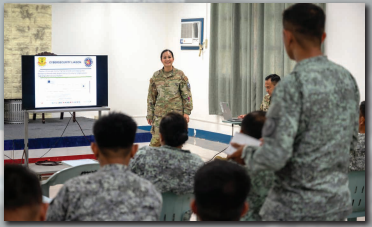
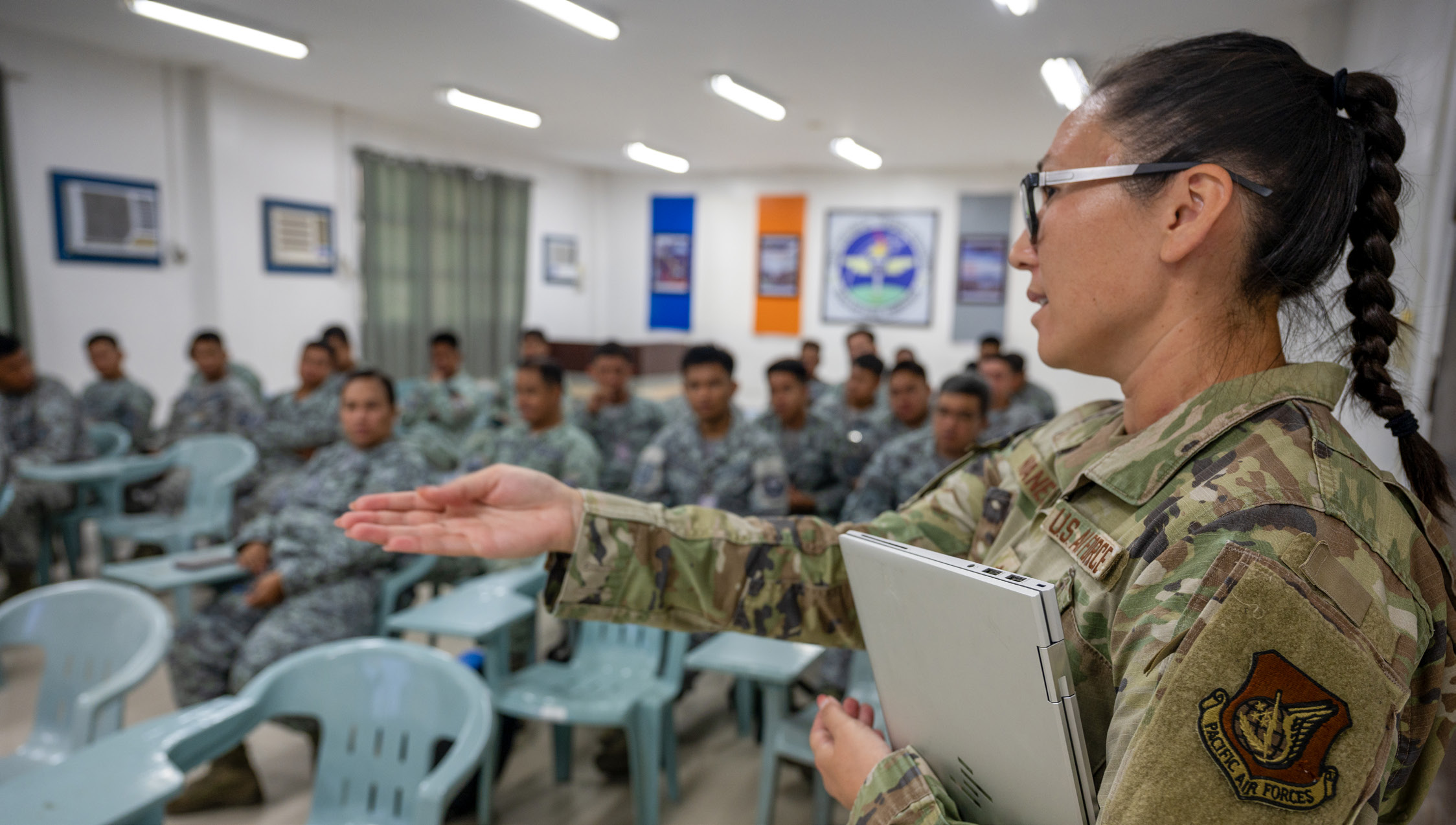
SHARING EXPERTISE – Maj. Collin Yoshimitsu, 169th Aircraft Control and Warning Squadron mission crew commander, discusses a broad range of air defense topics with military counterparts of the Philippine Air Force. These military-to-military breakouts were held during the State Partnership Program Air Defense Subject Matter Expert Exchange, August 2013, at Col. Jesus Villamor Air Base, Pasay City, Philippines. Senior Master Sgt. Kirsten Stanley photo(Picture from the 2013 Annual Report)
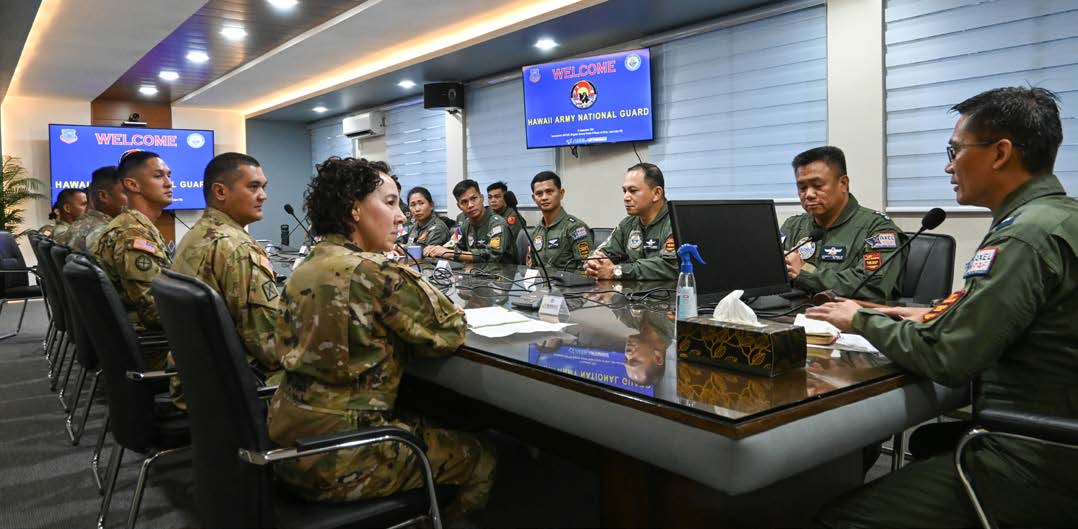
As Hurricanes Madeline and Lester were bearing down on the state, regular operations didn’t stop. Maj. Jeff Hickman provided a DOD briefing and Joint Operations Center tour to a delegation from the Philippines Air Force, Headquarters for Pacific Command and the National Guard Bureau State Partnership Program. (Picture from the 2016 August – September Pupukahi)
In recent years, the SPP has evolved to address sophisticated tactical operations, such as a month-long Subject Matter Expert Exchange (SMEE) that shared decades of air surveillance and intercept management experience.
Aviation maintenance has also been a cornerstone of modern engagements. In September 2024, the HING conducted its annual Rotary Wing Aviation Maintenance and Standardization SMEE. The real-world utility of these exchanges was demonstrated in November, when joint fire suppression techniques developed during SPP exchanges were successfully utilized to contain a devastating coastal fire in Tondo, Manila.
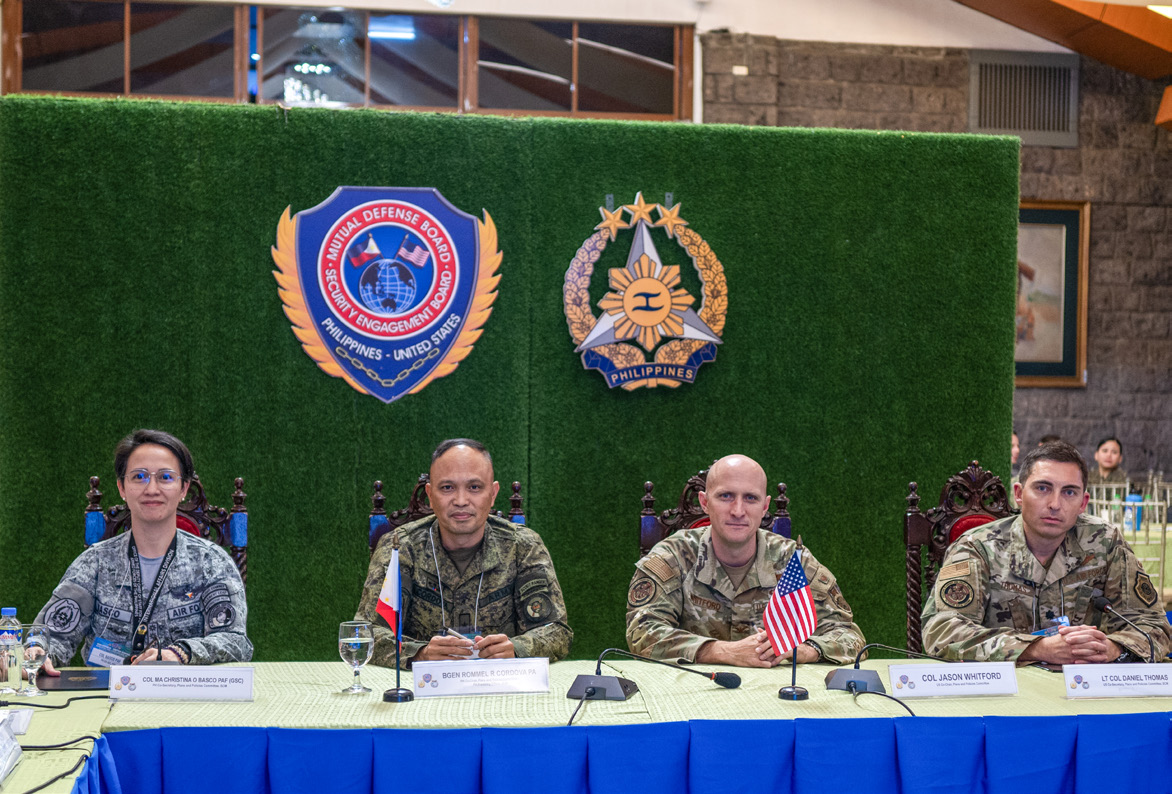
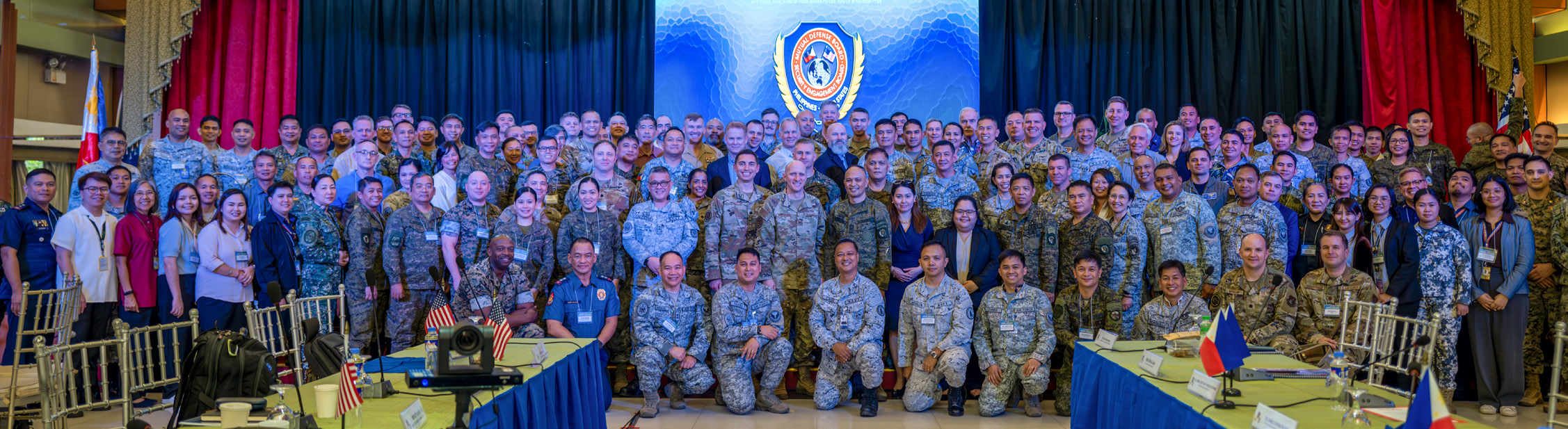
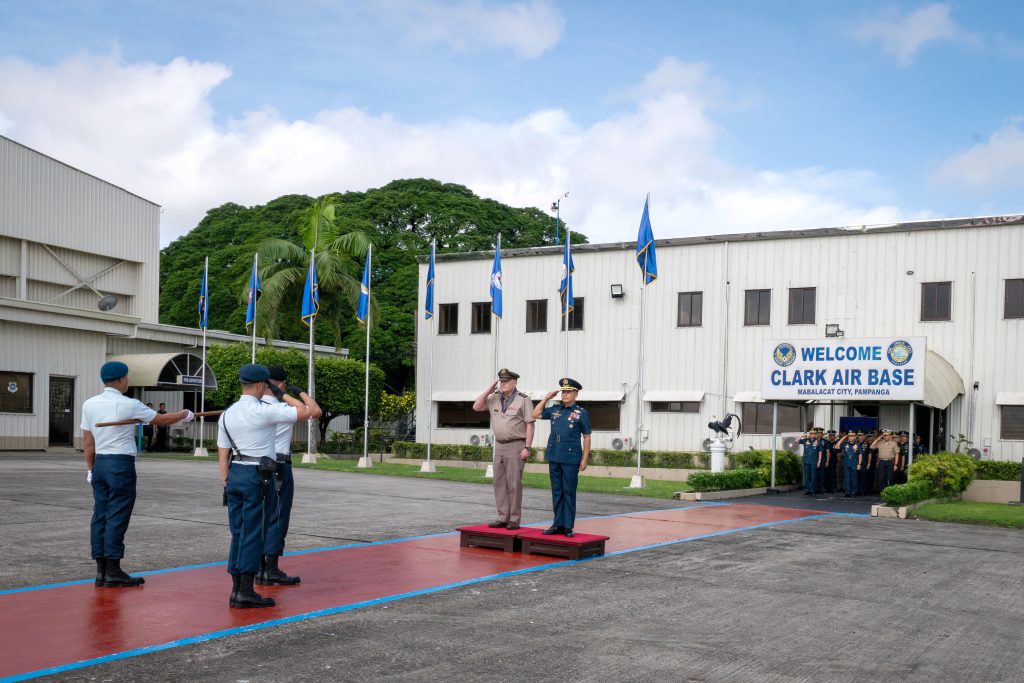
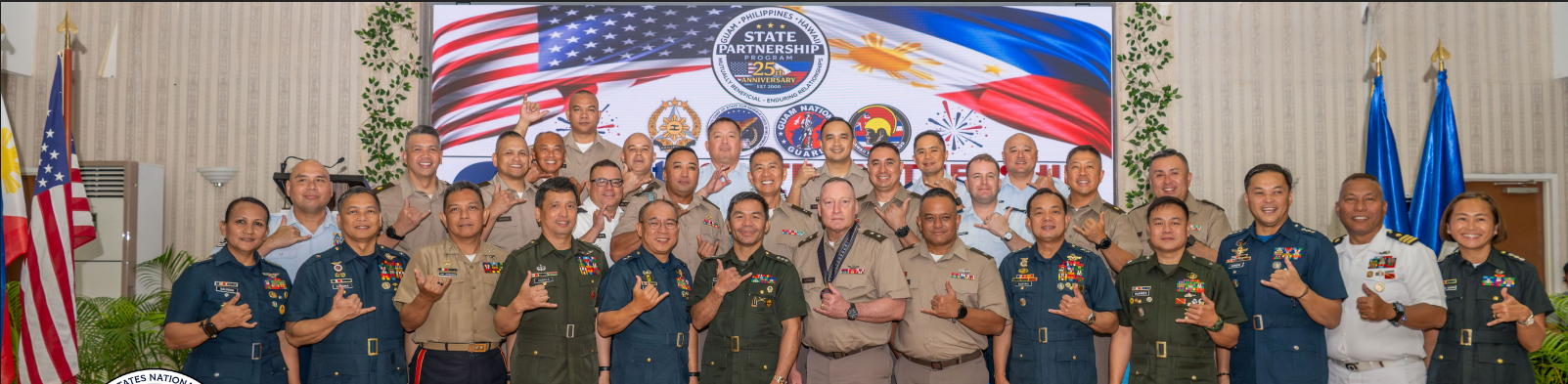
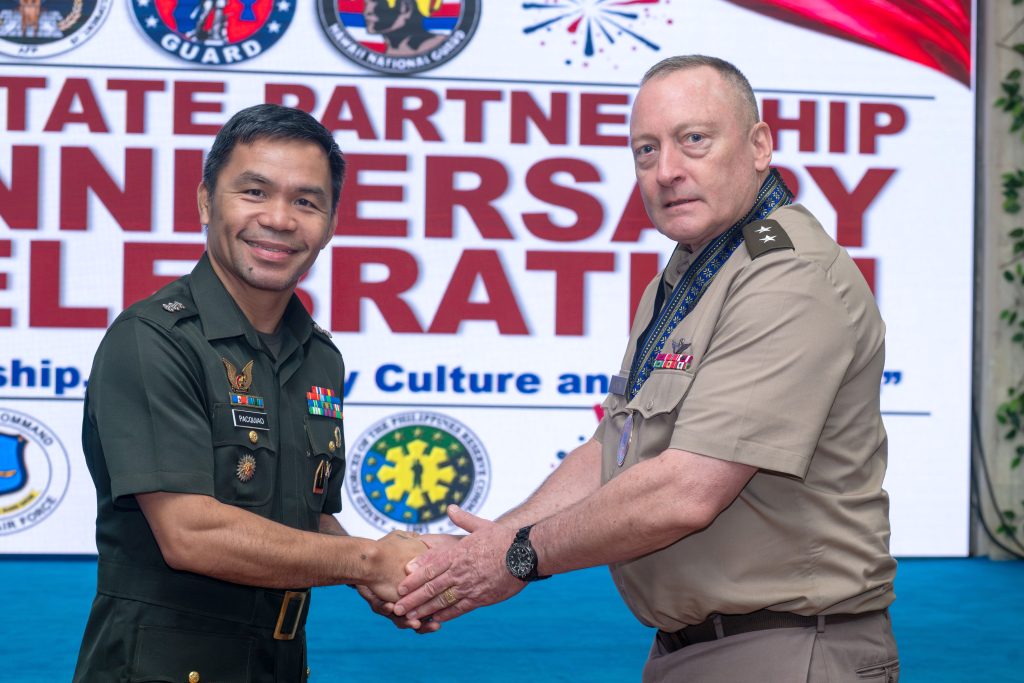
In September 2025, senior leaders gathered at Clark Air Base to celebrate the 25th anniversary of the SPP. The ceremony highlighted a quarter-century of shared sacrifices, enduring friendships and more than 60 annual engagements spanning cyber defense, climate resilience and reserve force modernization. The partnership’s longevity has transformed the HING-AFP relationship into a primary pillar of USINDOPACOM’s regional security framework, ensuring a free and open Indo-Pacific.
State Partnership Program: Philippines Chronological History
18 FEB 2000 The 204th Airlift Squadron, Hawaii Air National Guard delivered books and school supplies to Virgen Delos Remedios Elementary School while supporting Exercise Balikatan 2000.
Learn more
Airlift squadron aircrew brings aloha to Filipino elementary school
Airlift crew donates school supplies page 3 ANGEL AID – Maj. Terry Ganiko, Master Sgt. Darrin Morris and other 204th Airlift Squadron C-130 crew members delivered books and school supplies to Virgen Delos Remedios Elementary School, Angeles City, Philippines as the children look on. ANGEL AID – Maj. Terry Ganiko, Master Sgt. Darrin Morris and other 204th Airlift Squadron C-130 crew members delivered books and school supplies to Virgen Delos Remedios Elementary School, Angeles City, Philippines as the children look on. (Pictures from the 2000 January – February Pūpūkahi)
ANGELES CITY, Philippines (PACAFNS) – Hundreds of smiling, excited young faces greeted members of the 204th Airlift Squadron from the Hawaii Air National Guard Feb. 18 when they delivered books and school supplies to Virgen Delos Remedios Elementary School while supporting Balikatan 2000.
The members of the 204th provided airlift support for the exercise, but also decided to spread some goodwill while they were making the trip.
“We recently started a partnership program in Hawaii and the Philippines is our unit’s partner,” said Maj. Terry Ganiko, project coordinator for the program. “We are so happy to be here and to be able to help out like this.”
And help they did. The school teaches 450 children in 12 classrooms with 15 teachers. Up to now, many of the books being used were· from donations made to the school in the 1970s according to principal Nicolass Candas.
“The books and supplies they have brought us will help so much,” Candas said. ”We are so grateful for what they have done here today, and this will help the children so much.”
The children were the reason these members of the 204th did what they did in collecting the books and supplies to bring with them on the trip. A month prior to the unit deploying to assist with Balikatan, boxes were put out to collect the items.
”We have a lot of ties to the Philippines in our unit,” said Ganiko, a 204th navigator. “Some of our members are either from here or have family living here, so our people were anxious to give. It’s nice that we could help out this way.”
Besides helping some very appreciative children in need, the efforts also brought smiles to the faces of the men in flight suits handing out the items.
“This is what it’s all about,” said Master Sgt. Darrin Morris, a C-130 crew member with the 204th. “I have kids of my own, and this just makes you feel good to be able to do something like this and to see these smiles on their faces. This is awesome.”
After the books and supplies were handed out, the children of the school each took turns trying to get close to shake hands with the men, have their picture taken with them or to just say thank you.
The 204th hopes to turn this gesture into a tradition by bringing more supplies each year to the Philippines to be donated to public schools. “I hope we can come back next year and bring these children even more books and supplies,” Ganiko said. “It’s worth it to see their faces.” As the members of the 204th were ready to leave, the children waved goodbye and the teachers thanked them again and again.
‘You can look around here and see how much they appreciate this and it makes you realize how important it is to help children,” Morris said.
ANGEL AID Maj. Terry Ganiko, Master Sgt. Darrin Morris and other 204th Airlift Squadron C-130 crew members deliver books and school supplies to Virgen De Los Remedios Elementary School, Angeles City, Philippines. Chief Master Sgt Sam Wong photo(Picture from the 2000 Annual Report)
FEB 2001 A delegation from the HIARNG and HIANG made its first SPP visit to the Armed Forces of the Philippines. The delegation exchanged briefings and discussions at various echelons of the AFP.
Learn more
States Partnership Program (SSP)
In FY 99, Hawaii was the first state to be given the distinction of establishing a partnership with an Asia-Pacific country, the Republic of the Philippines, under the National Guard Bureau’s SPP. The goal is to demonstrate by example the role of the citizen-soldier and the proper role of the military in a democratic society. In February 2001, a delegation from the HIARNG and HIANG made its first SPP visit to the Armed Forces of the Philippines (AFP). The delegation exchanged briefings and discussions at various echelons of the AFP.
TROOP REVIEW – Maj. Gen. Edward L. Correa Jr., the adjutant general, inspects the troops during a February visit to Hawaii’s States Partnership Program country, the Philippines. (Picture from the 2001 January – March Pūpūkahi)
States Partnership Program (SSP)
In June 2001, a seven-member AFP delegation visited Hawaii to observe the Hawaii National Guard’s Makani Pahili hurricane exercise and visited State Civil Defense, Oahu Civil Defense, and Air National Guard.
2001 The 204th Airlift Squadron, Hawaii Air National Guard delivered books and school supplies to Sapang Bato Elementary School while supporting Exercise Balikatan 2001.
Learn more
204th Airlift Squadron brings education supplies to Philippines
By Capt. John Sheets, U.S. Air Force with Lt. Col. Ann S. Freed, U.S. Army Combined/Joint Information Bureau
ANGELES CITY, Philippines — Members of the Hawaii Air National Guard on duty at Exercise Balikatan 2001 gave of their hearts to improve the young minds of Sapang Bato Elementary School students in the Philippines. In May, Hawaii Air Guard donated educational books and school supplies to the teachers and students gathered to witness the dedication of a new school building. The building was constructed by the Armed Forces of the Philippines and U.S. service members during the exercise.
The squadron donated the educational materials as part of the National Guard State Partnership Program.
Hawaii airmen full filled their promise last year to come back with more educational supplies for another Angeles City school.
Members of the 204th Airlift Squadron from the Hawaii Guard collected approximately 500 pounds of reference books, encyclopedias, dictionaries and general reading books from unit members and libraries. Chief Master Sgt. Sam Wong, the primary U.S. exercise planner accepted grateful thanks from school principal Ms. Marilou M. Razon during the dedication ceremony.
The 204th’s mission is to use their C-130 Hercules aircraft to perform tactical airlift for military operations. They move small numbers of people and equipment to or from home station to or from staging areas to the operational area. During Balikatan 2001 the squadron was the primary trainer in U.S. airlift operations.
This included training their Philippine Air Force counterparts in cargo preparation, load planning, load master duties, flight engineer responsibilities, and pilot navigator duties. The Hawaii crew also taught low level navigation over water, formation flying, and tailgate operations – which includes heavy equipment drop, CDS or containerized delivery system drops, and paratrooper jumps.
In conjunction with their participation in Balikatan 2001 held in the Philippines, members of the 204th Airlift Squadron collected, donated and airlifted much needed education supplies to a new elementary school as part of the National Guard State Partnership Program. The school was built by Philippines and U.S. Armed Services
SETTING THE PARAMETERS·-Chief Master Sgt. Sam Wong, 204th Airlift Squadron crew chief, provides instruction to U.S. and Philippine Air Force personnel during Exercise Balikatan 2001. (Picture from the 2001 April – June Pūpūkahi)
State Partnership Program ……………….. 204th Airlift Squadron ……………….. Collection and distribution of school books and supplies for schools in the Republic of the Philippines
APR 2002 In April, twelve members from the 154th SFS were deployed to the Philippines Islands to participate in Exercise Balikatan.
Learn more
154th Security Forces Squadron Shows Their “Right Stuff” in the Philippines and Michigan
By Captain Wayne Acosta, Commander, 154th SFS
In April, twelve members from the 154th SFS were deployed to the Philippines Islands to participate in Exercise Balikatan.
Another five members from the 154th SFS augmented the 154th Medical Squadron during their training at Alpena, Michigan to conduct weapons qualification, Opposition Forces (OPFOR), and other augment duties. These members were Master Sgt. Randy Burnett, Master Sgt. Everett Ferriera, Tech. Sgt. Jamie Louis-Kahanu, Tech. Sgt. Steve Matsuda, and Staff Sgt. Radford Higa.
HIANG Ambassadors Training with “Aloha” in the Philippines
By SMSgt William L. Beck, Jr., 15th Maintenance Squadron
Back row left to right: Members of the 220th C-130E Air Wing PAF currently assigned at Mactan Benito Ebuen Air Base, Lapu City: SSgt Danilo Antonio, SSgt George Magalangit, , TSgt Cornejo Alero, TSgt Emilo Alahandro, SSgt Nestor Corrigador, SSgt Roberto Auquilar. Front row kneeling left to right: SMSgt William Beck (HIANG), MSgt Joey Coderio (PAF)(Pictures from the 2002 June Kūkāʻilimoku)
HIANG members from the 154th Maintenance Squadron and the 204th Airlift Squadron participated in “Balikitan 2002”. A month-long JCS joint and combined exercise with U.S. and Republic of the Philippines military forces during April and May. Interoperability seminars for the Philippines Air Force (PAF) were held on Clark Field (formerly, Clark Air Base) by our C-130 maintainers and aircrew to their counterparts from the 220th Air Wing, PAF. We also delivered and distributed much needed school supplies to the children at Cavite School.
MSgt. Eric Wada, SSgt. George Maglangit, SSgt. Melvin Salangdron and I instructed the maintenance seminars. Advanced system knowledge was evident among all PAF maintenance personnel. We challenged them with “what if’ problem-solving maintenance scenarios which enhanced their levels of experience.
Our participation in this year’s exercises was a rewarding experience for both P AF and HIANG personnel. The success of our mission can be attributed to our cultural similarities, which created a more relaxed environment for the exchange of ideas and value-added training.
The Republic of the Philippines has a State partnership with the Hawaii National Guard.
Top L-R: Sr.Arnn. Richardo Namoca, Staff Sgt. Clifford Ramson, Master Sgt. Ruben Mesinas, Staff Sgt. Jason Morris, Tech. Sgt. Larry Woody, Staff Sg. Ulysses Saromines, and Sr. Master Sgt. Paul Gallagher Bottom L-R: Staff Sgt. Richard Burke, Sr. Arnn. Ivan Angeles, Sr. Arnn. Martin Lapuente, Tech. Sgt. Dawn Tafaoa, Sr. Arnn. Hans Tandal, and Arnn. 1st Class Robert Kim (Photo provided by Capt. Acosta) (Picture from the 2002 May Kūkāʻilimoku)
27 APR 2003 Soldiers from the 298th Engineer Detachment deployed to Tagaytay City, Philippines, to participate in Exercise Balikatan 2003. The engineers worked alongside airmen of the Filipino Air Force to repair a home economics classroom.
Learn more
In April, 27 soldiers from the 298th Engineer Detachment deployed to Tagaytay City, Philippines, to participate in Exercise BALIKATAN. They continued the Hawaii National Guard’s commitment to the National Guard initiative State Partnership Program. The engineers worked alongside airmen of the Filipino Air Force to repair a home economics classroom.
by 1st Lt. Jeffery D. Hickman and Master Sgt. Stephen Lum
Engineers build Philippines partnershipTEAMWORKERS – Sgt. Joel Ballestro, 298th Engineer Detachment works with a local troop to make a “form” to be used for pouring cement during Exercise Balikatan in the Philippines.PAINTING THE CEILING– Spc. Andrew Kalaukoa, 298th Engineer Detachment, places “mud” to seal the ceiling joints during Exercise Balikatan in the Philippines.SMOOTH OPERATOR – Spc. Gordon Mattos, 298th Engineer Detachment, Hawaii Army National Guard, smooths the plaster on the wall of a classroom during Exercise Balikatan in the Philippines. Staff Sgt. Haunani Lo Photos(Pictures from the 2003 April – June Pūpūkahi)
construction, not destruction, is what the Hawaii Army National Guard’s 298th Engineering Detachment is all about. Twenty engineers continued building the Hawaii National Guards States Partnership Program relationship with the republic of the Philippines during Exercise Balikatan 2003 this spring. The program is a National Guard initiative that promotes links between U.S. states with partner countries’ defense ministries and other government agencies for the purpose of improving bilateral relationships with the U.S.
Carpenters, electricians, masons, plumbers and more put their expertise and hearts into repairing a home economics classroom in Tagaytay City in the Batangas Province, about two hours south of Manila. The 298th engineers spent 20 eight hour days working along side airmen from Philippine Air Force’s 355th Aviation Engineer Wing in the humanitarian and civil assistance/civil military operation event.
The tools and other equipment to be used during this project were sent from Hawaii, via barge, 40 days before the arrival of the 298th.
Once on site, there was no shopping outside the hotel, no walking around the immediate area or sight-seeing. The daily routine was: hotel, bus, work site, bus and hotel. The threat level for the area was elevated, but the 298th soldiers said they felt no threat. Our soldiers were in an unstable region and had a Guam Army National Guard unit providing force protection.
“The locals were ecstatic about our help … they were very thankful,” said Staff Sgt. Haunani Lo. One thing that the 355th will come away from this project with is the experience in using the 298th‘s power tools. “When we got there, they were using rakes, shovels, hand saws and homemade ladders and that was it.”
FEB 2004 A Hawaii Air National Guard C-130H cargo aircraft loaded with 154th Wing personnel, aircraft maintenance equipment and parts, medical supplies and a pallet full of elementary school books, left Hickam Air Force Base to participate in Exercise Balikatan 2004, in the Republic of the Philippines.
By Chief Master Sgt. Samuel K.P. Wong Loadmaster Superintendent, 204th Airlift Squadron
GETTING IT RIGHT – Tech. Sgt. Kimo McKee and Staff Sgt. Garrick Hiramoto prepare their C-130H cargo aircraft for rigging the airdrop load. Hawaii Air National Guard photos(Picture from the 2004 April – September Pūpūkahi)
In February, a Hawaii Air National Guard C-130H cargo aircraft loaded with 154th Wing personnel, aircraft maintenance equipment and parts, medical supplies and a pallet full of elementary school books, left Hickam Air Force Base to participate in the Joint Combined Services/Combined Philippine and U.S. Exercise, Balikatan ’04, in the Republic of the Philippines.
Maj. Robert Chowhoy led the team from the 204th Airlift, 154th Maintenance and 154th Aircraft Maintenance Squadrons. Their mission was to coordinate and expand access to training areas and facilities in advancement of theatre engagement plans and to continue development of our State Partnership Program with Hawaii, Guam and the Philippines.
After stops in Wake Island and Guam, the C-130 landed at Clark Air Base. After a few days of acclimatizing, the Hawaii airmen flew to Palawan island and accomplish their State Partnering mission by transporting 18,000 pounds of medical supplies and 2000 pounds of books. The medical supplies were used by U.S. medical personnel providing medical services to the people of the Philippines. The books replenished and stocked the libraries of the various schools undergoing renovation by U.S. military construction personnel.
Our focus then shifted toward completing our tactical airdrop training. This training gave our newer pilots and crew members the opportunity to conduct needed land navigation, fly over unfamiliar territory and to coordinate and plan with other participating military services.
HIANG Members Participate in Balikatan 04 Exercise
by CMSgt Samuel K. P. Wong
HIANG Members Participate in Balikatan 04 ExerciseHIANG Members Participate in Balikatan 04 ExerciseHIANG Members Participate in Balikatan 04 Exercise(Pictures from the 2004 March – April Kūkāʻilimoku)
Maj Robert Chowhoy led a contingent of HIANG members from the 204 AS, 154 AGS and 154 MXS to Clark Field, Philippines to participate in the annual JCS/Combine Philippine and U.S. exercise, Balikatan 04. The mission was designed as a means to access training facilities and develop the State Partnership Program between the State of Hawaii, Guam and the Philippines.
The mission commenced with the C-130 transporting 18,000 pounds of medical supplies and a pallet full of elementary books to Palawan Republic of the Philippines. During the exercise, U.S. medical personnel utilized the supplies to provide medical services to the Philippine people. The elementary books were given to schools to replenish and stock libraries of various schools undergoing renovations.
While the mission requirements for the remainder of the exercise were to work with the Philippine Air Force (PAF), more important activities prevented the PAF aircrews from attending the exercise. Consequently, our focus shifted to completing the tactical day/night NVG airdrop training
SECURING THE LOAD – Chief Master Sgt. Sam Wong and Master Sgt. Steve Lowery check the rigging on an airdrop load. (Picture from the 2004 April – September Pūpūkahi)
JAN2008 The first-ever two-day Pacific State Partnership Program Regional Workshop in Honolulu was held, it brought together Indonesia, Mongolia, the Philippines, Thailand and their respective National Guard partner states of Hawaii, Alaska, Guam and Washington.
Learn more
First Pacific SPP workshop
by U.S. Army Staff Sgt. Jim Greenhill National Guard Bureau
HONOLULU – The first-ever two-day Pacific State Partnership Program Regional Workshop in Honolulu in late January, co-hosted by Lt. Gen. H. Steven Blum and Maj. Gen. Robert G.F. Lee, Hawaii’s adjutant general, brought together Indonesia, Mongolia, the Philippines, Thailand and their respective National Guard partner states of Hawaii, Alaska, Guam and Washington.
Foreign military chiefs, National Guard adjutants general and others discussed activities that promote mutual security cooperation, stability and progress throughout the 41- country PACOM area of operations. The SPP in the Pacific draws on the resources of PACOM, the National Guard Bureau, National Guard states, the Office of the Secretary of Defense, U.S. ambassadors and country teams and other agencies and individuals.
Workshop discussions focused on military-to-military, military-to-civilian and civil security cooperation issues as well as funding for SPP events and related topics. Among issues to which attendees assigned a high priority:
Joint noncommissioned officer and officer training. “We’re down at the Soldier level,” said Maj. Gen. Donald Goldhorn, the adjutant general of the Guam National Guard, which is partnered with the Philippines. “We’re down at the E-5, E-6 level. That’s where the relationships really need to start.” Long-serving Guard leaders speak of foreign enlisted Soldiers and officers who held low ranks when the SPP started in the 1990s and now are among their nation’s military leaders, saying such relationships built over the long-term pay dividends that can’t be matched.
Developing mutual language skills. “We need to learn their language as much as they need to learn ours,” said Maj. Gen. Craig Campbell, the adjutant general of the Alaska National Guard, whose partner is Mongolia.
National Guard officers serving in partner countries as bilateral affairs officers and foreign officers serving at state joint forces headquarters. “These programs all succeed because of personal relationships,” said Maj. Gen. Timothy Lowenberg, the adjutant general of the Washington National Guard, whose partner is Thailand.
The SPP taps the unique missions of the National Guard and its Citizen-Soldiers and Airmen. “They [are] the best ambassadors for the United States,” Blum said. “The ability to achieve anything is always done through the magnificent work of the Citizen-Soldiers and Airmen. They bring not only their very, very fine military skills, … but … civilian life experience, civilian-acquired skills, the ability to interact with other people in an environment outside of the military … and [they] say more about what’s right about America than anything that we could say through … other programs.”
Senior military representatives from Indonesia, Philippines, Mongolia and Thailand echoed these sentiments.
SPP activities include exchanges by high-level military and civilian leaders. Military-to-military contacts bring state National Guard members together with foreign troops. Military-to-civilian activities focus on homeland defense, homeland security and military support to civilian authorities, including disaster preparedness, emergency response and consequence management.
The SPP is more about sharing ideas and knowledge than strictly military exchanges, Blum said. The partnerships can address a wide variety of shared security issues, including border security and migration, combat medical training, computer and financial crime, defeating improvised explosive devices, disaster response, humanitarian assistance, illegal drugs, military support to civilian authorities, peacekeeping operations, port security and weapons proliferation.
The National Guard Pacific partnerships unite three countries that share the risk of tsunamis with four Western National Guard states that are also at risk. Other regionally shared issues include cyclones, hurricanes or typhoons, mudslides the pandemic influenza threat and high seas piracy. By addressing these issues ahead of time, National Guard and foreign leaders can avoid exchanging business cards for the first time in a crisis that calls for swift, effective mutual aid.
Civilian-to-civilian security exchanges often grow from the SPP, with increased contacts between U.S. and foreign businesses, educational institutions, farmers, doctors, lawyers and scientists.
“This state partnership brings so much more than the military side,” said Lee, the Hawaii adjutant general. Lee pointed out that he and some other adjutants general also act as their states’ civil defense and emergency managers, and homeland security leaders, meaning they can offer even richer skills to their SPP partners.
Scheduled upcoming exchanges between Hawaii and Indonesia include hurricane and military exercises and enlisted and officer training. Blum called that partnership “particularly significant because of the geographic location and the strategic importance of Indonesia, [which] has the largest Muslim population in the world.” More than 210 million Muslims live there.
The Asia-Pacific region includes 51 percent of the earth’s surface, said Brig. Gen. Skip Vincent, PACOM’s deputy mobilization assistant. Almost 60 percent of the world’s population lives there, and it includes the four most-populous nations – China, India, Indonesia and the United States. Five of America’s seven mutual defense treaties are in the region, with Australia, Japan, the Philippines, South Korea and Thailand.
More than 25 percent of the world’s trade and 50 percent of its oil are there.
“This [SPP], while today it’s just with four countries here, hopefully in the not-too-distant future will be with many more countries here,” said Goodman, the Marine lieutenant general.
Keating noted that trade between the United States and Japan has increased by a factor of four in the last 20 years and between the U.S. and China by a factor of 50. He also said the Pacific is home to three of the world’s four largest economies, and 15 of its 20 largest ports, including the largest of all, Shanghai.
“If you haven’t been [to Shanghai] in the last week or so, it’s a different city,” he said. “It’s changing that rapidly.”
Partnerships are created through discussions among countries, ministers of defense, the U.S. ambassador, regional combatant commanders, adjutants general, governors and the chief of the National Guard Bureau, which administers the SPP.
The SPP started in the Baltic region of Europe in 1993 after the collapse of the former Soviet Union, focused on matching U.S. states with former Soviet satellite nations. “This partnership provided them a chance for the path to NATO and the European Union that they wanted to take to determine their future,” Blum said.
The SPP later expanded to South and Central America. Goodman saw the SPP at work firsthand during a U.S. Southern Command assignment as chief of staff. “I gained an extraordinary appreciation for the power of the State Partnership Program,” he said. “It’s of extraordinary value.”
Central Asia, the Middle East, the Pacific and Africa came next. The U.S. in October established Africa Command (AFRICOM). “I expect that [region’s partnerships] will also grow dramatically in the next two to three years,” Blum said.
No SPP relationship has ended and none has failed since the program’s inception 15 years ago. The SPP benefits from its ability to connect nations with the U.S. at the state level, Guard leaders said. “Our federal government is a complex and somewhat intimidating system to deal with,” Blum said. “This lets them get into America through a portal that’s comfortable for them.”
Maj. Gen. Robert G.F. Lee, the adjutant general of the Hawaii National Guard, and Lt. Gen. H. Steven Blum, the Chief of the National Guard Bureau, co-hosted the first-ever two-day Pacific State Partnership Program Regional Workshop in Honolulu on Jan. 24, 2008. (Picture from the 2008 March Kūkāʻilimoku)
FEB 2008 The 293rd Combat Communications Squadron’s Eagle Vision 5 deployed to the Republic of the Philippines during the 2008 Balikatan Exercise. The team provided humanitarian assistance to the Pampanga community, in conjunction with their Eagle Vision operations, in the Central Luzon region.
Learn more
Eagle Vision gives back to to Philippine community
by 154 WG/PA
Staff Sgt. Kyle Kikuchi explains Eagle Vision functions to Philippine children.(Picture from the 2008 April Kūkāʻilimoku)
The 293rd Combat Communications Squadron’s Eagle Vision 5 team took the Air Force’s “Service Before Self” core value to a higher level while they were deployed to the Republic of the Philippines during the 2008 Balikatan Exercise in February.
The team was afforded the opportunity to provide humanitarian assistance to the Pampanga community, in conjunction with their Eagle Vision operations, in the Central Luzon region of the Philippines.
With the help of Col. Julio Stomayer, Air Force Combat Support Office, the Eagle Vision 5 team began their humanitarian efforts at the Angeles City Bahay Bata Center. The Eagle Vision 5 team made their way to the Center, an institution in Central Luzon that seeks to uplift the welfare of street children. “We were received at the center with a warm welcome,” said Staff Sgt. Dana Ayala, 293 CBCS Data Integration Segment Operator. “The children from the center created an assembly line and began stacking the various boxes of food.” Besides donating food to the center, members of the 293rd also took time out of their day to play baseball and interact with the children. In another humanitarian effort, the Eagle Vision 5 team collected children’s clothing for the 2008 Balikatan Exercise as part of an initiative coordinated between the 204th Airlift Squadron and the Active Duty’s 535th Airlift Squadron. To get clothing, Staff Sgt. Ayala spearheaded a clothing drive held at Mililani Uka Elementary School and the 293 CBCS prior to the Balikatan deployment. “The drive was more than a success,” said Sergeant Ayala. “We collected over half a pallet of donations.” While in the Philippines at Clark Air Base, the team consolidated and sorted their collection and distributed the items Feb. 22 during a visit from a nearby Pampanga school and orphanage School supplies were donated as well.
Besides the giving of gifts, the Eagle Vision team, was also able to do a little “show and tell” with the Pampanga children. Staff Sgt. Kyle Kikuchi, 293 CBCS Acquisition Segment Operator, gave the kids an overview of how Eagle Vision operates. Following the overview, Staff Sgt. Kikuchi and the other Airmen on hand were showered with questions from the children about the Eagle Vision system.
“From a mission standpoint, I think the 2008 Balikatan deployment was a complete success,” said Ayala. “As a humanitarian effort our Eagle Vision team was proud to have had the opportunity to interact with the children and provide for the less fortunate.”
The Eagle Vision system provides unclassifi ed, commercial imagery to command or control. The imagery can be easily shared among coalition forces to support mission planning and disaster relief, etc.
(L) Senior Airman Kendall Cathcart (Eagle Vision 1) and (R) Staff Sgt. Dana Ayala (Eagle Vision 5) sort through bags of donated goods.(Picture from the 2008 April Kūkāʻilimoku)
FEB 2008 Exercise Balikatan ‘08 a joint and bilateral exercise increases both the American and Filipino armed forces’ ability to respond quickly and work effectively together to provide relief and assistance in the event of natural disasters and other crises that threaten public safety and health.
Learn more
Exercise Balikatan ‘08 tests ability to deliver
by Tech. Sgt. Shane A. Cuomo Air Force News Agency
A C-17 Globemaster III aircrew and members from the Philippine air force conduct a pre-mission briefi ng Feb. 27, at Clark Field, Pampanga, in the Philippines, during Exercise Balikatan ‘08. Airmen are from the Hawaii Air National Guard’s 204th Airlift Squadron and from the 535th Airlift Squadron at Hickam Air Force Base, Hawaii. Balikatan is an annual joint and bilateral exercise involving U.S. military and Philippines armed forces members(Picture from the 2008 April Kūkāʻilimoku)
CLARK FIELD, Philippines (AFPN)–Moving large amounts of equipment, personnel or humanitarian relief supplies can be a daunting task. But it’s a task tactical and strategic airlifters like the C-130 Hercules and the C-17 Globemaster III are made for. That’s why they were instrumental in Exercise Balikatan ‘08.
The joint and bilateral exercise increases both the American and Filipino armed forces’ ability to respond quickly and work effectively together to provide relief and assistance in the event of natural disasters and other crises that threaten public safety and health.
The ability to deliver materiel and personnel to military operations, humanitarian assistance/disaster relief or contingency operations is critical to be successful, offi cials said.
“Our role for the exercise is key in that in any military operation that we have you’re always going to need airlift, whether it’s tactical airlift or strategic airlift,” said Lt. Col. Mark Polomsky, the 36th Airlift Squadron commander.
The term Balikatan is a Tagalog word, which means ‘shouldering the load together,’ and characterizes the philosophy and intent of the exercise.
Along that same line, the fi rst C-17 involvement with the exercise comes with a mix of active duty and Air National Guard members.
“We are a team. The Hawaii Air National Guard 204th Airlift Squadron and the 535th Airlift Squadron, as well as our maintenance, is made up of Guard and active duty,” said Capt. Al Basioa, C-17 planner for the exercise.
“Everything is a team effort and we work very well together. It is indistinguishable between us in our mission,” he said.
Working hand in hand with the Filipinos, the two C-130 aircraft from Yokota Air Base, Japan, and the C-17 from Hickam Air Force Base, Hawaii, showed their capabilities via airlift.
“It’s really good training working with our sister services and working with another countries’ military,” Colonel Polomsky said.
The exercise allows the Filipino government to understand the scope of America’s airlift capabilities, Captain Basioa said. That way, if they need assistance in humanitarian or disaster relief efforts in the future, they’ll know what to expect.
“Airlift is very important, for example when the floods and mudslides happened in 2006 the C-130s and the C-17 were both there to provide assistance,” Captain Basioa said. The relationship between the government of the Philippines and the United States is the longest bilateral partnership in U.S. history.
Master Sgt. Joseph Salvador explains the working of the C-17 Globemaster III to members of the Philippine air force prior to taking off on a mission Feb. 27 from Clark Field, in Pampanga, during Exercise Balikatan ‘08 held in the Philippines. Sergeant Salvador is a loadmaster from the Hawaii Air National Guard’s 204th Airlift Squadron. (Picture from the 2008 April Kūkāʻilimoku)
Also of note is Hawaii’s JFHQ involvement in the on-going support to Indonesia and the Philippines through our State Partnership Program (SPP) These program continue to solidify the excellent partnership the Hawaii Guard enjoys with these two important Pacific Nations. It is through there Pacific partnerships that the JFHQs stand ready to engage where and when needed to support world class exercise events or bilateral exchanges. As we grow the programs we set the conditions for future engagements that continue to shape the strategic environment of the Pacific. Our contributions in the PACOM-AOR have established the Joint Force Headquarters as the cornerstone for superb and professional support rendered by both our soldiers, airmen and officers that make up Hawaii’s own Joint-Team!
Also of note is Hawaii’s JFHQ involvement in the on-going support to Indonesia and the Philippines through our State Partnership Program (SPP). These programs continue to solidify the excellent partnership the Hawaii Guard enjoys with these two important Pacific Nations. It is through these Pacific partnerships that the JFHQs stand ready to engage where and when needed to support world-class exercise events or bilateral exchanges. As we grow the programs we set the conditions for future engagements that continue to shape the strategic environment of the Pacific. Our contributions in the PACOM-AOR have established the Joint Force Headquarters as the cornerstone for superb and professional support rendered by both our soldiers, airmen and officers that make up Hawaii’s own Joint-Team.
Also of note is Hawaii’s JFHQ involvement in the on-going support to Indonesia and the Philippines through our State Partnership Program (SPP). These programs continue to solidify the excellent partnership the Hawaii Guard enjoys with these two important Pacific Nations. It is through these Pacific partnerships that the JFHQs stand ready to engage where and when needed to support world-class exercise events or bilateral exchanges. As we grow the programs we set the conditions for future engagements that continue to shape the strategic environment of the Pacific.
Hawaii National Guard State Partnership Program (HING SPP) has been busy this year with variety of engagements with partner nations, Philippines and Indonesia, with subject matter experts exchanges (SMEE) on Homeland Defense/ Disaster Response (HA/DR), Search and Rescue training, Non-Commission Officer Development, and Senior Leader Engagement Visit. HING SPP also hosts numerous events with familiarizations and demonstrations of certain capabilities of the Hawaii Army and Air National Guard. In addition, Hawaii National Guard conducted HA/DR CPX and Disaster Exchange with Taiwan Army.
Hawaii CERFP S&E personnel provide subject matter expert exchange with the Armed Forces of the Philippines, Philippine Red Cross and Local Fire Departments in various procedures to respond to a collapsed structure working collaborative with HING State Partnership Program (SPP)
The Hawaii National Guard played its part in hosting delegations from our State Partnership Programs with Indonesia and the Philippines as well as several other key nations in the region.
SEP 2012 Members of the Hawaii CERF-P went to the Philippines to train alongside host nation military and emergency responders. They conducted search and extraction techniques, casualty extraction and transport, as well as swift water training.
Learn moreGETTING THEIR FEET WET – Hawaii Guard troops do swift water training in Taiwan. JDOMS photo(Picture from the 2013 Annual Report)
State Partnership Program showcases emergency response operations
Specifically, the Hawaii CBRNE Emergency Response Force Package or CERF-P has been at the forefront of establishing a kind of CERF-P University that demonstrated technical aspects of the Urban Search and Rescue. In September, 21 members of the Hawaii CERF-P went to the Philippines and Taiwan to train alongside host nation military and emergency responders. They conducted search and extraction techniques, casualty extraction and transport, as well as swift water training. This exchange of “best practices” has facilitated a very dynamic reciprocal relationship among and its partner nations in the Pacific.
TROOP SHARING – CBRNE Emergency Response Force Package trains in the Philippines. JDOMS photo(Picture from the 2013 Annual Report)
State Partnership Program showcases emergency response operations
There have been numerous foreign delegation visit that have given Hawaii JDOMS an opportunity to share operational experience and ideas on disaster related matters. This year alone JDOMS hosted military delegations State Partnership Program (SPP) from Indonesia and the Philippines, as well as Japan, and Taiwan. This year Hawaii JDOMS conducted several Subject Mater Expert Exchanges with numerous Pacific partners. Specifically, the Hawaii CBRNE Emergency Response Force Package or CERF-P has been at the forefront of establishing a kind of CERF-P University that demonstrated technical aspects of the Urban Search and Rescue.
19-23 AUG 2013 Air defense experts from the Hawaii Air National Guard traveled to Col. Jesus Villamor Air Base, Pasay City, Philippines, to conduct an Air Defense, Command and Control Subject Matter Expert Exchange with Philippine air force partners.
Learn more
Hawaii National Guard air defense experts share with Philippine air force partners
Story and photo by Senior Master Sgt. Kristen Stanley
Philippine Air Force Brig. Gen. Raul Del Rosario, commander of the Air Defense Wing, welcomes Hawaii Air National Guardsman Master Sgt. Ronald De Peralta to the Air Defense, Command and Control Subject Matter Expert Exchange, Aug. 19-23, 2013. Master Sgt. De Peralta, a member of the 169th Aircraft Control and Warning Squadron provided a briefing on the history of air defense in the State of Hawaii to the Philippine Air Force participants.(Pictures from the 2013 November Kūkāʻilimoku)
MANILA, Philippines – Air defense experts from the Hawaii Air National Guard traveled to Col. Jesus Villamor Air Base, Pasay City, Philippines, to conduct an Air Defense, Command and Control Subject Matter Expert Exchange (SMEE) with Philippine air force (PAF) partners Aug. 19-23, 2013.
The exchange was in support of the National Guard’s State Partnership Program, as Guam and Hawaii are co-partnered with the Philippines.
During the week-long SMEE, the U.S. air defense experts from the 109th Air Operation Group and the 169th Aircraft Control and Warning Squadron provided briefings and shared expertise with their Philippine air force counterparts on a wide spectrum of topics including surveillance, weapons, tactics, identification, command/ control and the role of the Air Operations Center.
Philippine military participants included airmen from Headquarters Air Defense Wing (ADW), Philippines Air Defense Control Center (PADCC), Direct Air Support Force (DASF), the 580th Aircraft Control and Warning Group, the 7th Tactical Fighter Squadron and the 950th Communications, Electronics, Information System Group (CEISG). The PAF representatives briefed the U.S. team on the current air defense system in the Philippines and a proposed phased plan of modernization. Earlier this year, Philippines President Benigno Aquino announced an initiative to modernize the air defense system of the Philippines to include the procurement of new radars and equipment. A modernized air defense system will allow the Philippines to gain a greater awareness of what’s going on in the region and the ability to better defend their own sovereign interests.
Smaller group breakout sessions generated dialogue between PAF and HING airmen. Detailed questions and answers were discussed outside the parameters of the briefings.
“Airmen from both nations shared their ideas and personal experiences resulting in enhanced insight, respect, and appreciation for the contributions of both countries in the attainment of common goals,” said Maj. Clifford Afong, director of operations for the 150th Air Operation Squadron and lead for the Hawaii air defense team.
These military-to-military discussions with U.S. and PAF air defense counterparts are a perfect example of how the Hawaii National Guard State Partnership Program supports the Pacific Realignment strategies and objectives by contributing to bilateral partnership efforts. U.S. Secretary of Defense Chuck Hagel is currently conducting discussions and negotiations with the Philippines on a framework agreement to enable U.S. forces to operate on Philippine military bases, in Philippine territory and waters, and enable the U.S. to help beef up the capacity of the Philippines’ armed forces.
The National Guard State Partnership Program has been building relationships that today includes 65 unique security partnerships involving 71 nations around the globe. The program links a state’s National Guard with the armed forces of a partner country. In addition to co-partnership with Guam to the Philippines, the Hawaii National Guard is also partnered with Indonesia Despite the wrath of Tropical Storm Maring earlier in the week that brought significant flooding to Manila, the SMEE concluded on time and was considered a much appreciated and successful exchange for both counties. The event closed with a ceremony featuring guest of honor Brig. Gen. Raul Del Rosario, commander of the Air Defense Wing, and a family-style luncheon hosted by the Hawaii Air National Guard participants.
Airmen from the Hawaii Air National Guard’s 154th Wing and the active duty’s 15th Wing use the Airman’s Manual to review their deployed environment survival skills during July’s Operational Readiness Exercise outside the 154th’s headquarters. The year-long collaboration will cultimate during this month’s Operational Readiness Inspection Nov. 4-8. (Photo by Tech. Sgt. M ichelle Thomas)(Pictures from the 2013 November Kūkāʻilimoku)
The HING continued to build enduring partner relationships with the Republic of the Philippines through Bilateral Defense Discussions (BDD). The HING attended the US-Philippines Bilateral Engagement Calendar Board (BECB) in Manila to establish a list of SPP events (urban search and rescue SMEE, Joint Staff, Hawaii National Guard ground radar, air defense and C2 Subject Matter Expert Exchange (SMEE), senior leader exchange) in February 2014.
FEB 2014 The HING attended the US-Philippines Bilateral Engagement Calendar Board in Manila and observed the reopening ceremony of the Marabaras National High School that was damaged by Typhoon Haiyan.
Learn more
The HING continued to build enduring partner relationships with the Republic of the Philippines through Bilateral Defense Discussions (BDD). The HING attended the US-Philippines Bilateral Engagement Calendar Board (BECB) in Manila to establish a list of SPP events (urban search and rescue SMEE, ground radar, air defense and C2 Subject Matter Expert Exchange (SMEE), senior leader exchange) in February 2014. The HING contingent observed the reopening ceremony of the Marasbaras National High School that was damaged by Typhoon Haiyan.
GUARD IMPROVEMENT – Soldiers from the 230th Engineer Company install a window frame at Marasbaras High School in the Philippines. The Engineering Civil Action Project included Hawaii and Guam National Guard Soldiers and Airmen to rebuild the Tacluban school damaged by Typhoon Haiyan. National Guard photo(Picture from the 2014 Annual Report)
The HING continued to build enduring partner relationships with the Republic of the Philippines through Bilateral Defense Discussions (BDD). The HING attended the US-Philippines Bilateral Engagement Calendar Board (BECB) in Manila to establish a list of SPP events (urban search and rescue SMEE, ground radar, air defense and C2 Subject Matter Expert Exchange (SMEE), senior leader exchange) in February 2014.
24 APR 2015 The Armed Forces of the Philippines trained shoulder-to-shoulder with Hawaii Army National Guard soldiers, practicing techniques to enter collapsed buildings effectively in case of a real world urban search and rescue scenario as part of exercise Balikatan.
Learn more
Balikatan 2015 Reinforces Urban Search And Rescue Techniques
Story by Staff Sgt. Chris Hubenthal Friday, April 24, 2015
U.S. Army Staff Sgt. Jim Evagelista, left, 103rd Troop Command, 230th Engineer Company logistics noncommissioned officer in charge, Hawaii Army National Guard, instructs Ruel Tabang, right, Palawan Puerto Princesa City Bureau of Fire Protection rescuer, on basic shoring techniques for construction of a split sole raker as part of exercise Balikatan’s urban search and rescue training in Puerto Princesa City, Palawan, Philippines, April 24. The USAR training familiarized BK15 participants in lumber cutting and basic shoring, enabling them to more effectively construct T-spots and split soles in case a collapsing building needs to be supported during a real world mission. This year marks the 31st iteration of the exercise, which is an annual Philippines-U.S. bilateral military training exercise and humanitarian civic assistance engagement. (U.S. Air Force photo by Staff Sgt. Christopher Hubenthal/Released)(Picture from the 2015 May Pūpūkahi)
PUERTO PRINCESA CITY, Philippines – The Armed Forces of the Philippines trained shoulder-to-shoulder with U.S. Hawaii Army National Guard soldiers, practicing techniques to enter collapsed buildings effectively in case of a real world urban search and rescue scenario as part of exercise Balikatan, April 24.
Fifty four Filipino participants from the AFP and Palawan Bureau of Fire Protection practiced basic shoring techniques.
Shoring is the process of supporting a building, vessel, structure, or trench with props when they are in danger of collapse.
U.S. Army Staff Sgt. Jim Evagelista, 103rd Troop Command, 230th Engineer Company logistics noncommissioned officer in charge, HIARNG, explained how the training is preparing the AFP to better respond to a natural or man-made disaster.
“Before the rescuer can enter a building they need to secure and stabilize the collapsed structure before they can enter,” Evangelista said. “What I taught them is that the first thing that you need to know as a rescuer is that you need to rescue yourself, your teammates, and then the victim. It doesn’t make sense if you’re going into a building that’s not stable.”
To prepare for a USAR situation, AFP members and fire protection rescuers constructed t-spots, double t-spots, flying rakers, and split sole rakers, to better prevent a damaged building from collapsing.
Philippine Army Sgt. Vanessa May Sumanga, 408th Palawan Community Defense Center criminologist, said she thinks the USAR training has better prepared her to respond to an incident.
“Staff Sgt. Evangelista taught me how to do basic shoring if there was ever a building collapse and how to rescue a victim,” Sumanga said. “From my basic knowledge given by Sir Evangelista, I will better be able to help rescue victims.”
Philippine Air Force Staff Sgt. Rolando Albaniel, 570th Composite Tactical Wing military police security supervisor, said that the knowledge the BK15 USAR training has provided will be utilized when the training is complete.
“What they taught us must go to action,” Albaniel said. “With this training there should be no accident for the rescuer when they enter a building. This training is beneficial if this happens in Palawan. It gives us an idea on how to perform in any case that a disaster may happen to us.”
U.S. Army Corey Ito, CBRNE Enhanced Response Force Package search and extraction noncommissioned officer in charge, HIARNG, hopes the training will assist the AFP in the future.
“Hopefully they can use the training because they are hit by a lot of typhoons and other real world events,” Ito said. “The Filipinos are very receptive, open to everything, and very eager to learn.”
This year marks the 31st iteration of the exercise, which is an annual Philippines-U.S. bilateral military training exercise and humanitarian civic assistance engagement.
STATE PARTNER – Staff Sgt. Jim Evagelista, left, 230th Engineer Company, 103rd Troop Command, logistics noncommissioned officer in charge, Hawaii Army National Guard, instructs Ruel Tabang, right, Palawan Puerto Princesa City Bureau of Fire Protection rescuer, on basic shoring techniques for construction of a split sole raker as part of exercise Balikatan’s urban search and rescue training in Puerto Princesa City, Palawan, Philippines. Staff Sgt. Christopher Hubenthal, U.S. Air Force photo(Picture from the 2015 Annual Report)
Additionally, 109th AOG sent SMEEs to support the HING’s State Partnership Program in Indonesia and Philippines. Their real-world contributions received accolades for supporting U.S. Presidential airlift missions, planning and executing priority tanker missions in support of 613th AOC Intelligence Surveillance and Reconnaissance operations and continuing to develop the theater’s warfighting capabilities. . . Support was provided for an Indonesian general officer delegation visit in June 2015.
2015 Soldiers from the 203th Engineer Company, Hawaii Army National Guard have assisted in the rebuilding of a school in Tacloban the Philippines after it was damaged during super typhoon Hyann in 2013.
Learn more
Hawaii Army National Guard Help Rebuild in the Philippines
In the second effort of is kind in the past two years construction Soldiers from the Hawaii Army National Guard’s 203th Engineer Company have assisted in the rebuilding of a school in Tacloban the Philippines after it was damaged during super typhoon Hyann in 2013
Hawaii Army National Guard Help Rebuild in the PhilippinesHawaii Army National Guard Help Rebuild in the Philippines(Pictures from the 2015 July Pūpūkahi)
– 2015 July Pūpūkahi pp. 2
Hawaii Army National Guard Help Rebuild in the Philippines(Picture from the 2015 July Pūpūkahi)
APR 2016 Airmen from the 204th Airlift Squadron, Hawaii Air National Guard and Hawaii National Guard Chemical, Biological, Radiological, Enhanced Response Force Package participated in exercise Balikatan 2016.
Learn more
Hickam airlift squadrons participate in Balikatan 2016
Story and Photos by Tech. Sgt. Andrew Jackson Headquarters HAING Public Affairs
JOINT BASE PEARL HARBORHICKAM, Hawaii. — Airmen and C-17 Globemaster III aircraft from the active duty 535th Airlift Squadron and Hawaii Air National Guard 204th Airlift Squadron returned home to Joint Base Pearl Harbor-Hickam after participating in exercise Balikatan 2016.
Balikatan is an annual bilateral exercise designed to increase interoperability between the U.S. and Philippine armed forces with this year’s iteration running through mid-April throughout various regions of the Philippines.
The squadrons supplied airlift support and completed high and low altitude package delivery. Airmen had the opportunity to complete real world hands-on training unique to the international airspace that surrounds Clark Air Field in the Philippines.
“I have learned a lot about what goes into a deployment, from the coordinating, and communication,” said U.S. Air Force Capt. Brandon Chang, Balikatan project officer for the two squadrons. “Because I was doing the planning I did not fly as much but I know that all the other guys gained experience in a variety of air operations.”
In addition to providing airlift support to an A-10 Thunderbolt II squadron from Osan Air Base, Korea, the crews flew a wide variety of missions during the exercise such as static line air-drop, high altitude low opening, equipment drop, low altitude maneuvers, and provided a high mobility artillery rocket system move for U.S. Marines. Another mission highlight was a mass causality air evacuation where U.S. Air Force pararescue airmen worked side by side with Armed Forces of the Philippines rescuers to care for simulated casualties while inflight to a safe location.
To overcome communications difficulties on the flightline, tower liaison officers from the Hawaii Guard assisted Philippine air traffic control personnel.
Throughout the exercise, the two squadrons functioned as a well blended unit with no distinction between active duty and Guardsmen.
Philippine topography provided the air crews and maintenance airmen the opportunity to work through a variety of missions and gain training not normally available at home station. Missions where flown daily for a two-week period to give the aircrews time to grow in their skills and experience.
“It is our job to better our skills and to get a different view of operations while working with different agencies while coordinating with the Armed Forces of the Philippines,” said Chang. “All of the skills we gained during this exercise will pay high dividends in the future.”
Hawaii National Guard Search and Rescue Soldiers Participate in Balikatan 2016
Story and Photo by Tech. Sgt. Andrew Jackson
Staff Sgt. Ryan Ahpuck with the Hawaii National Guard CERFP breaching and breaking team demonstrates changing a bit on a hammer drill for the Armed Forces Philippines for Balikatan 2016, April 09, 2016, Camp Capinpin, Philippines.Staff Sgt. Cory Ito, Hawaii National Guard CERFP team, collects an after action report from members of the Armed Forces of the Philippines after their second day on the ropes rescue course during an Urban Search and Rescue subject matter exchange with the Hawaii National Guard CERFP team during Balikatan 2016, April 11, 2016, Camp Capinpin, Philippines.(Pictures from 2016 May Pupukahi)
Balikatan means ‘shoulder to shoulder’ in the Philippines. That is the goal, the theme, and the point of a series of annual exercises that where held here during April in the Philippines. Balikatan is a series of preparedness exercises that are staged through-out the country incorporating the Armed Forces of the Philippines, US Army, Air Force, Navy, Marines, and the National Guard.
Hawaii National Guard Chemical, Biological, Radiological, Enhanced Response Force Package (CERF-P) team Non Commissioned Officer In-Charge (NCOIC), Sgt. 1st Class, Jason Kaaiakamanu stated. “Our role here is to show them (the AFP) our techniques, and procedures as far as what we do for search and extraction. Along those lines we know that they have a lot more natural disasters where they can use those techniques more then we do in Hawaii.”
The Hawaii National Guard CERF-P’s search and rescue team has been participating in Balikatan every year since 2011. The Hawaii National Guard supports Balikatian through the National Guard State Partnership Program with the aim of building capability across the disaster response forces of both countries. This year, the Armed Forces of the Philippines and the Hawaii National Guard are conducting an urban search and rescue interoperability exercise during Balikatan at Camp Capinpin, Tanay, Rizal.
During the events at Camp Capinpin, the search and rescue Soldiers from the Hawaii Army National Guard review life saving techniques that include rope rescue, shoring of walls and structures, confined space, breaching and lifting of concrete, patient packaging and decontamination principles. The event culminated in an interoperability exercise which test the techniques rehearsed during the week.
“Everything we demonstrate can be used in a natural disaster, depending on the scenario. If they have to go in to villages, or do rescues of mountain sides, it can all be incorporated in to what they have to do here on a yearly bases,” said Kaaiakamanu. “It is good for us to come but we also have members of the AFP returning every year to refresh their skills and to help instruct the new students. It is about building relationships with the AFP.”
One of the focuses of Balikatan is to build a coalition of rescue operations experts and journeymen who are versed in each others’ standard operating practices so that in the event of a natural or man-made disaster there will be less confusion in the initial and follow on responses.
“Balikatan 2016 Urban Search and Rescue Field Training Exercise, gives more knowledge and experience to the organic personnel of the Philippine Army,” said Philippine Army Major Ricardo Villaruel, 2016 Balikatan Field Training Exercise Liaison Officer. “The Philippine Army also has a disaster response team in every unit they are here participating in the exercise. The capabilities brought by the Hawaii National Guard is very important.”
The Philippines is no stranger to natural disasters, as they have been struck by multiple typhoons a year for the past few years, and are also prone to earthquakes, and tsunamis. These are the same kinds of disasters that Hawaii also potentially faces which is part of the reason Hawaii National Guard is assisting the Armed Forces of the Philippines. The National Guard State Partnership Program partners countries with National Guard from different states to help build coalitions and grow interoperability between forces while helping each other increase their individual knowledge and proficiency.
U.S. Air Force Capt. Reinier Villanueva, pilot with the 204th Airlift squadron conducts a safety brief with passengers before a low flying maneuver flight on a C-17 Globemaster III during exercise Balikatan 2016, Clark Air Field, Philippines, April 15, 2016. (Picture from 2016 May Pupukahi)
19 AUG – SEP 2016 the Hawaii Air National Guard and Philippine Air Force counterparts completed subject matter expert exchange on Air Defense. The month long exchange involved reciprocal visits to the respective countries.
Learn more
HIANG shares air defense expertise with Philippine Air Force partners
154th Wing Public Affairs Story and Photo by Senior Airman Orlando Corpuz
Philippine command and control technicians manually plot incoming aircraft coordinates on a light board at Wallace Air Station, Philippines, Aug. 31, 2016Philippine Air Force members are given a tour of Hawaii Air National Guard F-22 Raptor facilities during a State Partnership engagement at Joint Base Pearl Harbor-Hickam, Hawaii, Sep. 16, 2016. The National Guard’s State Partnership Program matches a state’s National Guard with a partner country to build capacity and security cooperation. (U.S. Air National Guard Photo by Senior Airman Orlando Corpuz) (Pictures from the 2016 October Kuka’ilimoku)
Air Defense was the primary topic of discussion during a recently completed subject matter expert exchange between the Hawaii Air National Guard and Philippine Air Force counterparts.
The SMEE was a result of the HIANG airmen executing the National Guard’s State Partnership Program. Through SPP, the National Guard conducts military-to-military engagements to support defense and security cooperation around the world.
“Given the complexities of today’s environment, you need to have international partners,” said U.S. Air Force Maj. Colin Yoshimitsu, mission crew commander with the 169th Air Defense Squadron. “During these engagements we exchange knowledge and experiences with our Philippine Air Force counterparts. They learn from us and we learn from them. It’s through this sharing that we are building a cooperative and mutually beneficial relationship”.
The month long exchange involved reciprocal visits to the respective countries and commenced on Aug. 19th when a team from the HIANG travelled to the Philippines for what would be a seventeen day operation at multiple sites throughout the Southeast Asian country.
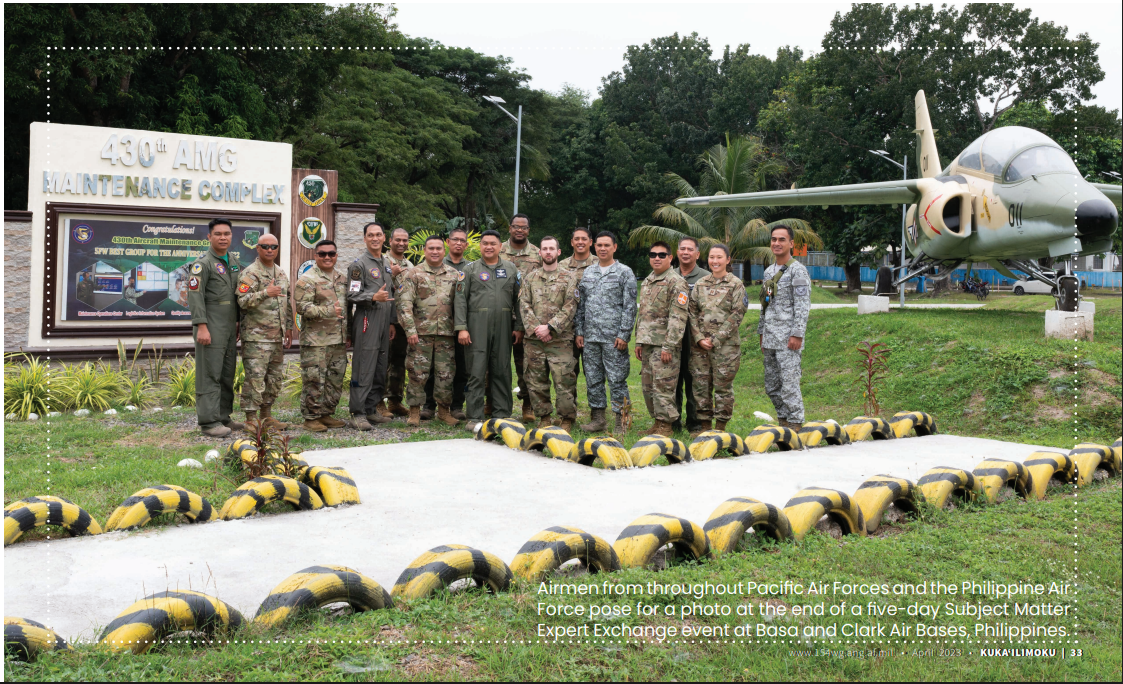
Basa Air Base, a roughly two and half hour drive northwest of Manila was the first major stop for the HIANG team.
Military modernization efforts by the Philippine government includes the acquisition of the South Korean developed, FA-50 Golden Eagle fighter aircraft. With its 8000 foot runway, the newly acquired fighter could one day be based out of Basa.
At Basa, the team worked with PAF units tasked with operating and maintaining the FA-50.
A bonus for the team came in the form of a coincidental crossing of paths with U.S. Secretary of the Air Force, Deborah Lee James, who was at Basa for a separate, unrelated engagement.
“The team really worked hard to accomplish the mission and represent the U.S. Air Force in a professional manner and to meet Secretary James while we were there was one of the highlights of the experience,” Yoshimitsu said.
After completing the five day SMEE at Basa, a four and half hour drive north took the HIANG airmen to Wallace Air Station where the PAF maintains and operates multiple radar sites.
While at Wallace the team was able to witness a demonstration of intercept and command and control operations during a simulated air incursion of Philippine air space.
“I was really impressed with PAF’s command and control,” said Master Sgt. Joseph Salvador, a loadmaster with the 204th Airlift Squadron and Hawaii Air National Guard State Partnership Program coordinator and planner. “Their equipment is not as modern as ours, but it is still capable. As the PAF goes through their modernization efforts, it’s really going to be interesting seeing their air defense operations grow and evolve.”
Although the overarching theme of the SMEE was air defense, other topics of discussion included cyber security and aerospace medicine. According to Salvador, the SMEE was an important way to learn the issues the PAF face.
“Exchanges such as these are invaluable in understanding what our international partners are going through. These engagements build upon each other. We are constantly trying to tailor the program to best address some of those challenges they experience,” Salvador said.
With reciprocity built into the program, the HIANG hosted a contingent of PAF air defense experts who visited Hawaii in September.
While in Hawaii the PAF group was able to tour HIANG operations at Joint Base Pearl Harbor-Hickam as well as some of its geographically separated units.
PAF members departed Hawaii on Sep. 17th marking the completion of the 2016 engagement.
Hawaii Air National Guard Airmen observe a Philippine Air Force air intercept exercise at the control room at Wallace Air Station, Philippines, Aug. 31, 2016. The demonstration was part of a State Partnership Program subject matter expert exchange between the HIANG and PAF. The State Partnership Program is a National Guard program that links a state’s national guard with a partner country to help build capacity and security cooperation. (Picture from the 2016 October Pupukahi)
13 MAY 2017 The Hawaii National Guard’s Chemical Biological Radiological Nuclear Explosive – Enhanced Response Force Package Search and Extraction team participated in Balikatan 2017.
Learn more
Hawaii National Guard’s partnership showcased during exercise Balikatan 2017
Story and Photos by Tech. Sgt. Andrew Jackson
Hawaii National Guard’s partnership showcased during exercise Balikatan 2017Hawaii National Guard’s partnership showcased during exercise Balikatan 2017U.S. Army Sgt. Daysen Chang, Hawaii National Guard, demonstrates how to tie a water-knot with members of the Armed Forces of the Philippines during a subject matter expert exchange in support of Balikatan 2017 at Fort Magsaysay in Santa Rosa, Nueva Ecija, May 8, 2017. These skills ensure that first responders and military members can secure and remove victims during a real-life crisis. Balikatan is an annual U.S.-Philippine bilateral military exercise focused on a variety of missions, including humanitarian assistance and disaster relief, and counterterrorism.(Pictures from the 2017 Spring Pupukahi)Hawaii National Guard partnership showcased during exercise BalikatanHawaii National Guard partnership showcased during exercise Balikatan(Pictures from the 2017 July Kuka’ilimoku)
Saturday, May 13, 2017 – One of the key themes of the 2017 iteration of Balikatan, the annual U.S.-Philippine military bilateral training event, was Humanitarian Assistance and Disaster Recovery (HA/DR). The Hawaii National Guard’s Chemical Biological Radiological Nuclear Explosive (CBRNE) – Enhanced Response Force Package (CERFP) Search and Extraction team has been participating in Balikatan since 2011. The CERFP’s Soldiers and Airmen have been working alongside the Armed Forces of the Philippines 525th Engineering Battalion and growing each other’s mastery of search and rescue techniques through Subject Matter Exchanges.
“The main goal for me, is that we operate as a team,” said Maj. James Kanoholani, officer in charge, Hawaii National Guard CERFP. “We speak the same language. We use the same techniques so that when the event comes, it will be that much easier to react.”
Each year, both forces bring new techniques that they have learned over the past twelve months to share with each other. Once this knowledge is reviewed and discussed, the skills are then demonstrated, establishing a base-line skill set. All of the training events are very hands-on with very limited lecture. This year, soldiers from the AFP’s 2nd, 7th, and 9th infantry divisions along with Sailors, Airmen and Marines from throughout the AFP, participated in the HA/DR search and extraction exercise at Fort Magsaysay, north of Manila. The training facility used this year was an disused hospital site, perfect for standing in as a collapsed structure.
The HING brought 26 soldiers and three Airmen while over 170 members of the AFP participated. Some of the HA/DR activities conducted included: rescue skills such as rope rescue, collapsed structure shoring, manual lifting and hauling techniques, breaching and breaking, and medical treatment of victims. The medical portion of the exchange and training was bolstered as well. A course was added to the curriculum and was taught by three Hawaii Air Guardsmen from the 154th Wing’s, Detachment 1, a unit that makes up the medical treatment arm of the HING’s CERFP team.
“Since this is a HA/DR exercise, and at the CERFP, that is our primary focus because we are the disaster recovery team for the state of Hawaii,” said Master Sgt. Jared Mina, 154th Wing, Detachment 1, Search and Extraction Rescue Operations. “What we bring to the table as the Search and Extraction Rescue Operations group, are full time Emergency Medical Technicians, firefighters, and some paramedics. Plus we are qualified in rope rescue and hazardous material operations. We can operate in the disaster area and in a chem-bio CBRN environment. Those are the skills we are sharing with the AFP to make their overall capability greater. In-turn they are also sharing their capabilities with us, it has been a very good Subject Matter Expert Exchange (SMEE).”
The Balikatan HA/DR portion of the exercise is conducted in a round robin format with small groups. Each spending a day on one of the rescue skill stations performing skill checks for the rescue experts from the 525th and the HING. The next day brings another skill to the forefront.
Disaster recovery in Hawaii is the mission of the state’s National Guard and the CERFP is at the center of that effort. They spend months each year training and maintaining individual proficiency while preparing to respond to a natural disaster, both no-warning events like tsunamis and earthquakes, to hurricanes. For members of the Hawaii Army National Guard, this is actually their secondary duty. They all belong to other units and are required to keep up proficiency in both aspects of their Guard jobs, which for most of them is in traditional, or part-time status.
The Hawaii National Guard is a force with two main missions, Federal and State. Their federal mission is national security and the state mission is supporting the state during times of emergency. All the while, Hawaii and the Philippines share in their vulnerabilities to certain types of natural disasters, namely hurricanes, typhoons, earthquakes, and tsunamis. They also have similar climates and many members of the HING are of Filipino descent, making the partnership more like a close friendship.
“This is going to help us by not only keeping our training current but also developing acamaraderie with the AFP,” said Sgt. Kage Fergerstrom, Hawaii CERFP. “So if we need to respond here, we already have a good rapport between our two nations.”
Throughout the exchange, safety was on everyone’s mind. Making sure all the participants were properly protected and well hydrated.
“The safety of the rescuer always comes first,” said Sgt. Fergerstrom. “The safety of the team and then the safety of the victim. We always want to make sure we are safe so that we do not become an extra victim.”
During the closing days of the week long SMEE, Brig. Gen. Keith Tamashiro, HIARNG Commander, Brig. Gen. Stephen L.A. Michael, 25th Inf. Div., the AFP and leaders from other countries, all toured the site to see the capabilities of the HING and AFP soldiers. This was followed by a media day where over 70 international, national and local journalists were invited to witness the types of HA/DR techniques that had been rehearsed during the 2017 iteration of Balikatan.
Hawaii National Guard’s partnership showcased during exercise Balikatan 2017(Picture from the 2017 Spring Pupukahi)
MAY 2017 Members of 230th Engineer Company, Hawaii Army National Guard spent over a month working with members of the Naval Mobile Construction Battalion 3 and the Armed Forces of the Philippines to construct a pair of classrooms at two elementary schools. The classrooms were built as a part the the Humanitarian assistance part of the 2017 Balikatan exercise.
Learn more
HIARNG engineers partnership builds classrooms in the Philippines
Philippine communities in Capiz Panay recently celebrated the completion of a pair of classrooms at two elementary schools. The classrooms were built as a part the the Humanitarian assistance part of the 2017 Balikatan exercise. Balikatan is an annual U.S.-Philippine bilateral military exercise focused on a variety of missions, including humanitarian assistance and disaster relief, counter-terrorism, and other combined military operations
Thirty Members of 230th Engineer Company, Hawaii Army National Guard spent over one month working with members of the Naval Mobile Construction Battalion 3 and the Armed Forces of the Philippines to construct these important facilities.
“Some of the students could become doctors or even be President the Philippines one day,” stated Philippine Army 1st Lt. Hazel Durotan, civil military operations officer, 3rd Infantry Division. In these, the future leaders of the Philippines will rise.”
The locations of the Engineering Civic Action Project (ENCAP) projects were two schools that were heavily damaged during a typhoon in recent years.
The two structures, at two separate sites, were both constructed from scratch over a compressed time line requiring the Hawaii National Guard engineering Soldiers and Seabee’s to work from the dark hours of the morning to well after dusk, every day of the construction schedule. Communication and coordination were key in every phase of the project due to differences in procedures and construction technology available in the remote locations. There were no large cement trucks making daily deliveries of pre-mixed concrete, that was mixed in batches by hand throughout each day.
“Our job was to come in and do all the finish work on the projects,” said U.S. Army 2nd Lt. Joshua Aquinde, platoon leader from the 230th Engineers. “It was hard work and long hours but we got it done for the children, which is the main mission.”
In the end, more was built than the classrooms. Relationships were also forged between the Philippines Hawaii National Guard, and the U.S. Navy.
“Getting schools operational again is an important aspect to any recovery operation,” said Hawaii Adjutant General Arthur Logan. He addressed the importance during the opening ceremonies of the classrooms. “Education is not just the key to ensure the next generation is prepared for the future, it is the best indicator that a disaster area is returning to normal. Duran and Malitbog Elementary schools were selected as projects for Balikatan 2017. These schools serve over 500 students. Today, there are two more fully functional classrooms in each location and a new water catchment systems. The revitalized schools are now a safe and conducive learning environment for its students.”
U.S. Army Sgt. Kilohana Abilay applies plaster to a school building at Duran Elementary School in Dumalag, Capiz, April 29, 2017 as part of a humanitarian civic action project for Balikatan 2017. Abilay is an interior electrician with 230th Engineer Company, Hawaii Army National Guard. Balikatan is an annual U.S.-Philippine bilateral military exercise focused on a variety of missions, including humanitarian assistance and disaster relief, counterterrorism, and other combined military operations. (U.S. Marine Corps photo by Lance Cpl. Nelson Duenas)(Picture from the 2017 Spring Pupukahi)
AUG – SEP 2017 Hawaii Air National Guard (HIANG) air defense experts completed a Subject Matter Expert Exchange with counterparts from the Philippine Air Force (PAF), marking the fifth straight year the HIANG has partnered with the PAF to exchange ideas on air defense as the Southeast Asian country goes through a military modernization effort.
Learn more
HIANG Completes Fifth Year of Air Defense Exchanges with PAF
by Senior Airman ORLANDO CORPUZ, 154th Wing Public Affairs
HIANG Completes Fifth Year of Air Defense Exchanges with PAFHIANG Completes Fifth Year of Air Defense Exchanges with PAFHIANG Completes Fifth Year of Air Defense Exchanges with PAF(Pictures from the 2017 October Kuka’ilimoku)
09/22/2017 – JOINT BASE PEARL HARBORHICKAM, Hawaii – Hawaii Air National Guard air defense experts recently completed a Subject Matter Expert Exchange [SMEE] with counterparts from the Philippine Air Force [PAF], marking the fifth straight year the HIANG has partnered with the PAF to exchange ideas on air defense as the Southeast Asian country goes through a military modernization effort.
The exchanges took place during the months of August and September and began with HIANG airmen traveling to several locations in the Philippines to discuss various air security concepts with the PAF.
While there, HIANG airmen interacted with various levels of the rank and file of the PAF: from airmen just beginning their military careers to senior leaders from some of the highest levels of the PAF organization.
For the first time since the exchanges have been taking place, Brig. Gen. Gregory S. Woodrow, commander, 154th Wing was a part of the incountry team to lend some general officer expertise and credence.
“We (United States) work hard to strengthen our alliances throughout the pacific,” said Woodrow. “The best way to do that is to pursue relations at the personal level as we educate and encourage each of our allies in their quest for better defense.”
According to Maj. Colin Yoshimitsu, a mission crew commander with the 169th Air Defense Squadron and engagement planner for the SMEE, having the general officers of the two Air Forces meet during the exchanges represents a leap forward and a maturing of the relationship.
“The program has evolved in that our senior leadership have volunteered to be more engaged with the leaders of the Philippine Air Force. Ultimately, we need the support of leadership on both sides for both organizations to move forward.” Yoshimitsu said
The SMEE was part of the National Guard’s State Partnership Program [SPP] which links a state’s National Guard with the armed forces or equivalent of a partner country in a cooperative, mutually beneficial relationship.
As the partnership progressed through the five years of engagements, so has the level of interaction and topics of discussion.
“Our partnerships has evolved and has grown with new objectives throughout the years,” said Yoshimitsu. “We began our first year of the basic mission of the Hawaii Air National Guard and the Operation Noble Eagle mission we accomplish at the 169th Air Defense Squadron. In subsequent years we have expanded the SMEE to include focus on training, procedures, checklists, maintainers, and flight medicine.”
The exchanges involved table top discussions, question and answer sessions as well tours and surveys of the varying components that make up an air defense system.
While visiting Clark Air Base, the HIANG team took in a tour of the PAF’s FA-50 Light Attack Aircraft. The FA-50 is a hallmark of the Philippine Armed Forces moderation efforts.
“As the Air Defense Command of the Philippine Air Force focuses on their upgrade and modernize their new air defense system, the HIANG team has centered the Subject Matter Expert Exchanges from the tactical arena to the operational and strategic.” Yoshimitsu said.
Tours and exchanges were not geographically exclusive to the Philippines. PAF personnel were also able to tour HIANG operations when the SMEE moved to Hawaii.
“The state partnership program really grows out of an alliance that we have with the Philippine Air Force and it’s symbolic of our strong relationship across the Pacific.” Woodrow said.
HIANG Completes Fifth Year of Air Defense Exchanges with PAF(Picture from the 2017 October Kuka’ilimoku)
AUG-SEP 2018 Hawaii Air National Guard air defense experts completed a subject matter expert exchange with counterparts from the Philippine Air Force to exchange ideas on air defense.
Learn more
HIANG Completes Fifth Year of Air Defense Exchanges with PAF
154th Wing Public Affairs Story by Senior Airman Orlando Corpuz
Hawaii Air National Guard air defense experts recently completed a Subject Matter Expert Exchange [SMEE] with counterparts from the Philippine Air Force [PAF], marking the fifth straight year the HIANG has partnered with the PAF to exchange ideas on air defense as the Southeast Asian country goes through a military modernization effort.
The exchanges took place during the months of August and September and began with HIANG airmen traveling to several locations in the Philippines to discuss various air security concepts with the PAF.
While there, HIANG airmen interacted with various levels of the rank and file of the PAF: from airmen just beginning their military careers to senior leaders from some of the highest levels of the PAF organization.
For the first time since the exchanges have been taking place, Brig. Gen. Gregory S. Woodrow, commander, 154th Wing was a part of the in-country team to lend some general officer expertise and credence.
“We (United States) work hard to strengthen our alliances throughout the pacific,” said Woodrow. ‚“The best way to do that is to pursue relations at the personal level as we educate and encourage each of our allies in their quest for better defense.
According to Maj. Colin Yoshimitsu, a mission crew commander with the 169th Air Defense Squadron and engagement planner for the SMEE, having the general officers of the two Air Forces meet during the exchanges represents a leap forward and a maturing of the relationship.
“The program has evolved in that our senior leadership have volunteered to be more engaged with the leaders of the Philippine Air Force. Ultimately, we need the support of leadership on both sides for both organizations to move forward.” Yoshimitsu said.
The SMEE was part of the National Guard’s State Partnership Program [SPP] which links a state’s National Guard with the armed forces or equivalent of a partner country in a cooperative, mutually beneficial relationship.
As the partnership progressed through the five years of engagements, so has the level of interaction and topics of discussion.
“Our partnerships has evolved and has grown with new objectives throughout the years,” said Yoshimitsu. “We began our first year of the basic mission of the Hawaii Air National Guard and the Operation Noble Eagle mission we accomplish at the 169th Air Defense Squadron. In subsequent years we have expanded the SMEE to include focus on training, procedures, checklists, maintainers, and flight medicine.”
The exchanges involved table top discussions, question and answer sessions as well tours and surveys of the varying components that make up an air defense system.
While visiting Clark Air Base, the HIANG team took in a tour of the PAF’s FA-50 Light Attack Aircraft. The FA-50 is a hallmark of the Philippine Armed Forces moderation efforts.
“As the Air Defense Command of the Philippine Air Force focuses on their upgrade and modernize their new air defense system, the HIANG team has centered the Subject Matter Expert Exchanges from the tactical arena to the operational and strategic.” Yoshimitsu said.
Tours and exchanges were not geographically exclusive to the Philippines. PAF personnel were also able to tour HIANG operations when the SMEE moved to Hawaii.
“The state partnership program really grows out of an alliance that we have with the Philippine Air Force and it’s symbolic of our strong relationship across the Pacific.” Woodrow said.
Philippine Air Force Brig. Gen. Antonio Ramon Lim, commander, 5th Fighter Wing, PAF and U.S. Air Force Lt. Col. Scott Oka, commander, 203rd Air Refueling Squadron, Hawaii Air National Guard discuss the capabilities of the KC-135 Stratotanker, Sep. 22, 2017, Joint Base Pearl Harbor-Hickam, HI. The exchange was part of the National Guard’s State Partnership Program which builds relationships through military-to-military engagements in support of defense security goals. (U.S. Air National Guard photo by Senior Airman Orlando Corpuz)(Picture from the 2018 Spring Pupukahi)
6-14 AUG 2018 A team of Hawaii Air National Guard air defense experts traveled to various air bases in the Philippines to conduct subject-matter expert exchanges with the Philippine Air Force.
Learn more
HIANG brings air defense expertise to Philippine engagement
154th Wing Public Affairs – Story by Senior Airman Orlando Corpuz – Thursday, August 16, 2018
A team of Hawaii Air National Guard (HIANG) air defense experts traveled to various air bases in the Philippines to conduct subject-matter expert exchanges with the Philippine Air Force (PAF), Aug. 6-14, 2018.
The HIANG has a long standing relationship with the PAF, and for the past six years they have been sharing air defense expertise with the PAF as they undergo enhancements to their air defense capabilities.
This year, the team featured a general officer with over 30 years of experience in air defense.
Maj. Gen. James O. Eifert, who currently serves as the Air National Guard Assistant to the Commander, Pacific Air Forces (PACAF), headlined a team of nine Airmen as they discussed various aspects of the air defense enterprise with their PAF counterparts.
“During high level discussions with Philippine air force Air Defense Command leadership, I was able to communicate my air defense command and control experience in both Pacific Command and U.S. Northern Command,” Eifert said. “I walked them through a few air defense scenarios from my experience in the Operation Noble Eagle mission, which painted the picture of how they need to think about command and control in defending the Philippine homeland.”
The multifaceted nature of air defense required the team to have a wide range of expertise. Various air force specialties were represented in the group: from tracking and identification, to communications and air battle management.
“Air defense is a complex enterprise. It requires a very diverse range of skill sets to succeed,” Eifert said. “This HIANG team brought literally over a hundred years of combined experience in the air defense business to this engagement to share their experiences and positively shape the Philippine Air Force’s future.”
According to Eifert, the PAF is on the right track as they proceed with their air defense upgrade efforts.
“They’re motivated, have great young people ready to seize the new capabilities available to them, and have new equipment arriving with great capabilities resident in it,” Eifert said. “They also have strong relations with an experienced ally (U.S.) happy to help.”
The expert exchange was part of the larger National Guard State Partnership Program (SPP). For more than two decades, SPP has been building relationships around the world, linking a state’s National Guard with a partner nation’s military or security forces to foster cooperative and mutually beneficial relations.
This iteration of the engagement – which required months of planning and had been conducted five times previously – was held at various air bases throughout the Philippines allowing for a wide range of interaction with PAF counterparts.
“This particular engagement was absolutely critical in the PAF’s development of their air defense enterprise,” Eifert said. “The timing of this engagement gave us the opportunity to share our lessons learned from decades of air defense experience so the PAF can get theirs right the first time, and hopefully learn from our mistakes.”
In addition to briefings and question and answer sessions, the team toured and surveyed various Philippine Air Force facilities.
The team, headlined by Eifert, included Airmen from the HIANG 169th Air Defense Squadron, 201st Air Operations Group, 204th Air Lift Squadron, and 154th Wing.
“I would like to congratulate the HIANG for offering up their best and brightest Airmen to these encounters with our close allies in the Philippines. Their efforts are helping to make tremendous strides in the PAF’s ability to monitor and defend their borders.” Eifert said.
Senior air defense experts from the HIANG and the Philippine Air Force (PAF) discussed air defense development during a visit to Manila. The Airmen were part of a subject matter expert exchange between the HIANG and the PAF as part of a National Guard State Partnership Program engagement. Philippine Air Force (PAF) officials also gave a tour of the PAF’s FA-50 fighter aircraft and facilities as part of the engagement.
Senior air defense experts from the Hawaii Air National Guard and Philippine Air Force discuss air defense development during a visit to the Philippine Air Defense Control Center, Aug. 7, 2018, Villamor Air Base, Manila, Philippines. The airmen were taking part in a subject matter expert exchange between the HIANG and PAF as part of a National Guard State Partnership Program engagement. (U.S. Air National Guard photo by Senior Airman Orlando Corpuz) Maj. Gen. James O. Eifert, Air National Guard Assistant to the Commander, Pacific Air Forces leads a discussion on air defense concepts during a visit to the Philippine Air Defense Control Center, Aug. 7, 2018, Villamor Air Base, Manila, Philippines. The airmen were taking part in a subject matter expert exchange with Philippine Air Force counterparts as part of a National Guard State Partnership Program engagement. (U.S. Air National Guard photo by Senior Airman Orlando Corpuz) Maj. Gen. James O. Eifert, Air National Guard Assistant to the Commander, Pacific Air Forces, shakes hands with Philippine Air Force Maj. Gen. Antonio Ramon A. Lim, Commander, Philippine Air Defense Command, Aug. 9, 2018, Clark Air Force Base, Philippines. The two general officers spearheaded a subject matter expert exchange between the Philippine Air Force and the Hawaii Air National Guard as part of a National Guard State Partnership Program engagement. (U.S. Air National Guard photo by Senior Airman Orlando Corpuz)Philippine Air Force (PAF) officials give a tour of the PAF’s FA-50 fighter aircraft and facilities Aug. 9, 2018, Clark Air Force Base, Philippines. The tour was part of a subject matter expert exchange between the Philippine Air Force and the Hawaii Air National Guard as part of a National Guard State Partnership Program engagement. (U.S. Air National Guard photo by Senior Airman Orlando Corpuz)(Pictures from the 2019 January Kuka’ilimoku)
Maj. Gen. James O. Eifert, Air National Guard Assistant to the Commander, Pacific Air Forces leads a discussion on air defense concepts during a visit to the Philippine Air Defense Control Center, Aug. 7, 2018, Villamor Air Base, Manila, Philippines. The airmen were taking part in a subject matter expert exchange with Philippine Air Force counterparts as part of a National Guard State Partnership Program engagement. (U.S. Air National Guard photo by Senior Airman Orlando Corpuz)(Picture from the 2018 Summer Pupukahi)
Soldiers of the Philippines Army 525th Engineer Combat Battalion and the Indonesian National Military – Quick Response Disaster Management Unit combine forces to assess a casualty during a confined space rescue exercise in Kapolei, Hawaii, July 10, 2018.This marks the first joint training exercise between the HIARNG, Philippine, and Indonesian, Chemical, Biological, Radiological, Nuclear and High-Yield Explosive, Enhanced Response Force Package teams. (U.S. Army National Guard Photo by Sgt. Tinisha Mellein-Fortson/Released)Soldiers of the Hawaii Army National Guard, Indonesian National Military – Quick Response Disaster Management Unit, and Philippines Army 525th Engineer Combat Battalion teams work together to simulate extraction of a casualty during a confined space rescue exercise in Kapolei, Hawaii, July 10, 2018. This marks the first joint training exercise between the HIARNG, Philippine, and Indonesian, Chemical, Biological, Radiological, Nuclear and High-Yield Explosive, Enhanced Response Force Package teams. (U.S. Army National Guard Photo by Sgt. Tinisha Mellein-Fortson/Released)(Pictures from the 2018 Summer Pupukahi)
The SPP provides U.S. Indo-Pacific Command (USINDOPACOM) a unique security cooperation (SC) tool that improves international security, builds partner capability/capacity, and provides the U.S. access and influence with the Government of Indonesia (GOI) & the Republic of the Philippines (RP). The HING SPP Program has two country teams and 14 functional teams for a combined total of 40 service members supporting the plans, resources, and execution of SPP Engagements. . .
The HING SPP’s focus with the Armed Forces of the Philippines (AFP) is to develop partner military capacity, which consists of assisting in increasing operational interoperability with U.S. military service components, enhancing disaster response capabilities and institutionalizing joint training efforts through civil-military coordination. In FY19, there were 14 SPP engagements involving 98 HING service members and 145 AFP service members.
Hawai‘i Army National Guard CERFP training, Kapolei, HI. Soldiers from the HIARNG Philippines, and Indonesia CERFP teams conduct first joint training exercise together. (Photo by: Pfc. Chavaughn Washington) (Picture from the 2019 Annual Report)
MAR 2019 Engineers from the Hawaii Army National Guard’s 230th Engineering Company and Search and Rescue Soldiers from The Hawaii Army National Guard’s chemical, biological, radiological, nuclear, and high-yield explosive enhanced-response-force-package bolstered a U.S. Navy deployment in Tacloban, Philippines. The Soldiers shared their operational expertise of their respective military specialties alongside counterparts from the U.S. Navy and the Armed Forces of the Philippines.
Learn more
Hawaii National Guard State Partnership Program assists U.S. Navy
HIDOD HQ | Tech. Sgt. Andrew Jackson
Rescue workers perform a heavy lifting operation on ruble to retrieve a simulated earthquake victim during the Pacific Partnership 2019 Humanitarian Assistance and Disaster Relief (HADR) exercise in Tacloban, Philippines, March 21, 2019. Pacific Partnership’s mission is to work collectively with host and partner nations to enhance regional interoperability and disaster response capabilities, increase stability and security in the region, and foster new and enduring friendships across the Indo-Pacific region. Pacific Partnership, now in its 14th iteration, is the largest annual multinational humanitarian assistance and disaster relief preparedness mission conducted in the Indo-Pacific region. (U.S. Air National Guard Photo by Tech. Sgt. Andrew Jackson)(Picture from the 2019 Spring Pupukahi)
Engineers from the Hawaii Army National Guard’s 230th Engineering Company and Search and Rescue Soldiers from The Hawaii Army National Guard’s chemical, biological, radiological, nuclear, and high-yield explosive enhanced-response-force-package (CERFP) bolstered the U.S. Navy Pacific Partnership deployment in Tacloban, Philippines in March of 2019.
The Soldiers were deployed to the Tacloban region of the Philippines to share their operational expertise of their respective military specialties alongside counterparts from the U.S. Navy and the Armed Forces of the Philippines.
Over 20 Soldiers from the 230th company joined efforts with U.S. Navy Seabees in two Engineering Civic Action Program projects (ENCAP). The first of the two projects took nearly two months to complete. The first project was a disaster evacuation, multipurpose building in Santa Elena. The second project was a complete renovation of a birthing center that had been severely damaged in a recent typhoon and required work from the roof to the plumbing.
“We renovated the V & G Health and Birthing Center,” said Sgt. Mary Rose Reiner, Hawaii Army National Guard 230th Engineer Company. “There was some reconstruction of the roofing. We installed the light fixtures too. We also laid cement in some of the rooms. The whole building was repainted and re plumed. Our electricians also rewired a few systems.”
Both of these projects will enhance the regions ability to care for their residents day to day needs as well as enhancing the regions disaster preparedness posture.
The Hawaii National Guard’s search and rescue Soldiers, who regularly engage with their counterparts of the Armed Forces of the Philippines as apart of the National Guard State Partnership Program, were on hand to assist in facilitating the largest Humanitarian Assistance and Disaster Relief (HADR) exercise that has ever been held on the island of Panay.
“We’re here to assist and help any type of training that they need to help oversee and expand their knowledge in the instructor portion of the training,” Staff Sgt. Cory Ito, Hawaii Army National Guard CERFP Team. “This has made us stronger in, as in, everybody getting together, knowledge that went out to the students, and we actually gained a lot of knowledge ourselves. From the local styles of rescue that they do to the actual mission of Yolanda. Overall, everything went well and safe, and the mission was completed.”
The HADR exercise involved participants from the Armed Forces of the Philippines, the Philippine Coast Guard and many different local government and non-government agencies. The participants were responding to a simulated earthquake scenario where a large structure had collapsed. Structures had to be shored up, while victims needed debris lifted off them and some areas required breaching to reach disaster victims. The Philippine Air Force also performed an aerial rescue off a roof top.
“Coming together is a beginning, keeping together is progress, but working together for the last two weeks is success,” said Mr. Jerry Yaokasin, Vice Mayor of Tacloban. “In doing the mission has fostered friendship among us. Trust and cooperation between our country and our partner nations. Mutual cooperation is vital. Humanitarian assistance and disaster preparedness, management and response. Especially of the people of this region.”
The goal of the Pacific Partnership is to improve interoperability of the region’s military forces, governments, and humanitarian organizations during disaster relief operations, while providing humanitarian, medical, dental, and engineering assistance to nations of the Pacific, strengthening relationships and security ties between the partner nations.
Sgt. Mary Rose Reiner, Hawaii Army National Guard 230th Engineer Company explains the improvements made to the water supply systems of a birthing center during Pacific Partnership Philippines 2019 to key leadership including Hawaii Adjutant General Brig. Gen. Arthur Logan and Pacific Partnership Mission Commander Capt. Randy Van Rossum in Tacloban, Philippines, March 21, 2019. The renovations were made as part of the Engineering Civic Action Program (ENCAP) portion of Pacific Partnership 2019. Pacific Partnership’s mission is to work collectively with host and partner nations to enhance regional interoperability and disaster response capabilities, increase stability and security in the region, and foster new and enduring friendships across the Indo-Pacific region. Pacific Partnership, now in its 14th iteration, is the largest annual multinational humanitarian assistance and disaster relief preparedness mission conducted in the Indo-Pacific region. (U.S. Air National Guard Photo by Tech. Sgt. Andrew Jackson)(Picture from the 2019 Spring Pupukahi)
MAR 2019 The Hawaii National Guard recently sent its own military disaster managers along with civilian disaster managers from the state, and county levels to Quezon City to help facilitate a large scale disaster exercise that included the Batazan Hills Barangay (a village, district or ward)
Learn more
Hawaii Disaster Planners Assist Philippine
Disaster response agencies HIDOD HQ | Tech. Sgt. Andrew Jackson | April 12 2019
Hawaii Emergency Management representative David Lopez, and Hawaii National Guard disaster response manager Maj. Wayne Anno provide exercise control input to Mike Marasigas, Incident Commander from Quezon City Disaster Risk Reduction Management Council, during the initial response to an earthquake drill at the beginning of the field training exercise phase of the Community Disaster Readiness Exercise, Batasan Hills, March 27, 2019. (U.S. Air National Guard Photo by Tech. Sgt. Andrew Jackson(Picture from the 2019 Spring Pupukahi)
The Hawaii National Guard State Partnership Program recently sent its own military disaster managers along with civilian disaster managers from the state, and county levels to Quezon City to help facilitate a large scale disaster exercise that included the Batazan Hills Barangay. A barangay is the smallest administrative division in the Philippines and is the native Filipino term for a village, district or ward. In metropolitan areas, the term often refers to an inner city neighborhood, a suburb or a suburban neighborhood.
“Right now from Hawaii we brought the Hawaii National Guard Joint Staff, our Hawaii Chemical, Biological, Radiological, Nuclear and high-yield explosive Enhanced Response Force Package, and the Search and Rescue Element,” Col. James Barros, Hawaii Army National Guard Disaster Manager. “We also brought representatives from the Honolulu County, Maui County and the Hawaii Emergency Management Agency. We are additional eyes for the administrators to look and see if their processes are working.”
The exercise was held at a “command post” level and field training level and included the Quezon City Disaster Risk Reduction Management Council (QCDRRMC) and the Batasan Hills Barangay Disaster Risk Reduction Management Office (DRRMO). The Hawaii National Guard State Partnership Program brought civilian disaster management professionals from state and county levels to evaluate the Philippine municipality response to a simulated earthquake a first for the state of Hawaii and major expansion of the State Partnership Program.
“We’ll be working specifically with one of their high risk barangays, to see how that process works,” David Lopez, Hawaii Emergency Management Agency, Critical Systems Planer.
The exercise started with a day long seminar focused on Hawaii’s and Quezon City’s approach on disaster and risk management. The Hawaii Civilian disaster management professionals each presented their respective response plans and methodology followed by a series of presentations from the Quezon City and Batasan Hills disaster managers.
“There’s always benefits to having exercises,” Herman Andya, Maui County Emergency Management Agency Administrator. “Even for us here at Maui County. So by doing these exercises, we can determine and identify operational gaps, what kind of things perhaps you can improve on; processes, procedures… and then based on that, we can make those improvements.”
Teams of Hawaii National Guard disaster managers and search and rescue Soldiers also worked directly with their Batasan Hills Barangay counterparts in process development and hands on rescue techniques.
The exercise transitioned into a full scale mass casualty earthquake response drill after the academic portion was accomplished. The drill was designed to test Quezon City’s ability to communicate with a Barangay and to test the Barangay’s ability to prioritize it efforts and to know when it needed to request assistance.
“Our state partnership has been just with the Philippines’ Army, and we started, back in about 2009, with the 525th, Engineer Battalion,” said Barros. “As we’re growing, we’re looking at in the cities, in the barangay, expanding that first responder. So, as we continue to train, as we continue to socialize, we saw an opportunity here to partner with Quezon City and their disaster management folks, and that’s how this kind of evolved into a this type of exercise; for our folks to come in to help evaluate their processes and give them a good look at what’s working, maybe some areas that we can improve on.”
This is the first time a joint exercise from both a city and barangay level has been held in the Philippines. The final phase of the exercise had first responders from Quezon City and the Batazan Hills Barangay clearing rubble, retrieving survivors and victims from a collapsed structure, responding to a structure fire, and aerial evacuations.
Hawaii National Guard disaster response Soldiers Maj. Wayne Anno, a long with Hawaii Emergency Management representative David Lopez look on as Batasan Hill Manager, Capt. Jojo Abad prepares directs his staff in the initial response to an earthquake drill at the beginning of the field training exercise phase of the Community Disaster Readiness Exercise, Batasan Hills, March 27, 2019. . (U.S. Air National Guard Photo by Tech. Sgt. Andrew Lee Jackson)(Picture from the 2019 Spring Pupukahi)
16 JUL 2019 Soldiers and Airmen from the Hawaii National Guard gathered with their counterparts from the Armed Forces of the Philippines to conduct an incident awareness and assessment subject matter expert exchange conference.
Learn more
Hawaii and the Philippines Reinforce Bonds at Emergency Management Exchange
154th Wing Public Affairs | Story by Senior Airman Robert Cabuco | Friday, July 19, 2019
MAKATI, Philippines – Soldiers and Airmen from the Hawaii National Guard (HING) gathered with their counterparts from the Armed Forces of the Philippines (AFP) to conduct an Incident Awareness and Assessment (IAA) Subject Matter Expert Exchange (SMEE) conference on July 16, 2019.
The goal of the meeting was to develop strong personal and professional relationships with the AFP through the State Partnership Program (SPP) on disaster response and emergency crisis management.
The partners gathered to share their experiences and operational practices during the three-day event. The State Partnership Program (SPP) is a joint Department of Defense (DoD) security cooperation program, managed and administered by the National Guard Bureau (NGB), executed and coordinated by the geographic Combatant Commands (CCMDs), with personnel provided by the National Guard of the respective partner States.
The Philippines was the first country brought into the SPP for U.S. Indo-Pacific Command in 2000 with Guam as an associate partner. Since then, the partners have participated in annual exchanges and joint exercises to increase each organizations over all readiness.
“The most important part of this exchange is to learn from each other,” said Master Sgt. Wayne Drowns, information analyst with the Hawaii Air National Guard. “The AFP gets to see how we do things in Hawaii and we get to learn from their experience as well.”
The officers provided a brief overview of how the Hawaii National Guard gather and disseminate information during a response. IAA operations are designed to provide timely and usable information to all levels of command and civil leaders in the event of a disaster.
“We can adapt these techniques to develop standard operating procedures to use during Humanitarian and Disaster Response (HADR) operations,” said Capt. Rene Datugan, an AFP Commander. “We need unity and clarity in the HADR mission sets in the roles and responsibilities area.”
“What we offer in this exchange is experience in both the wartime information operational picture and disaster response information operations,” said Lt. Col Brandon Torres, an intelligence officer with the Hawaii Army National Guard Joint Forces Headquarters. “This dual experience allows us to translate the similarities and differences in each operational picture.
Hawaii Air National Guard Senior Master Sgt. Michael Zheng, Intelligence Analyst from the 201st Intelligence Squadron, shares some disaster response experiences with Philippine Army Capt. Rene Datugan, during an Incident Awareness and Assessment (IAA) Subject Matter Expert Exchange (SMEE) conference in Makati on July 16, 2019. The SMEE conference creates opportunities to enhance international relationships through the exchange of operational knowledge during disaster response and emergency crisis management. (U.S. Air National Guard photo by Senior Airman Robert Cabuco)(Picture from the 2019 Summer Pupukahi)
Bringing forces together across the pacific
The State Partnership Program has been successfully building relationships for 25 years and now includes 75 partnerships with 81 nations around the globe. SPP links a unique component of the Department of Defense – a state’s National Guard – with the armed forces or equivalent of a partner country in a cooperative, mutually beneficial relationship. As part of this effort, Airmen and Soldiers from the Hawaii National Guard have maintained ongoing subject matter expert exchanges with their parters from Indonesia the Philippines, to include more than 20 events this year.
In a dimly lit conference room in the Philippine Air Force installation of Clark Air Base, a radar expert is going over maintenance techniques and procedures. While he’s a U.S. Airman from the Hawaii Air National Guard, he’s conducting the class in Tagalog – a dialect of the Philippines – maintaining a calm and confident tone as he leads the teaching session with a crowd of Philippine Air Force Airmen.
Master Sgt. Eugene Mariano, a ground radar systems Airman with the Hawaii Air National Guard and 298th Support Squadron has worked on the latest technologies over the past 22 years of his career.
Because of his mastery of the language and natural delivery, onlookers could easily assume he is a member of the Philippine Air Force, only seeming to be separated by a distinct uniform pattern.
“I love working with the Philippine Airmen as they’re going through modernizing of their air defense systems,” Mariano said. “They’re like an open book. So respectful and eager to learn and the fact that I’m a natural Tagalog speaker certainly makes the communication easier.”
Mariano is part of a diverse team of Hawaii Air National Guard air defense experts that convene yearly to share air defense knowledge with Philippine Air Force counterparts through the National Guard’s State Partnership Program. SPP pairs a state’s National Guard with a partner nation and aims to build capacity and security cooperation through Subject Matter Expert Exchanges such as the one held this past Aug. 19-24 in various locations in the Philippines.
“This is a really cool mission. It’s pretty amazing to see the strides the PAF has made in their air defense,” Mariano said. “And it’s humbling to think that maybe I had a small part to play in all of this.”
The team includes several Tagalog speaking airmen, but Mariano is the most senior and has the most experience.
“I feel very proud for being a part of this team,” Mariano said. “It’s been a long process, but I think they are turning the corner.”
While working with service members from another country can be a daunting effort; the language barrier alone can prove insurmountable, Mariano leverages his Philippine language skills to bridge the language barrier and make connections naturally with his PAF counterparts.
“Being able to speak the language is definitely an advantage,” said Mariano. “They don’t have to take the extra step to translate when they hear me talking. I think it helps to make the Philippine airmen comfortable. And when they’re comfortable, maybe it’s easier to learn and absorb the material.”
Mariano was born in the Philippines and immigrated to the United States in the 1990s. At an early age he knew he would be serving in the military; it was one of his passions. It wasn’t until he joined the Hawaii Air National Guard that he discovered that radar was also one of his passions. Blending his language skills with dedication to country and enthusiasm for his craft make him an effective mentor.
“I really like working on radars and it’s a very important piece to air defense. I really love that I’m able to share some knowledge and some of the lessons I’ve learned in radar maintenance,” Mariano said. “When I left the Philippines to come to the U.S. I never imagined though, that I would be returning as a U.S. Airman to work with some of my former countrymen.”
This year’s iteration marks seven years since the HIANG has conducted air defense SMEEs with the PAF. Mariano has been there from the start, having been selected as one of the original members of the team. According to team leader Lt. Col. Colin Yoshimitsu, Mariano’s contributions are integral to the group.
“Gino has been an important part of this team from the beginning of the program,” said Yoshimitsu, a mission crew commander with the 169th Air Defense Squadron. “Yes there is the bilingual language skills, but Gino has a unique ability to connect with people. He has that ‘aloha spirit’ that puts the PAF at ease and makes it very conducive to learning. I think the PAF have come to embrace Gino as a friend, not just some radar maintenance guy from the U.S.”
“I’ve been doing this for a while now,” Mariano said, “I enjoy coming back every year and seeing some of the same airmen I met in the beginning. We’ve become friends to each other.”
Back in the dimly lit conference room in Clark, Mariano has a side-bar conversation with one of the PAF Airmen.
“I told him, that your job and how well you do your job has a direct effect on the air defense of your country,” said Mariano. “I think he got it.”
15-19 JUL 2019 Emergency response service members from four nations gathered on Oahu to participate in a Hawaii National Guard hosted exercise, focused on urban search and rescue. Teams from Indonesia, Bangladesh, Vietnam, The Philippines, and the Oregon National Guard joined forces with the Hawaii’s CBRNE Enhanced Response Force Package.
Learn more
Multilateral urban search & Rescue
Story by Senior Airman John Linzmeier
An Indonesian soldier assists a simulated wounded Hawaii Army National Guardsman as he repels from a second story building during a Combined – Multinational Task Force [CTF 501] search and extraction training scenario on July 18, 2019 at Kalaeloa Urban Search and Rescue Training area. Service members from the Philippines, Indonesia, Bangladesh, Vietnam, Oregon Air National Guard traveled to Hawaii as part of a State Partnership Program training event. Photo by Master Sgt. Mysti Bicoy (Picture from the 2019 October Kuka’ilimoku)
Emergency response service members from four nations gathered on Oahu July 15-19 to participate in a Hawaii National Guard hosted exercise, focused on urban search and rescue.
Teams from Indonesia, Bangladesh, Vietnam, The Philippines, and the Oregon National Guard joined forces with the Hawaii’s CBRNE Enhanced Response Force Package, a Joint Mission comprised of both Army and Air National Guard Soldiers and Airmen. All together, the cohesive unit formed a Combined Multinational Task Force, called CTF 501.
The training activities were held in effort to maintain urban search and rescue standards and revolved around a 24-hour Basic Rope Rescue course, resulting in certifications and an improvement in interoperability.
Civilian responders also played a major role in supporting CTF 501, and regularly participate in disaster response events with the guardsmen, who specialize in scenarios which entail chemical, biological, radiological, nuclear or explosive threats, along with an array of natural disasters which may occur in the region.
Hawaii Army National Guard Capt. Valentine Roberts, CBRNE Enhanced Response Force Package (CERFP) operations officer, said the four nations were able to overcome obstacles throughout the week, such as language barriers, and further their combined life-saving capabilities.
Much of the initial training was held in a conference-styled setting, where experts could review and discuss emergency response procedures and development of best practices. It also served as a platform to introduce a Multinational Coordination Center, for responses involving humanitarian assistance and disaster relief.
The discussion-based training led up to a disaster scenario, held at Kalaeloa US&R site, which utilized the efforts of all military participants. Instructors focused on life-saving topics, such as pre-incident planning, program safety, rescue philosophy, safety standards and more.
At the training grounds, CTF 501 responders identified possible ‘victim’ locations and recovered causalities from a collapsed structure. Participants exercised rappel techniques to reach confined spaces and used an array of tools to break victims free of concrete confinements and metal obstacles. Simulated personnel with injuries were provided first aid and egressed through litters and a system of ropes.
Each rescue action was carefully evaluated and recorded by a team of instructors, who provided the international operators with feedback, highlighting their strengths and areas of improvement.
Roberts said Service members of all uniforms walked away from the CTF 501 training with more confidence in their rescue abilities and are better prepared to integrate together in the event of potential emergencies
An Indonesian soldier assists a simulated wounded Hawaii Army National Guardsman as he repels from a second story building during a Combined – Multinational Task Force [CTF 501] search and extraction training scenario on July 18, 2019 at Kalaeloa Urban Search and Rescue Training area. Service members from the Philippines, Indonesia, Bangladesh, Vietnam, Oregon Air National Guard traveled to Hawaii as part of a State Partnership Program training event. Photo by Master Sgt. Mysti Bicoy (Picture from the 2019 October Kuka’ilimoku)
State Partnership Program (SPP)
State Partnership Program The SPP provides U.S. Indo-Pacific Command (USINDOPACOM) a unique security cooperation (SC) tool that improves international security, builds partner capability/capacity, and provides the U.S. access and influence with the Government of Indonesia (GOI) and the Republic of the Philippines (RP). The HING SPP Program has two country teams and 14 functional teams for a combined total of 40 service members supporting the plans, resources, and execution of SPP Engagements.
The HING SPP continues to strengthen and reassure their partnership with the Indonesian National Military (TNI) to progress mutually beneficial goals, build partnership capacity, and establish interoperability.. . .
The HING SPP’s focus with the Armed Forces of the Philippines (AFP) is to develop partner military capacity, which consists of assisting in increasing operational interoperability with U.S. military service components, enhancing disaster response capabilities and insitiutionalizing joint training efforts through civil-military coordination. In FY20, there were 14 SPP engagements involving 98 HING service members and 145 AFP service members
From Aug. 20-27, 2019, air defense airmen from the Hawai‘i Air National Guard and Philippine Air Force participated in a Subject Matter Expert Exchange (SMEE) at Clark Air Base, Philippines. The SMEE was part of the National Guard State Partnership Program which pairs a state’s National Guard with a partner nation to promote security cooperation and capacity
DEC 2020 The Guam and Hawaii National Guards participated in a virtual Subject Matter Expert Exchange with the plans and programing division of the Armed Forces of the Philippines. Over the three day virtual engagement, the medical planning team from each participating entity presented their real-world COVID-19 response actions to date and plans for the future actions.
Learn more
Medical Planners from the Philippines, Guam and Hawaii compare COVID-19 Response
State of Hawaii, Department of Defense, Public Affairs Office | Story by Master Sgt. Andrew Jackson | Thursday, December 3, 2020
The Guam and Hawaii National Guards participated in a virtual Subject Matter Expert Exchange (SMEE) with the plans and programing division of the Armed Forces of the Philippines in the first days of December 2020. The National Guard’s State Partnership Program facilitated this SMEE. Normally during a table-top planning scenario in a SMEE, the planners are presented with a theoretical or historical scenario in order to build a response. However, over the three day virtual engagement, the medical planning team from each participating entity presented their real-world COVID-19 response actions to date and plans for the future actions.
“This is a medical and operational SMEE looking at the COVID-19 response for the military, but also looking at how we have integrated the response with the civilian sector,” said Lt. Col. James Faumuina, 154th Medical Group, Detachment 1 commander. “The Hawaii Guard presented our work with the State Dept. of Health (DOH) to flatten the curve. Specifically, our COVID mapping efforts and our Task Force Medical support. Guam presented their efforts to support the government and the Philippines showed the mass array of efforts they have been using to respond.”
The response in the three disparate geographical areas has been varied in some aspects, but still had the foundation of some basic tactics; encouraging social distancing, practicing proper hygiene, utilizing limited lockdowns, and conducting mass testing.
The largest challenge of the three day virtual SMEE was overcoming the 18 to 20 hour time difference. So, while participants in Guam and the Philippines met in the early morning hours, Hawaii was meeting in late afternoon the day before.
The SPP is a joint Department of Defense security cooperation program, managed and administered by the National Guard Bureau, executed and coordinated by the geographic Combatant Commands with personnel provided by the National Guard of the respective partner states. The Guam and Hawaii National Guard share the partnership with the Philippines.
Overall, the information presented served as validation of the work the Armed Forces of the Philippines and the Hawaii and Guam National Guards have been doing in the years prior to 2020 to build relationships with the civilian healthcare entities in each nation and state. The Hawaii National Guard’s medical planners have an over 10-year relationship with the Hawaii (DOH) and have worked with then in underserved communities. This helped reinforce the messaging in those communities and throughout the State of Hawaii. This positive proactive partnership has been an example shared with Guam and the Philippines in past pandemic SMEEs, which have been an annual event for at least the past five years.
One of the key areas of discussion was how to communicate with medical planners in the civilian health care sectors who often don’t have a tactical focus.
“The military has mobile capability and skill sets that frames our way at problem solving,” said Faumuina. “COVID-19 is the largest and most complex problem we have ever faced. Trying to merge our way of doing business with the civilian response is a big piece of that puzzle. These lesson and examples are what we are going to take away from this exchange to help with future operations.”
During a normal SMEE, the scenario being discussed and analyzed is completed, but the COVID pandemic is not over. Therefore, part of the discussion focused on future distribution of a vaccine. There have been mass testing and drive-thru flu vaccination events in the COVID response. These efforts in the Philippines, Guam, and Hawaii were examined by the medical planners as examples to create the future vaccine distribution plans.
Lt. Col. James Faumuina, 154th Medical Group, Detachment 1 commander and 1st Lt Gloria Choo, International Health Specialist State Partnership Program, discuss the information presented during the COVID-19 subject matter expert exchange between the Armed Forces of the Philippines, and the Guam and Hawaii National Guard, Honolulu, Hawaii, Dec 1, 2020. The SMEE was held virtually due to the on-going pandemic. (U.S. Air National Guard photo by Master Sgt. Andrew Jackson)(Picture from the 2021 Winter Pupukahi)
23-27 JAN 2023 Airmen from the Pacific Air Forces area of responsibility traveled to Basa and Clark Air Bases, Philippines, to conduct several subject matter expert exchanges with airmen from the Philippine Air Force.
Learn more
154th Wing joins info exchange in the Philippines
Airmen from the Pacific Air Forces area of responsibility traveled to Basa and Clark Air Bases, Philippines, to conduct several Subject Matter Expert Exchanges with airmen from the Philippine Air Force, Jan. 23 through 27, 2023.
The SMEEs involved discussions of munitions, maintenance, logistics and hot pit refueling and were held as a precursor to cooperation in future large exercises in the Indo-Pacific region.
“These SMEEs are really great collaborations between the two forces and lay the foundation toward a more detailed execution like Balikatan and Cope Thunder,” said Philippine Air Force 1st Lt. Carlo Emmanuel Canlas, event lead. “It’s important for the PAF and PACAF to improve coordination so future operations and exercises can be successful.”
Throughout the five-day event, PACAF Airmen discussed topics with their PAF counterparts, such as explosive safety, expeditionary munitions storage, protective facility designs, logistics to move the force from one location to another, hot pit operations, flying hour programs and maintenance scheduling.
“We were able to share our different programs with each other, which was incredibly insightful,” said U.S. Air Force Tech. Sgt. Rainier Raquion, 154th Wing Maintenance Operations, NCO in charge of Flight, Plans and Scheduling.
Hawaii is one of the State Partners of the Philippines through the State Partnership Program—or SPP—which began in 2000. One key aspect of the SPP links a unique component of the Defense Department–a state’s National Guard—with the armed forces, or equivalent, of a partner country in a cooperative, mutually beneficial relationship.
Through the SPP, the National Guard conducts military-to-military engagements in support of defense security goals. The program also leverages whole-of-society relationships and capabilities to facilitate broader interagency engagements spanning military, government, economic and social spheres.
At the end of the exchanges, both nation’s Airmen gathered for a debrief where leaders discussed the progress that was made and what they hoped to accomplish with future engagements.
“This was an incredibly successful SMEE,” said U.S. Air Force Capt. Jennifer Nuanes, 154th Wing, Aircraft Maintenance Unit officer. “It wasn’t just the information sharing that made it successful. It was the sharing of our cultures, our food and our experiences that built deeper relationships between our two countries. I look forward to future engagements and further enhancing these strong bonds.”
Airmen from throughout Pacific Air Forces and the Philippine Air Force pose for a photo at the end of a five-day Subject Matter Expert Exchange event at Basa and Clark Air Bases, Philippines.(Picture from the 2023 April Kuka’ilimoku)
2023 The National Guard Bureau has designated Maj. Stephen Brightman as the inaugural Bilateral Affairs Officer from the Hawaii National Guard to serve at the U.S. Embassy in the Philippines.
Learn more
Bright Beginnings: Inaugural Bilateral Affairs Officer in the Philippines
154th Wing Public Affairs – Hawaii Air National Guard | Story by Master Sgt. Mysti Bicoy | Friday, September 15, 2023
Bilateral Affairs Officers are instrumental in global diplomacy, nurturing diplomatic ties and bolstering international alliances. Their role is crucial in establishing constructive and harmonious relationships between nations, and it adapts to the specific needs and priorities of the countries they engage with.
In a groundbreaking development, the National Guard Bureau has designated Maj. Stephen Brightman as the inaugural Bilateral Affairs Officer from the Hawaii Air National Guard to serve at the U.S. Embassy in the Philippines. Brightman’s mission holds immense significance as it aims to further enhance the robust relationship between the United States and the Philippines during his three-year tenure. He is dedicated to building and enriching bilateral relations through the State Partnership Program.
“This is a great opportunity to serve in a different capacity,” said Brightman. “There’s a strong relationship between the two countries already established, and my objective is to further strengthen it by enhancing our communications and readiness between the U.S. and the Philippines,” said Brightman.
The State Partnership Program pairs each U.S. state or territory with a foreign country or region. These partnerships are established based on shared interests, common goals, and opportunities for collaboration.
“The BAO not only maintains the operational continuity of joint initiatives but also ensures the alignment of our mutual objectives for regional security,” said Maj. Reuben Kim, Hawaii National Guard State Partnership Program director. “Maj. Brightman’s work has been invaluable in fostering mutual understanding, trust, and shared strategic vision.”
Leveraging his position, Brightman has actively initiated dynamic military exchanges like Rotary Wing engagement and subject matter exchanges. Additionally, he has spearheaded various initiatives, including humanitarian aid efforts and lively cultural exchanges. These endeavors are carefully orchestrated through close collaboration with the Armed Forces of the Philippines and various government agencies.
“Through collaboration with partners and staff agencies, I’ve gained invaluable insights, refining my planning and processes for future progress,” explains Brightman.
Brightman also places emphasis on cultivating long-term relations that extend beyond immediate military engagements. His role demands a profound understanding of both cultures and embodies how deeply the United States values its alliance with the Philippines.
“A significant part of my job is to deeply understand and respect both cultures and establish connections based on shared values,” said Brightman.
Most BAOs do not receive formal language training, so learning the host nation’s language is a matter of personal initiative, requiring additional time alongside numerous official duties.
Before assuming his role as a BAO, Brightman had a personal connection to the Philippines, facilitating a smooth transition to a foreign country.
“My wife was born and raised in Manila, which has provided me with insights into the local culture, enhancing my ability to connect and collaborate effectively,” explained Brightman.
While reflecting on the shared values and commitment between the Philippines and U.S., Brightman attributes his success in the Philippines to the warmth of the local culture.
“I’ve observed parallels in cultural attributes, like the Hawaiian notion of ‘ohana’ symbolizing a larger family or community,” Brightman shared. “This cultural bond has fostered strong connections with my Filipino colleagues.”
As Brightman works to build a solid foundation, his commitment to advancing the relationship between the United States and the Philippines sets a promising trajectory for future bilateral engagements.
“Having Maj. Brightman as our BAO at the Joint U.S. Military Assistance Group in the Philippines, is essential to facilitate our ongoing military cooperation, said Kim. “He serves as a critical link between our two militaries, providing insight, guidance, and coordination at a strategic level.”
The State Partnership Program has been successfully building relations for 30 years and now includes 88 partnerships with 100 nations around the globe. For more information visit https://www.nationalguard.mil/Leadership/Joint-Staff/J-5/International-Affairs-Division/State-Partnership-Program/.
25-29 SEP 2023 The Hawaii Army National Guard conducted its first rotary wing aviation maintenance and standardization subject matter expert exchange in the coastal city of Lapu-Lapu, Cebu, Philippines.
Learn more
Hawaii Army National Guardsmen Lead Groundbreaking Rotary Wing SMEE in Philippines
154th Wing Public Affairs – Hawaii Air National Guard | Story by Master Sgt. Mysti Bicoy | Friday, October 13, 2023
The Hawaii Army National Guard (HIARNG) conducted its first Rotary Wing Aviation Maintenance and Standardization Subject Matter Expert Exchange (SMEE) in the lively coastal city of Lapu-Lapu, Cebu, Philippines, from September 25th to the 29th.
A contingent from Company C, 1st Battalion 183rd Aviation Regiment, alongside personnel from Army Aviation Support Facility No. 2, engaged in the inaugural Rotary Wing SMEE with the Philippine Air Force (PAF) 205th Tactical Helicopter Wing (THW) at Brigadier General Benito N. Ebuen Air Base in Mactan.
“This is a great opportunity for us to learn from the experts and gain valuable knowledge,” said Col Moises Micor, 205th THW deputy wing commander during the opening ceremony.
The event was held to establish a robust framework for bilateral relations, thereby fostering cooperation, collaboration, and interoperability rooted in the shared utilization of rotary wing platforms.
“It’s truly an honor and a privilege to be a part of this inaugural subject matter expert rotary event between the PAF and the HIARNG,” said Col. Byron Cadiz, HIARNG Aviation and Safety director. “This year marks the 30th anniversary of the State Partnership Program, this year also celebrates its 23rd year of the state partnership between the Hawaii National Guard and the Philippines, one of the longest relationships in the United States Indo-Pacific Command.”
PAF counterparts were acquainted with the intricacies of the UH-60M platform, encouraging a comparative analysis with their existing standard operating procedures, technical training, and operational protocols for their Sikorsky S-70i Black Hawk helicopter.
“The subjects covered by the HIARNG team spanned from sling load operations, mission planning, phase maintenance inspections, and corrosion control,” said Maj. Ryan Hong, Aviation Operations and Training officer. “A great deal of time was dedicated to crafting a syllabus delving into salient touchpoints that mattered the most to the 205th THW, setting our sights on empowering the PAF with the means to achieve maximum utilization of the S-70i airframe.”
The classroom environment served as the backdrop for comprehensive training sessions and facilitated roundtable discussions, covering a spectrum of aviation maintenance and standardization topics.
“Our Aviation team collaborated with the 205th THW offering support, sharing ideas through training sessions and open discussions for domestic and combat operations,” explained Capt. John Worthington, 183rd Aviation Regiment commander. “The aim was to teach and learn while forging a lasting partnership for mutual operational preparedness and readiness.”
As the inaugural event concluded, closing remarks were delivered followed by a PAF hosted Boodle Fight.
“This four day event has been a great success, as it opens up more opportunities for our pilots and maintenance crews and allows greater interaction and exchanges between our forces,” said Micor. “I hope the connections and the relationships forged during this subject matter exchange will continue to grow and strengthen in the future.”
The Philippines continues to be the oldest treaty ally of the U.S. in the Indo-Pacific Command, with the Hawaii National Guard playing a vital role as a partner which conducts subject matter exchanges and exercises together on a routine basis.
The State Partnership Program is a security cooperation initiative that enables the Hawai‘i National Guard to strengthen international security, enhance partner capabilities, and foster U.S. access and influence with the Republic of Indonesia and the Republic of the Philippines. In our latest efforts, the HING SPP successfully conducted 23 engagements with Indonesia and 27 engagements with the Philippines. These engagements were dedicated to supporting the planning, resourcing, and execution of SPP activities. The SPP aligns with USINDOPACOM’s security cooperation objectives, contributing to a more secure and stable region. . .
The HING SPP’s focus with the Armed Forces of the Philippines (AFP) is to develop partner military capacity, which consists of increasing interoperability with U.S. military service components, enhancing disaster response capabilities and institutionalizing joint training efforts through civil-military coordination.
Top Philippines-Hawai‘i engagements in FY24 included:
. . .
Tactical Combat Casualty Care – In a collaborative effort, the Armed Forces of the Philippines Peacekeeping Operations Center joined forces with USINDOPACOM’s Global Peacekeeping Operations Initiative and the HIARNG Medical Readiness Detachment. Together, they delivered a comprehensive Tactical Combat Casualty Care Course for 25 AFP Soldiers who are preparing to deploy on United Nations missions. This training ensures these dedicated soldiers are well-equipped to provide vital medical care in peacekeeping environments.
Urban Search and Rescue SMEE in support of Exercise Pacific Partnership 24 – A collaborative training exercise between the HIARNG and the AFP during Pacific Partnership aimed at enhancing the capabilities of both organizations in responding to natural disasters and emergencies.
298th Air Defense Group – Five HIANG Guardsmen participated in a SPP Air Defense Subject Matter Expert Exchange (SMEE) with the Philippine Air Force at Clark Air Force Base in Pampanga, Philippines. The SMEE events included briefs and discussions on mission and exercise planning, demonstrations in operating and maintenance of the theater operationally resilient command and control system, and validation of the 5th Fighter Wing’s Command and Control Fusion Center at Basa Air Base, Pampanga, Philippines.
6-7 MAR 2024 The Hawai‘i National Guard and Armed Forces of the Philippines held the the 2025 Mutual Defense Board and Security Engagement Board standing committee meeting at Camp Aguinaldo, Quezon City.
Learn more
Hawai‘i Guardsmen Join Philippine partners for annual Mutual Defense and Security Engagement
154th Wing, Hawai‘i Air National Guard | Story by Master Sgt. Mysti Bicoy | Friday, March 8, 2024
Mutual Defense Board (MDB) and Security Engagement Board (SEB) Standing Committee members complete the first of several meetings on March 7, 2024, Camp Aguinaldo, Quezon City, Philippines. The MDB was established in 1958 and the SEB was established in 2006. The two boards together form the annual MDB-SEB, which coordinates a framework for defense and security cooperation between the U.S. and Philippine militaries. (U.S. Air National Guard photo by Mysti Bicoy)Mutual Defense Board (MDB) and Security Engagement Board (SEB) Standing Committee members complete the first of several meetings on March 7, 2024, Camp Aguinaldo, Quezon City, Philippines. The MDB was established in 1958 and the SEB was established in 2006. The two boards together form the annual MDB-SEB, which coordinates a framework for defense and security cooperation between the U.S. and Philippine militaries. (U.S. Air National Guard photo by Mysti Bicoy)(Pictures from the 2024 Winter Pūpūkahi)
CAMP AGUINALDO, Quezon City – The Hawai‘i National Guard and Armed Forces of the Philippines made significant progress in strengthening their partnership during the 2025 Mutual Defense Board and Security Engagement Board (MDB-SEB) standing committee meeting held at Camp Aguinaldo, Quezon City on March 6-7.
This bilateral gathering, steered by high-level military strategists from both nations, kicked off a yearlong agenda brimming with over 500 joint planning and training initiatives, symbolizing a united effort towards shared security goals.
Hawai‘i and the Philippines share a unique bond through their association with the State Partnership Program, an initiative that fosters long-term security relationships and enhances international cooperation by connecting National Guard units with foreign militaries.
Through SPP, each geographic combatant command within 100 nations currently partners with the 50 states, three territories, and Washington, D.C. Additionally, seven new partner nations will soon be paired with states in the coming months, pending approval from relevant authorities.
Demonstrating their special relationship, HING Guardsmen significantly contributed by planning and coordinating transportation logistics, while the Philippines enhanced the collaboration by hosting the exchange, both ensuring the event’s seamless execution and success.
“As a supporting effort from the SPP, the U.S. and the Philippines have been able to collaborate on a wide range of initiatives, including disaster response, humanitarian assistance, and peacekeeping operations,” said U.S Army Col. John Udani, director of military support, Hawai‘i National Guard. “By working together, we are able to address common challenges more effectively, promote regional stability, and contribute to the advancement of shared security objectives in the Asia-Pacific region.”
Members from both the Philippines and the U.S. expressed their eagerness to continue tight-knit cooperation in critical areas vital to our national security interests. These encompass counterterrorism, maritime security, cyber security, humanitarian assistance and disaster relief, and numerous other strategic domains.
“The Philippines is the oldest treaty ally of the U.S. in the IndoPacific Command,” said U.S. Air Force Maj. Stephen Brightman, Bilateral Affairs Officer for the U.S. Embassy, Manila. “The Hawai‘i and Guam National Guard continues to play a vital role as a partner to build capacity and enhance partnerships to ensure a Free and Open IndoPacific.”
In 2023, Guardsmen from Hawai‘i and Guam participated in more than 30 engagements, while Guardsmen worldwide completed nearly 1,500 engagements. This program’s success underscores its relevance to our ongoing partnerships and collective achievements.
The MDB was established in 1958 and the SEB was established in The two boards together form the annual MDB-SEB, which coordinates a framework for defense and security cooperation between the U.S. and Philippine militaries.
Mutual Defense Board (MDB) and Security Engagement Board (SEB) Standing Committee members complete the first of several meetings on March 7, 2024, Camp Aguinaldo, Quezon City, Philippines. The MDB was established in 1958 and the SEB was established in 2006. The two boards together form the annual MDB-SEB, which coordinates a framework for defense and security cooperation between the U.S. and Philippine militaries. (U.S. Air National Guard photo by Mysti Bicoy)(Picture from the 2024 Winter Pūpūkahi)
11-14 JUN 2024 Members of the Hawai‘i Air National Guard participated in the first Aircraft Maintenance State Partnership Program event with the Philippines Air Force at Basa Air Base, Philippines.
Learn more
HIANG and PAF Forge Stronger Ties in Innovative State Partnership Event
154th Wing, Hawai‘i Air National Guard | Story by Master Sgt. Mysti Bicoy | Tuesday, June 11, 2024
BASA AIR BASE, Philippines – In a significant step towards strengthening bilateral military cooperation, members of the Hawai‘i Air National Guard (HIANG) participated in the first Aircraft Maintenance State Partnership Program (SPP) event with the Philippines Air Force (PAF) at Basa Air Base, Philippines, on June 11-14.
The exchange coincided with exercise Marine Aviation Support Activity (MASA) 24, an annual Philippine-U.S. military exercise focused on mutual defense, strengthening relationships, and rehearsing emerging aviation concepts.
Maj. Jared Fujii, 199th Expeditionary Fighter Squadron project officer for MASA 24, saw a unique opportunity to enhance bilateral cooperation by coordinating an SPP event.
“The strategy to integrate with the PAF was extremely well received by the PAF, as they are gearing up for a deployment,” said Fujii. “By aligning the SPP event with MASA 24, we maximized our resources and created a synergistic platform for collaboration, supporting our commitment as state partners.”
Participants from the PAF’s 5th Fighter Wing, 430th Aircraft Maintenance Group, and HIANG’s 154th Wing engaged in comprehensive discussions covering various aspects of deployment. Topics included deployed cargo requirements, aircraft management, logistics, personnel coordination, and the intricacies of planning large-scale deployments. These discussions allowed members to gain deeper insights into fighter operations, airlift support, and overall aircraft maintenance management, providing opportunities to modify and adopt new practices that can empower warfighters.
The event also highlighted the ongoing bilateral discussions aimed at enhancing the PAF’s fighter deployment capabilities and strategic operational infrastructure. This collaboration is expected to bolster the long term operational readiness and strategic reach of both forces.
PAF Maj. Reden Apepe, the director of operations of 430th Aircraft Maintenance Group, emphasized the significance of the timing of this exchange, aligning with their preparations for exercise Pitch Black, a large-scale multinational air combat training exercise.
“This SMEE occurred at the perfect time, as we are preparing for exercise Pitch Black,” said Apepe. “Maj. Nuanes and the HIANG team provided expert knowledge on aircraft safety and maintenance processes.”
Additionally, the event featured a bilateral community outreach initiative where members of the HIANG and PAF volunteered at a local orphanage in the Philippines.
“The outreach effort orchestrated by Master Sgt. Mysti Bicoy, highlighted the commitment of both forces to humanitarian efforts, fostering goodwill and the spirit of Aloha among the 36 children and the five-person all volunteer staff at the orphanage,” said Maj. Jennifer Nuanes, SPP team lead. “The smiles and laughter we saw on the children’s faces were overwhelming,” Nuanes continued. “It reminded us all of the simple yet profound difference we can make in people’s lives, even with small acts of kindness.”
Nuanes emphasized the exceptional role and deep cultural connections brought by Chief Master Sgt. Wendell Villanueva, the senior enlisted leader of the 154th Maintenance Group, in orchestrating the event. As one of the few remaining service members who experienced the historic eruption of Mount Pinatubo at Clark Air Base over 30 years ago, Villanueva has been building strong relationships with the PAF and the local community for decades. His local connections extend to the family he married into in the 1980s, and his careerfield expertise has been invaluable in ensuring seamless coordination.
“Through a history framework built by Chief Master Sgt. Villanueva, the event went beyond mere information exchange; it fostered a deeper understanding and mutual respect between the HIANG and PAF,” said Nuanes. “From logistical planning to facilitating discussions and workshops, his leadership was instrumental in making the event a success.”’
Hawai‘i and the Philippines share a unique bond through the State Partnership Program, which connects National Guard units with foreign militaries to foster long-term security relationships and enhance international cooperation. Established in 2000, this partnership is the longest standing in the Indo-Pacific region.
U.S. Air Force Maj. Jennifer Nuanes, 15th Aircraft Maintenance Squadron director of operations, conducts a Maintenance Subject Matter Exchange with the Philippine Air Force during the Marine Aviation Support Activity 24, Basa Air Base, Philippines, June 13, 2024. Enhancing interoperability between the U.S. and Philippine air forces contributes to the long-term advancement of our nations’ shared interests. (U.S. Air National Guard photo by Master Sgt. Mysti Bicoy)(Picture from the 2024 Spring Pūpūkahi)
16-20 SEP 2024 The Hawai‘i Army National Guard returned to the coastal city of Lapu-Lapu, Cebu, Philippines, for the third iteration of the state partnership program rotary wing aviation maintenance and standardization subject matter expert exchange.
Learn more
Third Rotary Wing Exchange Bolsters Philippines-Hawai‘i Military Collaboration
154th Wing, Hawai‘i Air National Guard \ Story by Senior Airman Roann Gatdula \ Monday, Sept. 23, 2024
LAPU-LAPU, CEBU, Philippines – The Hawai‘i Army National Guard (HIARNG) returned to the coastal city of Lapu-Lapu, Cebu, Philippines, on Sept. 16 – 20 for the third iteration of the State Partnership Program Rotary Wing Aviation Maintenance and Standardization Subject Matter Expert Exchange.
This exchange focused on the essential maintenance of Black Hawk helicopters, providing a collaborative platform for maintainers to share best practices and ensure their fleet remains mission-ready.
A contingent from Company C, 1st Battalion 183rd Aviation Regiment, alongside personnel from Army Aviation Support Facility No. 2 and the State Army Aviation Office engaged in this year’s Rotary Wing SMEE with the Philippine Air Force 205th Tactical Helicopter Wing at Brigadier General Benito N. Ebuen Air Base in Mactan.
The State Partnership Program is unique to the National Guard, and includes most of the 54 states and territories. Each state is assigned a different country with which they partner, creating an enduring relationship between that partner country and the state’s National Guard units.
For nearly a quarter of a century, the Hawai‘i National Guard has forged a robust partnership with the Philippines. This alliance not only facilitates bilateral training exercises but also enhances operational compatibility, expands capabilities, and fosters a lasting relationship between all parties involved.
The inaugural Rotary Wing SME Exchange was held last year in Mactan, with the most recent SMEE taking place this past April in Hawai‘i. This iteration emphasized improving safety, standardization and maintenance of the Sikorsky S-70i Black Hawk.
“There is no mission too important, that safety can be disregarded,” said PAF Lt. Col. John Paul Delgado, 210th Tactical Training Squadron commander, 205th Tactical Helicopter Wing “Though we are all eager to fly, perform our tasks and serve our country, we still need to pause a little and think about safety.”
During the weeklong event, the multinational participants collaborated across two training stations. A classroom environment provided PAF members to learn from a panel of HIARNG maintenance SMEs to discuss challenges, troubleshoot, and provide feedback on aviation maintenance and standardization topics. The hands-on portion of the exchange took place inside the hangar area, where PAF maintenance technicians were given a chance to learn alongside their HIARNG counterparts. This training involved detailed, step-by-step guidance, ensuring the adoption of best practices in aviation maintenance.
U.S. Army Capt. John Worthington, Aviation Support Facility commander and UH-60 Black Hawk instructor pilot, has been a mainstay since last year’s exchange and returns with an excited focus.
“My vision for the end result of this partnership is to have contributed to the integrated deterrence in the INDOPACOM Area of Responsibility,” said Worthington. “We can accomplish this through the tactical interoperability supporting both domestic and combat operations alongside the 205th THW in the Philippines. Our interchangeable rotary assets, such as the UH-60M and S-70i, are the foundation to our partnership which through evolving engagements can put us on the right trajectory.”
U.S. Army Lt. Col. Deanna Manriquez, HIARNG Army Aviation Officer who served as the head of the delegation was grateful for the opportunity to represent the State in her first outing to the Philippines.
“It’s been a very positive experience overall,” said Manriquez. “It’s wonderful to make these connections and develop these relationships because I understand how important it is building our partner capacity and working on our interoperability to help contribute to the security and stability out in the Indo-Pacific.”
By fostering open dialogue and hands-on demonstrations, participants aimed to enhance their technical skills and safety protocols, crucial for effective aviation operations.
The week-long training ceremony concluded with a gift exchange between both organizations and a traditional “boodle fight,” where military members of various ranks gathered around a table and ate “kamayan style,” a Filipino dining tradition, over a feast of local delicacies.
“The best gift we have is the enduring relationship with a valued partner that we can continue to build upon,” said Manriquez.
The next rotary exchange is tentatively scheduled to take place in April 2025 in Hawai‘i, with a focus on elevating rotary wing capabilities and reinforcing the partnership.
Rotary Wing Aviation Maintenance and Safety SMEE – The HIARNG and Philippine Air Force conducted the FY24 Rotary Wing Aviation Maintenance and Standardization SMEE, which included engaging instructor-led discussions covering sling load operations, water bucket operations, aviation safety and considerations, hoist operations, simulator training, and external load certification requirements and standards.
Hawai‘i Army National Guard and Philippine Air Force service members meet for the Rotary Wing Aviation Maintenance and Standardization Subject Matter Expert Exchange at Brigadier General Benito N. Ebuen Air Base, Lapu-Lapu City, Philippines Sept. 16, 2024. The Rotary Wing Subject Matter Expert Exchange is a collaboration between HIARNG and PAF, intended to strengthen alliances and partnerships with key allies like the Philippines. (U.S. Air National Guard photo by Senior Airman Roann Gatdula)(Picture from the 2024 Summer Pūpūkahi)
MAR 2025 Rotary Wing aviators from the Hawai‘i Army National Guard and the Armed Forces of the Philippines held a key leader engagement on Oʻahu.
Learn more
State Partnership Program Rotary Wing Key Leader Engagement in Hawai‘i
State of Hawai‘i, Department of Defense Public Affairs Office | Story and Photos by (Ret.) Master Sgt. Andrew Jackson | Friday, March 7, 2025
Rotary Wing aviators from the Hawai‘i Army National Guard (HIARNG) and the Armed Forces of the Philippines (AFP) held a key leader engagement on Oʻahu during the first week of March, 2025. The engagement included 103rd Troop Command Commander, Col. Phoebe Inigo, State Army Aviation Officer Lt. Col. Deanna Manriquez, Philippine Air Force 205th Tactical Helicopter Wing Commander, Brig. Gen. Alvin Hate and select members of their respective staffs. Hawai‘i and the Philippines have had a partnership through the State Partnership Program (SPP) for 25 years.
This five-day SPP key leader engagement was comprised of discussions, academic sessions and hands-on demonstrations of tactics, techniques, and procedures. It is part of a multi-year plan to increase the skill level of both the HIARNG and the AFP.
“We are here to experience first hand how the Hawai‘i National Guard conducts itʻs helicopter operations,” Hate said. “We want to learn about their operations because we are new to operating the Black Hawk (UH-60), and want to increase our capability to help the unified command of the AFP and in humanatarian assistance and disaster response operations.”
The engagement culminated with a heavy lift demonstration by the HIARNG where a UH-60 lifted a howitzer with co-ordination and communication with the 1st Battalion, 487th Field Artillery. Sling loading a Howitzer is a complex operation that requires proper rigging by Soldiers on the ground to insure the 3 ton load does not tangle or rotate in the air which destabilize the helicopter.
The SPP is a cost-effective program that is administered by the National Guard Bureau, guided by the State Department foreign policy goals and is executed by the state Adjutants Generals in support of combatant commander and U.S. Chief of Mission security cooperation objectives and Department of Defense policy goals. Through the SPP, the National Guard conducts military-to-military engagements in support of defense security goals, but also leverages whole-of-society relationships and capabilities to facilitate broader inter-agency and corollary engagements spanning military, government, economic and social spheres.
18-30 MAY 2025 Hawai‘i National Guard medical professionals completed their fourth annual Tactical Combat Casualty Care exchange with partners from the Armed Forces of the Philippines at Camp O’Donnell.
Learn more
Hawai‘i Guard, Philippine Armed Forces unite
By Tech. Sgt. John Linzmeier | 154th Wing, Hawai‘i Air National Guard
Hawaii‘i Air National Guard Staff Sgt. Maritza Garcia, 154th Medical Group Detachment 1 medic and Tactical Combat Casualty Care instructor, led Armed Forces of the Philippines students during a medical field training exercise on May 29 at Camp O’Donnell, Philippines. The training focused on critical life-saving skills, including hemorrhage control and airway management, as part of the Subject Matter Expert Exchange. (U.S. Air National Guard photo by Tech. Sgt. John Linzmeier)(Pictures from the 2025 Pūpūkahi | Volume 55 | No. 3)Hawaii Guardsmen, Philippine Armed Forces Unite for Annual Medical ExchangeHawaii Guardsmen, Philippine Armed Forces Unite for Annual Medical ExchangeHawaii Guardsmen, Philippine Armed Forces Unite for Annual Medical ExchangeHawaii Guardsmen, Philippine Armed Forces Unite for Annual Medical ExchangeHawaii Guardsmen, Philippine Armed Forces Unite for Annual Medical ExchangeHawaii Guardsmen, Philippine Armed Forces Unite for Annual Medical Exchange(Pictures from the 2025 July Kūkāʻilimoku)
CAMP O’DONNELL, Philippines — Hawai‘i National Guard medical professionals completed their fourth annual Tactical Combat Casualty Care (TCCC) exchange with partners from the Armed Forces of the Philippines (AFP) at Camp O’Donnell May 18-30.
The Subject Matter Expert Exchange (SMEE), facilitated by the Department of Defense National Guard Bureau State Partnership Program, helped 85 medical and non-medical personnel develop critical life-saving skills.
For the first time, an AFP instructor corps was qualified through the training to teach follow-up courses, a significant step toward developing a standardized medical training curriculum aligned with U.S. standards.
The training was tailored to support AFP participants at the Peacekeeping Operations Center, which is responsible for preparing personnel for United Nations peacekeeping missions, with a focus on stabilizing volatile regions through the use of military strength.
“This initiative has been greatly enriched by the collaboration between the Peacekeeping Operations School, the Peacekeeping Operations Center and Subject-Matter Experts from the Hawai‘i National Guard through the Joint United States Military Assistance Group-Philippines,” said Philippine Army Maj. Gen. Pedro C. Balisi Jr., Armor Pambato Division commander. “Their invaluable insights and shared commitment to advancing combat casualty care have deepened the training experience, fostering an exchange of best practices that will elevate our operational capabilities to new heights.”
The two-week SMEE was divided into two five-day programs. From May 18-22, Hawai‘i National Guard staff trained 36 AFP nurses and training managers as TCCC instructors, equipping them to deliver future courses. The 20-module curriculum covered topics such as hemorrhage control, airway and breathing management, shock recognition, hypothermia prevention, eye injuries, fractures, burns and wound treatment. Training included lectures, hands-on practice and videos, culminating in a mass casualty field exercise on the fifth day to validate instructor readiness.
From May 26-30, the newly certified AFP instructors taught 49 members of the AFP’s Quick Reaction Force (QRF), including Army Rangers, infantry, artillery and combat engineers, with Hawai‘i National Guard medics evaluating their performance. The QRF acquired critical combat life support skills, ensuring readiness for potential deployments in peacekeeping and combat operations. The week ended with another mass casualty exercise, testing participants’ ability to practice their skills in realistic combat scenarios.
Each week’s field training exercise FTX replicated combat zone stresses, with participants assigned roles as patients, medics, security teams or litter teams navigating complex terrain.
The multinational instructor team incorporated intense simulated stressors, such as explosive charges and patients inflicted with photo-realistic injuries while under attack from a hostile ambush, giving the students a sense of multidirectional chaos. This immersive approach rigorously tested TCCC skills, honing trainees’ ability to deliver rapid, life-saving responses under the heat of a contested battle space.
“One of the most critical lessons TCCC imparts is conditioning medics to keep treating patients under extreme pressure,” said U.S. Air Force Maj. Sanders Sandoval, 154th Medical Group Detachment 1 TCCC officer-in-charge. “Amid the chaos of gunshots, IEDs [improvised explosive devices] and intense yelling, we saw high performers staying focused, treating patient after patient. In combat, you get one shot to save a life, and that’s the standard we train for — operators who never freeze, who seize every moment to save as many lives as possible.”
TCCC, a cornerstone of military medical training, emphasizes combat life support techniques to address life-threatening injuries before patients are relocated to a hospital. It covers care under fire, tactical field care and tactical evacuation care, enabling medics and non-medical personnel, such as infantry and combat engineers, to significantly reduce fatalities in conflict zones.
This milestone event highlighted the Hawai‘i National Guard’s dedication to mutual learning and interoperability with the Armed Forces of the Philippines, equipping participants with essential combat life support skills for both combat and peacekeeping missions.
“Marking 25 years of the Hawai‘i-Philippines State Partnership,” Sandoval said, “we are committed to fostering a sustainable model for medical training and evacuation capabilities. Through shared goals, our leaders and warfighters strive to grow together, aspiring to integrate advanced TCCC techniques into standard operating procedures to prepare for future challenges.”
By certifying AFP instructors and training the Quick Reaction Force, this TCCC Subject Matter Expert Exchange strengthened the partnership, fostering trust and advancing a shared vision of readiness for United
23-25 SEP 2025 The Hawai‘i National Guard and Armed Forces of the Philippines celebrated 25 years of partnership, a bond that has endured typhoons, crises and global challenges to become the Indo-Pacific’s longest-running State Partnership.
By Master Sgt. Mysti Bicoy 154th Wing Hawai‘i Air National Guard
Hawai‘i Adjutant General Maj. Gen. Stephen Logan, center, attended a key leader engagement hosted by Armed Forces of the Philippines Lt. Gen. Rey Alemania, Army Joint Sustainment Command commander, right, at Camp General Emilio Aguinaldo, Quezon City, Philippines on Sept. 24, 2025. The engagement recognized 25 years of partnership between the Hawai‘i National Guard and Armed Forces of the Philippines under the State Partnership Program, the Indo-Pacific’s longest-running SPP. (Hawai‘i Air National Guard photo by Senior Master Sgt. Mysti Bicoy)Hawai‘i Adjutant General Maj. Gen. Stephen Logan and Armed Forces of the Philippines Air Force Brig. Gen. Jose Bonafacio, 410 Maintenance Wing commander, rendered honors during a pass and review at Clark Air Base, Mabalacat City, Pampanga, Philippines on Sept. 25, 2025. (Hawai‘i Air National Guard photo by Senior Master Sgt. Mysti Bicoy)(Pictures from the 2025 pūpūkahi | Volume 55 | No. 5)Philippines-Hawaii state partnership program 25th anniversary(Picture from the 2025 July Kūkāʻilimoku)
CLARK AIR BASE, Philippines — Cheers, handshakes and shared stories filled the air Sept. 23–25 as the Hawai‘i National Guard and Armed Forces of the Philippines celebrated 25 years of partnership — a bond that has endured typhoons, crises and global challenges to become the Indo-Pacific’s longest-running State Partnership.
“This 25-year partnership is the first and longest continuous State Partnership in the Indo-Pacific,” said Maj. Gen. Stephen Logan, Hawai‘i’s adjutant general. “It’s a quarter-century of steady engagement, cooperation and deep friendship.”
The anniversary, observed Sept. 25 at Clark, highlighted how the partnership has grown from a handshake in 2000 into more than 400 engagements across cyber defense, aviation, medical readiness, air defense and disaster response.
At Clark, the AFP’s Office of the Deputy Chief of Staff for Reserve Force Development hosted a ceremony that blended military tradition with cultural symbolism. Philippine Army Reserve Col. Emmanuel “Manny” Pacquiao attended as a guest.
“Col. Pacquiao’s presence showed how this partnership weaves into our nations’ cultural fabric,” said Command Sgt. Maj. Brandon Kumalae, the Hawai‘i Guard’s senior enlisted leader. “It connected Aloha with the honor of service.”
In Manila, Guard leaders met with U.S. Embassy officials, the Philippine Department of National Defense and the Joint U.S. Military Assistance Group to discuss homeland defense, cyber resilience and infrastructure training. The talks reinforced Indo-Pacific Command’s security priorities and Pacific Air Forces’ focus on interoperability and people-centered partnerships.
Philippine Secretary of National Defense Gilberto Teodoro Jr. has called for “functional replication” of reserve forces to match the readiness of active units. He said the Philippines must develop reserve formations that are capable of responding to both external threats and domestic emergencies.
The State Partnership Program has already supported that effort. Through combat casualty care training, cyber defense exchanges and aviation cross-training, the Hawai‘i and Guam National Guards have worked with the AFP to move reserve concepts from doctrine into practice. These efforts embody the Hawai‘i National Guard’s vision and priorities — building ‘Ohana through community, Optimizing the force, remaining Ready for any mission, honoring Kuleana through responsibility, strengthening Partnerships, and living Aloha wherever duty calls.
“Through hundreds of exchanges, our Guardsmen embody ‘bayanihan’ — unity and friendship,” Logan said. “This reflects the strong people-to-people and security ties between the United States and the Philippines, making us stronger together, stronger tomorrow.”
U.S. Air Force Maj. Stephen Brightman’s tour as bilateral affairs officer at the U.S. Embassy in Manila was extended to sustain momentum. “Maj. Brightman’s extension ensures mission success and preserves trust, respect and shared purpose,” said Maj. Reuben Kim, the Hawai‘i Guard’s SPP director.
Since 2000, the partnership has supported key milestones:
2013: Joint response to Super Typhoon Haiyan.
2023–2025: More than 90 annual engagements in cybersecurity, aviation and medical training.
2023: A Series of Rotary Wing Aviation engagements launched
April 2025: Eighty-five AFP personnel trained in combat casualty care at Camp O’Donnell.
August 2025: Over 500 events planned through the Mutual Defense Board and Security Engagement Board cycle.
Maj. Gen. Pablo Rustria Jr., AFP Reserve Command commander, said the partnership has built resilience in the face of natural disasters. “We’ve faced typhoons, earthquakes and floods over two decades,” he said. “The SPP has built a response framework that’s faster, stronger and more unified.”
Beyond training, cultural exchanges — lei greetings, Filipino Boodle fights, school renovations and community gatherings — have forged lasting bonds. “We come for the mission but stay for the people,” said Col. John Udani, the Hawai‘i Guard’s director of military support. “We’re Pacific family.”
Those ties endure, as former exchange participants now mentor cadets and Guardsmen return as senior leaders. With more than 60 engagements already this year, the SPP continues to evolve, tackling challenges from climate change to cyber threats while developing future leaders.
The State Partnership Program, established in 1993
Philippine Air Force Reservist Col. Emmanuel “Manny” Pacquiao, left, received a commemorative coin from Maj. Gen. Stephen Logan during the 25th anniversary celebration of the State Partnership Program at Clark Air Base. (Hawai‘i Air National Guard photo by Senior Master Sgt. Mysti Bicoy)(Pictures from the 2025 pūpūkahi | Volume 55 | No. 5)

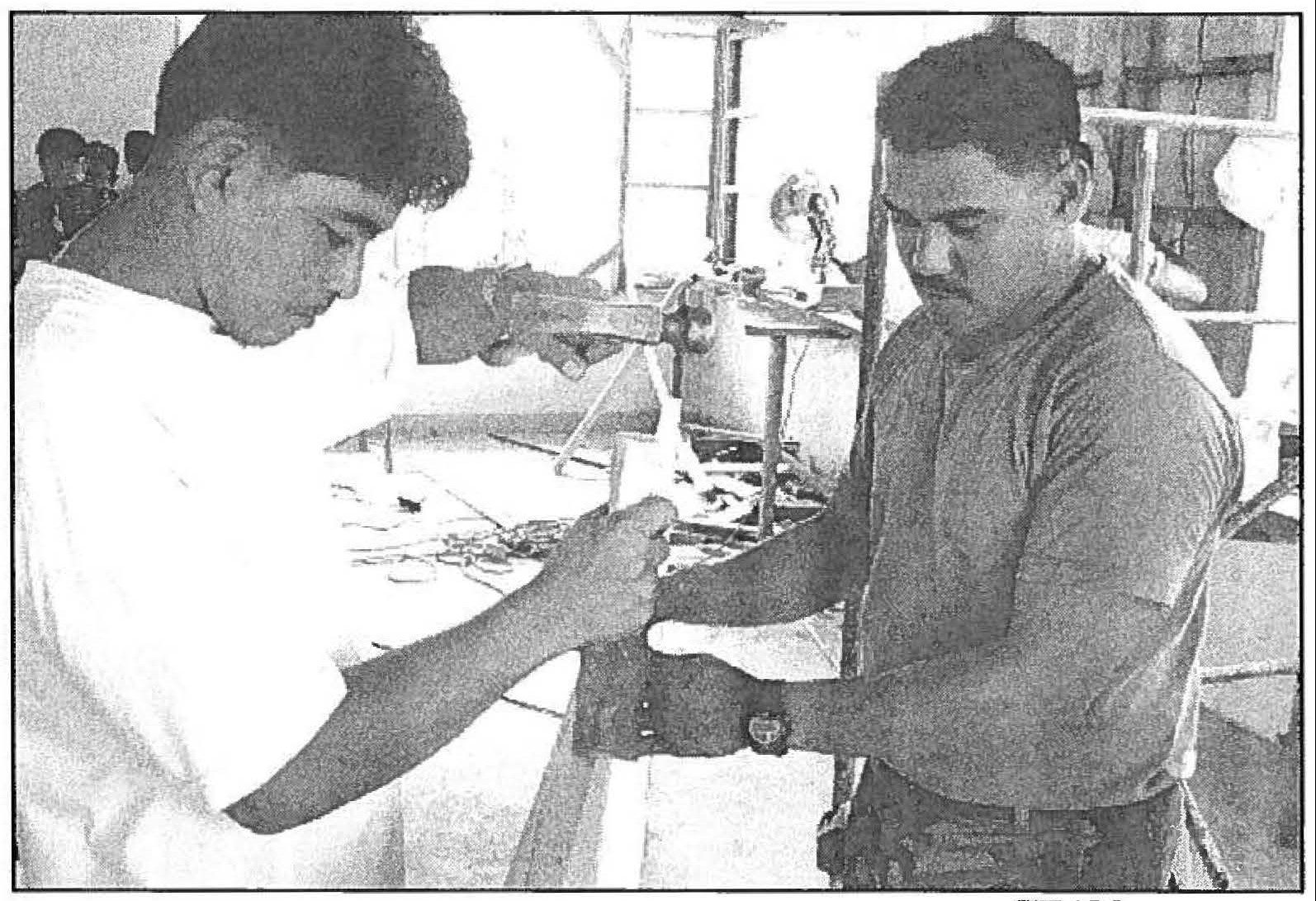
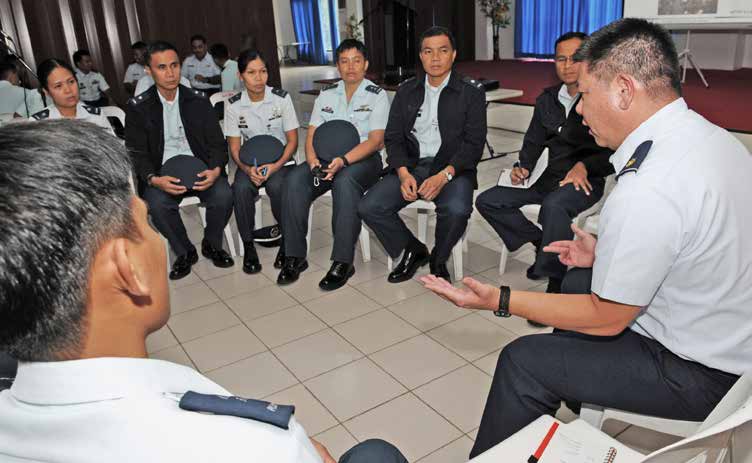
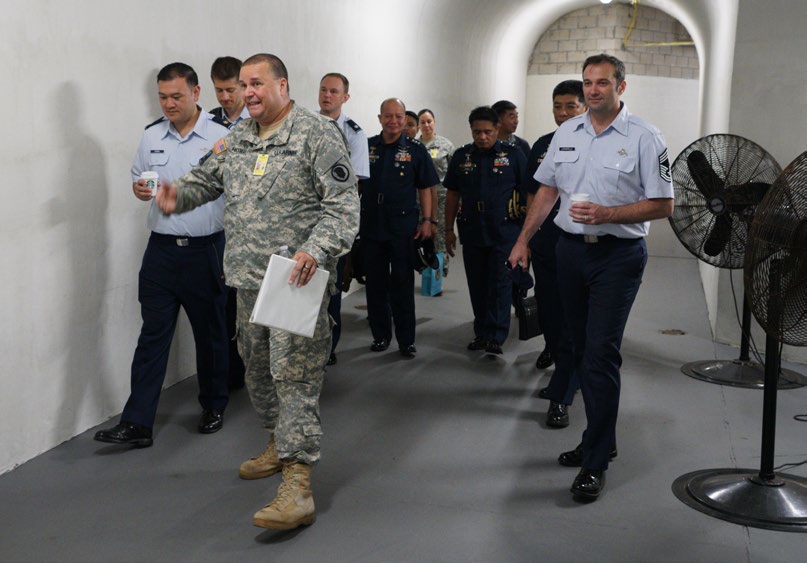
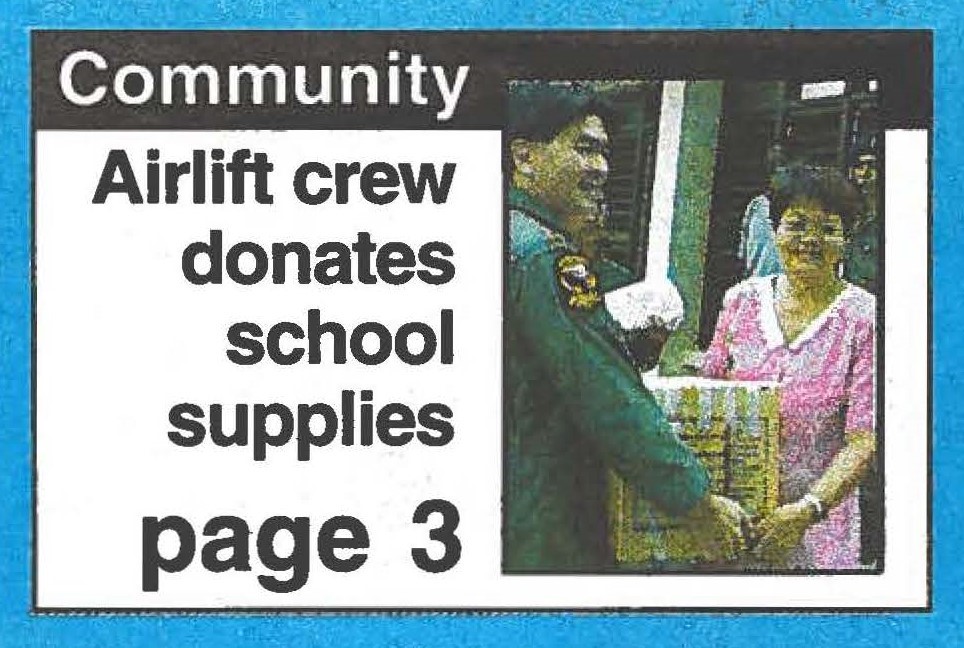
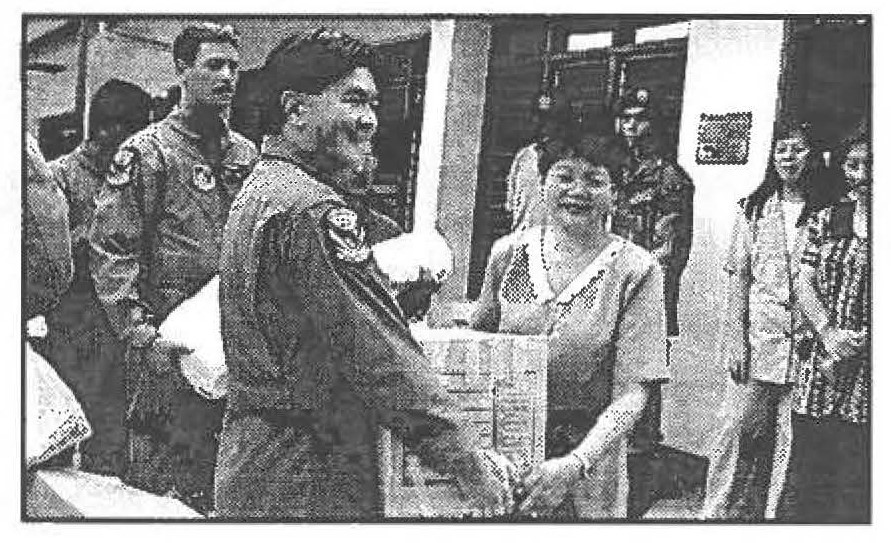
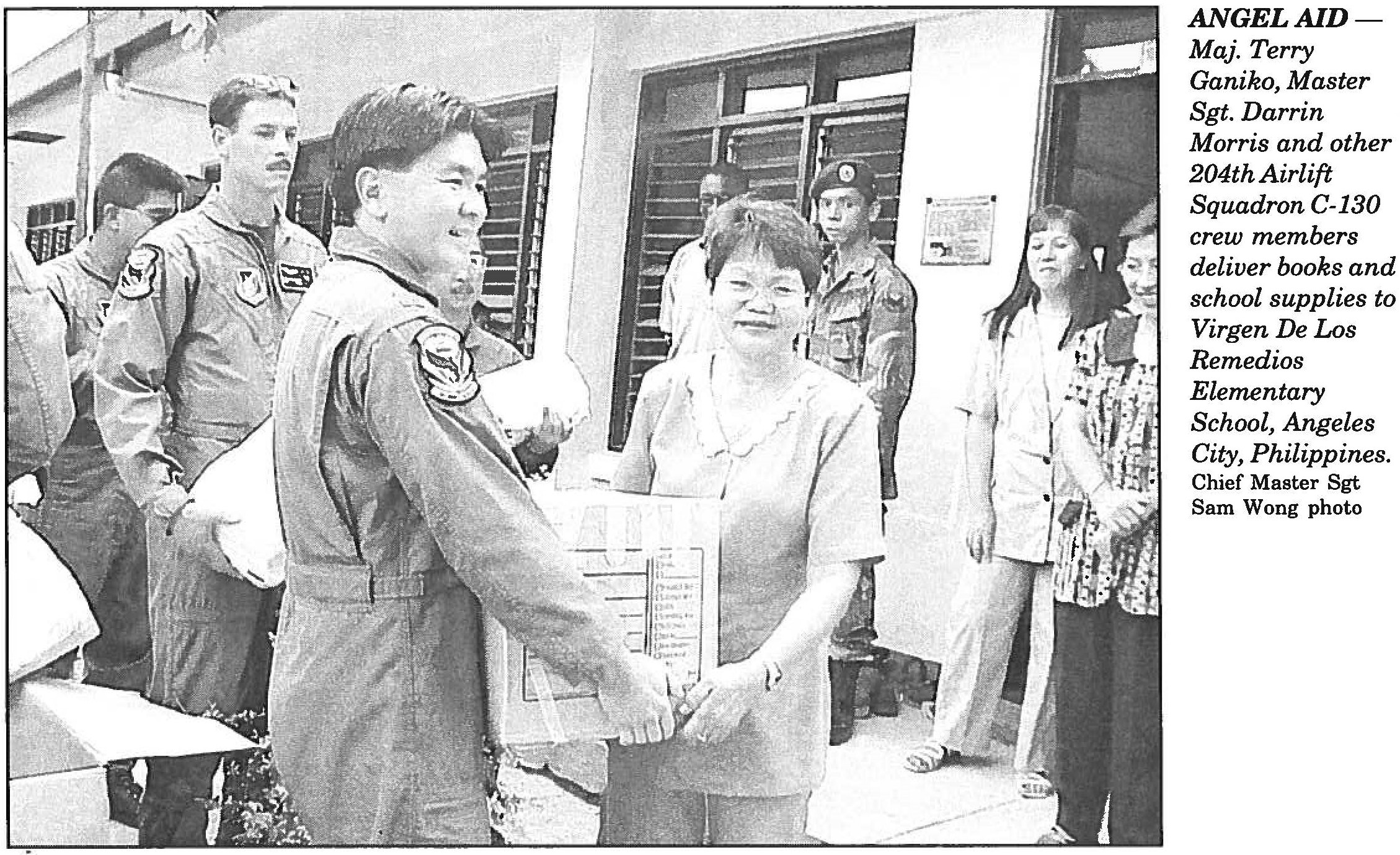
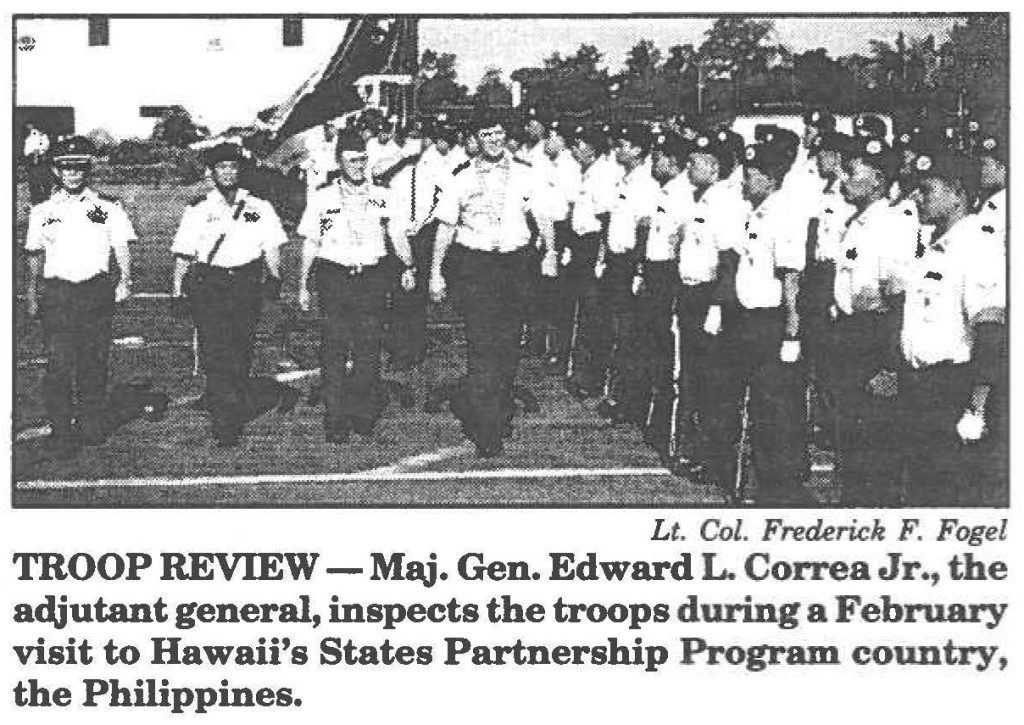
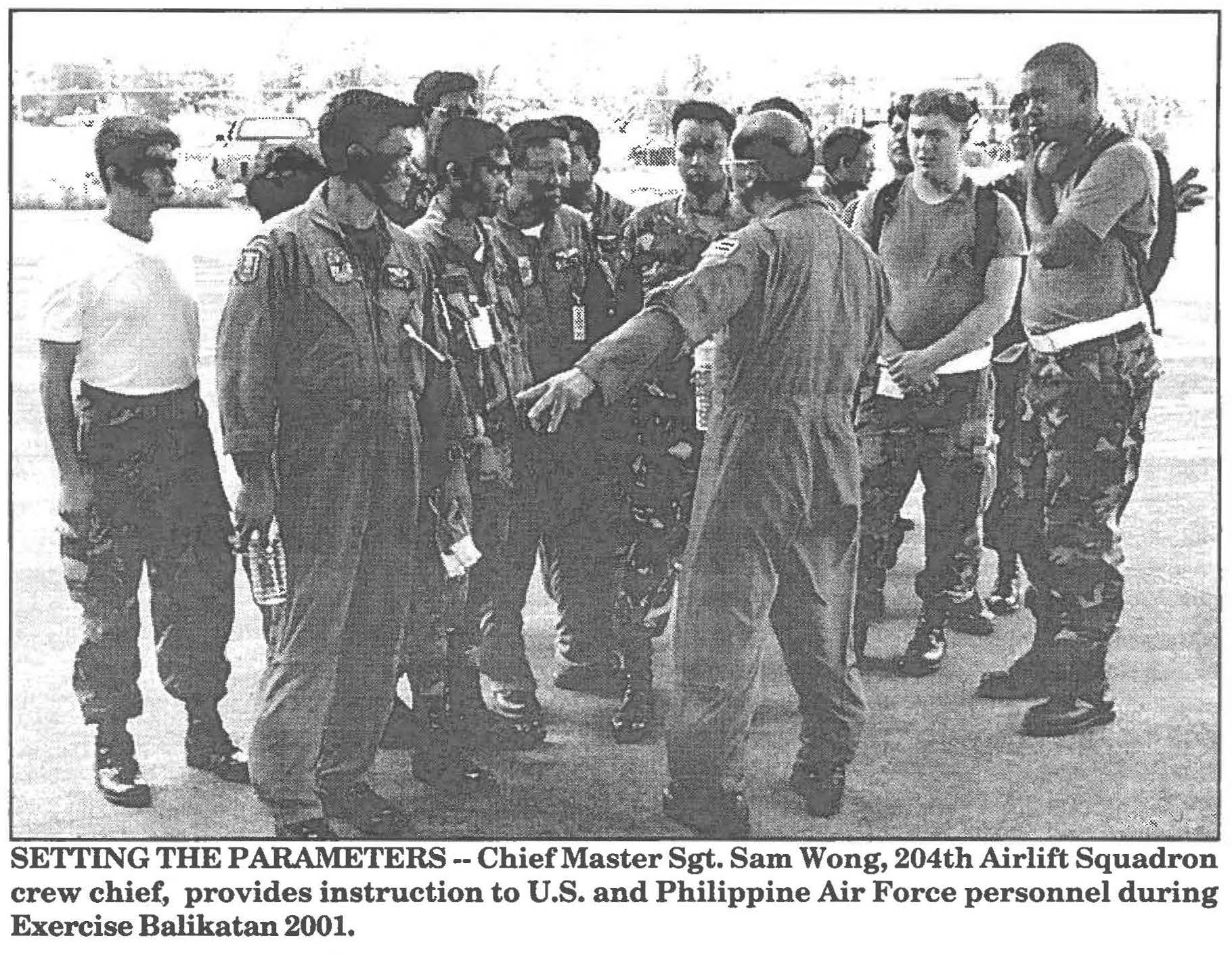
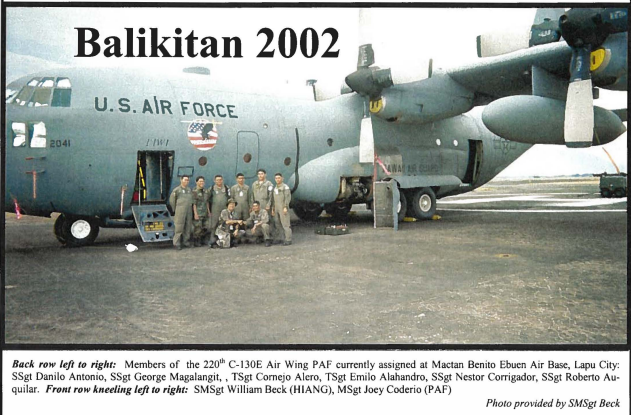
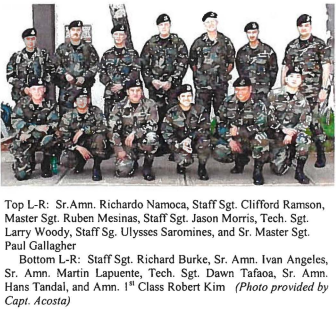
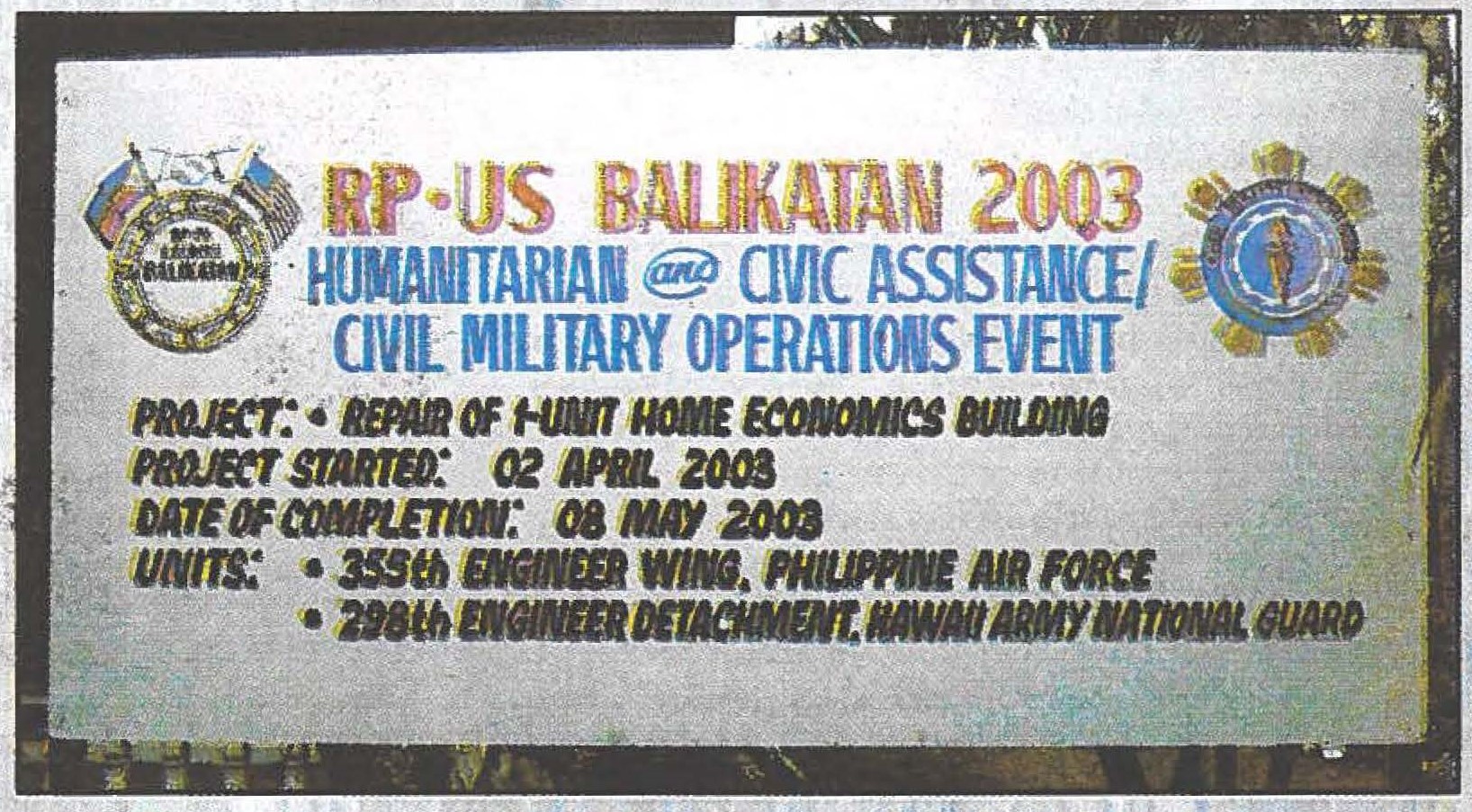
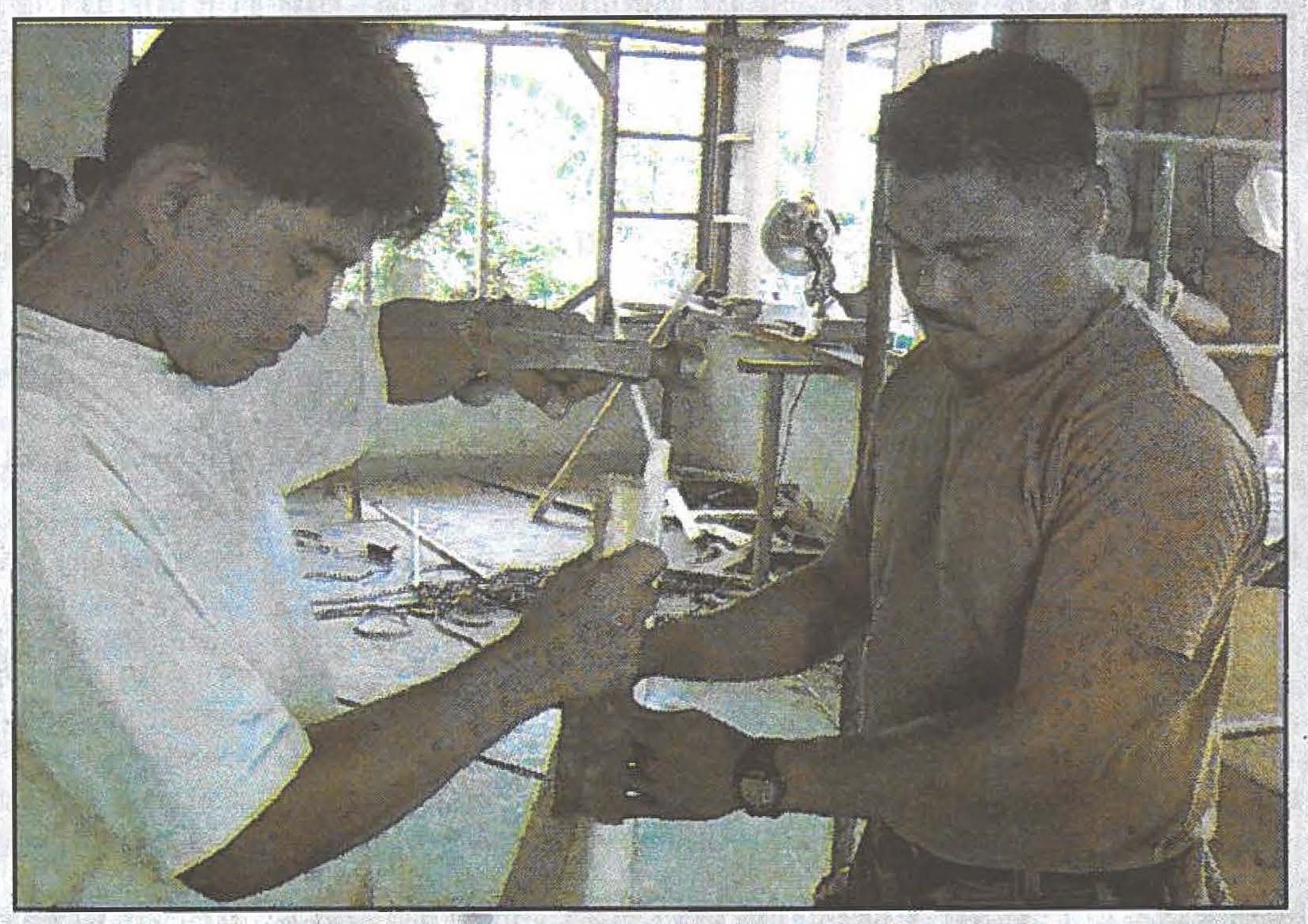
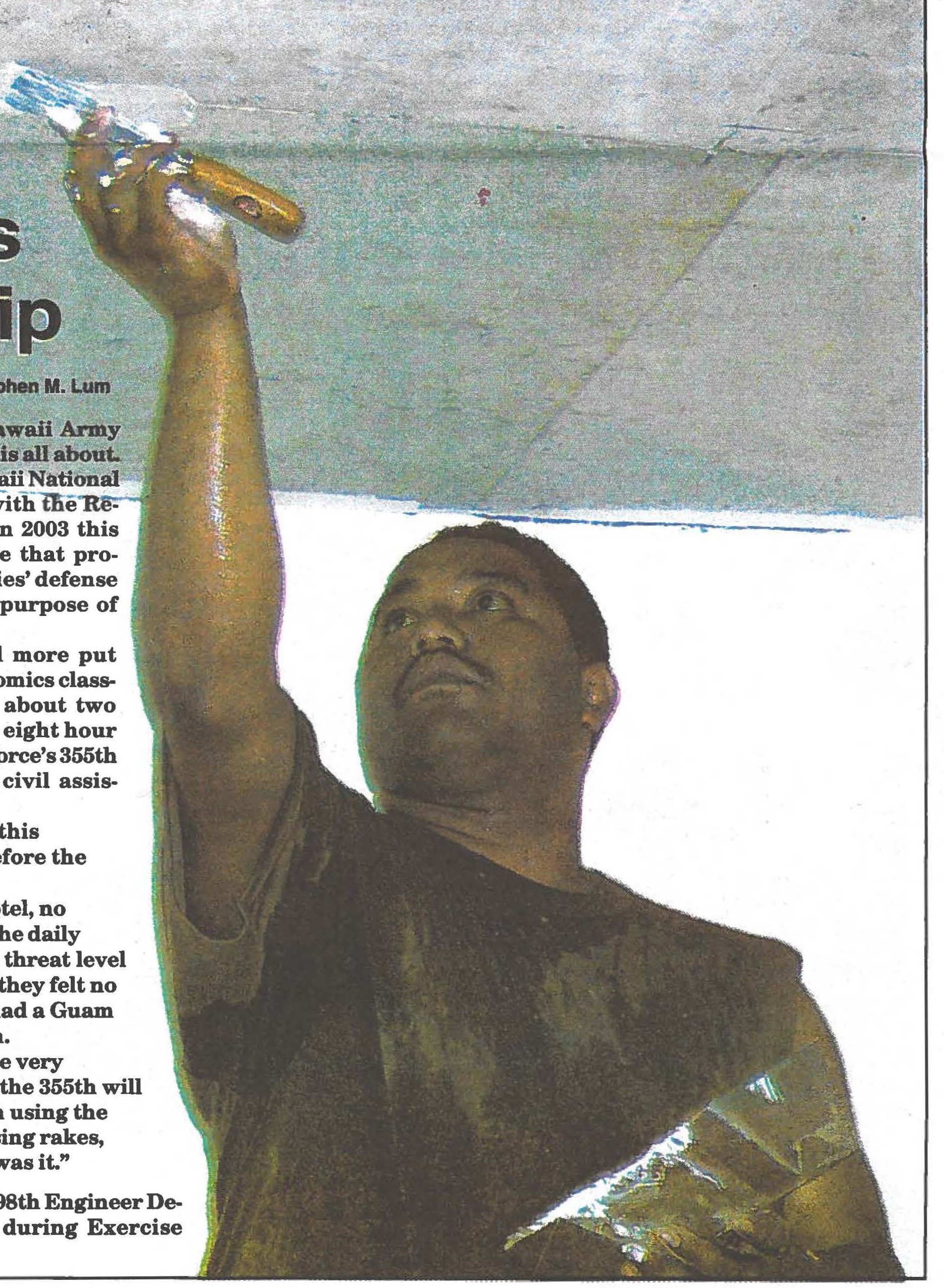
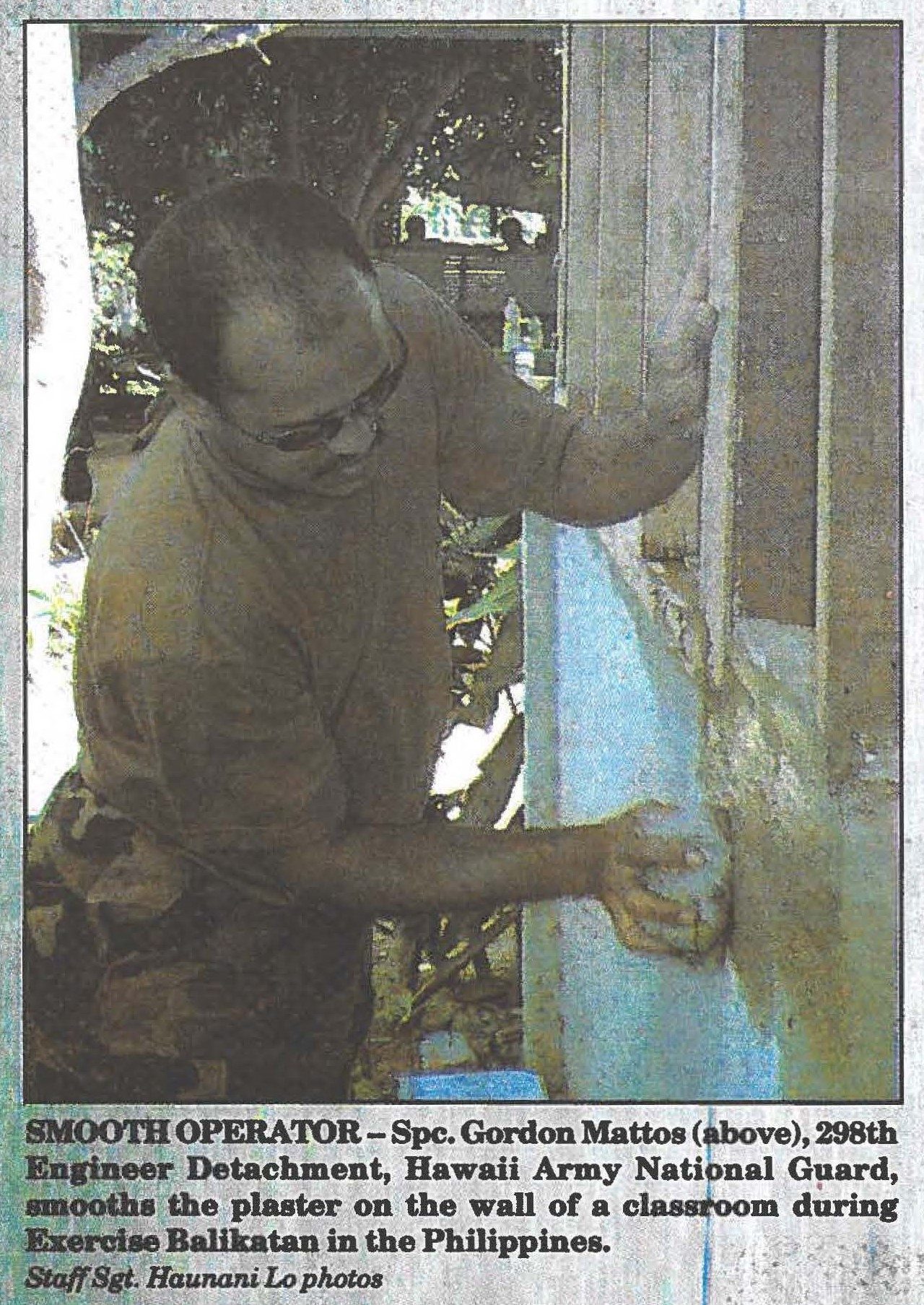
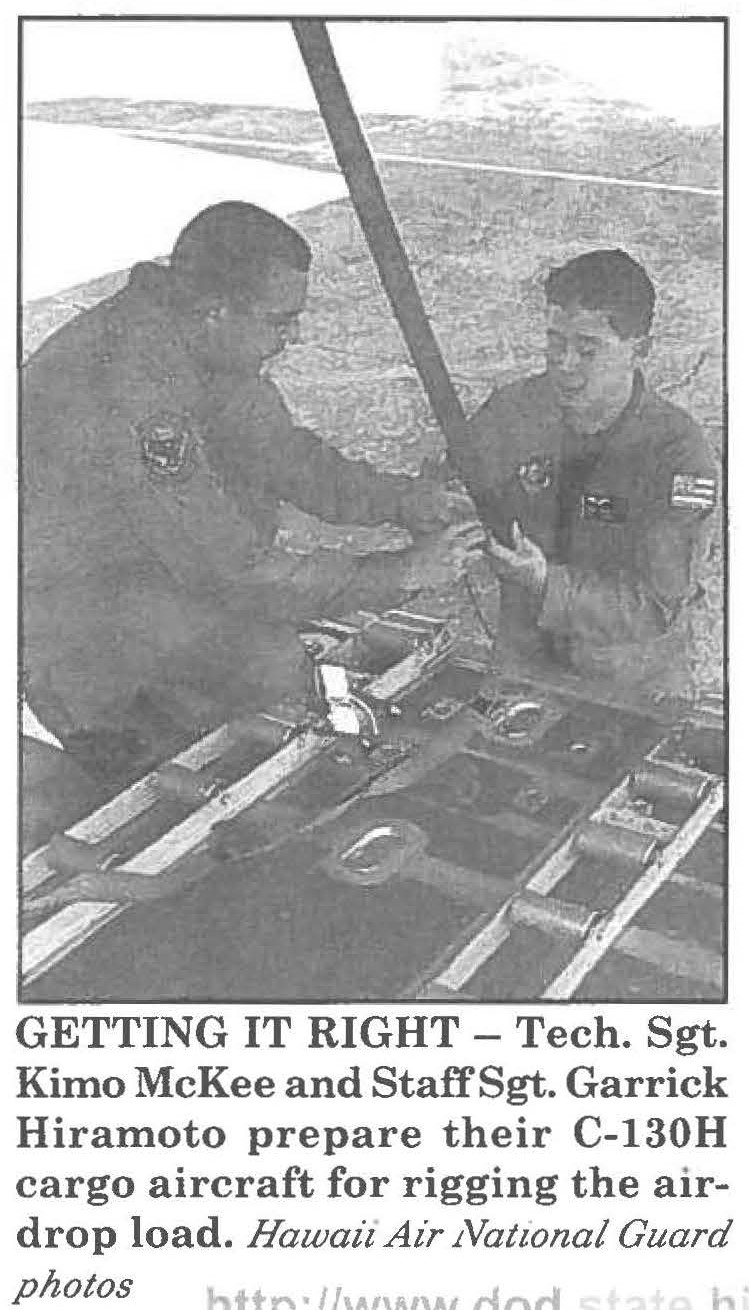
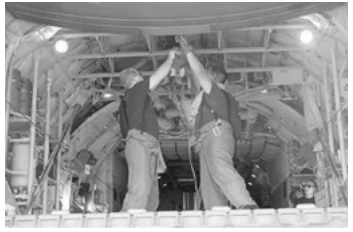
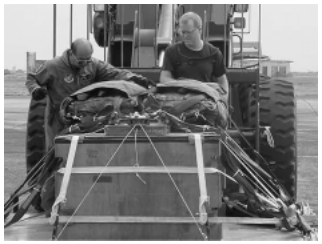
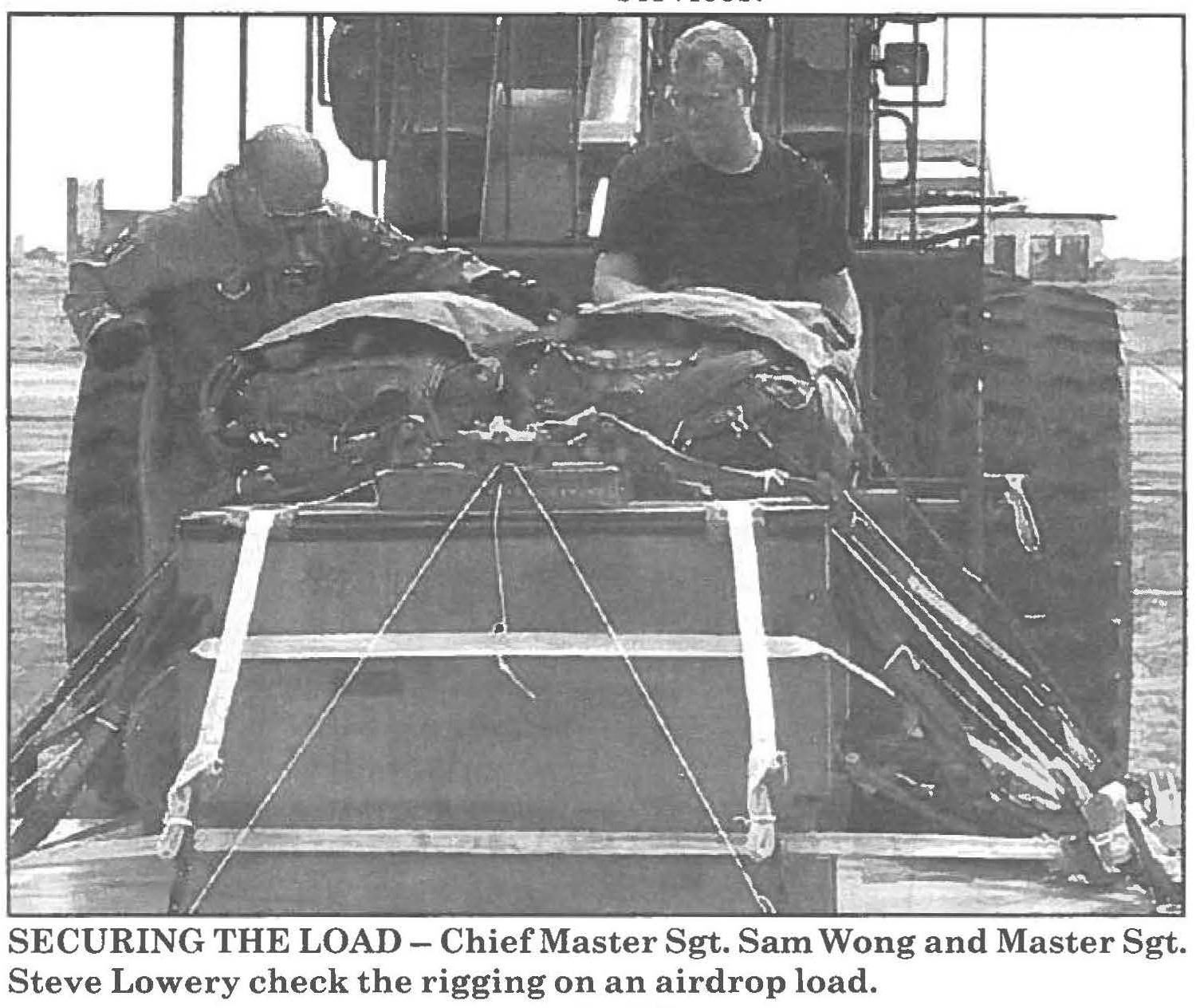
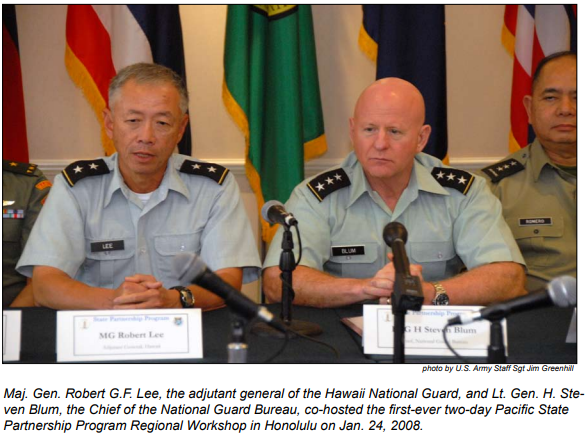
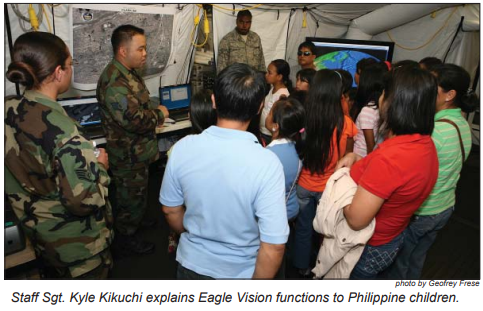
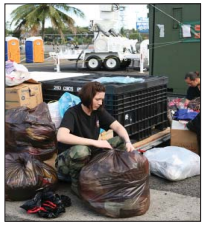
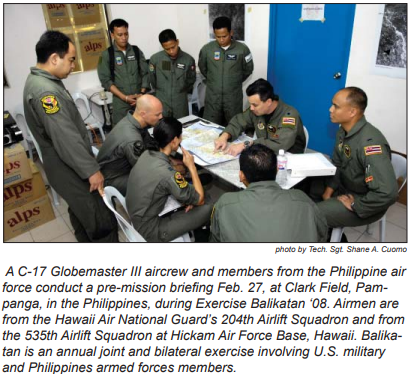
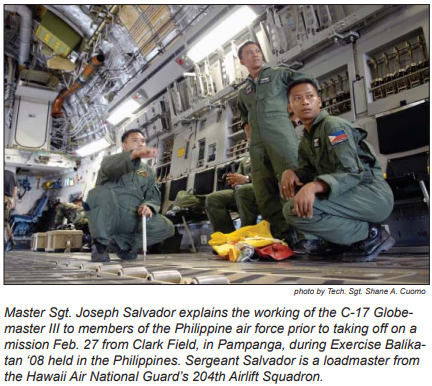
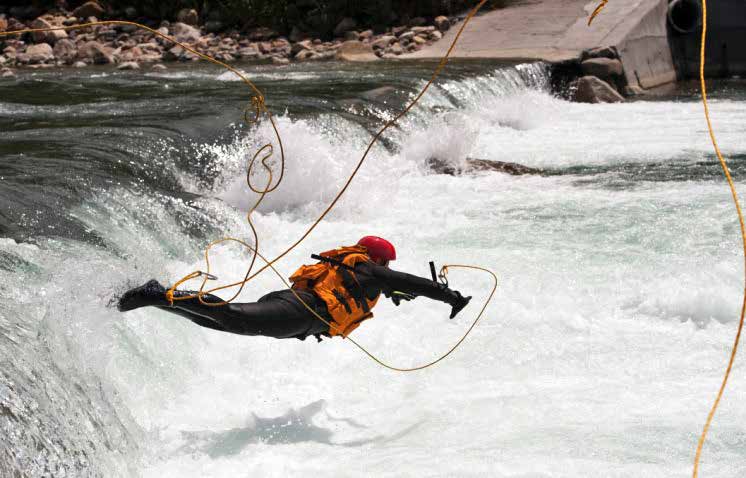
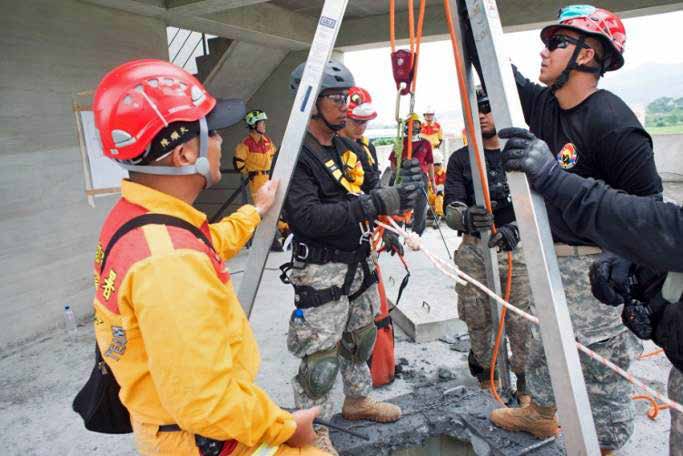
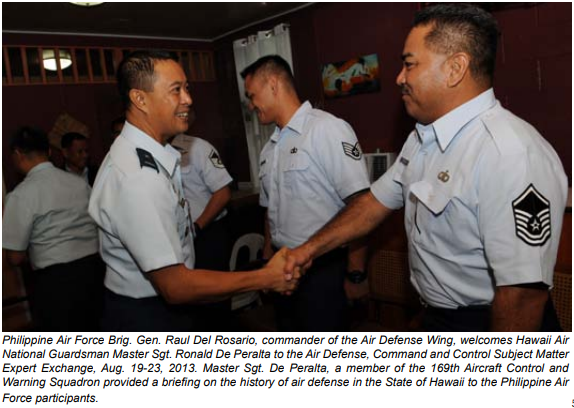
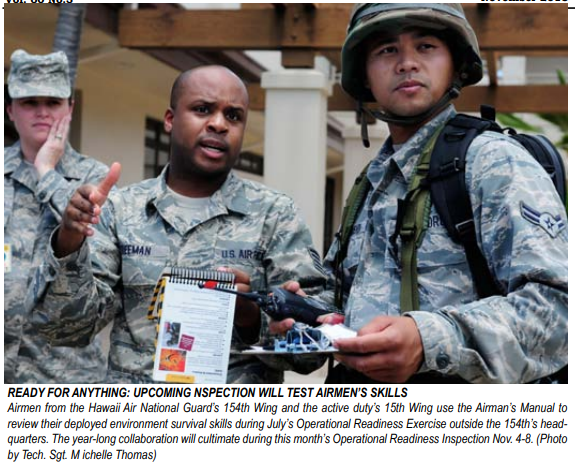
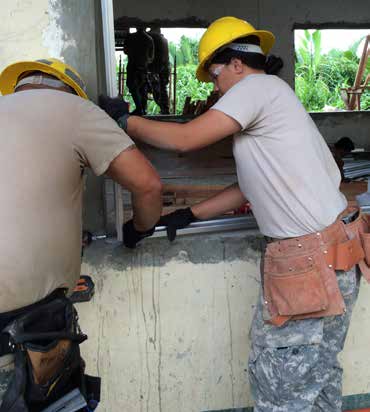
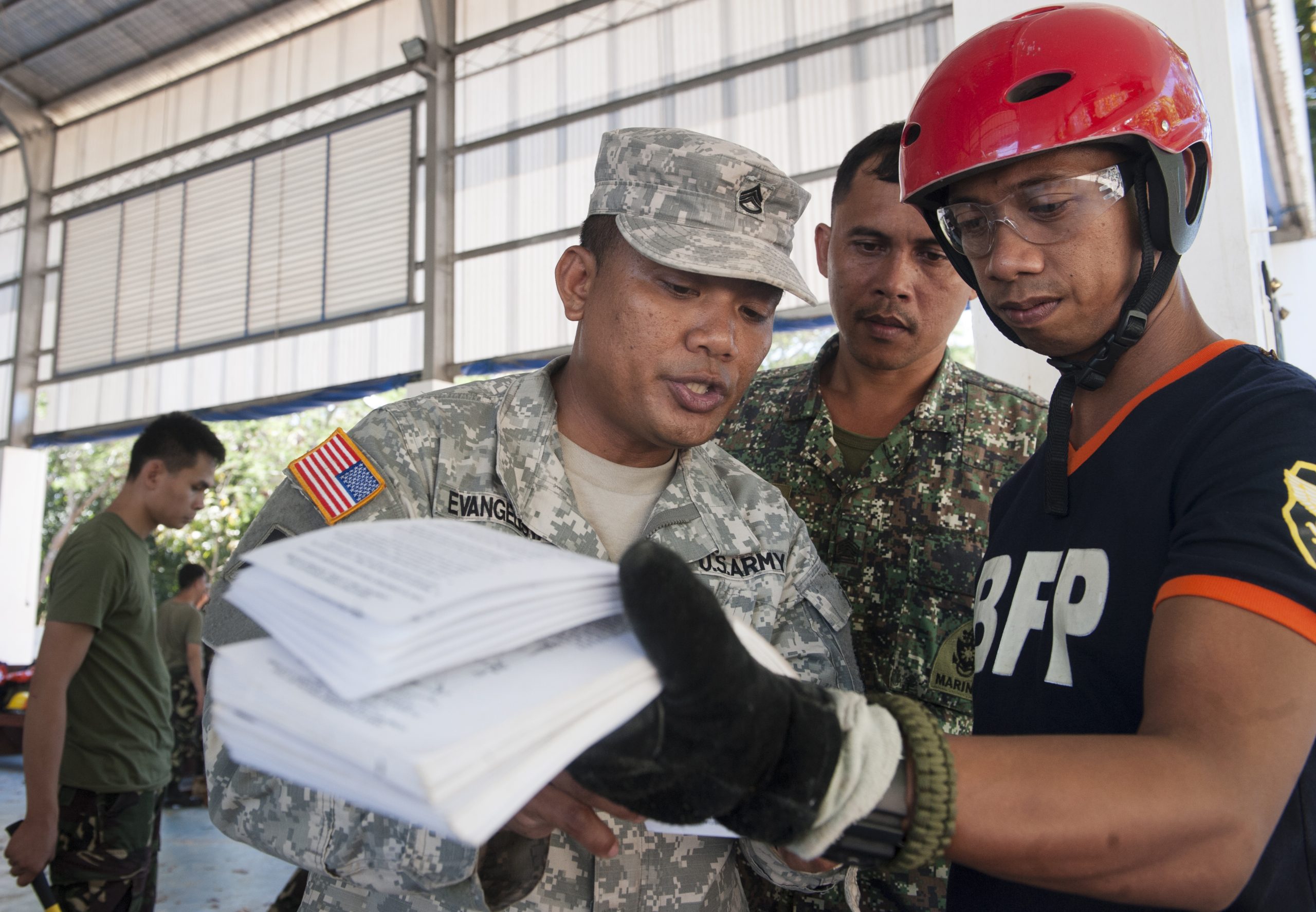
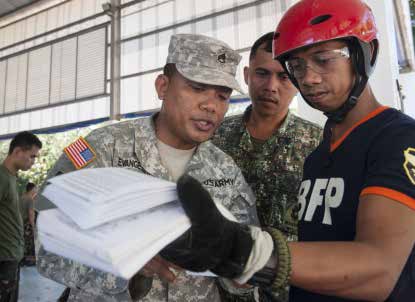
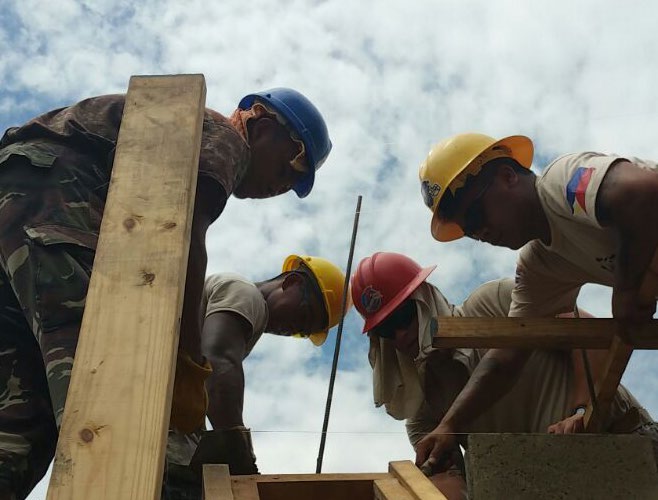
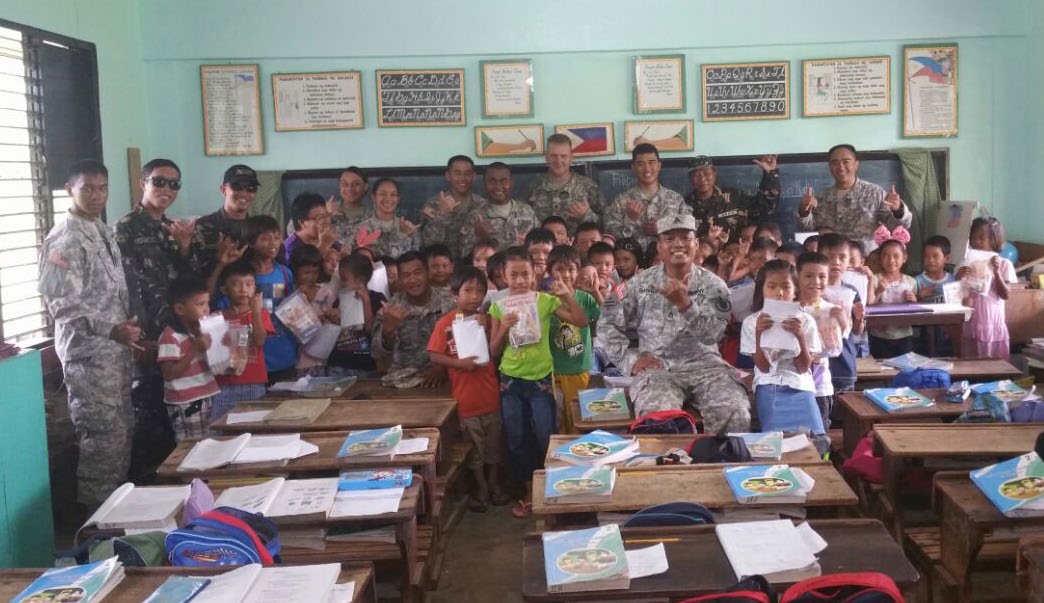
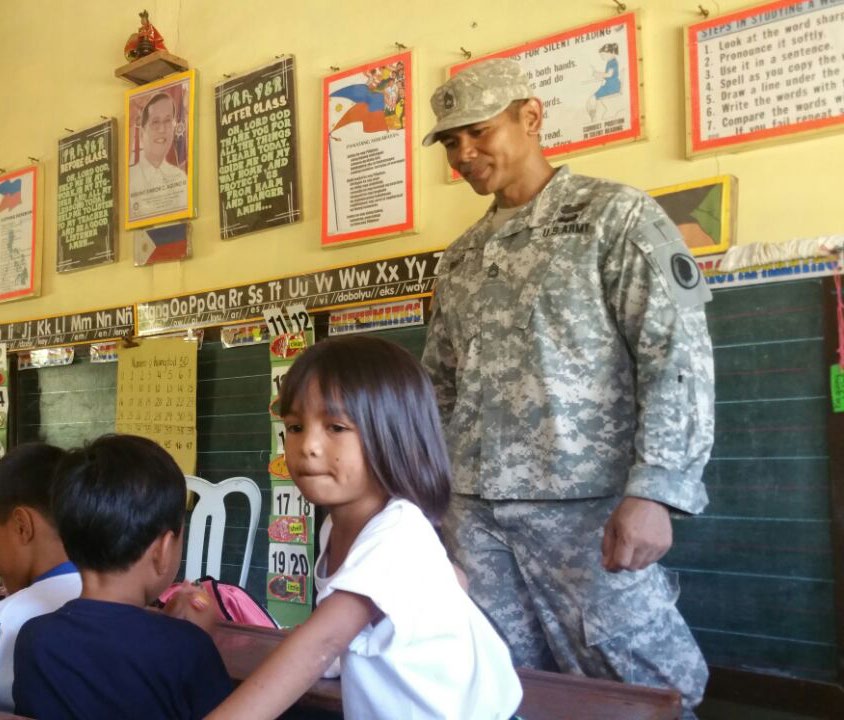
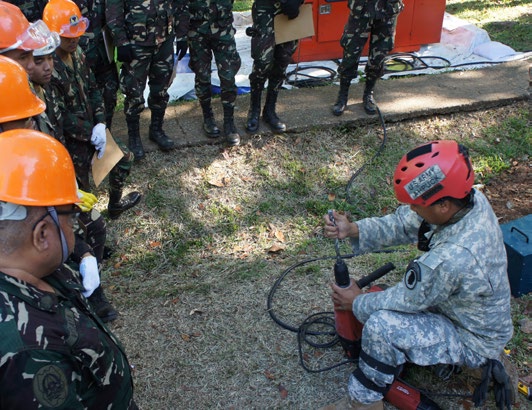
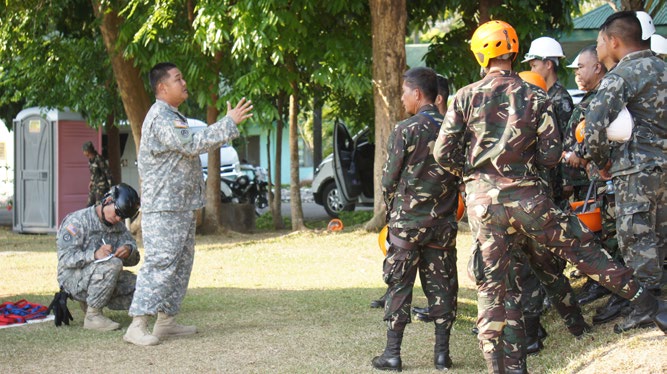
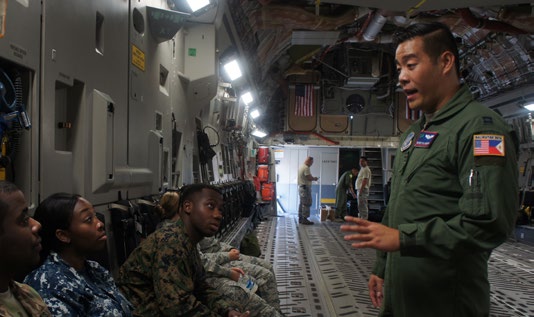
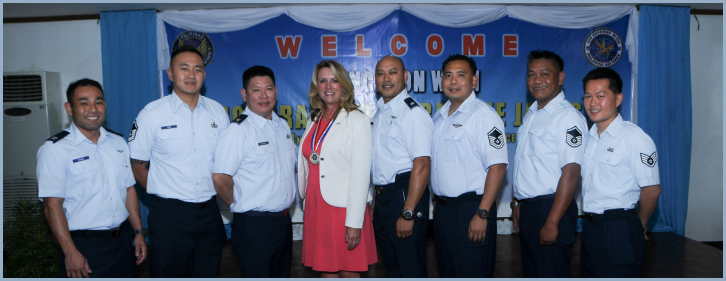
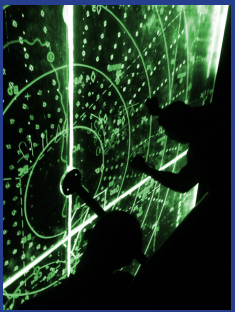
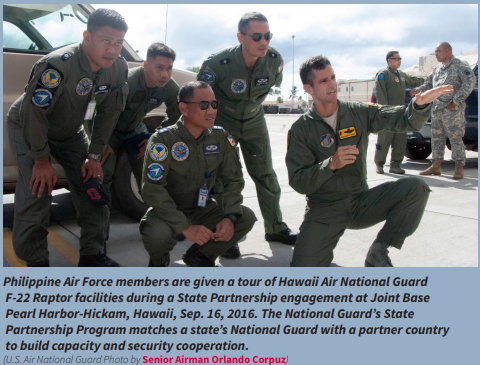
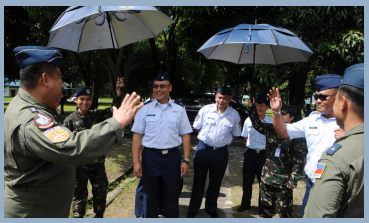
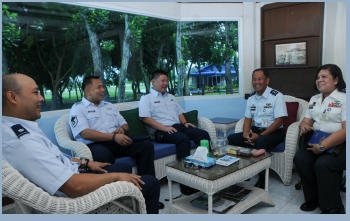
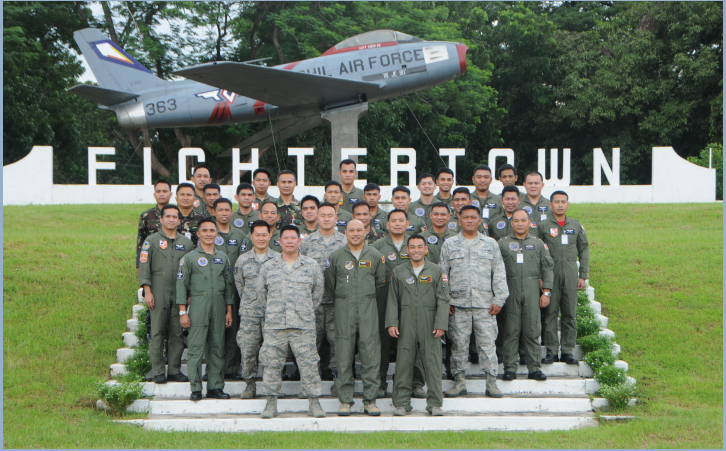
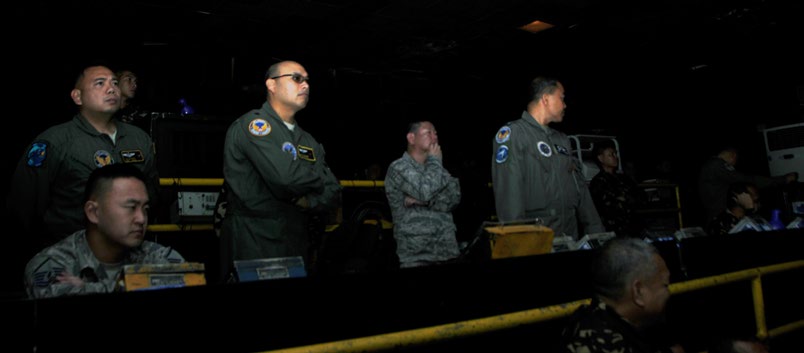
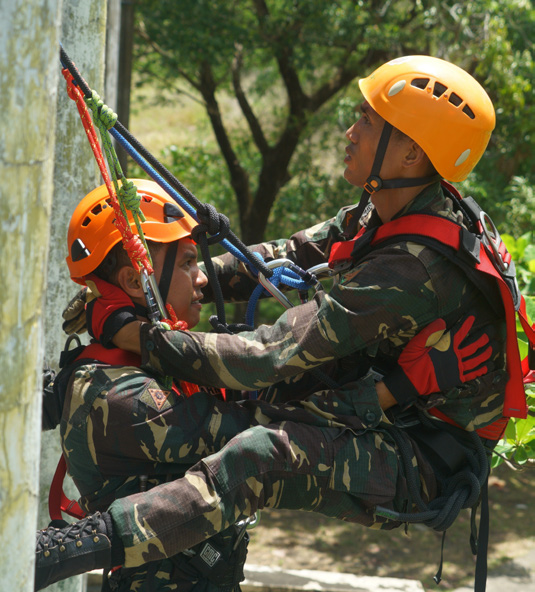
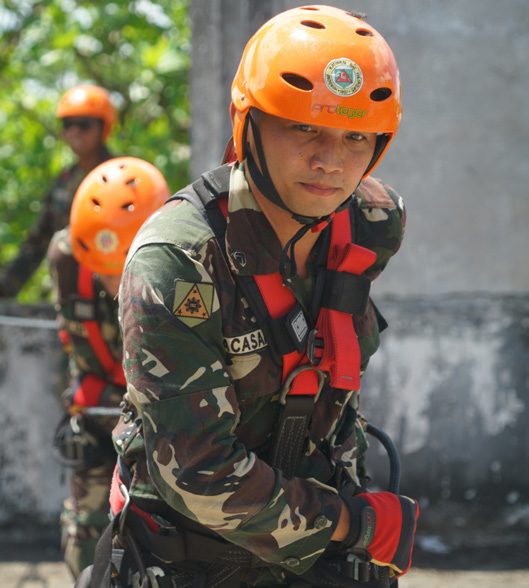
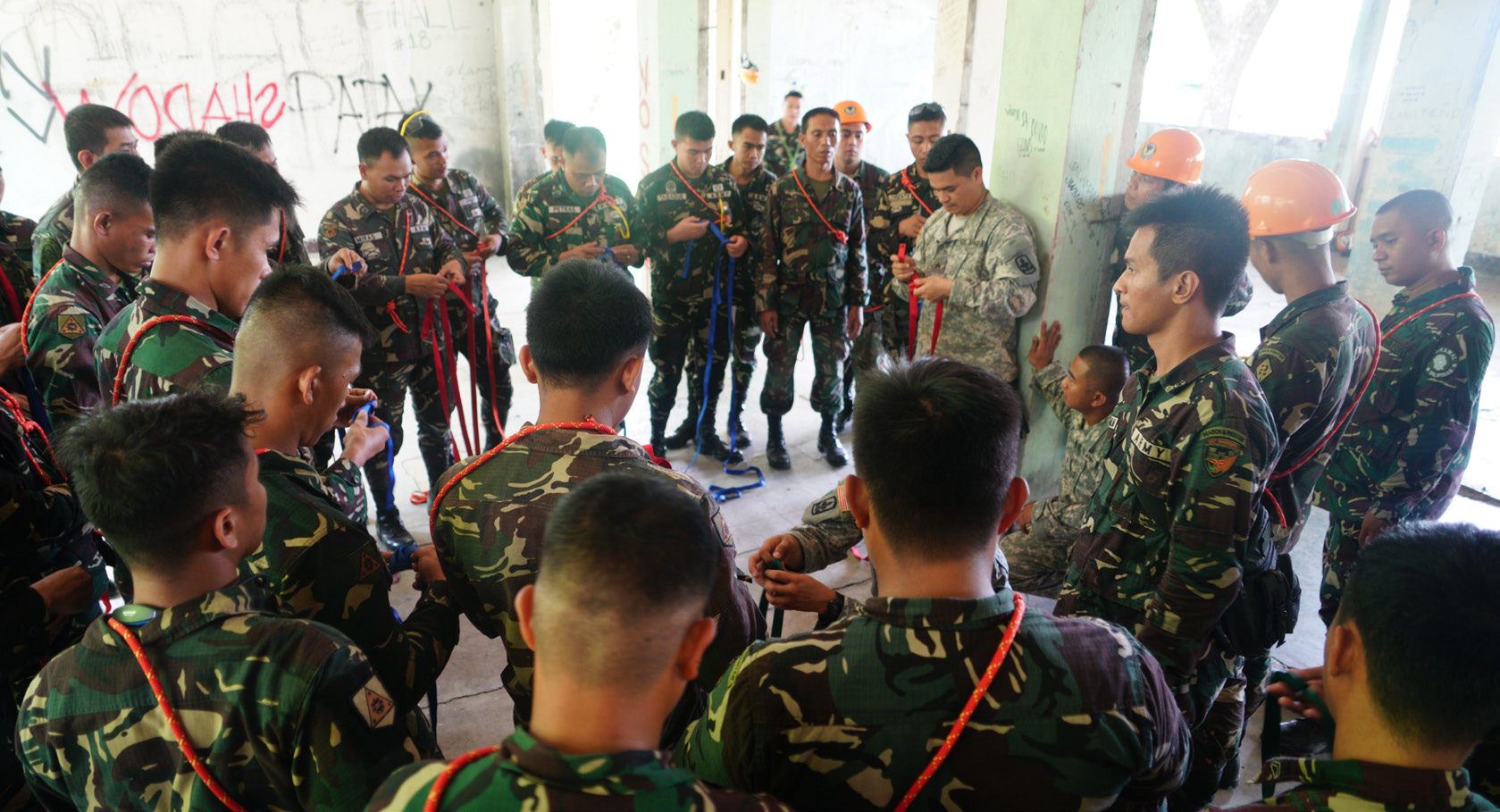
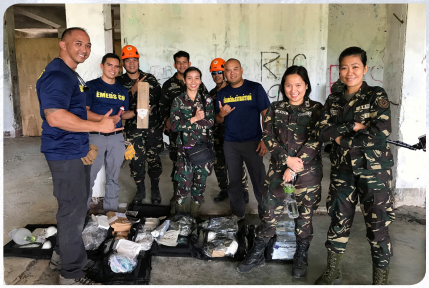
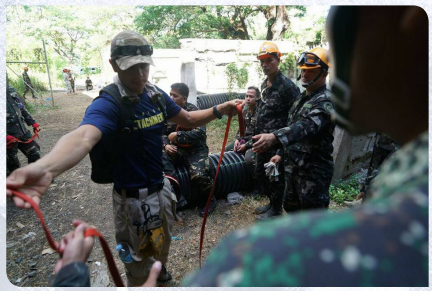
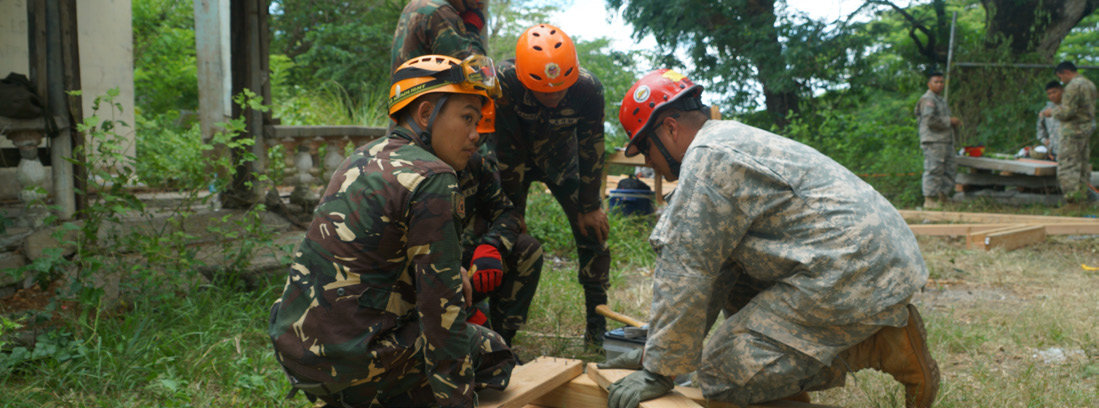
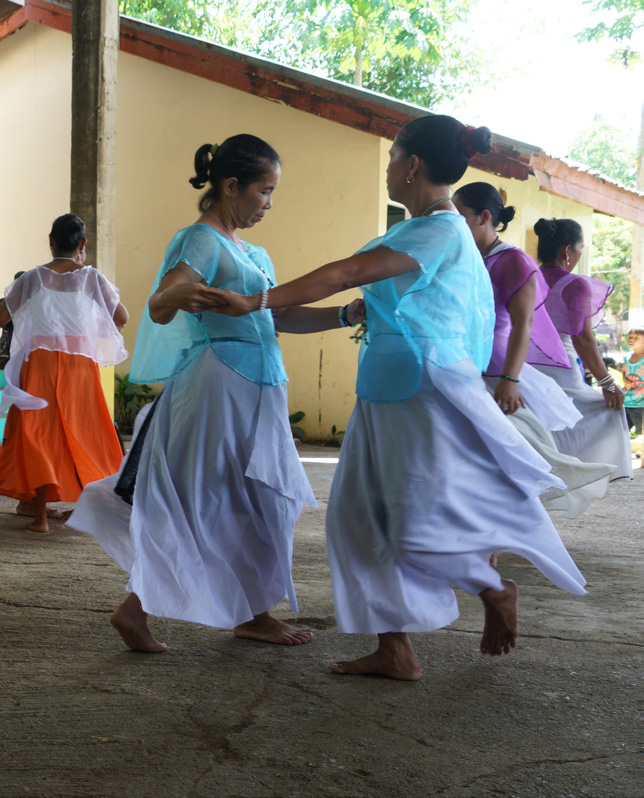
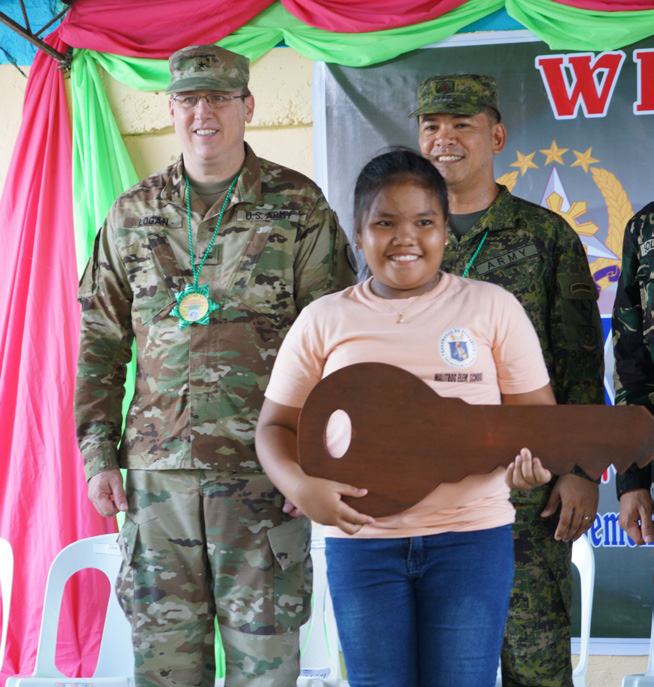
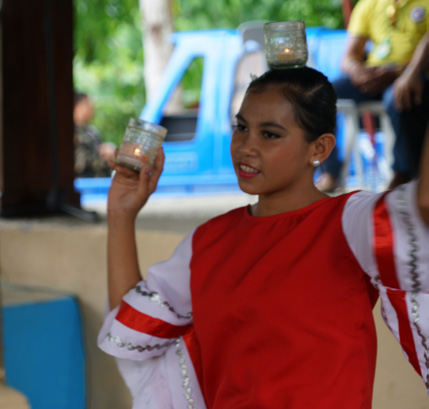
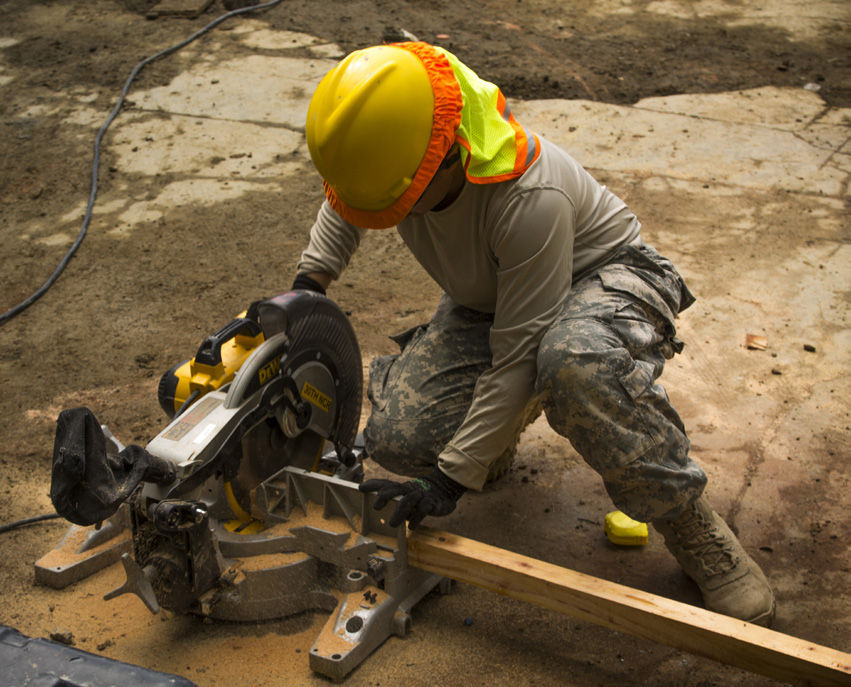
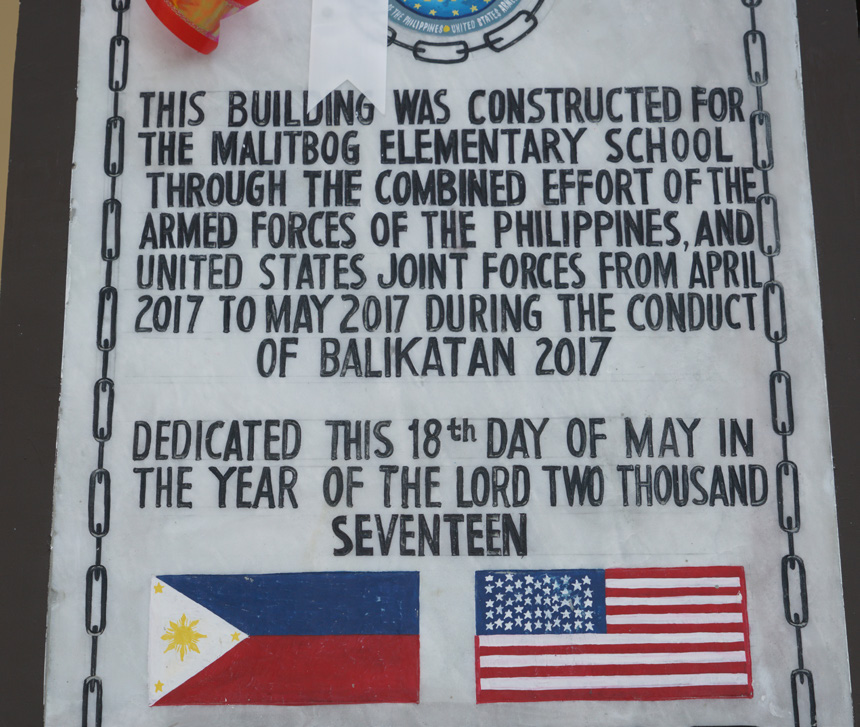
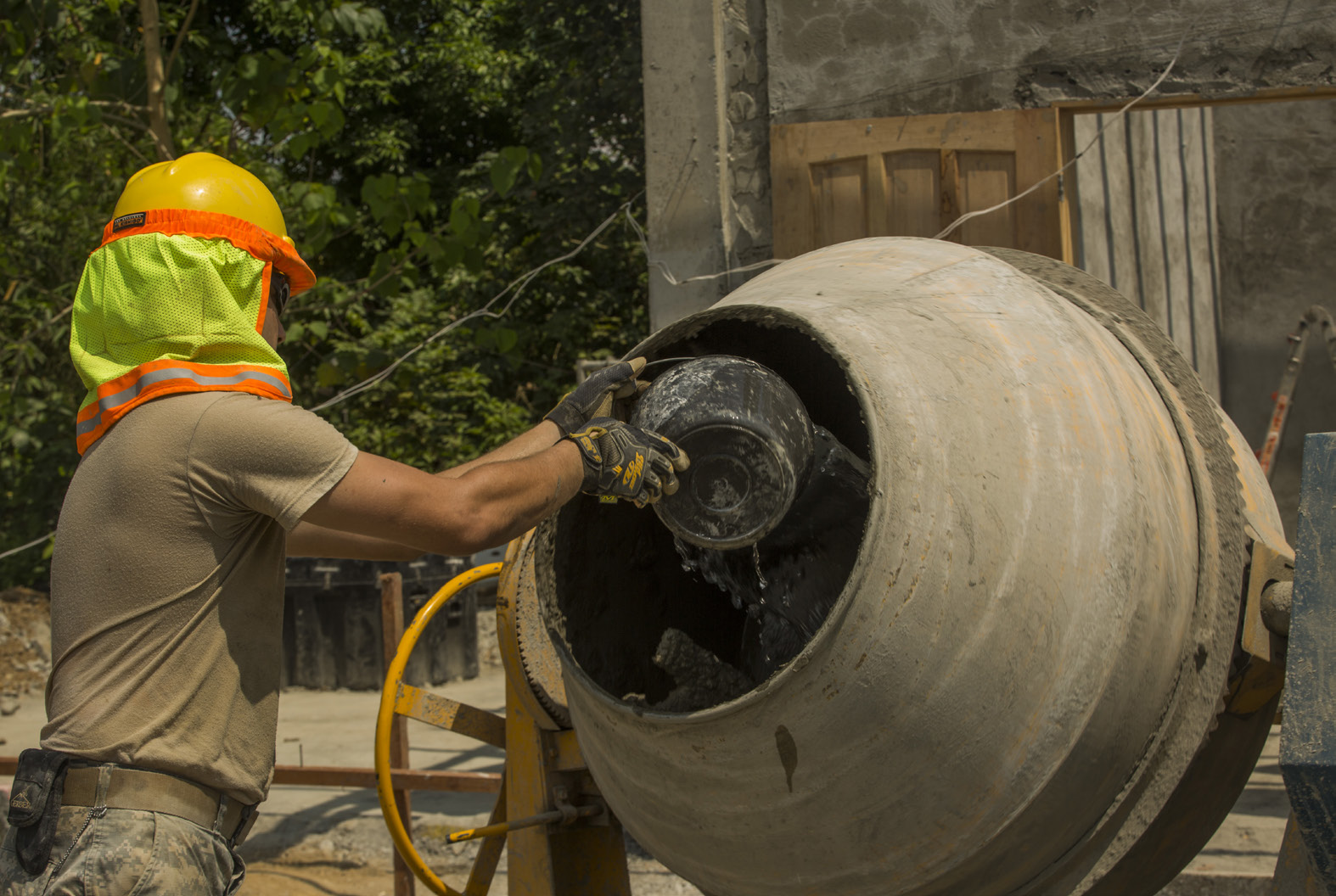
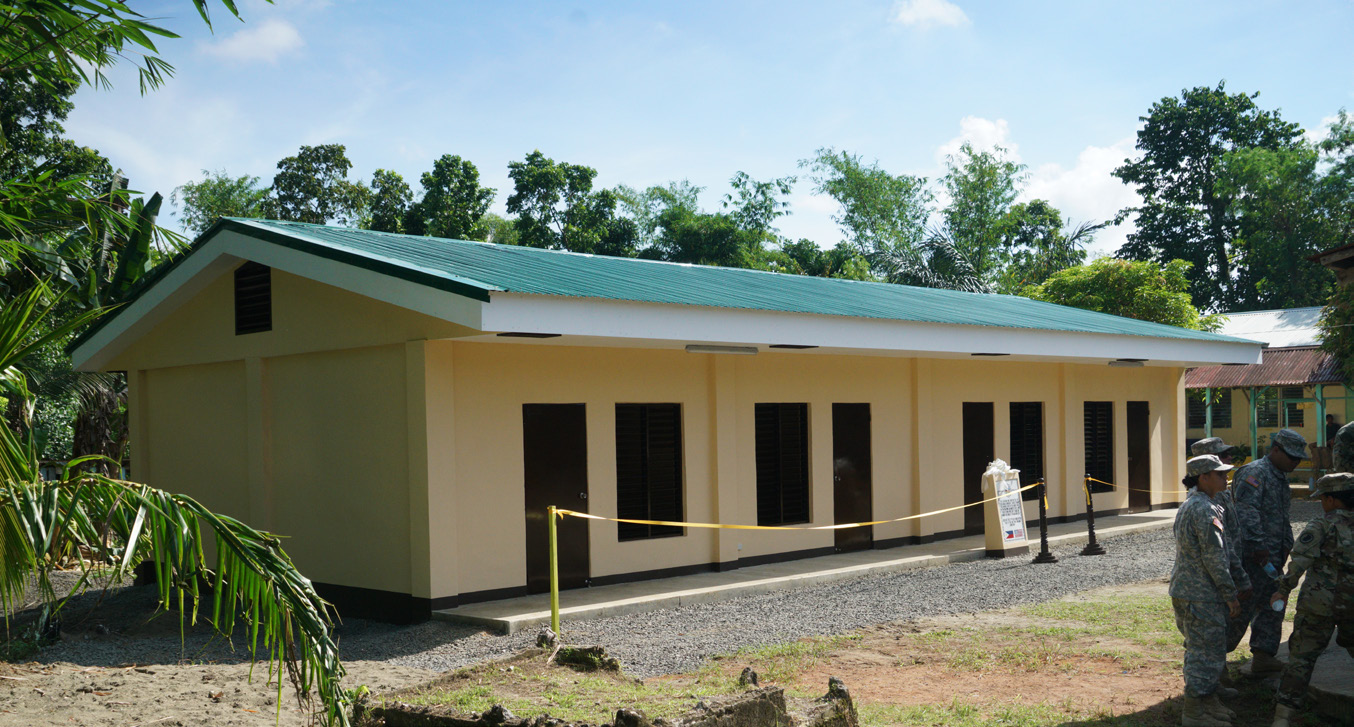
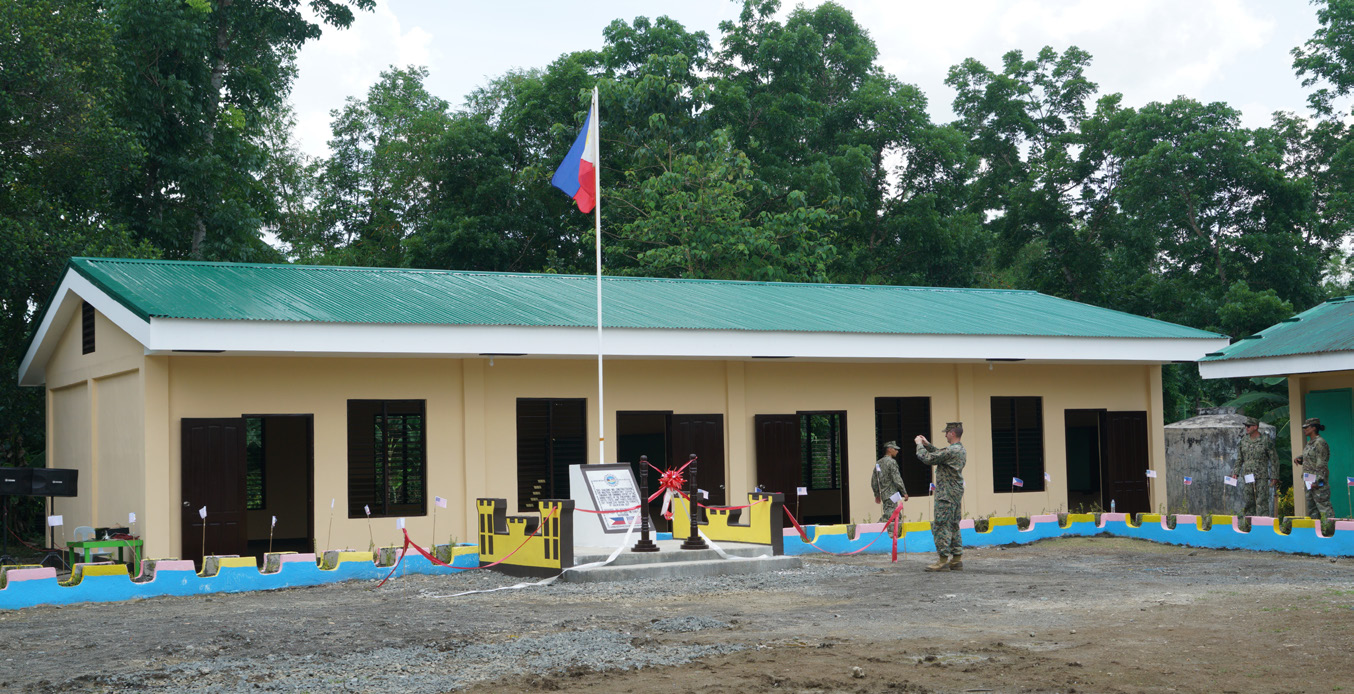
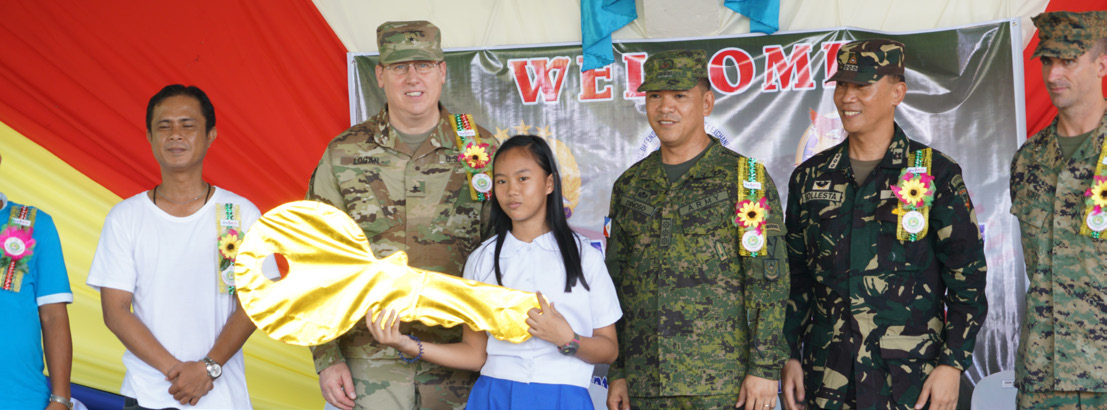
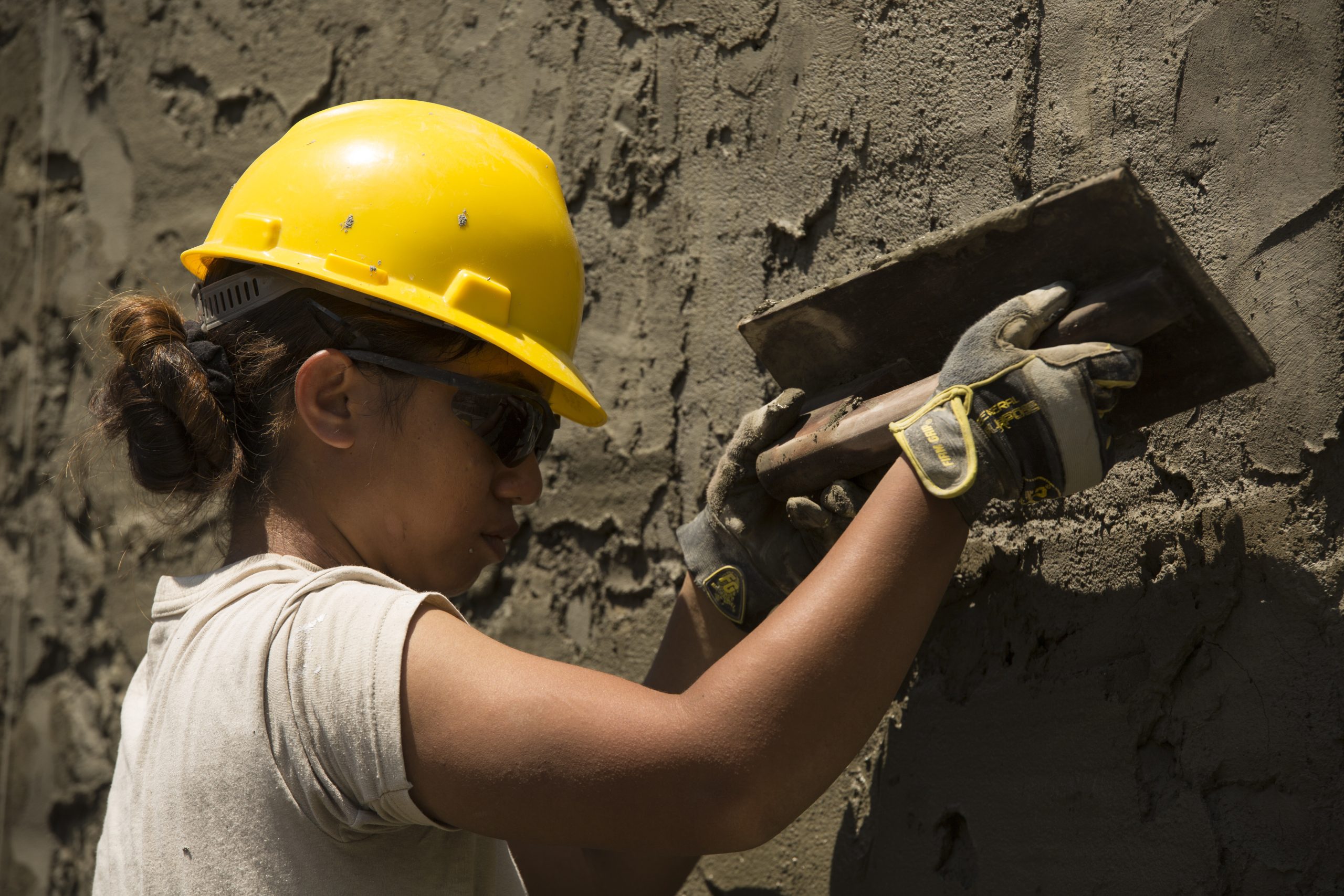
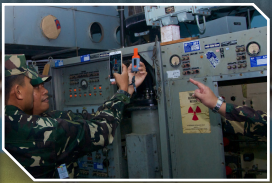
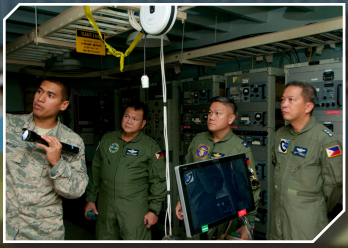
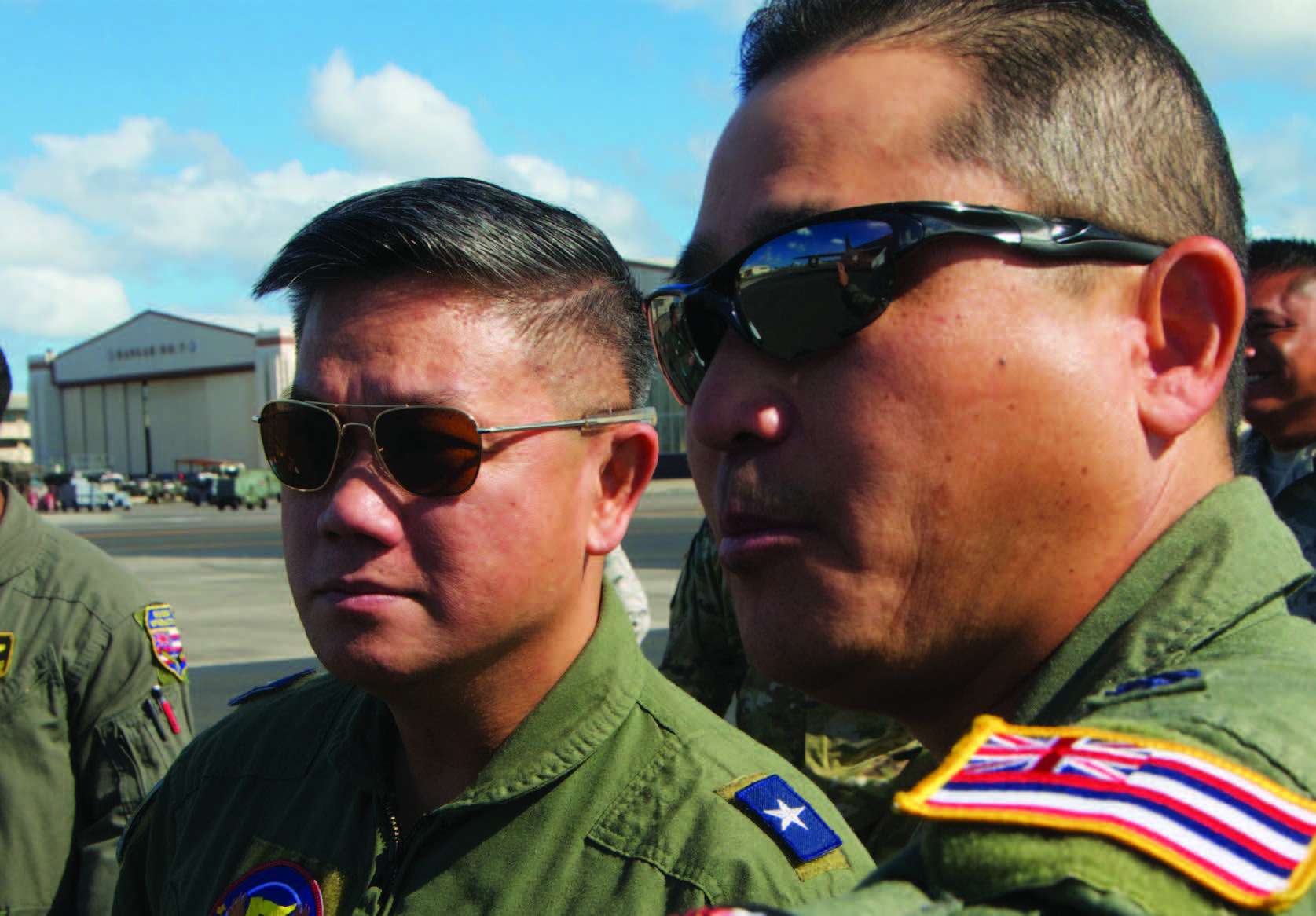
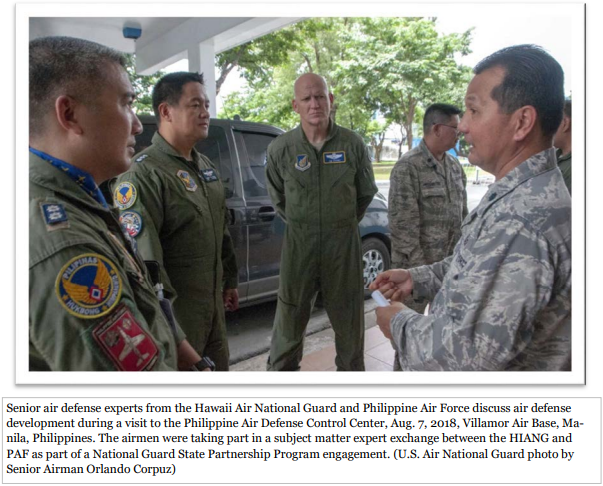
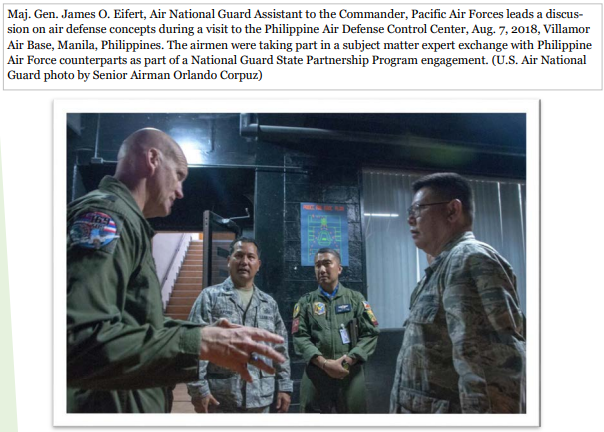
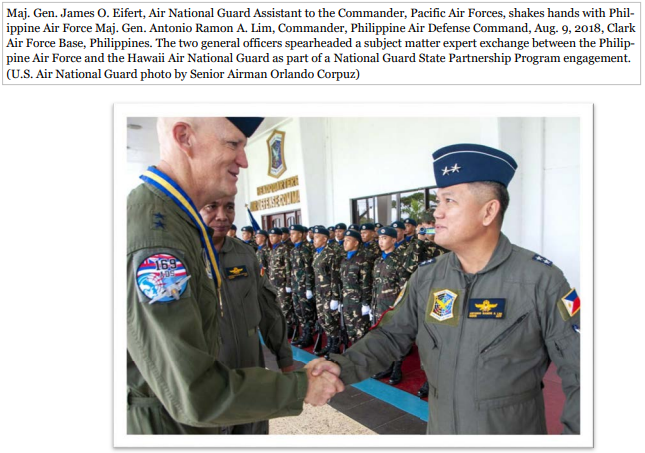
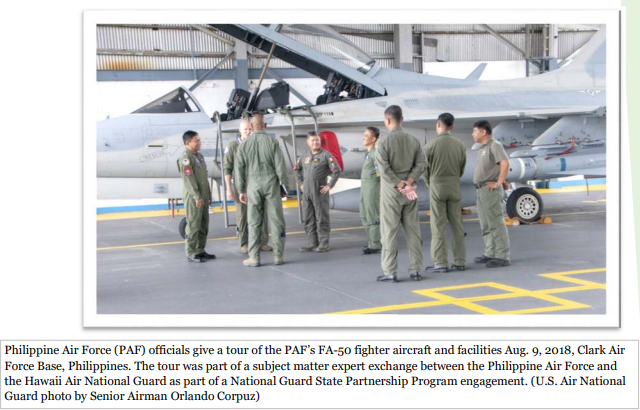
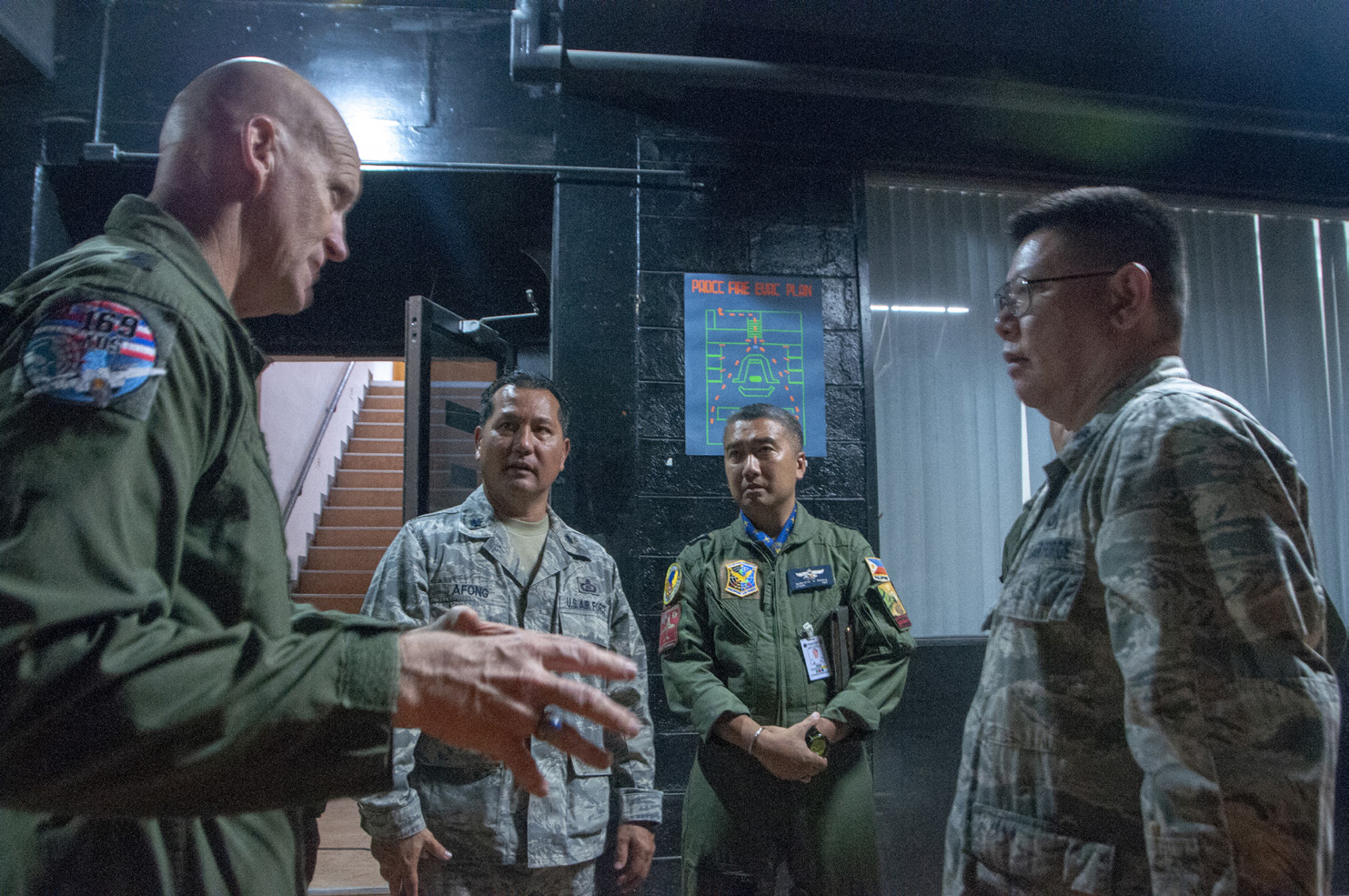
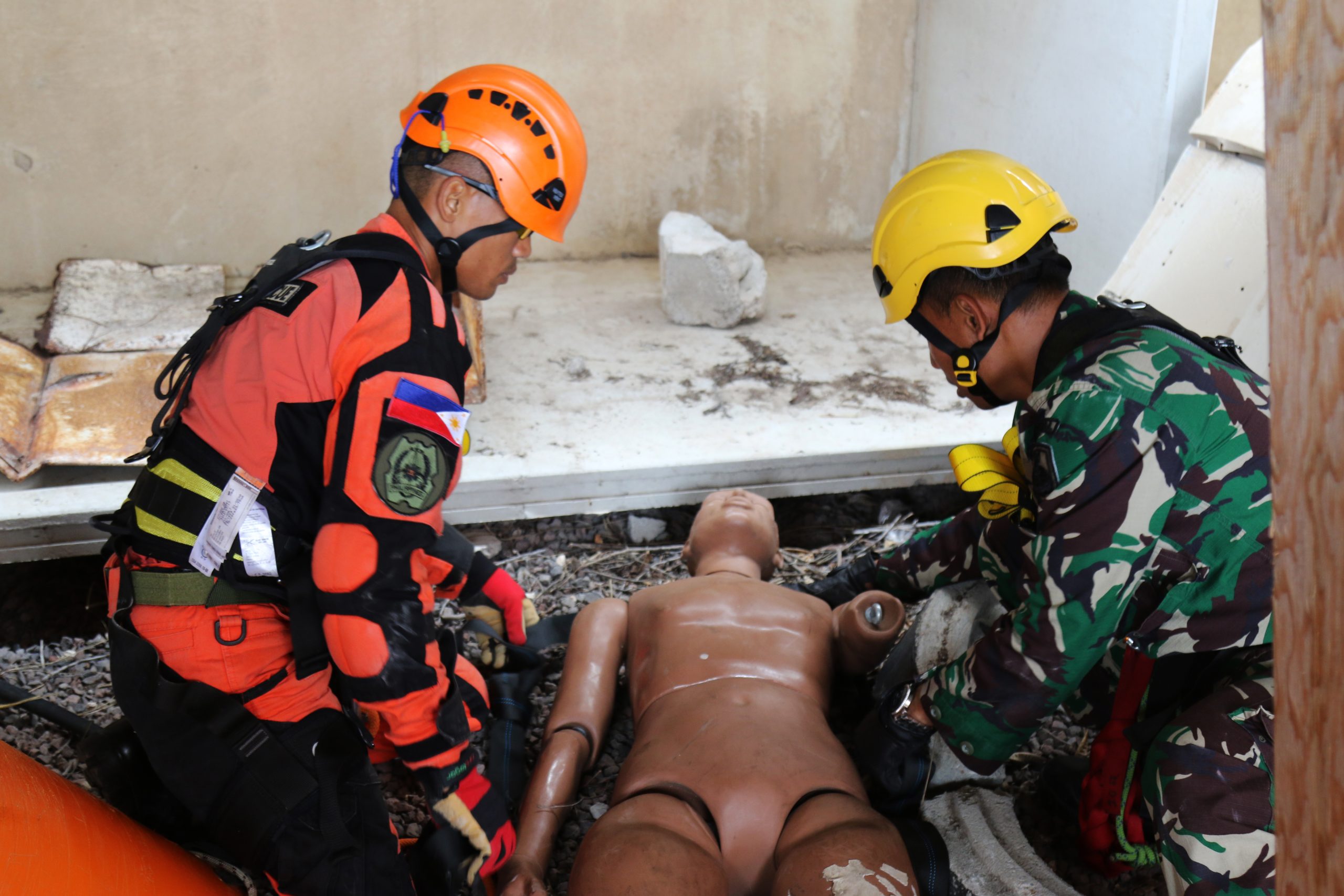
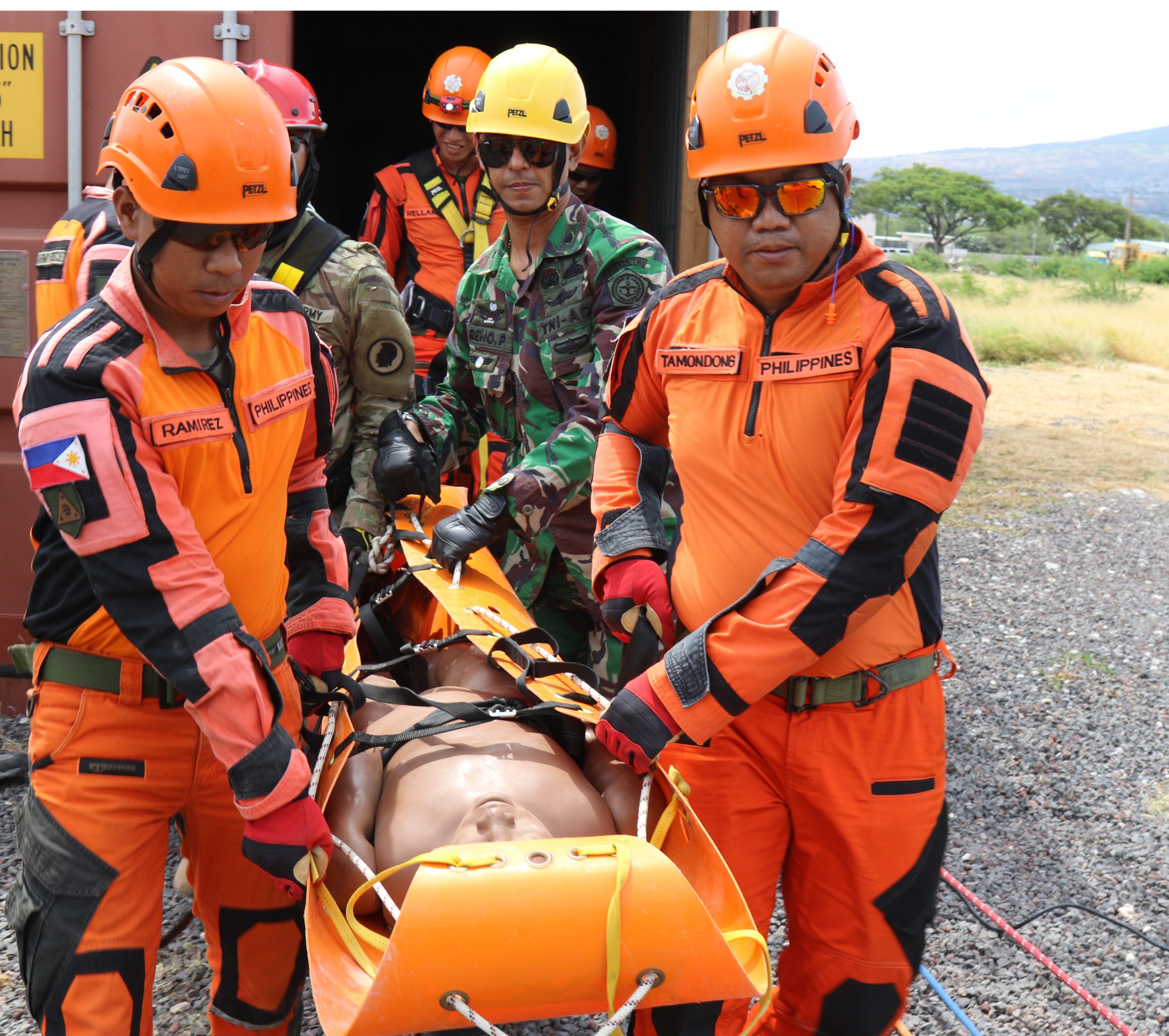
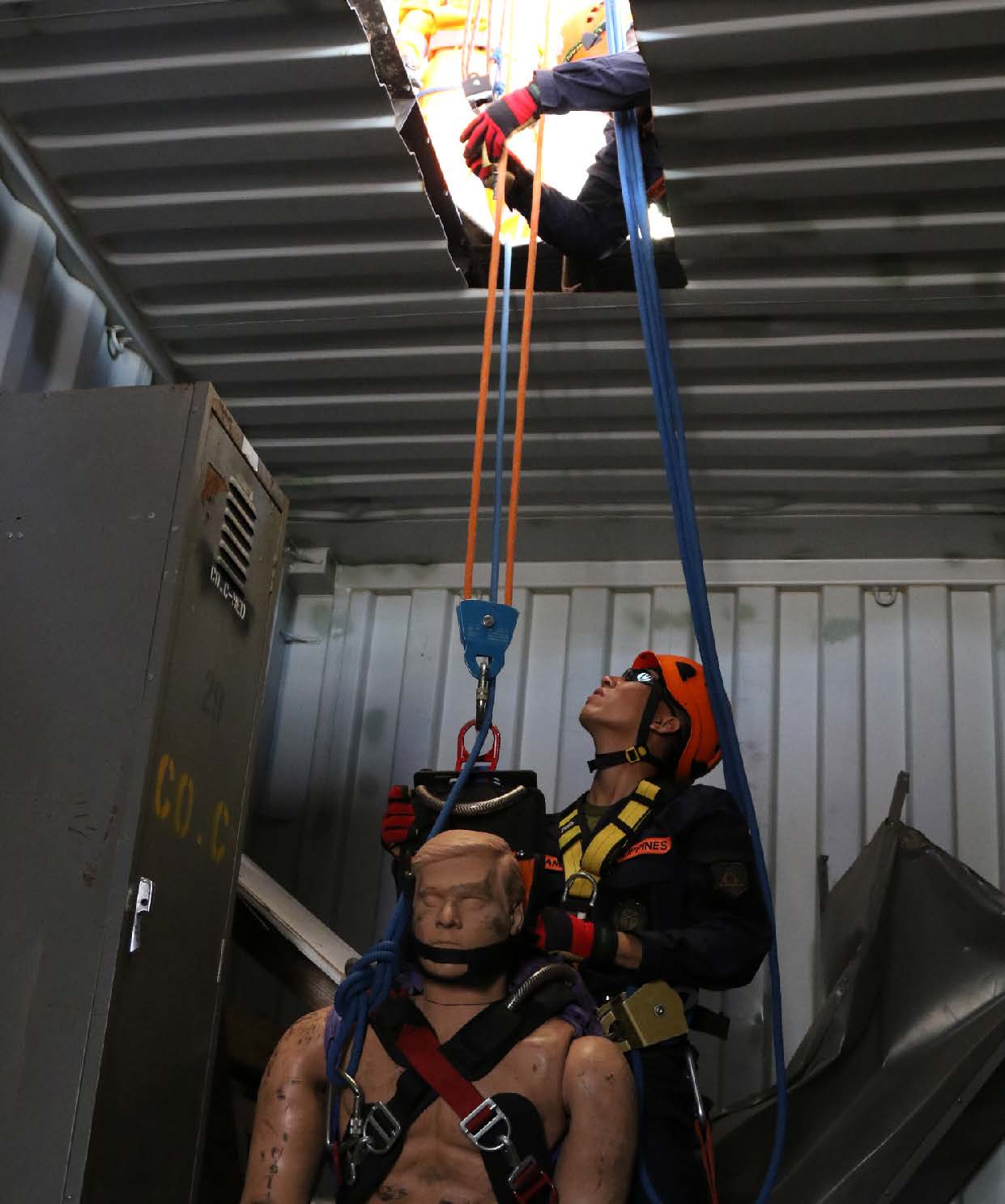
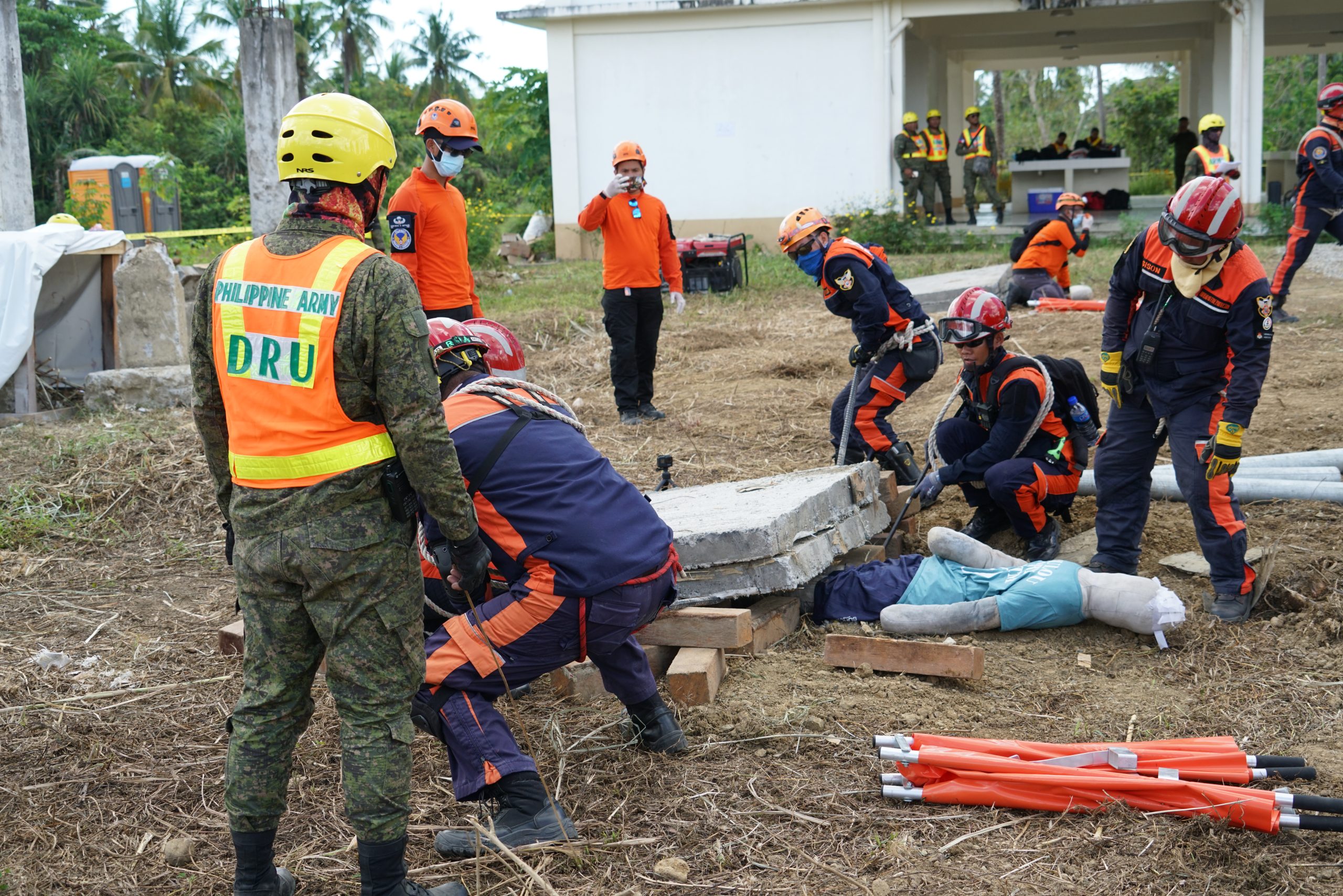
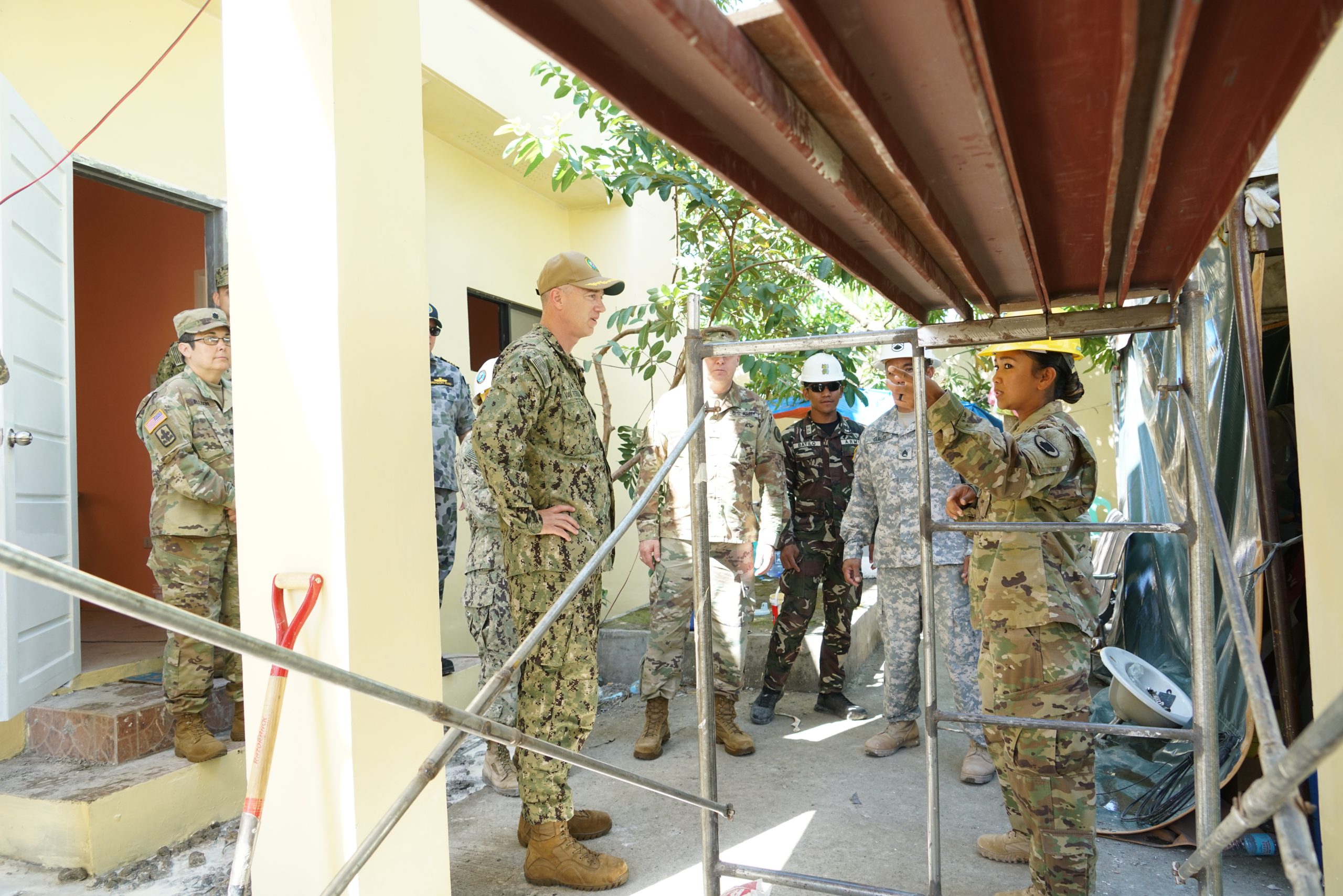
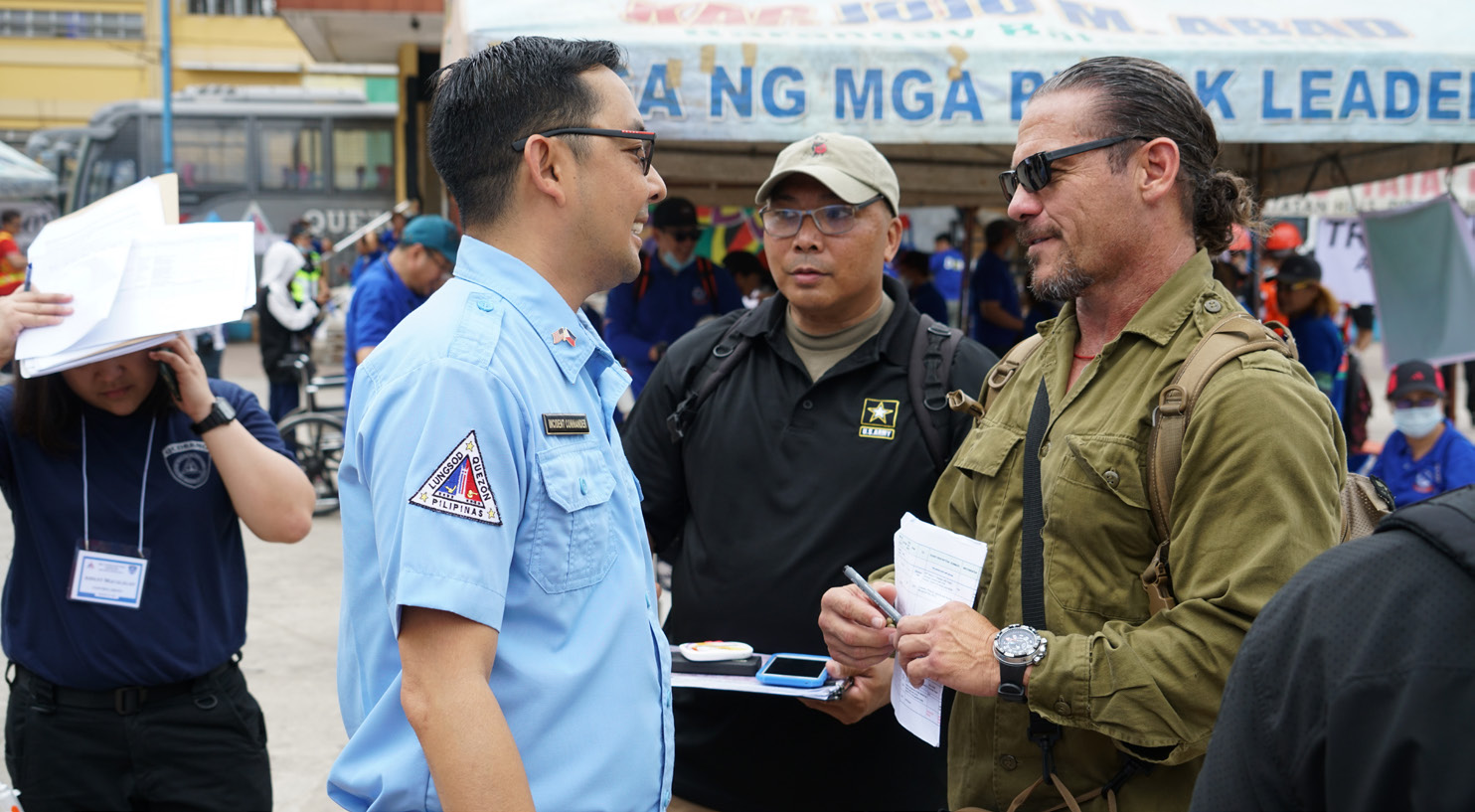
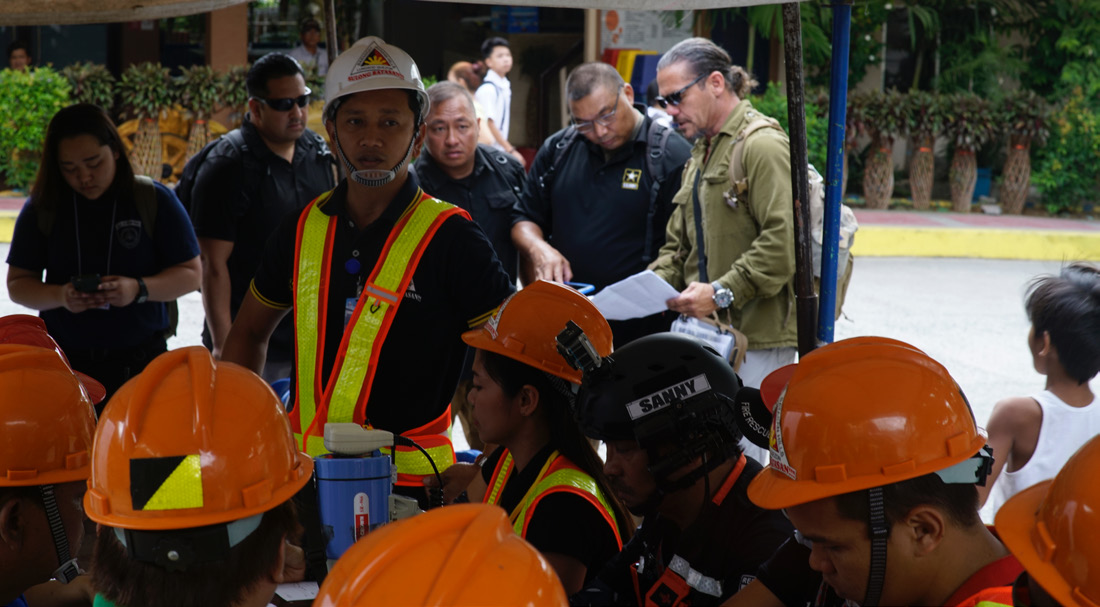
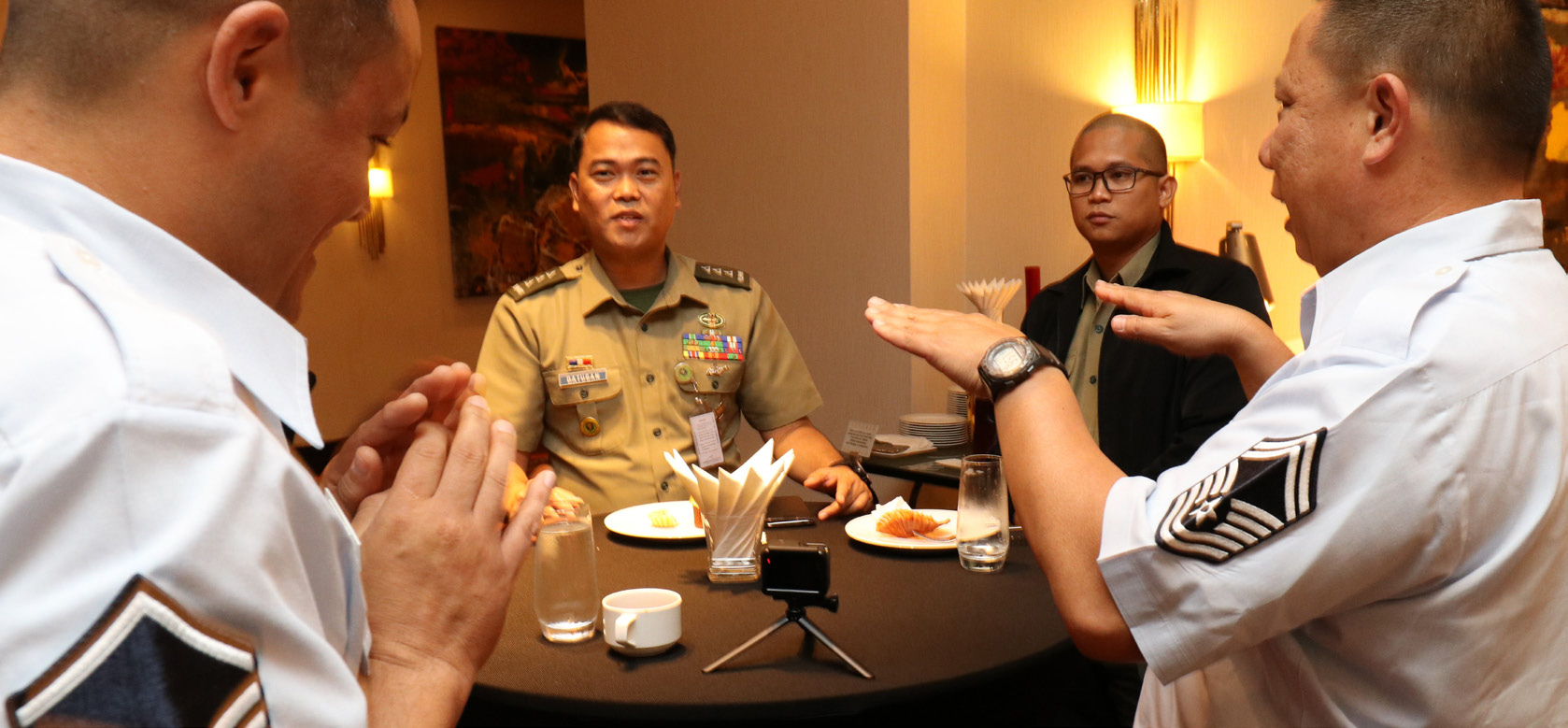
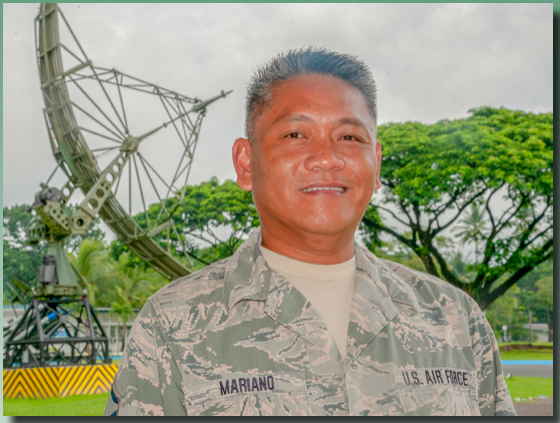
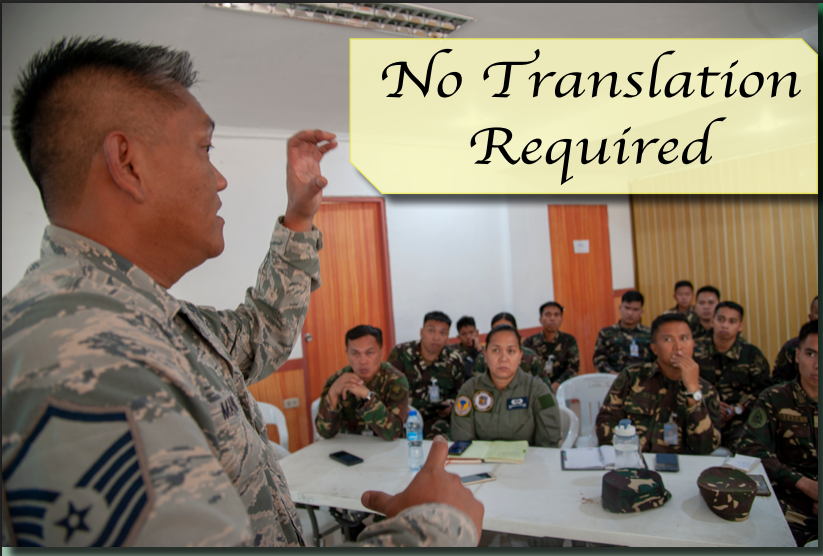
![An Indonesian soldier assists a simulated wounded Hawaii Army National Guardsman as he repels from a second story building during a Combined - Multinational Task Force [CTF 501] search and extraction training scenario on July 18, 2019 at Kalaeloa Urban Search and Rescue Training area. Service members from the Philippines, Indonesia, Bangladesh, Vietnam, Oregon Air National Guard traveled to Hawaii as part of a State Partnership Program training event. Photo by Master Sgt. Mysti Bicoy](https://dod.hawaii.gov/wp-content/uploads/2026/06/2019-October-Kukailimoku-5.png)