Do you need help in another language? We will get you a free interpreter. Call 808-369-3580 to tell us which language you speak.
您需要其它語言嗎?如有需要,請致電 (808-369-3478), 我們會提供免費翻譯服務
您需要其它语言吗?如有需要,请致电 (808-369-3478), 我们会提供免费翻译服务
En mi niit alilis lon pwal eu kapas? Sipwe angei emon chon chiaku ngonuk ese kamo. Kokori (808-369-3478) omw kopwe ureni kich meni kapas ka ani.
Makemake `oe i kokua i pili kekahi `olelo o na `aina `e? Makemake la maua i ki`i `oe mea unuhi manuahi. E kelepona (808-369-3478)`oe ia la kaua a e ha`ina `oe ia la maua mea `olelo o na `aina `e.
Masapulyo kadi ti tulong iti sabali a pagsasao? Ikkandakayo iti libre nga paraipatarus. Awaganyo ti
(808-369-3478) tapno ibagayo kadakami no ania ti pagsasao nga ar-aramatenyo.
다른언어로 도움이 필요하십니까? 저희가 무료로 통역을 제공합니다. (808-369-3478)로 전화해서 사용하는 언어를 알려주십시요
Kwoj aikuij ke jiban kin juon bar kajin? Kim naj lewaj juon am dri ukok eo ejjelok wonen. Kirtok
(808-369-3478) im kwalok non kim kajin ta eo kwo melele im kenono kake.
E te mana'o mia se fesosoani i se isi gagana? Matou te fesosoani e ave atu fua se faaliliu upu mo oe. Vili mai i le numera lea (808-369-3478) pea e mana'o mia se fesosoani mo se faaliliu upu.
¿Necesita ayuda en otro idioma? Nosotros le ayudaremos a conseguir un intérprete gratuito. Llame al (808-369-3478) y diganos que idioma habla.
Kailangan ba ninyo ng tulong sa ibang lengguwahe? Ikukuha namin kayo ng libreng tagasalin. Tumawag sa (808-369-3478) para sabihin kung anong lengguwahe ang nais ninyong gamitin.
‘Okú ke fie maʻu tokoni ʻi ha lea fakafonua ʻe taha? Temau kumi haʻo taha fakatonulea taʻetotongi. Telefoni ki he (808-369-3478) ke fakahā mai ʻa e lea fakafonua ʻokú ke lea aí.
Bạn có cần giúp đỡ bằng ngôn ngữ khác không ? Chúng tôi se yêu cầu một người thông dịch viên miễn phí cho bạn. Gọi (808-369-3478)nói cho chúng tôi biết bạn dùng ngôn ngữ nào
Gakinahanglan ka ba ug tabang sa imong pinulongan? Amo kang mahatagan ug libre nga maghuhubad. Tawag sa (808-369-3478) aron magpahibalo kung unsa ang imong sinulti-han.
The HANG received its first aircraft, a B-26C, no. 433, on Mar. 19, 1947. By the end of the fiscal year nine more aircraft had been added to the inventory: two AT-6s, four B-26s, one C-46 and two L-5s. There were, as yet, no tactical aircraft assigned.
The HANG completed its move to Hickam Field on Oct. 28 that same year, occupying two open-ended Butler hangars and a miscellaneous assortment of wooden World War II shacks. Possessed aircraft at the time of the move was twleve P-47Ns, two C-46Fs, two B-26Cs, five AT-6s and two L-5Es.
Feb. 10, 1954–1956 — HIANG Converts from F-47 Thunderbolt to F-86E Sabre
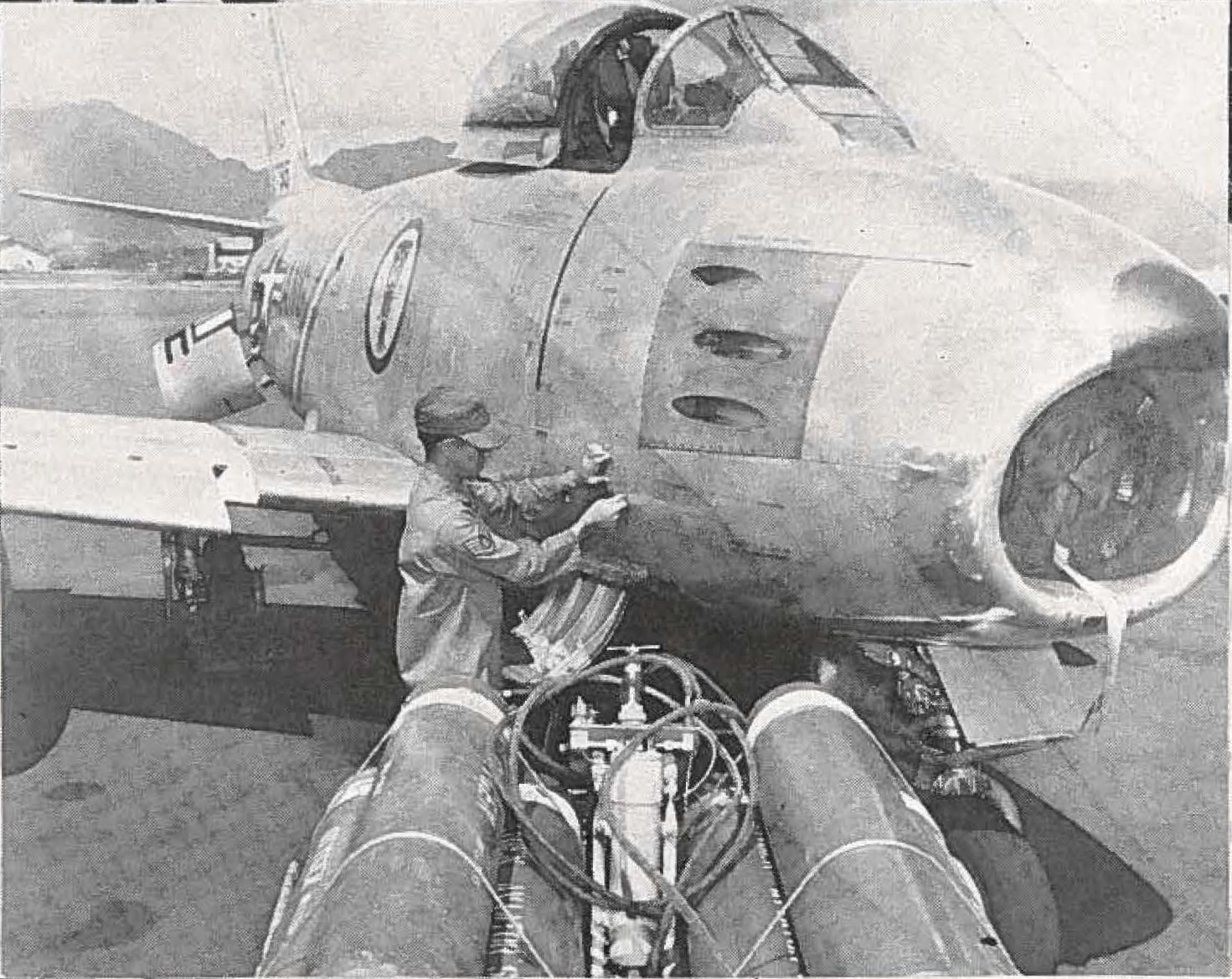
As part of the Air National Guard’s nationwide re-equipment program, the HIANG’s 199th Fighter Interceptor Squadron began transitioning from World War II-era F-47 Thunderbolts to the F-86E Sabre jet fighter in 1953. The conversion required extensive pilot and maintenance training, new specialized equipment, updated supply systems and modifications to support jet operations. The first F-86E Sabres arrived on Feb. 10, 1954. On March 7, 1954, Capt. Robert Hite became the first HIANG pilot to solo the F-86E following his checkout by Maj. Archibald Harrison.
It was in 1971 that Capt. Eddie Anderson found a World War II F-47 Thunderbolt in 20 feet of murky water off Waimanalo. Unfortunately, during recovery operations by the U.S. Navy, the heavy fighter was broken into three pieces. One amazing fact: the .50 caliber machine guns were removed from the wings, cleaned by the weapons shop and successfully fired after spending 27 years atthe bottom of the ocean!
All P-47N “Jugs” were grounded in October and November 1947 due to Fuel Selector Valve Seal Leaks. Because of insufficient funds, parts and supplies were normally backordered 90 to 120 days. “Nolan and his Forty Thieves” were again called upon to solve the fiscal and logistics problems, and came th rough with the “acquisition” of large quantities of “surplus” property from Navy “sources”.
The HANG became responsible for the reclamation of 79 P-47Ns of the inactivated 81st Fighter Group from Wheeler AFB. Airframes and engines of the 81st Fighter Group soon acquired the numbers and plates of the HANG. Parts for the aircraft were good, enough for a “150 year” stock level. Parts were so plentiful that when a mechanic needed a particular type, he had to go through a warehouse piled with aircraft parts to find the right part for job repair. The “P’s” were dropped from all fighter aircraft and replaced with “F’s” for fighters and by the end of 1949, aircraft mechanics had to maintain twenty-seven F-47Ns, four TB-26s, five T-6Ds, and two C-46Fs.
Fiscal year 1954 started off with a bang! The World War II vintage JUGs were replaced with North American F-86E Sabre Jets of recent Korean war fame with several dual-place jet trainers
The HANG received its first aircraft, a B-26C, no. 433, on Mar. 19, 1947. By the end of the fiscal year nine more aircraft had been added to the inventory: two AT-6s, four B-26s, one C-46 and two L-5s. There were, as yet, no tactical aircraft assigned.
PILOTS IN FRONT OF DOUGLAS B-26. Squatting: 2nd Lt. Hunter C. Parker, 2nd Lt. Leopold J. Brady, Capt. Archibald M. Harrison, 1st Lt. James F. Coleman, 2nd Lt. Frank J. Smith, 2nd Lt. Tyler M. Harr, 1st Lt. Jarrett F. Carr. Standing: 1st Lt. Carlos W. Bonham, Capt. Alfred D. Shaheen, 2nd Lt. Letwell P.A. Duvauchelle, 1st Lt. George R. Duncan, Capt. Douglas E. Guy, Maj. Valentine A. Siefermann, Maj. Frank R. Harlocker, Lt. Col. William F. Nolan, 1st Lt. Robert B. Maguire, 2nd Lt. George T. Harris.(Picture from the Mo’olelo Kahiko Helu Ekahi- Tradition of Excellence 40th Anniversary Hawaii Air National Guard)
Feb. 10, 1954–1956 — HIANG Converts from F-47 Thunderbolt to F-86E Sabre
As part of the Air National Guard’s nationwide re-equipment program, the HIANG’s 199th Fighter Interceptor Squadron began transitioning from World War II-era F-47 Thunderbolts to the F-86E Sabre jet fighter in 1953. The conversion required extensive pilot and maintenance training, new specialized equipment, updated supply systems and modifications to support jet operations. The first F-86E Sabres arrived on Feb. 10, 1954. On March 7, 1954, Capt. Robert Hite became the first HIANG pilot to solo the F-86E following his checkout by Maj. Archibald Harrison.
Feb. 5–May 30, 1958 — HIANG Converts from F-86E Sabre to F-86L All-Weather Fighter Interceptor
On Feb. 5, 1958, the HIANG was authorized to receive 27 F-86L All-Weather Fighter Interceptors, replacing the F-86E Sabre and transitioning the 199th Fighter Interceptor Squadron from a day-fighter to an all-weather air defense mission. The first F-86L arrived on Feb. 5, and the conversion required extensive pilot and maintenance training, new support equipment, facility improvements and installation of a $405,000 flight simulator. On May 1, 1958, the F-86L replaced the F-86E in the Air Defense Augmentation program, beginning the HIANG’s sunrise-to-sunset air defense commitment with the new aircraft and by May 30, the F-86E aircraft had been phased out, and all tactical pilots completed their transition by the end of June 1958.
July 19, 1960–May 1961 — HIANG Converts from F-86L All-Weather Fighter Interceptor to F-102A Delta Dagger
On July 19, 1960, the National Guard Bureau officially announced that the HIANG would transition from the F-86L All-Weather Fighter Interceptor to the supersonic F-102A Delta Dagger, marking a major modernization that provided greater speed, range, altitude and missile capabilities, significantly strengthening Hawaiʻi’s air defense mission. Preparations included installation of an $800,000 flight simulator, specialized maintenance and electronics training, and pilot instruction at Air Force bases in Japan and Texas. The first F-102A aircraft arrived at Hickam Air Force Base on Dec. 5, 1960, along with two TF-102 two-seat trainers. The complete aircraft changeover was accomplished in May 1961, and the F-102A assumed the air defense alert mission, replacing the F-86L.
May 25, 1974–June 1, 1977 — HIANG Converts from F-102A Delta Dagger to F-4C Phantom II
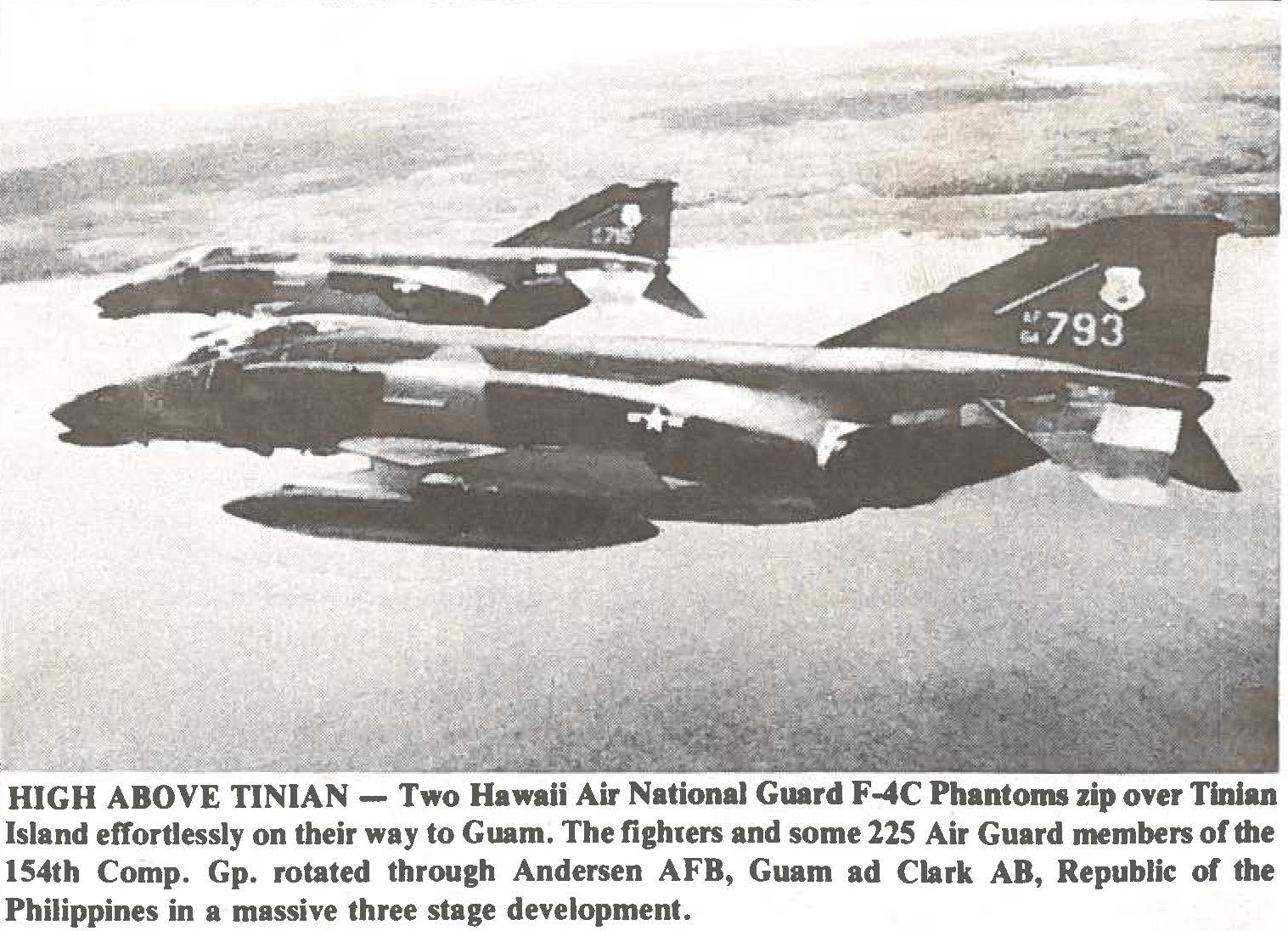
On May 25, 1974, the Adjutant General of Hawaiʻi announced that the HIANG was scheduled to receive F-4C Phantom II fighter aircraft, with the first F-4C arrived at Hickam Air Force Base on Oct. 24, 1975, for maintenance training and additional aircraft arriving in January 1976. The conversion involved extensive pilot and weapons systems officer training, facility construction and modifications, and preparation for the aircraft’s expanded capabilities, including aerial refueling. On Oct. 22, 1976, the F-4C assumed Hawaiʻi’s air defense alert mission, ending the unit’s operational use of the F-102A Delta Dagger and achieved mission-ready status on June 1, 1977, with 18 fully trained aircrews.
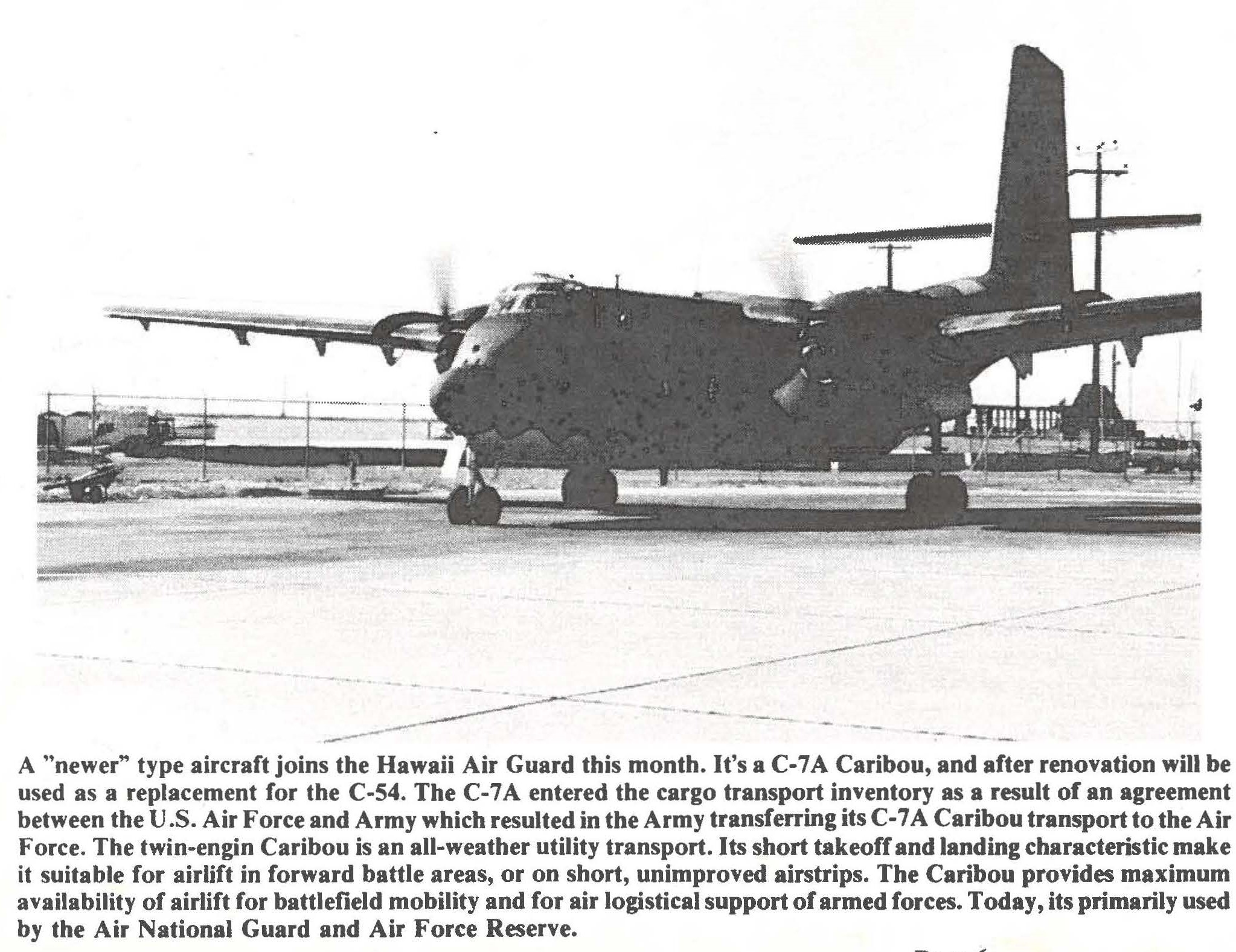
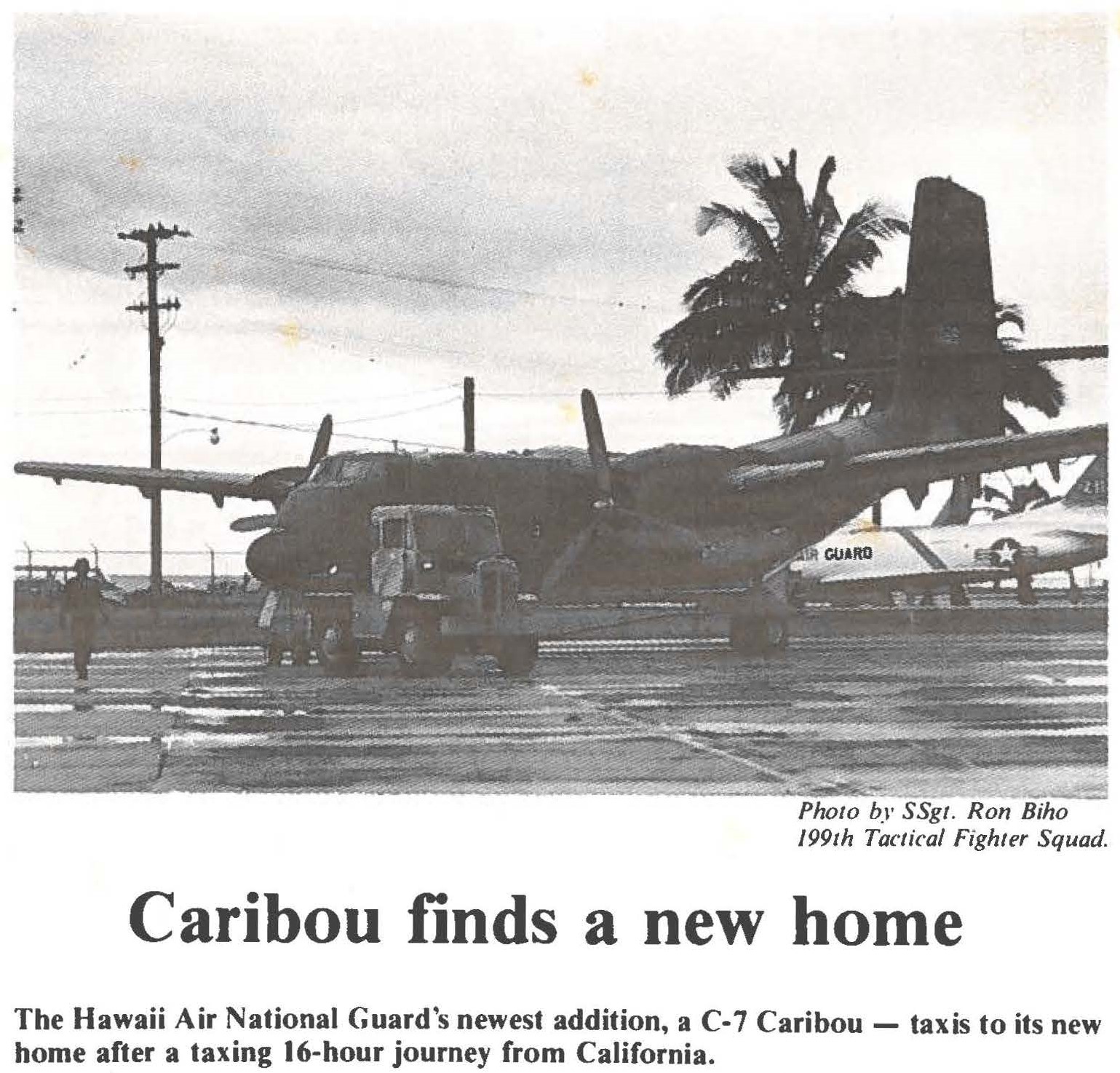
A “newer” type aircraft joins the Hawaii Air Guard this month. It’s a C-7 A Caribou, and after renovation will be used as a replacement for the C-54. The C-7 A entered the cargo transport inventory as a result of an agreement between the U.S. Air Force and Army which resulted in the Army transferring its C-7 A Caribou transport to the Air Force. The twin-en gin Caribou is an all-weather utility transport. Its short takeoff and landing characteristic make it suitable for airlift in forward battle areas, or on short, unimproved airstrips. The Caribou provides maximum availability of airlift for battlefield mobility and for air logistical support of armed forces. Today, it’s primarily used by the Air National Guard and Air Force Reserve. (Picture from the 1975 Autumn Pūpūkahi)
Aug. 25, 1984–1985 — HIANG Converts from C-7 Caribou to C-130A Hercules
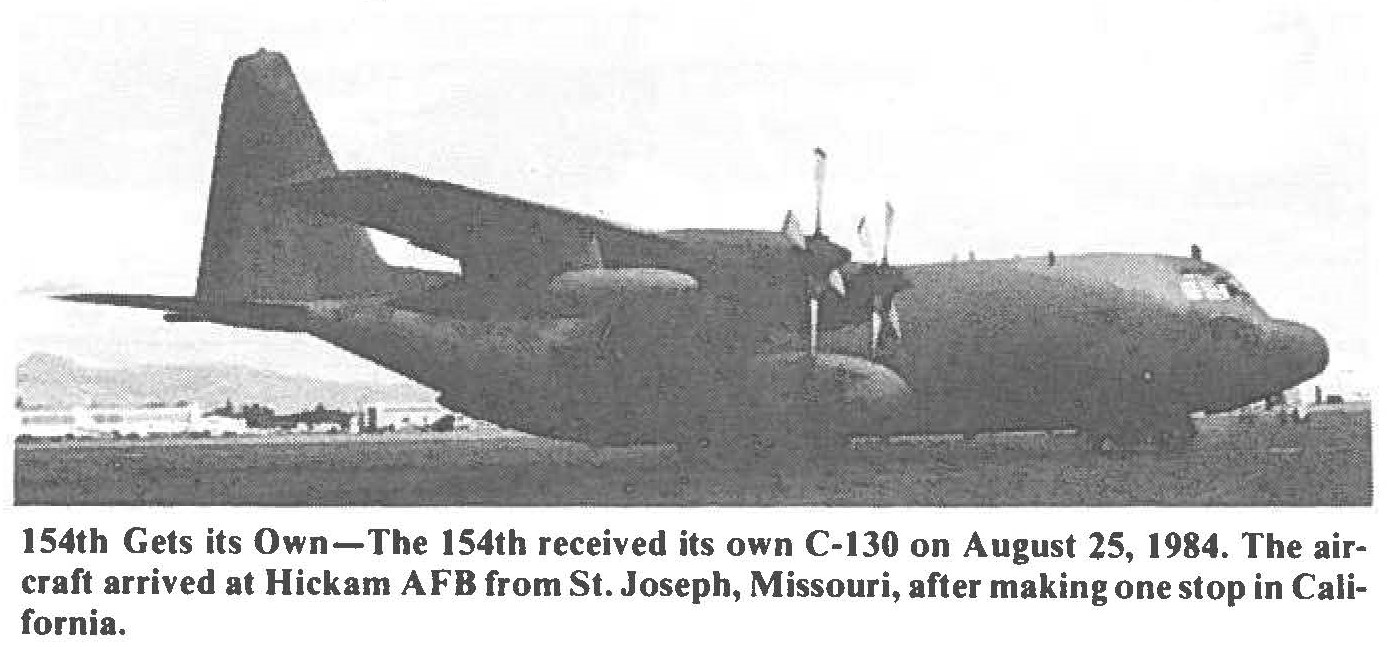
In 1984, the HIANG began transitioning its 154th Composite Group from the C-7 Caribou to the larger C-130A Hercules, significantly expanding the unit’s tactical airlift capabilities. The first C-130A arrived at Hickam Air Force Base on Aug. 25, 1984, from St. Joseph, Missouri. By 1985, the C-130A had replaced the C-7 Caribou, increasing the unit’s airlift capabilities nearly tenfold and establishing a foundation for expanded logistical and disaster-response support throughout Hawaiʻi.
154th Gets its Own-The 154th received its own C-130 on August 25, 1984. The aircraft arrived at Hickam AFB from St. Joseph, Missouri, after making one stop in California.(Picture from the 1984 October- December Pūpūkahi)
A “newer” type aircraft joins the Hawaii Air Guard this month. It’s a C-7 A Caribou, and after renovation will be used as a replacement for the C-54. The C-7 A entered the cargo transport inventory as a result of an agreement between the U.S. Air Force and Army which resulted in the Army transferring its C-7 A Caribou transport to the Air Force. The twin-en gin Caribou is an all-weather utility transport. Its short takeoff and landing characteristic make it suitable for airlift in forward battle areas, or on short, unimproved airstrips. The Caribou provides maximum availability of airlift for battlefield mobility and for air logistical support of armed forces. Today, it’s primarily used by the Air National Guard and Air Force Reserve. (Picture from the 1975 Autumn Pūpūkahi)
Caribou finds a new home. The Hawaii Air National Guard’s newest addition, a C-7 Caribou – taxis to its new home after a taxing 16-hour journey from California.(Picture from the 1980 December Pūpūkahi)
HANG crew flies C-7 to Hawaii
The Hawaii Air National Guard has received its second C-7 Caribou aircraft. More than 1,700 gallons of gas and 15 gallons of oil were consumed on the journey across the Pacific. The 16-hour flight began at Moffett Naval Air Station, near San Jose, California, at 4:24 a.m. and ended in Honolulu at 5: 15 p.m. on October 1.
The crew, commanded by Col. Ritchie Kunichika, included Capt. Melvin Honda, and MSgts. Ray Bermudez and Eddie Uyeda. Using two, large, butane-like tanks of gas stores in the main cargo compartment, the crew manually fed fuel into the aircraft system throughout the flight. The arduous journey was well worth the effort, considering the added airlift support the Caribou will be able to provide to the Army and Air National Guard.
May 25, 1974–June 1, 1977 — HIANG Converts from F-102A Delta Dagger to F-4C Phantom II
On May 25, 1974, the Adjutant General of Hawaiʻi announced that the HIANG was scheduled to receive F-4C Phantom II fighter aircraft, with the first F-4C arrived at Hickam Air Force Base on Oct. 24, 1975, for maintenance training and additional aircraft arriving in January 1976. The conversion involved extensive pilot and weapons systems officer training, facility construction and modifications, and preparation for the aircraft’s expanded capabilities, including aerial refueling. On Oct. 22, 1976, the F-4C assumed Hawaiʻi’s air defense alert mission, ending the unit’s operational use of the F-102A Delta Dagger and achieved mission-ready status on June 1, 1977, with 18 fully trained aircrews.
Feb. 5, 1986–June 22, 1988 — HIANG Converts from F-4C Phantom to F-15A Eagle
Following the Air Force’s Feb. 5, 1986, announcement that the HIANG would replace its 24 F-4C Phantom fighters with 24 F-15A Eagle aircraft, the HIANG began a major modernization effort involving personnel training, facility upgrades and operational planning. The first two F-15A Eagles arrived at Hickam Air Force Base on March 11, 1987, and assumed the state’s air defense mission on Sept.1, 1987, following the final F-4C scramble. The conversion was completed ahead of schedule on June 22, 1988, strengthening Hawaiʻi’s air defense capabilities
Aug. 25, 1984–1985 — HIANG Converts from C-7 Caribou to C-130A Hercules
In 1984, the HIANG began transitioning its 154th Composite Group from the C-7 Caribou to the larger C-130A Hercules, significantly expanding the unit’s tactical airlift capabilities. The first C-130A arrived at Hickam Air Force Base on Aug. 25, 1984, from St. Joseph, Missouri. By 1985, the C-130A had replaced the C-7 Caribou, increasing the unit’s airlift capabilities nearly tenfold and establishing a foundation for expanded logistical and disaster-response support throughout Hawaiʻi.
154th Gets its Own-The 154th received its own C-130 on August 25, 1984. The aircraft arrived at Hickam AFB from St. Joseph, Missouri, after making one stop in California.(Picture from the 1984 October- December Pūpūkahi)
Aug. 19, 2004–Feb. 15, 2006 — HIANG Converts from C-130 Hercules to C-17 Globemaster III
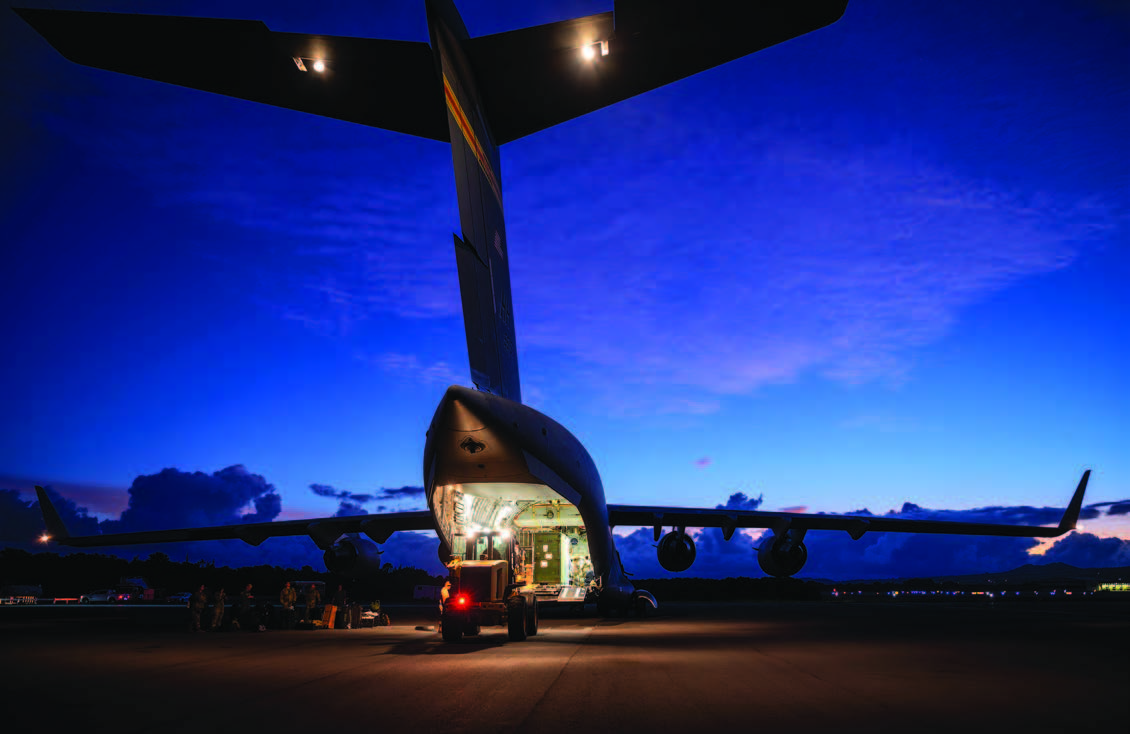
On Aug. 19, 2004, a groundbreaking ceremony at Hickam Air Force Base marked the beginning of the Hawaiʻi Air National Guard’s transition from the C-130 Hercules to the C-17 Globemaster III and the establishment of the Air Force’s first C-17 active-duty and Air National Guard classic associate unit. The conversion involved extensive pilot, loadmaster and maintenance training, construction of new facilities, and installation of a $7 million C-17 flight simulator. The first C-17, named Ke Aloha (Spirit of Hawaiʻi), arrived at Hickam on Feb. 8, 2006, and The last C-130 departed Hickam on Feb. 15, 2006, concluding 20 years of service and completing the transition to the C-17.
Feb. 5, 1986–June 22, 1988 — HIANG Converts from F-4C Phantom to F-15A Eagle
Following the Air Force’s Feb. 5, 1986, announcement that the HIANG would replace its 24 F-4C Phantom fighters with 24 F-15A Eagle aircraft, the HIANG began a major modernization effort involving personnel training, facility upgrades and operational planning. The first two F-15A Eagles arrived at Hickam Air Force Base on March 11, 1987, and assumed the state’s air defense mission on Sept.1, 1987, following the final F-4C scramble. The conversion was completed ahead of schedule on June 22, 1988, strengthening Hawaiʻi’s air defense capabilities
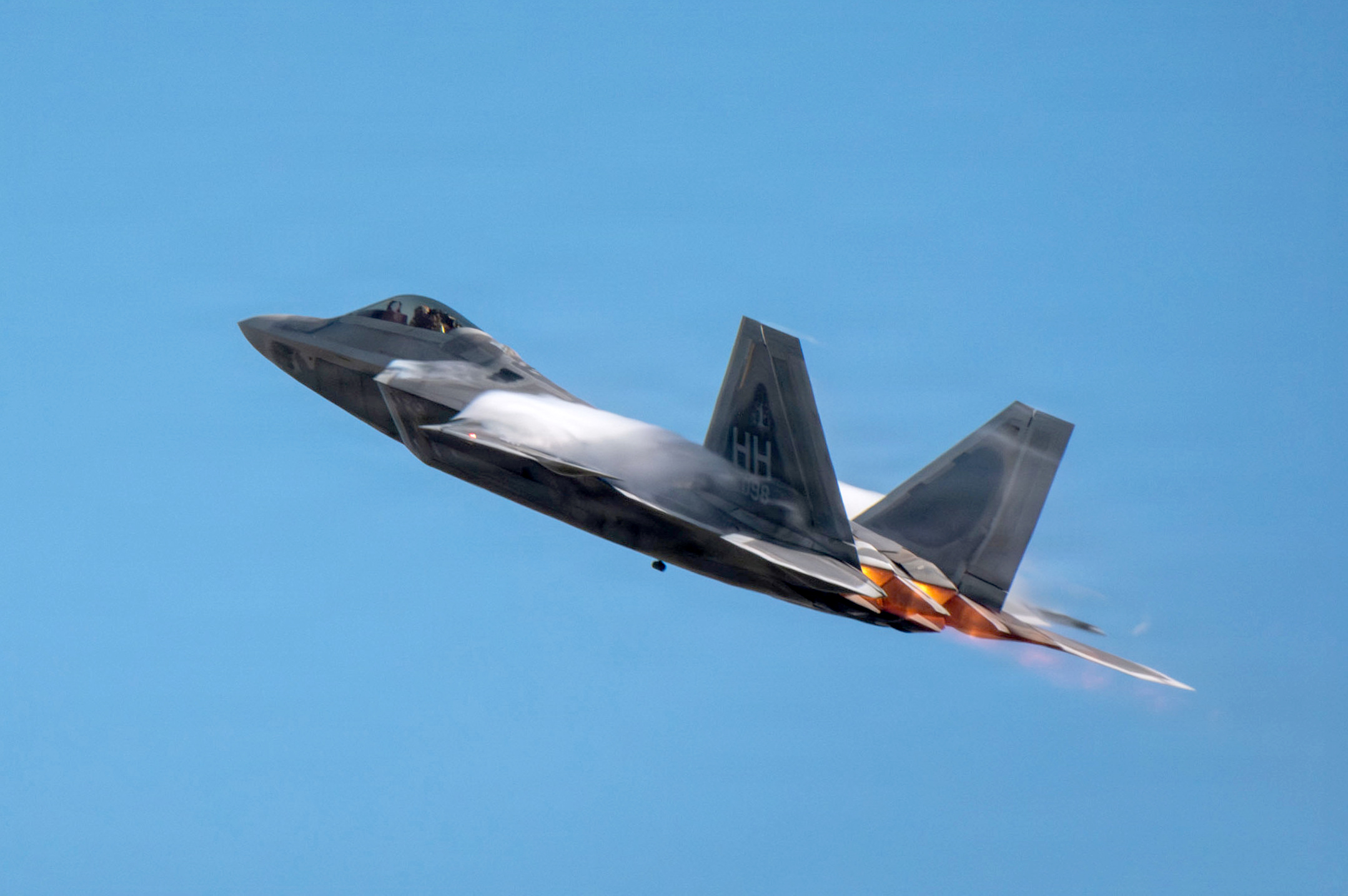
2008–Sept. 1, 2010 — HIANG Converts from F-15 Eagle to F-22 Raptor
The Hawaiʻi Air National Guard began transitioning the 199th Fighter Squadron from the F-15 Eagle to the F-22 Raptor in 2008, marking a major modernization of Hawaiʻi’s air defense capabilities. The first two F-22 Raptors arrived at Joint Base Pearl Harbor-Hickam on July 9, 2010, ushering in a new Total Force partnership between the HIANG’s 154th Wing and the active-duty 15th Wing. The transition included extensive pilot training and facility upgrades, including construction of a Low Observable Composite Repair Facility. The final F-15 Eagles departed Hawaiʻi on Sept. 1, 2010, and the HIANG became the first Air National Guard unit to serve as the lead flying squadron in an F-22 associate unit.
HAWAIIAN STYLE BLESSING – Lt. Col. Christopher “Frenchy” Faurot, 199th Fighter Squadron pilot, along with his wife and Staff Sgt. Ben Nitta, a Hawaii Air National Guard F-22 Raptor crew chief, drapes a maile lei across the nose of the F-22 Raptor jetfighter during arrival ceremonies held July 12, 2010(Picture from the 2010 Annual Report)
KC-135 Stratotanker
March 16, 1993-Present
April 15, 1991–March 16, 1993 — HIANG Establishes KC-135R Stratotanker Air Refueling Mission
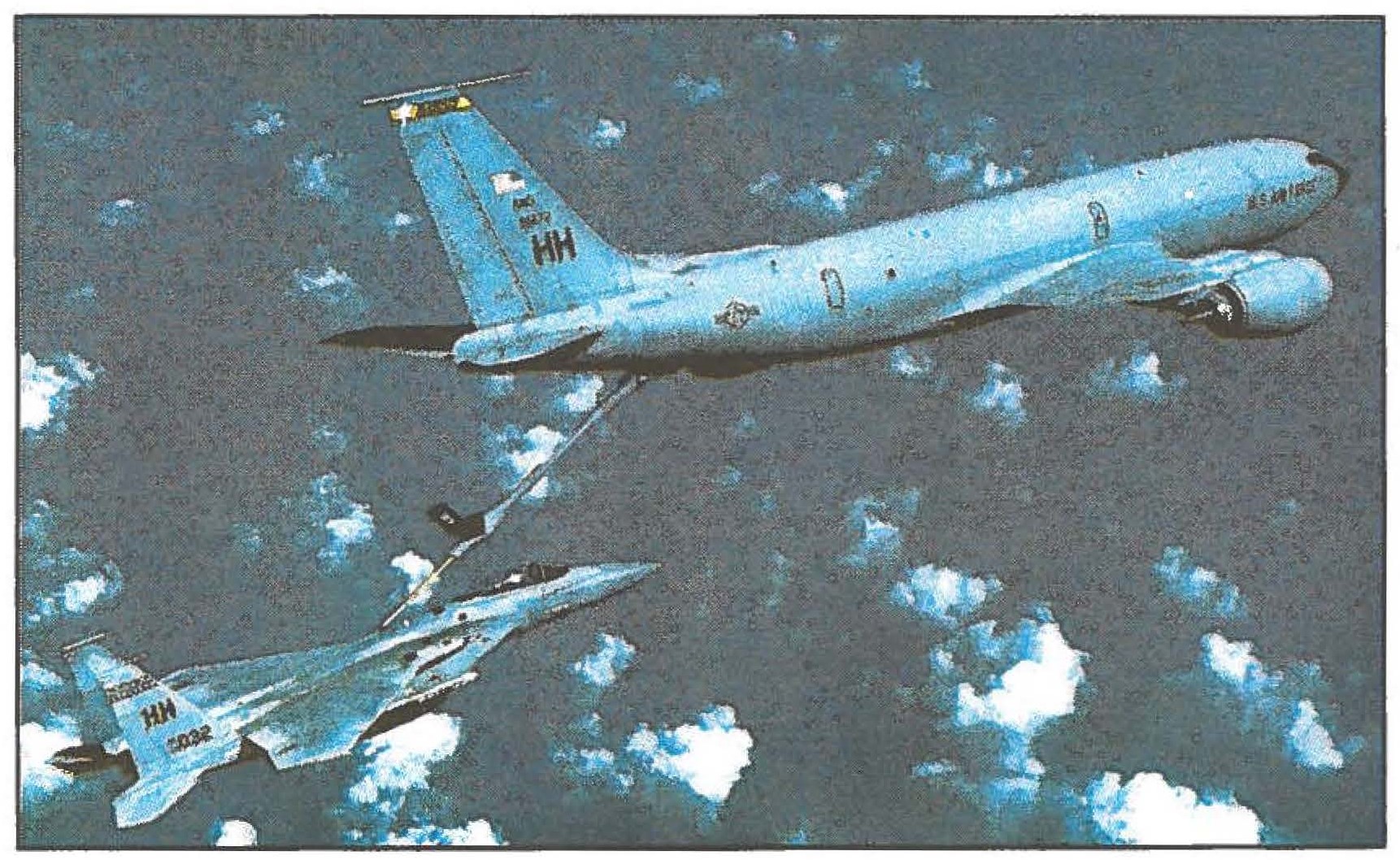
On April 15, 1991, the Office of the Secretary of the Air Force announced that the HIANG’s 154th Composite Group would receive four KC-135 Stratotanker aircraft, introducing a new aerial refueling capability to the unit’s mission. This ment establishing a new air refueling squadron, recruiting and training operations and maintenance personnel, and preparing facilities at Hickam Air Force Base. The first KC-135R arrived on Dec. 4, 1992, and was assigned to the newly established 203rd Air Refueling Squadron, and the first operational flight took place on March 16, 1993, conducting aerial refueling with a C-5 Galaxy.
Aug. 19, 2004–Feb. 15, 2006 — HIANG Converts from C-130 Hercules to C-17 Globemaster III
On Aug. 19, 2004, a groundbreaking ceremony at Hickam Air Force Base marked the beginning of the Hawaiʻi Air National Guard’s transition from the C-130 Hercules to the C-17 Globemaster III and the establishment of the Air Force’s first C-17 active-duty and Air National Guard classic associate unit. The conversion involved extensive pilot, loadmaster and maintenance training, construction of new facilities, and installation of a $7 million C-17 flight simulator. The first C-17, named Ke Aloha (Spirit of Hawaiʻi), arrived at Hickam on Feb. 8, 2006, and The last C-130 departed Hickam on Feb. 15, 2006, concluding 20 years of service and completing the transition to the C-17.
2008–Sept. 1, 2010 — HIANG Converts from F-15 Eagle to F-22 Raptor
The Hawaiʻi Air National Guard began transitioning the 199th Fighter Squadron from the F-15 Eagle to the F-22 Raptor in 2008, marking a major modernization of Hawaiʻi’s air defense capabilities. The first two F-22 Raptors arrived at Joint Base Pearl Harbor-Hickam on July 9, 2010, ushering in a new Total Force partnership between the HIANG’s 154th Wing and the active-duty 15th Wing. The transition included extensive pilot training and facility upgrades, including construction of a Low Observable Composite Repair Facility. The final F-15 Eagles departed Hawaiʻi on Sept. 1, 2010, and the HIANG became the first Air National Guard unit to serve as the lead flying squadron in an F-22 associate unit.
HAWAIIAN STYLE BLESSING – Lt. Col. Christopher “Frenchy” Faurot, 199th Fighter Squadron pilot, along with his wife and Staff Sgt. Ben Nitta, a Hawaii Air National Guard F-22 Raptor crew chief, drapes a maile lei across the nose of the F-22 Raptor jetfighter during arrival ceremonies held July 12, 2010(Picture from the 2010 Annual Report)