Do you need help in another language? We will get you a free interpreter. Call 808-369-3580 to tell us which language you speak.
您需要其它語言嗎?如有需要,請致電 (808-369-3478), 我們會提供免費翻譯服務
您需要其它语言吗?如有需要,请致电 (808-369-3478), 我们会提供免费翻译服务
En mi niit alilis lon pwal eu kapas? Sipwe angei emon chon chiaku ngonuk ese kamo. Kokori (808-369-3478) omw kopwe ureni kich meni kapas ka ani.
Makemake `oe i kokua i pili kekahi `olelo o na `aina `e? Makemake la maua i ki`i `oe mea unuhi manuahi. E kelepona (808-369-3478)`oe ia la kaua a e ha`ina `oe ia la maua mea `olelo o na `aina `e.
Masapulyo kadi ti tulong iti sabali a pagsasao? Ikkandakayo iti libre nga paraipatarus. Awaganyo ti
(808-369-3478) tapno ibagayo kadakami no ania ti pagsasao nga ar-aramatenyo.
다른언어로 도움이 필요하십니까? 저희가 무료로 통역을 제공합니다. (808-369-3478)로 전화해서 사용하는 언어를 알려주십시요
Kwoj aikuij ke jiban kin juon bar kajin? Kim naj lewaj juon am dri ukok eo ejjelok wonen. Kirtok
(808-369-3478) im kwalok non kim kajin ta eo kwo melele im kenono kake.
E te mana'o mia se fesosoani i se isi gagana? Matou te fesosoani e ave atu fua se faaliliu upu mo oe. Vili mai i le numera lea (808-369-3478) pea e mana'o mia se fesosoani mo se faaliliu upu.
¿Necesita ayuda en otro idioma? Nosotros le ayudaremos a conseguir un intérprete gratuito. Llame al (808-369-3478) y diganos que idioma habla.
Kailangan ba ninyo ng tulong sa ibang lengguwahe? Ikukuha namin kayo ng libreng tagasalin. Tumawag sa (808-369-3478) para sabihin kung anong lengguwahe ang nais ninyong gamitin.
‘Okú ke fie maʻu tokoni ʻi ha lea fakafonua ʻe taha? Temau kumi haʻo taha fakatonulea taʻetotongi. Telefoni ki he (808-369-3478) ke fakahā mai ʻa e lea fakafonua ʻokú ke lea aí.
Bạn có cần giúp đỡ bằng ngôn ngữ khác không ? Chúng tôi se yêu cầu một người thông dịch viên miễn phí cho bạn. Gọi (808-369-3478)nói cho chúng tôi biết bạn dùng ngôn ngữ nào
Gakinahanglan ka ba ug tabang sa imong pinulongan? Amo kang mahatagan ug libre nga maghuhubad. Tawag sa (808-369-3478) aron magpahibalo kung unsa ang imong sinulti-han.
The Adjutant General of Hawaii announced on May 25 that the Hawaii Air National Guard has been scheduled to receive F-4C Phantom jet fighter aircraft.
Major General Valentine A. Siefermann said that the Phantoms will be assigned to the 154th Fighter Interceptor Group (FIG) at Hickam Air Force Base on Oahu and will replace the F-102 Delta Dagger interceptors currently flown by the unit.
Approximately 20 aircraft will be released to the Guard from the Air Force inventory and delivered to Hawaii during the fourth quarter of Fiscal Year 1976. The modernization is part of the Total Force policy that increases reliance by the active services on Guard and Reserve units.
One of the functions of the more sophisticated F4C will be the continued air defense of Hawaii previously performed by the HANG in the F-102.
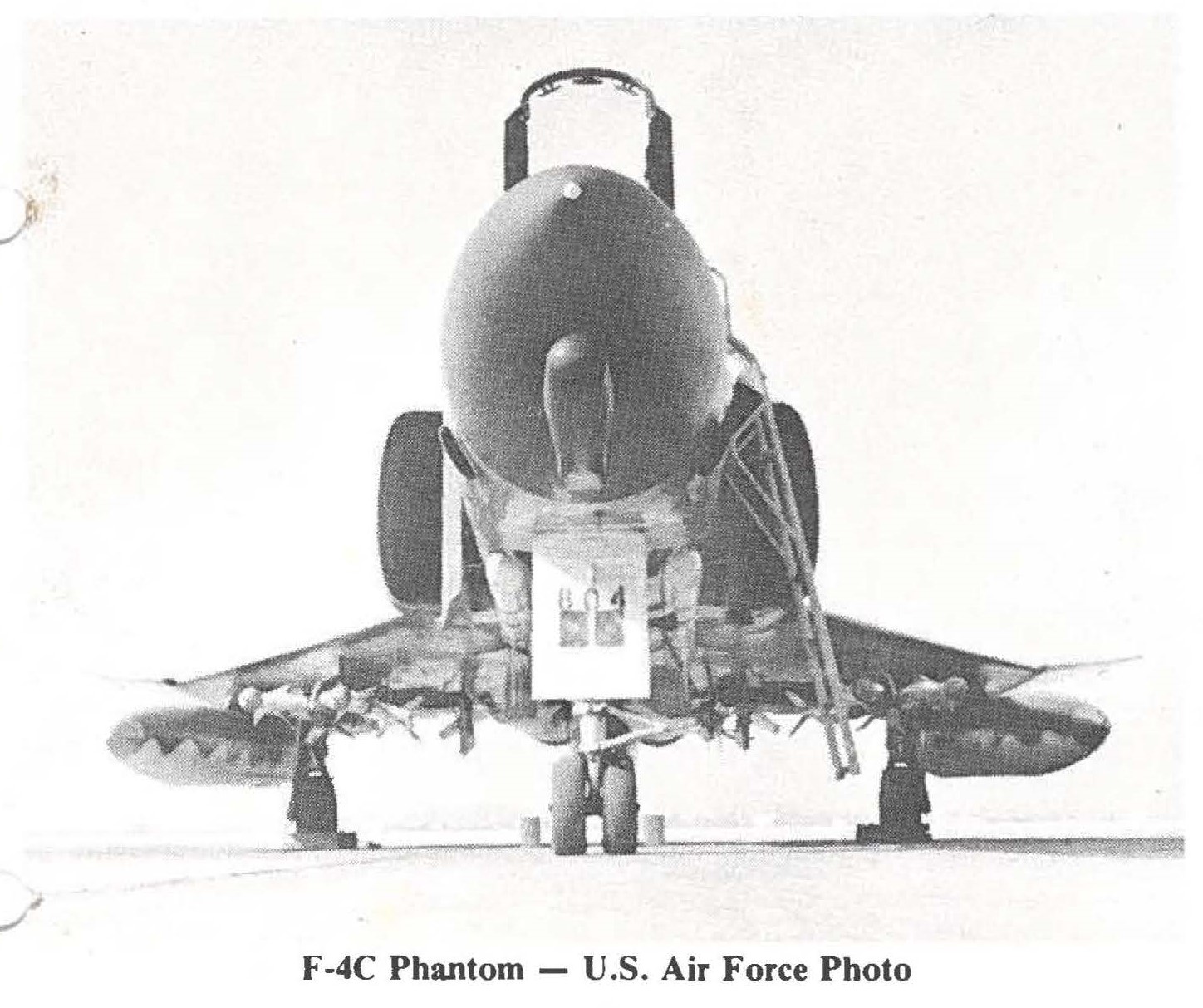
The supersonic aircraft, manufactured by McDonnell Douglas, is capable of long-range, high altitude intercepts. using air-to-air missiles as primary armament and a 20mm gun as secondary armament. The Phantom can also be used for air-to-ground attack missions.
The conversion is expected to generate an increase in the manpower of the 154th Fighterceptor Group both among air crews and support personnel. This increase will require the recruitment and training of additional guardsmen.
Some modification of the unit’s facilities will also be required to accommodate the F-4Cs.
Significant changes arc expected in the other Hawaii Air National Guard units.
The swept-winged, twin-engined, F-4C carries a __ of two – a pilot and a weapons system officer. It’s predecessor in Hawaii. the delta-winged. single-engined F-102, is a single seat aircraft.
Two primary methods will be used to train guardsmen to fly and support the Phantom. Some guardsmen will be trained at Hickam by Air Force and Air National Guard personnel. The majority of the local training support will be provided by an Air Force field training detachment.
More information is expected to be available after a three-man team from the National Guard Bureau in Washington. D. C. arrives early next month for a four-day conference with local Air Guard and Pacific Air Forces officials. The conference will be used to coordinate personnel, operations, training, logistics and maintenance requirements for the conversion.
The F-4C will be the fourth type of mission jet aircraft flown by the Hawaii Air National Guard since the organization was converted to jets in 1953. The others were F-86E Sabres. F-86L Sabres and the current F- 102’s.
The Air National Guard was involved with preparation for a major reorganization and devoted a great deal of time in planning for the 154th Fighter Interceptor Group’s conversion to the F-4C aircraft in Fiscal Year 1976.
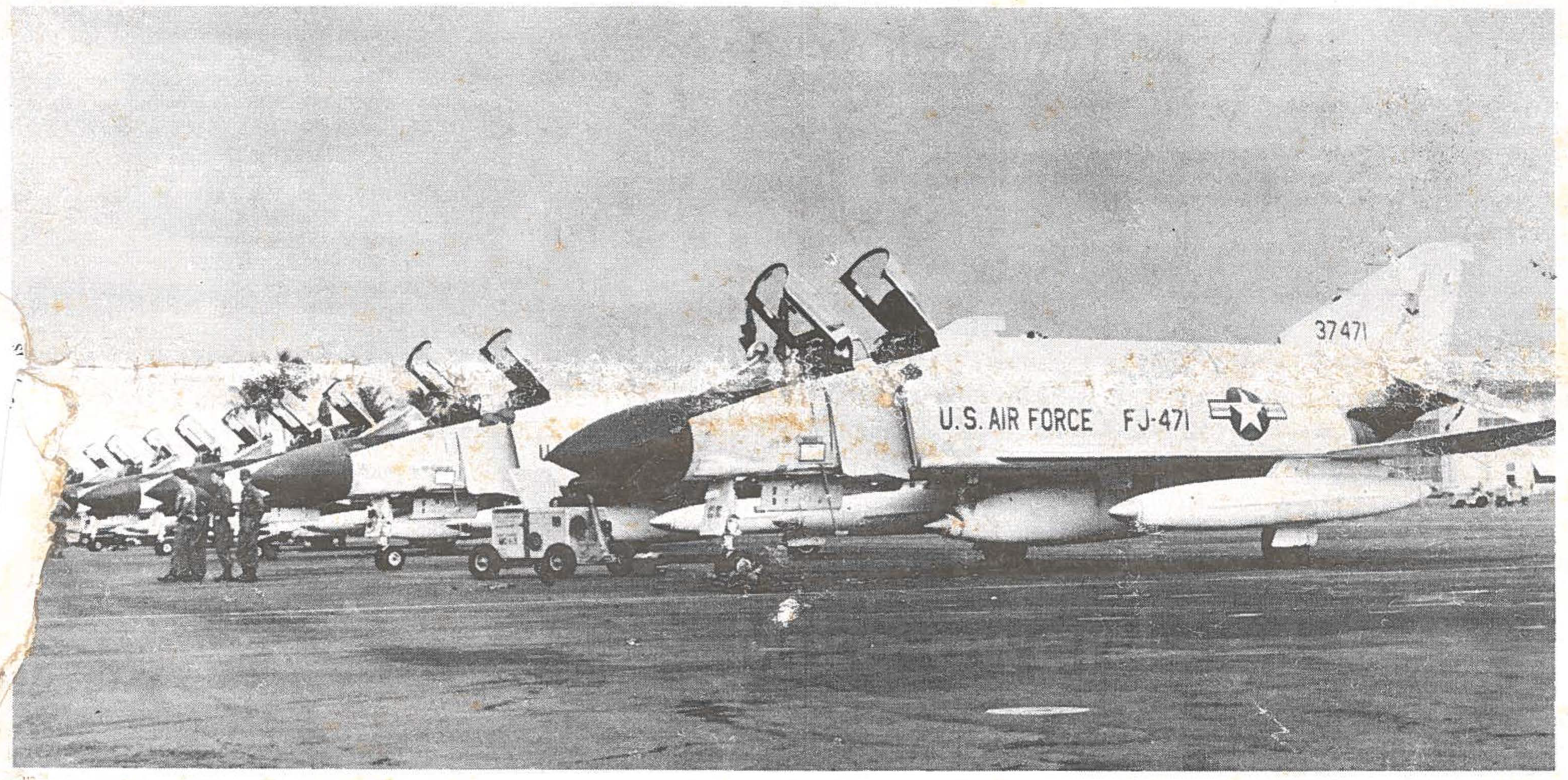
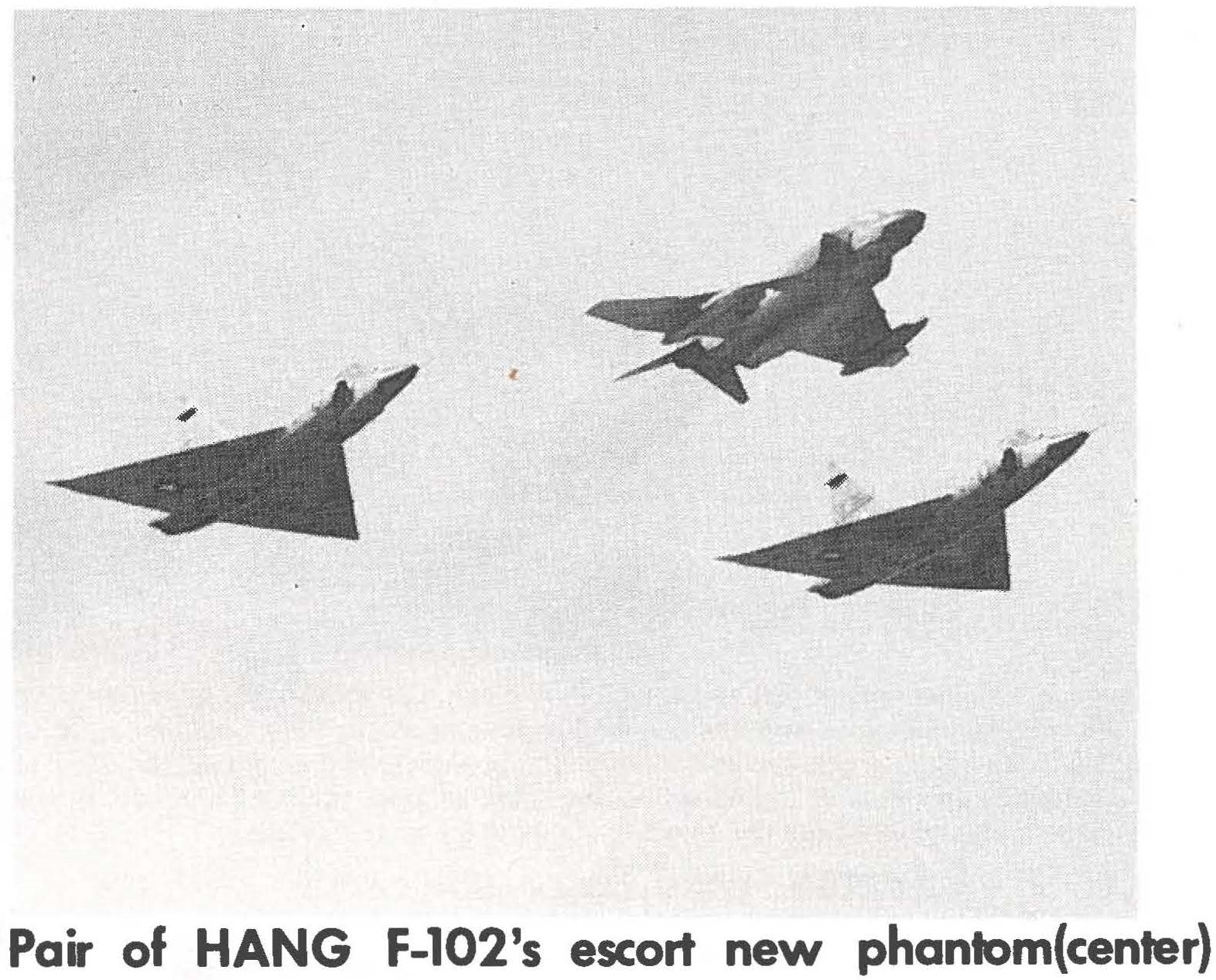
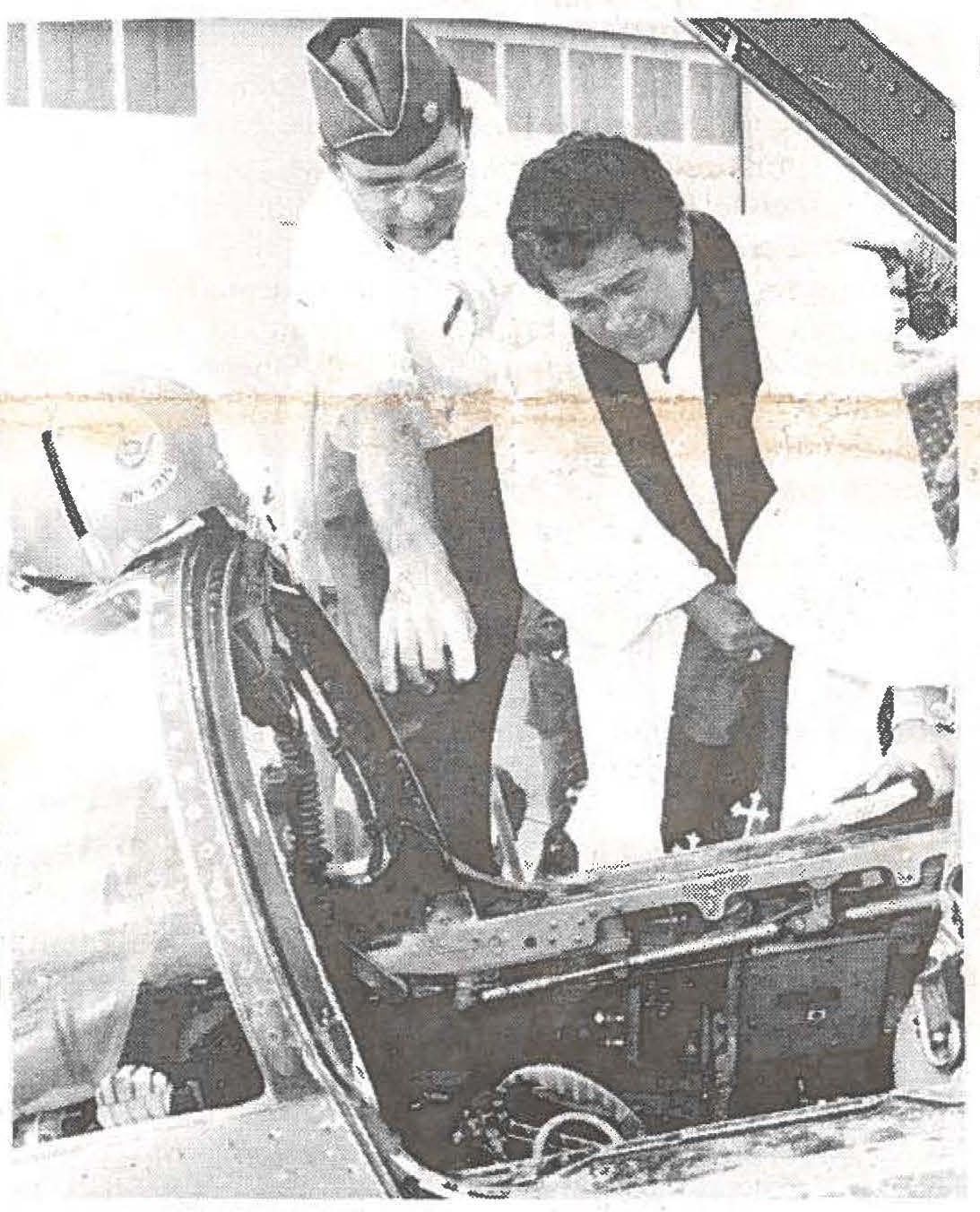
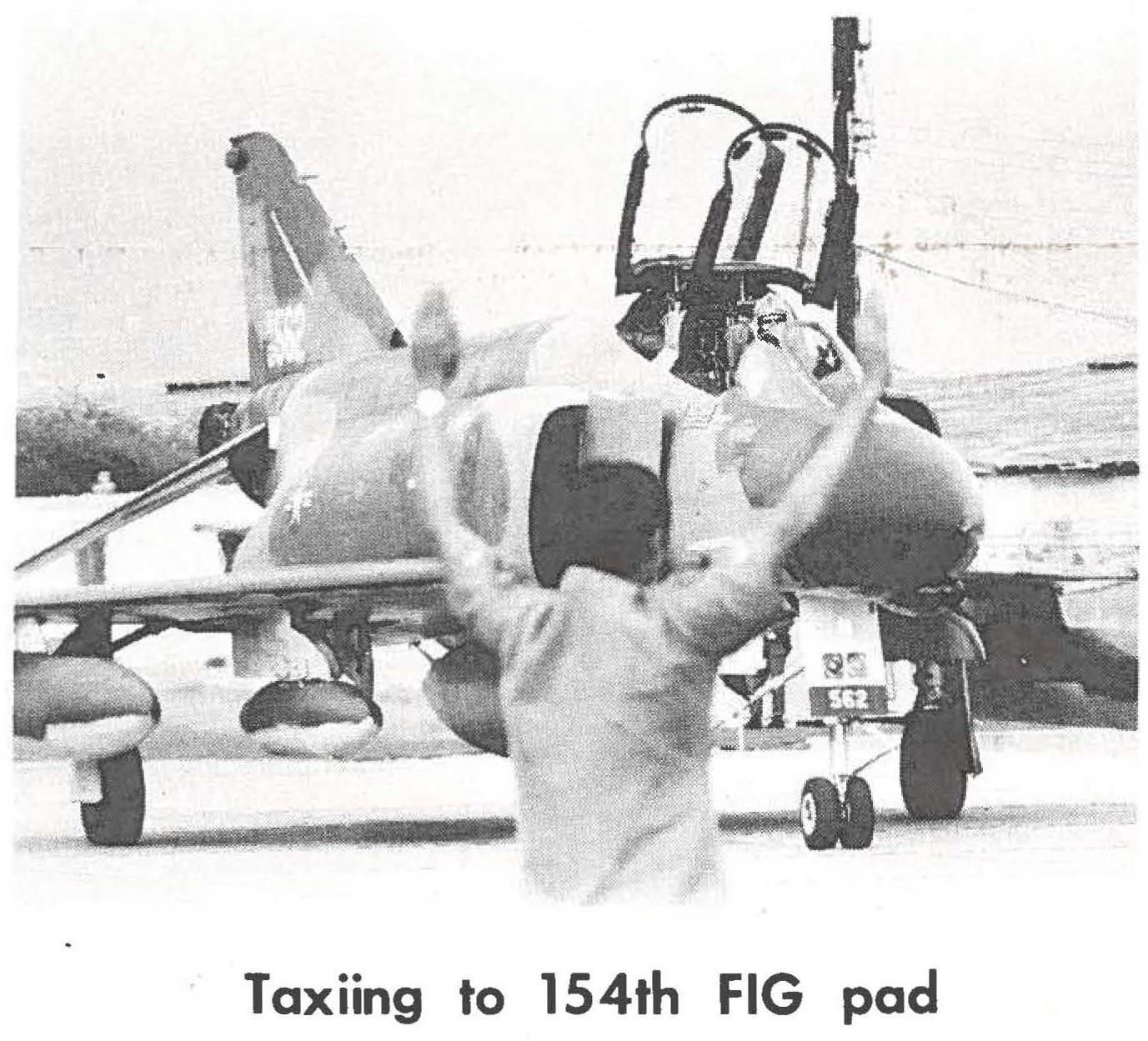
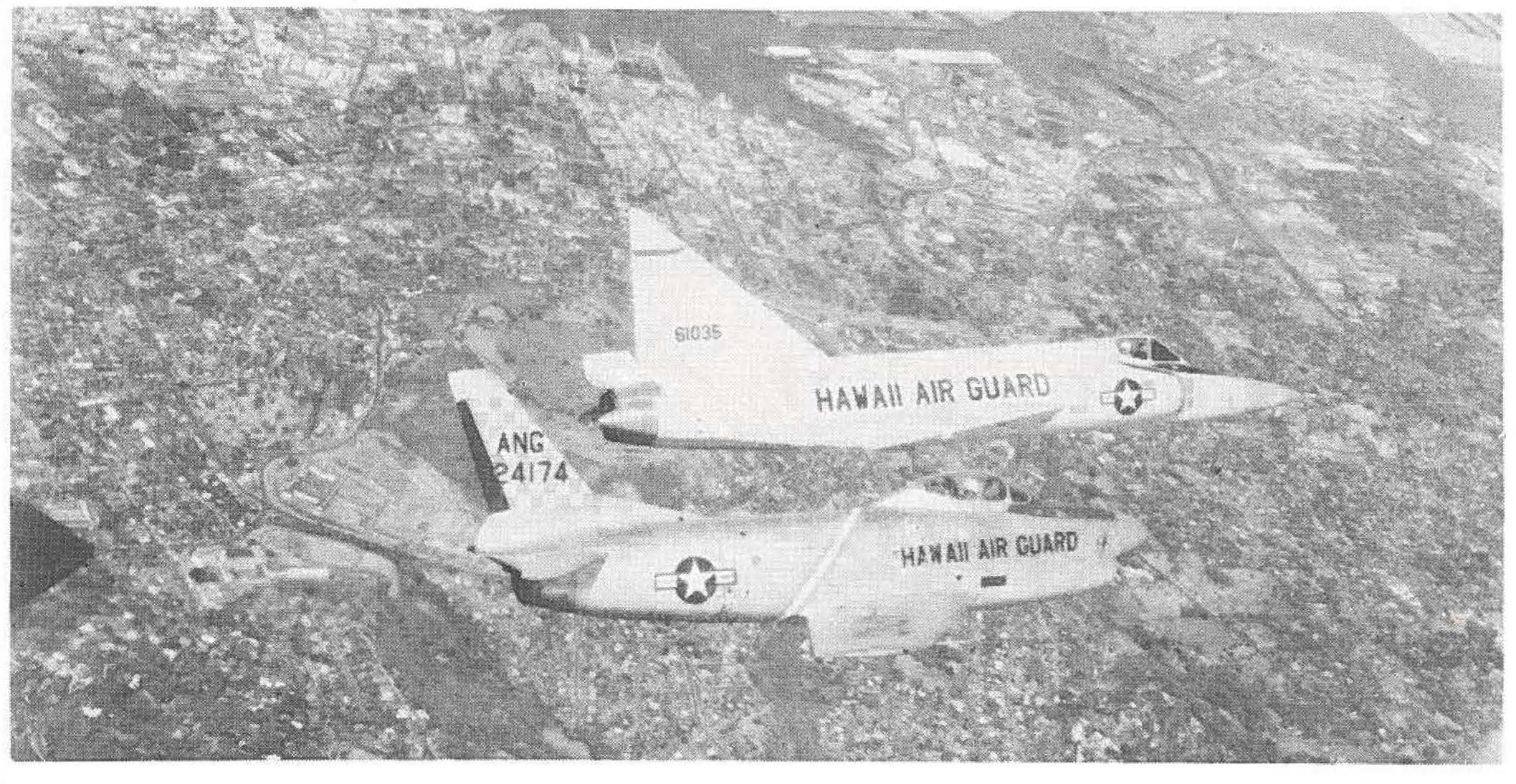
Pair of HANG F-102’s escort new phantom (center) NEWLY BLESSED – The Rev. Abraham Akaka is given a personal tour of the Air Guard’s newly acquired F-4C- Phantom jet fighter by Maj. Norman C. Ault (HANG). Rev. Akaka blessed the Phantom soon after it arrived at the 154th Fighter Group’s ramp at Hickam AFB Oct. 24. Eventually, the Air Guard will receive 18 Phantoms, phasing out its use of the Delta F-102. More details on page 3. National Guard photo by SpS Dennis Fujii (117th PID Staff).Taxiing to 154th FIG pad Since 1953 the Air Guard has flown four different jet aircraft. The Hawaii Guard’s first supersonic aircraft, the F-86E Sabre Jets were sent to the Guard in 1955 after proving themselves in the Korean War. The F-86L Sabre Jets (left photo – bottom plane) were introduced to the Air Guard in 1958. This all-weather fighterinterceptor provided Hawaii with air defense protection at night, rocket-firing capabilities (the F86E had only 50 caliber machine guns), and a more elaborate firecontrol system. The Guard converted to F-102A Delta Daggers (left photo – top plane) in 1961. The “Deuce” not only fired folding-fin rockets, but Falcon air-to-air guided missiles.(Pictures from the 1975 October – November Pūpūkahi)
HICKAM AIR FORCE BASE, HAWAII – The Hawaii Air National Guard (HANG) received its first F-4C Phantom jet fighter on October 24.
The arrival of the Phantom marks the beginning of the Air Guard’s planned conversion from the F-102 Delta Dagger to the more sophisticated F-4C.
The F-4C trainer, which flew in from George Air Force Base, California, was intercepted 100 miles east of Oahu and escorted to Hickam Air Force Base by two F-102’s.
After the Phantom landed, a brief ceremony was held in front of the 154th Fighter Interceptor Group, where the new aircraft was blessed by the Rev. Abraham Akaka.
“The first Phantom will initially be used for ground training,” said Col. James Ashford. commander of the 154th Fighter Interceptor Group.
“The rest of the approximately 18 Phantoms should arrive in April and June, 1976,” he added.
The modernization is part of the Total Force policy that increases reliance by the active services on Guard and Reserve units.
One of the functions of the more sophisticated F-4C will be the continued air defense of Hawaii previously performed by the HANG with the F-102.
The supersonic aircraft, manufactured by McDonnell Douglas, is capable of Iongrange. high-altitude intercepts, using air-to-air missiles as primary armament and a 20mm gun as secondary armament.
The Phantom can also be used for air-to-ground attack missions.
The swept-winged, twin-engined F-4C carries a crew of two – a pilot and a weapons system officer. Its predecessor in Hawaii, the delta-winged, single-engined F-102 is a single seat aircraft.
Ashford noted that the switch from the F-102 to the F-4 is more than a switch from an old aircraft to a newer one.
The F-4 is a multi-mission-capable aircraft. In other words, it is capable of air defense. air superiority, and air-ground work. The F-102 was designed primarily for air defense.
“Of course, our primary role will be in air defense, but the added capability, especially in air superiority, would come prominently into play should the 154th be called into active duty overseas,” said Ashford.
The F-4C will be the fourth type of mission jet aircraft flown by the Hawaii Air National Guard since the organization was converted to jets in 1953. The others were F-86E Sabres, F-86L Sabres and the current F-102’s.
The F-4 conversion is moving along on schedule and the first F-4C Phantom jet should be arriving in October for maintenance training, according to Col. James Ashford, commander, 154th Fighter Group.
Ashford recently returned from a conference in Washington D.C. where more details on the conversion were firmed up.
One of the prime concerns at the moment is training.
Until the 154th achieves F-4 mission ready status, the F-l02s will be retained on an alert basis.
“The faster we can reach total mission ready status, the faster we can minimize the operation of two aircrafts,” said Ashford.
This is the reason for the initial F-4 in October. When that F-4arrives, there would be a combination of in-class mock-up demonstration and training as well as practical application on the F-4 itself.
As far as the pilots and backseaters are concerned, in order to minimize the burden that would fall on local facilities, much of the pilot training will be done on the mainland. Final negotiations are currently underway to arrange for mainland training.
About 100 hours of ground training school and 20-25 training sorties are needed to insure mission ready status.
Ashford noted that the switch from the F-102 to the F-4 is more than a switch from an old aircraft to a newer one.
The F-4 is a multi-capable aircraft. In other words, it is capable of air defense, air superiority, and air groundwork. The F-102 was designed primarily for air defense. “Of course, our primary role will be in air defense and air superiority, but the added capability, especially in air superiority, would come prominently into play should the 154th be called into active duty overseas,” said Ashford.
The Air National Guard focused much time and energy on the 154th Tatical Fighter Group’s conversion from the F-102A Delta Dagger to the F-4C phantom II aircraft .
Significant progress was made by the 154th Tactical Fighter Group (TFG) toward converting from the F-102A Delta Dagger to the two-seater F-4C Phantom aircraft. Aircrew members received initial transition training at Luke Air Force Base (AFB), Arizona, and George AFB, California. Construction and mod ification of existing facilities at Hickam proceeded while the 154th TFG maintained operations in both aircraft.
After 16 years of operation in the F-102A aircraft, tile 154th TFG initiated conversion to the F-4C McDonell Douglas Phantom. The expected role is to maintain the air defense alert posture and to increase the aircrew from a one-man to a two-man crew. The person who occupies the back seat is known as a weapons system officer (WSO).
Conversion to the F-4C aircraft required a significant amount of new construction and modification of existing facilities. . .
The TFG continued maintaining its air defense alert posture throughout the year with two pilots and two aircraft on “5-minute” alert St2tl US. Two additional pilots and two aircraft were on “30-minute” alert status from July through Oct. 1975. The reduced posture to “two-on-5-minute alert” was to accommodate the maintenance iraining load.
The first F-4C aircraft arrived on Oct. 24, 1975 and was used exclusively for “hands on” training by maintenance personnel. Other F-4Cs began arriving in Jan. 1976 and, by the end of the fiscal year, 15 were on hand. Flying training began in April 1976 as aircrews returned to Hawaii from F-4 checkout in the conti nental U.S.
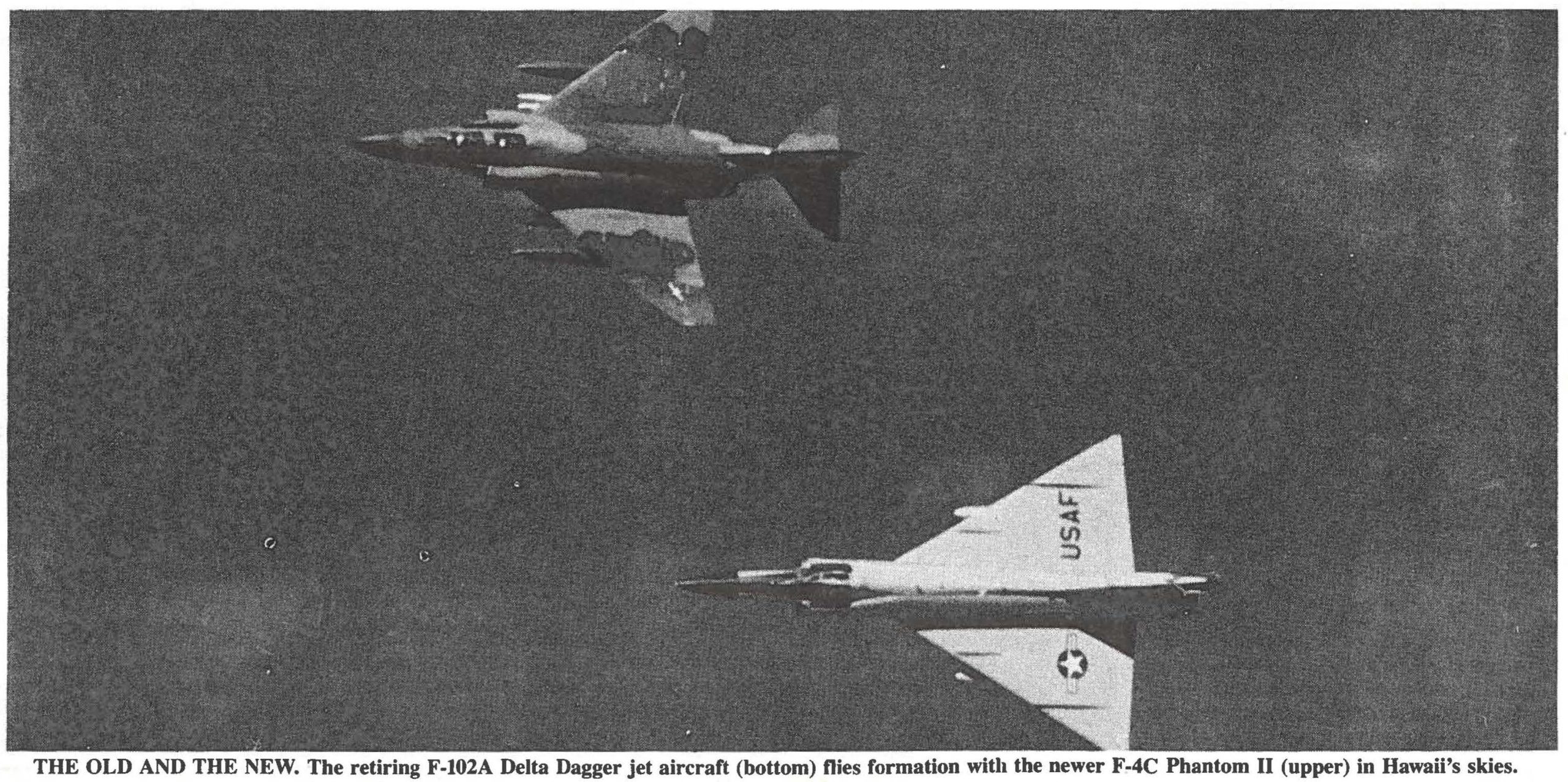
THE OLD AND THE NEW. The retiring F-102A Delta Dagger jet aircraft (bottom) flies formation with the newer F-4C Phantom II (upper) in Hawaii’s skies.(Picture from the 1976 December Pūpūkahi)
“Honolulu Tower, Crick zero-one flight, active scramble!”
Immediately following this communication, two Hawaii Air National Guard F-102A Delta Dagger fighter interceptors were taxied down the runway and launched on the last operational flight to be flown by any F-102A in the Air Force inventory.
The conversation between Honolulu tower and Col. James R. Ashford, lead pilot and commander of the 154th Tactical Fighter Group, Hawaii Air National Guard (HANG). occurred just after the horn sounded at 1 p.m. on Oct. 22 indicating the initiation of an active air defense flight.
For 16 years, the F-102As, also known as “deuces,” have been assigned to the HANG in the continuous alert, air defense role. For the past year, this unit has been the only one in the United States to operate the “deuce.”
“Today was truly an end of an era for this proud ‘bird’,” said Col. Arthur U. Ishimoto, commander of the HANG.
“The ‘deuce’ will never again be flown in an operational mode in the United States. Some of them may be used in the future as drone targets for training, but none will be used for the primary mission,” he continued.
The’ ‘deuce,” conceived in Dec. 1951, was designed to fulfill requirements consisting of interception and destruction of high-speed enemy aircraft.
This fighter interceptor has not only served as air defense protection for Hawaii, but it has also known combat in Vietnam, often being voluntarily flown on combat missions by Hawaii Air Guard pilots. It has been a reliable machine but is being replaced by the more modem F-4C Phantom II.
The “aloha” flight began when the two F-102As left the alert site at the Air Guard’s Hickam AFB facilities.
The two interceptors first flew to the island of Kauai and passed over Mt. Kokee, an aircraft control and warning (ACW) site, to bid a fond farewell.
The formation then moved to Mt. Kaala, Oahu, another ACW site to say goodbye. The last F-102A flyby then passed over the Hawaii Air National Guard facilities at Hickam AFB, the home of the fighter interceptor aircraft for the last 16 years.
The aircraft then landed, proceeded to designated positions on the “ramp” and cut engines, never to start again.
The pilots were presented with leis in the traditional “aloha” spirit.
The era of the F-102A ended.
While the F-102As were on their last flight, a new era began as the F-4C Phantom II officially assumed the active air defense role for the State of Hawaii.
The Hawaii Air National Guard (HANG) highlights for the fiscal year included two significant achievements conversion of the 154th Tactical Fighter Group to F-4C aircraft and attaining mission-ready status as of June 1, 1977. ..
Active air defense alert operations by F-102As were terminated on Oct. 22, 1976, and assumed by the F-4Cs. As of June 30, 1977, 18 formed aircrews were declared mission-ready (MR).
Key members of the 199th TFS finalized the training flow for individual pilot checkout in the F-4C aircraft. These checkout courses were conducted at George AFB, California, and Luke AFB, Arizona. By the end of FY 76, 19 pilots and 4 WSOs had completed their initial checkout in the Phantom.
The major highlight of the past year was the conversion from the F-1 02A Delta Dagger to the F-4C Phantom after 16 years of operation with the F-102A. Improved aircraft performance, newer state-of-the-art aircraft fire control system and air-to-air missiles of the F-4C will re sult in increased air defense mission capability. The added offensive capabilities of the F-4C brought a name change from fighter interceptor group to tacti ca l fighter group.
At the beginning of FY 77, both F-102A and F-4C aircraft were maintained and operated with two F-1 02As continuing to remain on air defense alert, ready to scramble, intercept and identify any unknown aircraft penetrating the Hawaiian Air Defense System (HADS). After sufficient aircrews were trained in the F-4C, a single F-4C was placed on air defense alert on Oct 22, 1976, and all F-102A operations were terminated. The 154th TFG was the last organization in the entire USAF to operationally employ the F-1 02A. On Jan. 22, 1977, the number of F-4C aircraft on air defense alert was increased to two. As of June 1, 1977, sufficient aircrews were combat ready and the readiness posture of our F-4C aircraft had improved to the point that unit combat statu s capab ility was upgraded.
Eleven pilots completed their initial qualification (phase 1) in the F-4C Phantom at Air Force bases on the Mainland. Training consisted of flight simulator lessons, many hours of academics on aircraft system s, and 9 to 17 flying sorties. These 11 pilots plus the 16 who had completed their training earlier at Luke AFB, Ari zona, and George AFB, California, completed the pilot checkou t requirements.
Four locally recruited officers with navigator ratings who entered and completed combat crew training in the F-4C aircraft became qualified weapons system officers (WSOs). Combat crew training which lasted approximately seven months, was conducted at Homestead AFB, Florida, or Luke AFB, Arizona. Two other former Air Force navigators were recruited locally and comp leted WSO combat crew training at Luke AFB, Arizona
In March 1977, the 199th TFS had sufficient aircrews trained to be declared MR, the first step toward maximum combat readiness. By the end of June 1977, 18 pilots and 18 WSOs (18 formed crews) were fully trained to MR status. The ultimate goal will be reached when 12 to 14 more pi lots and 8 more WSOs are upgraded to MR status in the Phantom
Hooking Up-photo by 1stLt. Gregg K. Kakesako Gasing Up Over the Pacific Ocean at Sunset-photo by Capt. Garritt Osborne. (Pictures from the 1977 June Pūpūkahi)
The Hawaii Air National Guard (HANG) reached another milestone in the F-4 conversion. In only six days, from Feb. 16–17 and Feb. 28 through March 5, thirteen HANG aircrews made a total of 217 successful hookups with a KC-135 air refueling tanker.
This is no small feat. It requires smooth and precise formation flying with the KC-135 while a boom operator attempts to connect a fuel line between the two planes. Once the connection is made, fuel is pumped into the F-4 at a rate of 3,900–4,200 pounds per minute. One wrong move could mean two planes and thousands of pounds of fuel coming together in disastrous results.
The successful hookups clearly demonstrate the high caliber of flying skill in the 199th Tactical Fighter Squadron aircrews.
With the new air refueling capability, the Hawaii Air Guard can react within hours to any situation around the world by deploying the versatile F-4 Phantom.
To accomplish the air refueling training, the Hawaii Air Guard worked with two other Air Guard units. During the Feb. 16–17 training, a KC-135 refueling tanker from the 132d Air Refueling Squadron in Bangor, Maine, supplied the air refueling services, and during the Feb. 28 through March 5 period, a KC-135 tanker from the 115th Air Refueling Squadron in Spokane, Washington, was used.
During the most recent air refueling training, conducted in the week of May 2–6, an additional thirteen aircrews made successful hookups with the 115th Air Refueling Squadron, Washington Air Guard tanker.
The air refueling training went much faster and smoother than anyone had anticipated. Colonel Bob Elliott, acting commander of the 326th Air Division and Air Force advisor to the Hawaii Air Guard, summed up the training by saying, “They did a fine job! In fact, this is the best example of intensive training and accomplishment I’ve seen outside of a combat situation.”
To date, all pilots have been qualified in the air refueling training, and by the end of June, the Air Guard expects to have all weapons systems officers qualified.
The conversion of the 154th FlG to F-4C PHANTOM aircraft began to occupy considerable time at HQ HANG in planning and coordination. More than just a change of aircraft, the F-4C required an additional crew in the form of weapons systems officers, additional maintenance training and facilities, pilot training, additional supply coordination, and a myriad of other details.
After fifteen long years “caring for” the DEUCES, the CAMRON again began the arduous task of converting to the newer F-4C Phantom, the conversion being the result of the Department of Defense directive called Total Force. The first “Phantom” arrived in October 1975, and a new chapter for the 154th CAM Sq. was to be added to its already overflowing book of accomplishments.
Everyone prepared for the arrival of the F-15 EAGLE in 1987. The “Eagles” would replace our aging F-4C “Phantoms”. The news caused a lot of happy faces, but also a lot of sad ones, especially for the WSOs. since the F15 is a single seat fighter.
The last F-4C sortie occurred during September of 1987 when it departed Hickam AFB to be delivered to the “boneyard” at Davis-Monthan AFB in Tuscon, Arizona.