Hurricane
What is a Hurricane?
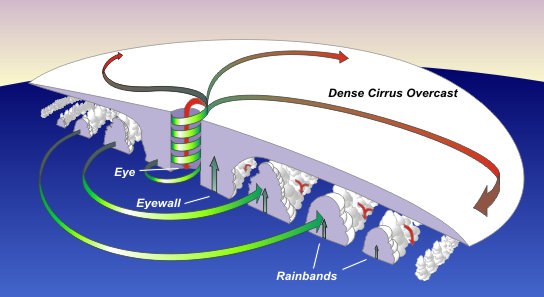
Hurricanes are huge cyclones of rotating clouds and thunderstorms that form over the ocean and draw strength from warm tropical water. These spinning clouds have a low-pressure center (or “eye”) that attracts high-pressure winds which form a strong eyewall.
Hurricanes grow by pulling up warm tropical air and moisture from the ocean into its cloud system, where this moisture cools and condenses, forming intense rain bands and thunderstorms. These storm systems can be hundreds of miles wide and last for days.
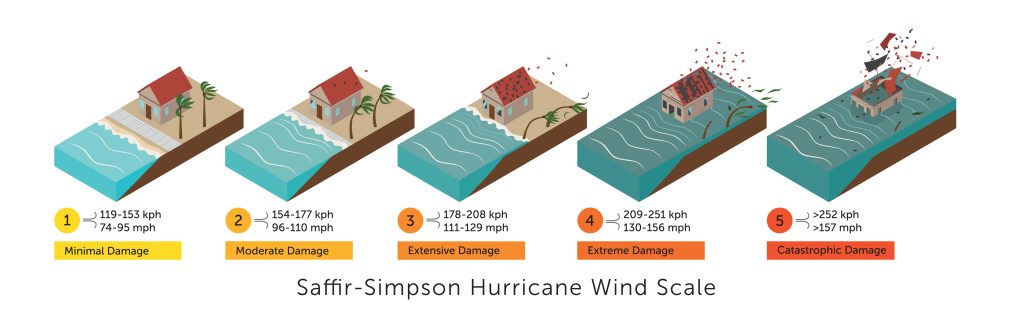
When a tropical storm gains enough momentum to sustain winds over 74 miles per hour, it’s called a hurricane. Hurricanes have five categories based on wind speed. Category 1 begins at 74 mph, and Category 5, the most dangerous, has sustained winds of 157 mph and stronger.
What are the Hazards of Hurricanes?
When a hurricane crosses land where people live (called “landfall”), danger is very high. Hurricanes pose a number of hazards to people, including storm surge inundation, flooding from extreme rain, destructive winds, tornadoes, dangerous rip currents and rough surf.
In Hawaiʻi, even hurricanes that stay hundreds of miles off shore can have devastating impacts to the islands.
Storm surge is water that is pushed by hurricane winds inland, causing severe flooding in coastal areas and along bays, rivers and estuaries. Storm surge can have water heights of 10 feet and higher, and can travel several miles inland. Hurricane Katrina in 2005 – a category 3 hurricane – had a devastating storm surge with water levels over 25 feet high and a storm surge distance of 12 miles inland in Louisiana and Alabama. Storm surge is historically the deadliest hazard of hurricanes.
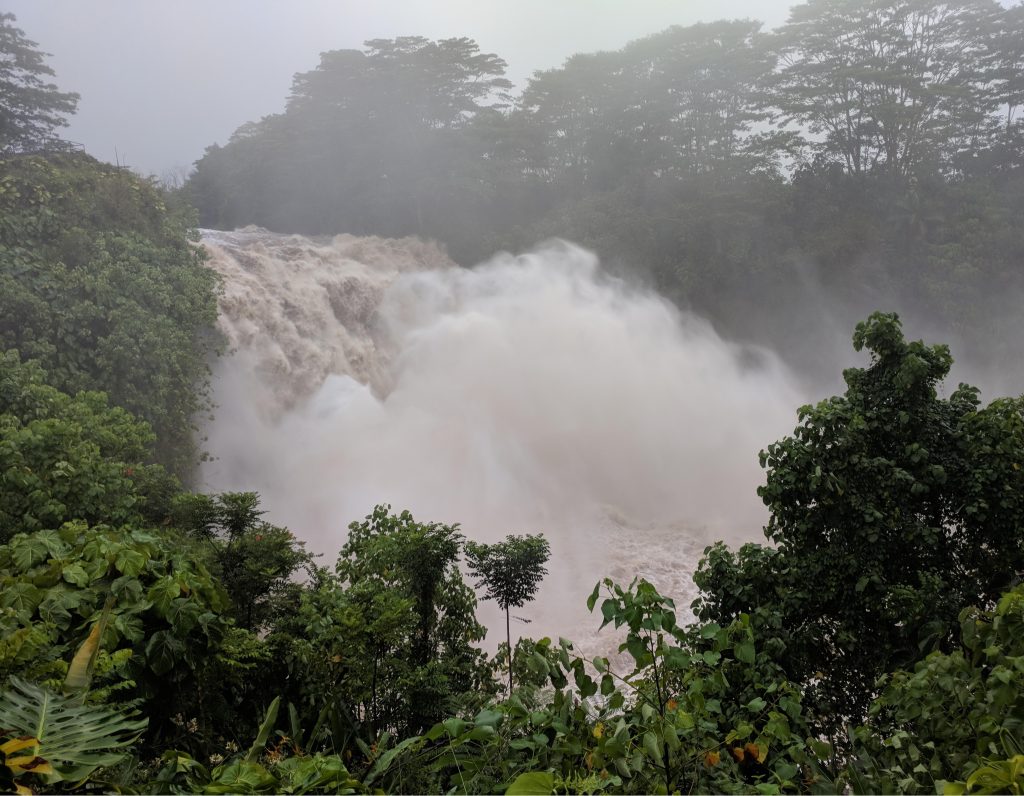
Flash flooding occurs when hurricanes drop extreme amount of rain over land, sometimes hundreds of miles inland or days after a hurricane makes landfall. Runoff from heavy rain causes flash flooding around waterways like rivers and streams, or in low-lying areas such as valleys and paved urban areas where water cannot be absorbed. In 2018, Hurricane Lane caused severe flash flooding and landslides on Hawaiʻi Island, even though the hurricane was 140 miles away and never made landfall. A record of 58 inches of rain fell on the slopes of Mauna Kea. 100 people had to evacuate, and 180 structures were damaged.
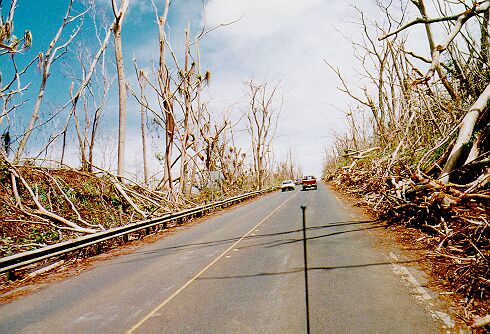
Winds from hurricanes cause numerous problems. Hurricane winds can damage or destroy homes and buildings; blow dangerous projectile debris like signs, building materials and outdoor furniture; uproot trees and make roads impassable; and knock down utility poles and power lines, causing power outages and communications outages.
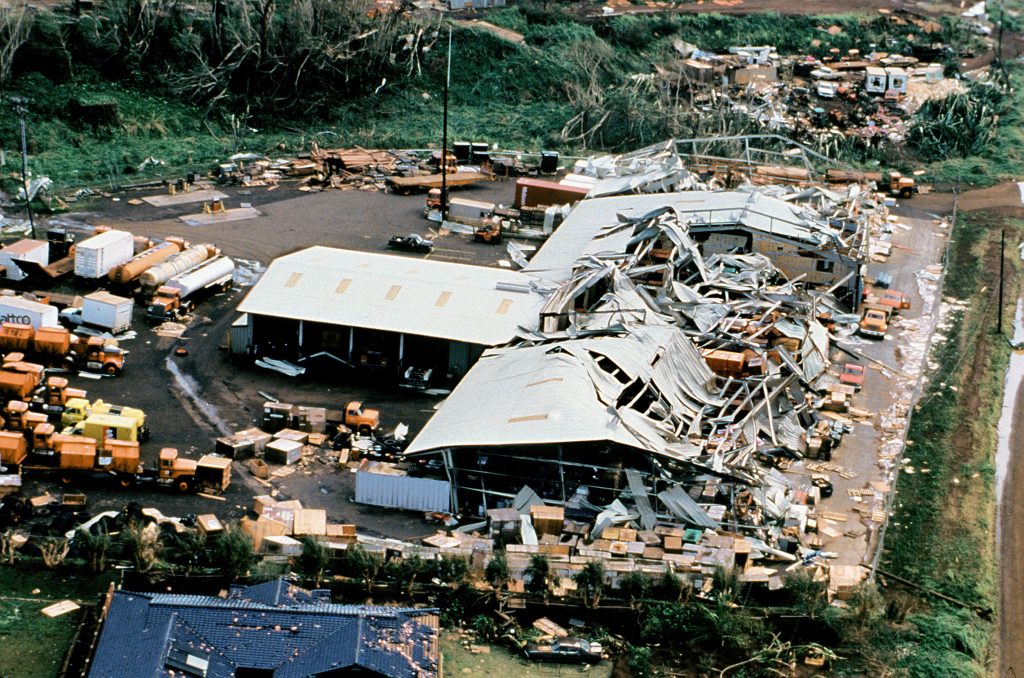
Hurricane Iniki in 1992 brought wind gusts over 150 miles per hour to Kauaʻi, causing widespread damage to buildings and infrastructure, and causing power outages that lasted months for some people.
Tornadoes can occur in rain bands well away from the center of the hurricane. Both Hurricane Iniki and Hurricane Iwa produced tornadoes on Oʻahu.
Rip currents and rough surf are common hazards of hurricanes, even when they are thousands of miles away. In Hawaiʻi, a distant hurricane may cause high surf that can sweep away beach goers.
Hurricanes in Hawaiʻi
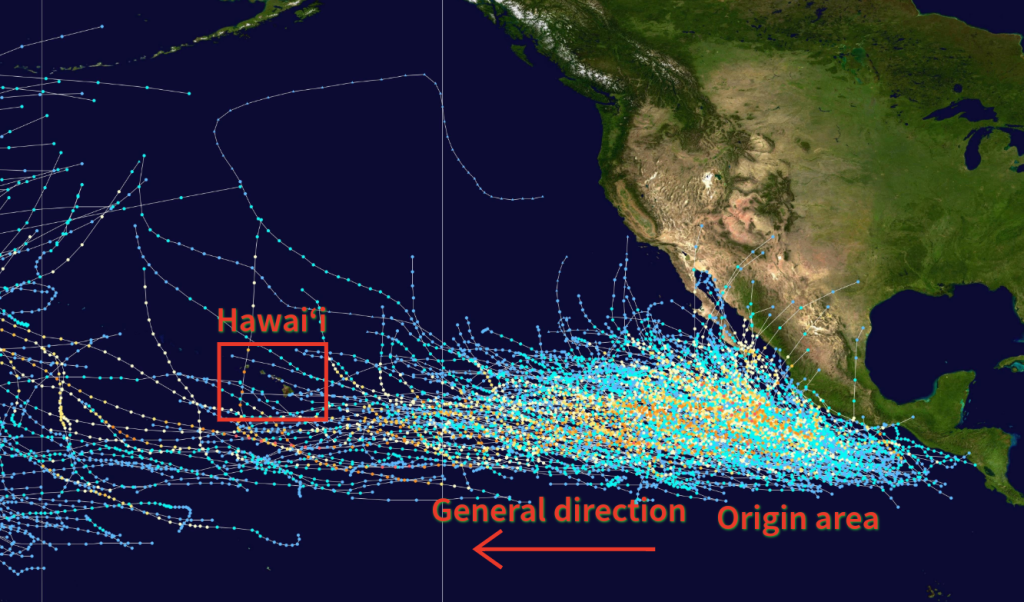
Hurricane season for Hawaiʻi runs from June through November, with peak season historically being in August and September. Storms form off the west coast of Mexico and Central America and head west towards the Hawaiian Islands. Hurricanes have had deadly impacts on Hawaiʻi, both from landfall and offshore effects.
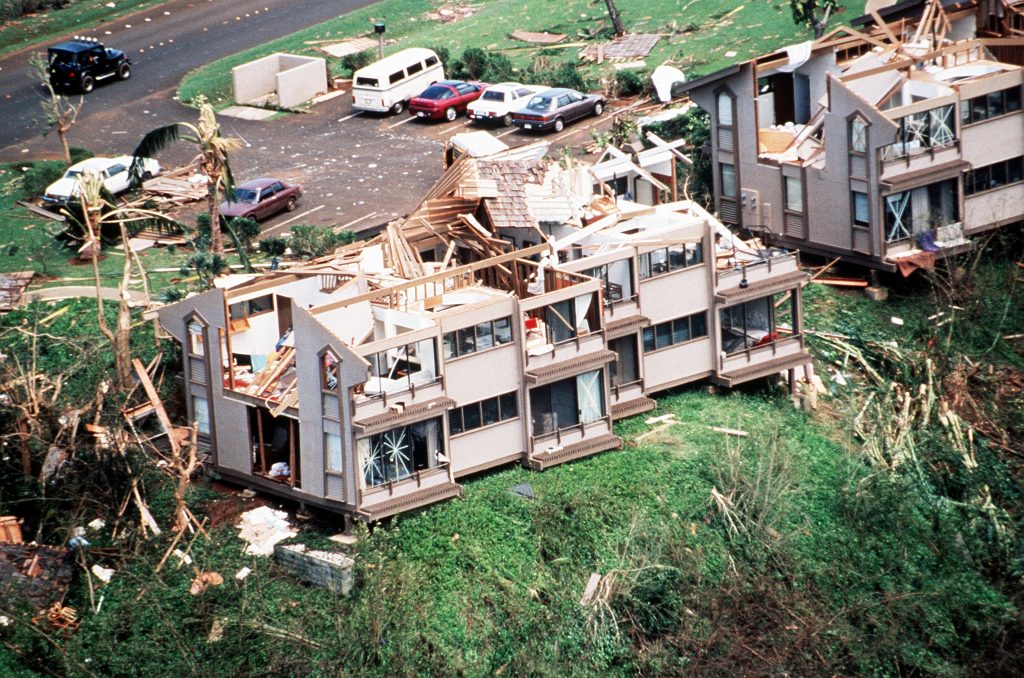
On September 11, 1992, Hurricane Iniki made landfall on Kauaʻi as a Category 4 hurricane with winds of 140 mph. These winds damaged over 14,000 homes on Kauaʻi, including the destruction of 1,400 homes. Five people in Kauaʻi County died, including from flying debris, houses collapsing and a boat capsizing.
7,000 people on Kauaʻi were displaced from their homes. Electricity was knocked out for the entire island, and some homes remained without power for over three months.
On Oʻahu, Hurricane Iniki brought winds of 80 miles per hour and caused a tornado in Nanakuli. Two people on Oʻahu died. Waves and storm surge severely damaged the Waianae coast.
Hurricane Iniki caused $3 billion in damage to Hawaiʻi.
On the night of November 23, 1982, Hurricane Iwa struck Kauaʻi, Oʻahu and Niʻihau as a Category 1 hurricane with winds sustained at 90 mph. A seaman at Pearl Harbor was killed from rough seas. Over 11,000 buildings were damaged and 500 people were displaced. Damages surpassed $300 million at the time.
In recent history, hurricanes have impacted Hawaiʻi even when they remain offshore. Hurricane Lane, which came as close as 140 miles from Hawaiʻi Island, produced torrential rainfall, flash floods and strong winds on August 22 to 26, 2018.
A weather station at Kahuna Falls on Hawaiʻi Island measured 58 inches total during the storm, the most ever in Hawaiʻi and the second-most ever in the United States (60 inches from Hurricane Harvey). Flash flooding and mudslides damaged 159 buildings on the Big Island. Winds contributed to downed power lines and wildfires on Maui and Oʻahu. One fatality occurred on Kauaʻi.
On August 8, 2023, Hurricane Dora remained more than 700 miles away from Hawaiʻi, but the storm enhanced trade winds that fueled the deadly Maui wildfires that killed 102 people.
These hurricanes are just a few examples of both direct and indirect impacts that hurricanes have in Hawaiʻi.
Preparing for Hurricanes: Understanding Insurance
After a disaster such as a hurricane, the first step is to file an insurance claim. So, prior to hurricane season, it’s important to review your insurance coverage.
In Hawaiʻi, all lenders require hurricane insurance, which gives coverage for hurricanes at Category 1 or stronger. Hurricane coverage is mainly for wind damage to your home, including rain damage after your home has been damaged by wind (i.e., your roof is blown off and rain comes in).
Flood insurance is useful for hurricane impacts as well, but it is only required for homes in flood zones. If you have flood insurance, you will be covered for flooding hazards associated with hurricanes, like storm surge on coasts or flash flooding from heavy rain.
For both renters and homeowners, having an accurate inventory of your possessions is essential for determining what kind of insurance you need, and for making claims after a disaster damages your property.
Take photos or videos of your home and property to have a record of the condition of your home. The National Association of Insurance Commissioners (NAIC) offers a handy inventory app that can help. This app can record your belongings room by room. Plus, you can upload photos of your items and even scan barcodes. Check out the app here https://content.naic.org/consumer/home-inventory.

Preparing for Hurricanes: Strengthening Your Home
If a hurricane is approaching, it is important to understand your home’s ability to withstand hurricane winds. After Hurricane Iniki, building codes were changed to incorporate requirements for hurricane resilience.
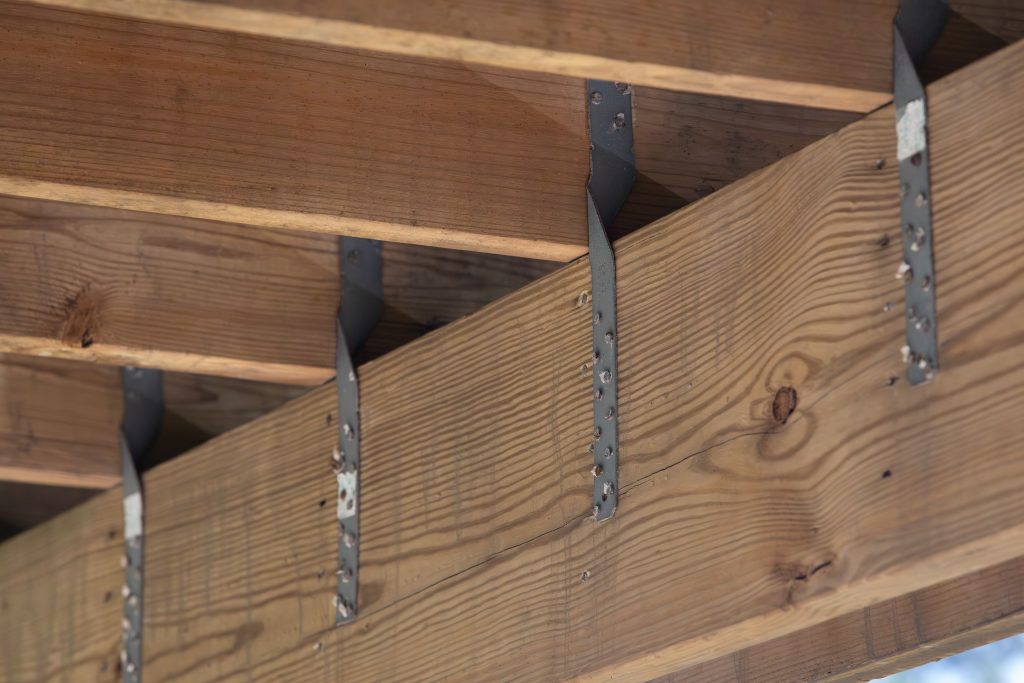
Homes built after 1995 were required to have a strong hardware connection from the roof to the foundation to reduce the risk of roofs being blown off as they were during Hurricane Iniki. On Kauaʻi, this applies to homes built in 1993 or later; and in Hawaiʻi County, this applies to homes built in 1994 or later.
Homes built in 2010 or later across the state of Hawaiʻi were required to be able to withstand a Category 3 hurricane (winds up to 129 miles per hour).
If your home was built before these dates, there are things you can do to improve your home’s resilience to hurricane winds and heavy rain. The following suggestions are not exhaustive, so reach out to your insurance agent or a licensed contractor for advice on how to strengthen your particular building. Two in-depth resources that you can consult are The Homeowner’s Handbook to Prepare for Natural Disasters by the University of Hawaiʻi and Guide to Hurricane Strengthening for Hawaii Single-Family Residences by the Hawaiʻi Department of Commerce and Consumer Affairs.
Roof
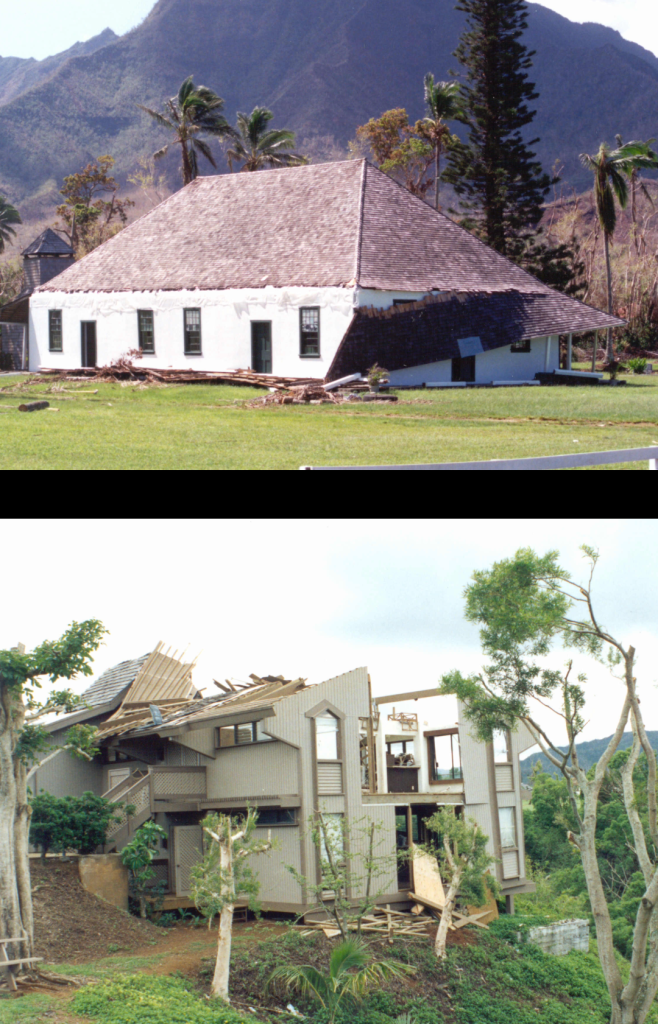
The design and material of your roof will have an effect on its ability to withstand heavy wind and rain. A hip roof design (in which every side has a downslope) generally performs best during hurricanes because there are no gables where upsloping winds catch.
There are many options for roofing materials. Metal is a good choice because it is very resistant to impact. Asphalt shingles or tiles can also be appropriate if they are rated for wind resistance.
Having a water-resistant seal between your roof and the wood beneath it will greatly reduce the risk of water intrusion if parts of your roof’s exterior such as shingles or tiles do blow off in a hurricane.
Roof to Walls and Foundation
Another strategy for hurricane resistance is called a continuous load path. In this strategy, strong metal clips or straps are installed to secure the roof to the walls, and another set of clips or straps connects the walls to the foundation. This improves your home’s resilience by distributing the load of heavy winds to the entire structure of your home and foundation.
Windows and Doors
Windows and doors are very susceptible to hurricane winds. If a window or door is broken by debris or blown in by wind, the wind and rain can further damage the inside of your home or compromise its structural integrity.
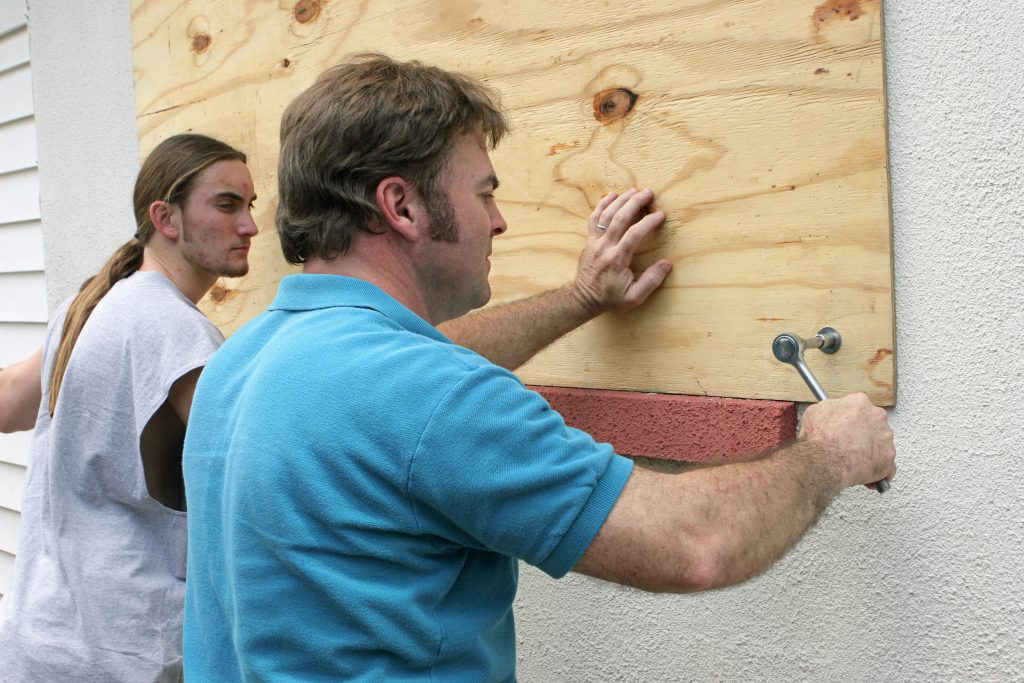
There are options for impact-resistant doors and windows that are rated for hurricane wind speeds. You can also install hurricane shutters such as accordion shutters or roll-down shutters. Another option is to have storm panels such as plywood ready to install over your windows or glass doors before a hurricane arrives. Finally, in a pinch, you could push a heavy piece of furniture behind your doors so that they don’t blow in and let in rain and wind.
Garage doors tend to buckle under hurricane winds. You can install bracing to strengthen them during a hurricane, or choose a heavy-duty reinforced garage door. Make sure you know how to operate your garage door manually in case the power goes out.
Sealing
Make sure you keep up with sealing or caulking cracks and gaps in your home. Even a small gap can cause significant damage from a heavy hurricane rainband. Check the gaps around windows, doors, plumbing, electrical and roofline. Use waterproof sealant to close the gaps and install flashing at joints. These small steps can prevent water damage and mold.
Get an Inspection
There are many more design and retrofitting options that you can consider, from large projects like elevating your home on stilts to small changes like using spiral nails instead of straight. Most insurance companies offer hurricane inspections and other risk analyses. Reach out to your insurance agent to see what is available to you.
Understanding Forecasts
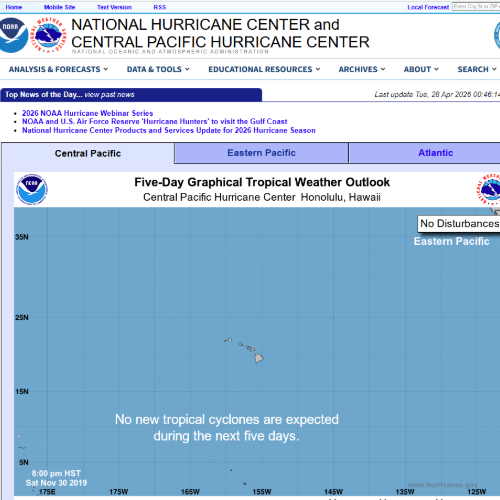
The Central Pacific Hurricane Center is the primary source of hurricane information for Hawaiʻi. When a tropical storm forms with the potential to impact Hawaiʻi, scientists begin tracking its movement and characteristics.
It’s vitally important that you have several ways of getting information about hurricanes. These are all important information channels to have set up:
- Get free local emergency text message alerts by signing up at ready.hawaii.gov/alerts
- Follow government social media at ready.hawaii.gov/alerts
- Visit the National Weather Service’s Honolulu Forecast Office website at weather.gov/hfo for the latest forecast updates and to follow their social media
- Have a radio with backup batteries to get information when the power goes out. Tune to your local emergency station listed at ready.hawaii.gov/alerts
- Monitor the local news on TV for storm updates
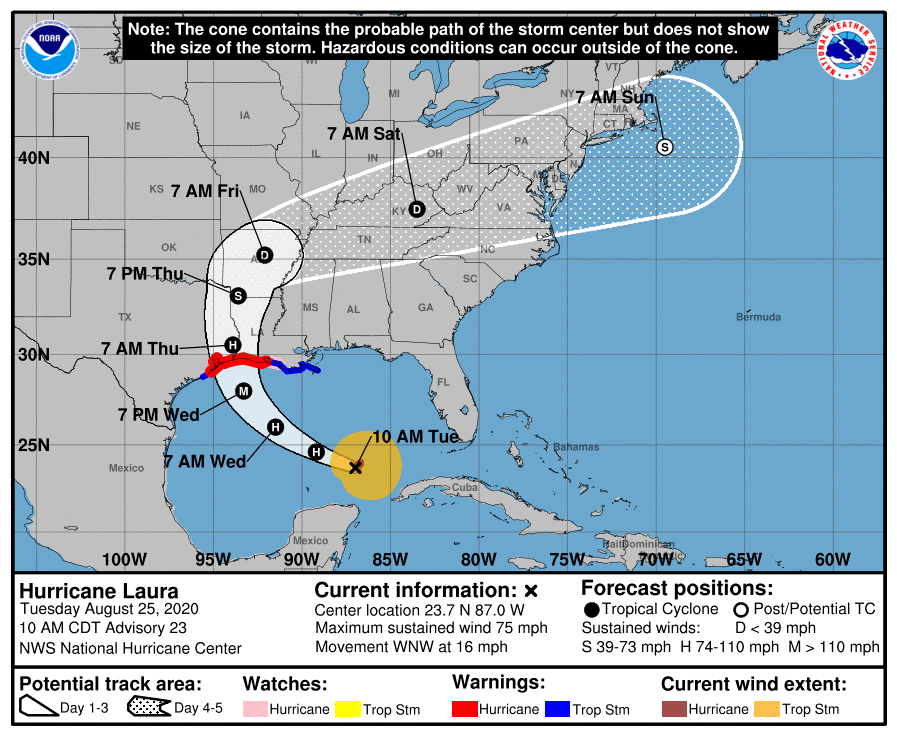
The National Weather Service alerts the public with hurricane and tropical storm warnings, watches and advisories. They also publish detailed forecast cones with expected storm tracks and wind speeds. You can see the differences between the different kinds of weather alerts and learn how to read hurricane forecasts here: https://www.noaa.gov/understand-forecast-information.
Responding to a Hurricane
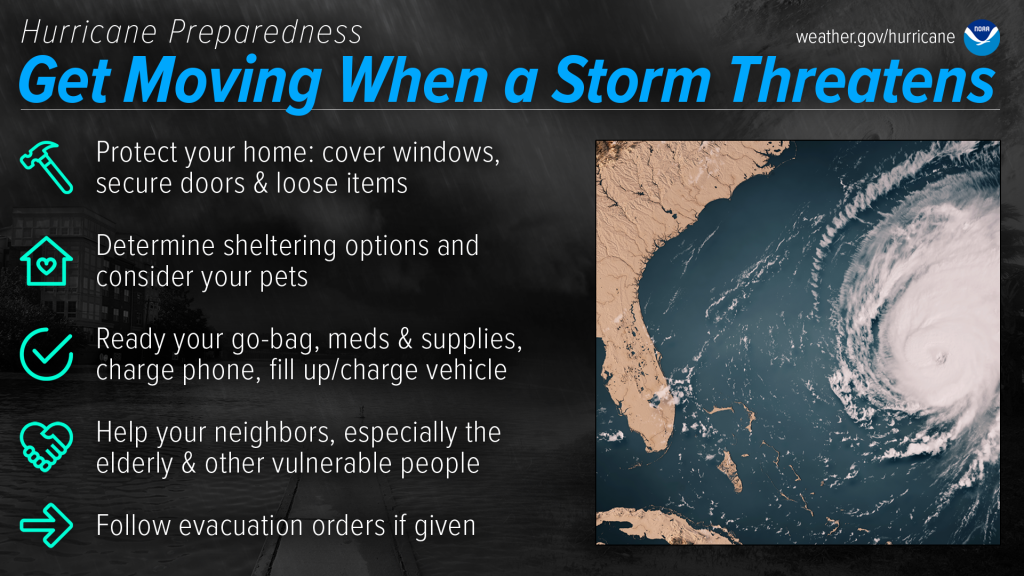
If a hurricane is forecast to hit Hawaiʻi, you will need to be ready to protect yourself and your property. Last-minute preparations in the days before a storm include:
- Boarding up windows and glass doors.
- Bringing outdoor furniture, trash cans, decorations or anything that could be blown around by hurricane winds.
- Removing dead or weak tree limbs or branches that could be blown down.
- Clearing gutters and drains to ensure water flow from heavy rain.
- Check emergency equipment such as a generator or sump pump for operability.
It’s important to remember that hurricanes have a wide area of hazardous weather impacts. Plan for the worst and don’t wait to prepare.
Make sure you:
- Have emergency supplies ready at home.
- Make a family emergency plan including a safe place to weather the storm.
- Pack a Go Bag in case you need to evacuate.
- Prepare for power outages.
- Plan for your pets.
Visit HIEMA’s “Get Ready” webpages to make sure you are prepared for hurricanes or any other kind of natural disaster: https://dod.hawaii.gov/hiema/get-ready-overview/.
Be ready to act on evacuation orders or shelter-in-place orders that may be given leading up to and during a hurricane.
If you are ordered to shelter in place, go to a small interior room that is away from windows, like a closet or hallway. Go where there are the most walls between you and outside. Keep your emergency kit nearby and have a radio to listen for emergency updates. Be aware that the eye of a hurricane can be calm, but the rest of the storm is still coming. Don’t go outside until officials tell you it’s safe to do so.
Hurricane Safety for Boaters
The University of Hawaiʻi’s Sea Grant College has a helpful guide that you can read here: The Hawaiʻi Boater’s Hurricane and Tsunami Safety Manual. This manual contains detailed information on emergency supplies, what to do if you’re caught in a storm, and routine seasonal maintenance to be ready for hurricane season.