Earthquake
Earthquake Hazards
Earthquakes are common geological occurrences that can cause hazardous and damaging shaking where we live on the earth’s surface. The shaking and displacement of land that we observe is caused by the movement of the tectonic plates that encircle the surface of the earth. When plates bump into each other, earthquakes occur, anywhere from the surface of the earth to hundreds of miles deep.
Earthquakes are measured and classified by magnitude and intensity. The Richter Scale measures magnitude, the amount of energy generated by an earthquake. Intensity refers to the amount of shaking and is measured on the Modified Mercalli Intensity scale (MMI).
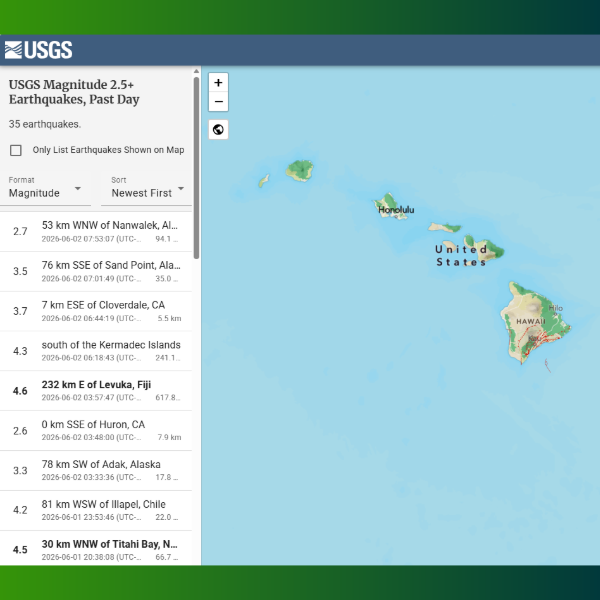
In Hawaiʻi, thousands of small, unnoticeable earthquakes happen because of volcanic activity – mostly on the Big Island of Hawaiʻi. However, large, damaging earthquakes happen as well, usually at faults or cracks in our tectonic plate. On Hawaiʻi Island, there are numerous faults and rifts around Mauna Loa and Kīlauea where these big earthquakes occur.
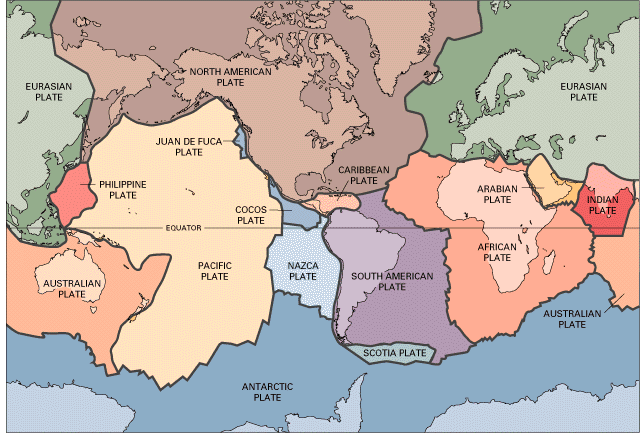
Despite being in the middle of a tectonic plate, earthquakes are common in Hawaiʻi because of a “hotspot” called the Hawaiian Mantle Plume. This plume is a weak spot in the Pacific Plate where heated rock and magma rise from the mantle of the earth and find rifts and cracks in volcanoes to be released. Because of this constant movement and shifting of magma and rock beneath Hawaiʻi Island, some big earthquakes can occur.
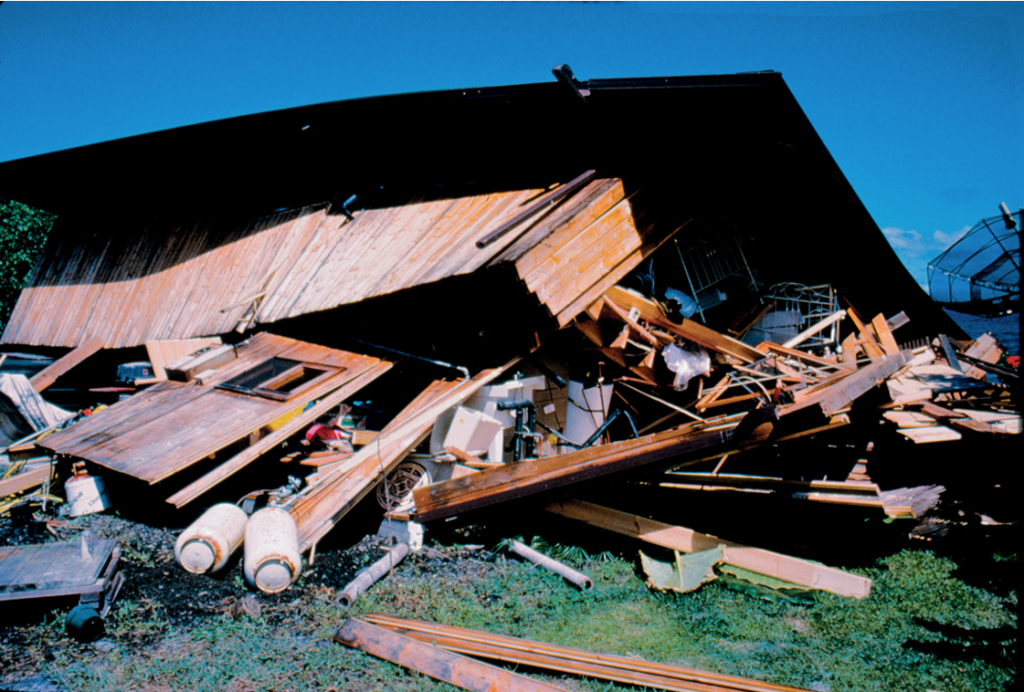
The main hazards caused by these earthquakes include:
- Violent shaking that can destroy homes and cause injury, usually from falling objects.
- Local tsunamis that bring large waves that threaten people and property near coasts.
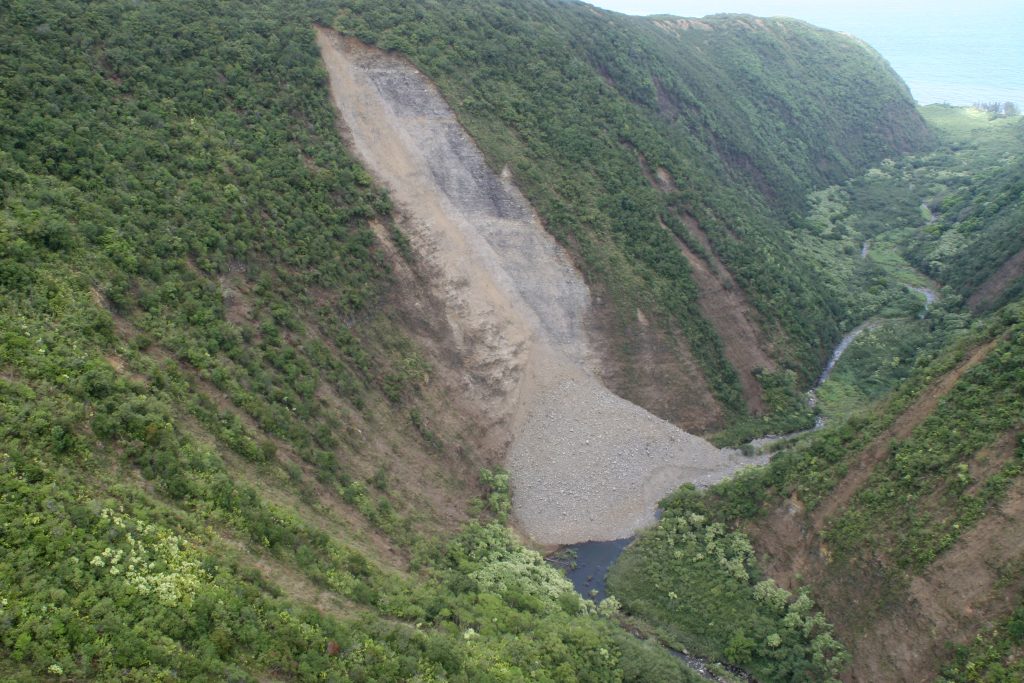
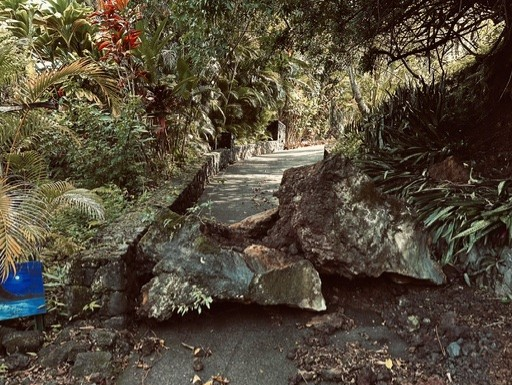
- Dangerous landslides where boulders, rocks, trees and debris fall from steep areas.
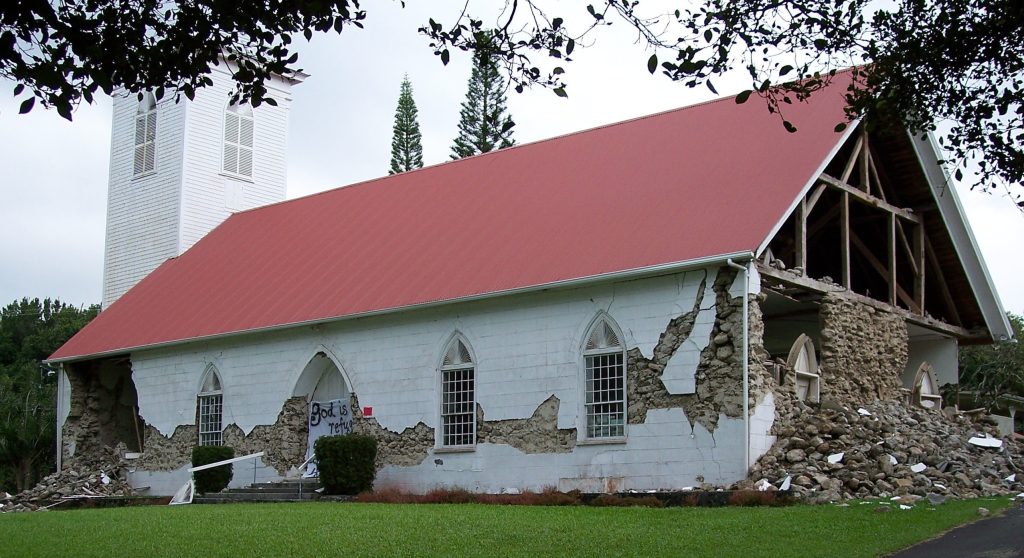
- Cracking in the earth that can damage or destroy roads, bridges and buildings.
- Fires resulting from broken gas lines, downed power lines and damaged electrical appliances
- Disruption of utilities like water and power due to earthquake damage.
Earthquakes in Hawaiʻi
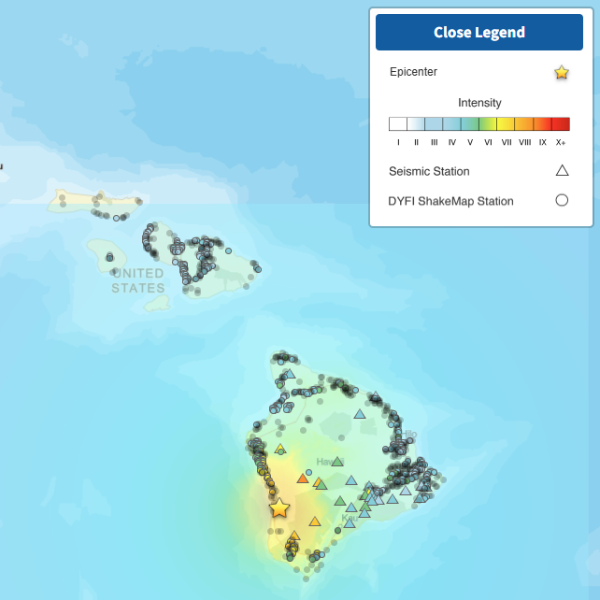
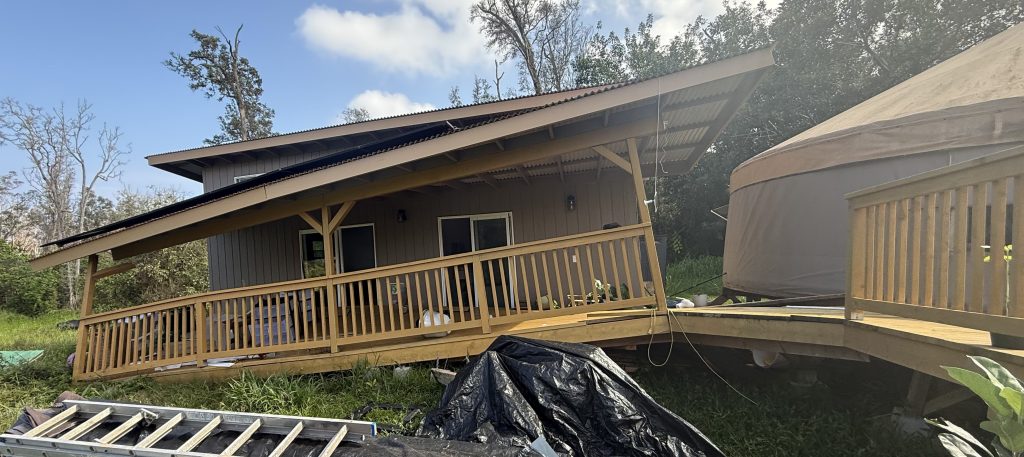
Earthquakes are a part of life in Hawaiʻi – especially on the Big Island of Hawaiʻi, where most effects of earthquakes are felt. Large earthquakes have caused major damage as recently as May 22, 2026, when a 6.0-magnitude earthquake with an epicenter near Honaunau damaged more than 200 homes, destroying eight of them and causing major damage to more than 80 properties.
The most devastating earthquake in Hawaiʻi’s history occurred on April 2, 1868, when a massive 7.9-magnitude earthquake happened in the Kaʻu District. The earthquake caused a local tsunami that killed 46 people on the Kaʻu-Puna coast and triggered a landslide that killed 31 people in Wood Valley.
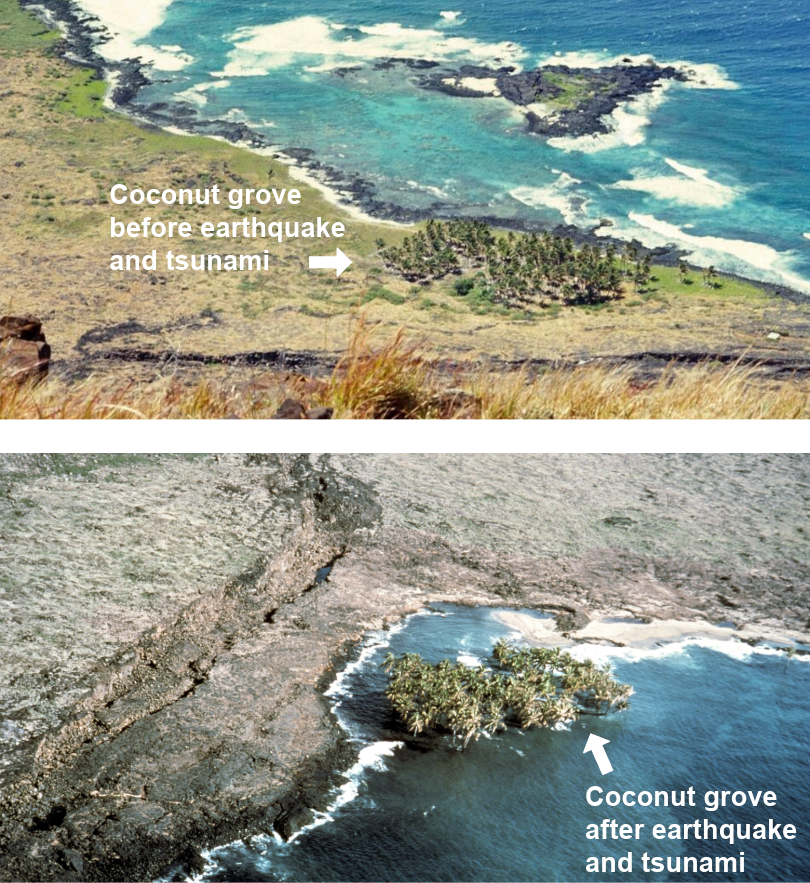
In 1975, a 7.7-magnitude earthquake in Puna triggered a local tsunami that killed two people who were camping near the beach at Halapē. Tsunami wave heights measured as high as 47 feet. On the southern shore of Hawaiʻi, including at Halapē, some land subsided (dropped) by 12 feet during the earthquake.
In 2006, a 6.7-magnitude earthquake happened with an epicenter just offshore of Kona Airport in Kīholo Bay, and produced a 6.1-magnitude aftershock earthquake offshore to the north near Māhukona. Effects were felt across the state, including an extended power outage on Oʻahu. On the Big Island, massive landslides occurred in valleys and on coastal cliffs. There was heavy damage to structures, bridges, roads and Kawaihae Harbor.
There have been 22 strong earthquakes measuring 6.0 magnitude or higher in the past 120 years – an average of one every five or six years. Most have occurred around Hawaiʻi, but the area around Maui Nui has also had earthquakes measuring over 6.0 in magnitude. Of course, these damaging earthquakes can happen anytime, so it’s important to prepare today.
Preparing for Earthquakes
Prepare to Be Safe:
There are some things you can do now to make sure you know how to protect yourself during an earthquake. First, sign up for emergency alerts from your county’s emergency management agency (click here to sign up) and USGS ShakeAlert cell phone warnings. If an earthquake occurs, you will receive an alert to your cell phone. This gives you the information you need to get away from the coastline if there is a local tsunami, to be aware of hazardous road conditions or to check on loved ones who may have been affected by the earthquake.
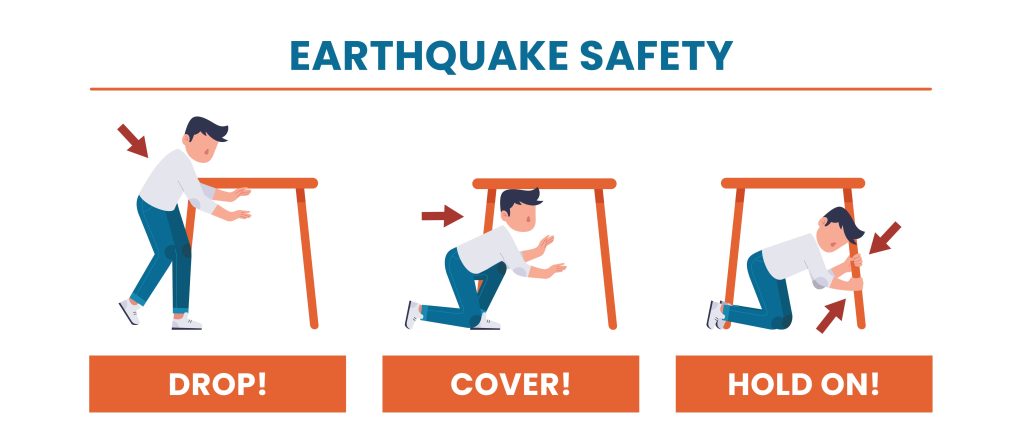
At home, identify safe places to go if an earthquake shakes your house. Your safest option is to get under a sturdy table or desk where you will be protected from falling objects. Think about the areas where you spend a lot of time, like your bedrooms, living room, kitchen or office. Are there things that could fall on you and injure you? If you have small children, look out for things that could fall or topple during a strong earthquake, things like televisions, bookshelves and other tall furniture.
If there is no table or desk, your next best option is to sit against an interior, central wall with nothing hanging like pictures or a mirror, and away from windows that could shatter. Where are those walls in your home?
Make sure you have a fire extinguisher. Know where it is and how to use it. Fires are a major threat after an earthquake because of gas leaks, downed power lines and damaged electrical appliances.
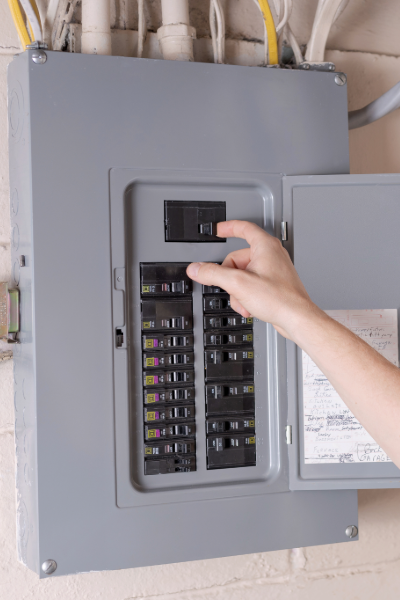
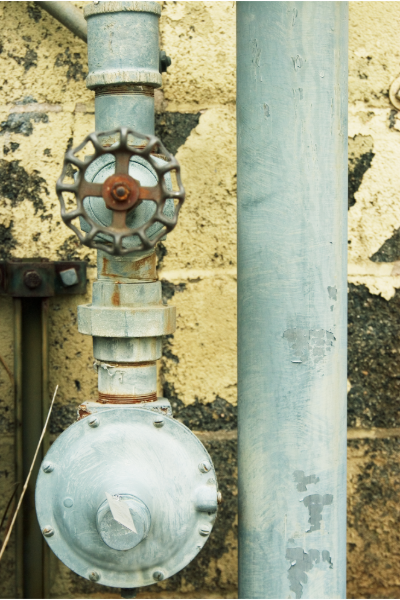
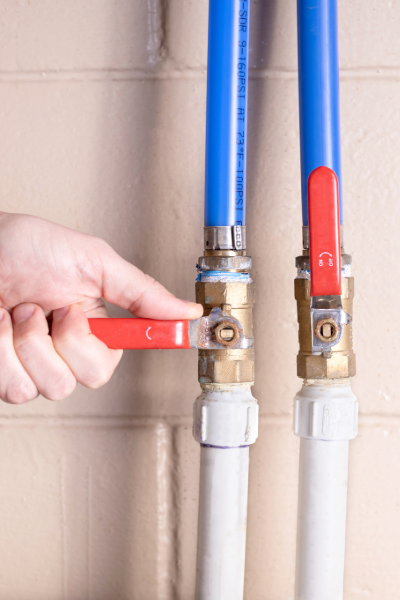
Finally, check for your home’s utility controls for gas, electric and water. If there is a gas leak, electrical damage or leaking pipe after an earthquake, you will need to shut off these utilities to prevent further damage such as a fire ignition or water damage. Keep an adjustable wrench in your emergency supply kit so you can use it to shut off the utility valves in an emergency.

Prepare Inside Your Home
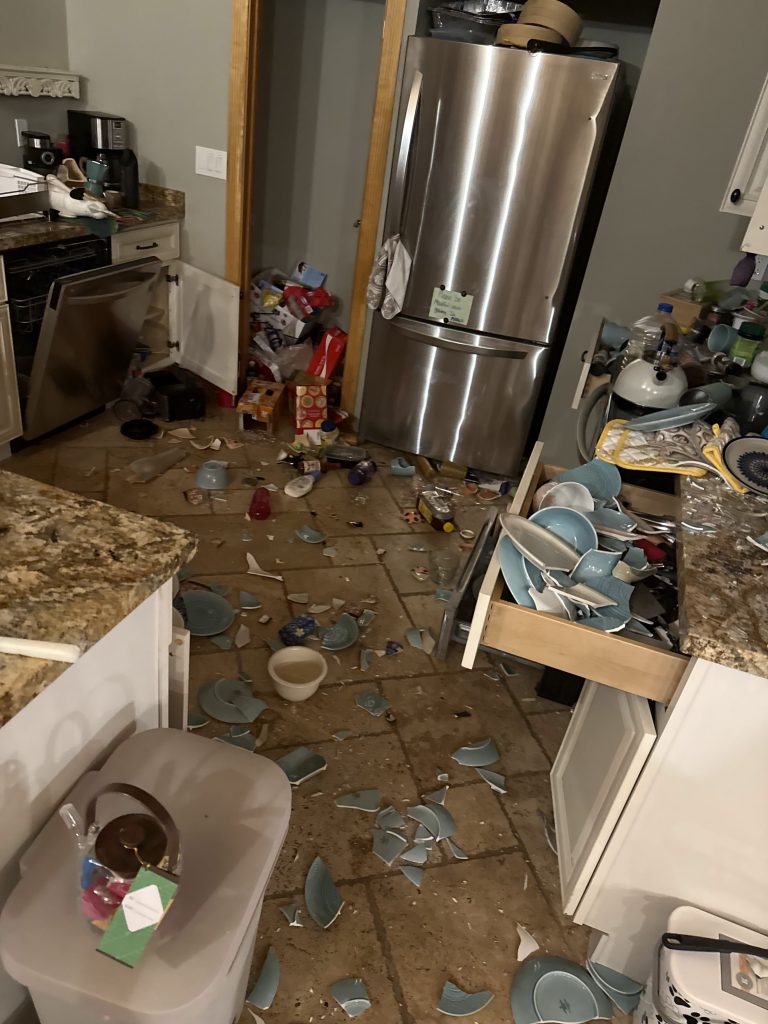
The vast majority of injuries from earthquakes are from falling objects, not from building damage. Take a look around your home. Imagine your home shaking. Are there things that could fall and injure someone? Consider things like televisions that aren’t mounted, gym equipment, shelves with heavy books or loose picture frames, or kitchen cabinet tops with decorative dishes or statues. These things need to be addressed now.
Here are a few things you can do to secure your living space:
- Move or secure things that can fall on you where you spend a lot of time sleeping, working or sitting, like your bed, couch, desk or kitchen.
- Secure furniture that can topple – like bookshelves, racks and televisions – by fastening them directly your wall studs using mounts or straps.
- Install latches on cabinets to prevent them from opening and spilling their contents during an earthquake.
- For hanging objects like mirrors and pictures, use closed-hook fasteners so that wires cannot be shaken out of the hook and fall.
- Secure your water heater using a strap and wood blocks attached to wall studs. Water heaters that topple can cause fires, water damage, gas leaks and burns.
- Consider hazardous chemicals you may have stored – make sure they are secured and contained if they were to topple and spill.
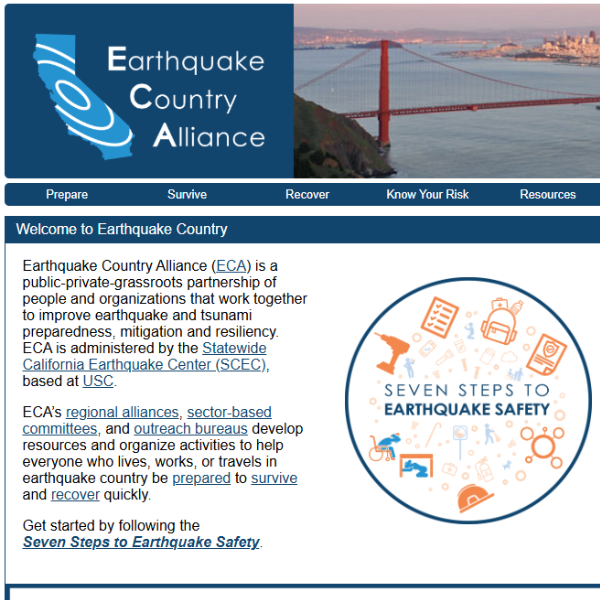
Earthquake Country Alliance has an excellent website with instructions on how to secure a long list of possible earthquake hazards around your home or business: Click here to visit.
Strengthen Your Structure
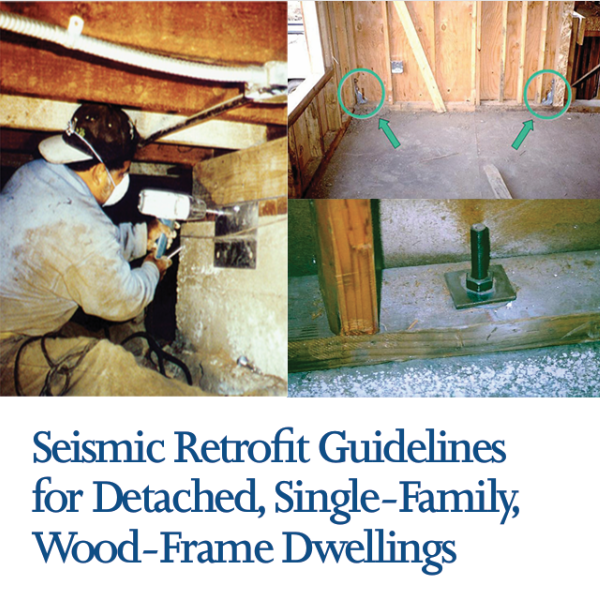
Homes more than 30 years old are more likely to be susceptible to earthquake damage. For these homes, there are retrofit improvements that can strengthen your home’s resistance to earthquake damage. For these improvements, consult a structural engineer or ask your home insurer for an inspector evaluation.
Foundations:
If you have a “post and pier” style foundation, a continuous perimeter foundation can improve your building’s strength. Check the connection between your home’s wood frame base and the foundation. If it is unsecured, adding bolts to connect your frame base and foundation is a very important improvement to consider.
Cripple walls:
If you have a crawl space under your house, you should make sure your cripple walls are braced sufficiently to mitigate against horizontal movement during an earthquake. Check that there are sufficient bolts and that plywood has been fastened to studs to brace the cripple walls.
First-story openings:
Check your large openings on your first floor, like garage doors, broad windows or sliding doors. Consult a professional to make sure these openings are properly braced to resist earthquake movement.
Chimneys:
Masonry chimneys that are not properly braced are very susceptible to earthquakes. Falling bricks can cause injury or death, and can also damage your roof or other parts of your home. Have your chimney inspected by a professional.
These issues are only a few suggestions for home strengthening. Two good resources are the City of Portland’s Residential Seismic Strengthening website and FEMA’s Retrofit Guidelines for Single-Family Wood Structures.

Responding During an Earthquake
If You’re Inside
Drop, cover and hold on – don’t run outside – stay indoors and take cover quickly. Get underneath a table or desk to protect yourself from falling objects, and hold on to the table leg to prevent it from bouncing away. If there isn’t a table or desk nearby, sit against an interior wall or get low beside a couch or other sturdy furniture. Cover your head with your arms.
If You’re Outside
Try to get to an open area away from buildings, power lines, streetlights, trees or other tall objects where things may fall on you. If you’re outside on a city street with tall buildings, get inside a building to a safe space quickly. Areas right outside of buildings are “danger zones” where falling objects are likely to endanger you.
If You’re at the Beach or Coast
A local tsunami could happen from a strong local earthquake. Quickly get to high ground or as far inland as possible. Don’t stop to pack your things; you may only have minutes.
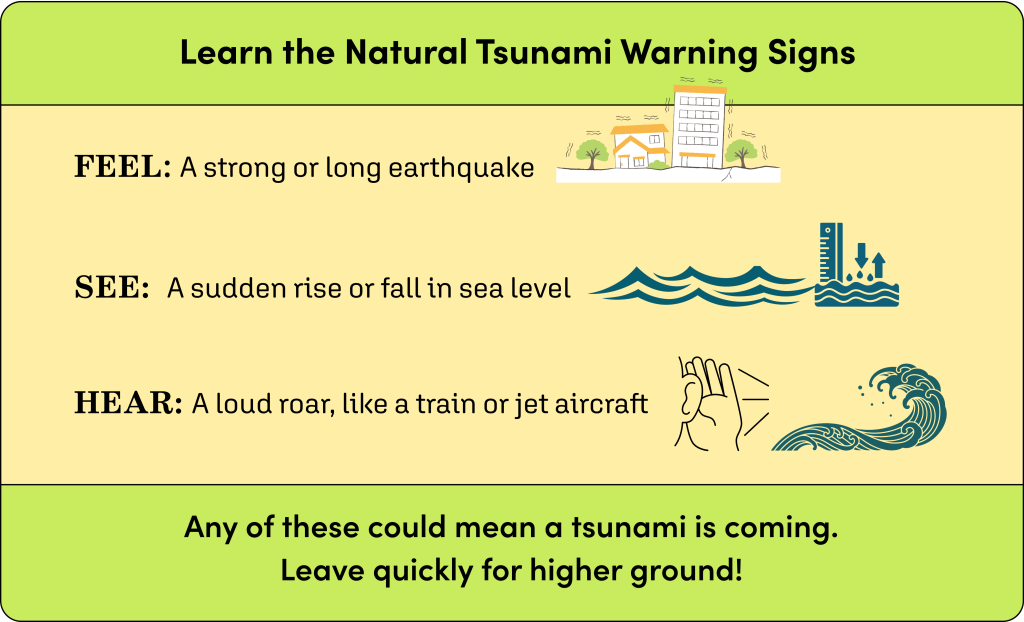
Remember the signs of a local tsunami:
- You feel a strong or long earthquake
- You see a sudden rise or fall in the ocean
- You hear a loud roar from the ocean that sounds like a train or jet
For more information on tsunamis, visit HIEMA’s tsunami webpage.
If You’re Driving
Strong earthquakes that occur at shallow levels less than 30 kilometers from the earth’s surface often have aftershocks, smaller earthquakes that occur along the fault as portions of the plate readjust to the initial displacement of earth. Aftershocks can occur within minutes, hours or a few days. Be aware of this following a very large, shallow earthquake.
Slow down, pull over out of traffic and stay in your car. However, if you’re driving on a bridge or overpass (or under one), keep driving until you are past and then pull over. When you resume driving, be very cautious and watch out for cracks in the road, fallen debris and bumps.
After an Earthquake
After an earthquake, you need to take stock of the damage around you. Put on sturdy shoes to avoid injuring yourself on broken glass or sharp debris. Check for injuries and call 911 if anyone is seriously injured. Do not move a seriously injured person unless they are in danger of further injury.
There are often utility hazards following a strong earthquake that damages gas, electrical and water systems. The risk of fire will be elevated if there is damage to gas or electrical systems or appliances.
- If you smell gas or hear a hissing sound, open windows and doors, get out of the house immediately, turn off the main gas valve from outside and call 911.
- If you see sparks, frayed or broken wires or smell smoke, turn off the power at the main circuit breaker. Don’t turn it back on yourself; your utility company will need to inspect and power on your system.
- If you see a leaking water pipe or water line, or a shattered toilet, shut off the main water valve.
There will likely be public infrastructure damage after a strong earthquake, like damaged roads, power outages and public water issues. Tune in to your local emergency radio station, check your phone or television for emergency updates, and wait for the “all clear” from emergency officials before traveling through a damaged area.