Home /
All-Hazards Statewide Outdoor Warning Siren System
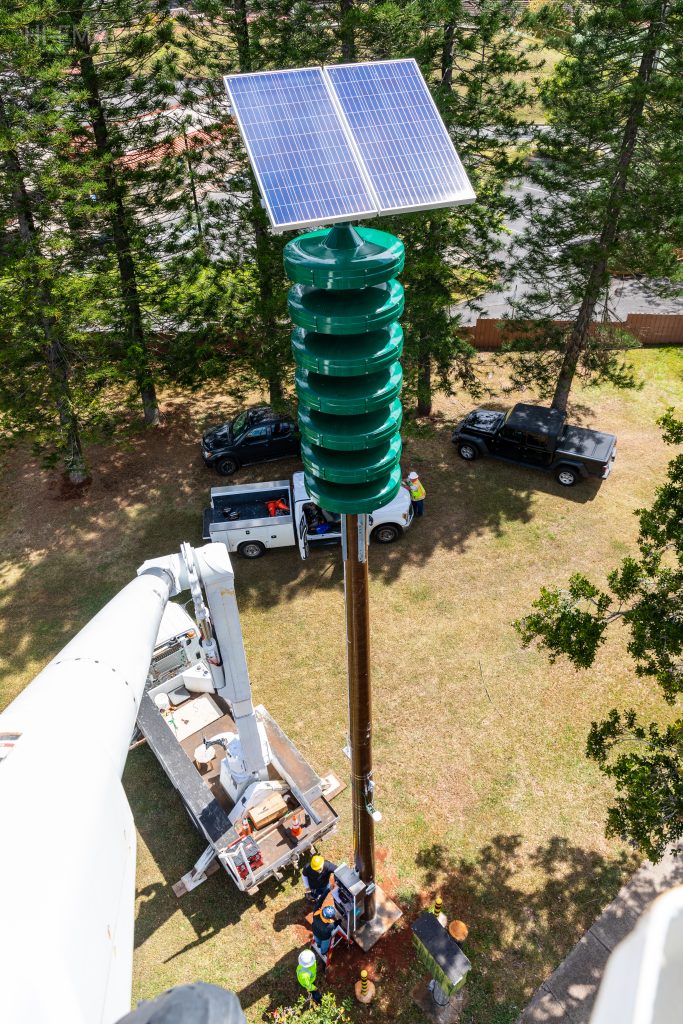
The all-hazards siren system can be used for a variety of natural disasters and human-caused events, including tsunamis, hurricanes, dam breaches, flooding, wildfires, volcanic eruptions, terrorist threats or hazardous material incidents.
All sirens are tested statewide on the first business day of the month at approximately 11:45 a.m. If you hear a siren outside of a scheduled test, check your radio, television or cell phone for emergency information and instructions by official authorities.
To report a malfunctioning siren, contact your county emergency management agency listed here.
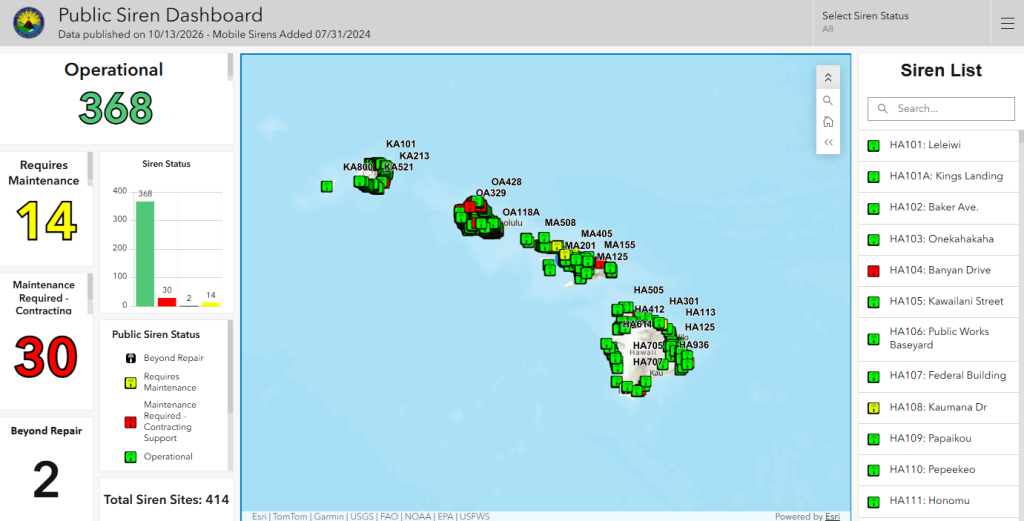
Click the map image above to access the public siren dashboard.
Watch to learn more about the Hawaiʻi’s all-hazards siren system:
Siren System Facts:
- Hawaiʻi has the largest single integrated outdoor siren warning system for public safety in the world.
- The all-hazard siren system can be used for a variety of natural disasters and human-caused events, including tsunamis, hurricanes, dam breaches, flooding, wildfires, volcanic eruptions, terrorist threats or hazardous material incidents.
- The sirens output is 121 decibels and propagate with a manufacture radius of 3,400 feet. This range may vary due to environmental and surrounding physical conditions. The sirens are battery-powered and use a photovoltaic charging system.
- The sirens are one part of the larger Hawaiʻi Statewide Alert and Warning System (SAWS) which includes FEMA’s Integrated Public Alert & Warning System (IPAWS) that uses both the Emergency Alert System (EAS) and Wireless Emergency Alerts (WEA) to alert the public.
- The sirens, along with the EAS, are tested on the first business day of each month in collaboration with county emergency management agencies and local radio and television broadcast partners.
- If you hear a siren outside of a scheduled test, check your radio, television or cell phone for emergency information and instructions by official authorities.