Do you need help in another language? We will get you a free interpreter. Call 808-369-3580 to tell us which language you speak.
您需要其它語言嗎?如有需要,請致電 (808-369-3478), 我們會提供免費翻譯服務
您需要其它语言吗?如有需要,请致电 (808-369-3478), 我们会提供免费翻译服务
En mi niit alilis lon pwal eu kapas? Sipwe angei emon chon chiaku ngonuk ese kamo. Kokori (808-369-3478) omw kopwe ureni kich meni kapas ka ani.
Makemake `oe i kokua i pili kekahi `olelo o na `aina `e? Makemake la maua i ki`i `oe mea unuhi manuahi. E kelepona (808-369-3478)`oe ia la kaua a e ha`ina `oe ia la maua mea `olelo o na `aina `e.
Masapulyo kadi ti tulong iti sabali a pagsasao? Ikkandakayo iti libre nga paraipatarus. Awaganyo ti
(808-369-3478) tapno ibagayo kadakami no ania ti pagsasao nga ar-aramatenyo.
다른언어로 도움이 필요하십니까? 저희가 무료로 통역을 제공합니다. (808-369-3478)로 전화해서 사용하는 언어를 알려주십시요
Kwoj aikuij ke jiban kin juon bar kajin? Kim naj lewaj juon am dri ukok eo ejjelok wonen. Kirtok
(808-369-3478) im kwalok non kim kajin ta eo kwo melele im kenono kake.
E te mana'o mia se fesosoani i se isi gagana? Matou te fesosoani e ave atu fua se faaliliu upu mo oe. Vili mai i le numera lea (808-369-3478) pea e mana'o mia se fesosoani mo se faaliliu upu.
¿Necesita ayuda en otro idioma? Nosotros le ayudaremos a conseguir un intérprete gratuito. Llame al (808-369-3478) y diganos que idioma habla.
Kailangan ba ninyo ng tulong sa ibang lengguwahe? Ikukuha namin kayo ng libreng tagasalin. Tumawag sa (808-369-3478) para sabihin kung anong lengguwahe ang nais ninyong gamitin.
‘Okú ke fie maʻu tokoni ʻi ha lea fakafonua ʻe taha? Temau kumi haʻo taha fakatonulea taʻetotongi. Telefoni ki he (808-369-3478) ke fakahā mai ʻa e lea fakafonua ʻokú ke lea aí.
Bạn có cần giúp đỡ bằng ngôn ngữ khác không ? Chúng tôi se yêu cầu một người thông dịch viên miễn phí cho bạn. Gọi (808-369-3478)nói cho chúng tôi biết bạn dùng ngôn ngữ nào
Gakinahanglan ka ba ug tabang sa imong pinulongan? Amo kang mahatagan ug libre nga maghuhubad. Tawag sa (808-369-3478) aron magpahibalo kung unsa ang imong sinulti-han.
Science and Technology Academies Reinforcing Basic Aviation and Space Exploration
The Department of Defense Science and Technology Academies Reinforcing Basic Aviation and Space Exploration (STARBASE) Program traces its roots to Michigan, where it began in 1991 as Project STARS. Initially developed to inspire and educate youth in the fourth, fifth and sixth grades the program introduced students to engaging, hands-on activities in science, technology and mathematics (STEM). Guardsmen played a key role in demonstrating the use of STEM in their daily work, while serving as mentors and role models for the students.
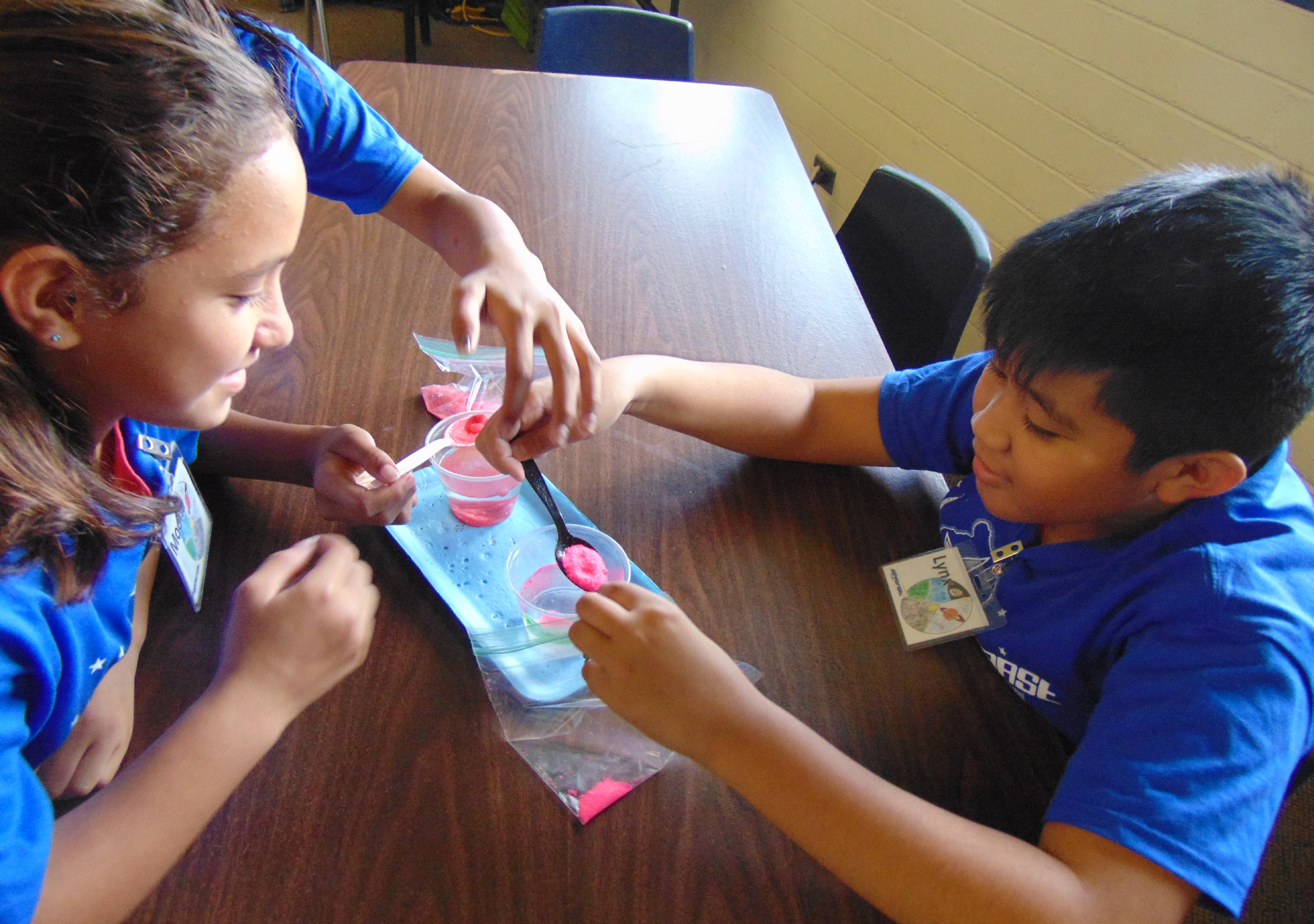
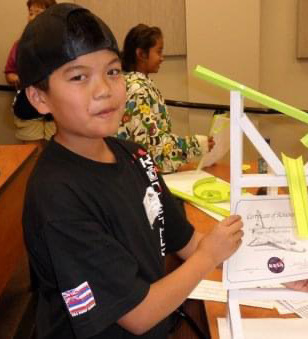
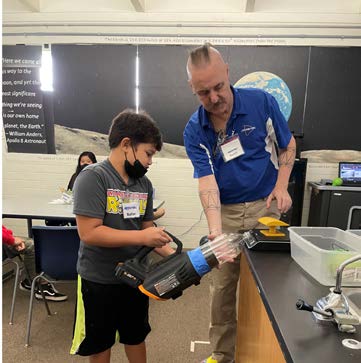
STARBASE Showcase, Pāhoa, HI. 5th grade students from Pāhoa Elementary explore fluid mechanics with a marshmallow and a bell jar at STARBASE. (Photo by: Kelly McVinnie) (Picture from the 2019 Annual Report)
Building on its early success, the program gained national attention and in Fiscal Year 1993, Congress appropriated funds to formally establish the DOD STARBASE Program and launched pilot sites in seven states. Over the years, STARBASE expanded with locations across the U.S., making STEM education accessible to students nationwide.
STARBASE Hawaiʻi was first established in September 2008, operating out of the Kea’au Armory on Hawai‘i Island. STARBASE Hawaiʻi serves over 700 students annually, primarily focusing on fifth graders supporting a variety of public, private, and charter schools.
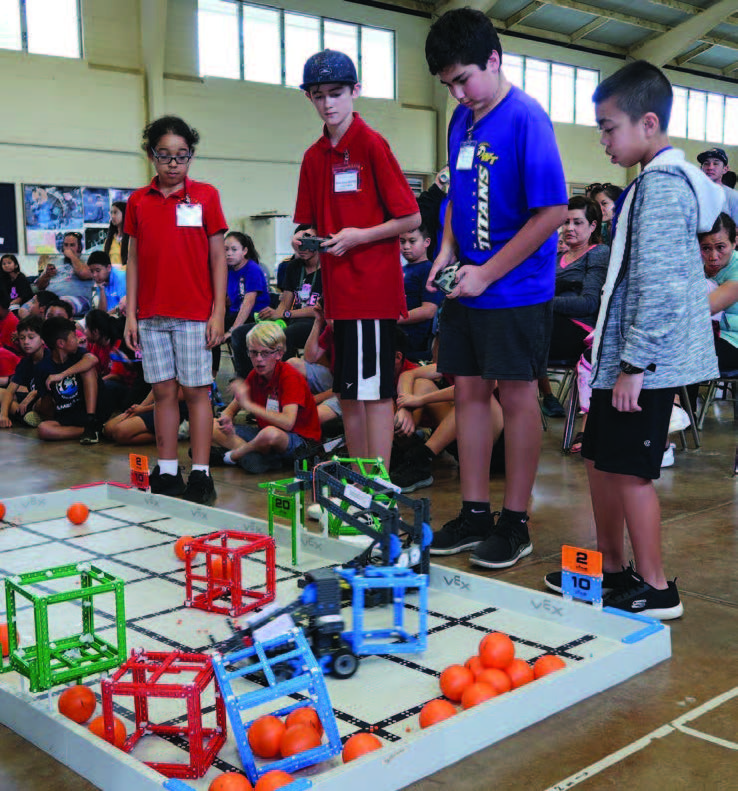
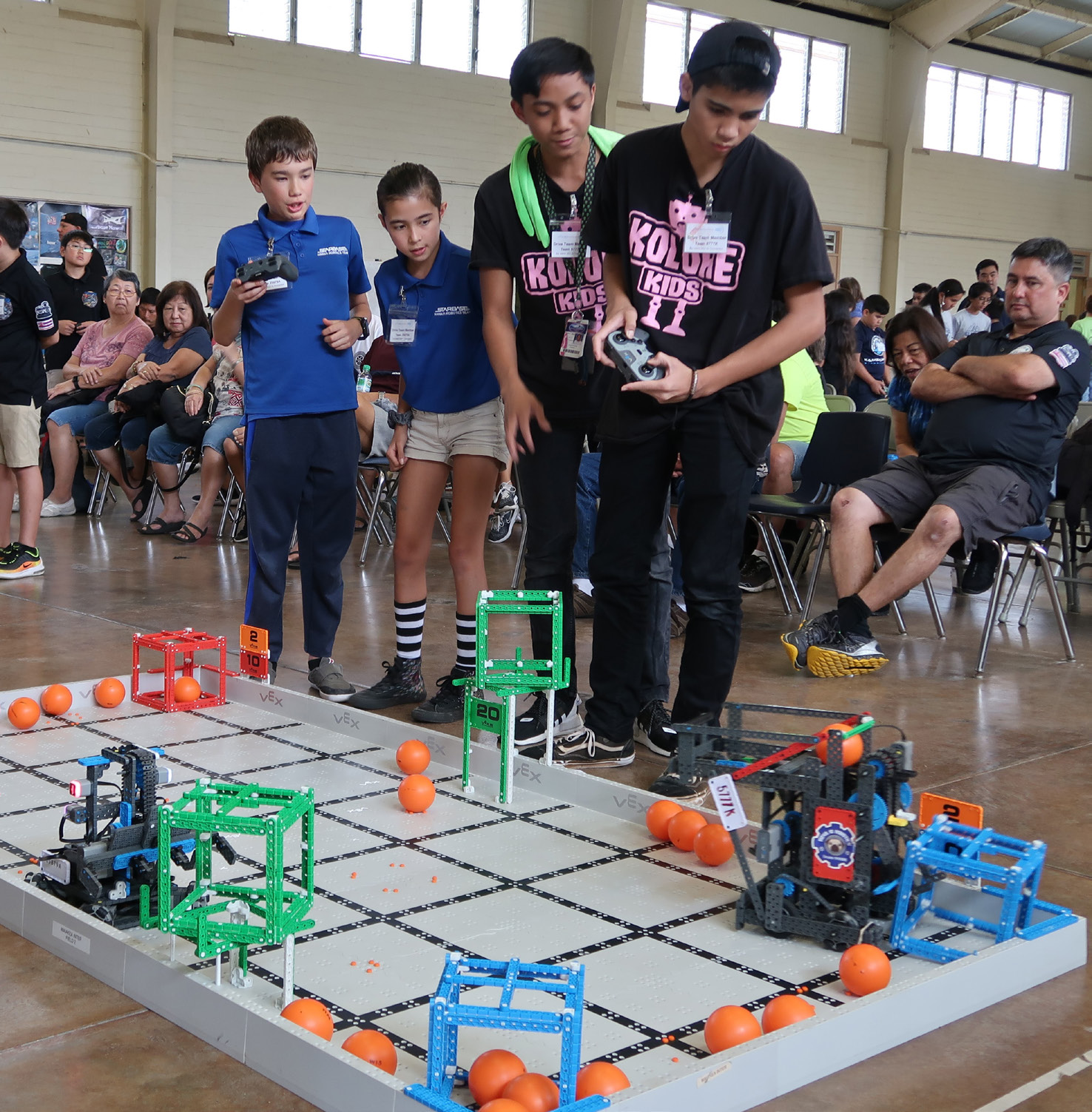
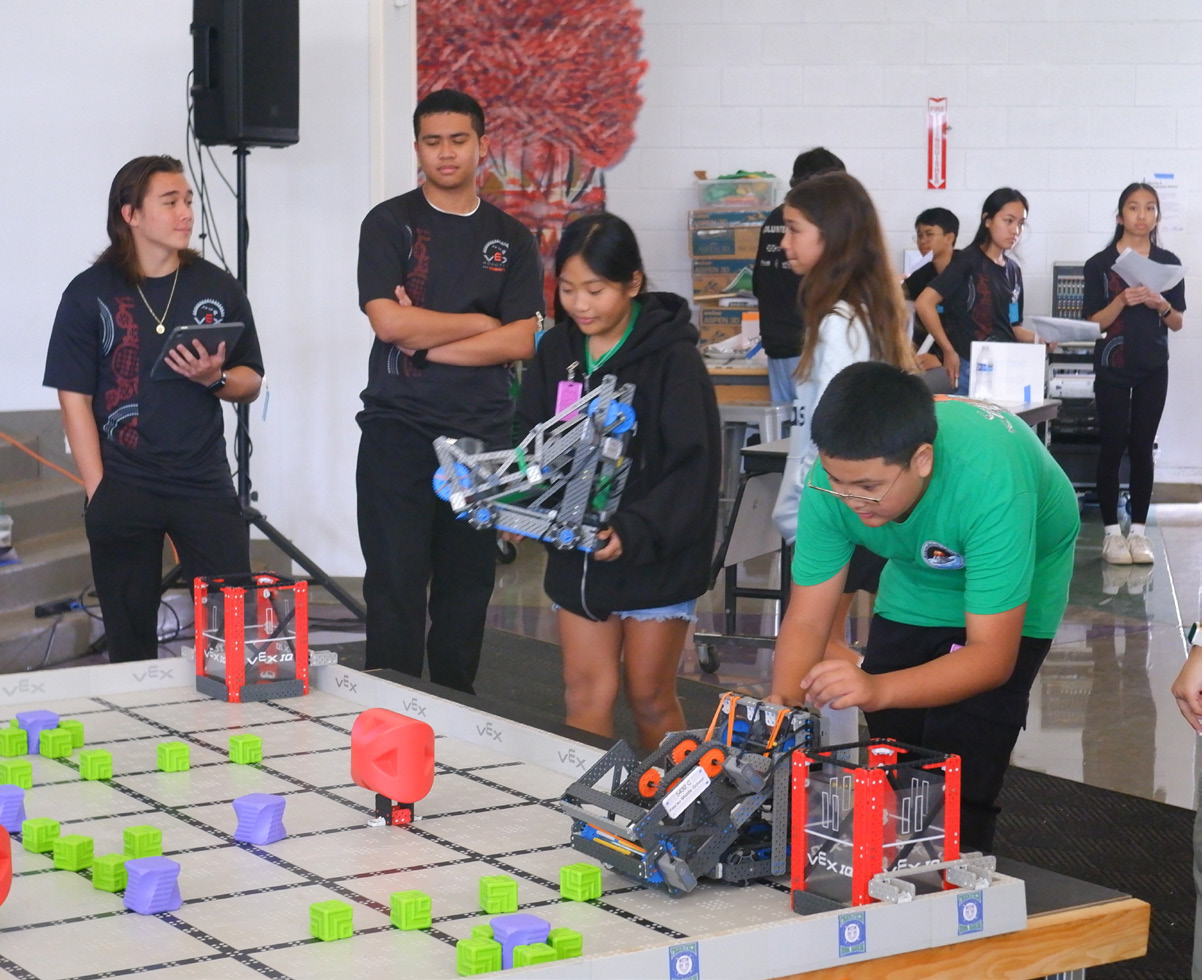
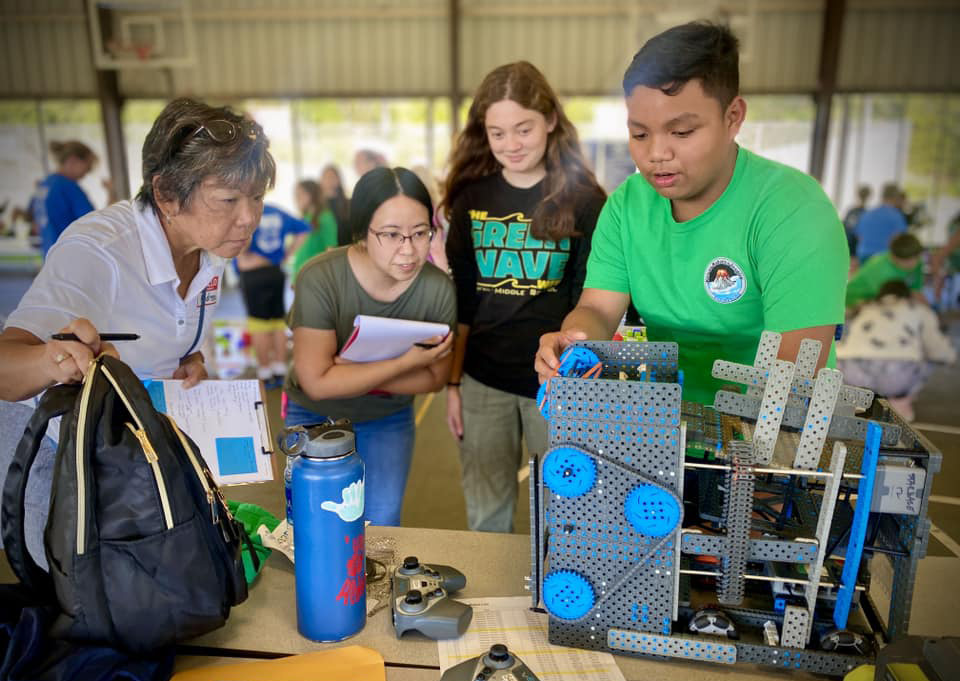
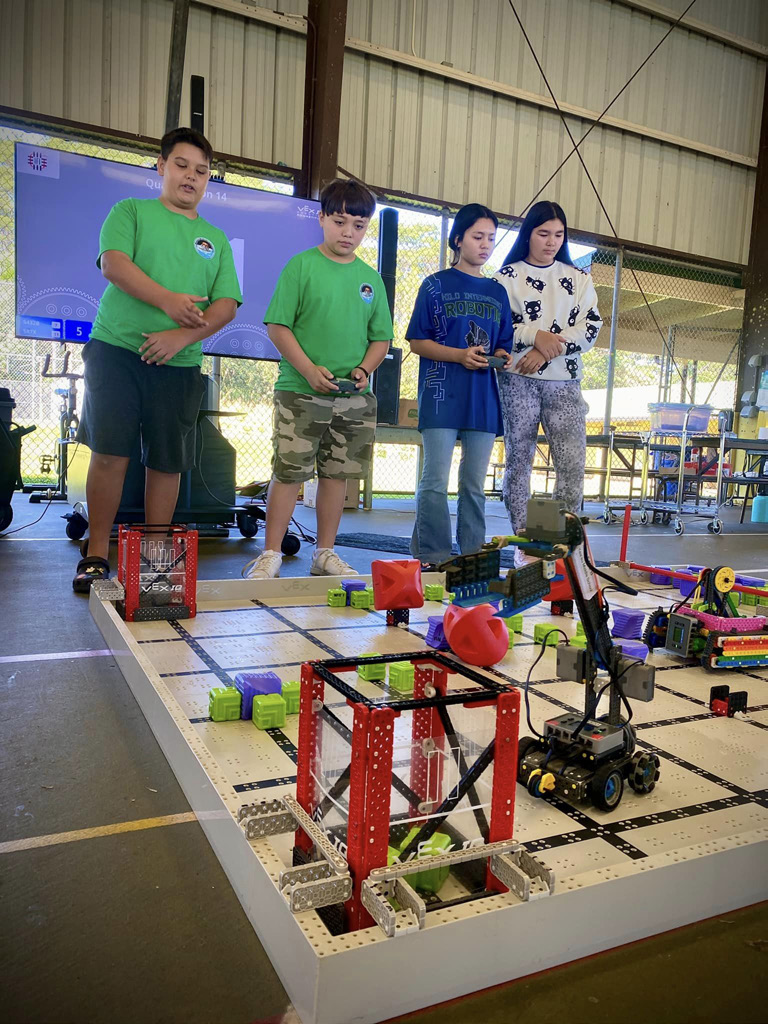
In 2016, STARBASE Hawaiʻi partnered with the Volcano School of Arts and Sciences to offer an after-school robotics program for teams competing in the TMT Kea’au-Puna-Ka‘u VEX IQ League where students designed, built and tested robots for various driver-controlled and autonomous challenges.
In recent years, STARBASE Hawai‘i has expanded beyond its Level I (fifth grade) program, aspiring toward Level II and III accreditation to introduce robotics and intermediate/high school curricula.
During the COVID-19 pandemic, STARBASE Hawaiʻi partnered with Keaʻau Middle School to host robotics practices at the Keaʻau Armory since after-school programs were canceled. This collaboration with Keaʻau Elementary and Middle School led to the formation of the STARBASE-Keaʻau VEX IQ Robotics Program and in 2022, the STARBASE team became certified VEX IQ Robotics coaches.
In 2023, STARBASE Hawaiʻi expanded its classroom into a fully equipped Robotics Lab to host team practices. The STARBASE-Keaʻau Robotics Team qualified for and competed in the VEX IQ Hawaiʻi State Championship in 2022, 2023, 2024, and 2025, achieving a 5th place finish in 2025.
Community outreach has become a hallmark of STARBASE Hawai‘i. It has engaged thousands of students and families through events like Science and Math Nights at local schools, Keiki Summer Fun camps, Astro Day at Prince Kuhio Plaza and television features like the Na Leo Hawai‘i TV “Island Science” program. As of August 2025, STARBASE Hawaiʻi has inspired, motivated and empowered the students of East Hawaiʻi, having served over 10,000 students.
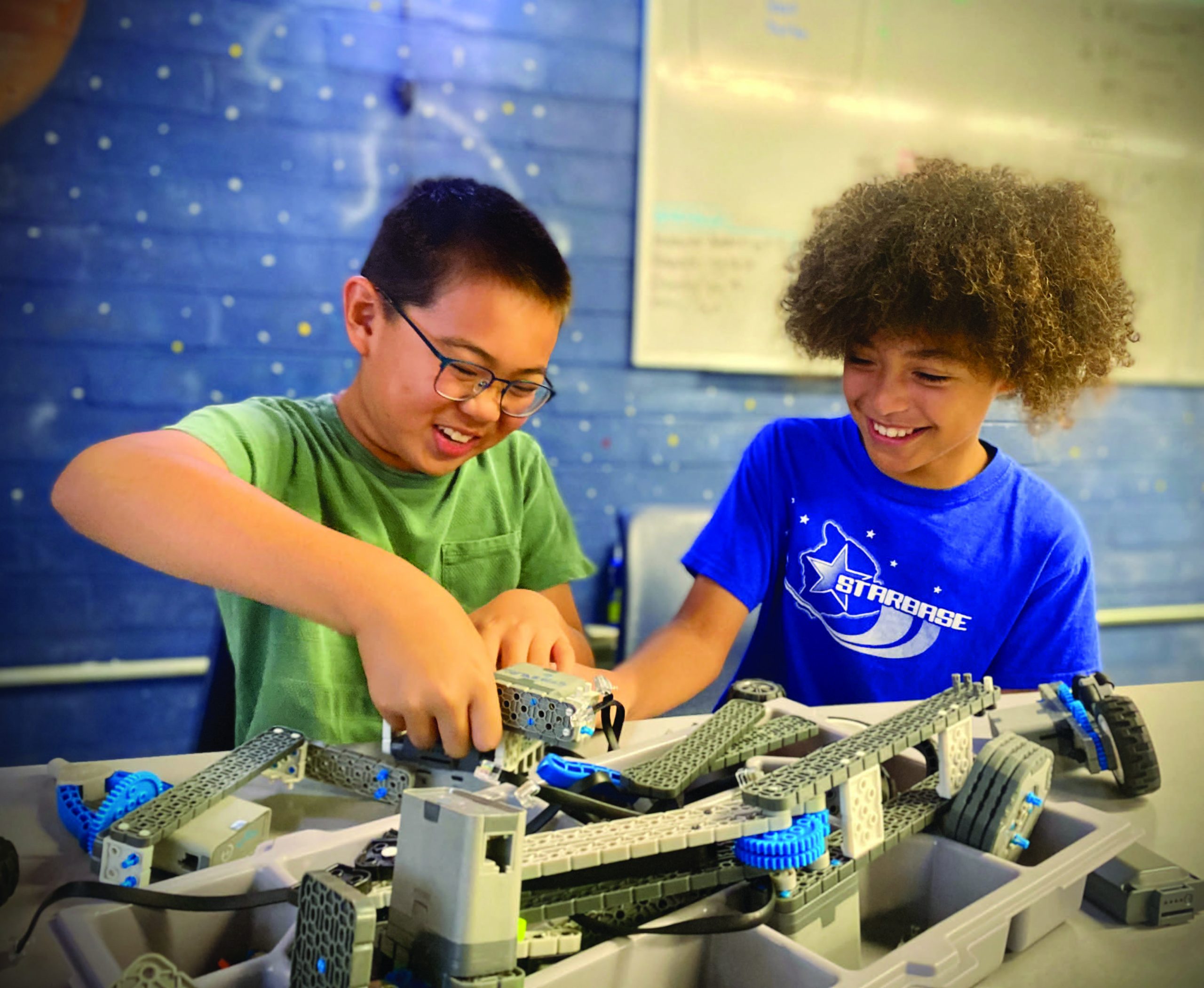
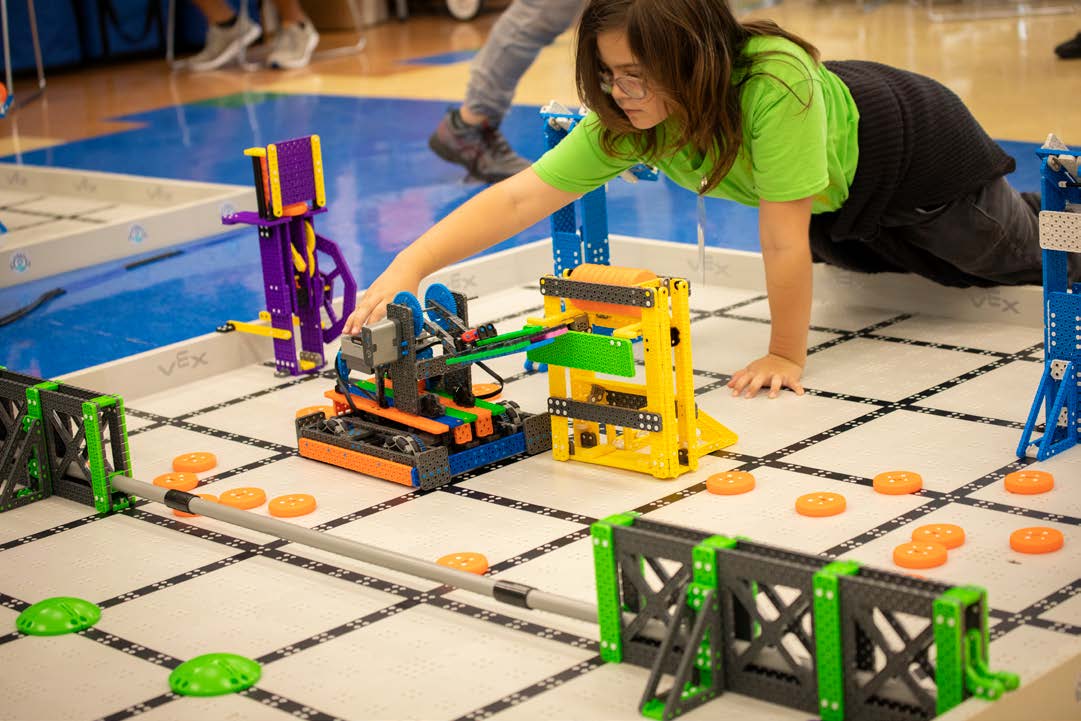
Students participate in the STARBASE Summer Robotics Workshop, a weeklong robotics intensive program where students design, build and program their robots to tackle a variety of challenges. – Ken Smith photo(Picture from the 2024 Annual Report)
Over the years, STARBASE Hawaiʻi has grown into a cornerstone of STEM education and fostered a strong sense of community and curiosity. As it looks to the future, STARBASE Hawaiʻi remains dedicated to expanding opportunities, nurturing young minds and building the next generation of scientists, engineers and leaders.
Science and Technology Academies Reinforcing Basic Aviation and Space Exploration Chronological History
STARBASE Showcase, Pāhoa, HI. 5th grade students from Pāhoa Elementary examine hydrophilic and hydrophobic properties at STARBASE (Photo by: Kelly McVinnie) (Picture from the 2019 Annual Report)
STARBASE: Motivate students to explore Science, Technology, Engineering, and Math (STEM), as they continue their education. . .
Highlights
STARBASE
660 fifth grade students from 11 schools completed the five day STARBASE program between July 1, 2018 and June. 30, 2019
Held two flight simulation. workshops for Onizuka Science Day in FY19. There was a total of 28 students ranging from 1st grade to high school and many adults who attended.
‘Imiloa Family Day 2019; an all day flight simulation workshop was held. There were over 300 people in attendance, ranging from kindergartners to adults.
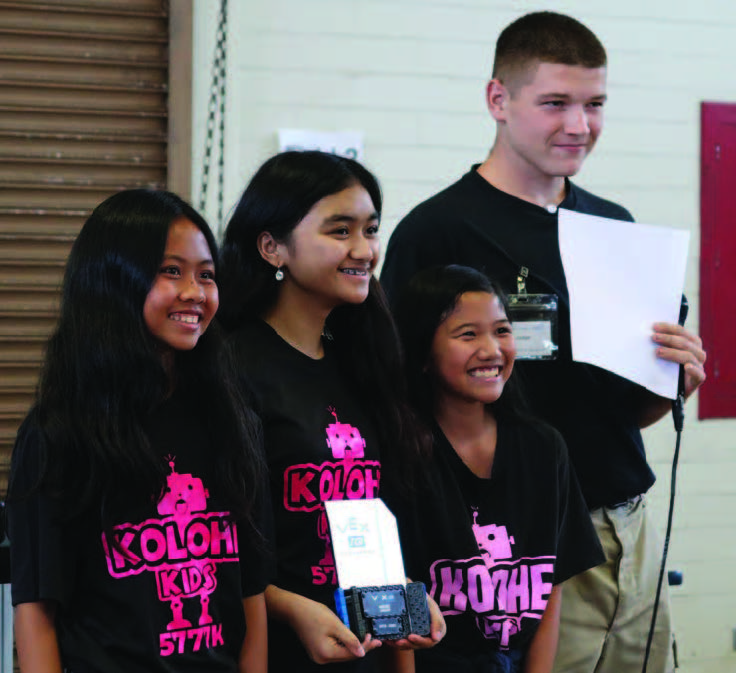
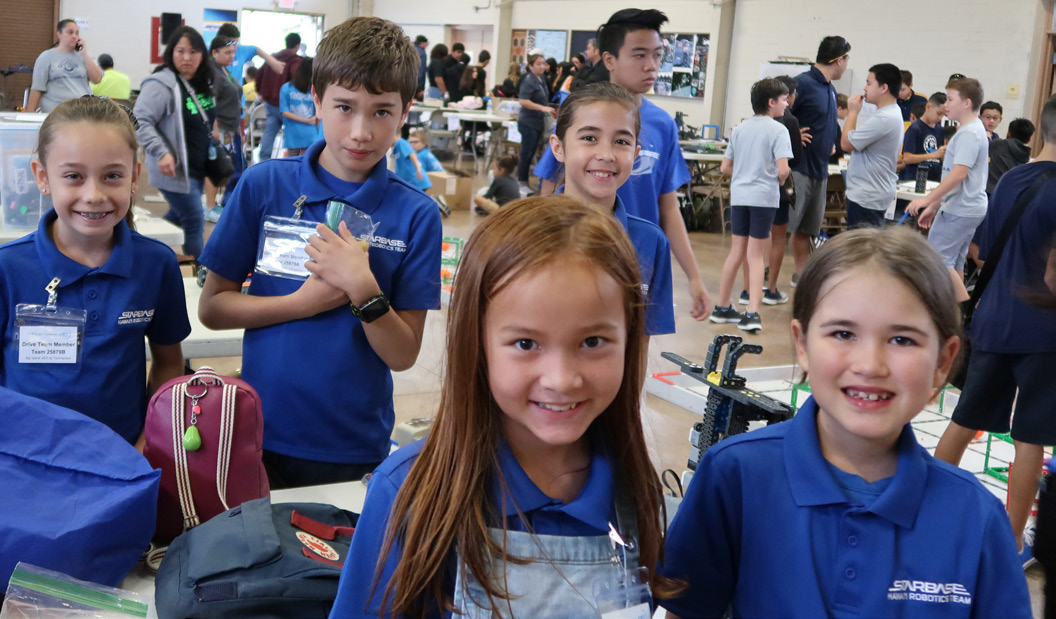
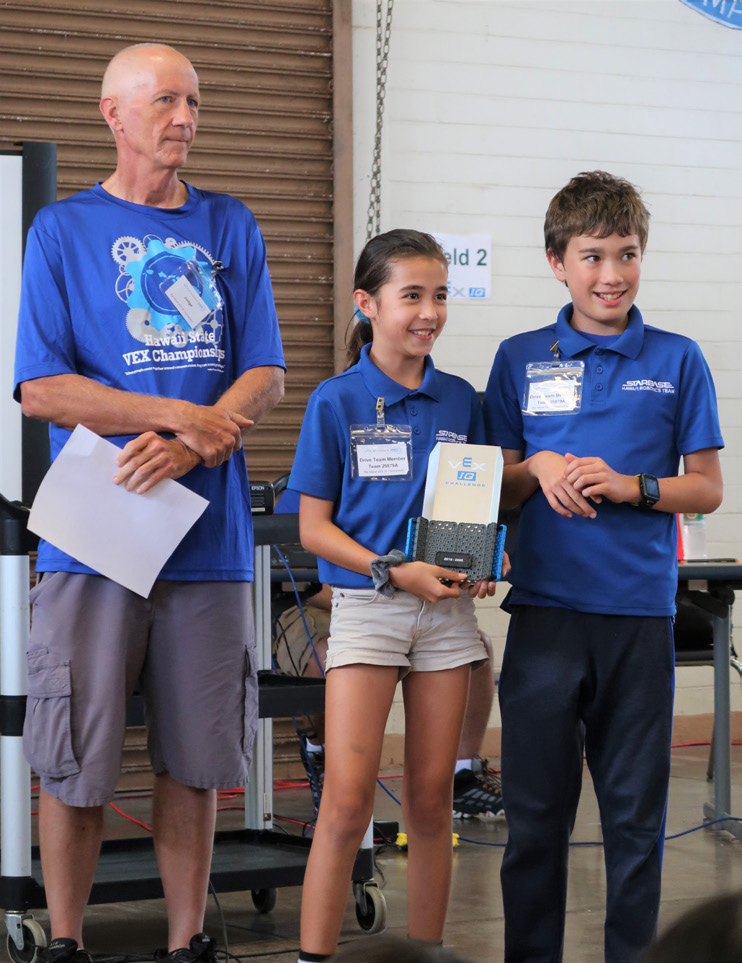
VEX Robotics Competition – State Finals, Hilo HI. A tournament was held at the Kea‘au Armory, home of STARBASE Hawai‘i. Roughly 40 teams and 120 elementary and middle school students from across the State of Hawai‘i competed. (Photo by: Kelly McVinnie)VEX Robotics Competition – State Finals, Hilo, HI. YCA Hilo, a sister organization to STARBASE Hawai‘i, provided graduates to help with the VEX Robotics Competition State Finals on Feb. 1, 2020. Graduate Kai Metcalf, far right, served as a judge and prize presenter. (Photo by: Diana Kelley)(Pictures from the 2020 Annual Report)STARBASE Hawaii’s middle school team (Henry Shiro and Cahara Stecher) competes in the Big Island VEX IQ Tournament on February 1, 2020.STARBASE Hawaii’s elementary and middle school teams are ready for the Big Island VEX IQ Tournament on February 1, 2020.Hawaii STARBASE middle school team (Henry Shiro and Cahara Stecher) receive a STEM Research Project Award (VIQC) at the Big Island VEX IQ Tournament on February 1, 2020. This award recognizes the team with the most effective STEM presentation video.(Pictures from the 2020 Spring Pupukahi)
2021 As a child, Ioane Burns II discovered his passion for STEM through the STARBASE Hawaii program, where hands-on activities like rocket building and flight simulation sparked his curiosity. Inspired by this early experience, Burns pursued mechanical engineering and aviation, earning a private pilot’s license while studying at the University of Hawaii at Manoa. He credits STARBASE with shaping his path and encourages others to join the program for its unique ability to expand horizons and build critical thinking skills.
Learn more
Former STARBASE Hawaii Student Turned STEM Major
State of Hawaii, Department of Defense, Public Affairs Office Story by Krystal Kawabata, Hawaii State DOD
If you talk to many successful professionals, a number of them will tell you they had a pivotal moment in their lives that put them on the path to their future careers. For Ioane Burns II, that moment came when he was just nine years old at STARBASE Hawaii.
“I’ve always appreciated my time at STARBASE, but it wasn’t until recently that I’ve realized how much of an impact it made on my life,” said Burns.
STARBASE is a nationally recognized program that focuses on making core subjects; science, technology, engineering, and math (STEM), fun and understandable for elementary-age students.
Burns first got involved with STARBASE when he briefly moved from North Kohala to Oahu. In 2007, when he was in the 5th grade, his class at Hickam Elementary school participated in the STARBASE program on Ford Island. While he had to move back to Hawaii Island nearly a year later, his enthusiasm for the program never waned and he continued on with the STARBASE program at the Keeau Armory during the summer months.
“There were a lot of awesome things I got to do at STARBASE,” said Burns. “At Ford Island, we learned about how submarine crews deal with casualties such as flooding or fire. We learned different scientific laws and principles. We even got to build and launch model rockets! At Keaau, we built soda bottle rockets, got introduced to CAD (Computer Aided Design), and my favorite part; got to fly with the Microsoft flight simulator!”
While STARBASE introduced him to a host of activities, Burns says he always had an interest in the STEM field.
“I remember going to the magazine aisle in Borders or KTA Super Stores and finding the newest Popular Mechanics issue. As a kid I would take things apart, figure out how they worked, and tried to put them back together. I also loved inventing, and my material of choice was cardboard.”
Burns adds his favorite inventions included a slot machine and an actual working vending machine, though he jokes that the latter wasn’t quite as profitable as he hoped because he was the only one using it.
After Burns left STARBASE, he continued to take STEM related courses such as CAD and even got into robotics in high school.
His parents saw his talents and encouraged him to pursue his passions long-term.
“I asked my family what kind of profession got to invent and fix things, and they told me that I could be a mechanical engineer. That ended up being my response to every time someone asked me ‘what do you want to be when you grow up?”
But a man of many talents, Burns also said he was interested in aviation.
“I had a large graphic encyclopedia of all the modern aircraft used by the US military and had every one of them memorized,” said Burns. “It even became a party trick for my friends and family!”
Now, he’s pursuing both.
After graduating high school at Kamehameha and heading off to college in 2015, Burns has begun working on his mechanical engineering degree at the University of Hawaii at Manoa and is hoping to finish with an aerospace certificate. He also began flight school in 2020 and received his private pilot’s license in August.
He eventually hopes to begin a career with a commercial airline and once he finishes his bachelor’s degree, is thinking about joining the Hawaii Air National Guard.
“I will definitely need to start working out though since it’s been a while since Kamehameha P.E.,” laughs Burns. “But I know I can do it, so I’ve made it a resolution for 2021!”
And STARBASE Hawaii Director, Diana Kelley, knows he can do it too.
“It reinforced for the team that what we do really matters, and that we never really know who will be deeply inspired or see STARBASE change their lives,” said Kelley.
Burns encourages anyone who may be thinking of joining, or enrolling their own kids into STARBASE, to apply.
“Go for it! Always be open to expanding your horizons … The classes are interesting, and the activities are fun! You may not end up pursuing a career in science or engineering, but just by having had the exposure to it will help broaden your understanding of the world and create critical thinking skills in ways that not many other programs can. That’s something that will stick with you for life.”
2022 STARBASE Hawai‘i is a hands-on STEM program on the Big Island that engages 5th graders through exciting experiments like rocket launches and water filtration to spark interest in science and math. Led by an energetic team, the program partners with schools and homeschoolers, helping students build teamwork, problem-solving, and critical thinking skills. STARBASE Hawai‘i also supports local robotics teams and welcomes volunteers, speakers, and donations to continue inspiring young minds.
Learn more
STARBASE Hawai’i
Story by Heather M.C. Leite, STARBASE-HI Deputy Director Instructor | December 12, 2022
Have you ever watched, “Are You Smarter Than a Fifth Grader?” and wondered “How do they know this stuff?” Then wondered if you’d be able to keep up with the bright young minds of today? Welcome to the weekly…sometimes daily…life of the staff at STARBASE-Hawai’i (HI). You maybe be asking who and what exactly is STARBASE-HI.
Located in Kea’au on the Big Island, we are a youth Science, Technology, Engineering, and Mathematics (STEM) program funded by the Department of Defense (DoD) and sponsored through the National Guard Bureau (NGB). Our mission is to advance the knowledge and exposer of our youth to STEM concepts, opportunities and careers. In partnership with local elementary schools, we provide an exciting, hands-on learning experience to help build not only STEM knowledge but improve teamwork, decision making, problem solving and more.
The dynamic and energetic staff is led by Director Ken “Floater” Smith and includes Ms. Alyssa “Ally Kat” Clark, Mr. Joel “Hekili” Kelley and Heather “Demo” Leite. The success of STARBASE-HI is due to the ability of the staff to create an “out-of-the-box” learning environment which keeps the students engaged and able to absorb the concepts of STEM. Can you say science and math was your favorite subjects at school? Maybe not and not all the students walk in excited to learn these topics but by the end of the week; STARBASE-HI students are usually sad to leave.
STARBASE academics are open to any school (public or private), alternative educational providers, or individual or group home-schooling families. A typical instruction week includes classroom instruction leading to experiments where students apply what they have learned. The flight and sometimes crash of “Eggbert”, water filtration of the Floater Stink Sludge (a.k.a. doodoo water) and the end-ofweek launch of student-built rockets 100-110 feet into the air powered only by water are only a few of the exciting events. Yes, we have cool jobs!
STARBASE-HI is currently a Level I Operating location which focuses on 5th grade students and working towards Level II and III accreditation, allowing the staff to engage in advanced studies such as robotics as well as intermediate and high schools. In the meantime, we are coaches and advisors to Kea’au elementary and intermediate robotics teams who have experienced much success at local, state and national-level events.
How can you help STARBASE-HI? We are always looking for volunteers, STEM career speakers, or advocates of our program. We also take donations of 16-20 oz. plastic soda bottles or firm (i.e. menehune) water bottles to create our rockets. Give us a call and we can arrange to pick them up, you can stop by our office (16-512 Volcano Hwy, Old Armory) or drop in collection cans at the KMR PX or 291st Combat Communications Squadron. On Oahu but want to visit or donate? Give us a call at (808) 982-4298. We hope to see you and maybe do an experiment with us!
2023 STARBASE Hawai‘i introduces fifth graders, especially from underrepresented and disadvantaged backgrounds, to STEM through engaging, hands-on programs that build critical thinking and problem-solving skills. The program also fosters community involvement by collaborating with local schools, hosting family events like Science Night, and coaching robotics teams to inspire students and broaden access to STEM. With a focus on inclusion and mentorship, STARBASE aims to boost Native Hawaiian and Pacific Islander participation in STEM fields and prepare keiki for future educational and career opportunities.
Learn more
STARBASE Hawai‘i: Launching into the Future with STEM
As our world rapidly expands into a technology-based and digitally connected atmosphere, there is a growing need for STEM (science, technology, engineering, and math) professionals, which is expected to continue to rise. Introducing STEM concepts in keiki education is an important step for building a foundation of understanding for the world they’ll be working in as adults.
“Whatever you’re into, STEM is going to be involved in some way,” says Kenneth Smith, director of the STARBASE program on Hawai‘i Island. “STEM effects everything in life already, so we try to find a way to relate that to the individual student.”
The STARBASE program is a federally funded Department of Defense initiative that serves primarily fifth grade students in setting and achieving STEM goals during a 25-hour curriculum, which is offered to most schools, or can be taken at no cost during summer programs. Apart from offering critical thinking skills in STEM fields, STARBASE seeks to serve students who are socioeconomically disadvantaged, historically underrepresented, or live in rural or inner-city areas (DoD STARBASE, 2020).
Located in Kea‘au, STARBASE Hawai‘i furthers state-wide initiatives for economic resilience by supporting youth education in STEM-related fields (Office of Planning, State of Hawai‘i, 2016). Though the program provides their services through the Hawai‘i National Guard’s Kea‘au Armory, STARBASE Hawai‘i seeks to serve as many Hawai‘i county communities as possible, welcoming students from around the island. The program has a computer lab equipped for 35 students, a robotics field, and four exceptionally dedicated staff members.
When Kea‘au Middle School lost their long-time robotics coach last August, employees from STARBASE stepped into volunteer as coaches to help keep the program afloat and continue the legacy of the former coach who started the program 14 years ago.
“I grew up fortunate with doing a lot of after-school programs, but the network of friends I met and how my character grew through that meant so much to me,” Smith says. “I can see that with the kids here and thought ‘this is what we’re supposed to do! This is what STARBASE is all about, connecting people and getting them excited about STEM.’”
During robotics coaching the STARBASE volunteers combined elementary school teams with middle school teams, practicing together in the same space at the same time. This allows younger children to observe what older, more experienced students are attempting and creates a trickledown mentorship among all the students.
STEM education becomes more important as students move through their primary education, setting the stage for more diverse opportunities when it comes to college or a professional career. According to the U.S. Bureau of Labor Statistics, STEM occupations are expected to grow 10.8 percent between 2021 and 2031, compared to a total occupation growth of 5.3 percent for employment in the U.S. STEM occupation salaries were, on average, nearly twice the median annual wage for all other occupations in 2021. This is an important pathway for economic equity in Hawai‘i, whose cost-of-living standards have forced many Native Hawaiian and Pacific Islander (NHPI) individuals to move out of state.
In an article from The Review of Higher Education by John Hopkins University press, two researchers cite that less than ten percent of Native Hawaiian students choose STEM fields for study. This can lead to chronic underrepresentation of indigenous cultural knowledge, practice, and contribution in STEM fields for NHPI. Programs like STARBASE, which aims to serve underrepresented groups in all aspects of STEM at an early age, assists keiki whose “experiences echo those of their parents beginning with achievement disparities starting at very young ages and persisting through postsecondary education” (Cintina & Kanaiaupuni, 2019). NHPI children are the second highest category of students served during the current STARBASE cycle.
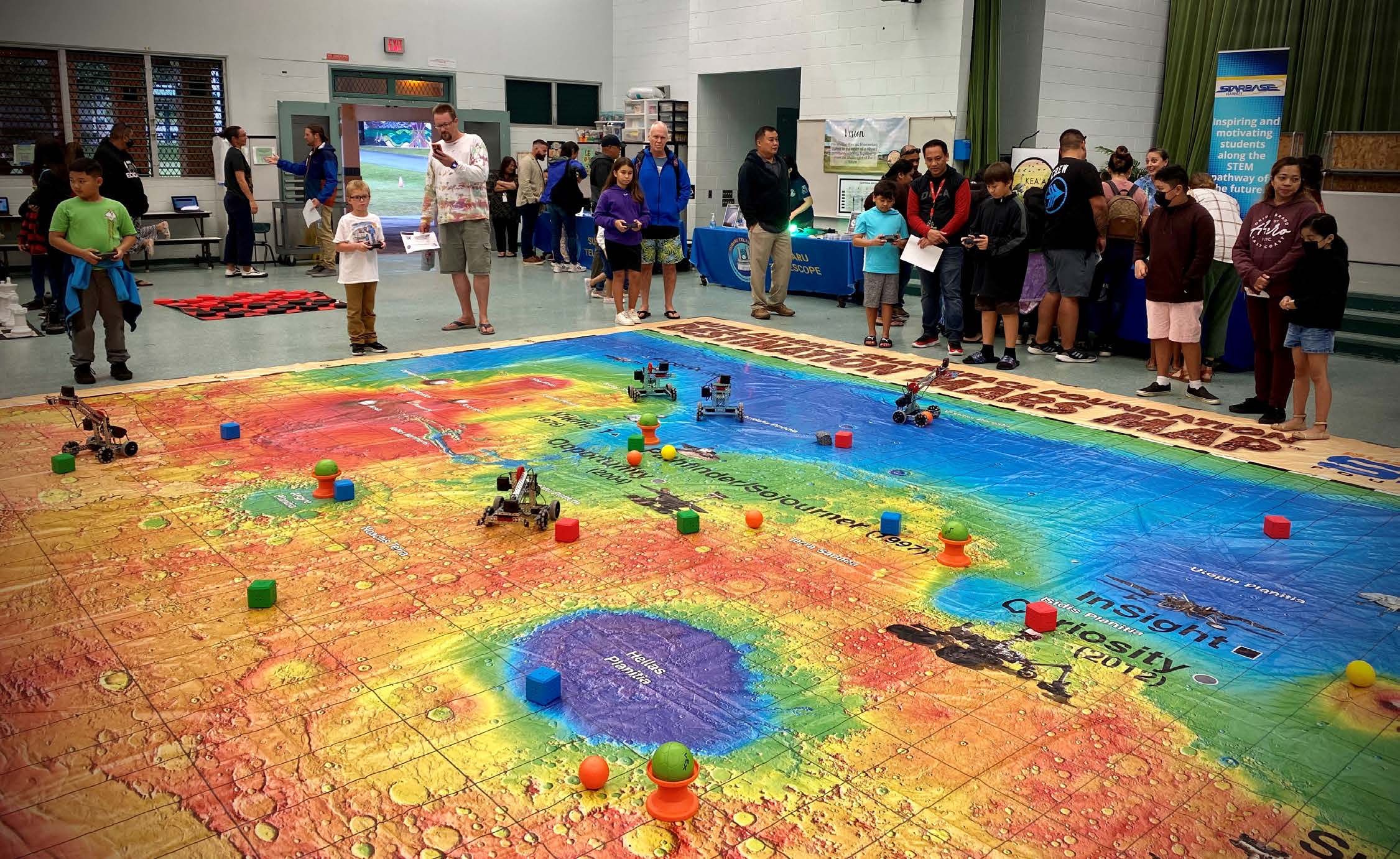
STARBASE also ensures that the local community and family members are included in their program’s efforts. The Hawai‘i Museum of Science and Technology hosts a monthly “Science Night” once per month at rotating elementary schools. In January, more than 400 Kea‘au Elementary students and family members attended, driving eight of STARBASE’s VEX EXP Clawbots around a map of Mars, donated to the museum by the Buzz Aldrin Foundation.
The emphasis on efforts to include family and community members in a keiki’s education diverts from the typical Western method of self-sufficiency, and instead embraces interdependency, which has long been a trait of Pacific cultures (Baker, et al., 2021). When it comes to Family Engagement Planning, “expanding the reach of engagement to include families and communities, policies and practice meet the full diversity of all involved” (Baker, et al., 2021), and creates an environment where success in more challenging careers, like those in STEM fields, could be easier to achieve than in past generations.
“The big thing is community involvement. We’ve got these resources here, and we want to share them with as many people as we can and get them excited about it,” says Smith. The STARBASE director also says that he hopes the program can reduce some of the stigma around STEM and showcase all the different aspects. “If you’re not into math, maybe it’s physics. Maybe it’s chemistry. Maybe it’s computer-aided design. That’s the new language of building; we have a whole curriculum based on computer-aided design, where kids are actually building stuff.”
Smith is looking forward to welcoming new students through its school program and summer courses. “We’re here to serve,” he says. “We’re here to work with the community and grow. If there are other programs out there, we want to be part of it. If people want to come and talk to the students, we want to hear from you guys. We’d love to hear how you can help serve the community with us.”
Baker, J. B., Keahiolalo, R., Keahi‐Wood, K., Cogbill, J. T., Naeole, C., & Turner, H. (2021). Developing a family engagement plan for Native Hawaiian and Pacific Islander STEM students in higher education: A review and critique of the literature. Asia Pacific Viewpoint, 62(1), 86–99. https://doi.org/10.1111/apv.12288
Cintina, I., & Kanaiaupuni, S. M. (2019). Finishing Strong: GPA and Timely College Graduation Outcomes among Native Hawaiian STEM Majors. The Review of Higher Education, 42(4), 1459–1487. https://doi.org/10.1353/rhe.2019.0072
DoD Starbase. (2020, March 23). DoD Starbase | Department of Defense Youth Programs. https://dodstarbase.org/
15 FEB2024 The Hawai‘i STARBASE program sent four teams to compete in the 2024 VEX Robotics State Championship, where they tackled engineering challenges involving robot design, skills tests, and collaborative rounds. The competition required teams to build robots capable of gathering, sorting, and depositing colored blocks while adapting quickly to breakdowns and repairs. Guided by STARBASE coaches, all four teams performed impressively, finishing in the top twenty of the statewide contest.
Learn more
Hawai‘i STARBASE program fields four teams at VEX state championship
Hawai‘i STARBASE program fields four teams at VEX state championshipHawai‘i STARBASE program fields four teams at VEX state championshipHawai‘i STARBASE program fields four teams at VEX state championship(Pictures from the 2024 Winter Pūpūkahi)
The Hawai‘i Island Science and Technology Academies Reinforcing Basic Aviation and Space Exploration (STARBASE) program fielded four teams at the state championship tournament on Presidents Day Feb. 15, 2024.
The four teams were part of a twelve team contingent from Hawai‘i Island, a large sample out of the twenty seven teams who competed in the state level competition. The VEX Robotics Competition, presented by the Robotics Education & Competition Foundation, is the largest and fastest growing middle school and high school robotics program globally with more than 20,000 teams from 50 countries playing in over 1,700 competitions worldwide.
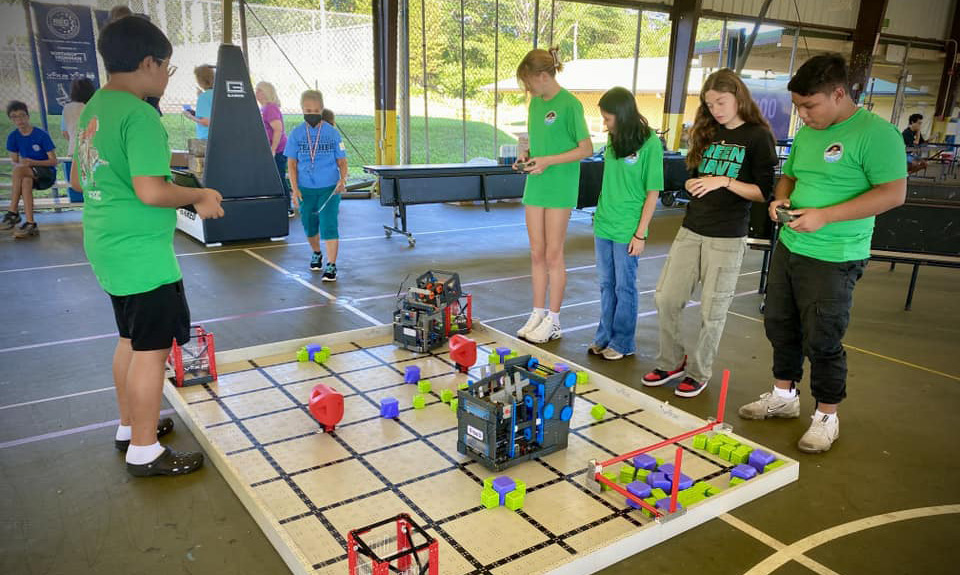
The competition consisted of two challenges: a skills test and a collaborative performance based series of rounds on a 12 foot by 12 foot square field. The skills test measures the team’s robot in its effectiveness on the field of play in the user driven and programed phases. The collaborative rounds paired teams together to test the performance of the robot and the team’s problem-solving methods. Each team participated in over 20 one-minute rounds on identical fields of play. The teams were ranked by the points scored throughout the rounds.
VEX competition presents teams with a different field of play and scoring criteria each year. The challenge informed the teams robot design and strategy. This year’s course necessitated a “gather and sort” capability with the ability to deposit three different colored and sized blocks into towers. There were also bonus points for other actions, like ending the 60 second round “parked” in a supply corner or dislodging the other blocks from their raised position.
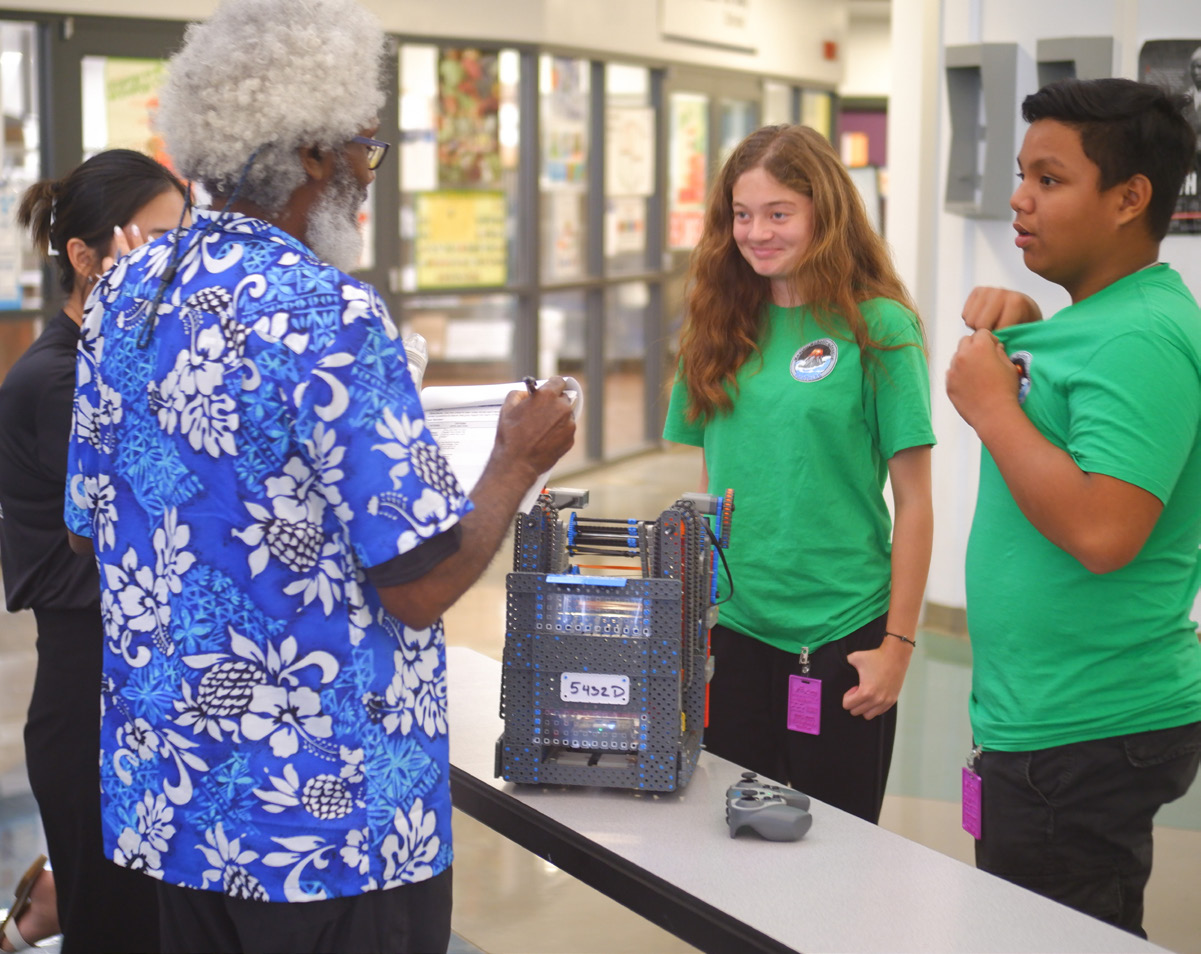
Every team was also graded during an engineering review where their design process and strategy were scrutinized.
The field of robots in this year’s challenge resembled miniature farm harvesting equipment that could gather, sort, lift and, deposit payloads of blocks in a controlled manner.
“The teams decide how they are going to solve the problem and build their robot,” said Mrs. Heather Leite, STARBASE Deputy Director. “We are here to guide and coach them, but the approach, process, and solution is unique each team.”
The durability and robustness of each build was also tested during the competition. The competitive rounds are collaborative not combative. With teams working together to achieve a strategy agreed upon shortly before each match. However, with the number and frequency of rounds each team faced, robots did break down and the ability to quickly adjust and repair was a key to success.
The STARBASE teams finished in the top twenty of the state competition.
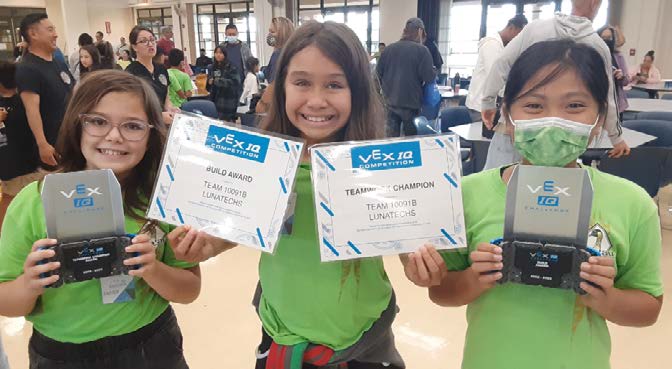
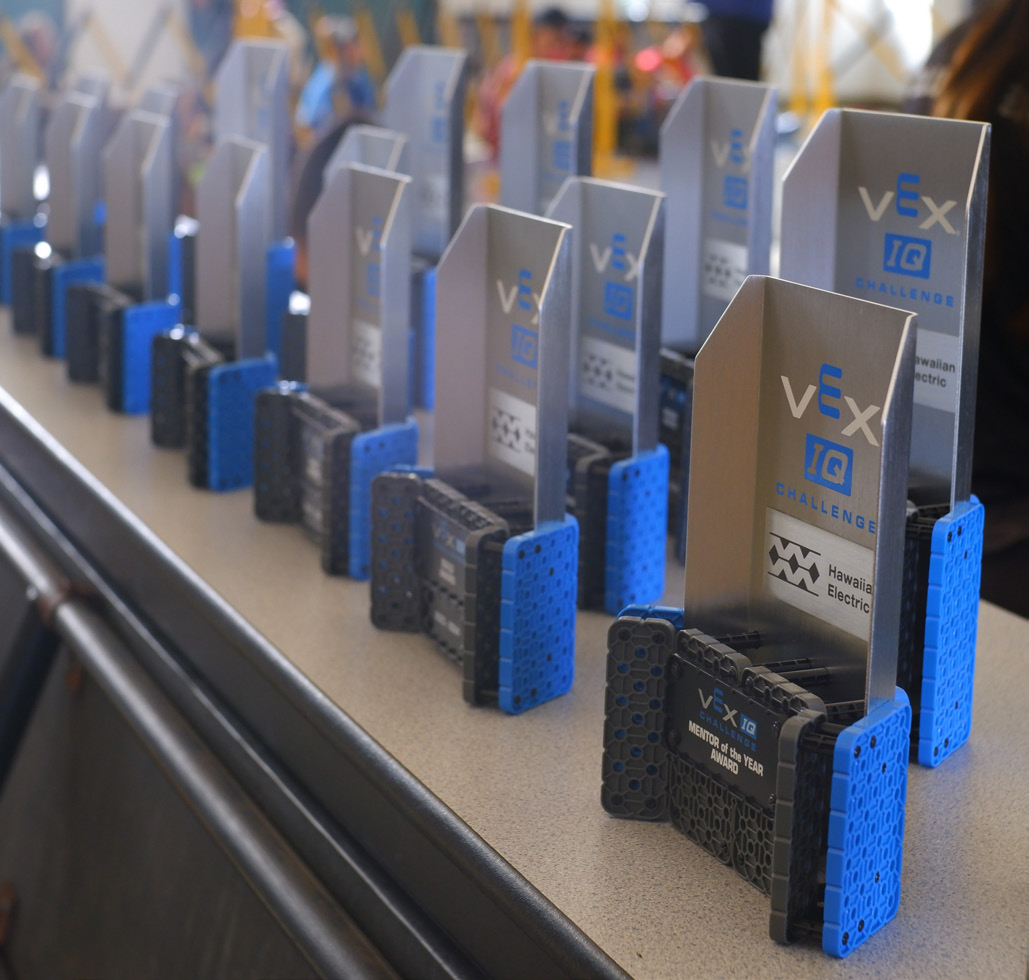
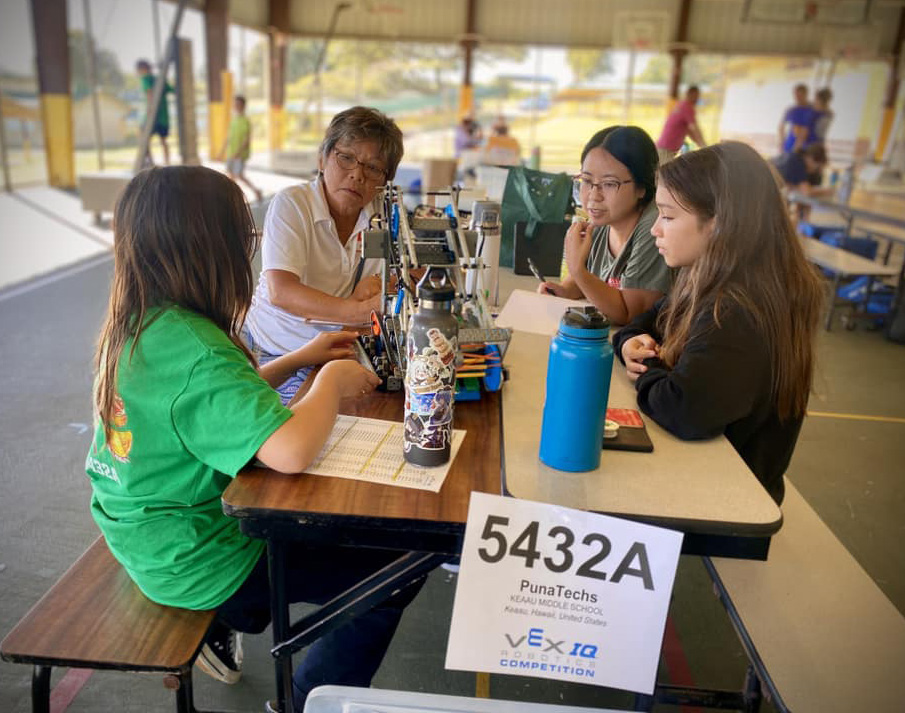
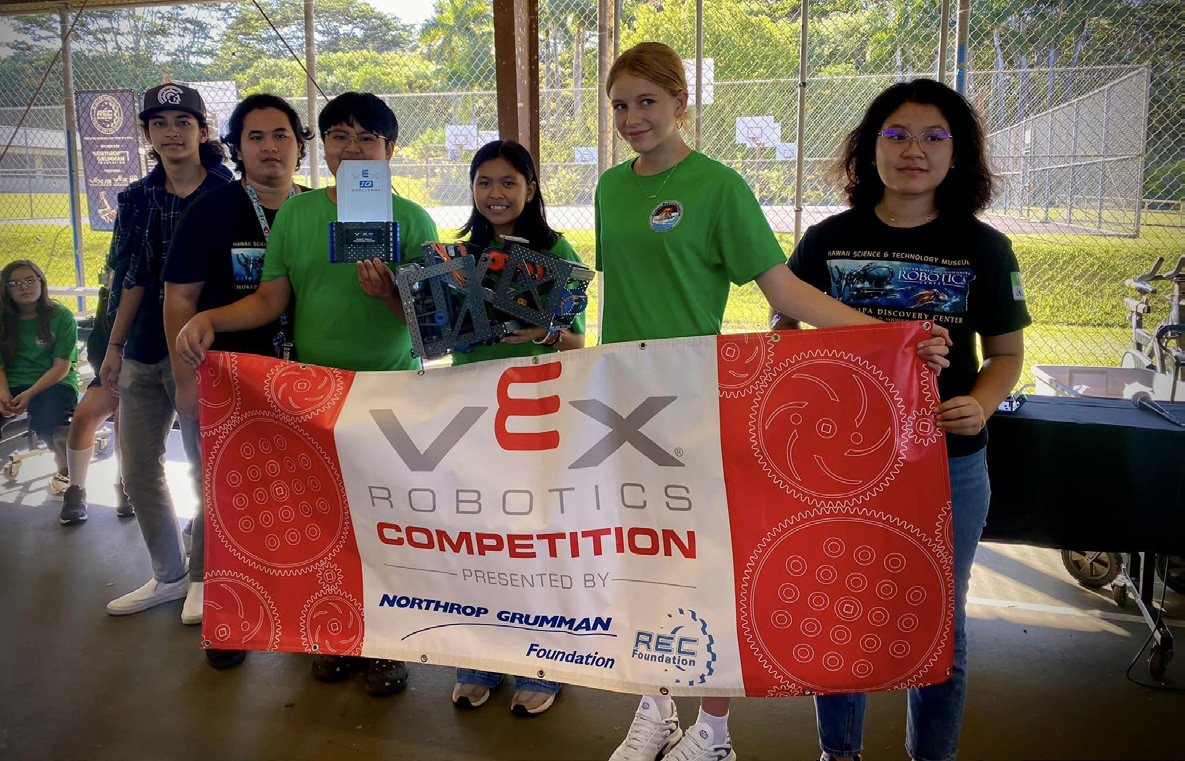
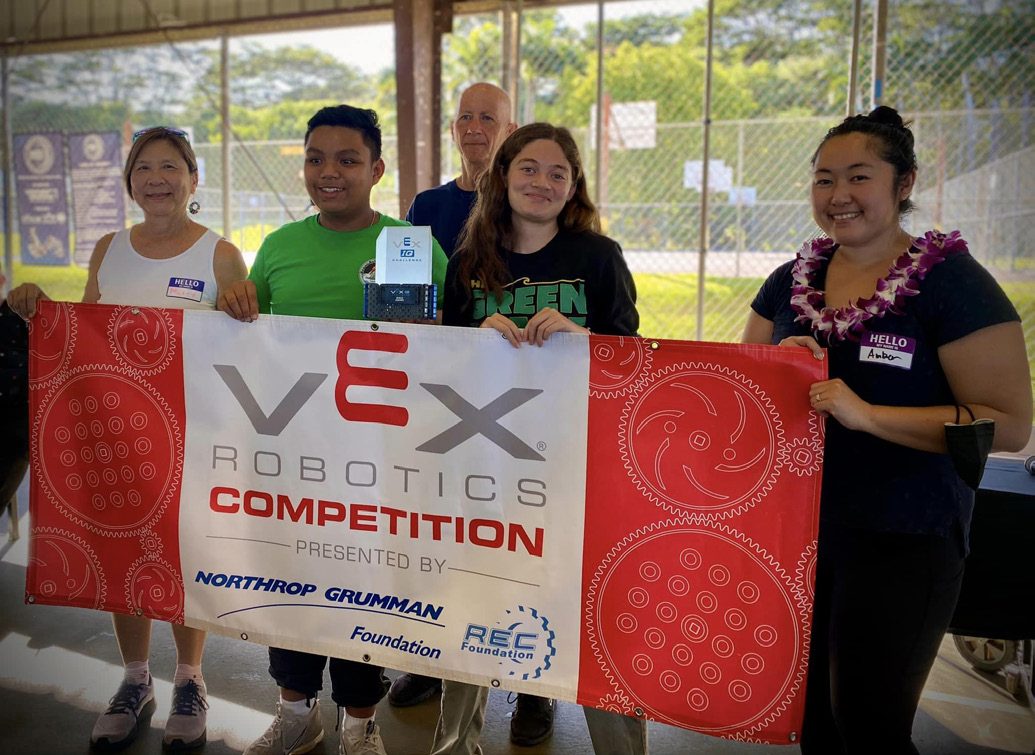
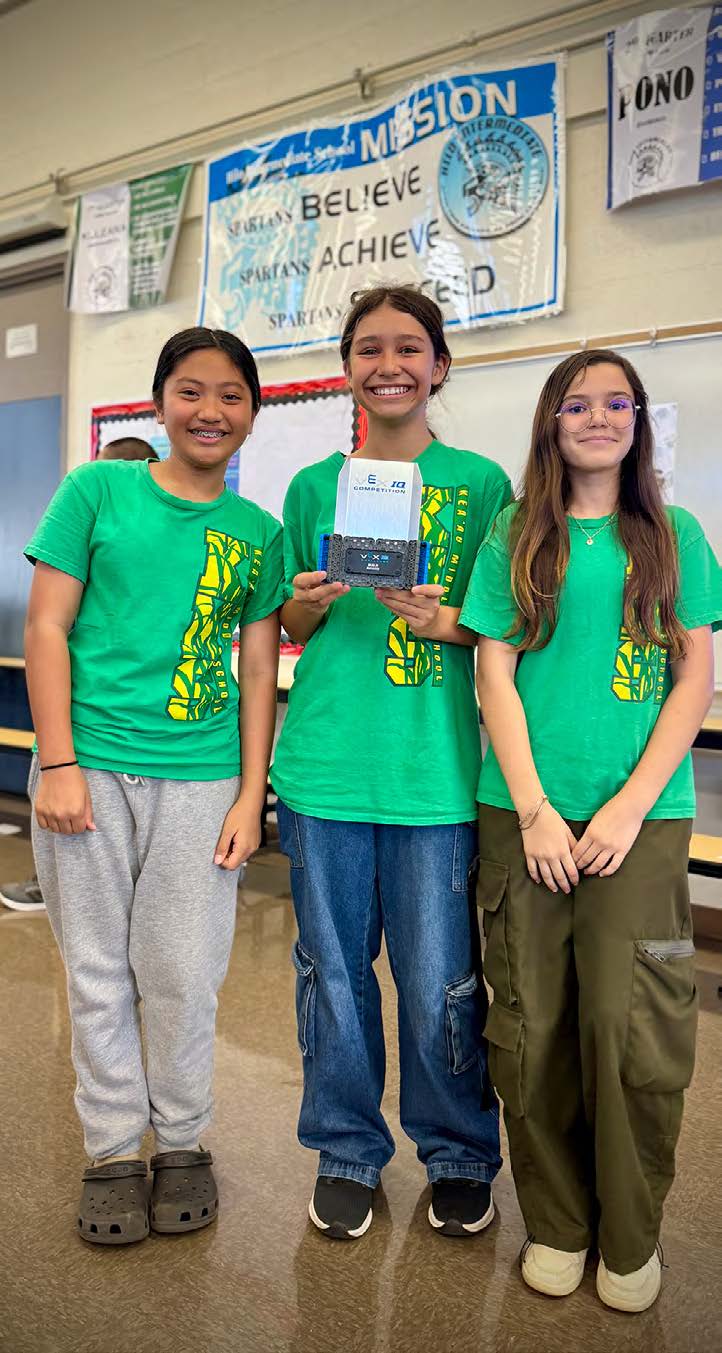
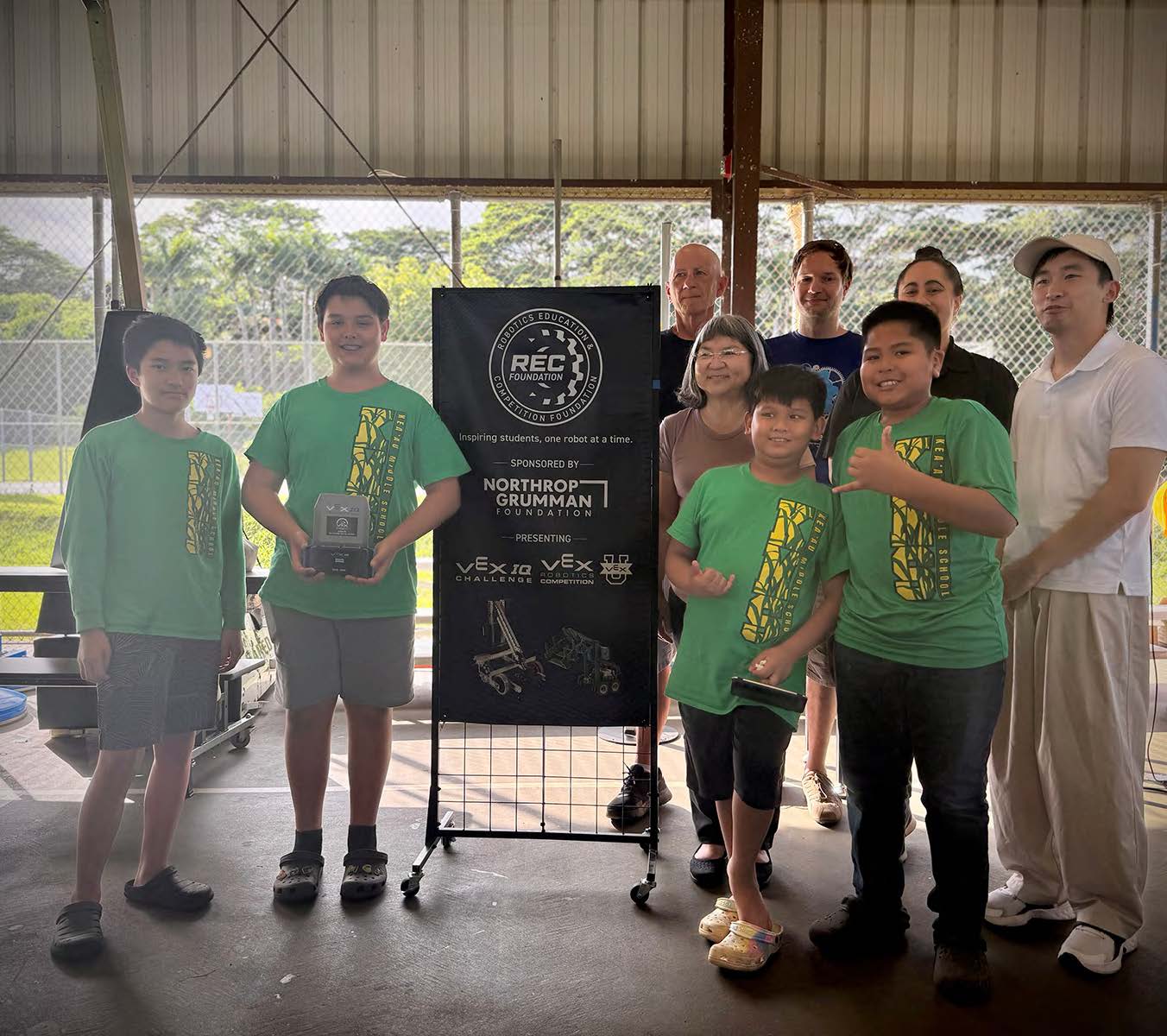
Another Big Congratulations to Team 5432D for winning the Build Award for the most robust robotics of the competition. We are so proud of everyone and all the hard work they have put in this season, WAY TO GO!!!
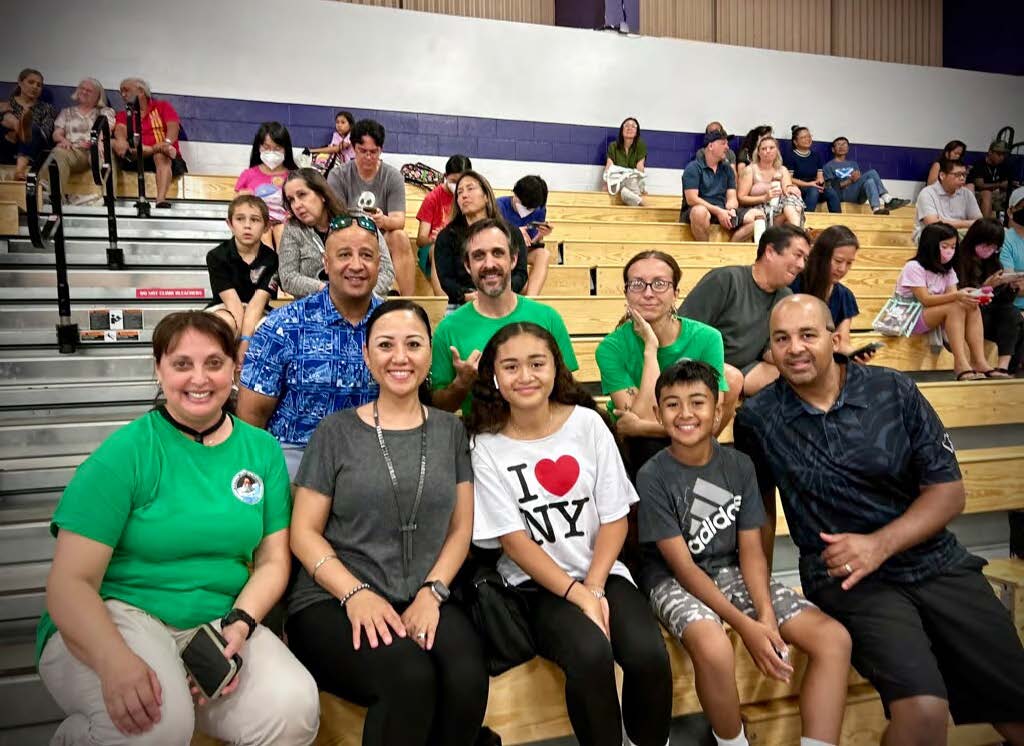
STARBASE/Kea‘au Puna Techs Team 5432A winning the Build Award at Big Island League Finals. (Ken Smith photo)STARBASE/Kea‘au Puna Techs Team 5432B winning the Create Award at the Big Island League Finals. (Ken Smith photo)STARBASE Hawai‘i coaches (From right to left – Heather Leite, Ken Smith and Aly Clark) with Deputy Adjutant General Brig. Gen. Phillip L. Mallory and HIANG Senior Enlisted Leader Chief Master Sgt. Maryann Martin and family at the Hawai‘i VEX IQ State Championships. (Marlise Ahuna photo) (Pictures from the 2025 pūpūkahi | volume 55 | No. 01)
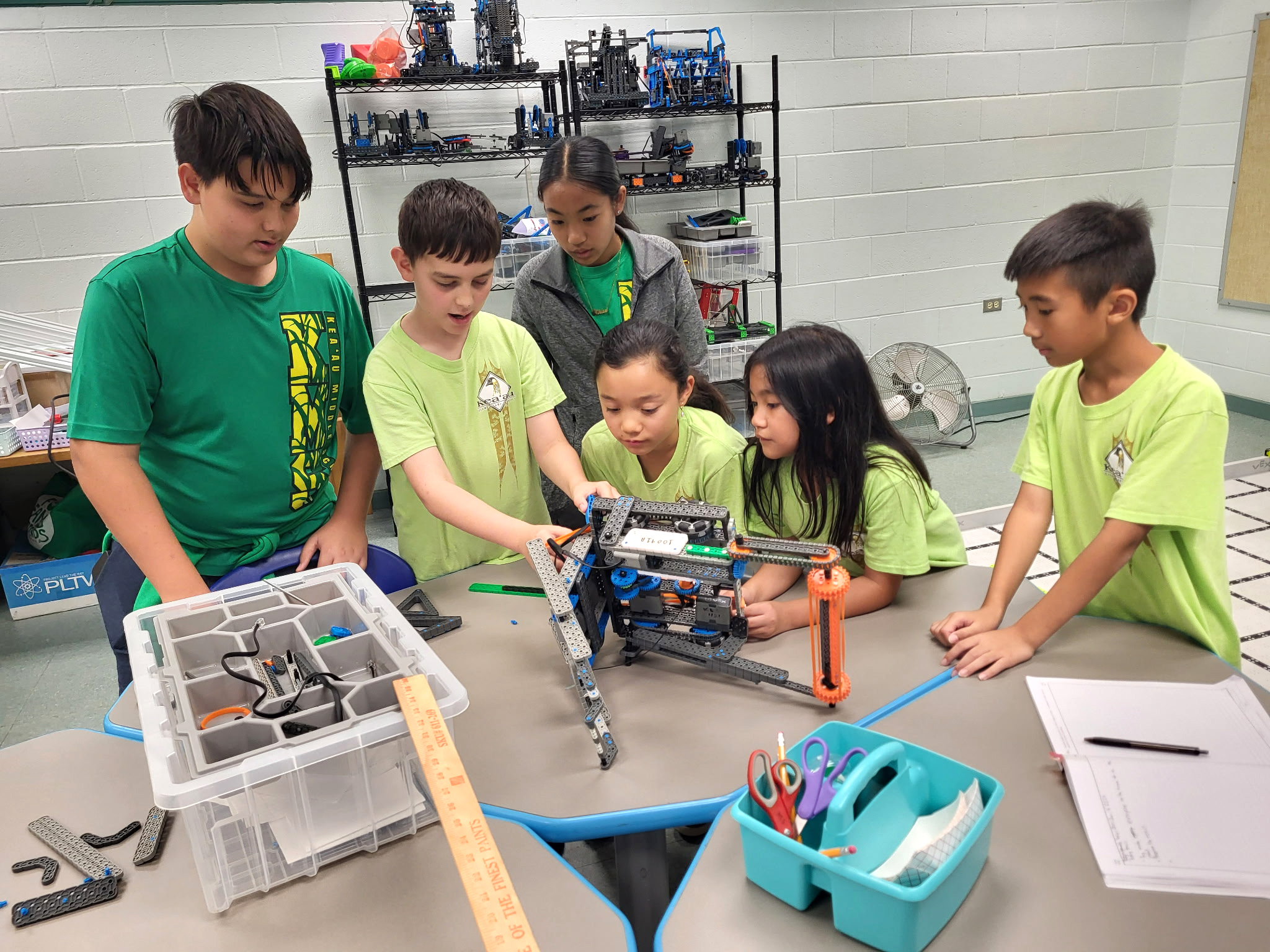
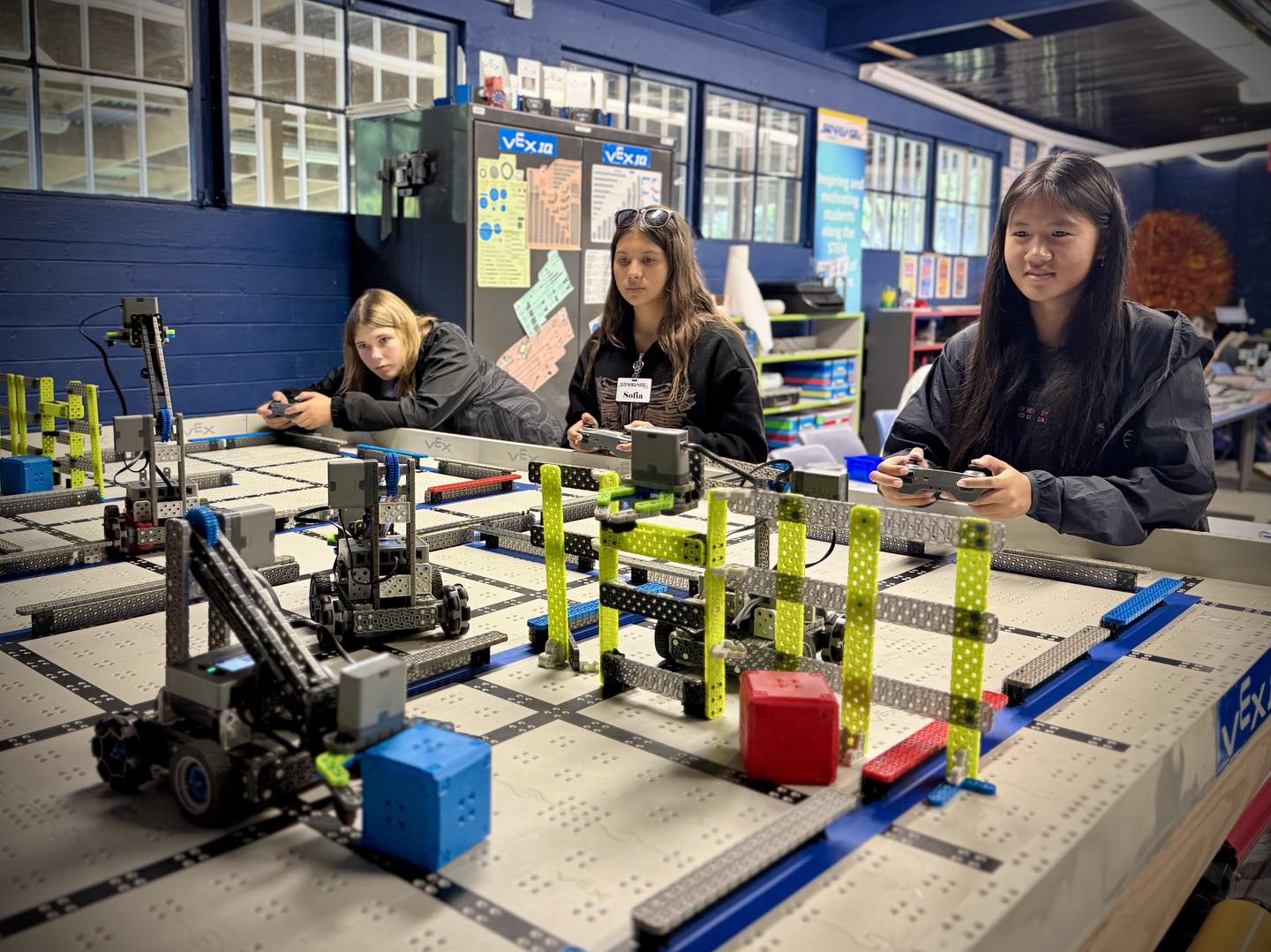
Charlie Ahuna, left, and Veronica Silva, back center, of the STARBASE Hawai‘i/Kea‘au Robotics Team mentor members of the Kea‘au Elementary Robotics Team. (Aly Clark photo)
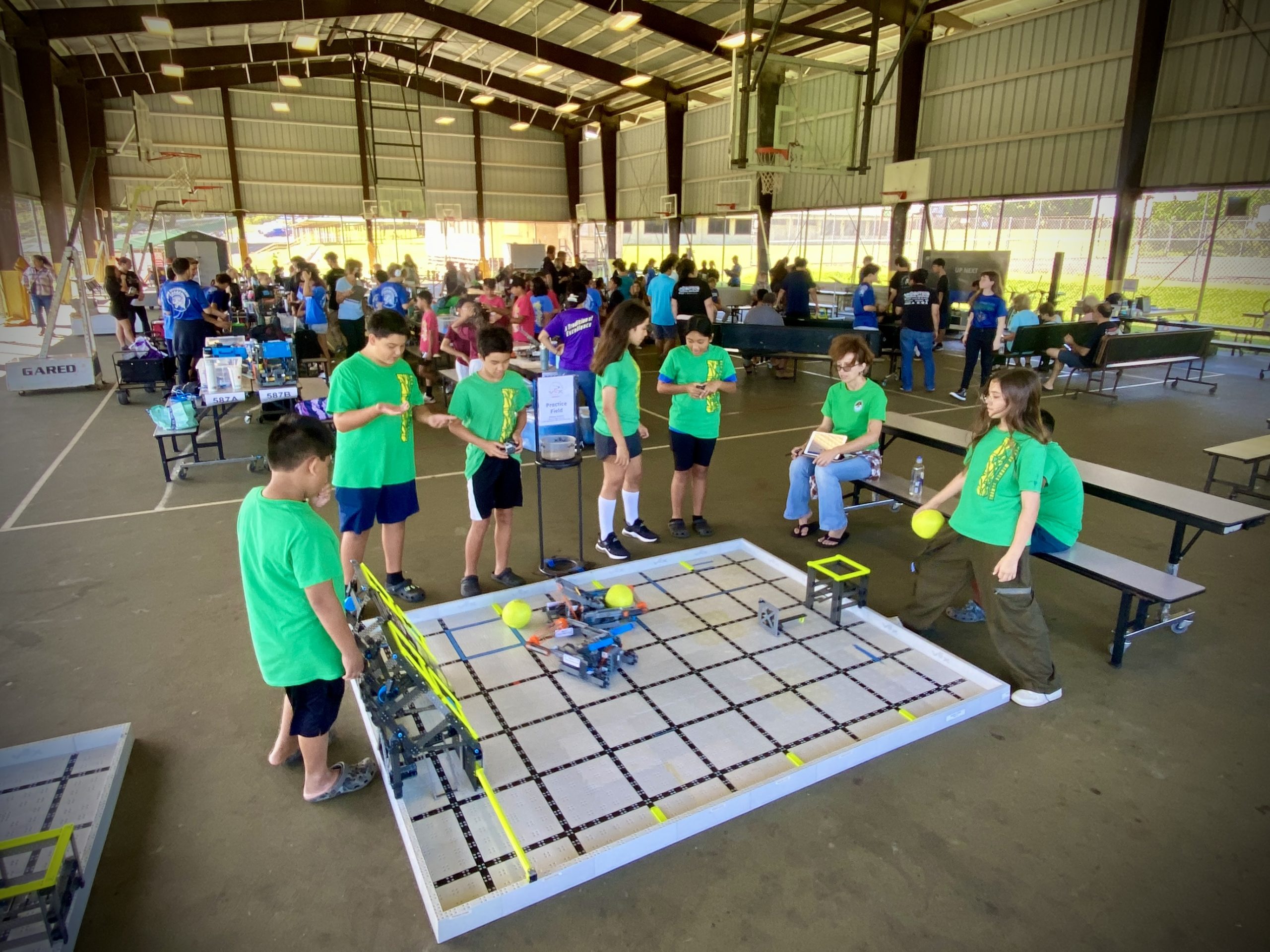
The STARBASE Hawai‘i/Kea’au Robotics Team practices before the first event at the robotics competition at Waiākea Middle School. (Ken Smith photo)
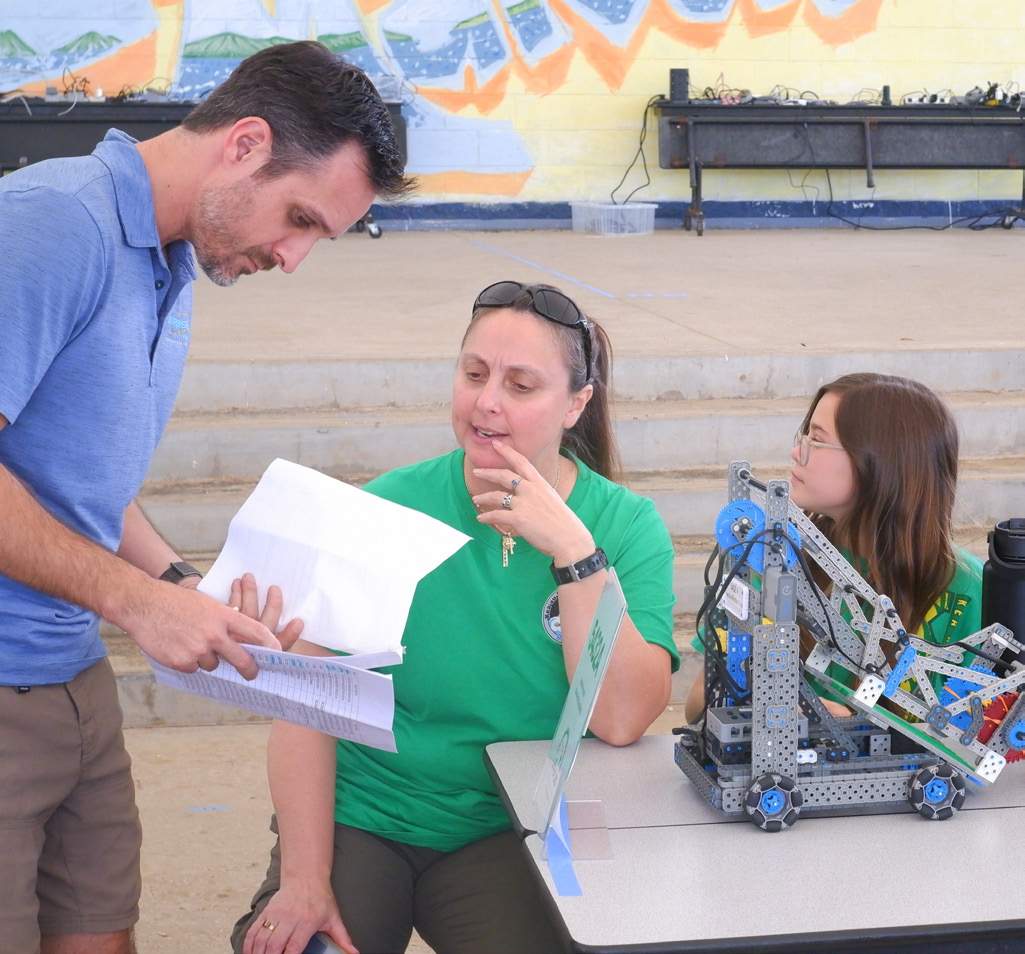
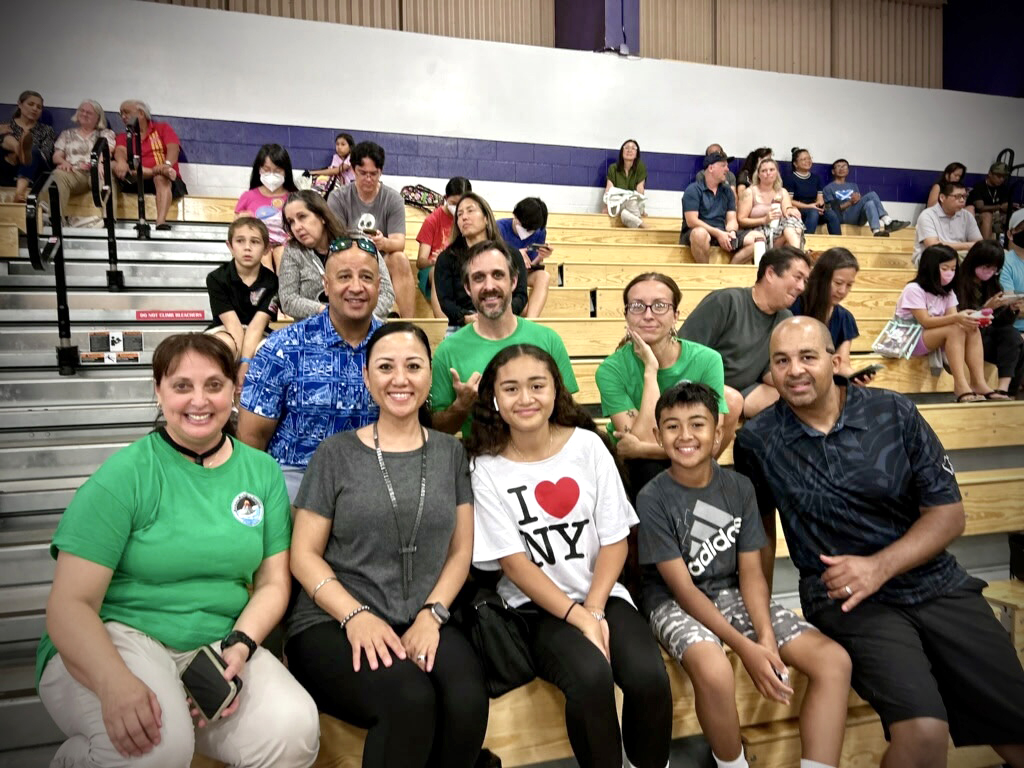
STARBASE Hawai‘i coaches (in green) Heather Leite, left, Ken Smith and Aly Clark sat with Deputy Adjutant General Brig. Gen. Phillip Mallory, top left, and Hawai‘i Air National Guard Senior Enlisted Leader Chief Master Sgt. Mey Martin, second from front left, and family at the Hawaii VEX IQ State Championships at Pearl City High School in February. (Marlise Ahuna photo)
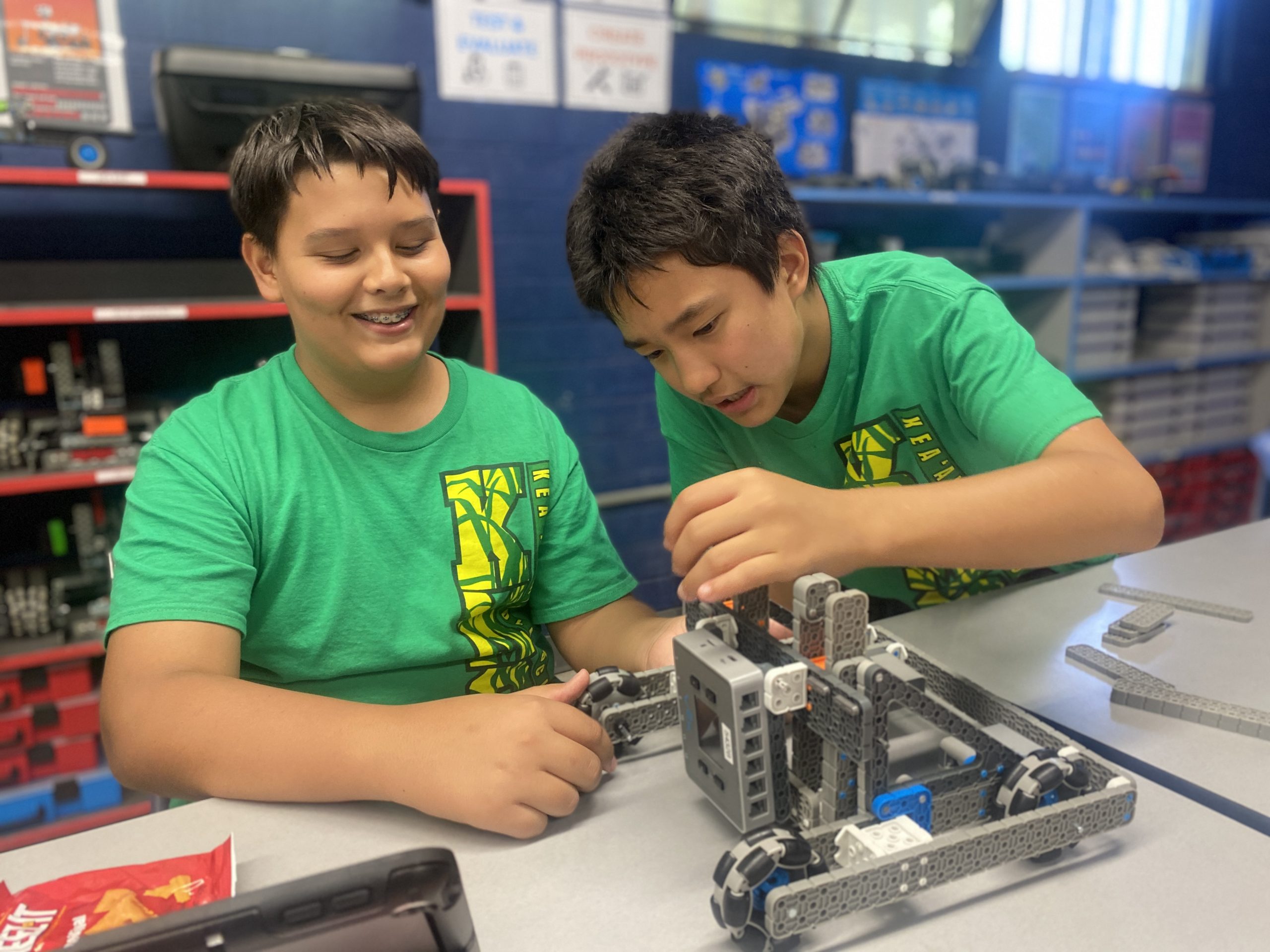
STARBASE Hawai‘i/Kea‘au Robotics Team 5432B Team Captain Charlie Ahuna, left, and Aiden Kinoshita adjust their robot at the STARBASE Hawai‘i Robotics Lab. (Ken Smith photo)
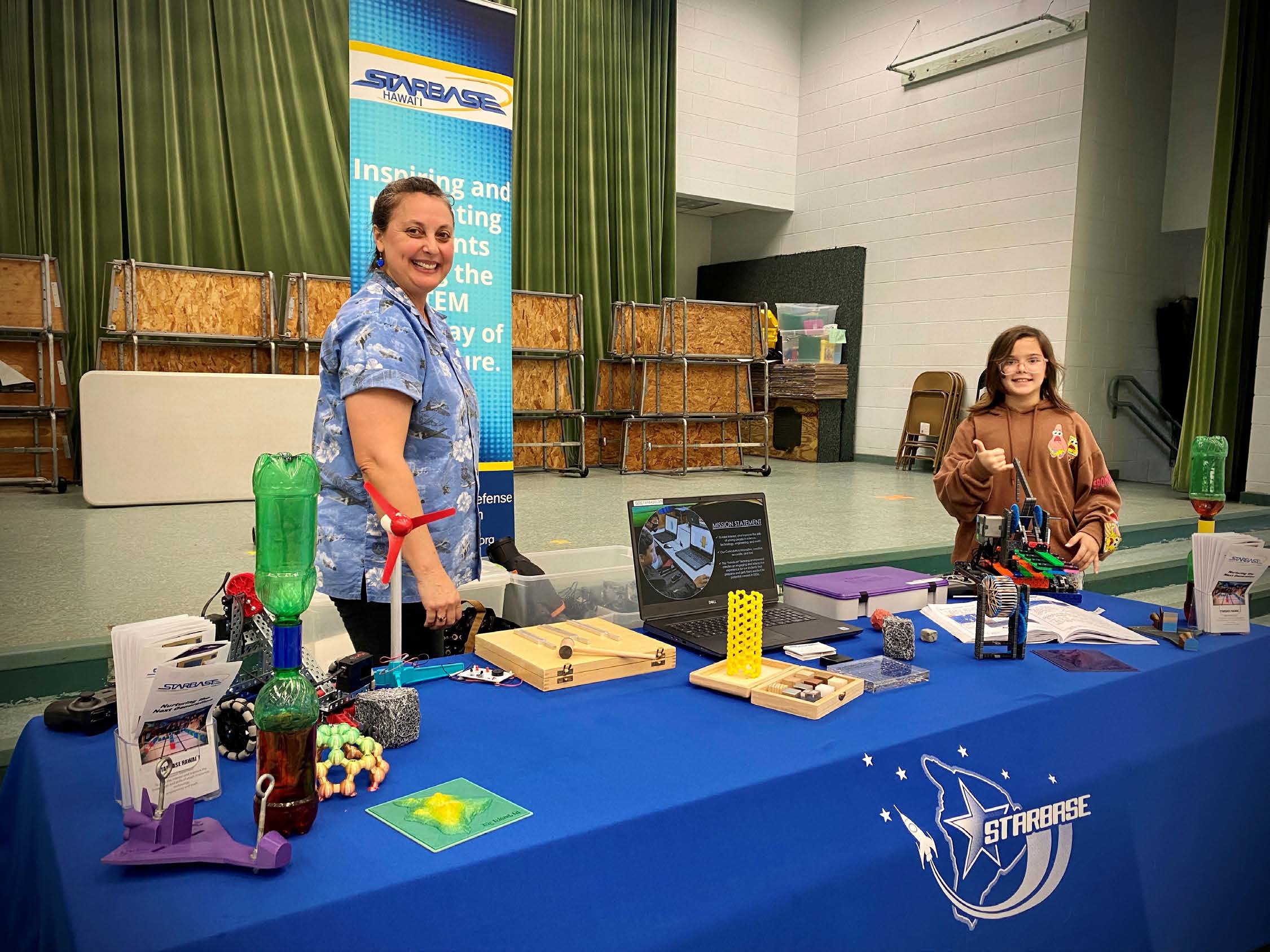
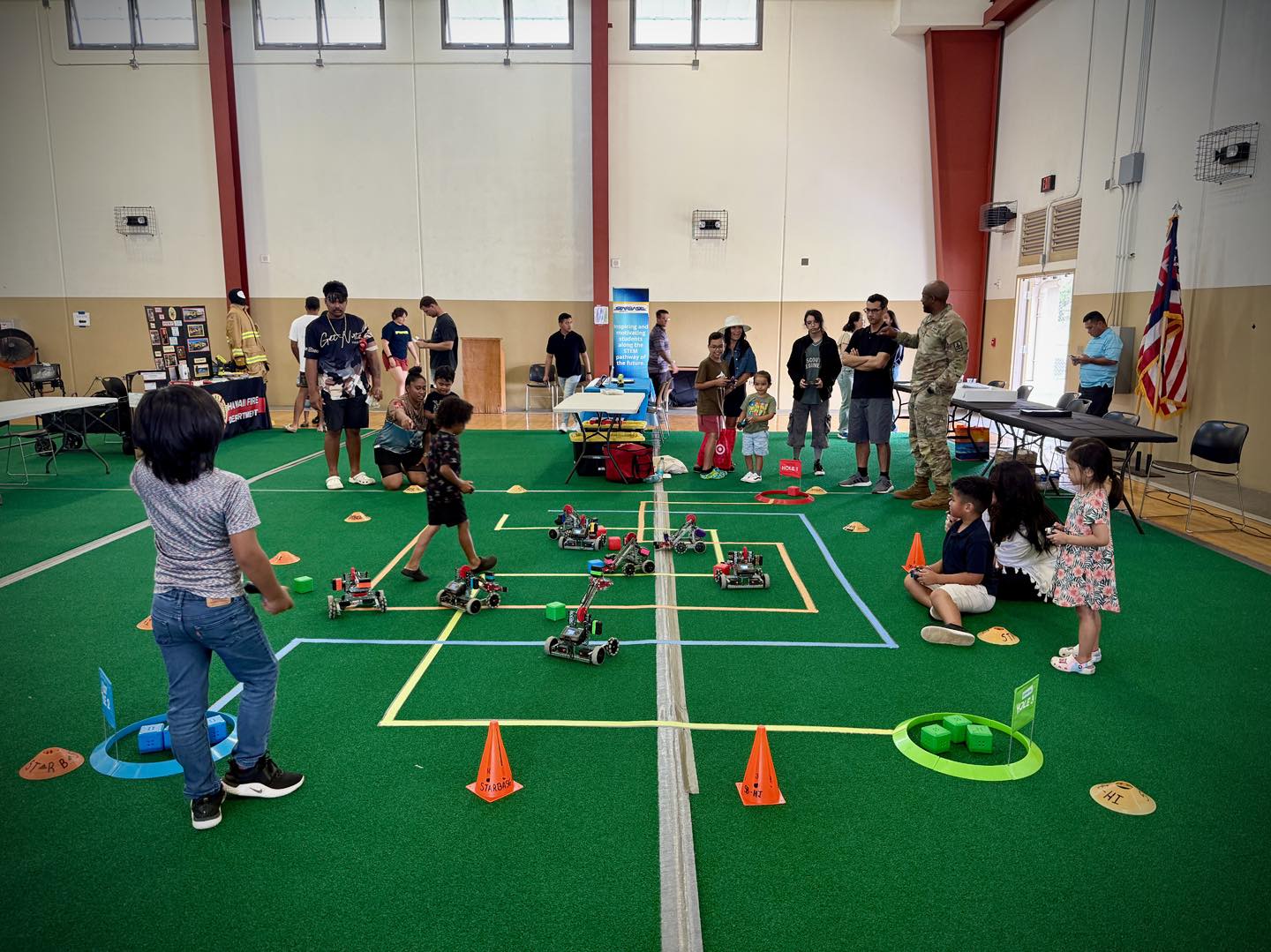
(Pictures from the 2025 Pūpūkahi | Volume 55 | No. 2)In June, STARBASE Hawai’i participated in robotics challenges at the Hawai’i Army National Guard’s CAV-299th Family day, above, and students, below attended the UH Hilo PISCES STARS Program. (STARBASE Hawai‘i photos)In June, STARBASE Hawai’i participated in robotics challenges at the Hawai’i Army National Guard’s CAV-299th Family day, above, and students, below attended the UH Hilo PISCES STARS Program. (STARBASE Hawai‘i photos)(Pictures from the 2025 pūpūkahi | Volume 55 | No. 5)