Do you need help in another language? We will get you a free interpreter. Call 808-369-3580 to tell us which language you speak.
您需要其它語言嗎?如有需要,請致電 (808-369-3478), 我們會提供免費翻譯服務
您需要其它语言吗?如有需要,请致电 (808-369-3478), 我们会提供免费翻译服务
En mi niit alilis lon pwal eu kapas? Sipwe angei emon chon chiaku ngonuk ese kamo. Kokori (808-369-3478) omw kopwe ureni kich meni kapas ka ani.
Makemake `oe i kokua i pili kekahi `olelo o na `aina `e? Makemake la maua i ki`i `oe mea unuhi manuahi. E kelepona (808-369-3478)`oe ia la kaua a e ha`ina `oe ia la maua mea `olelo o na `aina `e.
Masapulyo kadi ti tulong iti sabali a pagsasao? Ikkandakayo iti libre nga paraipatarus. Awaganyo ti
(808-369-3478) tapno ibagayo kadakami no ania ti pagsasao nga ar-aramatenyo.
다른언어로 도움이 필요하십니까? 저희가 무료로 통역을 제공합니다. (808-369-3478)로 전화해서 사용하는 언어를 알려주십시요
Kwoj aikuij ke jiban kin juon bar kajin? Kim naj lewaj juon am dri ukok eo ejjelok wonen. Kirtok
(808-369-3478) im kwalok non kim kajin ta eo kwo melele im kenono kake.
E te mana'o mia se fesosoani i se isi gagana? Matou te fesosoani e ave atu fua se faaliliu upu mo oe. Vili mai i le numera lea (808-369-3478) pea e mana'o mia se fesosoani mo se faaliliu upu.
¿Necesita ayuda en otro idioma? Nosotros le ayudaremos a conseguir un intérprete gratuito. Llame al (808-369-3478) y diganos que idioma habla.
Kailangan ba ninyo ng tulong sa ibang lengguwahe? Ikukuha namin kayo ng libreng tagasalin. Tumawag sa (808-369-3478) para sabihin kung anong lengguwahe ang nais ninyong gamitin.
‘Okú ke fie maʻu tokoni ʻi ha lea fakafonua ʻe taha? Temau kumi haʻo taha fakatonulea taʻetotongi. Telefoni ki he (808-369-3478) ke fakahā mai ʻa e lea fakafonua ʻokú ke lea aí.
Bạn có cần giúp đỡ bằng ngôn ngữ khác không ? Chúng tôi se yêu cầu một người thông dịch viên miễn phí cho bạn. Gọi (808-369-3478)nói cho chúng tôi biết bạn dùng ngôn ngữ nào
Gakinahanglan ka ba ug tabang sa imong pinulongan? Amo kang mahatagan ug libre nga maghuhubad. Tawag sa (808-369-3478) aron magpahibalo kung unsa ang imong sinulti-han.
Detachment 1, Company A, 3rd Battalion, 140th Aviation Regiment was constituted on 1 October 2005 in the Hawaii Army National in Hilo, Hawaii, as Detachment 2, Company B, 3 Battalion, 140th Aviation Regiment. The unit was first transformed on 1 September 2006, to Det 2, Co B, 3/140 AVN SEC SPT which enabled them to become a deployable Security and Support element for B Co(-), 3-140th CAARNG. The unit was then reorganized again on 2 September 2012 to its current designation from Det 2, Co B, 3/140 AVN SEC SPT BN. The unit’s most recent transformation included replacing the legacy single engine OH-58s with the dual engine UH-72A Lakota, the U.S. Army’s new multi-mission Light Utility Helicopter equipped with some of the latest advancements in aviation equipment and communications technology. Since its previous inception, the unit had assisted the Domestic Cannabis Eradication Program in the confiscation of approximately 8.6 billion dollars worth of illegal drugs. This 2013, the unit spent 9 months conducting aerial detection and monitoring operations in support of the DEA and Customs and Border Patrol in order to detect, interdict, and disrupt criminal organizations and drug trafficking organizations along the Texas-Mexico border. The unit’s support directly led to over 7000 apprehensions and the seizure of over 4000lbs of illegal drugs. In addition, the unit remains postured to execute Search and Rescue (SAR) and Command and Control (C2) Communications (C3I) flights for the State Civil Defense. In October of 2019, the detachment moved to its present location at Wheeler Army Air Field, Hawaii. In October of 2024, the detachment will be deploying to San Diego, California in support of the South West Border mission.
Detachment 1, Company A, 3rd Battalion, 140th Aviation Regiment Chronological History
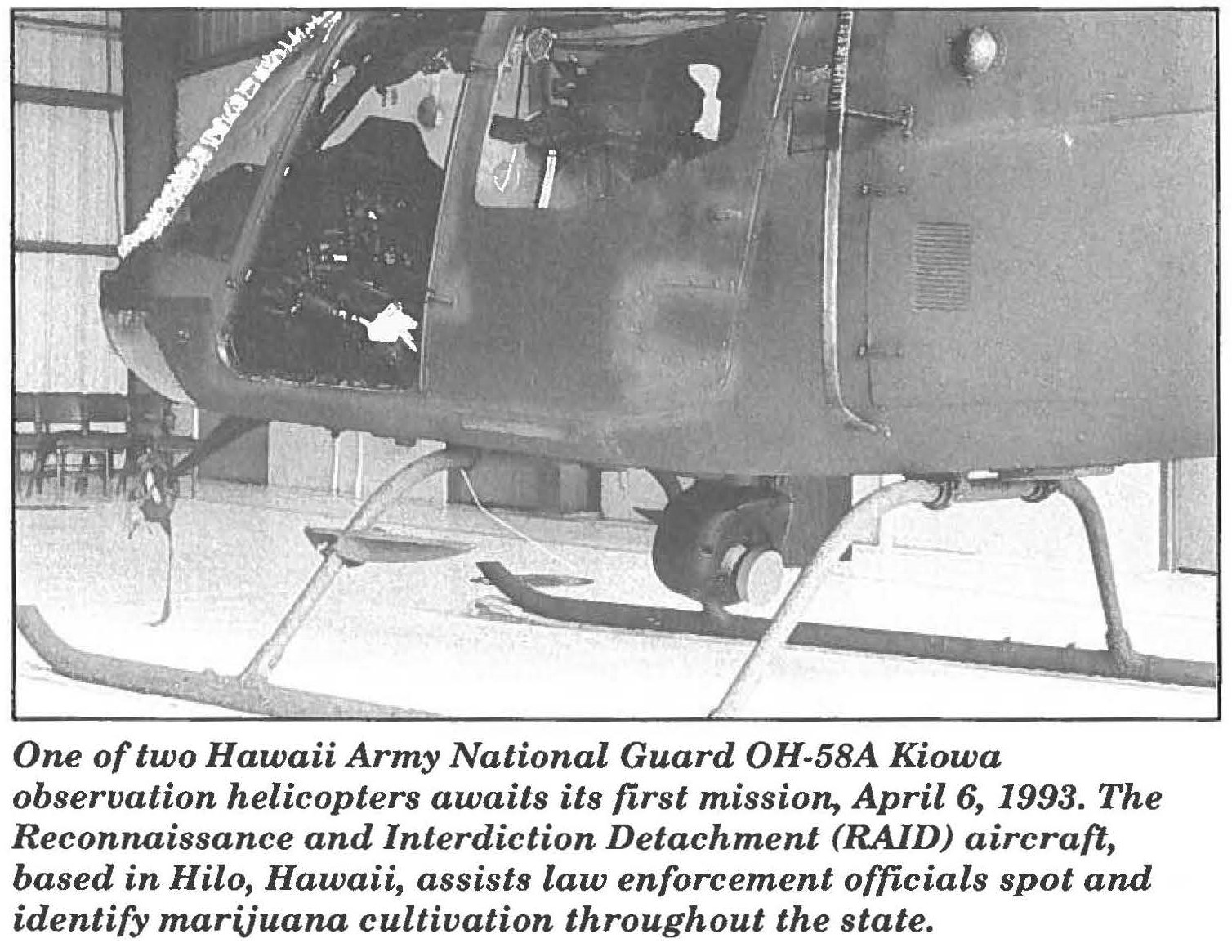
One of two Hawaii Army National Guard OH-58A Kiowa observation helicopters awaits its first mission, April 6, 1993. The Reconnaissance and Interdiction Detachment (RAID) aircraft, based in Hilo, Hawaii, assists law enforcement officials spot and identify marijuana cultivation throughout the state.(Picture from the 1993 Annual Report)
The HIARNG received two OH-58 Kiowa observation helicopters, March 16, 1993, for the Reconnaissance and Interdiction Detachment. The primary mission of these helicopters is to provide airborne scout and reconnaissance support for drug interdiction and surveillance during both day and night operations
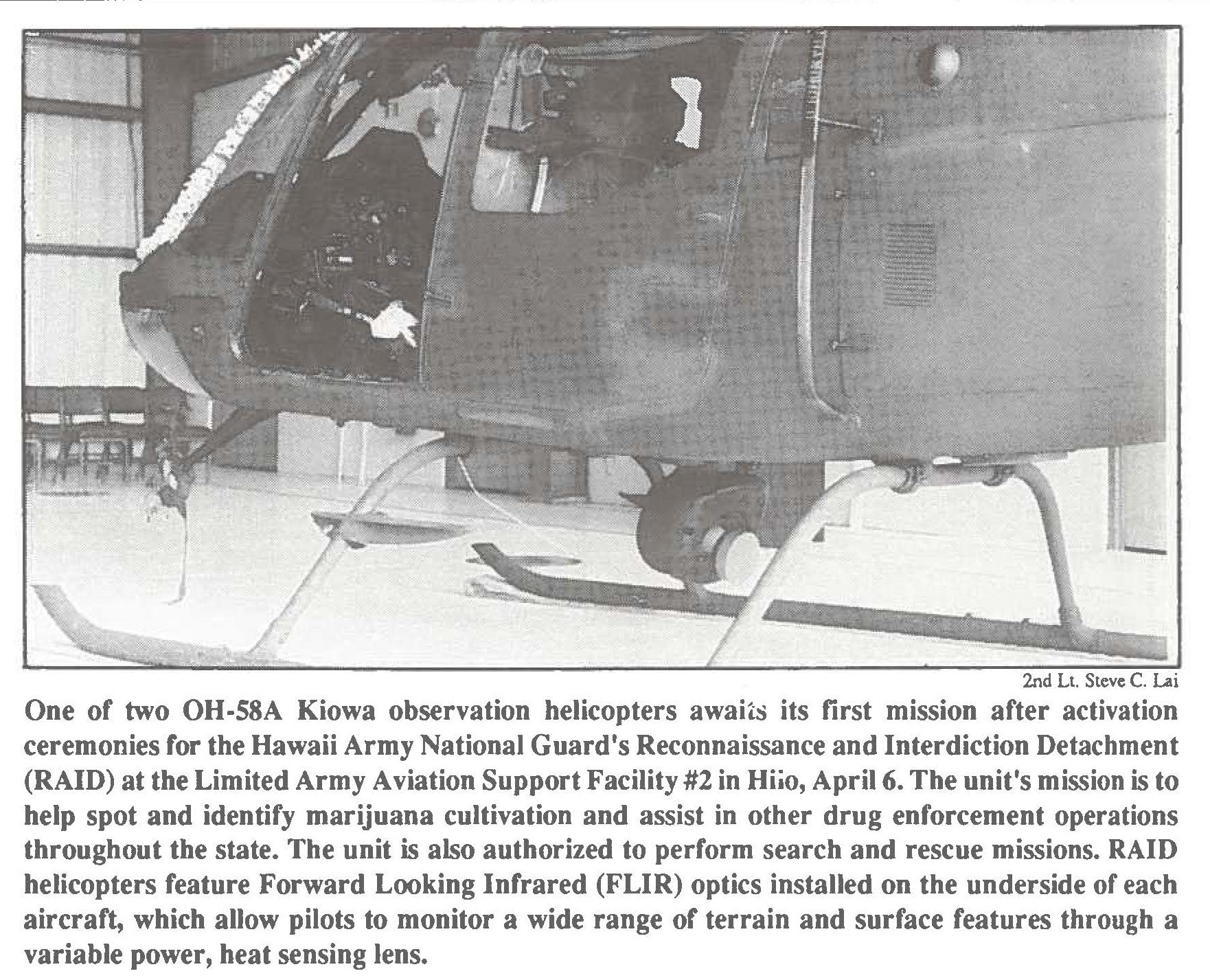
One of two OH-SSA Kiowa observation helicopters awaits its first mission after activation ceremonies for the Hawaii Army National Guard’s Reconnaissance and Interdiction Detachment (RAID) at the Limited Army Aviation Support Facility #2 in Hilo, April 6. The unit’s mission is to help spot and identify marijuana cultivation and assist in other drug enforcement operations throughout the state. The unit is also authorized to perform search and rescue missions. RAID helicopters feature Forward Looking Infrared (FLIR) optics installed on the underside of each aircraft, which allow pilots to monitor a wide range of terrain and surface features through a variable power, heat sensing lens.(Picture from the 1993 April – May Pūpūkahi)
The HIARNG’s aviation units include the Headquarters State Area Command aviation section, with its 18-passenger C-26 aircraft; 1st Battalion, 193rd Aviation (Attack), whose units are transitioning to a medium lift helicopter company; an aviation intermediate maintenance unit; the 451st and 452nd Aviation Detachments; and a Reconnaissance and Interdiction Detachment (RAID) that supports counterdrug operations.
Aircraft inventory includes seven CH-4 7D Chinook helicopters, four UH-60A Blackhawk helicopters, and a C-26B Metroliner twin-engine, fixed-wing aircraft. Two specially equipped OH-58A Kiowa helicopters were added to the inventory to support RAID missions.
The Reconnaissance and Interdiction Detachment (RAID) supports state counterdrug operations with two specially equipped OH-58A Kiowa helicopters based in Hilo. The five-man unit works closely with law enforcement agencies in eradication and surveillance missions. They also provide night search and rescue support using the helicopters’ thermal imaging system.
The Reconnaissance and Interdiction Detachment (RAID) supports state counterdrug operations with two specially equipped OH-58A Kiowa helicopters based in Hilo. The five-man unit works closely with law enforcement agencies in marijuana eradication and surveillance missions. They are also capable of performing night search and coordinating rescue support using the helicopters’ thermal imaging system.
The Reconnaissance and Interdiction Detachment (RAID), a five-soldier detachment based at Lyman Field, fields three OH-58A Kiowa observation helicopters specifically configured for aerial surveillance and night operations. These helicopters provide law enforcement agencies with the ability to conduct day/night operations in support of marijuana eradication and search and rescue missions. In FY 1997, this section was credited with the destruction of 141,016 marijuana plants with a street value of $141,016,000.
The Reconnaissance Air Intrastate Detachment (RAID), a five-soldier detachment based at Lyman Field, fields three OH-58A Kiowa observation helicopters specifically configured for aerial surveillance and night operations. These helicopters provide law enforcement agencies with the ability to conduct day/night operations in support of marijuana eradication and search and rescue missions
The organizations assigned to the Troop Command include a CH-47 (medium lift) helicopter company, an aviation intermediate maintenance (AVIM) company, an engineer detachment, a personnel service detachment, a counterdrug reconnaissance and interdiction detachment (RAID), a tactical operations cell for the 25th Infantry Division’s rear area operations, and the 111th Army Band.
The second aviation unit is the counterdrug Reconnaissance Air Intrastate Detachment (RAID), which is an 11-soldier detachment. It is authorized five OH-58A Kiowa observation helicopters specifically configured for counterdrug aerial surveillance and night operations. These helicopters and crews routinely provide law enforcement agencies statewide with marijuana eradication support.
The second aviation unit is the counterdrug Reconnaissance Air Intrastate Detachment (RAID), which is an 11-soldier detachment. It is authorized three OH-58A Kiowa observation helicopters specifically configured for counterdrug aerial surveillance and night operations. These helicopters and crews routinely provide law enforcement agencies statewide with marijuana eradication support.
The second aviation unit is the counterdrug Reconnaissance Air Intrastate Detachment (RAID). It is authorized three OH-58A Kiowa observation helicopters specifically configured for counterdrug aerial surveillance and night operations. These helicopters and crews routinely provide law enforcement agencies statewide with marijuana eradication support
The third aviation unit, the counterdrug Reconnaissance Air Intrastate Detachment (RAID), is an 11-soldier unit. It is authorized three OH-58A Kiowa observation helicopters specifically configured for counterdrug aerial surveillance and night operations. These helicopters and crews routinely provide law enforcement agencies statewide with marijuana eradication support.
The third aviation Unit, the counterdrug Reconnaissance Air Intrastate Detachment (RAID), is an 11-soldier unit. It is authorized three OH-58A Kiowa observation helicopters specifically configured for counterdrug aerial surveillance and night operations. These helicopters and crews routinely provide law enforcement agencies statewide with marijuana eradication support.
The third aviation unit, the counterdrug Reconnaissance Air Intrastate Detachment (RAID), is an 11-soldier unit. It is authorized three OH-58A Kiowa observation helicopters specifically configured for counterdrug aerial surveillance and night operations. These helicopters and crews routinely provide law enforcement agencies statewide with marijuana eradication support.
The third aviation unit, the counterdrug Reconnaissance Air Intrastate Detachment (RAID), is an 11-Soldier unit. It is authorized three OH58A Kiowa observation helicopters specifically configured for counterdrug aerial surveillance and night operations. These helicopters and crews routinely provide law enforcement agencies statewide with marijuana eradication support.
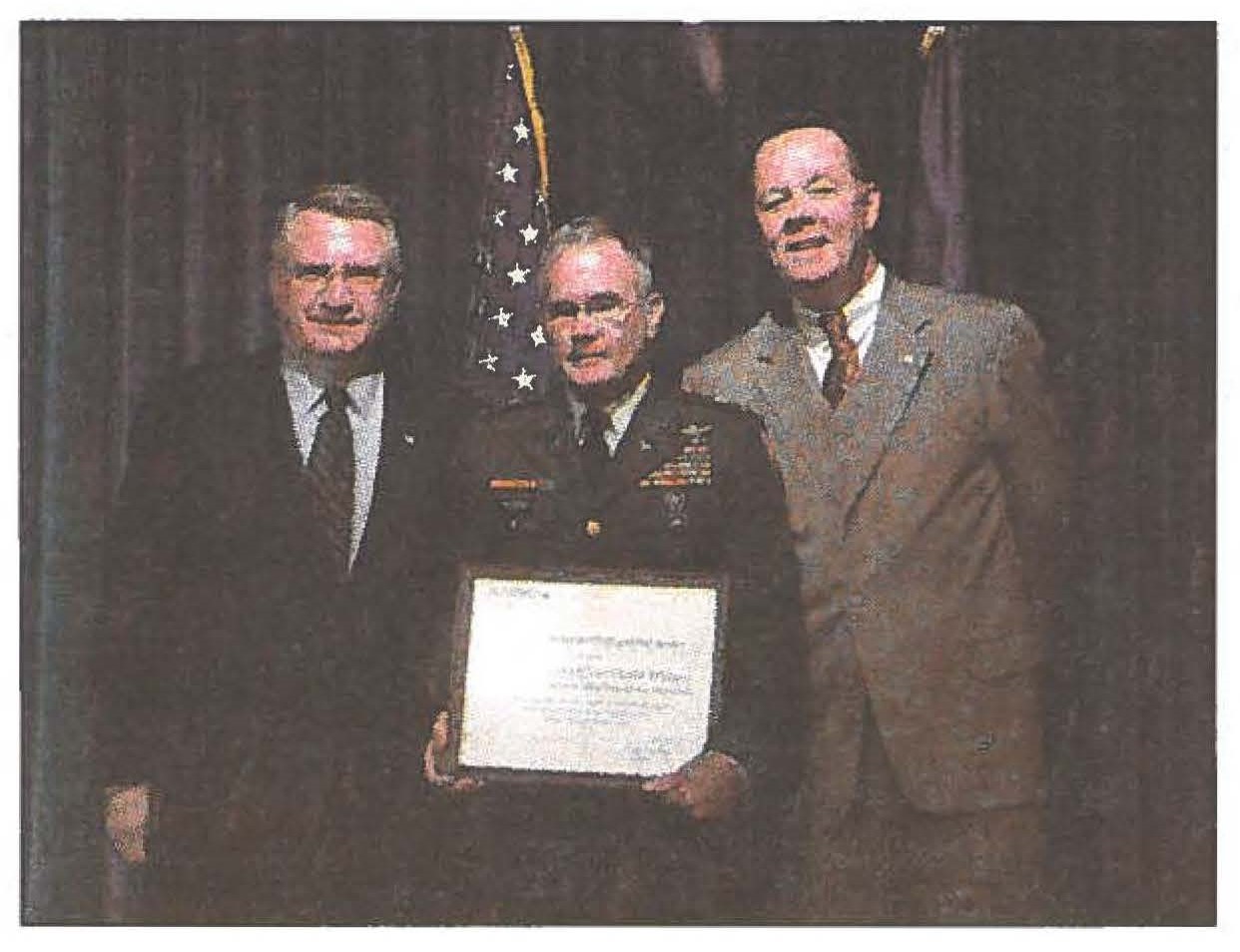
John Walters, Director of the Office of National Drug Control Policy, ChiefWarrant Officer Dave Watters, and Scott Burns, deputy director for State and local affairs for ONDCP pose with Chief Watters’s Director’s Award for Distinguished Service. Staff Sgt. Cheryl Hackley, National Guard Bureau, photoRAID member honored page 8(Pictures from the 2006 January – March Pūpūkahi)
A Hawaii Army National Guard member received national recognition from the Office of the National Drug Control Policy Jan. 19, 2006 for his support of the National Marijuana Eradication Initiative from Jan. 1 -Dec. 31, 2005.
Chief Warrant Officer Dave Watters, Hawaii Reconnaissance &Aerial Interdiction Detachment, was one of twelve National Guard members presented the first ever Director’s Award for Distinguished Service by the nation’s drug czar, John Walters, director ONDCP, and Scott Bums, deputy director for State and Local Affairs, during a ceremony held following a Marijuana Eradication Conference at the Eisenhower Building in Washington, D.C. “It was quite an honor to be representing, with Hilo police officer Robert Hironaka, Hawaii in this endeavor,” said CWO Watters. It’s great that Washington is recognizing what Hawaii is doing with this mission.
Hawaii is one of the nation’s top seven marijuana-producing states. CWO Watters selection “reinforces the extent of the Marijuana problem within the State of Hawaii and the importance of joint National Guard and law enforcement eradication efforts,” said Lt. Col. Joe Logan, Hawaii National Guard Counterdrug Coordinator. According to the citation, CWO Watters coordinated all National Guard helicopter support for counterdrug missions within the State of Hawaii and flew over 100 reconnaissance missions in support of Federal and local law enforcement agencies during 2005. His work resulted in the discovery of international drug trafficking operations and the seizure of significant amounts of illegal drugs.
The Hawaii Reconnaissance & Interdiction Detachment assists local law enforcement agencies by providing airborne scouting and reconnaissance drug interdiction and surveillance during day and night operations throughout the Hawaiian islands.
Although CWO Watters has been with the RAID since 2001, he has seen more than six years worth of airborne reconnaissance. During the Vietnam War, CWO Watters served his time as a scout pilot. Needless to say, he has been able to use many of the lessons learned from being a scout pilot during Vietnam to during RAID missions. CWO Watters received numerous decorations for his performance during the Vietnam War, a few of which are the Distinguished Flying Cross, the Soldiers Medal, and two Bronze Stars.
“There are so many people that add to it (RAID program) and to be one of the first to receive this award is an honor,” said CWO Watters.
The third aviation unit, the counterdrug Reconnaissance Air Intrastate Detachment (RAID), is an 11-Soldier unit redesignated as Det. 2, Co. B, 3rd Bde., 140th Aviation Security and Support. It is authorized three OH-58A Kiowa observation helicopters. They provide Command, Control, and Communication (C3) and air movement operations. The aircraft is specifically configured for counterdrug aerial surveillance and night operations. These helicopters and crews routinely provide law enforcement agencies statewide with marijuana eradication support.
The third aviation unit is Detachment 2, Co. B, 3rd Bde., 140th Aviation Security and Support. It is authorized three OH-58A Kiowa observation helicopters. They provide Command, Control, and Communication (C3) and air movement operations. The aircraft is specifically configured for counterdrug aerial surveillance and night operations. These helicopters and crews routinely provide law enforcement agencies statewide with marijuana eradication support.
The third aviation unit is Detachment 2, Co. B, 3rd Bde., 140th Aviation Security and Support. It is authorized three OH-58A Kiowa observation helicopters. They provide Command, Control, and Communication (C3) and air movement operations. The aircraft is specifically configured for counterdrug aerial surveillance and night operations. These helicopters and crews routinely provide law enforcement agencies statewide with marijuana eradication support.
It’s not easy being green: Marijuana eradication on Guam
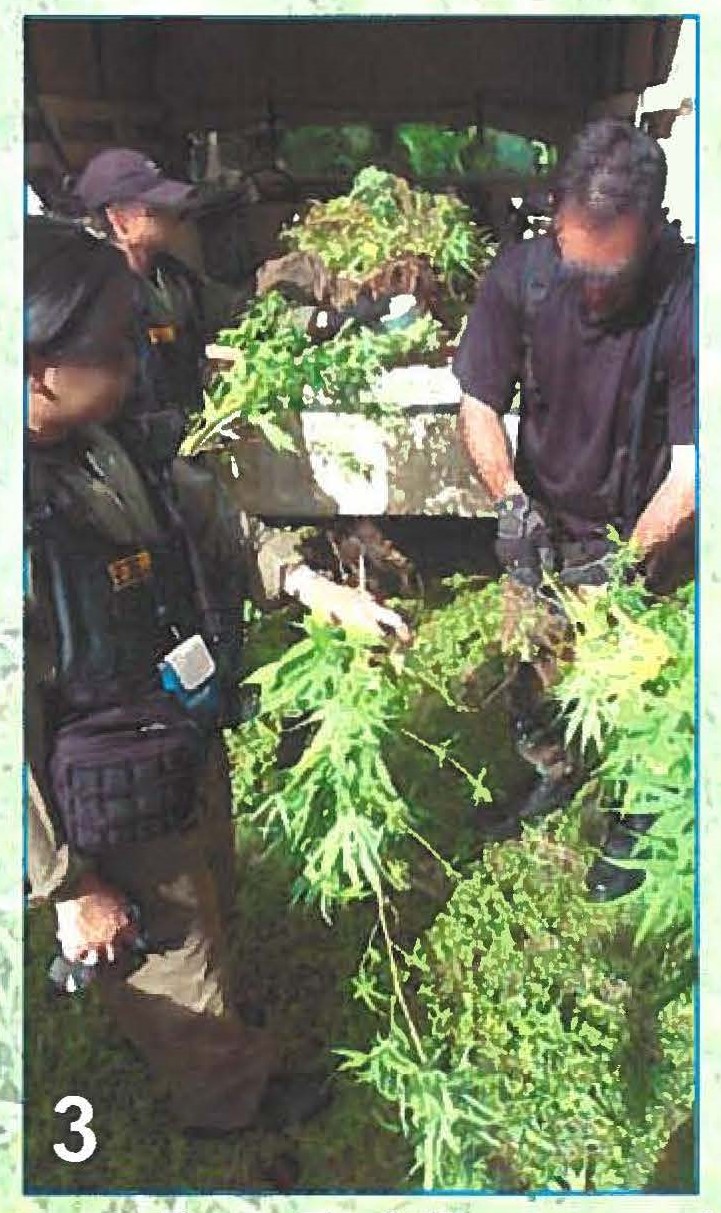
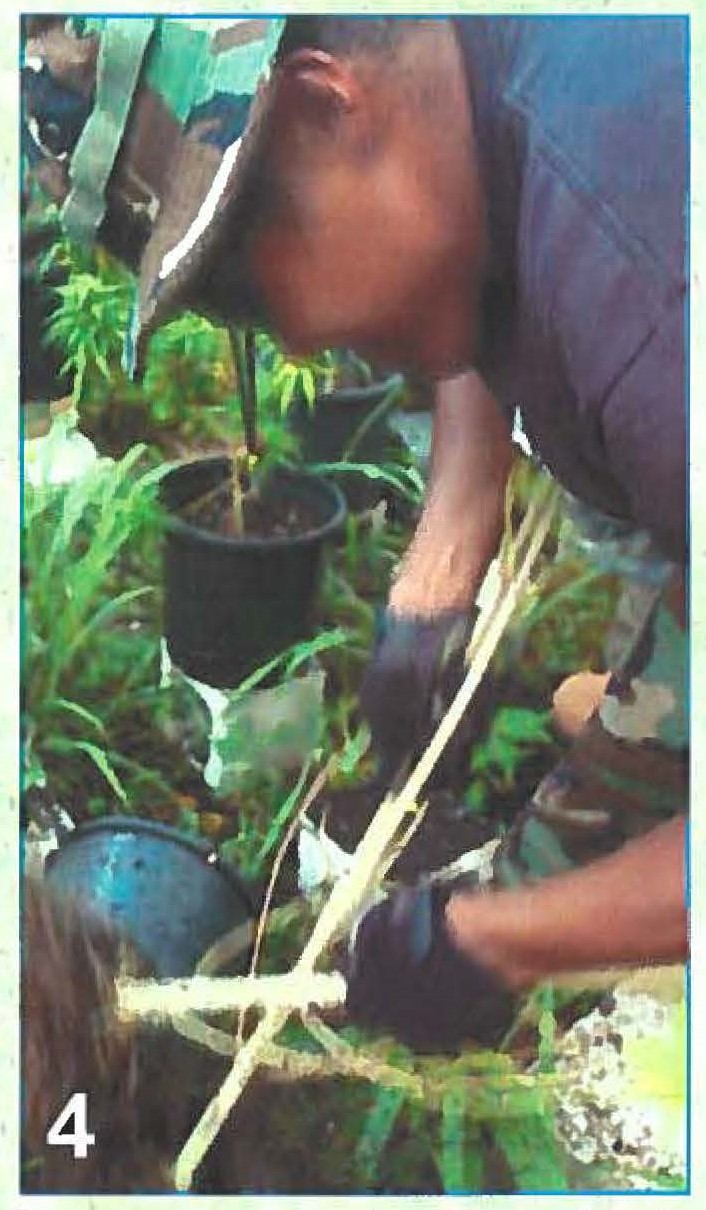
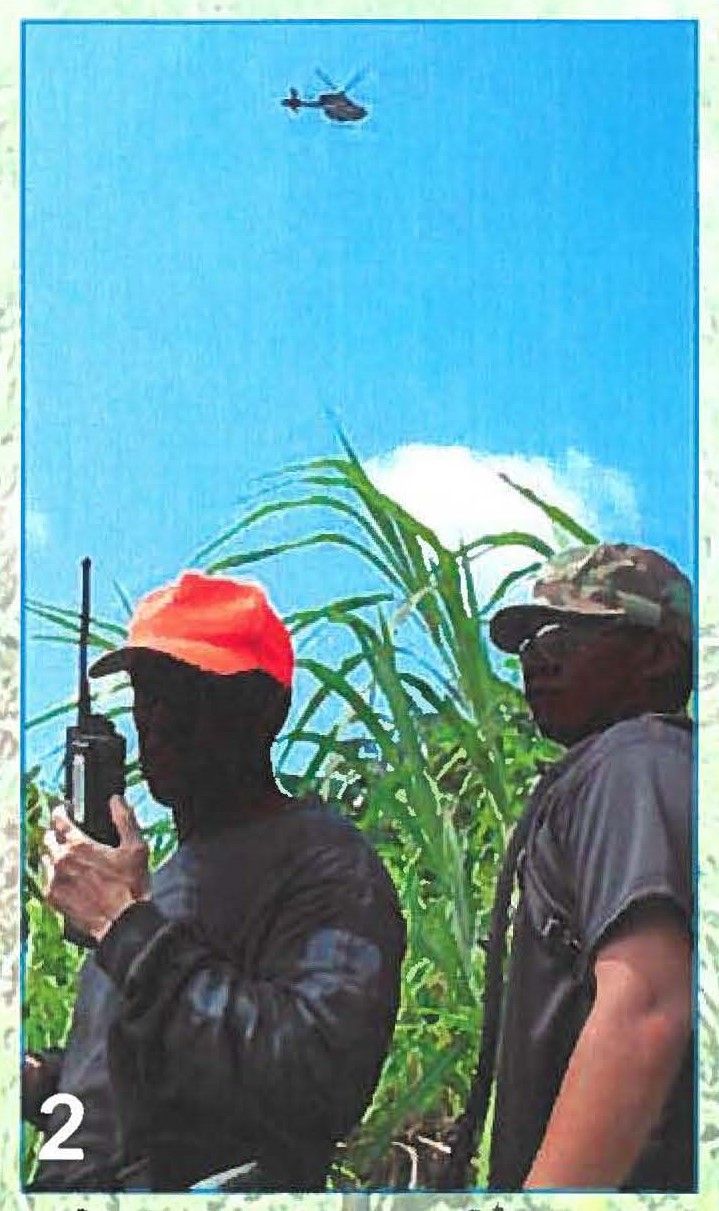
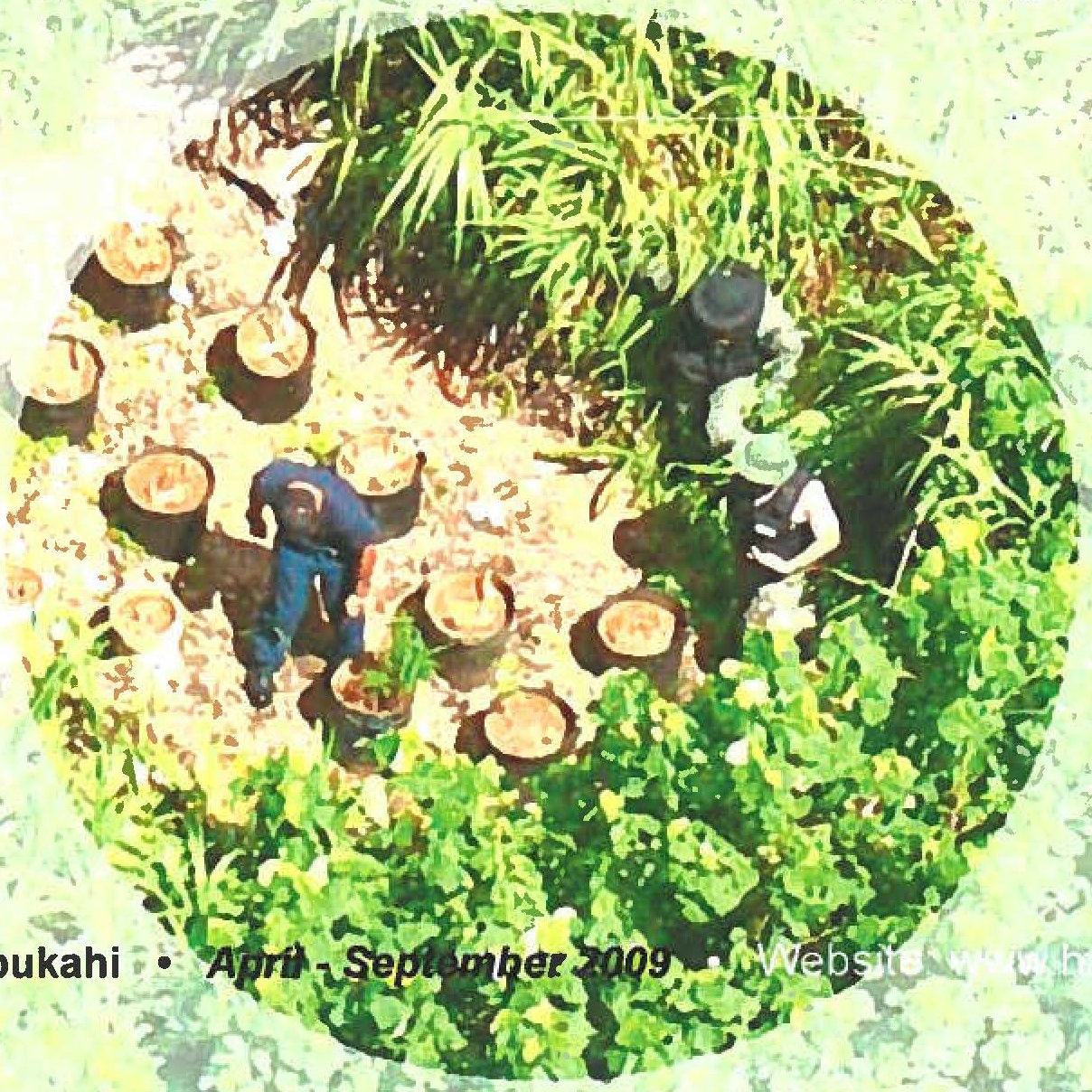
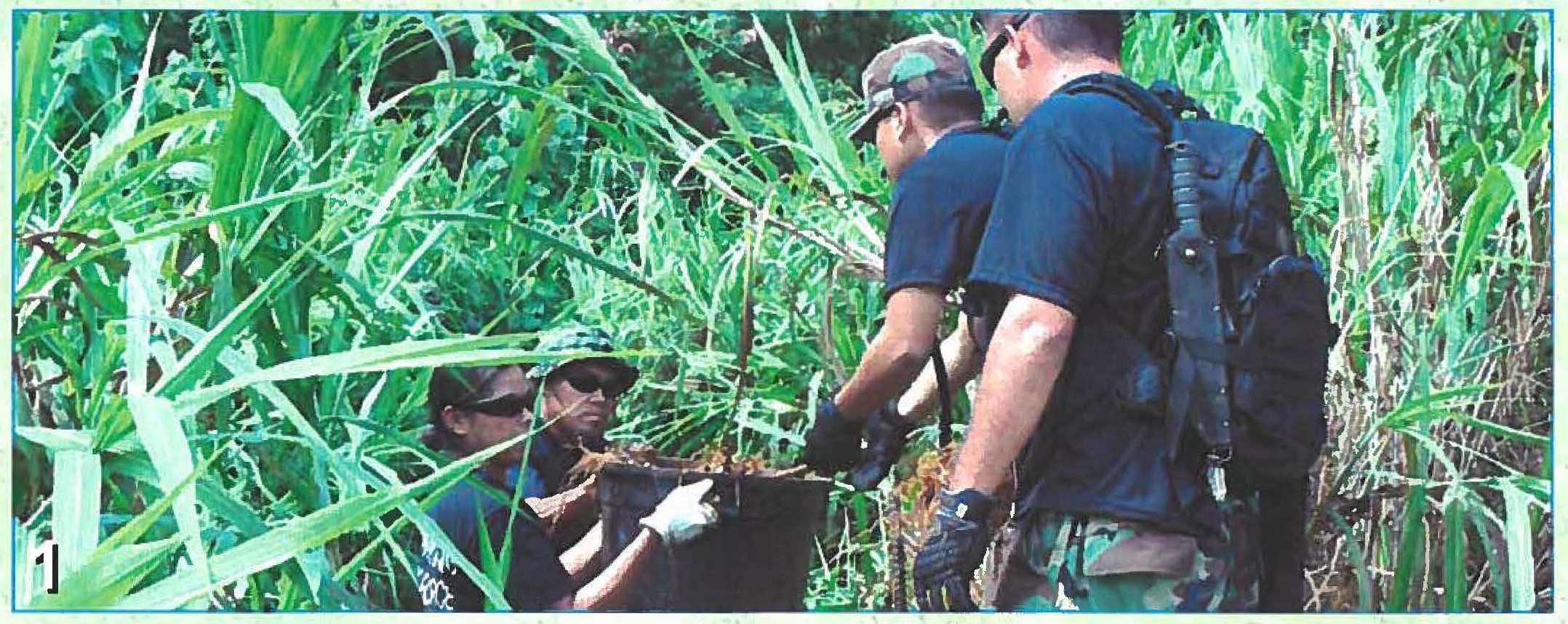
Members from the Guam and Hawaii National Guard Counter Drug Task Forces count and tag marijuana plants seized during a DEA organized marijuana eradication mission conducted on Guam this June.A Hawaii, Air National Guard member with the Counter Drug Task force cuts the roots from a marijuana plant seized in Guam during a DEA organized marijuana eradication mission held this June. Pfc James M. Wilton photos Team leader, “Chong” and Hawaii Air National Guard member with the Counter Drug Task Force receive directions to a patch of marijuana from spotter helicopter flying overhead during a DEA organized marijuana eradication mission held on Guam this June. Capt. Jeff Hickman photosIt’s not easy being green: Marijuana eradication on GuamHawaii National Guard Counter Drug Task Force members remove a planter, which was being used to grow illegal drugs, from a ditch in Guam during a DEA organized marijuana eradication mission held this June.(Picture from the 2009 April – September Pūpūkahi)
TAMUNING, Guam – This past June, Hawaii and Guam’s National Guard Counter Drug Task Force (CDTF) joined the Drug Enforcement Agency (DEA) and various law enforcement agencies and for a major Marijuana Eradication mission on Guam.
Operation GREEN HARVEST, or marijuana, eradication, on the island of Guam has been conducted by the National Guard since 2001, and it’s the final mission of the fiscalyear for the CDTF. Operation GREEN
HARVEST’s mission is to eradicate and suppress the growing of cannabis on domestic soil cutting the life line of criminal enterprises whom profit from its sale and distribution. Operation GREEN HARVEST has been conducted in Hawaii and California since 1977 and expanded to 25 states in 1985.
“The collaborative effort between Federal and local agencies and the National Guard allow GREEN HARVEST to be as successful as it has been,” said Tony Marquez, DEA, resident agent in charge. “The marijuana eradicated on Guam has to be a jointeffort, and each year the support provided by the National Guard has facilitated smooth operations and great results.”
650 plants seized
Over 650 plants were seized this year from all regions of the island during the three day operation.
Since its inaugural year, the amount of plants confiscated on Guam has been getting less and less, but that is not how victory against the war on drugs is solely measured by those involved. In the past, operations on Guam and Saipan would easily net over a thousand plants. However recently, operation GREEN HARVEST, has forced the majority of growers to adjust their modus operandi. These clever adjustments include: using better concealment, distancing patches from main trails , or roads and having smaller numbers of the plants in one place. The deterring factor of all that hard work could have possibly helped to lower the overall number of plants in the ground.
The moment people hear the low flying helicopters, word spreads that the marijuana eradication teams are present and most growers tear up or uproot their own plants, fearing that they will be found by the team. These actions show the operation is working, said Col. Diron J. Cruz, chief of staff Guam Army National Guard.
“It does get better every year. Success is not determined by the number of plants we uproot and seize. The success is the team and the system in place to do the job safely and with maximum effectiveness. Every year that team builds upon the communication, coordination and execution lessons learned from prior missions,” said Cruz. “To have an operation that involves so many players, and so many moving parts, and in the end, gainfully service the local community, that is a success.”
Aerial advantage
In order to gain the advantage over marijuana growers, helicopters are used to find the plants. According to experienced spotters, marijuana has a distinct “green” color and it stands out among the throngs of green that make up the Guam landscape. The Hawaii Army Guard’s Det. 1, Co. B, 3rd Bn., 140th Aviation OH-58 Kiowa observation helicopters and a DEA helicopter set out each day to spot cultivation of marijuana then guide teams on the ground to the exact site to pull the plants. The ground teams travel in mini-convoys to each suspected location and sometimes have to hike and “machete” their way through thick growth to reach the illegal plants. Once on site, the plants are pulled out of the ground with roots intact and if any pots were used, they are destroyed. Many times the plants are already cut or pulled, but once they are removed from the ground, they rarely survive replanting. The ground teams still celebrate finding the plants and they also let the aerial teams know that it was a good find.
“Even the little ones count!” states Capt. Phoebechelo Inigo, operations officer with the Hawaii Guard’s conuterdrug Support Program ” for many of the Hawaii Guard troops, it was their first time working an eradications mission in Guam, but they have experience working with Law Enforcement Agencies (LEA) back home.”
Cooperation key to success
“At first I was hesitant about joining ( the Counterdrug Support Program), but after working with the different LEAs I was proud to be part of the team,” said Staff Sgt. Scott Kamalii, a member of Hawaii Counterdrug and an intelligent analyst with the Bureau of Alcohol, Tobacco, Firearms and Explosives (ATF) in Honolulu. “It feels good to help the community and get drugs off the street.”
This year the ground teams were composed of Hawaii and Guam National Guard Soldiers and Airmen, and representatives from a variety of LEAs: DEA, ATF, the Federal Bureau of Investigation, Guam immigration and Customs Enforcement (ICE), US Federal Marshals, the Coast Guard, Navy Criminal Investigative service (NCIS), Guam and Hawaii Police Officers, the U.S. Postal Service and the Internal Revenue Service.
The motivation generated from the mission could be felt through both the coordinated efforts of the teams and the positive impact the mission has had on the island drug problem in the community. “Experience was our advantage and we established this solid network among the various agencies years ago,” said Capt. Gerard S. Valwto, Guam National Guard counterdrug coordinator.
The National Guard is in the unique position to contribute to drug law enforcement efforts and can assist law enforcement agencies in several areas. Marijuana Eradication Missions like Operation GREEN HARVEST are part of an on going endeavor by the government to combat the drug problem in the U.S. “As long as people are growing the stuff, the Guard is committed to step up and be a part of the team,” said Cruz. “Guam is only a microcosm in the large effort of marijuana seizures nationally, but We do get our share of resources to execute this mission. This is a problem that is not going away.”
Mission History
The National Guard involvement in the war on drugs began in 1977 in Hawaii when it provided four helicopters to Operation GREEN HARVEST to detect marijuana fields, transport law enforcement personnel to the fields, and transport confiscated illicit drugs. The National Guard Counterdrug Program is the leading domestic conterdrug support agency to create a drug/free America. Each state and U.S. territory has a National Guard Counterdrug Program that supports local, state, and federal law enforcement and community based organizations. Each National Guard Counterdrug Program focuses its resources to support educational and prevention operations within the community that are coordinated efforts in drug prevention.
The third aviation unit is Detachment 2, Co. B, 3rd Bn., 140th Aviation Security and Support. It is authorized three OH58A Kiowa observation helicopters. They provide Command, Control, and Communication (C3) and air movement operations. The aircraft is specifically configured for counterdrug aerial surveillance and night operations. These helicopters and crews routinely provide law enforcement agencies statewide with marijuana eradication support.
The third aviation unit is Detachment 2, Co. B, 3rd Bn., 140th Aviation Security and Support. It is authorized three OH58A Kiowa observation helicopters. They provide Command, Control, and Communication (C3) and air movement operations. The aircraft is specifically configured for counterdrug aerial surveillance and night operations. These helicopters and crews routinely provide law enforcement agencies statewide with marijuana eradication support.
Detachment 1, Co. A, 3rd Bn, 140th Aviation (Security and Support), is also headquartered at Lyman Field. It is authorized two LUH-72A Lakota helicopters. The unit conducts Command, Control, and Communication (C3) and air movement operations. The aircraft contains state of art the communication and surveillance equipment. These helicopters and crews routinely provide state law enforcement agencies with counter-drug support. They are also fully capable search and rescue helicopter unit with MEDEVAC capabilities
Detachment 1, Company A, 3rd Battalion, 140th Aviation Regiment (Security and Support with LUH-72 Lakota) The Lakota helicopter unit is headquartered in Hilo, Hawaii. Its mission is to conduct aviation security, reconnaissance, support and other operations for Homeland Security and Defense, Counter Drug Operations, and Defense Support to Civil Authorities (DSCA), and other agencies as approved by the Secretary of Defense for both the Continental U.S. and Outside the Continental U.S. areas of responsibility.
Deployed in support of the Operation JUMP START, the southwest border mission, Texas, January 2013 through September 2013.
Detachment 1, Company A, 3rd Battalion, 140th Aviation Regiment (Security and Support with LUH-72 Lakota) The Lakota helicopter unit is headquartered in Hilo, Hawaii. Its mission is to conduct aviation security, reconnaissance, support and other operations for Homeland Security and Defense, Counter Drug Operations, and Defense Support to Civil Authorities (DSCA), and other agencies as approved by the Secretary of Defense for both the Continental U.S. and outside the Continental U.S. areas of responsibility.
Deployed in support of the Operation RIVERWATCH II, the southwest border mission, Texas, January 2013 through September 2013.
Detachment 1, Company A, 3rd Battalion, 140th Aviation Regiment (Security and Support with Lakota LUH-72) The Lakota helicopter unit is headquartered in Hilo, Hawaii. Its mission is to conduct aviation security, reconnaissance, support and other operations for Homeland Security and Defense, Counter Drug Operations, and Defense Support to Civil Authorities (DSCA), and other agencies as approved by the Secretary of Defense for both the Continental U.S. and outside the Continental U.S. areas of responsibility.
One Lakota LUH-72 and six personnel currently deployed in direct support of Operation PHALANX, Laredo/Harlingen, Texas
Home for the HolidaysHome for the HolidaysHome for the HolidaysHome for the Holidays(Pictures for the 2015 December Pupukahi)
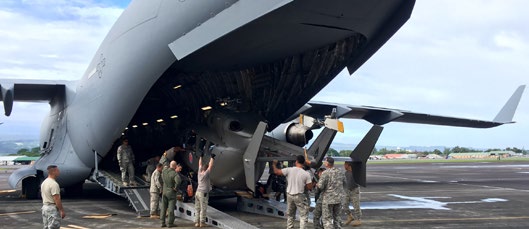
Seven Hawaii Army National Guard Soldiers returned home after a six month-long deployment in support of the Southwest Border Mission. The Hilo-based Detachment 1, Company A, 3rd Battalion, 140th Aviation “Guardians”, flew their UH-72 Lakota helicopter for task force Liberty based out of Harlingen, Texas. The unit’s mission during operation Phalanx was to conduct aerial detection and monitoring and disrupt transnational criminal organizations and drug trafficking organizations in support of the U.S. Department of Homeland Security. The deployers were: Capt. Jayson Yang, Chief Warrant Rachael Yanos, Chief Warrant Aaron Beede, Chief Warrant Juan Coria, Chief Warrant Charles Eckart, Staff Sgt. Roland Gacayan Jr., and Spc. Takej Anjel.
Detachment 1, Company A, 3rd Battalion, 140th Aviation Regiment The Lakota helicopter unit is headquartered at Wheeler Army Airfield and is commanded by Capt. Jerrod Avegalio. Its mission is to conduct aviation security, reconnaissance, support and other operations for Homeland Security and Defense, Counter Drug Operations, and Defense Support to Civil Authorities (DSCA), and other agencies as approved by the Secretary of Defense for both the Continental U.S. and outside the Continental U.S. areas of responsibility
Detachment 1, Company A, 3rd Battalion, 140th Aviation Regiment The Lakota helicopter unit is headquartered at Wheeler Army Airfield and is commanded by Capt. Jerrod Avegalio. Its mission is to conduct aviation security, reconnaissance, support and other operations for Homeland Security and Defense, Counter Drug Operations, and Defense Support to Civil Authorities (DSCA), and other agencies as approved by the Secretary of Defense for both the Continental U.S. and outside the Continental U.S. areas of responsibility.
Provided personnel and aviation asset support in order to conduct reconnaissance missions in support of the HING Counter Drug program.
Provided personnel and aviation support for Operation A’ola Inoa.
Provided personnel to support Task Force Hawai‘i in support of the State of Hawai‘i’s COVID-19 response.
Detachment 1, Company A, 3rd Battalion, 140th Aviation Regiment (Det 1 Co. A, 3-140th AVN) Commanded by Capt. Marshall Kaohu Nishimura and Sgt. 1st Class Kevin Meno, Det 1 Co. A, 3-140th AVN conducts aviation security, reconnaissance, support and other operations for Homeland Security and Defense, Counter Drug Operations, and NGCS, and other agencies as approved by the Secretary of Defense for both CONUS and OCONUS areas of responsibility.
Consolidated AT 2023: The unit deployed from Hilo, Hawai‘i to Camp Roberts, Calif. for consolidated training with higher command in June 2023 to provide briefs and training for upcoming Southwest Border (SWB) mobilization. Sgt. Kevin Trinh was trained on the mission equipment package camera system.
Soldier Readiness Program (SRP): The unit conducted SRP in preparation for validation at Fort Bliss, Texas, on Jan. 6, 2024 at Kalealoa. This was held to satisfy mission essential task 5 conduct expeditionary deployment operations and ensure Soldiers are prepared for SWB mission. Sgt. Darius Acob reviewed his soldier readiness processing folder for proper documentation.
Readiness Level Progression Training for Non-rated Crewmembers (NRCM): The unit conducted readiness level training for NRCM from Feb. 26 to March 29, 2024 at Wheeler Army Airfield. This was held to satisfy mission essential task training and prepare for SWB mobilization. Sgt. Kevin Trinh conducted airspace surveillance during readiness-level progression training.
Detachment 1, Company A3 Battalion, 140th Aviation Regiment “Kia’i Ma Ka Lani”
The DET 1 CO A 3-140th AVN’s mission is to conduct aviation security, reconnaissance, support and other operations for Homeland Security and Defense, counter drug operations, and other agencies as approved by the Secretary of Defense for both CONUS and OCONUS areas of responsibility.
Deployed and supported Homeland Security on the southern border mission
Aviation regiment returns home after supporting Task Force Sentinel
By Sgt. Casandra Ancheta
117th Mobile Public Affairs Detachment
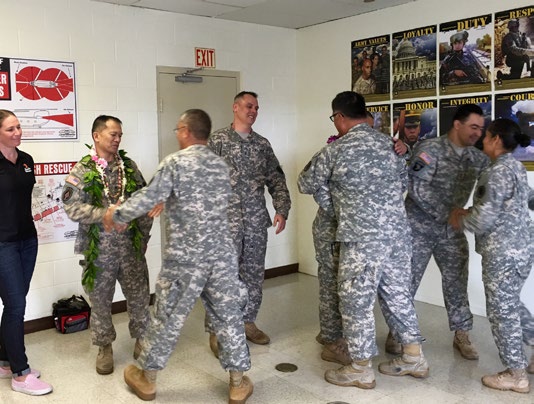
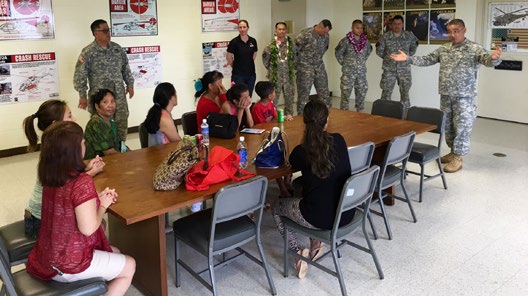
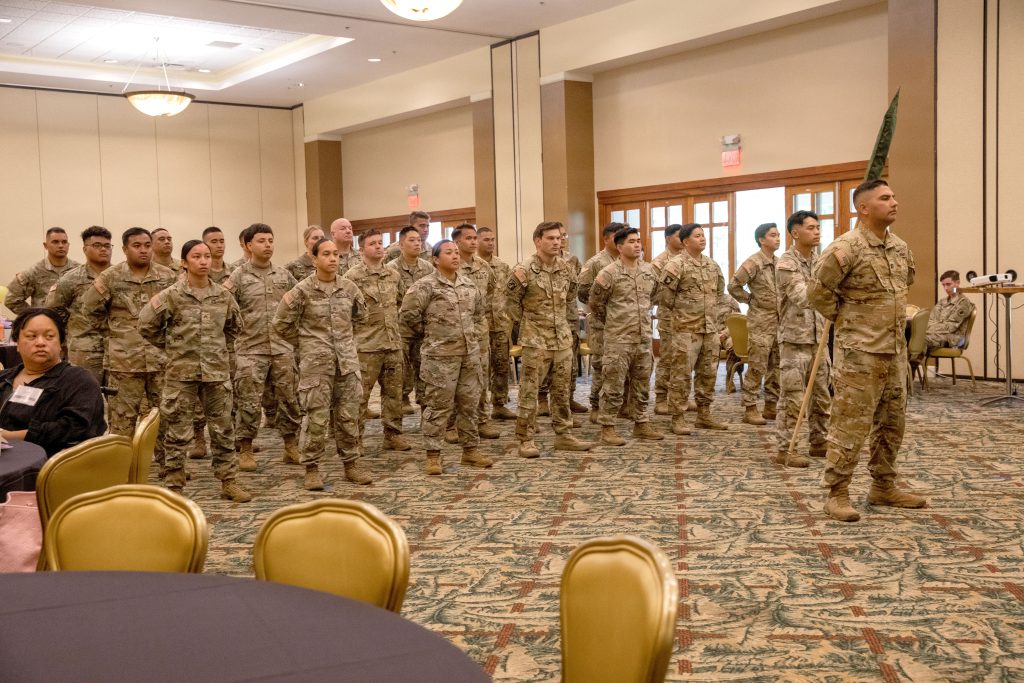
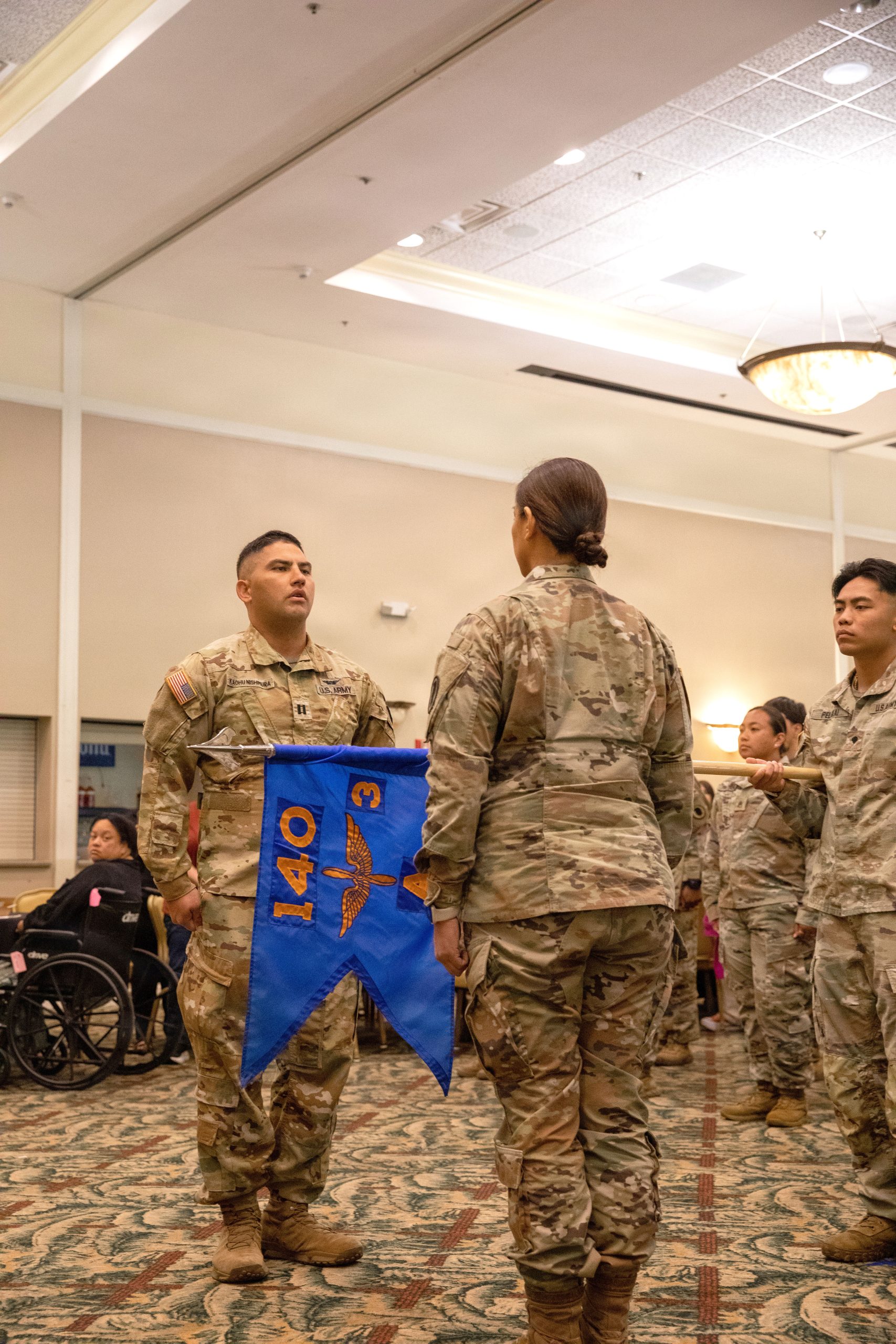
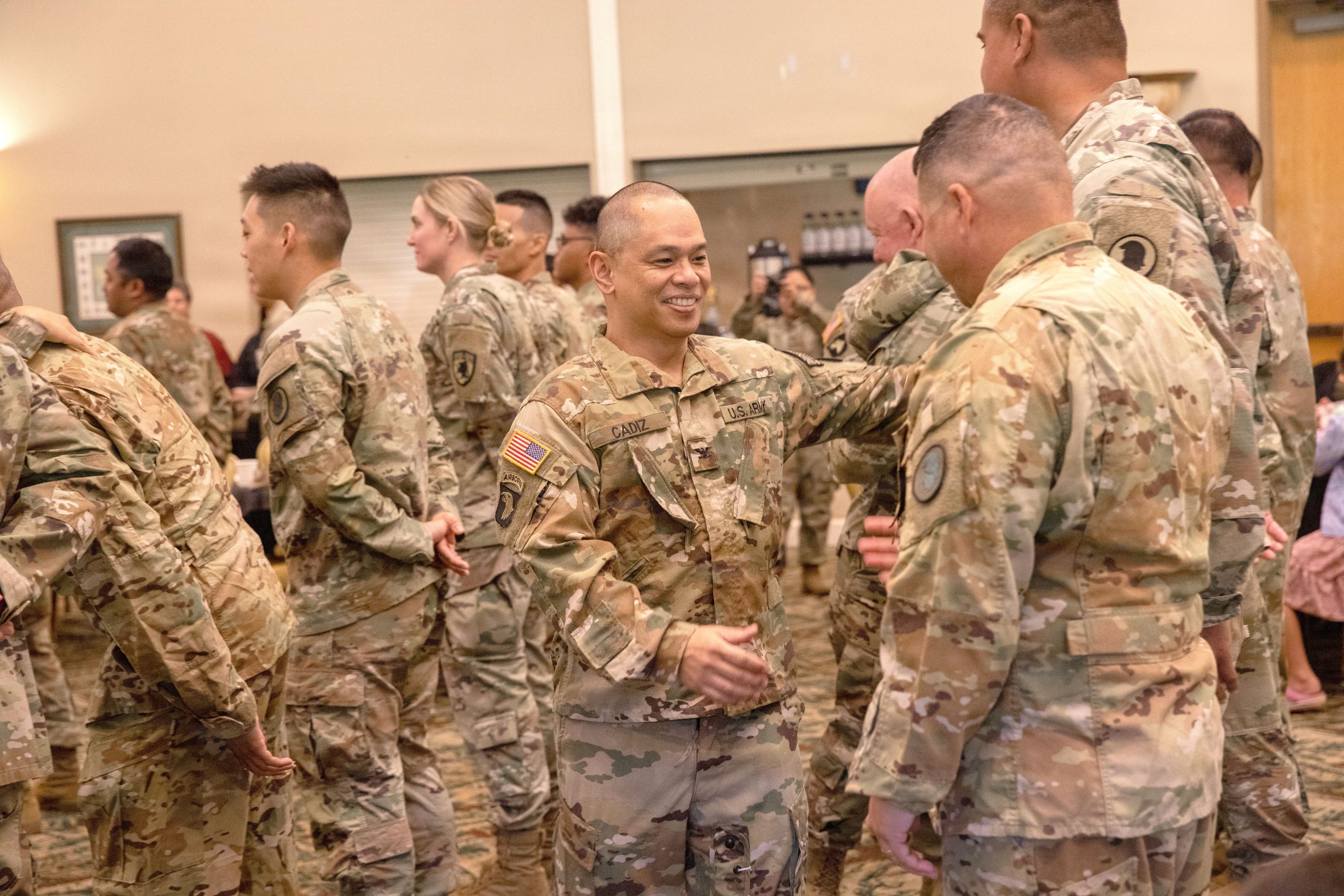
A welcome home ceremony for Hawai‘i Army National Guard soldiers from Detachment 1, Company A, 3rd Battalion, 140th Aviation Regiment (Det 1 Co A 3-140th AVN), was held at Schofield Barracks on Jan. 17. The Soldiers returned home after a 13-month deployment supporting the Joint-Task Force-Southern Border. (U.S. Army National Guard photos by Sgt. Mariah-Alexsandra Manandic-Kapu)Capt. Marshall Kaohu-Nishimura, commander of Det 1 Co A 3-140th AVN and Col. Phoebe P. Inigo, commander of the 103rd Troop Command, unraveled the unit flag during the event. (U.S. Army National Guard photos by Sgt. Mariah-Alexsandra Manandic-Kapu)A welcome home ceremony for Hawai‘i Army National Guard soldiers from Detachment 1, Company A, 3rd Battalion, 140th Aviation Regiment (Det 1 Co A 3-140th AVN), was held at Schofield Barracks on Jan. 17. The Soldiers returned home after a 13-month deployment supporting the Joint-Task Force-Southern Border. (U.S. Army National Guard photos by Sgt. Mariah-Alexsandra Manandic-Kapu)(Pictures from the 2026 pūpūkahi Volume 56 No. 2)
SCHOFIELD BARRACKS, HAWAI‘I — U.S. Soldiers assigned to the Detachment 1, Company A, 3rd Battalion, 140th Aviation Regiment (Det 1 Co A 3-140th AVN), 103rd Troop Command (103rd TC), Hawai‘i Army National Guard (HIARNG) returned home after their 13-month deployment at Schofield Barracks on Jan. 17, 2026.
The 3-140th supported Task Force Sentinel and provided aviation resources needed to detect and deter illegal activities.
“Our mission focused on providing aerial surveillance and reconnaissance, enhancing situation awareness and supporting border security operations,” said 1st Lt. Adam Stone, an aviation officer assigned to Det 1 Co A 3-140th AVN, 103rd TC.
Task Force Sentinel worked closely with the U.S. Northern Command, Department of Homeland Security and National Guard units from Alaska, Arizona, California, Colorado, New Mexico and Nevada.
“Throughout my time with these units, I witnessed our shared dedication to our mission, often navigating complex logistics and operational challenges together,” said U.S. Army Sgt. Kevin Trinh, a LUH-72 Crew Chief assigned to Det 1 Co A 3-140th AVN, 103rd TC. “Throughout my time with these units, I witnessed our shared dedication to our mission, often navigating complex logistics and operational challenges together.”
U.S. Army Capt. Marshall Kaohu-Nishimura, commander of Det 1 Co A 3-140th AVN, 103rd TC, 103rd TC, HIARNG, mentions that the Detachment 1 flew 1,300 hours and assisted in border security operations to detect and deter illegal activities from San Diego, Calif. to Yuma, Ariz.
“You’ve faced adversities with courage and professionalism, and your hard work has made a significant impact in our efforts to support national security,” said Kaohu-Nishimura.
Trinh mentions that in 2025, the border experienced record low encounters and a decrease in apprehensions.
“The collective efforts of every Soldier in the unit made a meaningful and measurable impact on mission success,” said Stone.
The 3-140th returned home to their loved one without any casualties or injuries, marking a successful mission.
“Together, we have accomplished our mission, and I am proud to serve alongside such an exceptional team,” said Kaohu-Nishimura. “Let us carry on with our heads held high, knowing that we have made a difference.”
Hawaiʻi Army National Guardsmen receive U.S. Border Patrol Merit Achievement Award
By Rachel Blaire | State of Hawai‘i Department of Defense Public Affairs
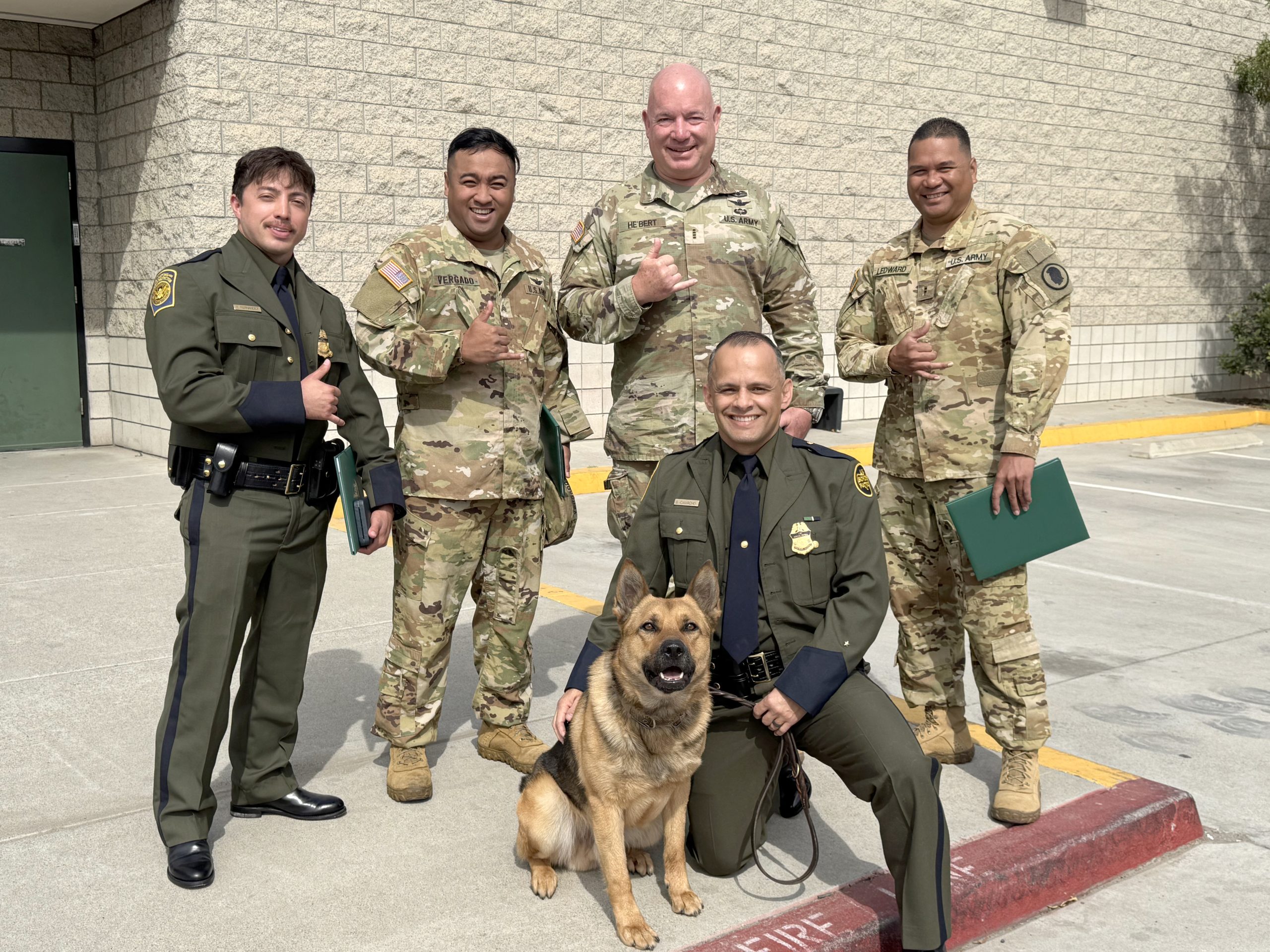
Hawaiʻi Army National Guardsmen Sgt. Mariano Vergado-Duclayan, second from left, Chief Warrant Officer 4 Jeff Hebert and Chief Warrant Officer 2 Jerome Ledward flashed shakas alongside San Diego Sector Chief Patrol Agent Justin De La Torre, far left, and Border Patrol Agent Benjamin Camacho and his canine, Boo. (U.S. Army National Guard photo by Col. Byron Cadiz)(Picture from the 2026 pūpūkahi Volume 56 No. 3)
Three Hawaiʻi Army National Guardsmen were involved in an operation last year to rescue a Border Patrol Agent and his canine from the California mountains after a snake bite. For their efforts they were awarded a U.S. Border Patrol Merit Achievement Award on April 3rd, 2026, which is presented to an individual or a group for lifesavings efforts that exceed expectation.
“It was an honor for the crew to receive this award for the K-9 rescue mission. The team stayed focused, worked together and did what was needed to bring the dog out safely,” said Chief Warrant Officer 4 Jeff Hebert, one of the aircrew members that day.
U.S. Soldiers assigned to Detachment 1, Company A, 3rd Battalion, 140th Aviation Regiment (1/A/3-140th AV), 103rd Troop Command, Hawaiʻi Army National Guard, deployed to support Task Force Sentinel by providing aviation resources needed to detect and deter illegal activities.
Task Force Sentinel worked closely with the U.S. Northern Command, Department of Homeland Security and National Guard units from Alaska, Arizona, California, Colorado, New Mexico and Nevada.
On May 9, 2025, Hebert and fellow 1/A/3-140th AV aircrew members Chief Warrant Officer 2 Jerome Ledward and Sgt. Mariano Vergado-Duclayan, were working on a California Army Air National Guard Blackhawk helicopter to provide aerial spotting and guidance.
That afternoon the Blackhawk got the call that Border Patrol Agent Benjamin Camacho’s Canine partner, Boo, sustained a rattlesnake bite in the Otay Mountain Wilderness near San Diego, Calif.
The Blackhawk landed to pick up the canine team and transferred the pair to an Air and Marine Operations’ Blackhawk helicopter at John Nichols Field Airport a few miles away. From there, they flew directly to Pet Emergency & Specialty Center in La Mesa, Calif.
Camacho and Boo were whisked into the pet hospital to receive antivenom. The attending veterinarian noted the quick response (less than 30 minutes) had been essential to Boo’s survival and eventual full recovery.
A silver color metal and enamel device 1 1/8 inches (2.86 cm) in height overall consisting of a blue equilateral triangle bearing two silver stars, one above the other, and with its apex between two vertical orange broad arrows, tips to base, all within two silver wings the tips curved upwardly and conjoined and the scapulars resting in base upon an orange scroll bearing the inscription “CURA ET PERFECTIO” in silver letters.
Symbolism
Ultramarine blue and golden orange are the colors traditionally associated with Aviation. The two broad arrows denote the Southern Philippines and Luzon Campaign assault landings and the stars symbolize the Bismarck Archipelago and Leyte Campaigns during World War II, in which the former organization participated. The triangular shapes, suggested by the Philippine Presidential flag, allude to the Philippine Presidential Unit Citation awarded to an element of the unit for those campaigns. The wings, symbols of flight, allude to that aspect of the organization’s mission. The motto is translated to “Accuracy and Perfection.”
Background
The distinctive unit insignia was originally approved for the 49th Aviation Battalion on 11 April 1969. It was redesignated for the 76th Aviation Group on 10 December 1974. It was redesignated for the 40th Aviation Battalion on 13 April 1979. The insignia was redesignated for the 140th Aviation Regiment with the description and symbolism revised effective 1 October 1987.
Unofficial Unit Insignia
140th Aviation Regiment Honors and Lineage
Constituted 31 July 1987 in the California Army National Guard as the 140th Aviation, a parent regiment under the United States Army Regimental System
Organized 1 October 1987 from existing units to consist of the 1st Battalion and Companies D, E, and F, elements of the 40th Infantry Division, and Company G
Reorganized 1 March 1988 to consist of the 1st Battalion and Companies D, E, and F, elements of the 40th Infantry Division, the 3rd Battalion, and Company G
Reorganized 1 September 1995 in the California and Nevada Army National Guard to consist of the 1st Battalion and Company F, elements of the 40th Infantry Division, the 3d Battalion, and Company G
Reorganized 1 September 1996 to consist of the 1st Battalion and Company F, elements of the 40th Infantry Division, the 3d Battalion, and Company G
Reorganized 1 September 1999 to consist of the 1st Battalion and Company F, elements of the 40th Infantry Division, the 3d Battalion, Company G, and Company H
Reorganized 1 September 2000 to consist of the 1st Battalion, an element of the 40th Infantry Division, the 3d Battalion, Company G, and Company H
Reorganized 1 September 2002 to consist of the 1st Battalion, an element of the 40th Infantry Division, the 3d Battalion, and Company G
Reorganized 1 November 2002 to consist of the 1st Battalion an element of the 40th Infantry Division, the 3d Battalion, and Companies D and G
(Company D ordered into active Federal service 7 July 2003 at Fresno)
(Company G ordered into active Federal service 6 January 2003 at Stockton; released from active Federal service 23 November 2003 and reverted to state control)
(Company D released from active Federal service 18 July 2004 and reverted to state control)
(1st Battalion ordered into active Federal service 11 September 2004 at home stations)
Redesignated 1 October 2005 as the 140th Aviation Regiment
(1st Battalion released from active Federal service 9 March 2006 and reverted to state control)
Reorganized 1 September 2006 in the California, Arizona, Colorado, Hawaii, Nevada, New Mexico, and Washington Army National Guard to consist of the 1st and 3d Battalions, elements of the 40th Infantry Division
(1st Battalion ordered into active Federal service 7 August 2010 at home stations; released from active Federal service 10 September 2011 and reverted to state control)
CAMPAIGN PARTICIPATION CREDIT
War on Terrorism
Iraq:
Iraqi Governance
(additional campaigns to be determined)
Company C (Fort Lewis, Washington), 1st Battalion, additionally entitled to:
War on Terrorism
Iraq:
Iraqi Surge
DECORATIONS
Meritorious Unit Commendation (Army), Streamer embroidered IRAQ 2010-2011
Company C (Fort Lewis, Washington), 1st Battalion, additionally entitled to:
Meritorious Unit Commendation (Army), Streamer embroidered IRAQ SEP 2007-JUL 2008
Headquarters and Headquarters Company (Stockton), 3d Battalion entitled to:
Army Superior Unit Award, Streamer embroidered 1992-1993