Do you need help in another language? We will get you a free interpreter. Call 808-369-3580 to tell us which language you speak.
您需要其它語言嗎?如有需要,請致電 (808-369-3478), 我們會提供免費翻譯服務
您需要其它语言吗?如有需要,请致电 (808-369-3478), 我们会提供免费翻译服务
En mi niit alilis lon pwal eu kapas? Sipwe angei emon chon chiaku ngonuk ese kamo. Kokori (808-369-3478) omw kopwe ureni kich meni kapas ka ani.
Makemake `oe i kokua i pili kekahi `olelo o na `aina `e? Makemake la maua i ki`i `oe mea unuhi manuahi. E kelepona (808-369-3478)`oe ia la kaua a e ha`ina `oe ia la maua mea `olelo o na `aina `e.
Masapulyo kadi ti tulong iti sabali a pagsasao? Ikkandakayo iti libre nga paraipatarus. Awaganyo ti
(808-369-3478) tapno ibagayo kadakami no ania ti pagsasao nga ar-aramatenyo.
다른언어로 도움이 필요하십니까? 저희가 무료로 통역을 제공합니다. (808-369-3478)로 전화해서 사용하는 언어를 알려주십시요
Kwoj aikuij ke jiban kin juon bar kajin? Kim naj lewaj juon am dri ukok eo ejjelok wonen. Kirtok
(808-369-3478) im kwalok non kim kajin ta eo kwo melele im kenono kake.
E te mana'o mia se fesosoani i se isi gagana? Matou te fesosoani e ave atu fua se faaliliu upu mo oe. Vili mai i le numera lea (808-369-3478) pea e mana'o mia se fesosoani mo se faaliliu upu.
¿Necesita ayuda en otro idioma? Nosotros le ayudaremos a conseguir un intérprete gratuito. Llame al (808-369-3478) y diganos que idioma habla.
Kailangan ba ninyo ng tulong sa ibang lengguwahe? Ikukuha namin kayo ng libreng tagasalin. Tumawag sa (808-369-3478) para sabihin kung anong lengguwahe ang nais ninyong gamitin.
‘Okú ke fie maʻu tokoni ʻi ha lea fakafonua ʻe taha? Temau kumi haʻo taha fakatonulea taʻetotongi. Telefoni ki he (808-369-3478) ke fakahā mai ʻa e lea fakafonua ʻokú ke lea aí.
Bạn có cần giúp đỡ bằng ngôn ngữ khác không ? Chúng tôi se yêu cầu một người thông dịch viên miễn phí cho bạn. Gọi (808-369-3478)nói cho chúng tôi biết bạn dùng ngôn ngữ nào
Gakinahanglan ka ba ug tabang sa imong pinulongan? Amo kang mahatagan ug libre nga maghuhubad. Tawag sa (808-369-3478) aron magpahibalo kung unsa ang imong sinulti-han.
A brand new initiative to support community preparedness through partnerships and resources was developed by SCD and the Pacific Disaster Center in October 2012. The Hawaii Hazard Awareness and Resiliency Program was designed to: increase hazard awareness; enhance understanding of official warnings; educate residents on appropriate response actions; improve personal preparedness; identify a community’s existing skills and resources for disaster preparedness and response; provide guidance on hazard mitigation; aid community development of emergency plans and exercises; and, support community outreach events.
The Hawaii Hazard Awareness and Resilience Program (HHARP) continues to be a key element of resilience building for SCD/ HI-EMA. HHARP was unveiled to the emergency management ohana at the HEPHSW and has been introduced to half a dozen local communities. In June 2014, SCD/HI-EMA staff presented the HHARP concept at preparedness seminars statewide. The HHARP concept involves guiding self identified communities through a facilitated education and outreach program to promote hazard understanding and awareness and by offering tools and information resource in mitigation, preparedness, response, and recovery.
The Hawaii Hazard Awareness and Resilience Program (HHARP) is a key element of resilience building for HI-EMA. The HHARP concept involves guiding self identified communities through a facilitated education and outreach program to promote hazard understanding and awareness and by offering tools and informational resources in mitigation, preparedness, response and recovery. In June 2015, Waimanalo was recognized as the first disaster resilient community by local, state and federal officials during the Waimanalo Emergency Preparedness Fair. The effort was spearheaded by the community group Hoomakaukau O Waimanalo, which translates to Get Ready Waimanalo
Waimanalo Recognized as HHARP Disaster Resilient Community
By Shelly Kunishige
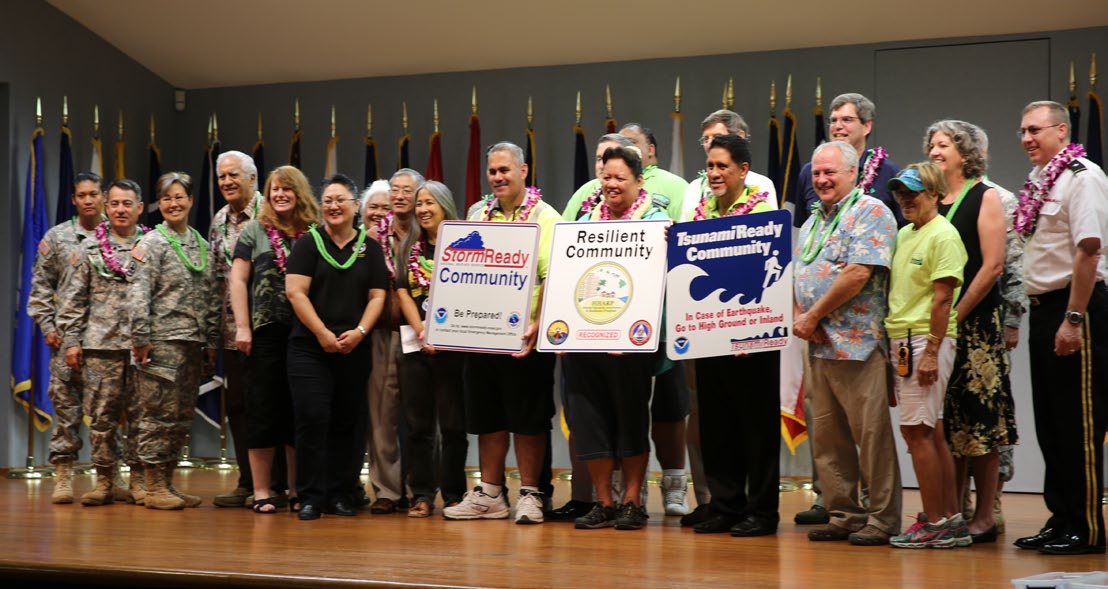
Waimanalo Recognized as HHARP Disaster Resilient Community(Picture from the 2015 July Pūpūkahi)
Waimanalo was honored as a Hawaii Hazards Awareness and Resilience Program (HHARP) disaster resilient community by local, state, and federal officials during the Waimanalo Emergency Preparedness Fair. This fair was held at the Hawaii National Guard Regional Training Institute on June 20, 2015. Fair organizers are members of a community group named Hoomakaukau O Waimanalo, which translates to Get Ready Waimanalo.
Hoomakaukau O Waimanalo worked with Hawaii Emergency Management Agency (HI-EMA), City and County of Honolulu Department of Emergency Management (DEM), and the Hawaii National Guard (HING) over an 18-month period to complete HHARP and is the first community to do so. “This is a prime example of disaster preparedness at a grass roots level,” said Kevin Richards, Earthquake and Tsunami Planner for the State of Hawaii and the creator of HHARP. “We recognize that communitites will have significant needs after a major disaster and HHARP enables them to respond and recover effectively as a community.”
HHARP was developed by Hawaii Emergency Management Agency (HI-EMA) in 2013. The goal of the program is to enhance community resilience to hazards. The HHARP method for achieving this goal is taking the communities through a facilitated education and outreach program to promote hazard understanding and awareness and by offering tools and information resources in mitigation, preparedness, response, and recovery.
Through the HHARP process Hoomakaukau O Waimanalo also earned their StormReady and TsunamiReady designations. StormReady and TsunamiReady requirements include demonstration that the community has: a 24-hour warning point and emergency operations center (at the City and County and State); multiple ways to receive severe weather warnings and forecasts and multiple methods for alerting the public; a system to monitor local weather conditions; held community seminars to promote readiness; and, developed a formal hazardous weather plan.
HI-EMA, DEM, and HING continue to introduce and administer HHARP in island communities. Actively engaged communities include Aina Haina, Ewa Beach, Hawaii Kai, Kailua, Kaneohe, and Waianae. If you are interested in learning more about HHARP, please contact Kevin Richards at (808) 733-4300 or [email protected].
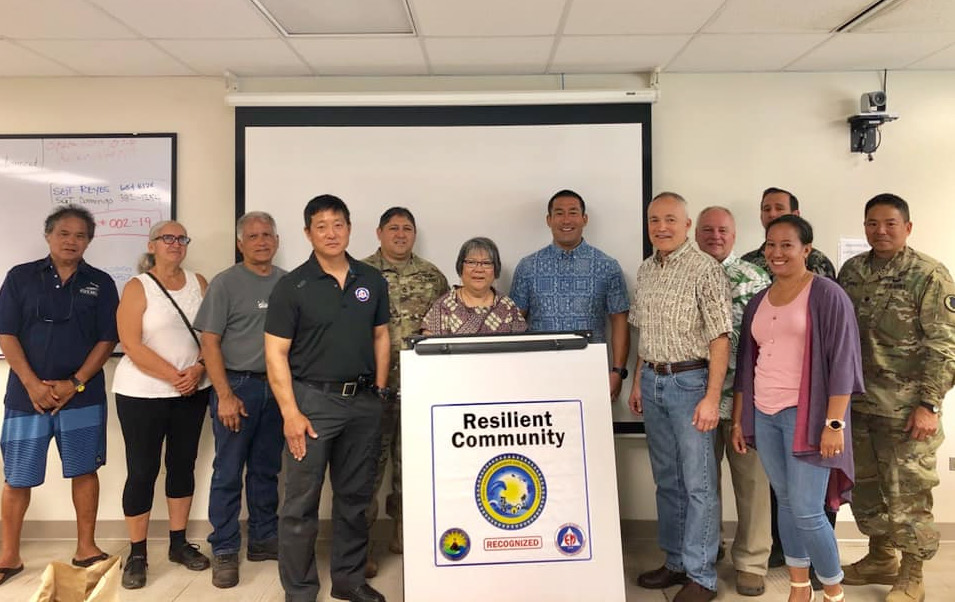
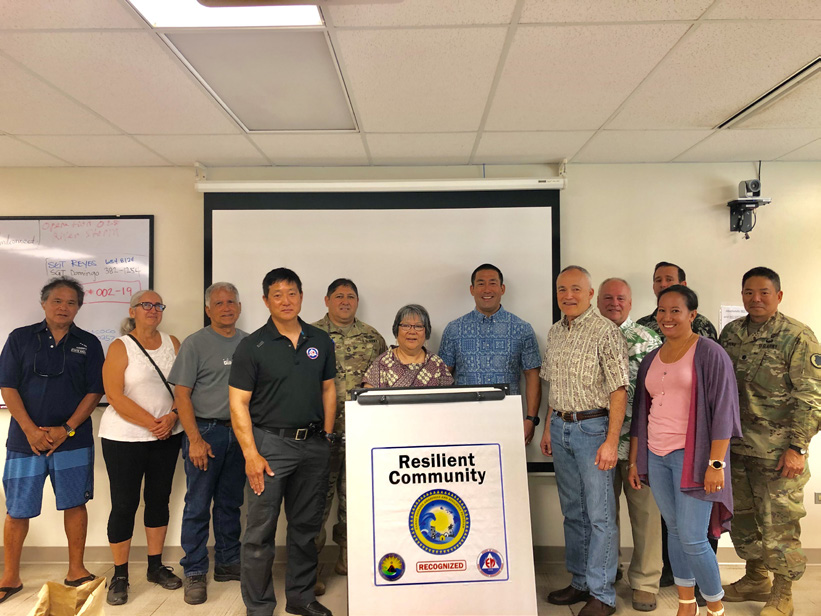
Hanapēpē-Eleele HHARP recognized as a “resilient community,” Kaua‘i, HI. Ceremony held with Kaua‘i Mayor Kawakami, and members representing Hanapēpē-Eleele community, Kaua‘i Emergency Management, Hawai‘i Emergency Management, Hawai‘i Army National Guard, and State Department of Defense Community Programs – as Hanapēpē-Eleele is recognized as a “resilient community.” (Photo by: Arlina Agbayani) (Picture from the 2019 Annual Report)
HHARP: Prepare communities to be self-reliant before, during, and after natural hazard events, improve their ability to take care of their own needs, and reduce the negative impacts of disasters.
Hanapepe-Eleele Recognized As HHARP Disaster Resilient Community –
Hawaii Emergency Management Agency – Arlina Agbayani
Hanapepe-Eleele Recognized As HHARP Disaster Resilient Community(Picture from the 2019 Summer Pupukahi)
Hanapepe-Eleele HHARP was honored as a Hawai’i Hazards Awareness and Resilience Program (HHARP) disaster resilient community by local and state officials during the Kaua’i Community Disaster Preparedness Fair. This fair was held at the Hanapepe National Guard Armory on May 18, 2019. Fair organizers are members of a community group named HanapepeEleele HHARP.
Hanapepe-Eleele together with Hawai’i Emergency Management Agency (HIEMA), Kaua’i County Emergency Management (KEMA), and the Department of Defense worked together for a three-year period to complete HHARP and is the first neighbor island to do so.
“In terms of disaster resiliency, this is a great moment for the community,” said Luke Meyers, Executive Officer of HI-EMA. “With everything that the Garden Island has endured, the formation of HanapepeEleele HHARP is vital for the outreach and education necessary to keep Kaua’i strong.”
HHARP was developed by HI-EMA in 2013. The goal of the program is to enhance community resilience against hazards. The HHARP method for achieving this goal is taking the communities through a facilitated education and outreach program to promote hazard understanding and awareness and by offering tools and information resources in mitigation, preparedness, response, and recovery.
HI-EMA continues to introduce and administer HHARP in island communities. Actively engaged communities include Ewa Beach, Hawai’i Kai, Kane’ohe, Kahalu’u, and Mililani. If you are interested in learning more about HHARP, please contact Bruce Oliveira at 808-429-8514 or [email protected].
Hanapepe-Eleele Recognized As HHARP Disaster Resilient Community –
Hawaii Emergency Management Agency – Arlina Agbayani
Hanapepe-Eleele Recognized As HHARP Disaster Resilient Community(Pictures from the 2019 Winter Pupukahi)
Hanapepe-Eleele HHARP was honored as a Hawai’i Hazards Awareness and Resilience Program (HHARP) disaster resilient community by local and state officials during the Kaua’i Community Disaster Preparedness Fair. This fair was held at the Hanapepe National Guard Armory on May 18, 2019. Fair organizers are members of a community group named HanapepeEleele HHARP.
Hanapepe-Eleele together with Hawai’i Emergency Management Agency (HIEMA), Kaua’i County Emergency Management (KEMA), and the Department of Defense worked together for a three-year period to complete HHARP and is the first neighbor island to do so.
“In terms of disaster resiliency, this is a great moment for the community,” said Luke Meyers, Executive Officer of HI-EMA. “With everything that the Garden Island has endured, the formation of HanapepeEleele HHARP is vital for the outreach and education necessary to keep Kaua’i strong.”
HHARP was developed by HI-EMA in 2013. The goal of the program is to enhance community resilience against hazards. The HHARP method for achieving this goal is taking the communities through a facilitated education and outreach program to promote hazard understanding and awareness and by offering tools and information resources in mitigation, preparedness, response, and recovery.
HI-EMA continues to introduce and administer HHARP in island communities. Actively engaged communities include Ewa Beach, Hawaii Kai, Kaneohe, Kahaluu, and Mililani.
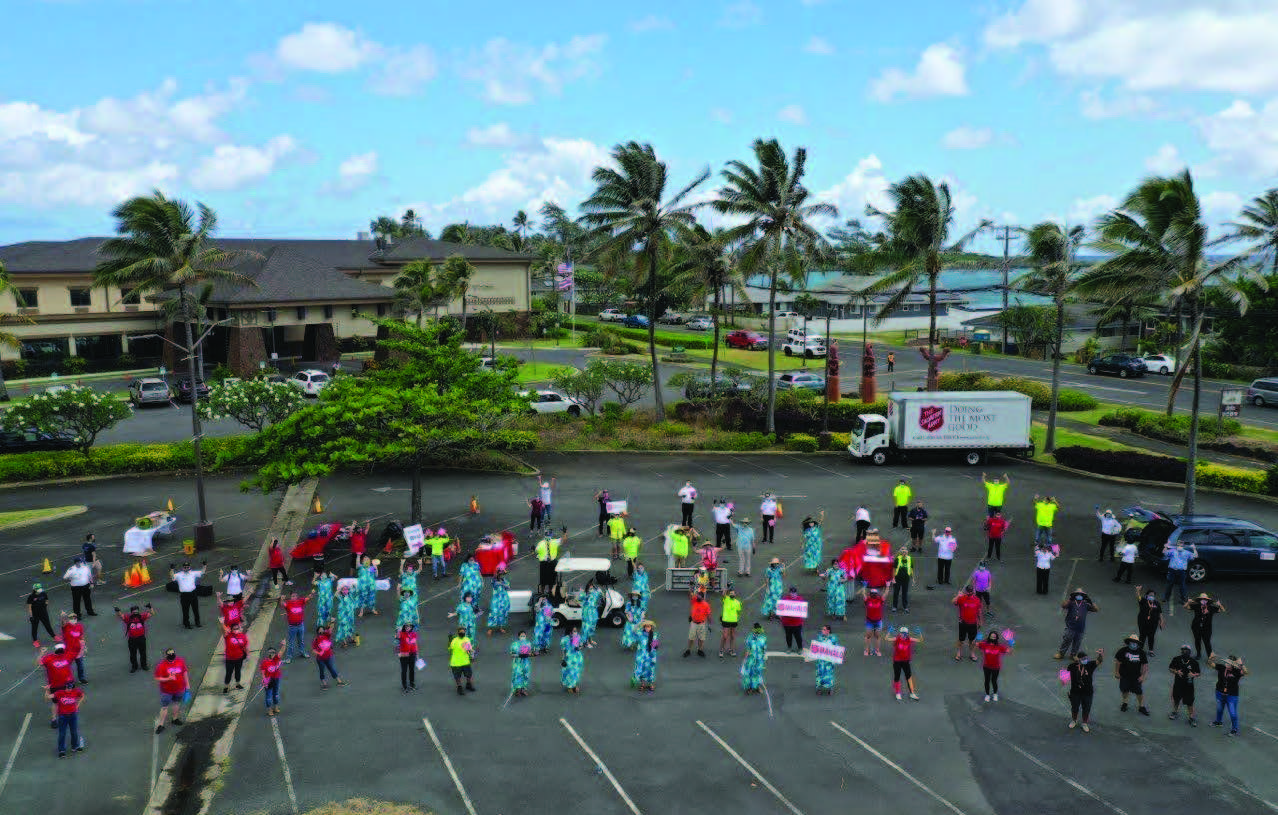
Mother’s Day food drive, Lā‘ie, HI. Volunteers come together to assist with a Mother’s Day Food Drive at the Brigham Young University Lā‘ie campus. The event was sponsored by the Salvation Army. HHARP was among those volunteers, and they helped distribute enough food to feed over 700 families. (Picture from the 2020 Annual Report)
Hawai‘i Hazard Awareness and Resiliency Program (HHARP): The aim of the Hawaii Hazards Awareness and Resilience Program (HHARP) is to help communities prepare to be self-reliant during and after natural hazard events, improve their ability to take care of their own needs, and reduce the negative impacts of disasters.