Do you need help in another language? We will get you a free interpreter. Call 808-369-3580 to tell us which language you speak.
您需要其它語言嗎?如有需要,請致電 (808-369-3478), 我們會提供免費翻譯服務
您需要其它语言吗?如有需要,请致电 (808-369-3478), 我们会提供免费翻译服务
En mi niit alilis lon pwal eu kapas? Sipwe angei emon chon chiaku ngonuk ese kamo. Kokori (808-369-3478) omw kopwe ureni kich meni kapas ka ani.
Makemake `oe i kokua i pili kekahi `olelo o na `aina `e? Makemake la maua i ki`i `oe mea unuhi manuahi. E kelepona (808-369-3478)`oe ia la kaua a e ha`ina `oe ia la maua mea `olelo o na `aina `e.
Masapulyo kadi ti tulong iti sabali a pagsasao? Ikkandakayo iti libre nga paraipatarus. Awaganyo ti
(808-369-3478) tapno ibagayo kadakami no ania ti pagsasao nga ar-aramatenyo.
다른언어로 도움이 필요하십니까? 저희가 무료로 통역을 제공합니다. (808-369-3478)로 전화해서 사용하는 언어를 알려주십시요
Kwoj aikuij ke jiban kin juon bar kajin? Kim naj lewaj juon am dri ukok eo ejjelok wonen. Kirtok
(808-369-3478) im kwalok non kim kajin ta eo kwo melele im kenono kake.
E te mana'o mia se fesosoani i se isi gagana? Matou te fesosoani e ave atu fua se faaliliu upu mo oe. Vili mai i le numera lea (808-369-3478) pea e mana'o mia se fesosoani mo se faaliliu upu.
¿Necesita ayuda en otro idioma? Nosotros le ayudaremos a conseguir un intérprete gratuito. Llame al (808-369-3478) y diganos que idioma habla.
Kailangan ba ninyo ng tulong sa ibang lengguwahe? Ikukuha namin kayo ng libreng tagasalin. Tumawag sa (808-369-3478) para sabihin kung anong lengguwahe ang nais ninyong gamitin.
‘Okú ke fie maʻu tokoni ʻi ha lea fakafonua ʻe taha? Temau kumi haʻo taha fakatonulea taʻetotongi. Telefoni ki he (808-369-3478) ke fakahā mai ʻa e lea fakafonua ʻokú ke lea aí.
Bạn có cần giúp đỡ bằng ngôn ngữ khác không ? Chúng tôi se yêu cầu một người thông dịch viên miễn phí cho bạn. Gọi (808-369-3478)nói cho chúng tôi biết bạn dùng ngôn ngữ nào
Gakinahanglan ka ba ug tabang sa imong pinulongan? Amo kang mahatagan ug libre nga maghuhubad. Tawag sa (808-369-3478) aron magpahibalo kung unsa ang imong sinulti-han.
The Hawaiʻi National Guard’s is Federalized for World War II
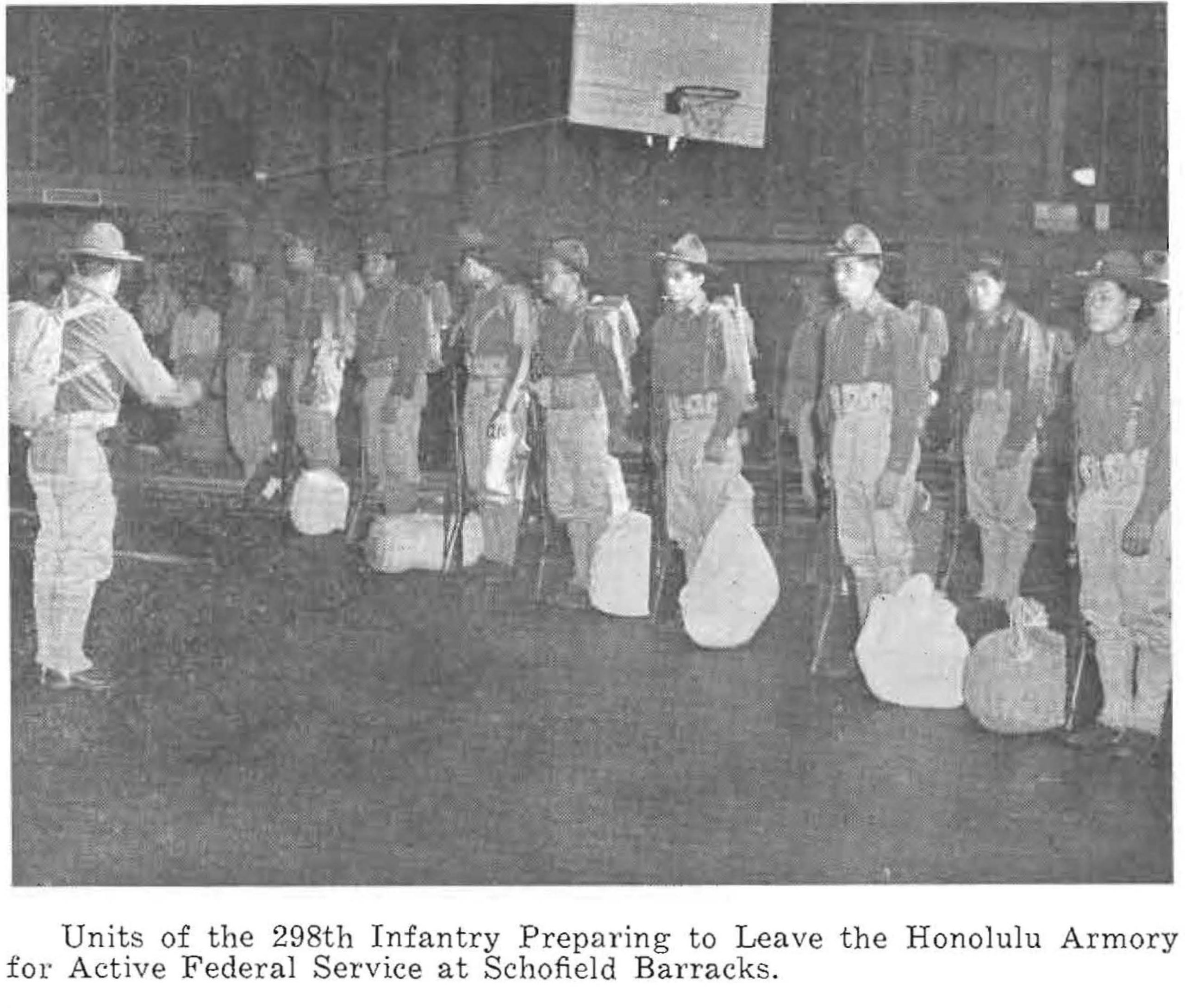
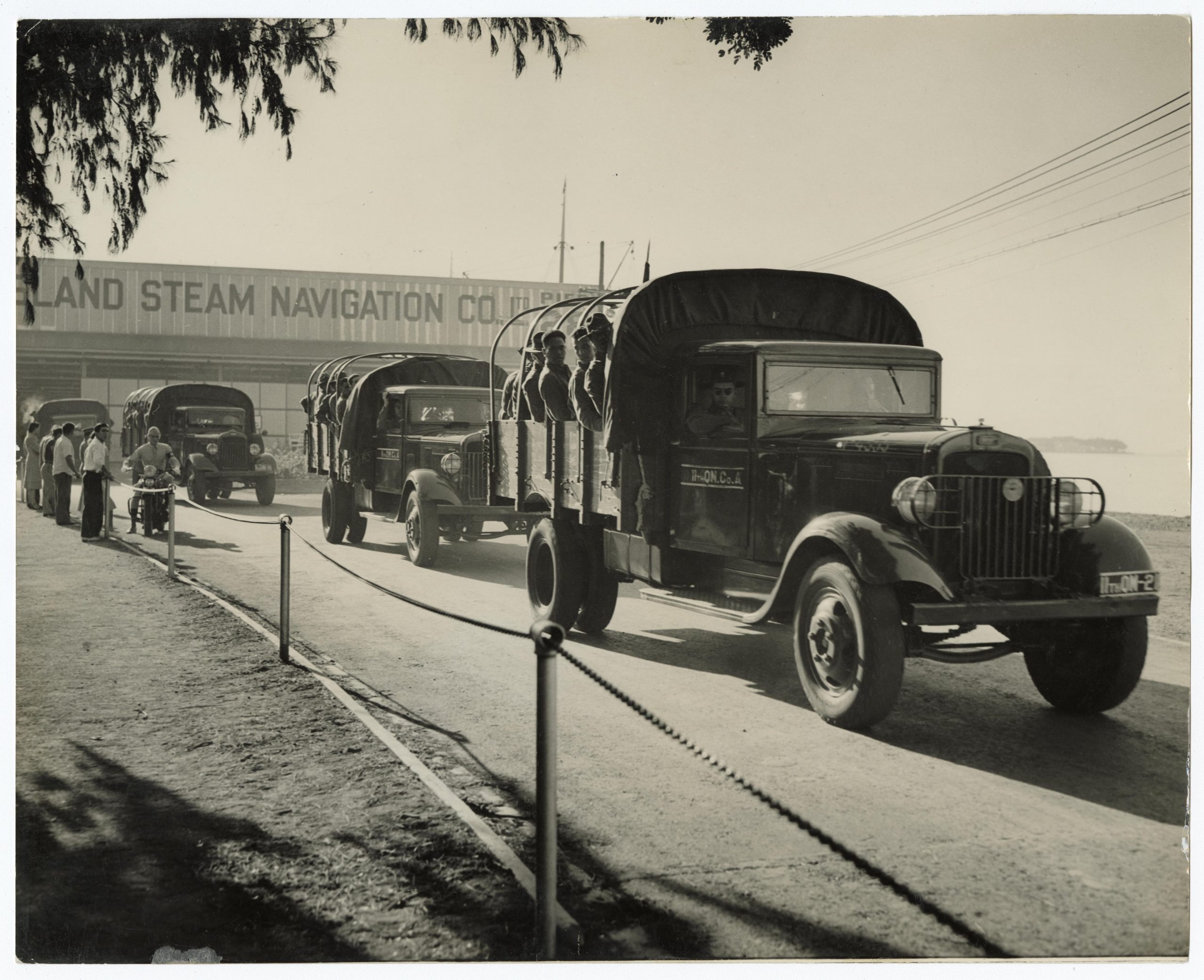
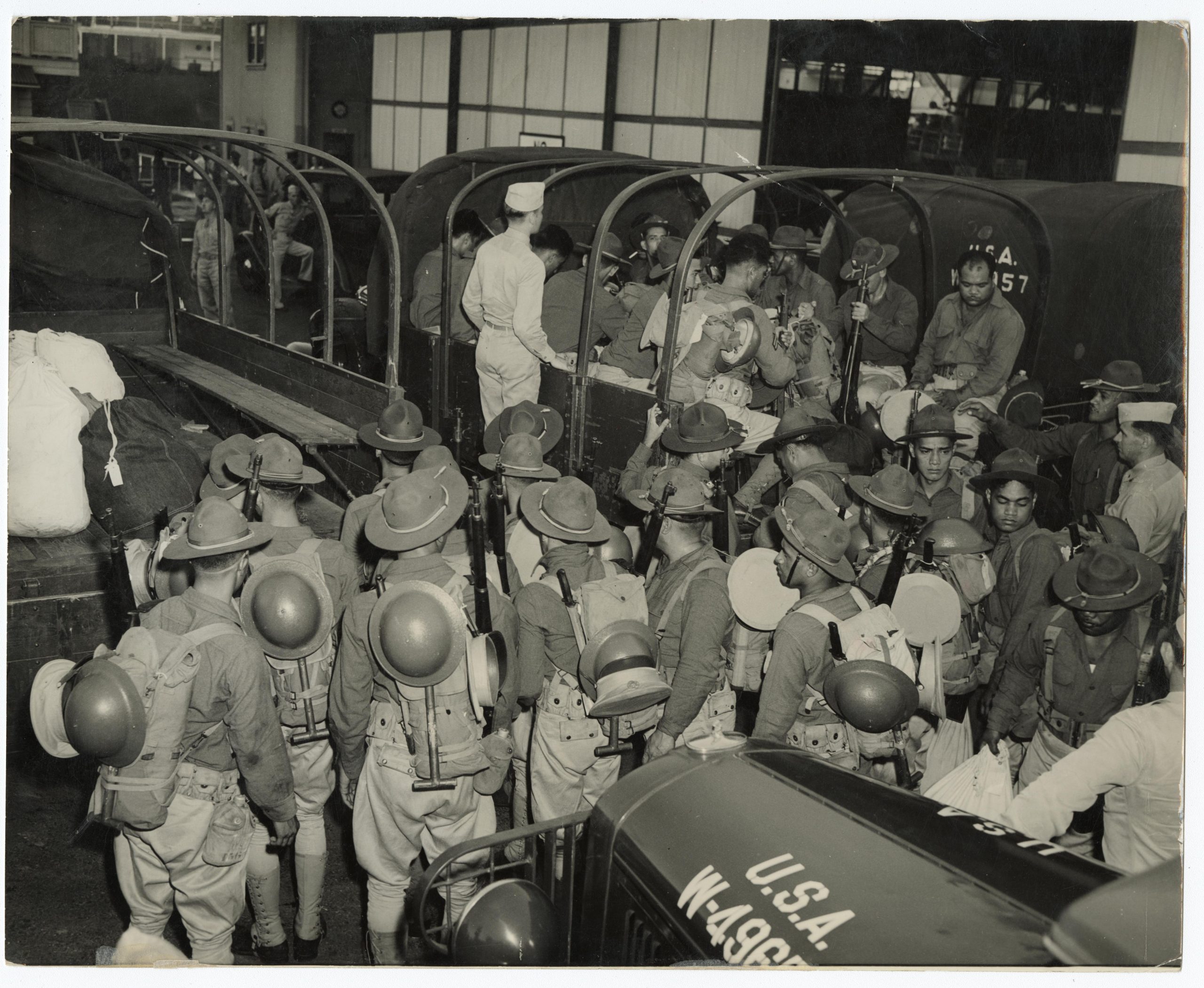
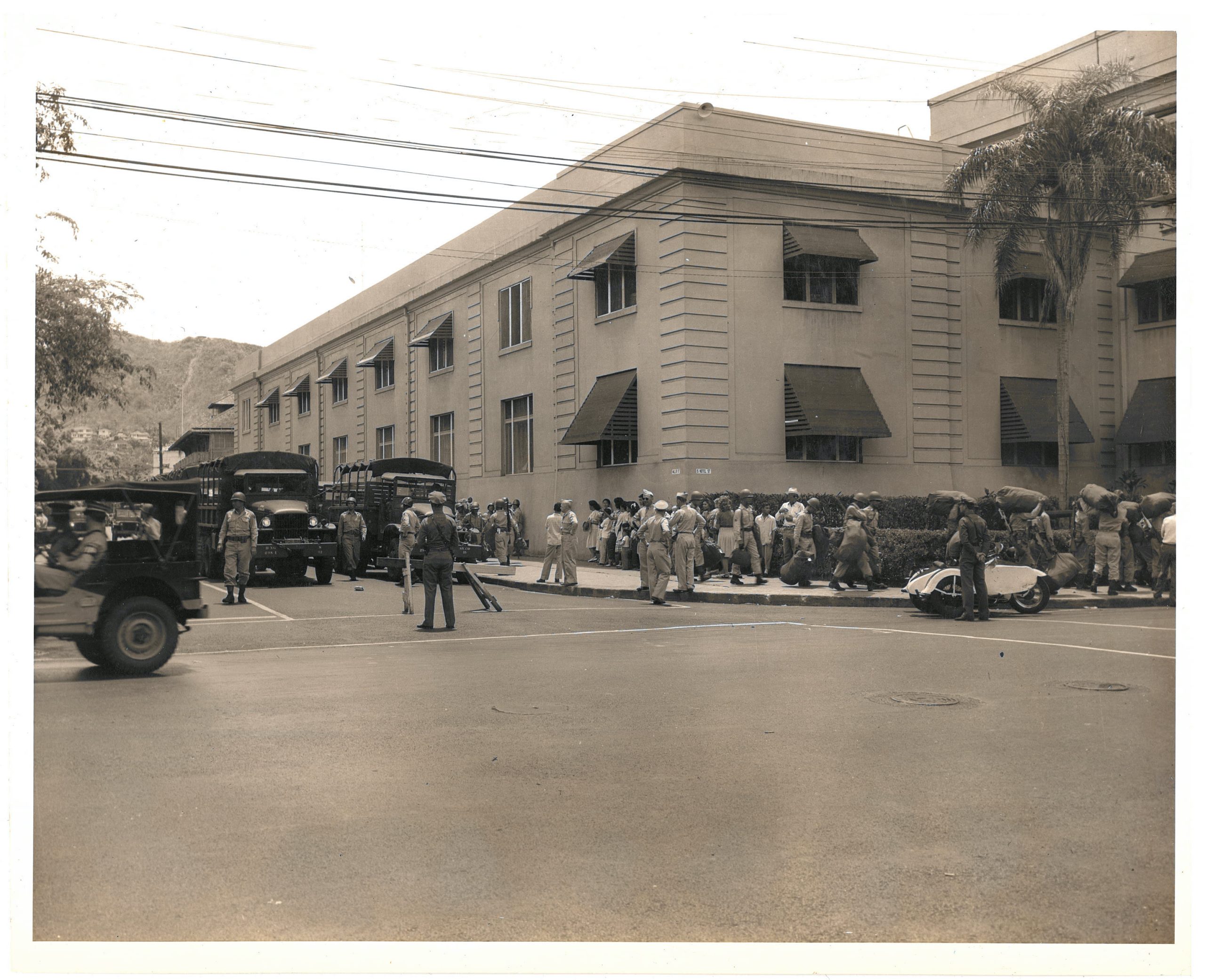
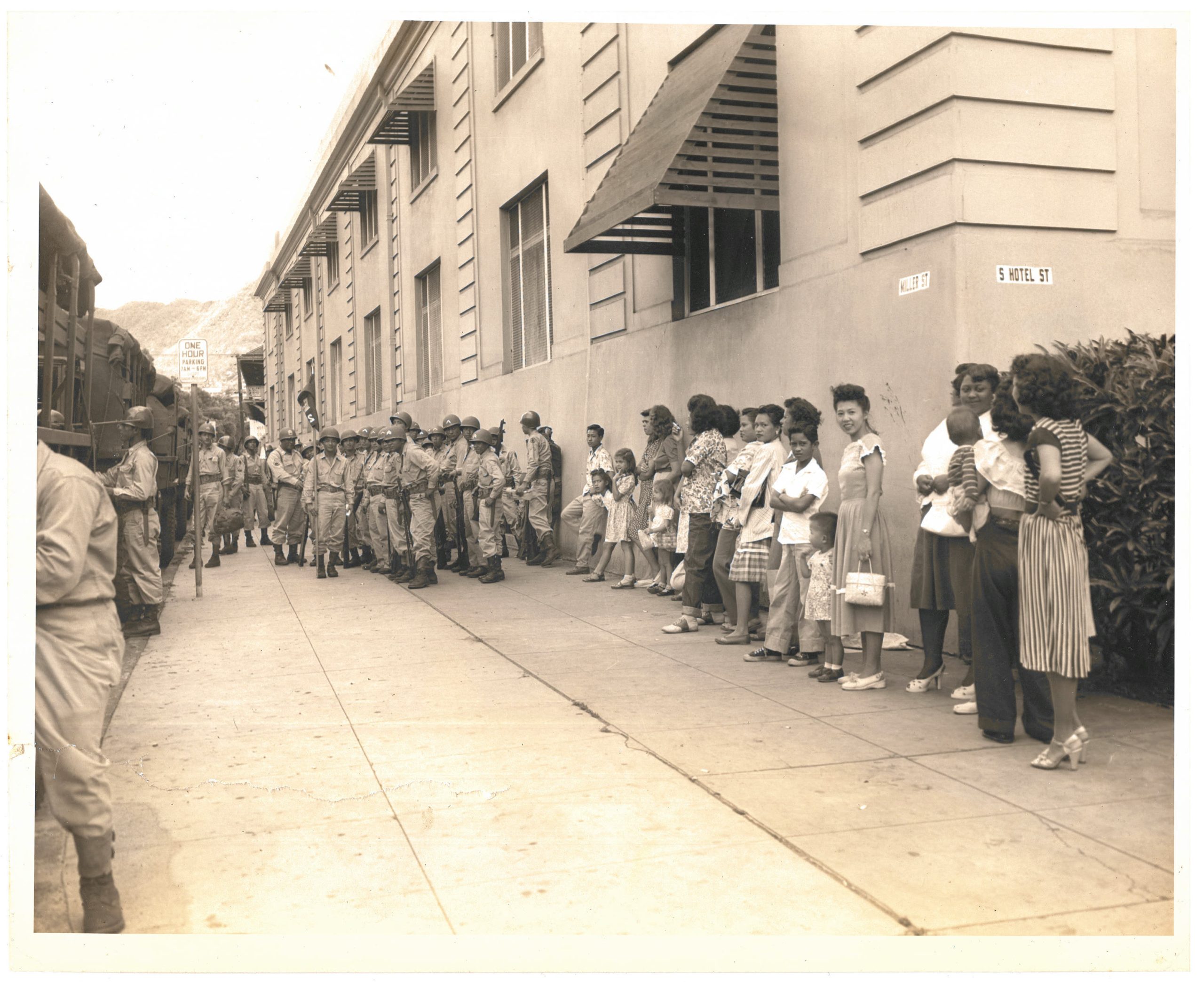
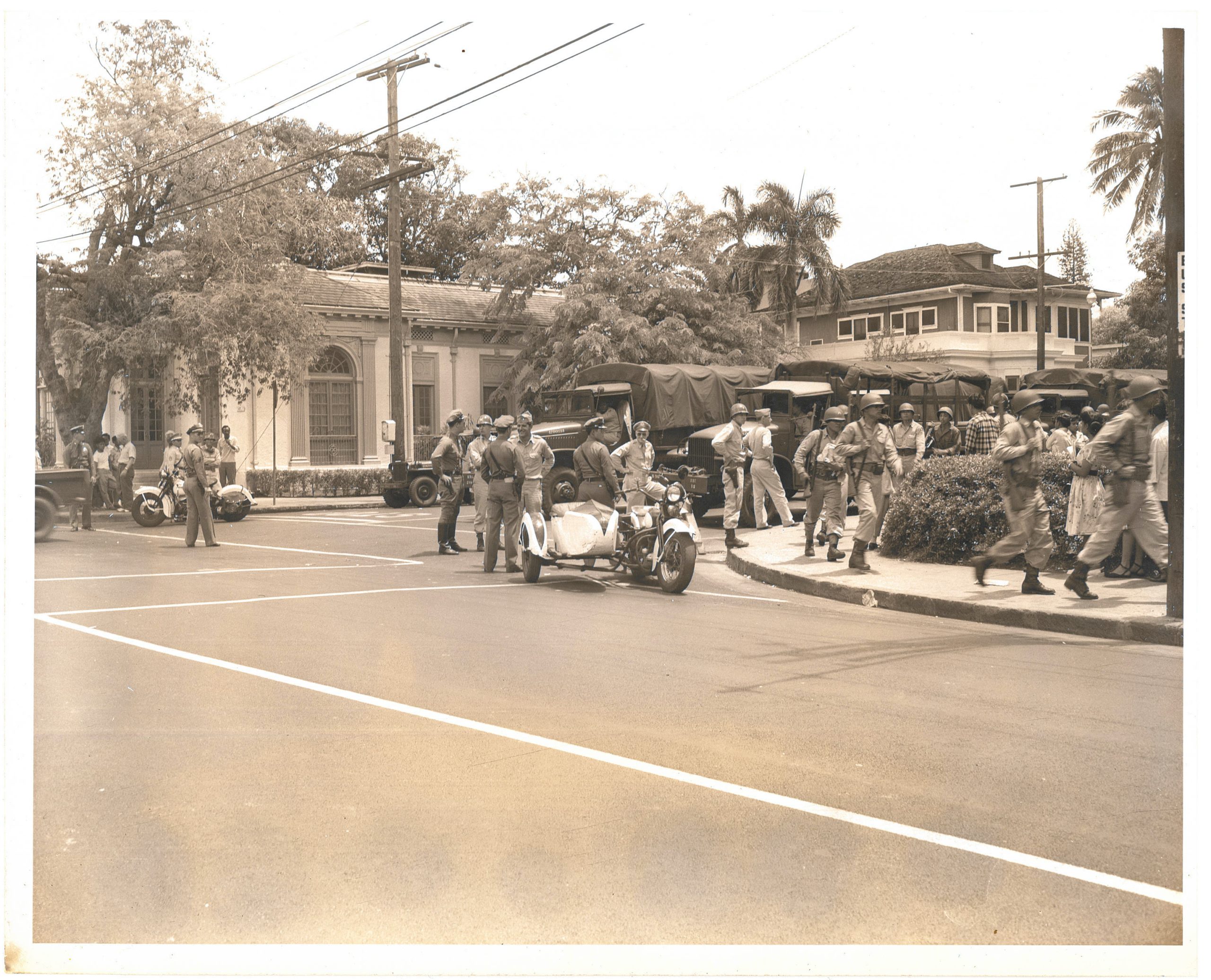
As tensions grew in Europe and the Pacific, President Franklin D. Roosevelt mobilized the nation’s citizen-soldiers. Executive Order No. 8551 (Sept. 25, 1940) called the Hawaiʻi National Guard into federal service and on Oct. 15, 1940, more than 1,600 Guardsmen of the 298th and 299th Infantry Regiments reported to Schofield Barracks for what was initially planned as one year of active duty.
Community support was strong. Hawaiʻi residents and local businesses donated funds and supplies to assist their soldiers, who were often referred to proudly as “Hawaiʻi’s Own.” The regiments quickly built cantonments at Schofield Barracks and began intensive training.
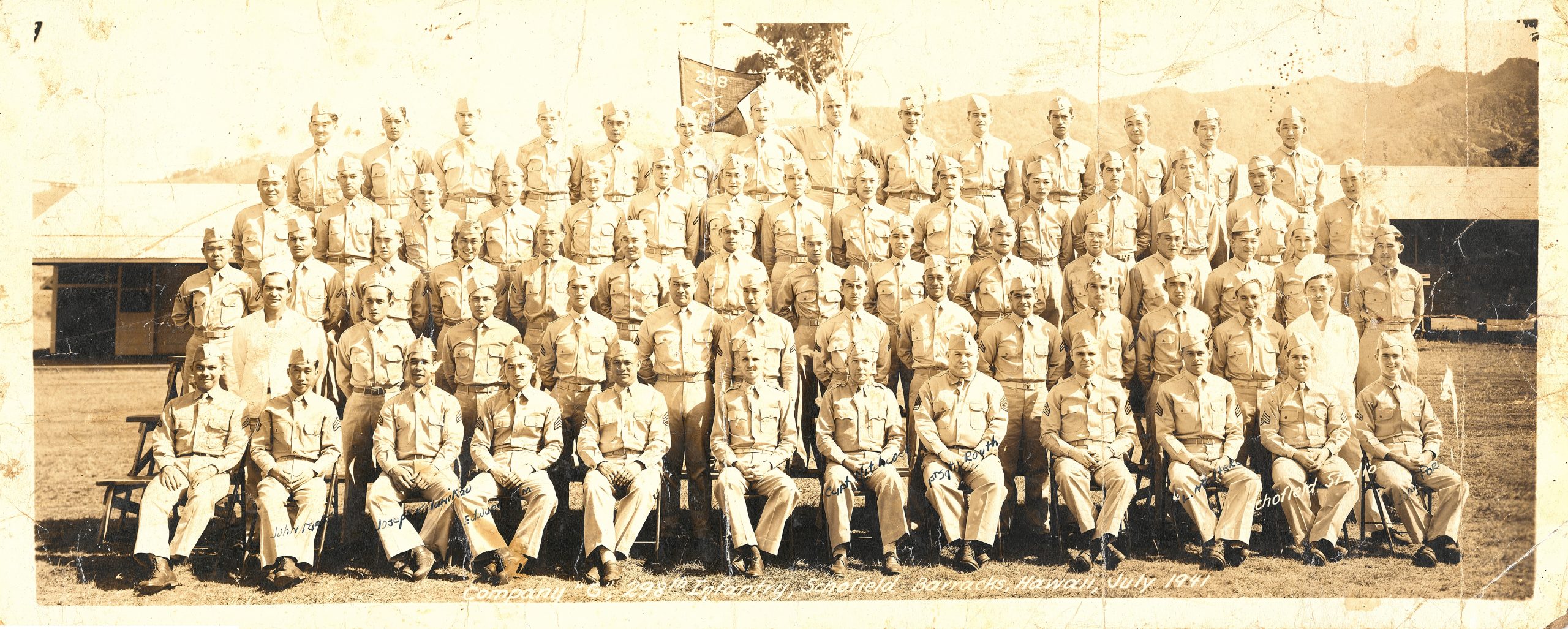
When Japan attacked Pearl Harbor on Dec. 7, 1941, the Hawaiʻi Guard was already on duty at coastal defense positions across Oʻahu and the neighbor islands. That evening, Master Sgt. David Akui of Company G, 298th Infantry Regiment, captured the first Japanese prisoner of war in World War II, a submarine officer who had swum ashore after his midget sub grounded at Waimānalo.
In the months following the attack, the Guard was tasked with critical beach defense and construction projects on Oʻahu, Hawaiʻi, Kauaʻi, Maui, and Molokaʻi. Tragedy soon struck when an Army transport ship was torpedoed by a Japanese submarine while carrying newly recruited Soldiers enroute to join the 299th Infantry on Hawaiʻi Island. Survivors were rescued and brought to Hāna, Maui. Nine of them later served with the 298th Infantry Regiment, and eight eventually transferred to the 100th Infantry Battalion, 442nd Regimental Combat Team.
In the spring of 1942, the War Department ordered the removal of Guardsmen of Japanese ancestry, leading to the formation of the 100th Infantry Battalion, which later became one of the most decorated units in U.S. Army history. The reorganization weakened the 299th Infantry Regiment, which was inactivated in June 1942, and its soldiers absorbed into the 298th Infantry Regiment.
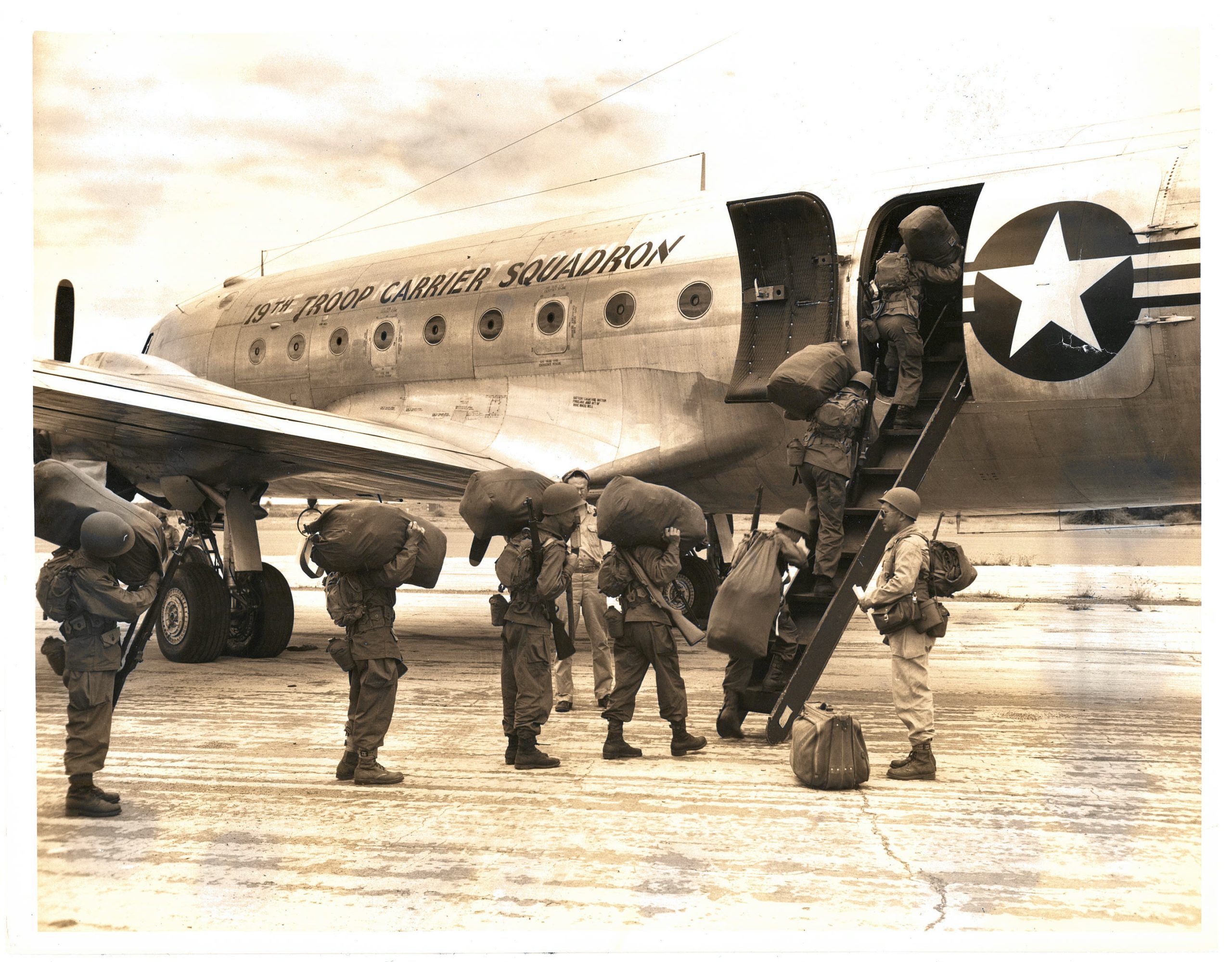
The 298th Infantry Regiment deployed to the South Pacific in 1943, serving in Guadalcanal and later Espiritu Santo to provide security for ports and installations. By then, only about 15% of the regiment was made up of original Hawaiʻi Guardsmen, with the rest consisting of local and mainland draftees.
By late 1944, most elements of the 298th Infantry Regiment returned to Oʻahu. The Regiment was gradually inactivated, with only the 1st Battalion remaining until January 1946. In total, the Hawaiʻi National Guard had served more than five continuous years on federal duty — longer than any other Hawaiʻi-based unit.
The Guardsmen’s service was marked by sacrifice, resilience and adaptation: from capturing the first Japanese prisoner of the war, losing comrades at sea, to sending Nisei soldiers into one of America’s most decorated combat units. At war’s end, the Guard reorganized in the Territory of Hawaiʻi, carrying forward its battle honors from the Central Pacific Campaign and its enduring reputation as “Hawaiʻi’s Own.”
During the early part of August, it was rumored that all National Guard units would be ordered into federal service for a twelve months’ period of active duty. By the first of September specific instructions covering this subject were received by The Adjutant General of Hawaii. Those officers below the rank of Captain and enlisted personnel with dependents were permitted to resign or be discharged from the service. Rules for rigid physical examinations were issued by the National Guard Bureau, and detailed instructions were received for induction into federal service.
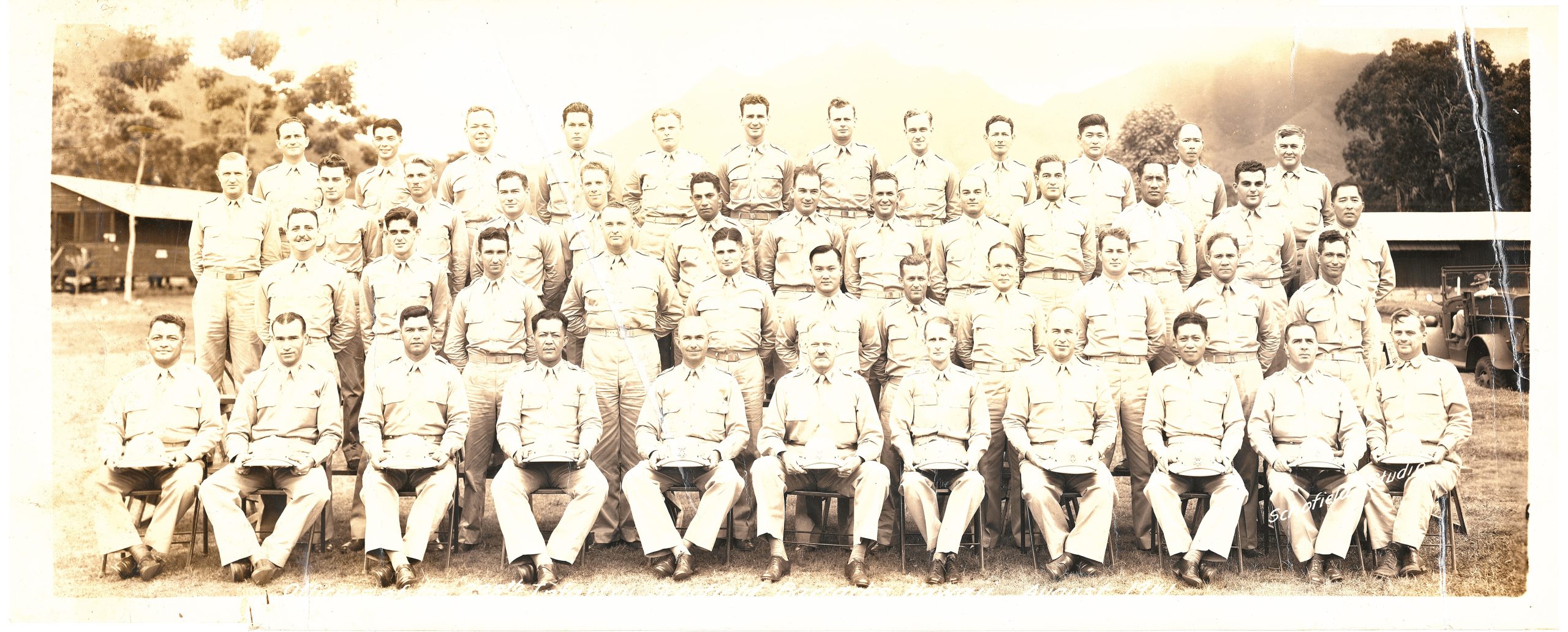
In compliance with Executive Order No. 8551, dated September 25, 1940, the 298th and 299th Infantries, under the command of Colonels W. A. Andersen and Gordon C. Ross, respectively, were ordered into federal service for a period of 12 months, effective October 15, 1940, by the following General Orders No. 51 of this headquarters, dated 8 October 1940:
MILITARY DEPARTMENT
Territory of Hawaii
OFFICE OF THE ADJUTANT GENERAL
Honolulu, T. H.
8 October 1940.
GENERAL ORDERS
NO. 54
SUBJECT: ORDERING HAWAII NATIONAL GUARD INTO MILITARY SERVICE OF THE UNITED STATES.
1. The following Executive Order* issued by the President of the United States is published for the information and guidance of all concerned:
“EXECUTIVE ORDER ORDERING CERTAIN UNITS AND MEMBERS OF THE NATIONAL GUARD OF THE UNITED STATES INTO THE ACTIVE MILITARY SERVICE OF THE UNITED STATES.
“By virtue of the authority conferred upon me by Public Resolution No. 96, 76th Congress, approved August 27, 1940, and the National Defense Act of June 3, 1916, as amended (39 Stat. 166), and as Commander-in-Chief of the Army and Navy of the United States, I hereby order into active military service of the United States, effective October 15, 1940, the following units and members of the National Guard of the United States for a period of twelve consecutive months, unless sooner relieved:
“All members, both active and inactive, of the units listed above.
“All persons so ordered into the active military service of the United States are, from the effective date of this order, relieved from duty in the National Guard of their respective states so long as they shall remain in the active military service of the United States, and during such time shall be subject to such laws and regulations for the government of the Army of the United States as may be applicable to members of the Army whose permanent retention in the active military service is not contemplated by law.
“Commissioned officers and warrant officers appointed in the National Guard of the United States and commissioned or holding warrants in the Army of the United States, and affected by this order, are hereby ordered to active duty under such appointments and commissions or warrants.
“All officers and warrant officers of the National Guard, appointed in the National Guard, who shall have been Federally recognized or examined and found qualified for Federal recognition, and shall have been assigned to units ordered to active duty under this order prior to the effective date thereof, who do not hold appointments in the National Guard of the United States in the same grade and arm or service in which they respectively have been most recently Federally recognized or have been most recently examined and found qualified for Federal recognition, are hereby tendered appointments in the National Guard of the United States in the same grade and arm or service in which they shall have been most recently Federally recognized or examined and found qualified for Federal recognition.
“Warrant officers and enlisted men of the National Guard of the United States who hold appointments as officers in the National Guard of the United States and commissions in the Army of the United States, and are assigned to units ordered to active duty under this order prior to the effective date hereof, are hereby ordered to active military service as commissioned officers of the Army of the United States under those appointments and commissions.
The White House,
September 25, 1940.
FRANKLIN D. ROOSEVELT”
2. All unit commanders throughout the Hawaii National Guard having inactive commissioned or enlisted personnel assigned to their commands will immediately notify such personnel, either in person or by registered mail, to report for active duty with the unit to which assigned, on October 15, 1940, or show cause for discharge.
3. All units required to render a monthly report of National Guard Duty performed (NGB Form 100), will prepare and submit a final report as of midnight October 14, 1940. A final Armory Drill Pay Roll will also be prepared by each unit involved and submitted as of the above date.
4. The provisions of existing regulations relative to mobilization will be complied with. The attention of all unit commanders is directed to the requirements of AR 130-10 and Induction Circular No. 1, NGB, dated September 5, 1940, which will be strictly adhered to.
5. All Federal property in the hands of units will be taken into Federal Service on the induction date. State property at each station will be properly prepared to protect it against disuse and stored in a safe dry place in the armory in which it is being used. Unless advised to the contrary each unit or organization commander in charge of an armory which is owned by the Territory of Hawaii, will upon the date of departure from his station, close the armory in question and see that it is securely locked. Keys will be delivered to custodians designated by this Headquarters, and if none so designated, keys will be delivered, or mailed to this Headquarters.
Hawaii National Guard Still in Federal Service The year ending June 30, 1942, finds the Hawaii National Guard, consisting of the Territorial (State) Staff and Detachment, and the 298th and 299th Infantries still in federal service and contributing in no small measure to the defense of the Pacific Area and the Nation.
During this fiscal year the 298th Infantry, under command of Colonel Wilhelm A. Andersen, augmented by many selectees, was stationed on the Island of Oahu. The 299th Infantry, under command of Colonel Gordon C. Ross, was also enlarged by the inception of selectees, and stationed on the Islands of Oahu, Hawaii, Maui, Kauai and Molokai. Certain officers and enlisted men of the Territorial Staff and Detachment are continuing on duty with the Territorial Selective Service Headquarters in Honolulu.
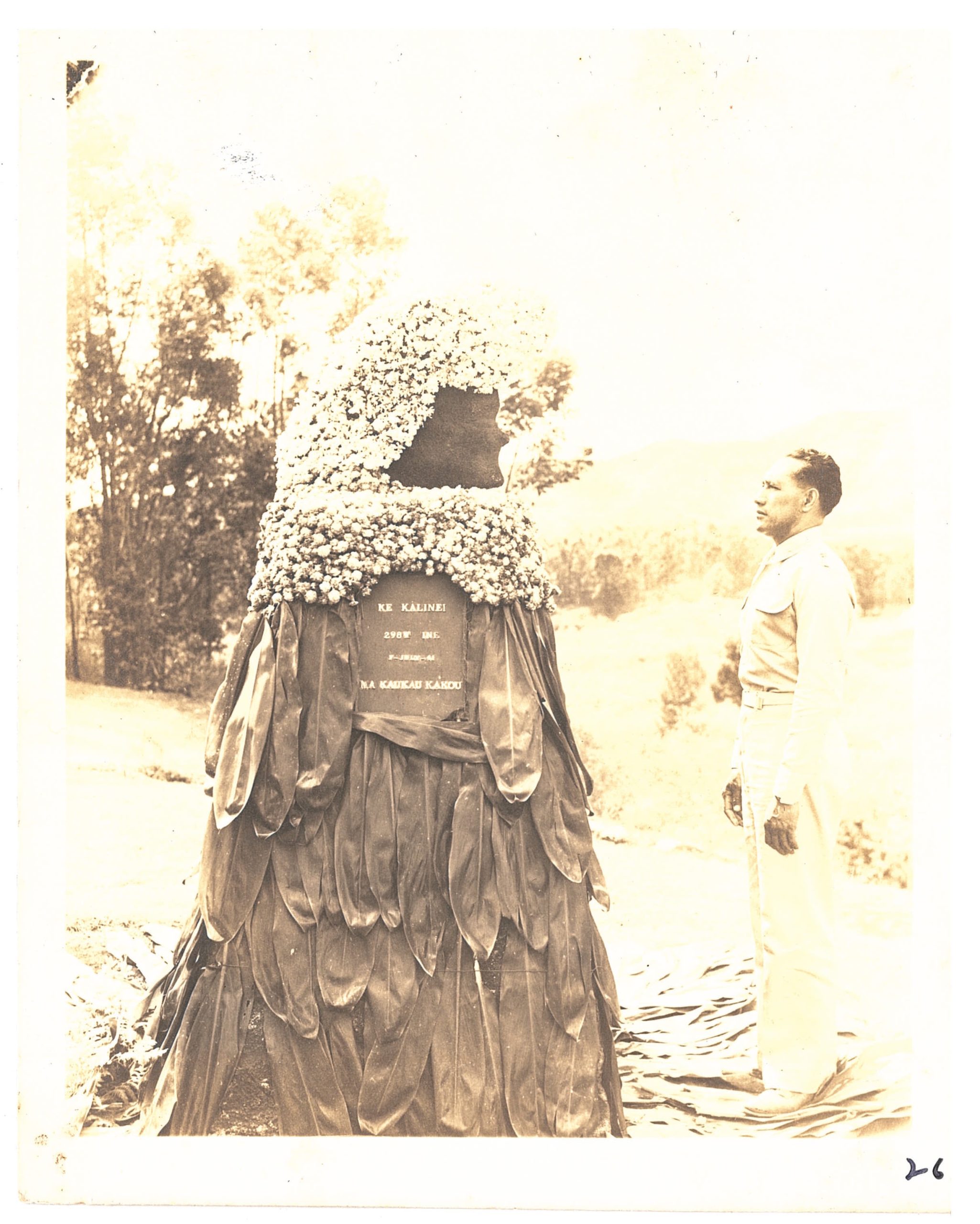
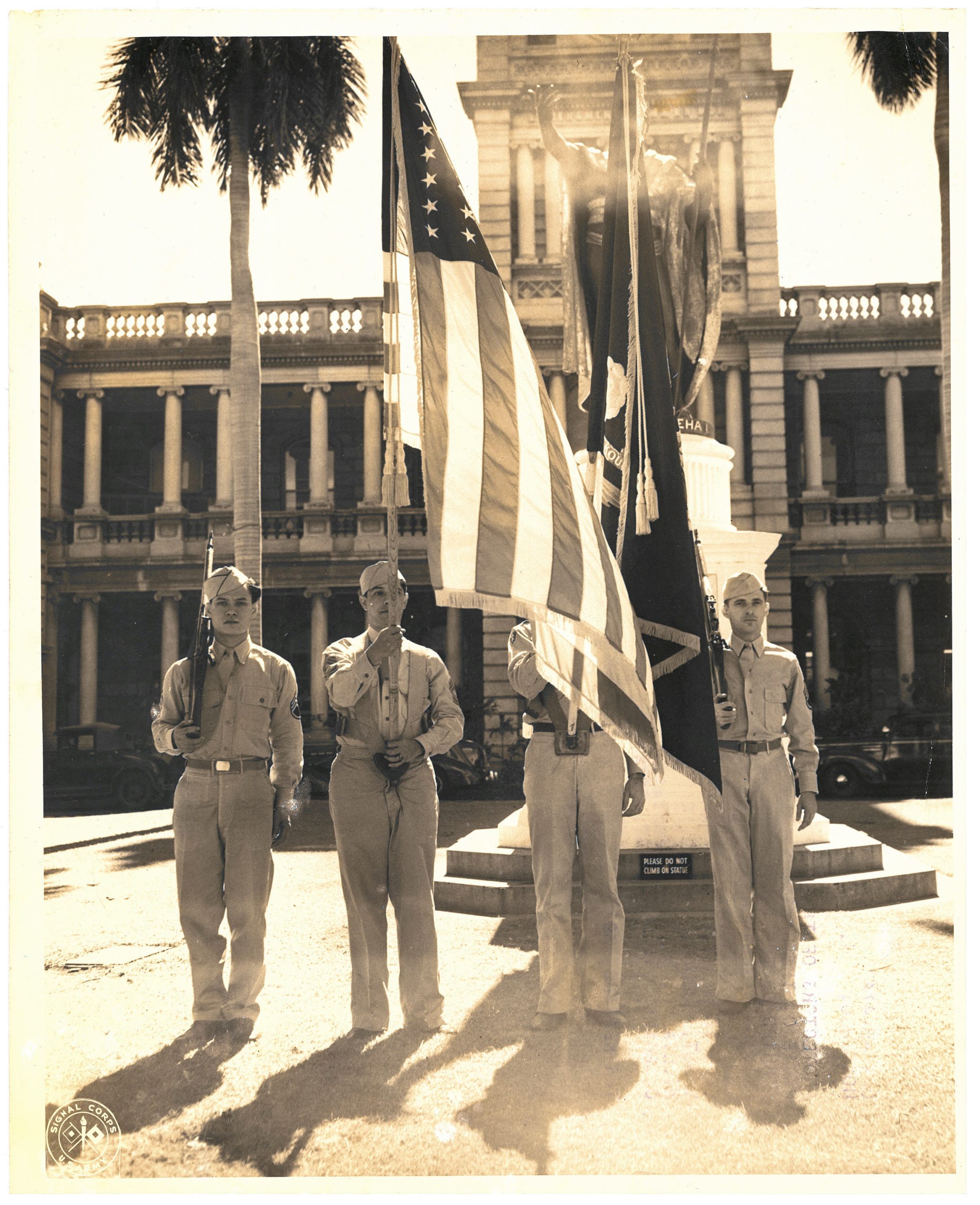
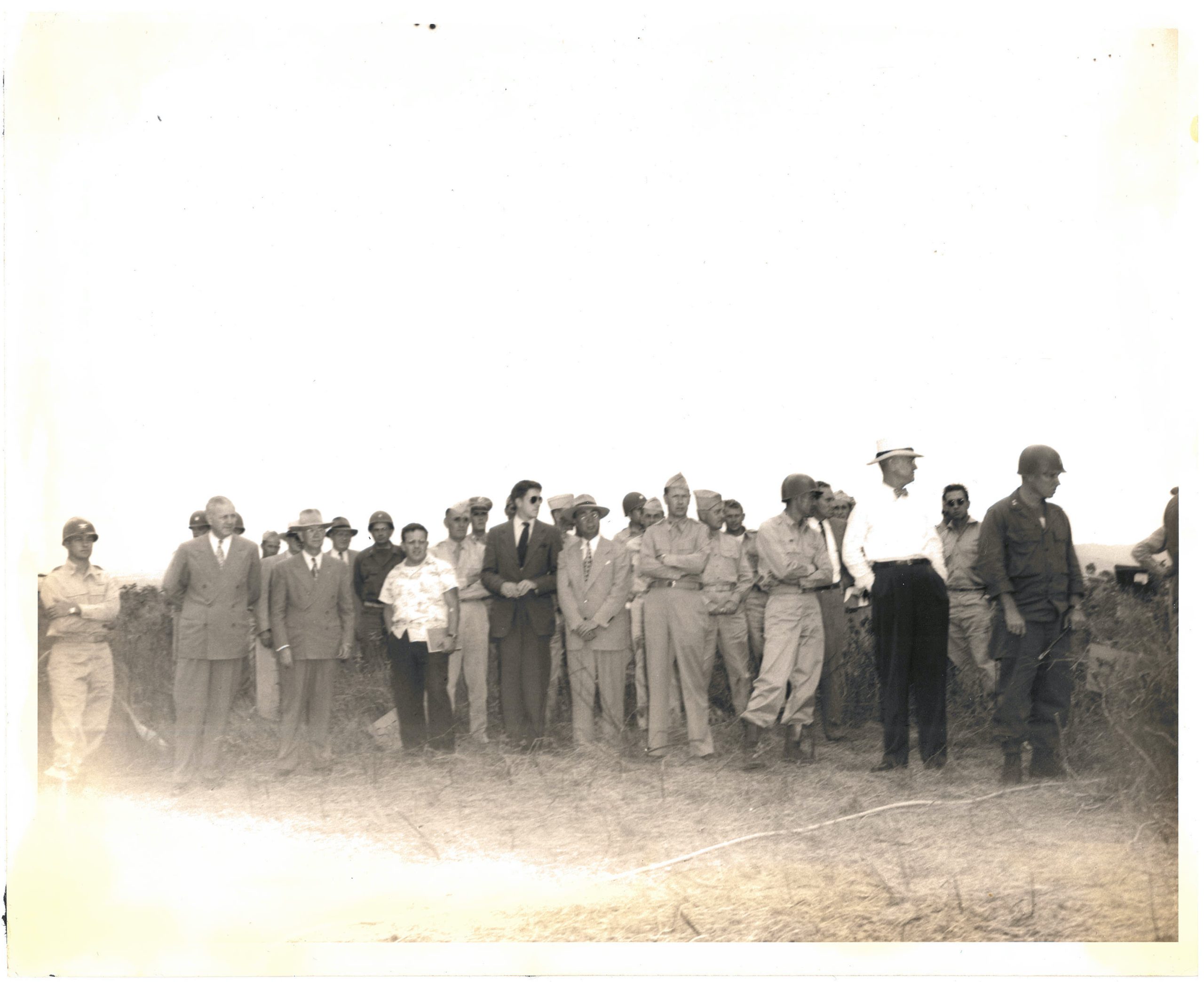
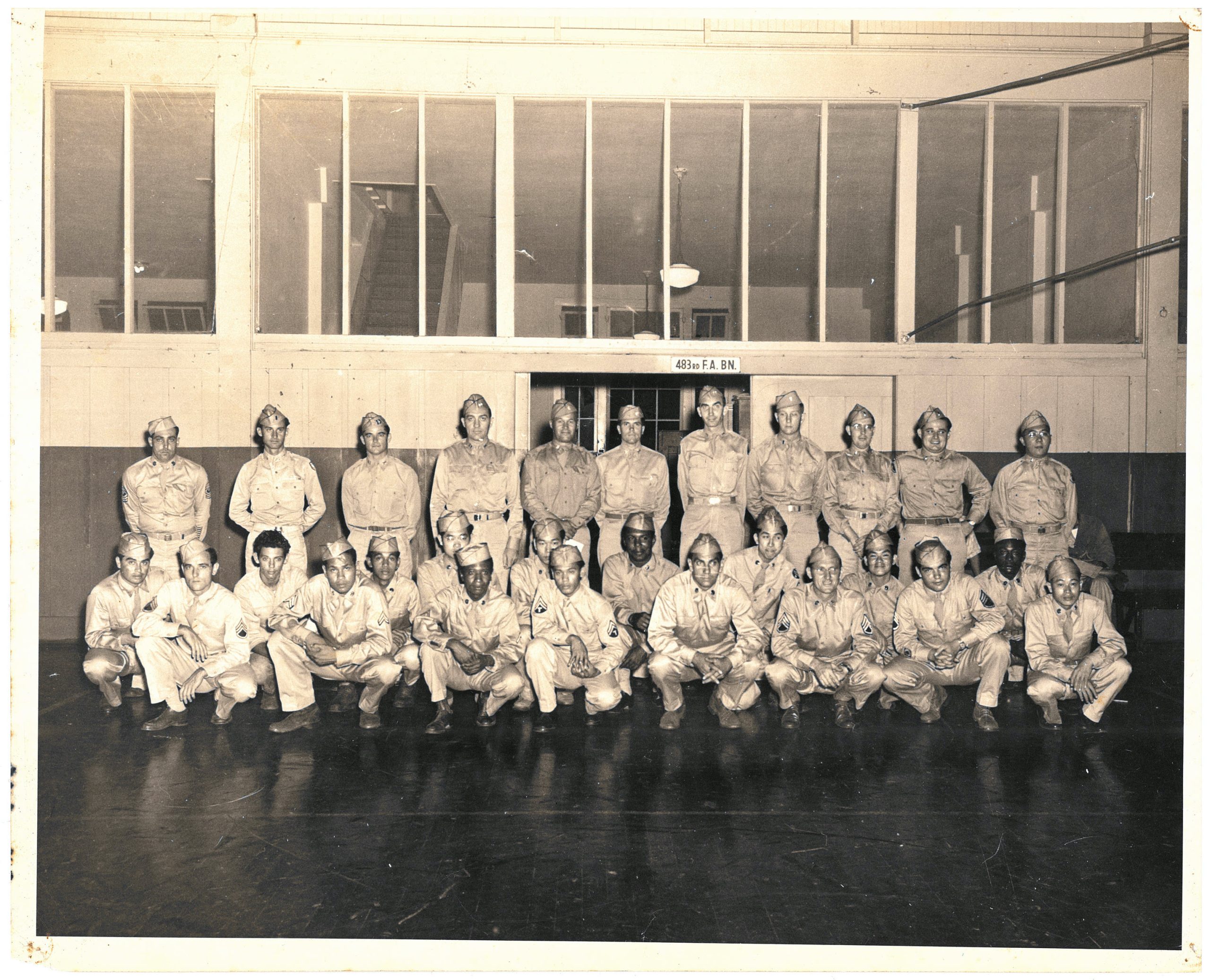
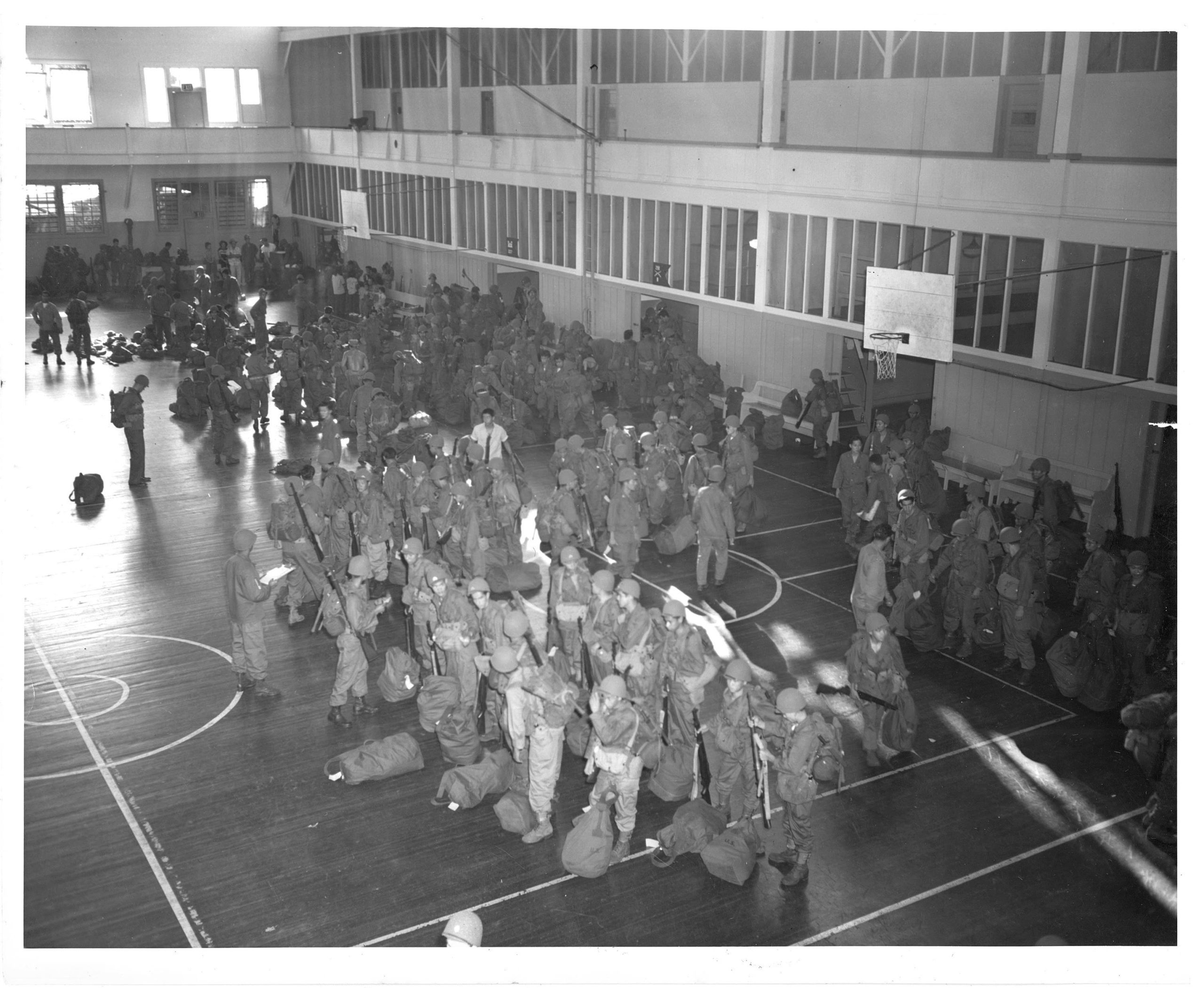
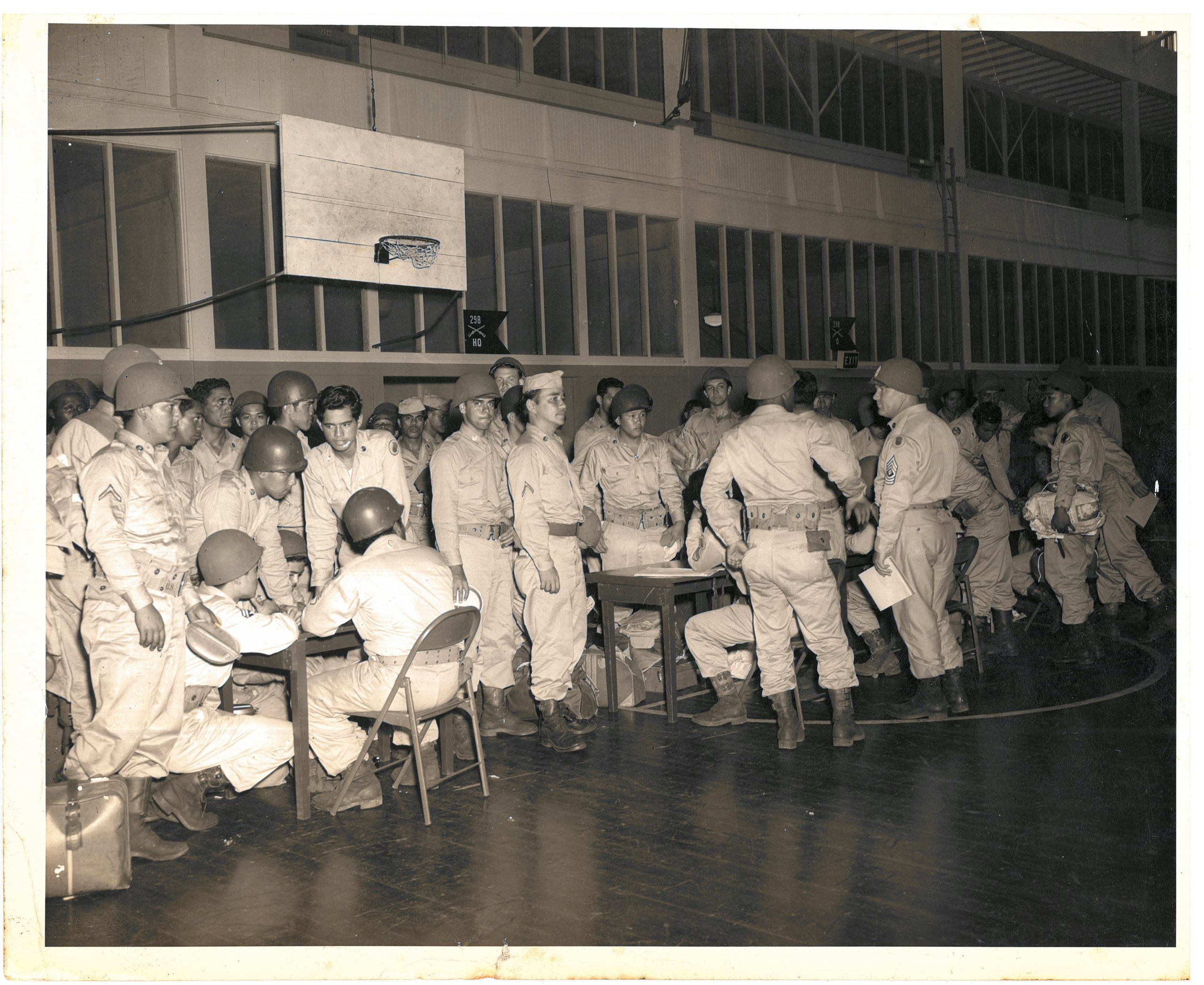
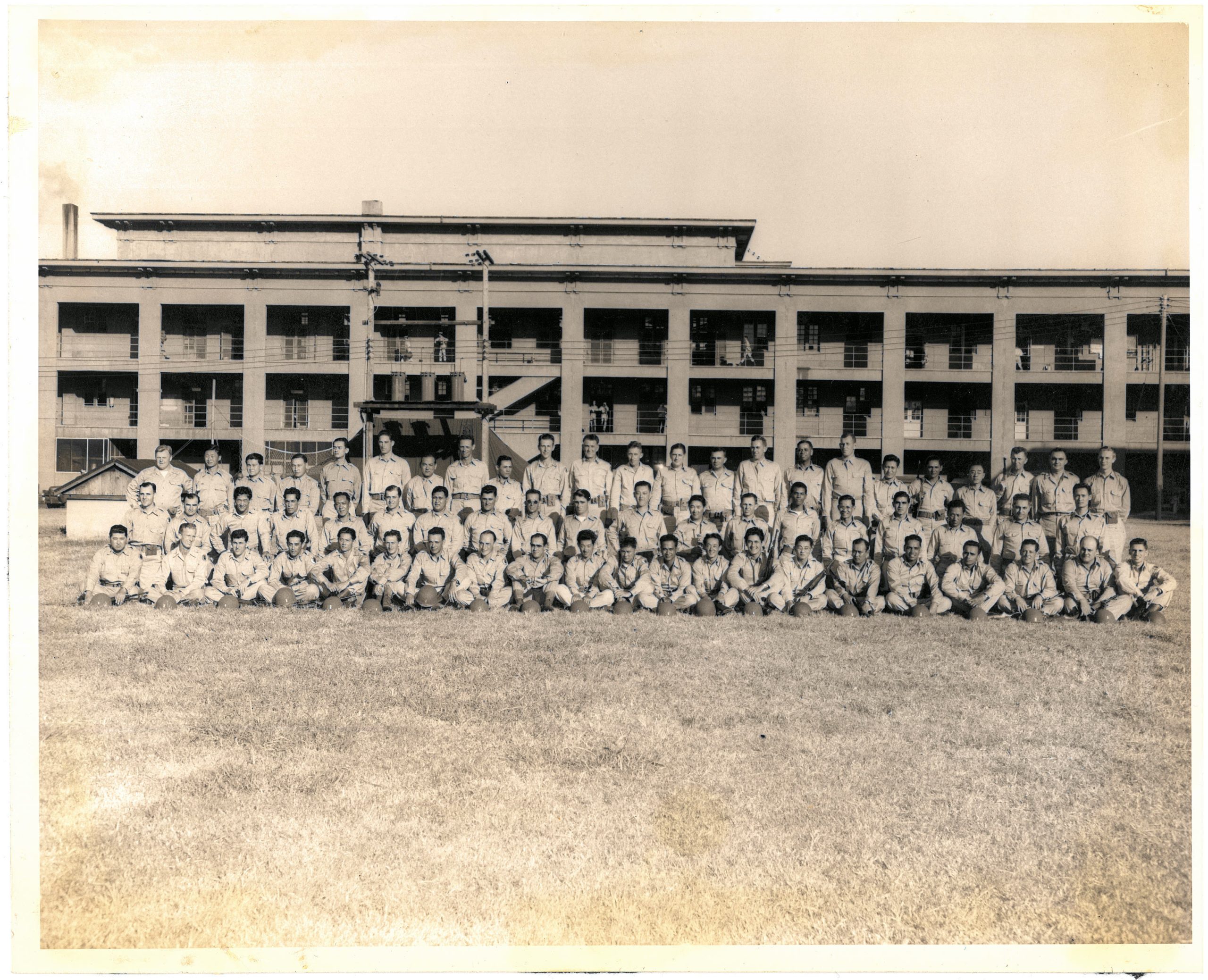
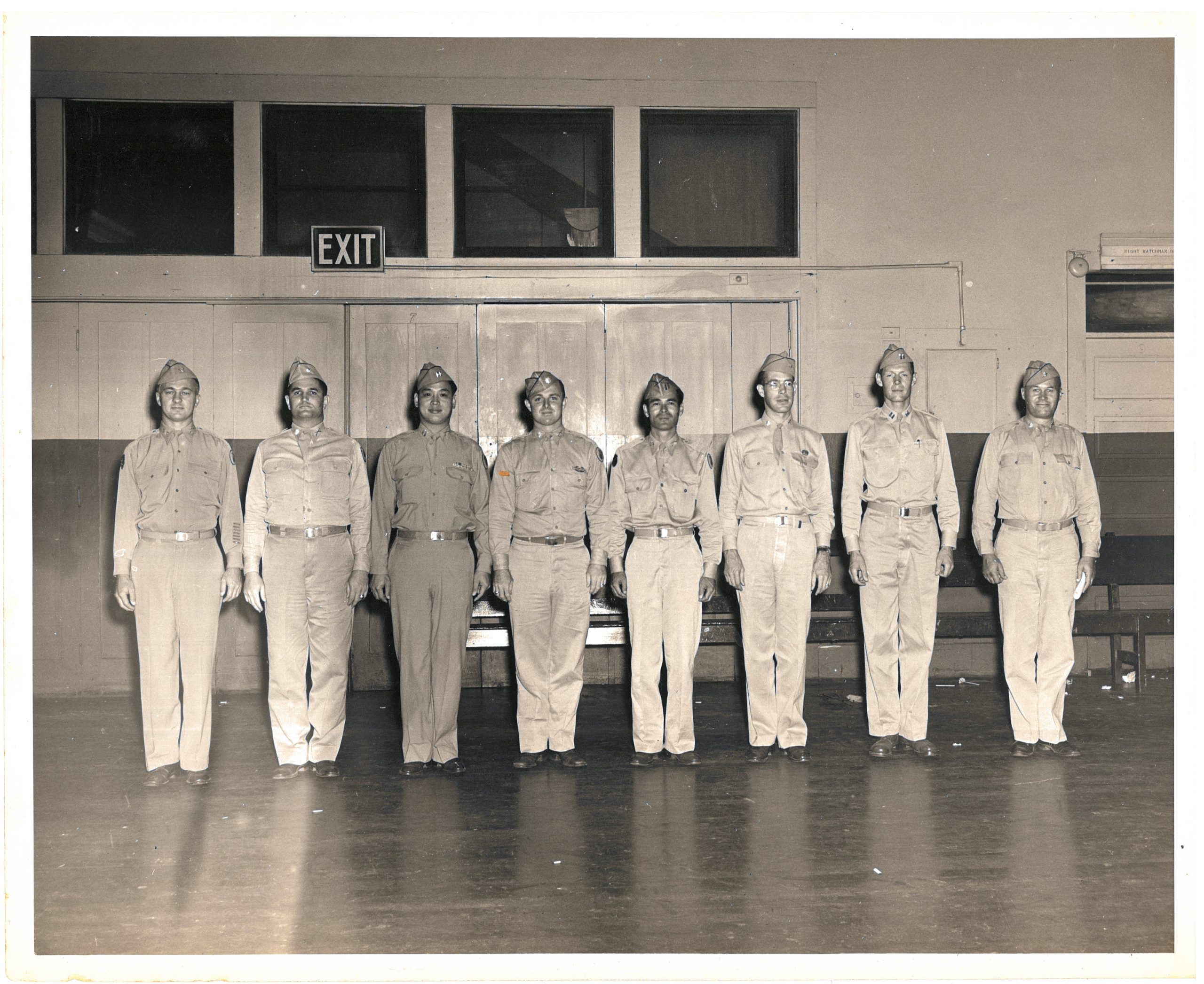
Military – National Guard after 1900Military – National Guard after 1900Military – National Guard after 1900Military – National Guard after 1900Military – National Guard after 1900Military – National Guard after 1900Military – National Guard after 1900(Pictures from Hawaiʻi State Archives)Air Force Photo Released by Pacific Air Command Hickam Field, Oahu, T. H.298th Engr Detch10.03.1946 CPA-46-4744 Honolulu, T.H. Protectors of the paradise of the pacific, set forth by King Kamehameha 1, Shown before their illustrious predecessor are, left to right, S/Sgt. Harold L. Yap, M/Sgt. Fred K. Robello, Captain William J. West and S/Sgt. Robert O Graham. (Signal Corps Photo)
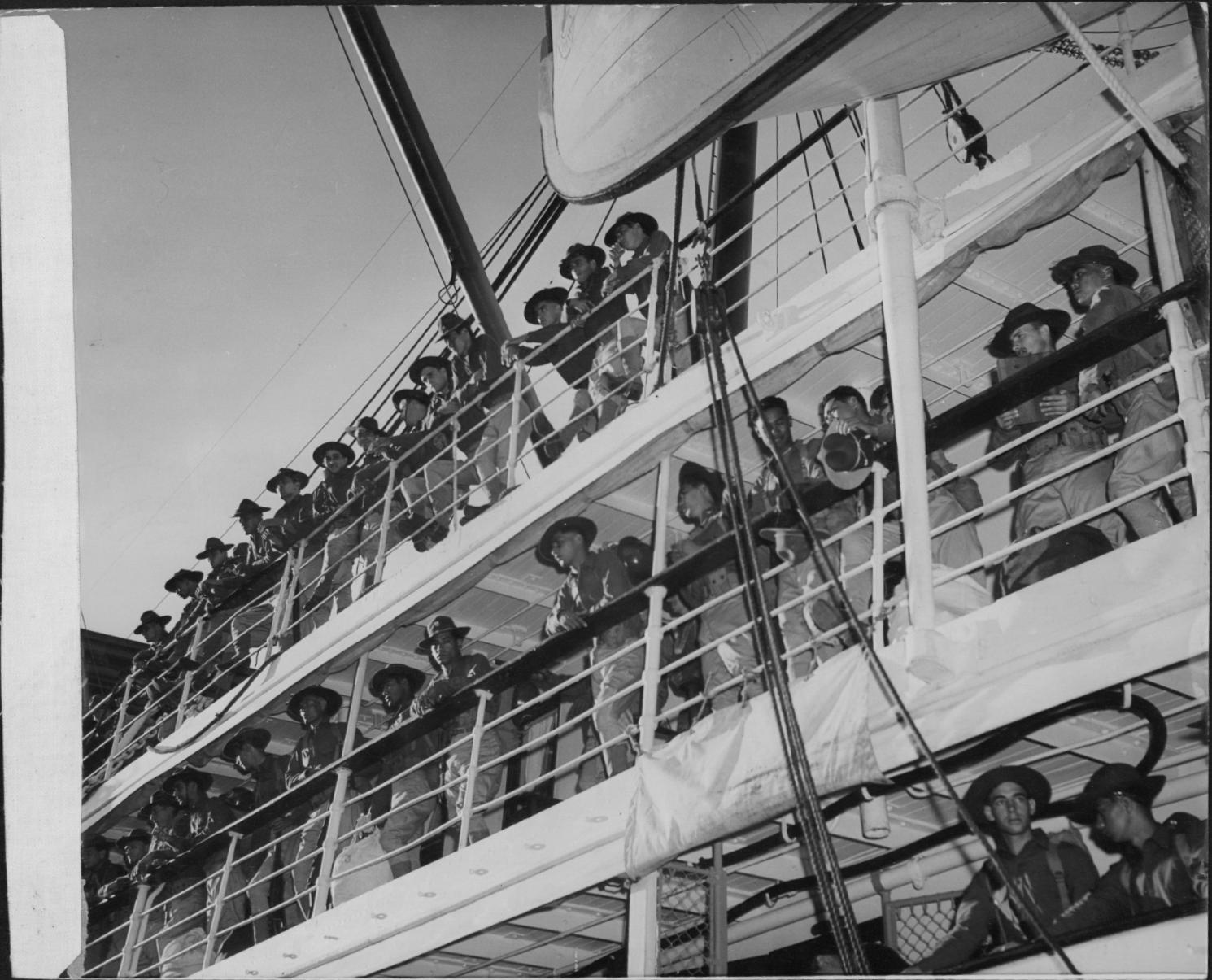
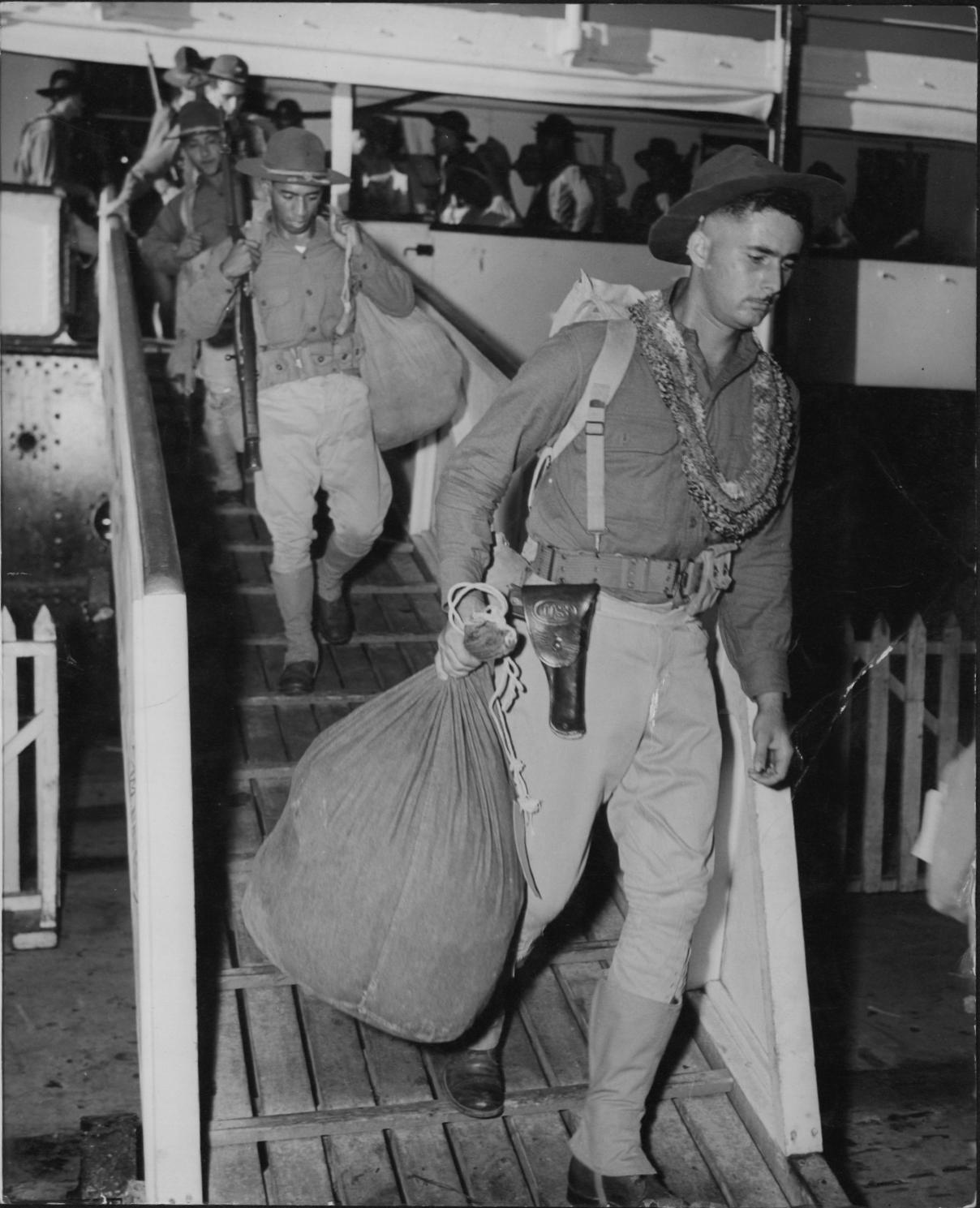
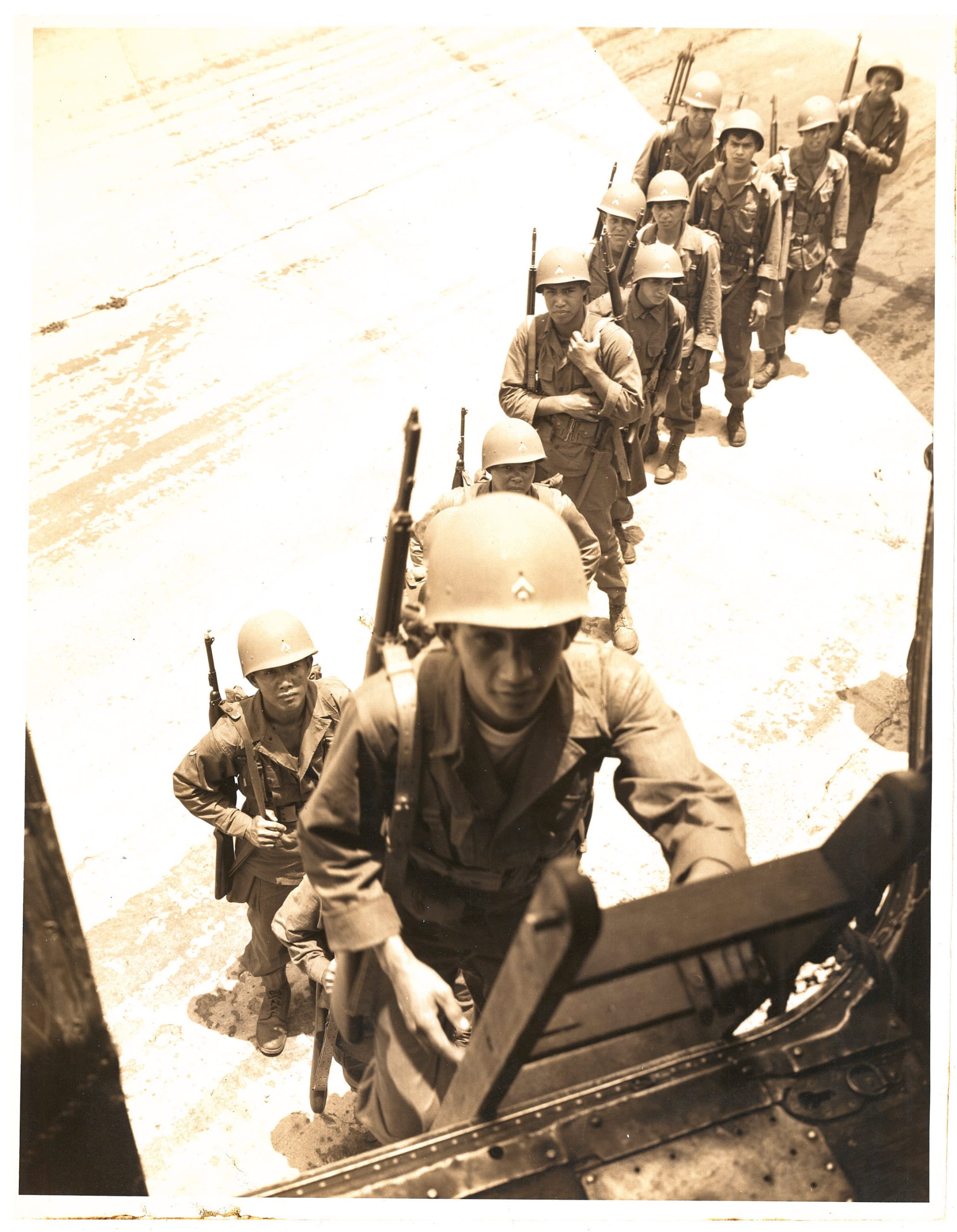
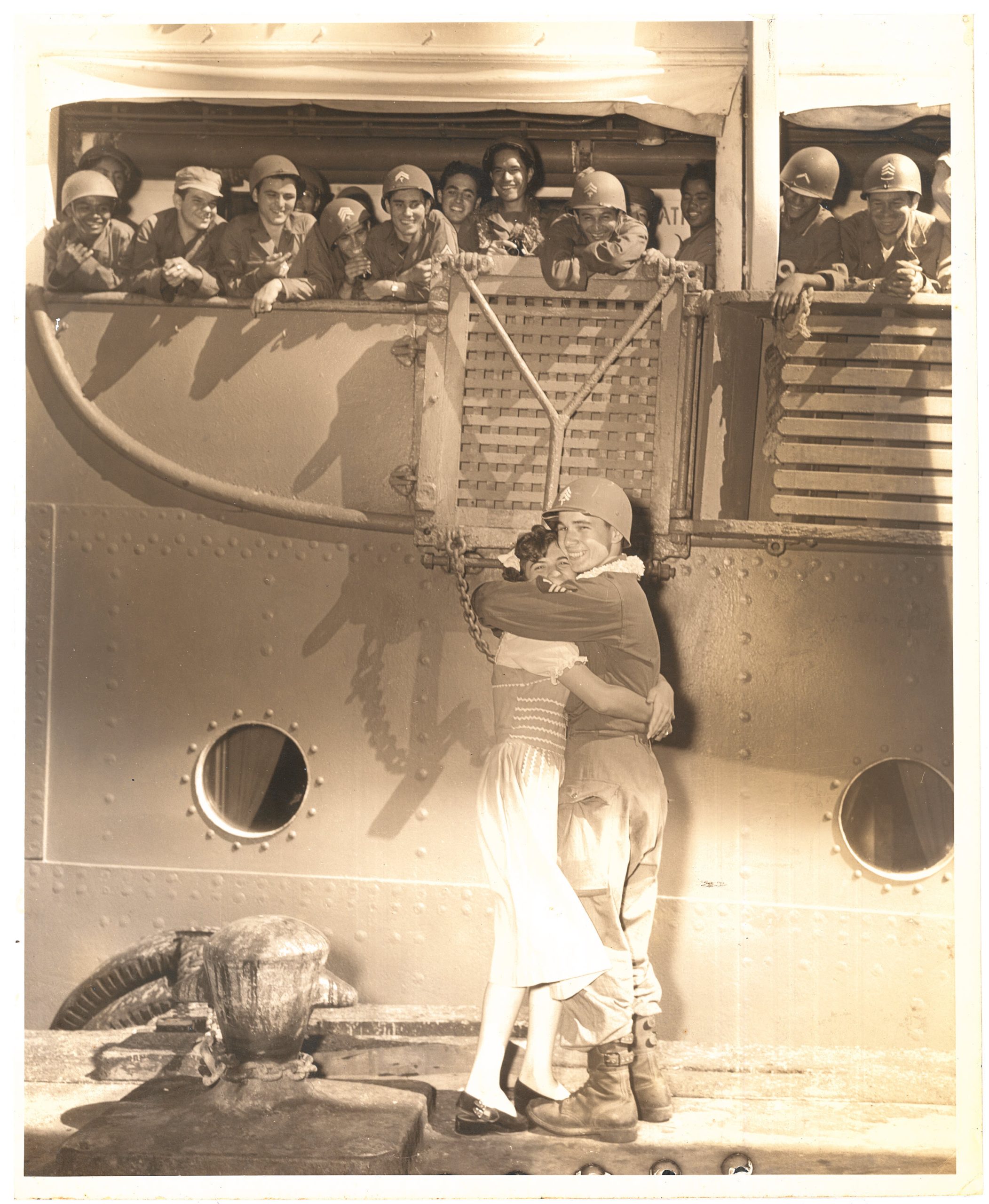
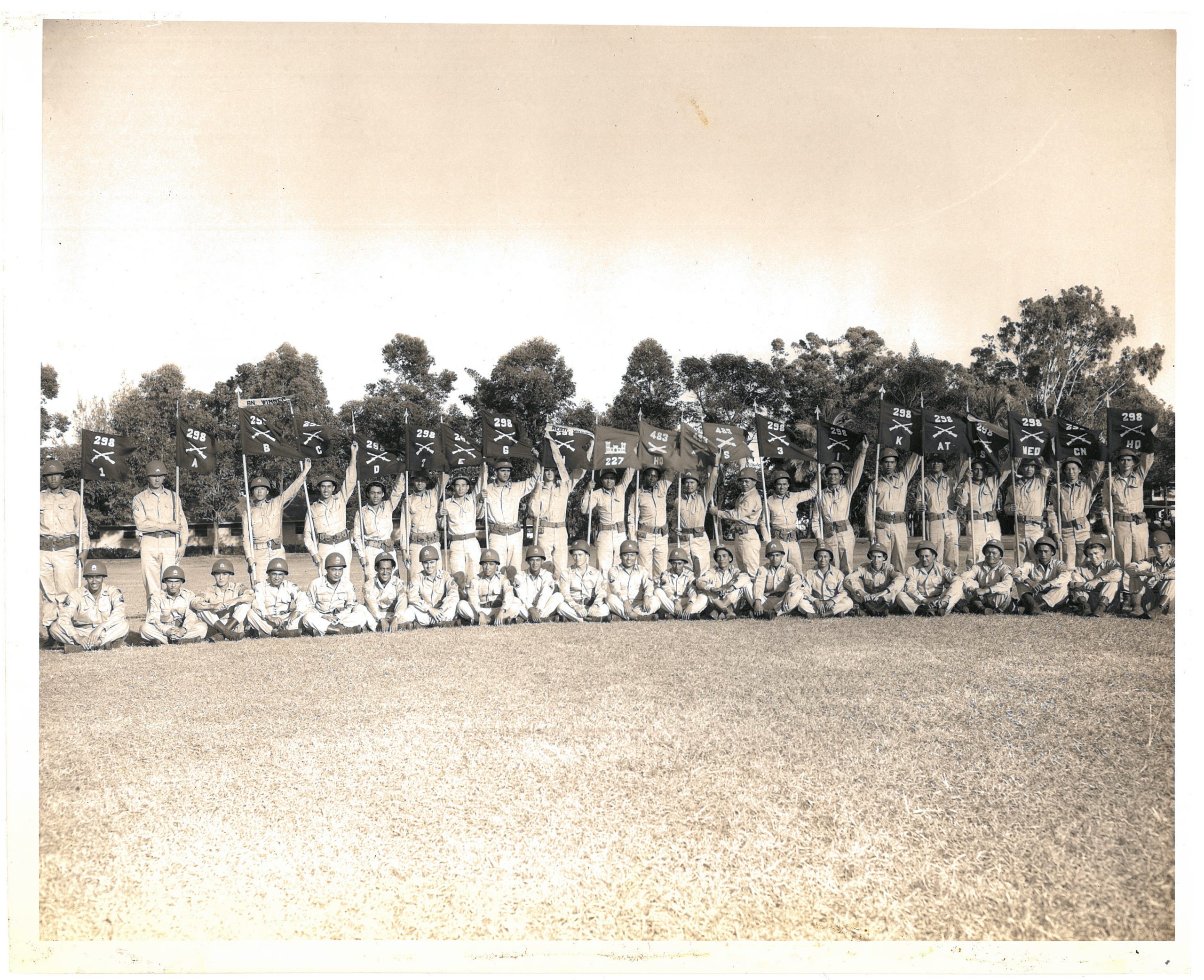
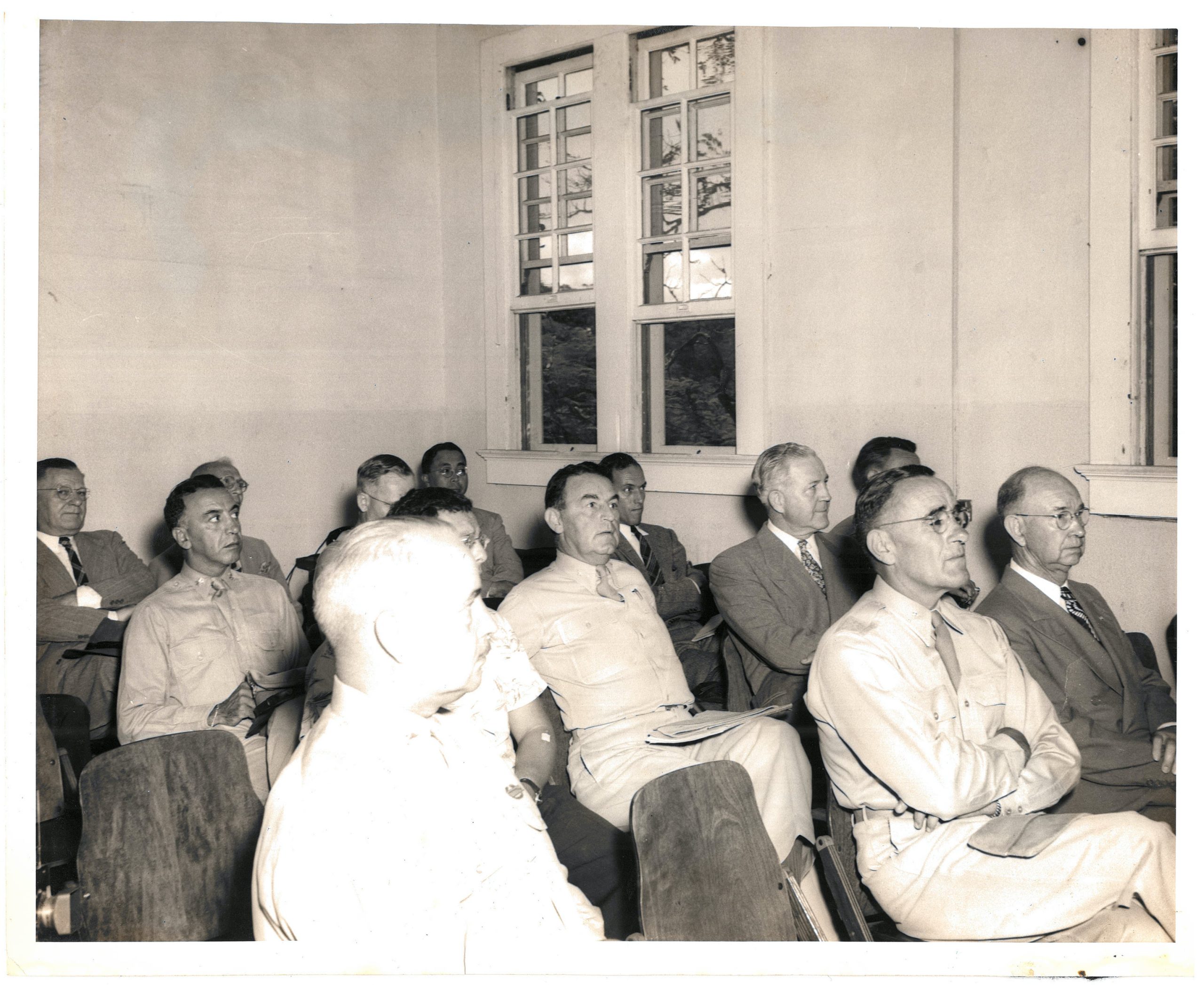
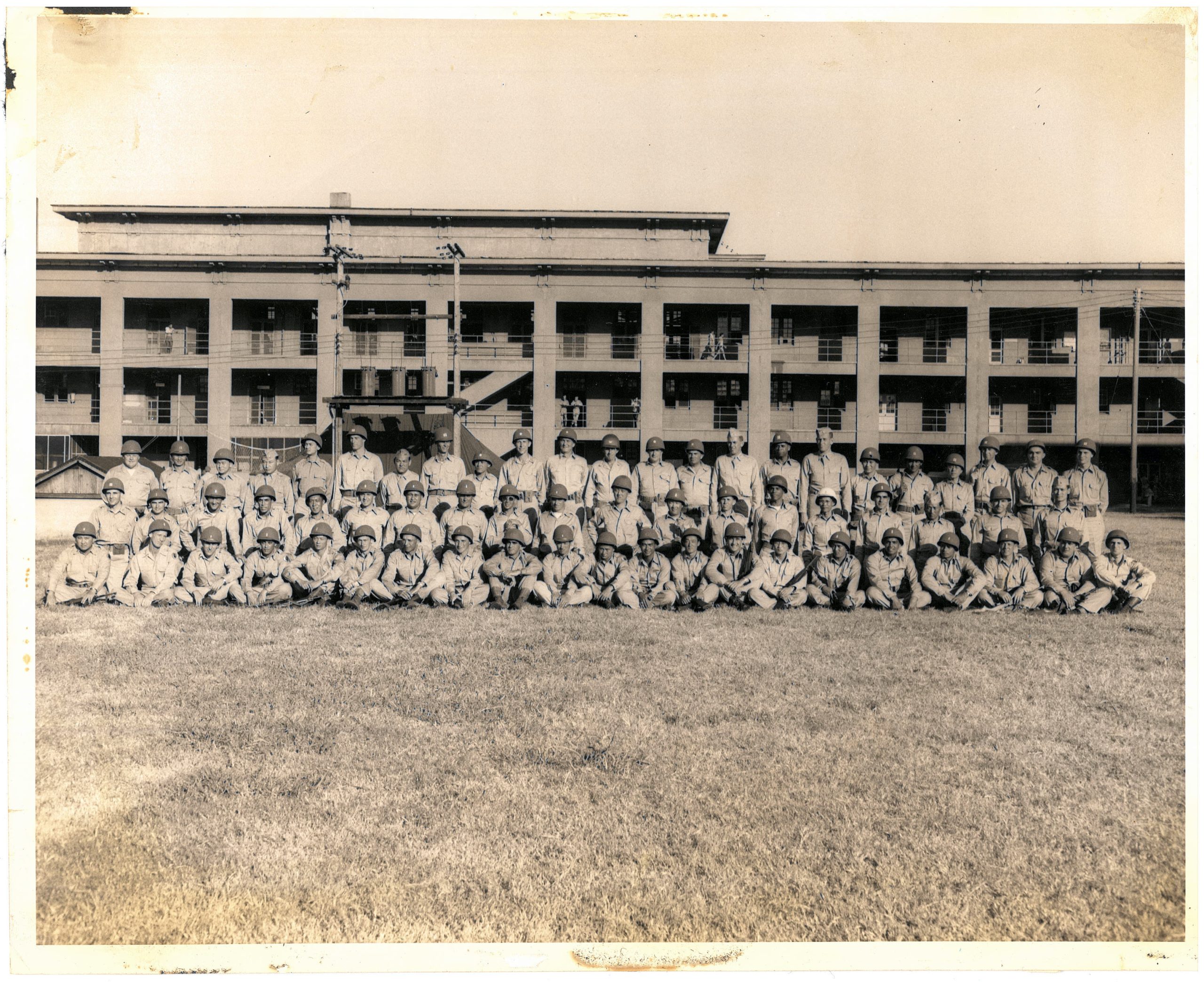
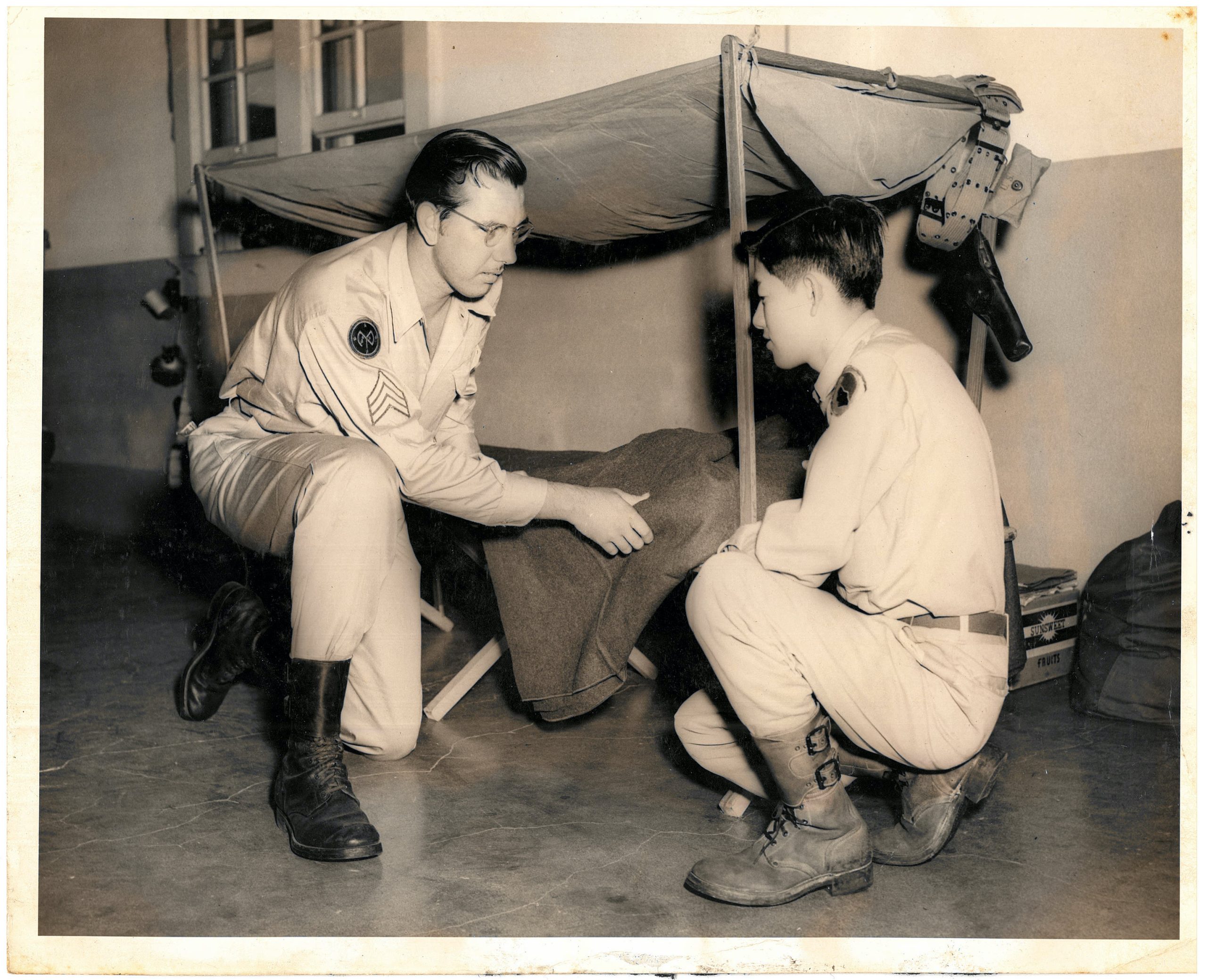
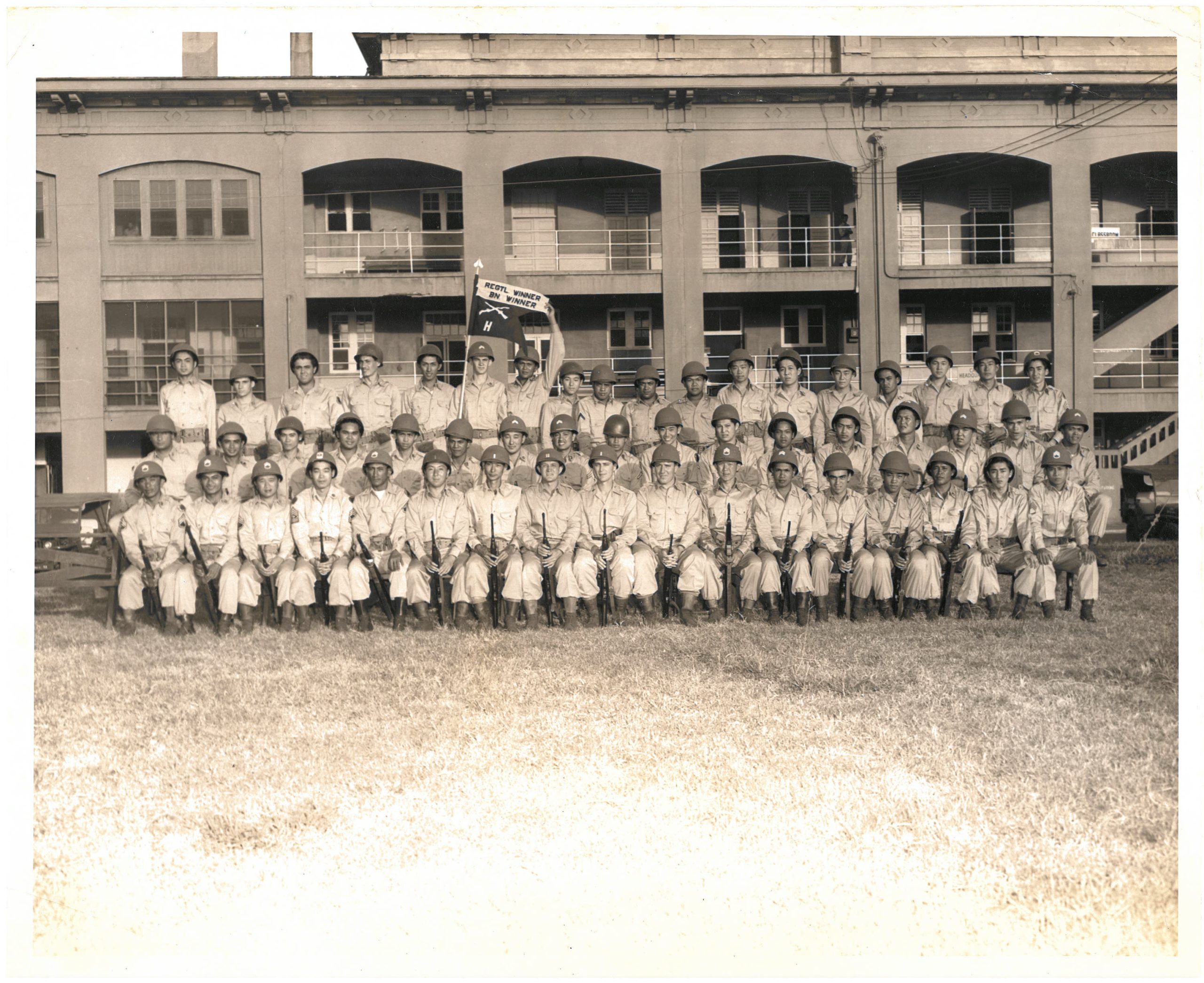
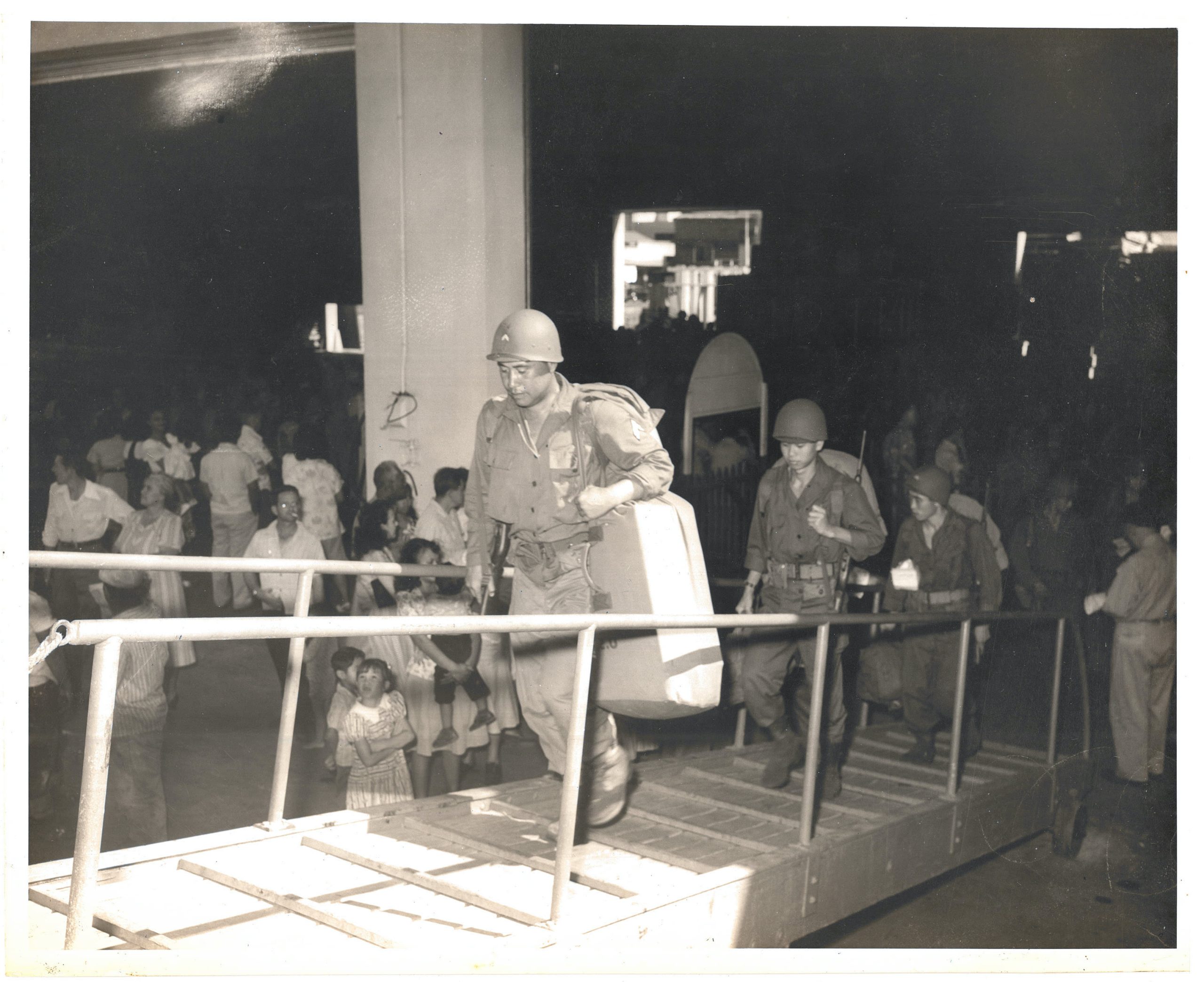
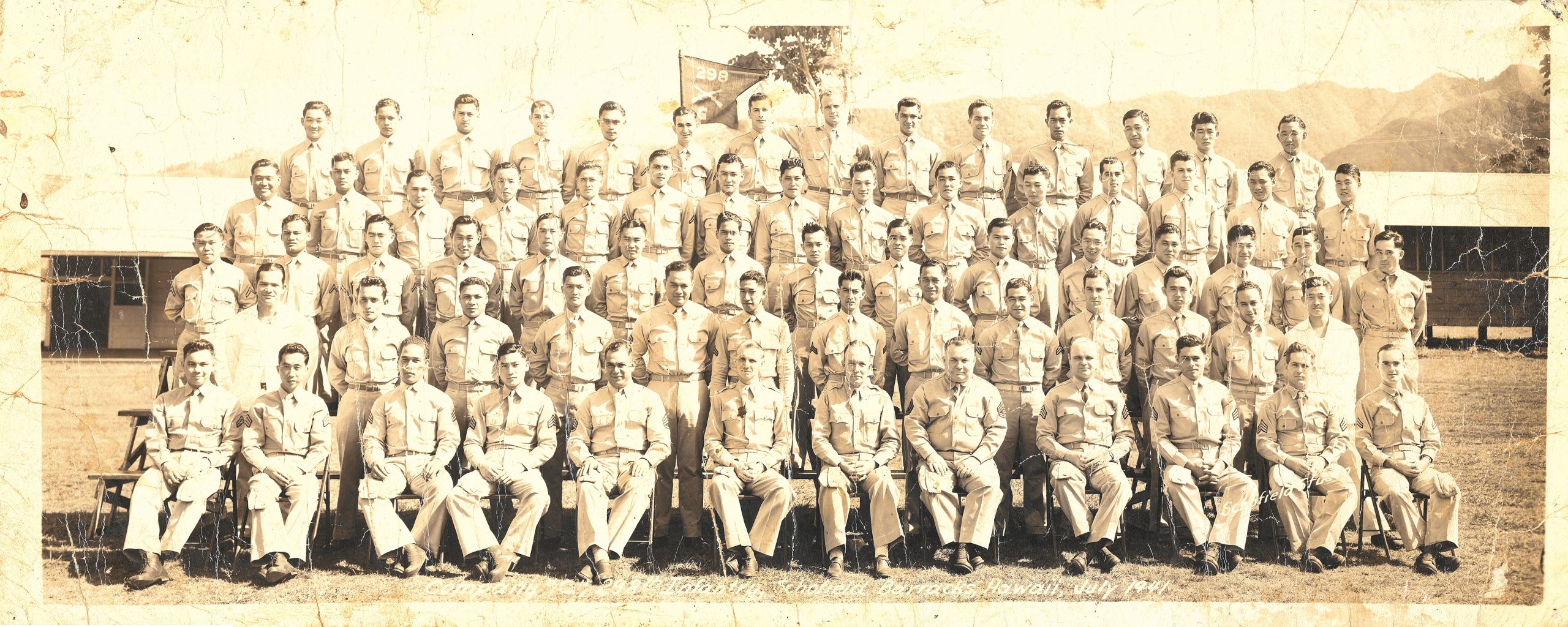
T/4 Keating, 3925 SIG Photo Ser Co299th Inf. Pier 12 Service Co. T:4 Elemer Viera The Ima DeRego Hilo GirlCo. H. 298th Infantry Special to the Advertiser299th Inf. Up the Gangway they come S.S. Hualalai A-47Col. KorhAir Force Photo Released by Pacific Air Command Hickam Field, Oahu T.H.Company G, 298th Infantry Schofield Barracks, Hawaii, July 1941Officers of the 298th Infantry Schofield Barracks, Hawaii – August 1941Company G, 298th Infantry Schofield Barracks, Hawaii, July 1941(Pictures from the Hawaiʻi National Guard Archives)
HAVE YOU EVER WONDERED?
By CPL. AMBROSE B. PARE
. . .
298th Infantry Regiment
Four years later, on August 17, 1923, the regiment was redesignated as the 298th Infantry Regiment and seventeen years later, on October 15, 1940, was once more inducted into Federal service at Schofield Barracks, for World War II.
With the exception of the 1st Battalion, the 298th Infantry Regiment was inactivated, after four and a half years of service during World War II, on the 10th of April 1945. The 1st Battalion stayed on for a few months but was finally inactivated on the 22nd of January 1946. The regiment received battle honors for the Central Pacific Campaign.
. . .
299th Infantry Regiment
Shortly before the United States entered World War II the 299th Infantry Regiment was inducted into Federal Service on the 15th of October, 1940. On June 20th, 1942, the regiment was inactivated and its personnel and equipment were transferred to the 298th Infantry.
By order of President Franklin D. Roosevelt, the National Guard of Hawaii was again ordered into active service in October 1940 and was on duty at Schofield when the Japanese attacked Pearl Harbor on December 7, 1941.
The first Japanese prisoner of World War II was captured at Waimanalo by an island Guardsman, MSGT David Akui, who was on guard duty on the evening of the 7th. The prisoner, a Lieutenant Commander, had abandoned his two-man submarine after it went aground on coral at Waimanalo. The other member of the small, two-man submarine took his own life aboard the craft.
Composition of the Guard at this time was two infantry regiments-the 298th and 299th. The 299th was inactivated in June 1942, with all personnel and equipment transferred to the 298th. The reorganized regiment went into combat in the New Hebrides Islands in the South Pacific from 1943 to 1944. They were released from Federal service in 1946 at which time the Hawaii National Guard was reorganized.
In 1940 war in Europe and Asia again brought about mobilization of the Guard, and on October 15, orders were issued calling the 298th and 299th Infantry regiments to active duty.
December 7, 1941, found the Hawaii Guardsmen serving up defenses along the coast of Windward Oahu and it was here that the first Japanese prisoner of war was taken-by Guardsmen.
Liemenant Paul Plybon and Sergeant David Akui, members of Company “G,” 298th Infantry, sighted and captured a two-man Japanese submarine that had washed ashore at Waimanalo. One of the occupants, an ensign was captured by the two Guardsmen. The other crewman was found dead inside the craft.
Lieutenant Plybon was later killed in the South Pacific and Sergeant Akui served through out most of the war with the famed “Merrill’s Marauders.” The 299th Infantry was deactivated in 1942 and its members transferred to the 298th and other Army units .
Known as “Hawaii’s Own” Regiment the 298th left Hawaii in September 1943 serving until November, 1944 in the New Hebrides and Guadalcanal theaters of operations.
Among the veterans of Guadalcanal, although not a member of the Guard at the time, is Brigadier General Frederick A Schaefer III, presently commanding general of the Hawaii Army National Guard.
Many other names well known to Hawaii served in the Guard; among them David Kahanamoku, brother of Duke Kahanamoku rose to the rank of captain. Farrant L. Turner, late Secretary of Hawaii, was also a member of the 298th before transferring to take command of the newly formed 100th Battalion. James Lovell, vice president of Lewers and Cooke, became the 100th Battalion’s executive officer upon transfer from the National Guard.
In the summer of 1942, 1406 enlisted and 28 officers of Japanese ancestry were transferred from the Guard and organized into the 100th Battalion, later to become the Army’s most decorated unit.
Following the war, many of the former Guardsmen who went into the 100th Battalion and 442nd Infantry returned to the Guard. Others, who had not previously been members of the National Guard, became Guardsmen after the war. Among chem are Brigadier General Francis S. Takemoto, first Nisei to achieve this rank and now commanding general of the 29th Infantry Brigade, and Colonel Edward M. Yoshimasu, chief of staff of the Hawaii Army National Guard.
With the end of World War II, the Hawaii National Guard was again reorganized into two regimental combat teams, the 298th and 299th.
The pressure to do away with the Guard subsided as international pressures President Franklin Roosevelt activated Guard units throughout the United States, including Hawaii’s units, on October 14, 1940 for one year of active duty training. This was later extended for 18 months. Before their term of service expired, Pearl Harbor was attacked. The Hawaii National Guard spent the rest of the war on active duty until it was restored to the Territory in late 1946.
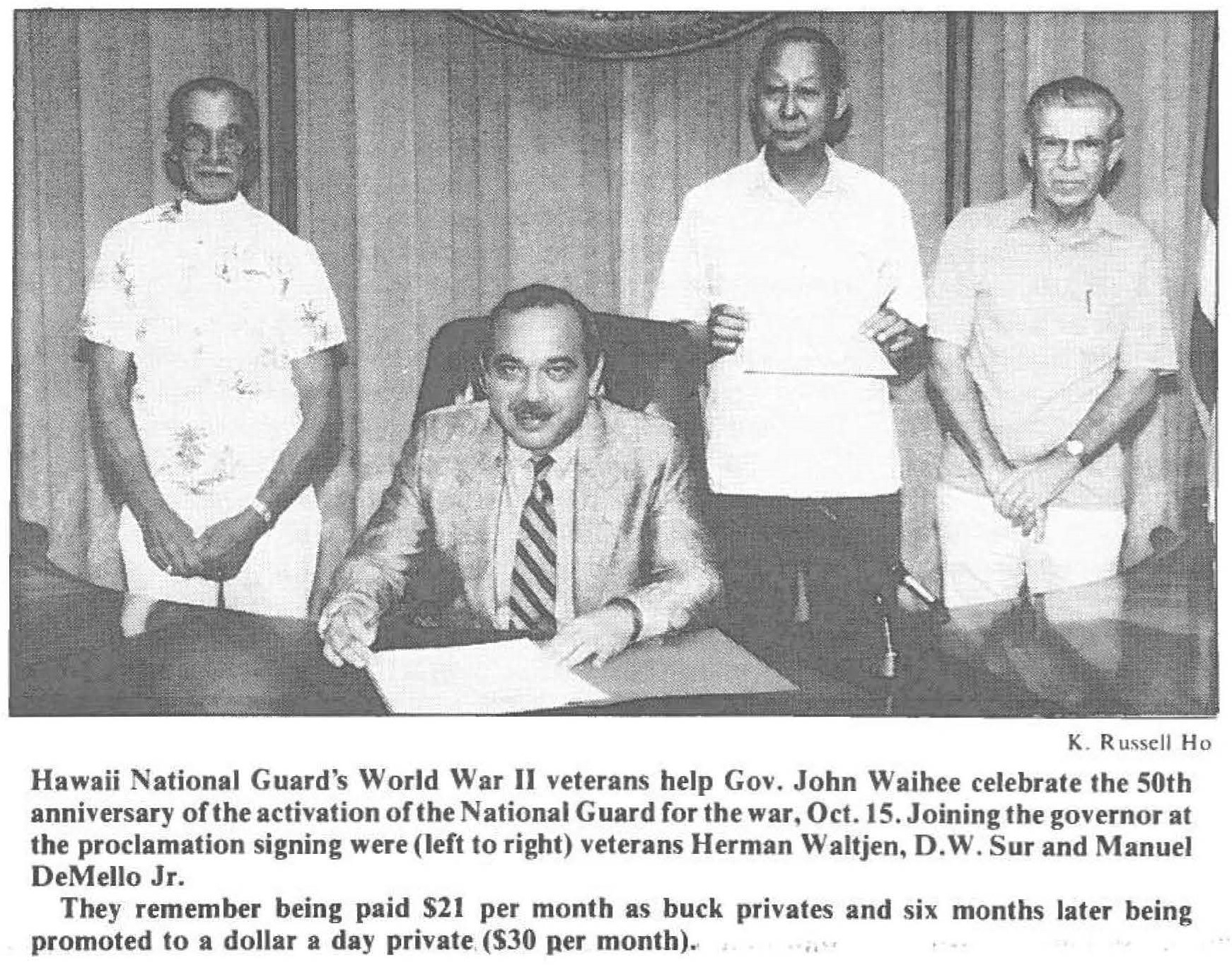
Hawaii National Guard’s World War II veterans help Gov. John Waihee celebrate the 50th anniversary of the activation of the National Guard for the war, Oct.15. Joining the governor at the proclamation signing were(left to right) veterans Herman Waltjen, D.W. Sur and Manuel DeMello Jr. They remember being paid $21 per month as buck privates and six months later being promoted to a dollar a day private ($30 per month)(Pictures from the 1990 July – September Pūpūkahi)
In anticipation of the United States’ involvement in World War II, President Franklin D. Roosevelt called on National Guard units across the nation to help fill the ranks of the newly expanded active Army. Hawaii’s 298th and 299th Infantry were two of the National Guard units called out.
The Hawaii units were tapped in the second increment of the presidential callup which inducted soldier from as far away as New York and Puerto Rico. The 298th, stationed at the Honolulu Armory, was commanded by Col. Wilhelm A. Andersen. Col. Gordon C. Ross was commander of the 299th, then stationed at lolani Barracks. Both infantry units were to serve for a 12-month period. (This period was later extended an additional 18 months.)
On Oct. 15, 1940, the two units’ 1,700+ members reported to Schofield Barracks for intensive training and preparation. Patriotism was high and there was wides spread support for the Guardsmen. To assist the young men in settling into their station camps, local residents and organizations collected donations to help pay for the soldiers’ personal items not provided by the Federal Government. The local media proudly referred to the men of the 298th and 299th as “Hawaii’s Own.”
On Dec. 8, 1941, a Hawaii Guardsman captured the first Japanese prisoner of World War II. On guard duty at Bellows Field, Master Sgt. David Akui captured Ensign Kazuo Sakamaki, commander of a two-man midget submarine. Sakamaki had swam ashore after being grounded during the surprise attack on Pearl Harbor the morning earlier.
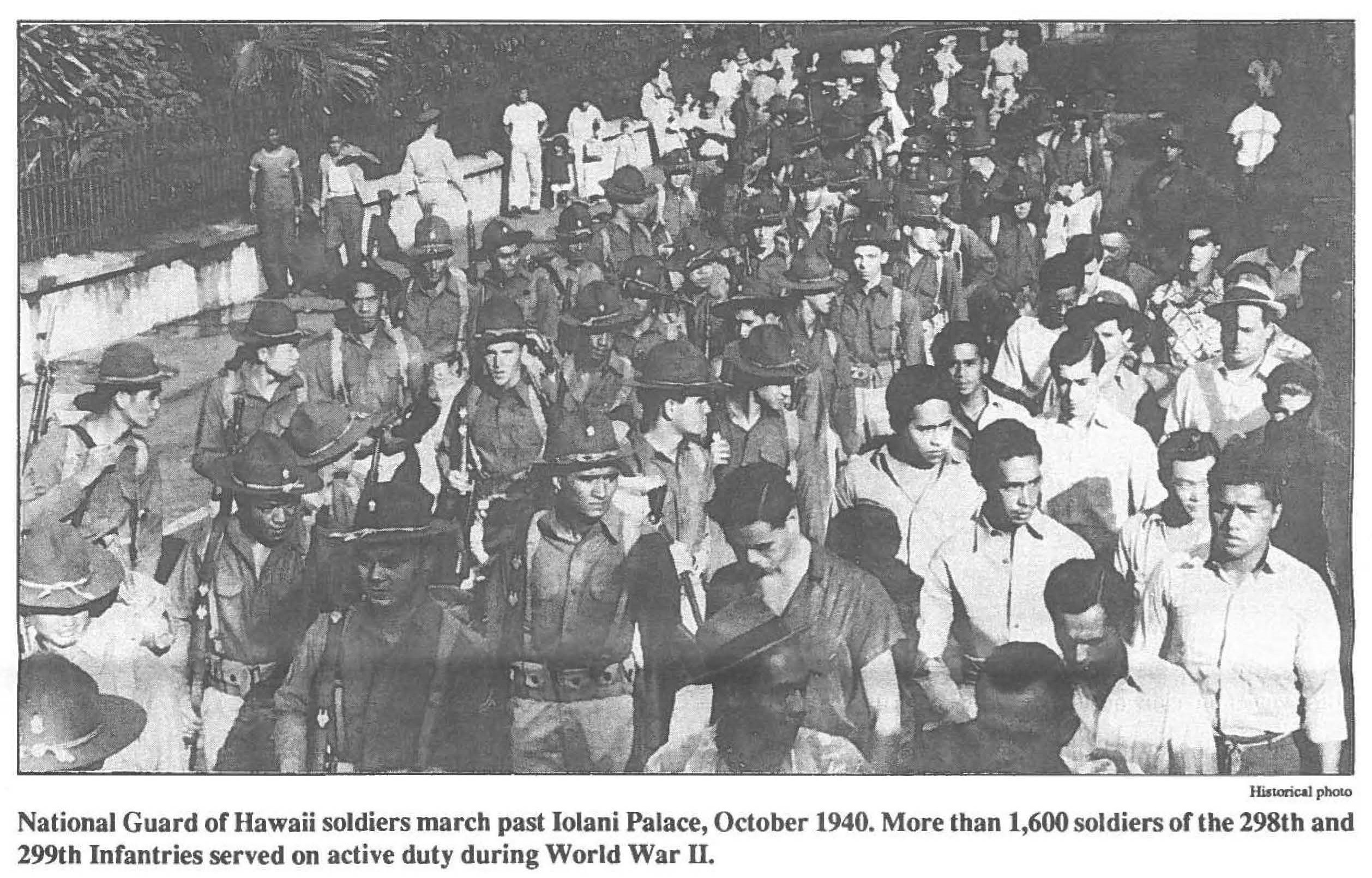
National Guard of Hawaii soldiers march past lolani Palace, October 1940. More than 1,600 soldiers of the 298th and 299th Infantries served on active duty during World War II. (Pictures from the 1991 October – December Pūpūkahi)
In the late 1930s, as war loomed in Europe and the Pacific, it became clear to previously neutral countries that regional conflicts were escalating into a global contest. Many countries braced for possible entry into another world war, including the United States, which activated reservists to fill a newly expanded active Army. The National Guard of Hawaii was tapped in the second increment of the federal call-up, its 298th and 299th Infantry Regiments to serve with the Army’s 24th Infantry Division in the South Pacific.
American patriotism was at an all-time high and there was widespread support for the territory’s citizen soldiers, who would later be dubbed “Hawaii’s Own.” Elaborate farewell ceremonies were held on the neighbor islands and local businesses and residents donated monies to purchase personal items and recreational equipment for the men. On Oct. 15, 1940, more than 1,600 National Guard soldiers from throughout the territory reported to Schofield Barracks, Oahu, for military training and preparation.
The soldiers settled into military life quickly and completely. Within 14 working days, the Third Regiment, Combat Engineers, 298th Infantry, had constructed a wooden cantonment in the area of Schofield known as National Guard Woods. Barracks construction for the 299th followed, with soldiers moving into their new quarters on Dec. 3. Col. Wilhelm A. Andersen was the commander of the 298th Infantry, stationed at the Honolulu Armory. Col. Gordon C. Ross commanded the 299th Infantry, then stationed at Iolani Barracks.
In early April, the territorial legislature expressed concern about the vulnerability of neighbor islands to enemy attack. Later that month, neighbor island units began returning to their home stations. The units were involved in numerous military construction projects and played major roles in building facilities at Hilo Airport, Hawaii; Barking Sands, Kauai; and Homestead Field, Molokai.
For many months after the Dec. 7 attack on Pearl Harbor, both regiments were assigned to beach defense duties. On Oahu, Guard soldiers took over for active Army forces deployed from Schofield.
In spring 1942, Guardsmen of Japanese descent were formed into a separate group that later became the 100th Infantry Battalion. The 299th Infantry was so depleted by this reorganization that the regiment was inactivated and its remaining members transferred to the 298th.
Due to numerous personnel changes and transfers, Hawaii Guard soldiers comprised only 15 percent of the 298th in 1943 when the regiment was sent to Guadalcanal and Espiritu Santo to guard port facilities. (Local and mainland draftees made up the majority of the unit, in nearly equal numbers.)
Most elements returned to Oahu in late 1944, and all but one of the battalions were deactivated on Oct. 10, 1945. Separation papers sent to the National Guard of Hawaii headquarters showed that local Guardsmen served longer and accrued more service points than any other Hawaii military group.
Compiled from Hawaii National Guard historical files.