Do you need help in another language? We will get you a free interpreter. Call 808-369-3580 to tell us which language you speak.
您需要其它語言嗎?如有需要,請致電 (808-369-3478), 我們會提供免費翻譯服務
您需要其它语言吗?如有需要,请致电 (808-369-3478), 我们会提供免费翻译服务
En mi niit alilis lon pwal eu kapas? Sipwe angei emon chon chiaku ngonuk ese kamo. Kokori (808-369-3478) omw kopwe ureni kich meni kapas ka ani.
Makemake `oe i kokua i pili kekahi `olelo o na `aina `e? Makemake la maua i ki`i `oe mea unuhi manuahi. E kelepona (808-369-3478)`oe ia la kaua a e ha`ina `oe ia la maua mea `olelo o na `aina `e.
Masapulyo kadi ti tulong iti sabali a pagsasao? Ikkandakayo iti libre nga paraipatarus. Awaganyo ti
(808-369-3478) tapno ibagayo kadakami no ania ti pagsasao nga ar-aramatenyo.
다른언어로 도움이 필요하십니까? 저희가 무료로 통역을 제공합니다. (808-369-3478)로 전화해서 사용하는 언어를 알려주십시요
Kwoj aikuij ke jiban kin juon bar kajin? Kim naj lewaj juon am dri ukok eo ejjelok wonen. Kirtok
(808-369-3478) im kwalok non kim kajin ta eo kwo melele im kenono kake.
E te mana'o mia se fesosoani i se isi gagana? Matou te fesosoani e ave atu fua se faaliliu upu mo oe. Vili mai i le numera lea (808-369-3478) pea e mana'o mia se fesosoani mo se faaliliu upu.
¿Necesita ayuda en otro idioma? Nosotros le ayudaremos a conseguir un intérprete gratuito. Llame al (808-369-3478) y diganos que idioma habla.
Kailangan ba ninyo ng tulong sa ibang lengguwahe? Ikukuha namin kayo ng libreng tagasalin. Tumawag sa (808-369-3478) para sabihin kung anong lengguwahe ang nais ninyong gamitin.
‘Okú ke fie maʻu tokoni ʻi ha lea fakafonua ʻe taha? Temau kumi haʻo taha fakatonulea taʻetotongi. Telefoni ki he (808-369-3478) ke fakahā mai ʻa e lea fakafonua ʻokú ke lea aí.
Bạn có cần giúp đỡ bằng ngôn ngữ khác không ? Chúng tôi se yêu cầu một người thông dịch viên miễn phí cho bạn. Gọi (808-369-3478)nói cho chúng tôi biết bạn dùng ngôn ngữ nào
Gakinahanglan ka ba ug tabang sa imong pinulongan? Amo kang mahatagan ug libre nga maghuhubad. Tawag sa (808-369-3478) aron magpahibalo kung unsa ang imong sinulti-han.
Hawaiʻi Air National Guard’s Operation Southern Watch support
Following the 1991 Gulf War, coalition forces established no-fly zones over Iraq to limit Saddam Hussein’s ability to threaten regional stability. The Hawaiʻi Air National Guard (HIANG) played a key role in enforcing these mandates through multiple deployments to the Persian Gulf as part of Operation Southern Watch.
In Nov. 2000, nearly 250 airmen from the 199th Fighter Squadron, 154th Maintenance Squadron, and the 154th Aircraft Generation Squadron deployed. Flying as the 199th Expeditionary Fighter Squadron under the 363rd Air Expeditionary Wing, HIANG pilots launched daily F-15 Eagle combat patrols over southern Iraq. Armed with live missiles and 20mm cannon rounds, they protected coalition aircraft — including reconnaissance planes, and strike fighters from Iraqi threats. Despite anti-aircraft fire and the constant risk of missile engagement, Hawaiʻi’s F-15 pilots sustained operations without interruption.
Supporting them were HIANG maintainers, life support specialists, and weapons crews, who worked long shifts to keep aircraft mission-ready. Their efforts ensured that all taskings were met, with additional opportunities for training sorties when possible.
In early 2001, the mission expanded with deployments from the 201st Combat Communications Group and its subordinate units, including the 291st Combat Communications Squadron. These airmen provided critical satellite, microwave, and computer communications to keep coalition air operations secure and coordinated.
The 154th Security Forces Squadron contributed significantly, rotating into the Persian Gulf to provide base defense and force protection. From 2001 through 2003, HIANG security forces airmen manned checkpoints, conducted vehicle searches, and safeguarded coalition aircraft and personnel at sprawling desert air bases. Many were mobilized immediately after the Sept. 11, 2001 attacks and served extended tours, balancing long duty hours and difficult conditions with professionalism and resilience.
By the conclusion of Operation Southern Watch in 2003, Hawaiʻi Air National Guard personnel had distinguished themselves across multiple mission areas — combat air patrol, communications, security, and maintenance. Their contributions underscored the Guard’s ability to seamlessly integrate with active-duty and allied forces in sustained overseas operations, reinforcing both coalition air superiority and regional security in the decade between Desert Storm and Operation Iraqi Freedom.
Allied operational missions take Hawaii Air National Guard to Balkans, Persian Gulf
By Capt. Charles J. Anthony
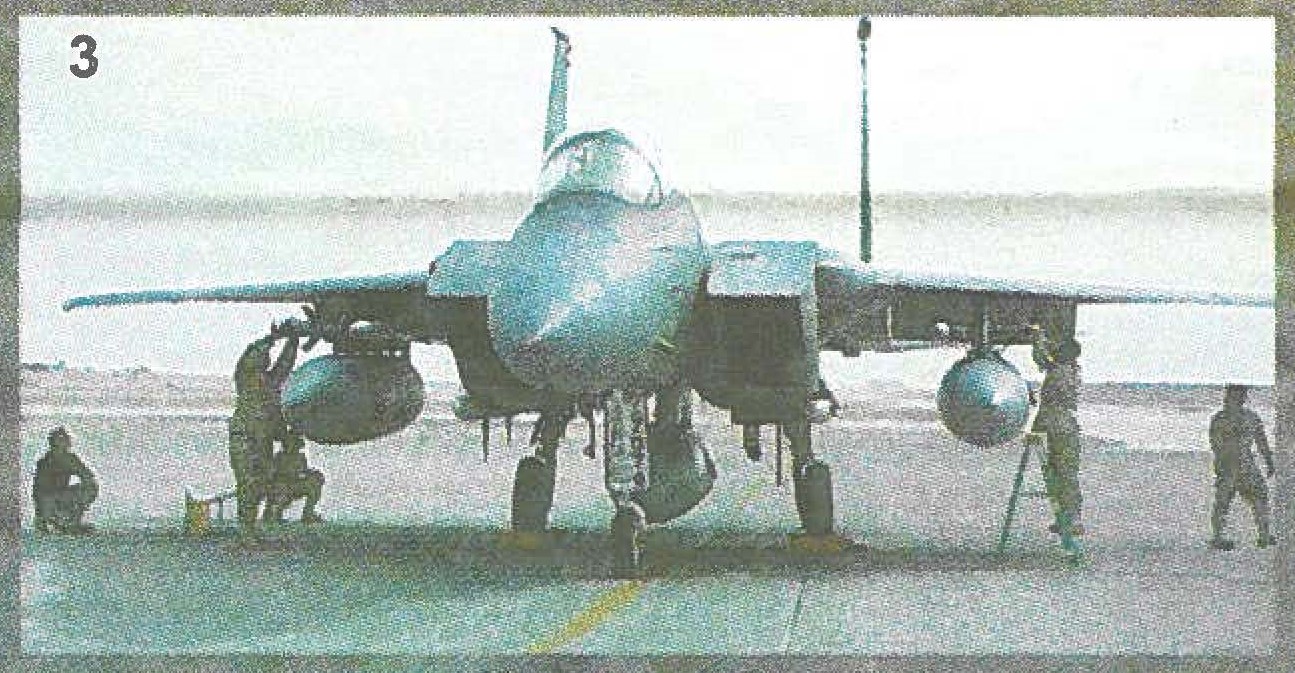
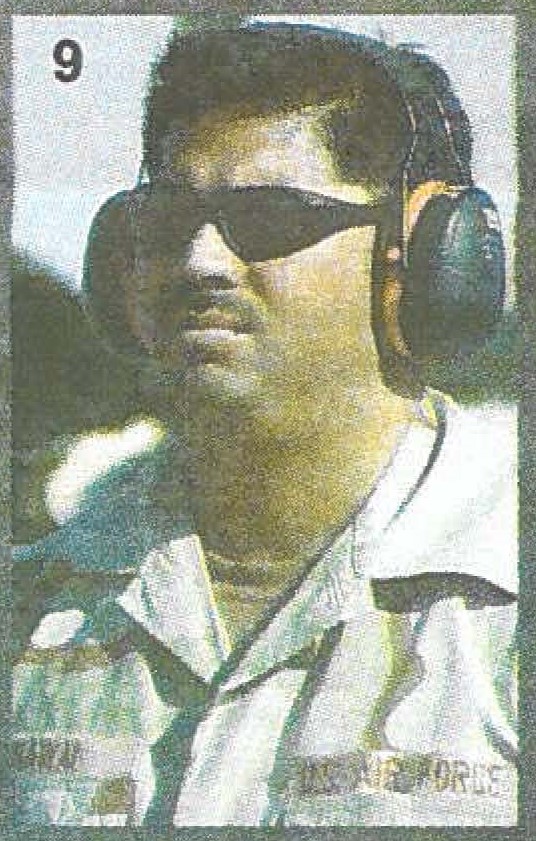
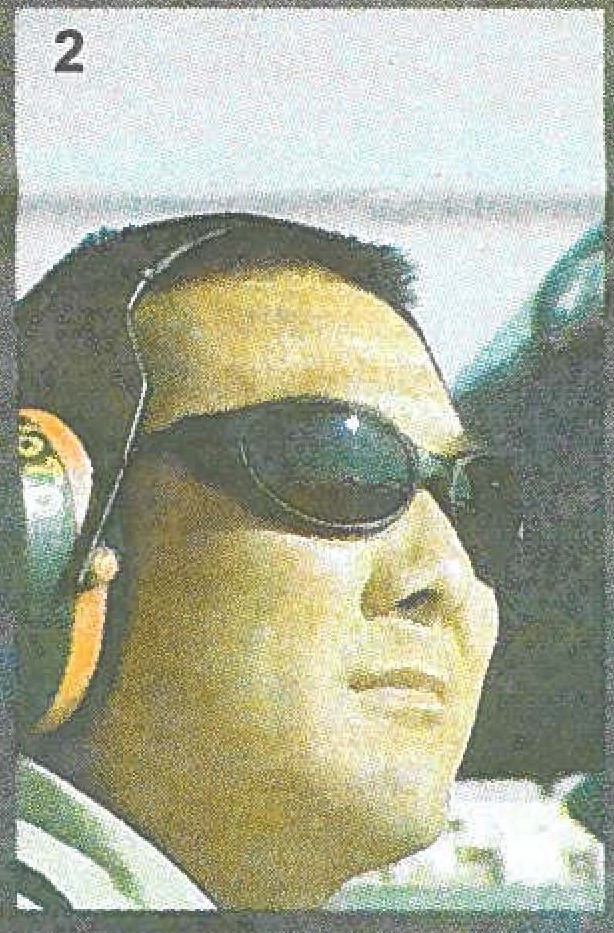
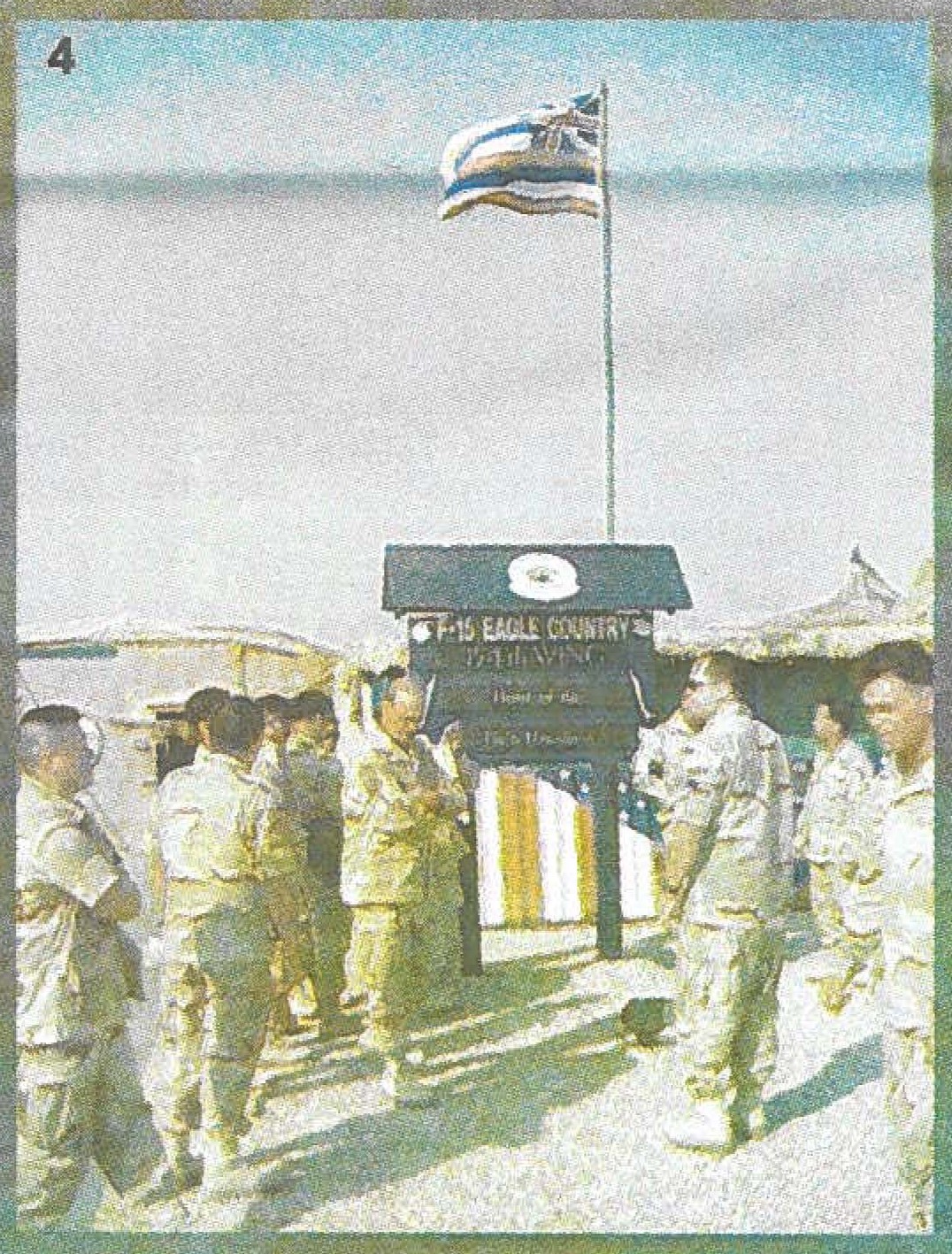
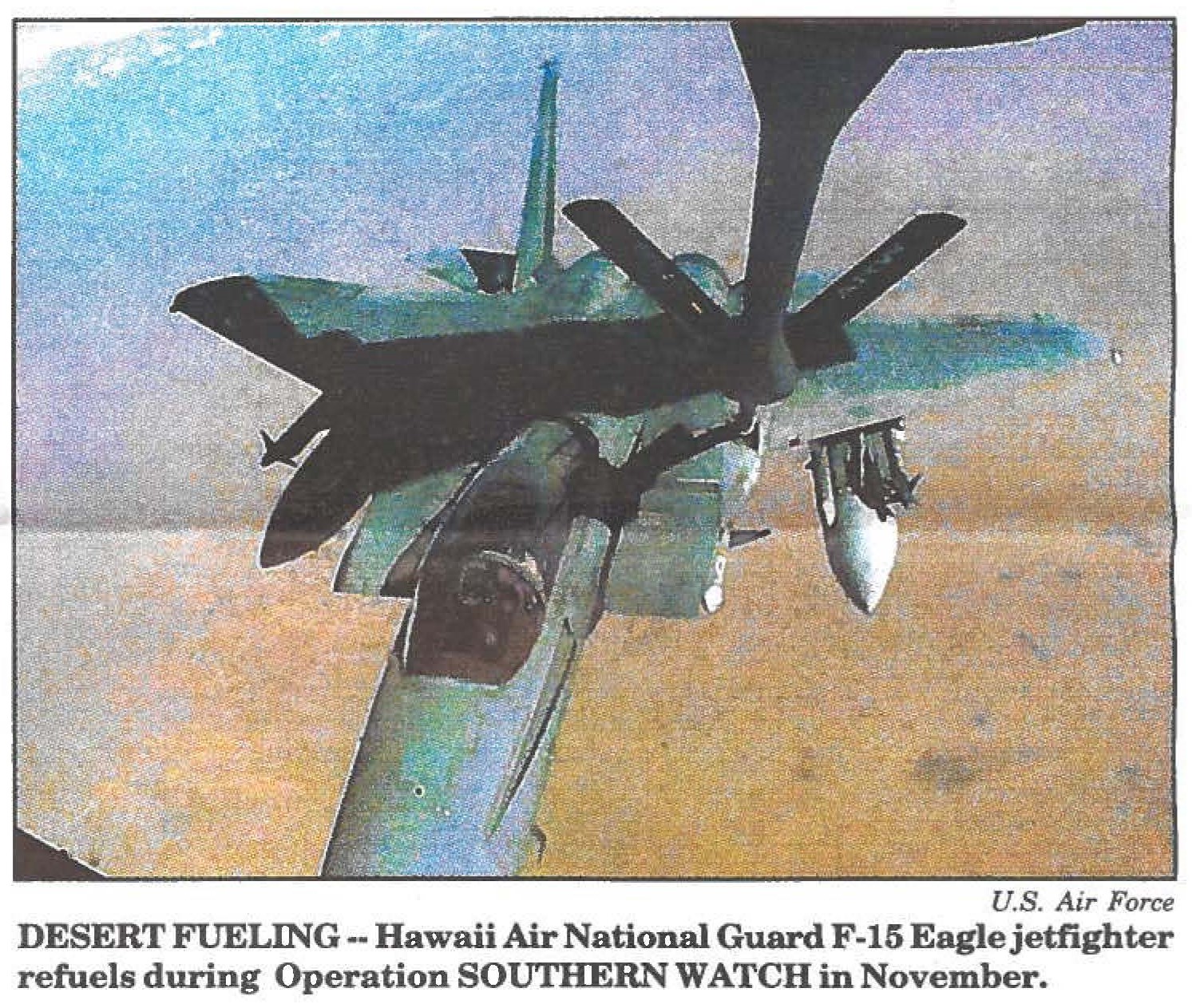
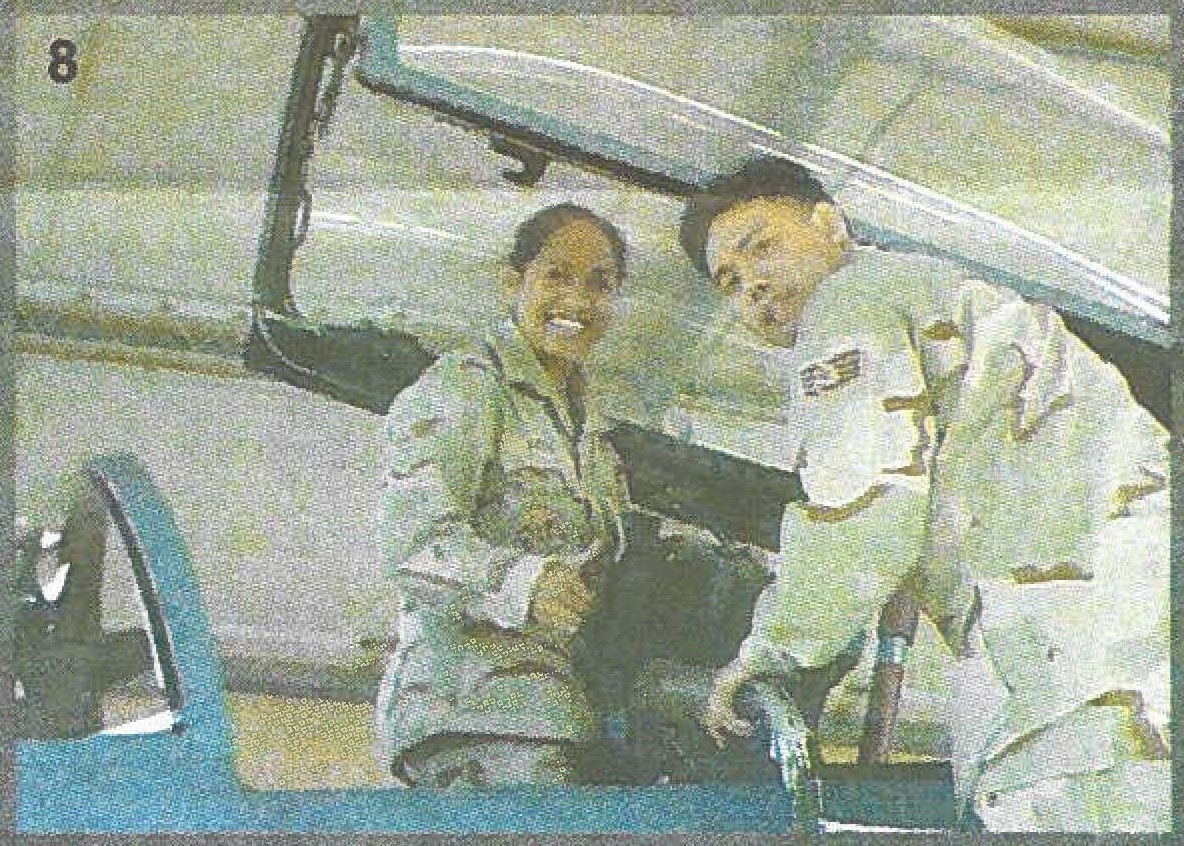
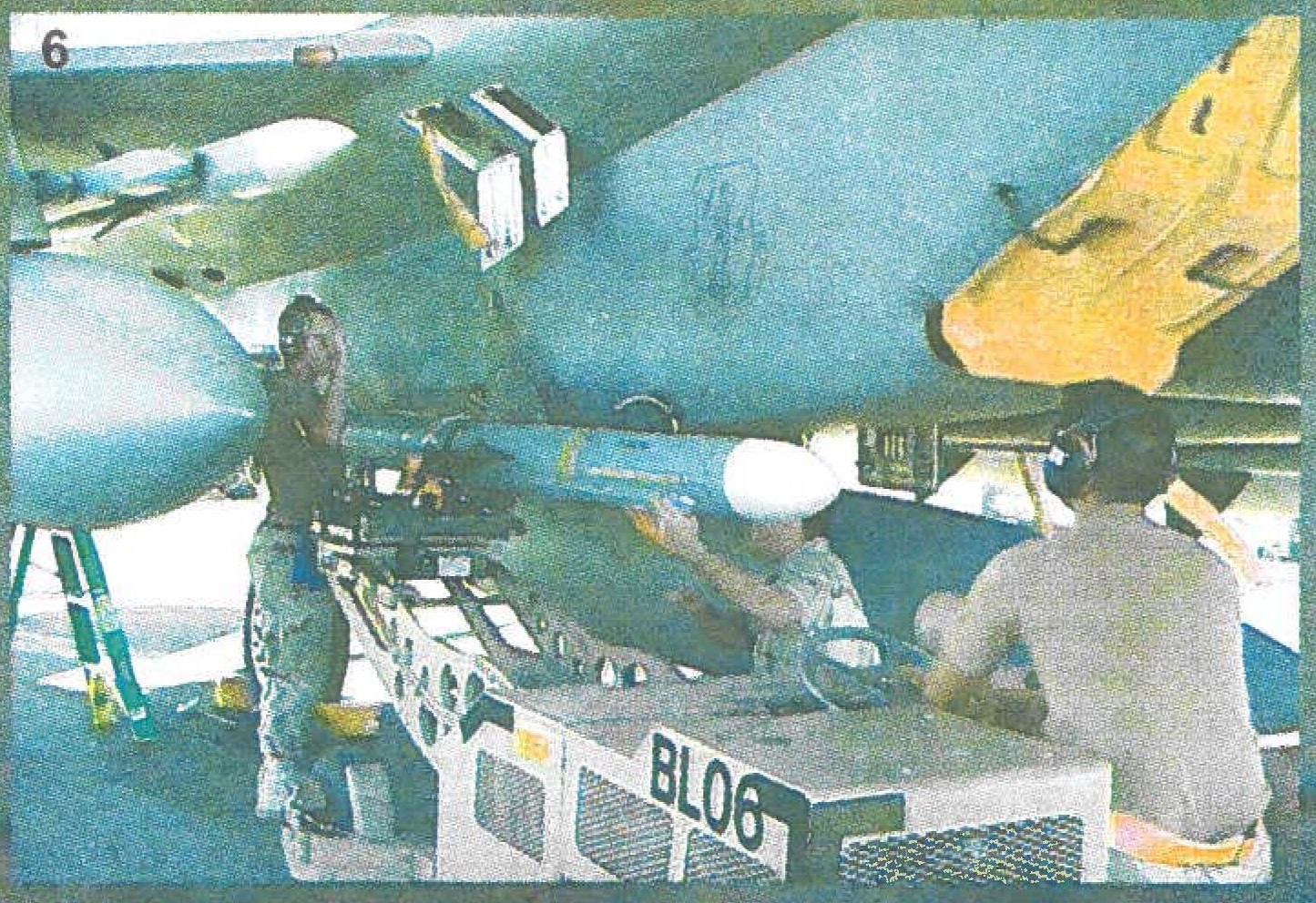
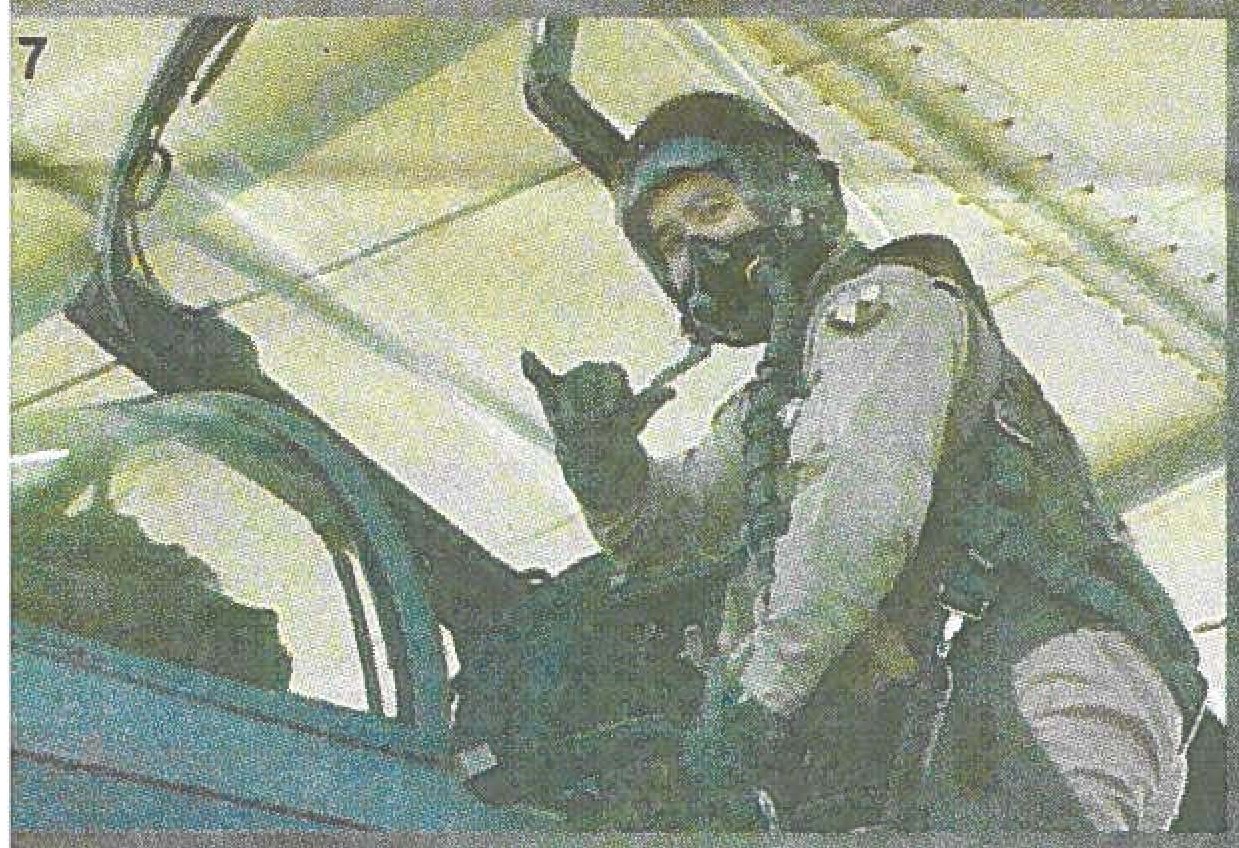
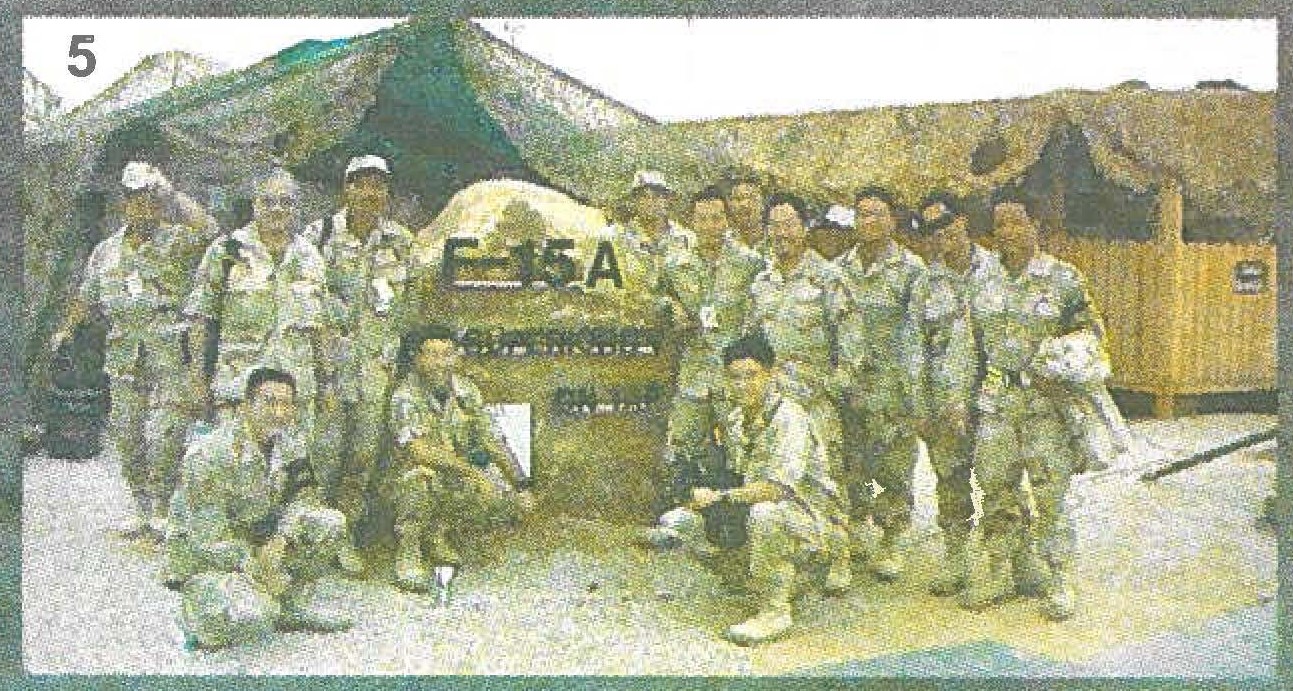
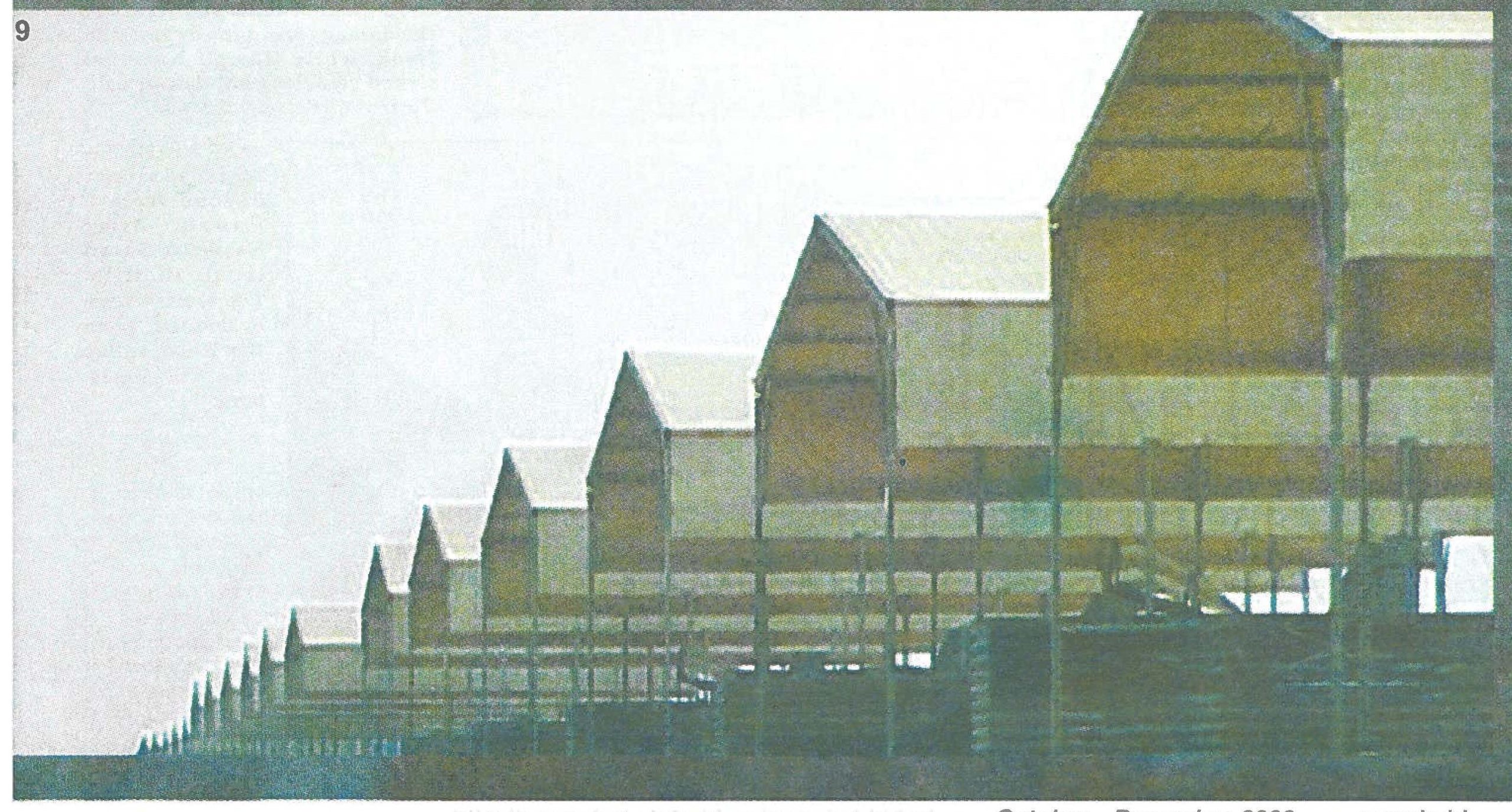
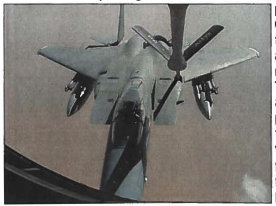
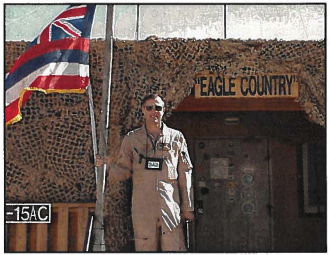
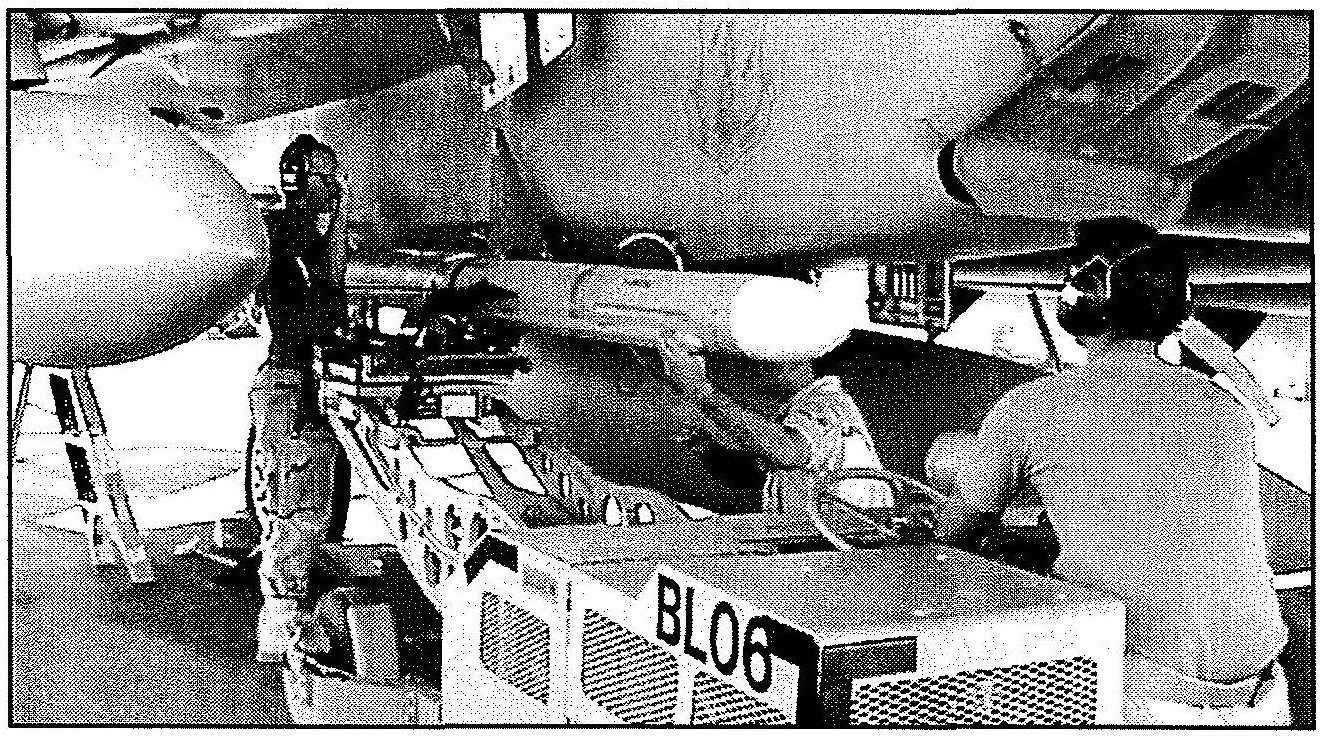
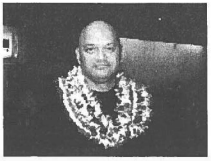
Staff Sgt. Richard Nawai Jr.Senior Airman Warren FujimotoCamp headquarters is marked with Hawaii State flagDESERT FUELING– Hawaii Air National Guard F-15 Eagle jetfighter refuels during Operation SOUTHERN WATCH in November.Senior Airman Jorena Young and Staff Sgt. Joseph Salvador, lift support staff, check the parachute pack/ejection system prior to launch
Flight crews load missiles
Maj. Jeffery “Sumo” Namihira prepares for missionAllied operational missions take Hawaii Air National Guard to Balkans, Persian GulfSunshades temporary parking spots where air craft wait and get minor maintenance prior to takeoffArming missle(Pictures from the 2000 October-December Pūpūkahi)
Hawaii Air National Guard (HIANG) personnel have been deploy ing to several far-flung places of the world, mostly with little fanfare, as they participate in Aerospace Expeditionary Forces nine and ten. AB part of AEF 10, 204th Airlift Squadron flight crews and maintenance personnel from the 154th Aircraft Generation Squadron have deployed to Germany; 154th Security Force Squadron personnel have gone to Incirlik Air Base, Turkey; videographers from the 154th Communications Flight have practiced their skills while at Aviano Air Base, Italy; and, a forecaster from the 199th Weather Flight helped provide weather reports to flyers at Incirlik.
“We provided entry control and close boundary security for aircraft on the flightline as well as mobile patrols,” said Staff Sgt. Dulcie Hale, one of 26 members of the Hawaii security force who deployed to Turkey between Oct. 22 and Nov. 17. “Everything was exactly the same compared with the active-duty. We were treated very well by active (Air Force) personnel, and we worked sideby-side with security forces from Lackland and Nellis,” said Hale, who had prior service with the active-duty Air Force before joining the Hawaii Guard.
Allied aircraft have been flying patrols over the northern no-fly zone of lraq as part of Operation NORTHERN WATCH. The 154th SFS members were restricted to base for the first two days at Incirlik because of Threatcon Charlie measures in place, but they were able to take in some limited sight-seeing the last few days they were in Turkey.
The 204th Airlift Squadron: deployed to Ramstein Air Base, Germany and flew resupply missions for “the NATO Peacekeeping operation in the Balkans. “our crews flew missions that took us through towering mountain peaks of the Alps and into fog shrouded valleys of sarajevo and Tuzla, Bosnia-Herzegovina and Skopje, Macedonia, to name a few,” said. Chief Master Sgt. Sam Wong 204th, chief loadmaster. “Every aspect of the operation allowed air crews and maintainers alike, the opportunity to integrate with our active duty counterparts, as well as with crews from the Alaska and West Virginia ANG C-130 units,” said Wong. All missions were flown on time and no cancellations due to maintenance. maintenance and life support staff worked 12 hour shifts to ensure that the aircraft was always ready for the next mission. “Working with the maintenance personnel from other units proved to be a unique learning experience,” said Staff Sgt. Paul Kalama. “We were able to exchange processes and ideas in our maintenance functions, which allowed us to function as a team.”
The largest and most visible deployment for AEF 9 involved approximately 250 members of the 199th Fighter Squaidron, 154th Maintenance Squadron and 154th Aircraft Generation Squadron who deployed to the Persian Gulf region around thanksgiving with a scheduled return date of Dec. 14. F-15 pilots from are Currently providing defense for coalition aircraft enforcing the southern no-fly zone of Iraq, as part of Opperation SOUTHERN WATCH. “This operation is helping to keep Saddam Hussein in check. Saddam Hussein is an angry and frustrated man because he has tried to shoot down a coalition flyer for the past ten years, but he has not been able to,” said Maj. Rojo Johnson, a 199th fighter pilot. “We’re going to do everything can we to ensure that all of our people come back safely,” added Johnson, who led the main body of airmen who departed Hickam Air Force Base on Nov. 24. “Our maintenance folks have been doing an outstanding job keeping our jets flying and the required maintenance work completed on time,” said Lt. Col. James “Bat” Drake, the detachment commander. “We have been filling all our tasking plus getting in a few training sorties here than there when the mission allows the break.” said Drake.
EDITOR’S NOTE: Due to the U.S. and host nation diplomatic agreement. U.S. military units are not authorized to announce the exact location(s) where our units deployed for AEF. Therefore, all references in the pupukahi are generic, such as “Persian Gulf region.”
I especially want to thank the members of the 199th Fighter Squadron, 154th Maintenance Squadron, and 154th Aircraft Generation Squadron who deployed to Southwest Asia in the predawn hours the day after Thanksgiving. The holiday season is a time when it’s especially appropriate for families to be together. Our HIANG members volunteered for the Operation SOUTHERN WATCH mission, despite the hardships, so that others from the active duty could be with their families. Volunteering for that deployment was a tremendously selfless act, and I want to say to our own family members how much your understanding is appreciated. Again, a big mahalo goes to our professional soldiers and airmen!
The 199th Expeditionary Fighter Squadron (EFS) is in place as part of AEF 9. We are here under United Nations mandates to keep Iraq complying with agreements made after Desert Storm and subsequent events. The horror stories some people passed along were vastly exaggerated as far as the atmosphere and surroundings we expected to find. I’m going to tell you about who we are, our mission, the facilities we are operating in, and then tell a little bit about how we are getting along.
People from the 154th Wing deployed here are made up of the 199th Fighter Squadron, the 154th Aircraft Generation Squadron, and the 154th Maintenance Squadron. Upon activation here, we are called the 199th EFS under the 363rd Air Expeditionary Wing, while the back shop people from the Maintenance Squadron are assigned to the 363rd Expeditionary Maintenance Squadron. This is the first time we have deployed and not all come under direct control of the Detachment Commander. But however things are organized, we are representing the Hawaii Air National Guard under real world threat conditions we don’t usually encounter at home while doing our mission quite well.
Nearly every day, including Thanksgiving, pilots of the 199th EFS take off in their F-15s and fly a little over an hour North to just South of Iraq. We then get gas from KC-135 tankers and enter Iraq with a full load of 6 radar missiles (4 Aim-120 AMRAAMs and 2 Aim-7 Sparrows) plus 2 heat seeking missiles (Aim-9 Sidewinders) along with 930 rounds of 20mm high explosive incendiary rounds for our guns. Our job is to provide defense for the Coalition Aircraft enforcing the Southern No Fly Zone of Iraq. These aircraft include U-2s, RJ-135s, E-3 AWACS, F-16CJs (the new Wild Weasels), EA-6Bs (jammers), F-16 bomb droppers, British GR-1 bomb droppers along with Navy F-14s and F-18s that do a combination of bomb dropping and air defense. Atlantic City Guard F-16s and British F-3s share the Air Defense roll with us. It is quite a waltz every day to get everyone in place at the correct time to ensure mission success. Saddam Hussein has learned not to turn on his air defense radars as in the past. Each time he would do so, our F-16CJs would shoot their missiles and take out Iraqi radars. The US has pretty much taken out the highest threat missiles to us on previous missions. Now, Iraq tries to get lucky with anti aircraft artillery that is not guided by radar. I call it taking nearly blind pot shots at us.
While previous units had to deal with the intense heat of summer and the accompanying sand storms, we are dealing with winter clouds and thunderstorms in the area we are trying to occupy. It actually rained at our home for a few days. The record .6 inches of rain didn’t turn the sand green. It just gave us a reprieve from the dust. But not to worry, we don’t have to shine our boots, because we are in the brown shoe days again.
Our takeoff and landings are designed to limit our exposure to potential man-held heat-seeking missiles. We take off with our flares armed, motors cooking in full afterburner to accelerate at low altitude until the end of the runway. We then pull up to climb as fast as possible out of harms way. Our base is quite well protected by security patrols that roam the desert for potential threats, but we don’t want to be the first ones to miss the mission because of damage to our aircraft or worse. For our arrival back home, we keep our altitude fairly high until the last minute, then dive to the field for our pitch out to landing. Again we have our flares armed at the ready to decoy against the potential missile threat.
Our maintenance folks have been doing an outstanding job keeping our jets flying and the required maintenance work completed on time. We have been filling all our tasking plus getting in a few training sorties here and there when the mission allows the break. This requires our troops to take off all the real missiles and one of the three external gas tanks, load up our training missiles (so we don’t shoot each other down by accident) and then do the routine in reverse to go back to war. Our back shop folks have been doing outstanding work along with the flight line to keep our parts together into the well-oiled machine we have come to expect. The motto of “One team, One fight” is displayed in the attitude of our people and all the help we get from our active duty counter parts.
Our living facilities are quite nice. They are all permanent facilities with a gym, little gyms, a Pool, running and biking path, and even a tent where they show nightly movies. All our dorms have community areas with TVs and VCRs. We have a few dining halls that serve fairly high quality food. The BX looks like almost any other that you might find in the US. We have access to two 15-minute phone calls per week, and the Internet is alive and well. While most of us would probably not volunteer to stay here for the normal 90 day tour that the actives have to do, our relatively short time here has been quite comfortable. We are coming up on Christmas though and will be glad to be home for the Holidays. Until then, Aloha.
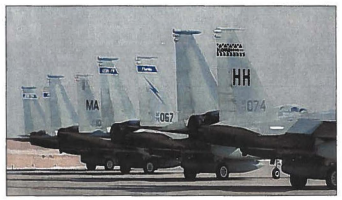
RISKY BUSINESS Airman deployed in the Persian Gulf area, armed F-15 Eagle jetfighters for Operation SOUTHERN WATCH in November 2000. Senior Master Sgt. Myles Moriyama photo(Picture from the 2001 Annual Report)
Communications personnel deploy to Persian Gulf Region
Members of the Hawaii Air National Guard began deploying to the Persian Gulf region in February as part of a scheduled rotation of troops supporting Operation SOUTHERN WATCH. Following the Persian Gulf War, coalition forces, under the auspices of the United Nations, imposed no-fly zones in the northern and southern sectors of Iraq. The southern no fly zone was imposed to prevent Iraqi aircraft from flying and large-scale Iraqi troop movements below the 33rd parallel.
Approximately 40 airmen from the 201st Combat Communications Group, will be taking part. Most are deploying for approximately three weeks. Rotations will continue through early May. Several other HIANG members Italy, Germany and Turkey to support U.S. Air Force operations.
The first rotation of Hawaii airmen was from the 291st Combat Communications Squadron, based in Hilo. Senior Airman Glen Gebin is a drill-status satellite and wide-band communications apprentice with the 291st, who volunteered for the deployment. He plans to pursue an Associates Degree in electronics from Hilo Community College after returning from the Persian Gulf. “I like exploring the world,” said Gebin, a Hilo native. “I’ve been to Thailand and Korea with the Air Guard, but this will be my first deployment to the Persian Gulf,” said Gebin. Staff Sgt. Lawrence Fong is a drill-status member of the 291st who works full-time for Suisan, wholesale food distributors, as a data processor. During the month of March, he will be working alongside his active-duty counterparts in the Persian Gulf area in computer operations. Fong says he looks at this deployment as an opportunity to learn new techniques while serving on active-duty. Fong says his bosses in Hilo are being “very supportive” while he serves his country.
The 201st Combat Communications Group is comprised of units at Hickam Air Force Base, as well as Kalaeloa, Kahului and Hilo. Its federal mission is to provide secure microwave and satellite communications and air traffic control services to the U.S. Air Force and other U.S. military forces.
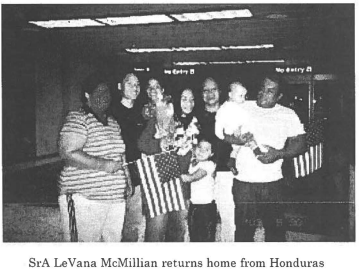
All 39 members of the 154th Security Forces Squadron have finally returned home after a 4-6 month deployment on AEF 7/8 in Saudia Arabia and Honduras. These members valiantly executed their missions in Operation Iraqi Freedom, Operation Southern Watch, Operation Enduring Freedom, and drug interdiction operations.
While deployed, these HIANG members received numerous Commendation and Achievement Medals, SNCO and NCO of the Month and Quarter Awards, and Letters of Appreciation. At the last Commander’s Call, the PSAB SF Commander cried in appreciation and praised the professionalism and work ethics of our HIANG SF members.
They have proudly completed the mission, are in reconstitution, and will be demobilized from active duty. These members were deployed and separated from their families 9 out of the 12 months while on the President’s Partial Reserve Mobilization. Their heroics contributed to the following squadron accolades: 2003 HING Family Readiness Group Unit of the Year Award, 2002 HIANG Unit of the Year Award, and 2002 154 MSG Unit of the Year Award. The squadron participated in many global military operations and exercises such as; Operation Iraqi Freedom, Operation Enduring Freedom, Operation Southern Watch, drug interdiction operation, Operation Noble Eagle, Ulchi Focus Lens, Thailand Fly-Away Security, Exercise Cobra Gold, and Exercise Maple Leaf.
Amazingly, the squadron’s unit manning is at 116% above its authorized strength. The SF career field continues to enlist and retain members with a $5,000 bonus.
Want a taste of the SF career field? PACAF MPA Tours are available for NCO and airmen to perform as READY Augmentees with the 15th SFS. Inquire with our orderly room, 448-7260. HUA!
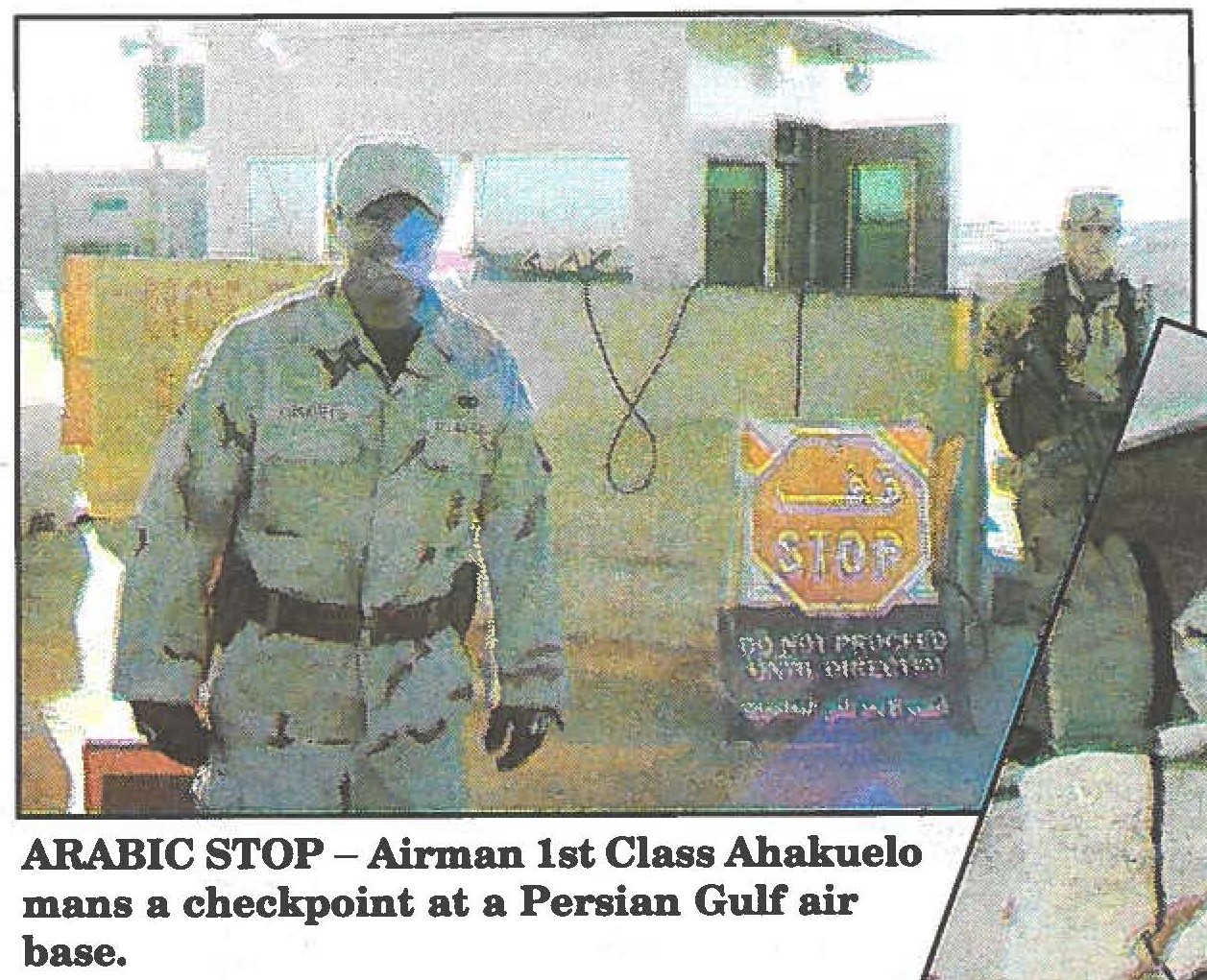
Members of the Hawaii Air National Guard’s 154th Security Forces Squadron are an integral part of the team that is defending one of the most secure air bases in the world. The Hawaii airmen are currently on active duty at an air base in the Persian Gulf region.
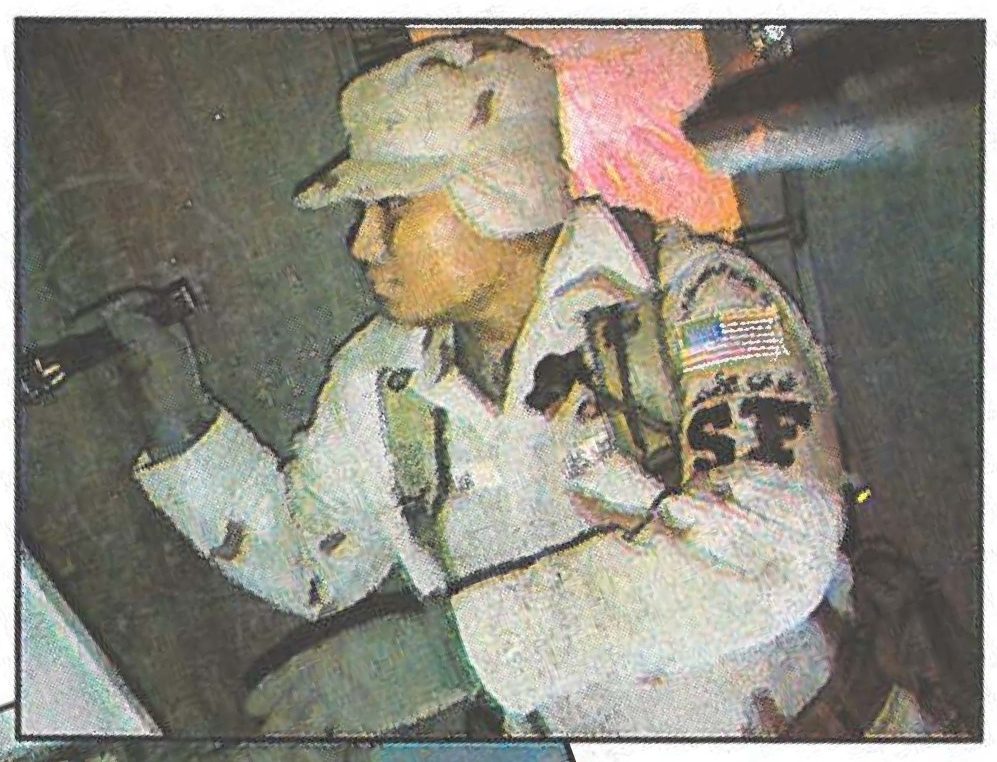
The U.S. Air Force controls several portions of a sprawling, 250 square mile air base in the middle of the desert. Entry into the American sectors of the base is strictly controlled, as U.S. and coalition forces must pass through a series of security checkpoints. Security Forces airmen are posted at these entry control points and search all vehicles transiting between coalition sectors.
U.S. and ether coalition forces were engaged in Operation SOUTHERN WATCH. The operation has been in effect since the end of the Persian Gulf War but the air base has taken on an even greater significance as the U.S. builds up its forces in the region.
Senior Airman Kalani Kaikala, a graduate of Campbell High School, is typical of the HIANG citizen-airman who has been deployed to the Persian Gulf region. Kaikala was called to active duty the day after the Sept. 11 terrorist attacks. He deployed to a U.S. air base within Central Command’s area of responsibility last year for 90 days. He returned home for just a few weeks in the fall of 2002, before deploying again with other unit members to the Persian Gulf in December. With war with Iraq underway, Kaikala and other members of the HIANG are now facing an extended stay in the Gulf. “The hours are long, and I’ve only had one day off for a while, said Kaikala, in a matter-of-fact way. Despite the difficult conditions often during cold, winter nights, he is not complaining. He knows that what he is doing is important to U.S. strategic interests, although he does look forward to returning home and resuming his civilian jobs at AKAL Security and National Car Rental.
Senior Airman Ryan Ramoran-Schreiner, a 2000 graduate of Pearl City High School, has not yet had a chance to begin his civilian career. He joined the HIANG after graduation, finished his technical school in May 2001 and was activated right after Sept. 11th. He has been on active duty since. “I’ve got a lot of family on Maui, and I missed not being home for Christmas. l haven’t been home very much for the past two years, said Ramoran-Schreiner. “Besides family, mostly I miss the local-style food- spam and rice, the Chinese seeds.” Ramoran-Schreiner and the other members of the HIANG security forces squadron say their biggest challenge is keeping things interesting. “It’s like the movie Groundhog Day, the the same day repeated over and over again. We need to focus on the mission and maintain our edge.”
For U.S. and coalition forces deployed in the Persian Gulf, their safety depends on security forces personnel maintaining that edge.