
Civilian Military Programs History

Civ-Mil
Civilian Military Programs
The Civilian Military Programs (CMP) is in the process of recognition and approval through the 2025 State Legislature, but its predecessor was called Community Programs. CMP aims to strengthen the partnership between military resources and civilian communities, with a mission of leveraging skills, knowledge and organizational capacity to improve the quality of life for Hawai‘i’s people. Over time, the programs have included youth development, family strengthening, disaster resilience and broad community engagement initiatives.
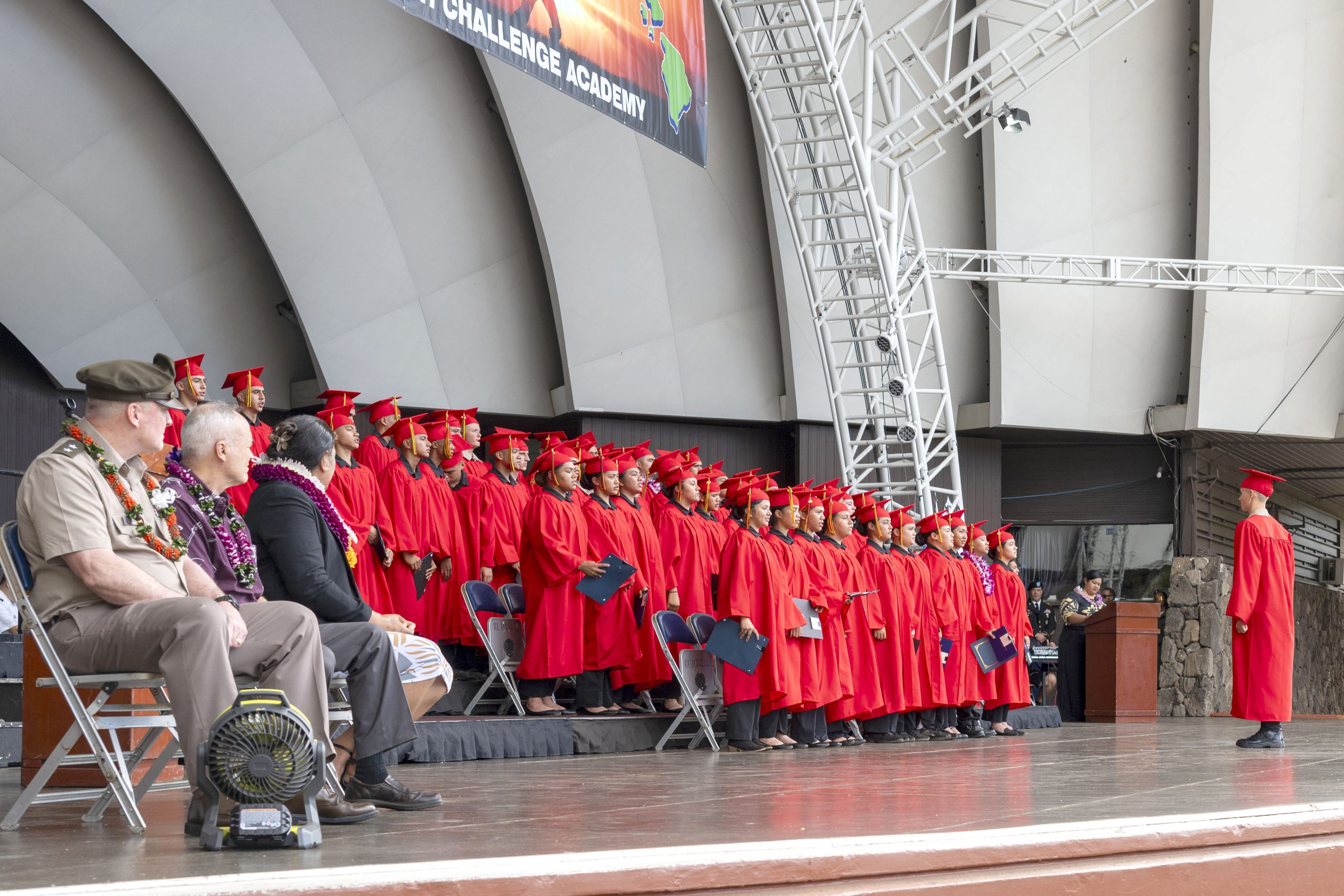
The longest running program to fall under Community Programs is the Hawaiʻi National Guard Youth Challenge Academy which started in 1994. It targets young people aged 16-18 who face challenges such as academic struggles or involvement with the justice system teaching them military discipline, academic instruction and civic engagement.
By 2019, Community Programs emphasized three priorities in addition to Hawaiʻi National Guard Youth Challenge Academy: STARBASE, KOA and HHARP. STARBASE inspired students to explore science, technology, engineering, and math as part of their educational journey. STARBASE is an active and growing program operating on Hawaii Island. KOA strengthened families by educating parents and youth on substance abuse prevention, communication and structure, ultimately reducing status offenses and petty misdemeanors, however the program was later retired. HHARP (Hawai‘i Hazards Awareness and Resiliency Program) helps communities become self-reliant before, during, and after natural hazard events. HHARP is currently under the Hawaiʻi Emergency Management Agency and is a growing program.
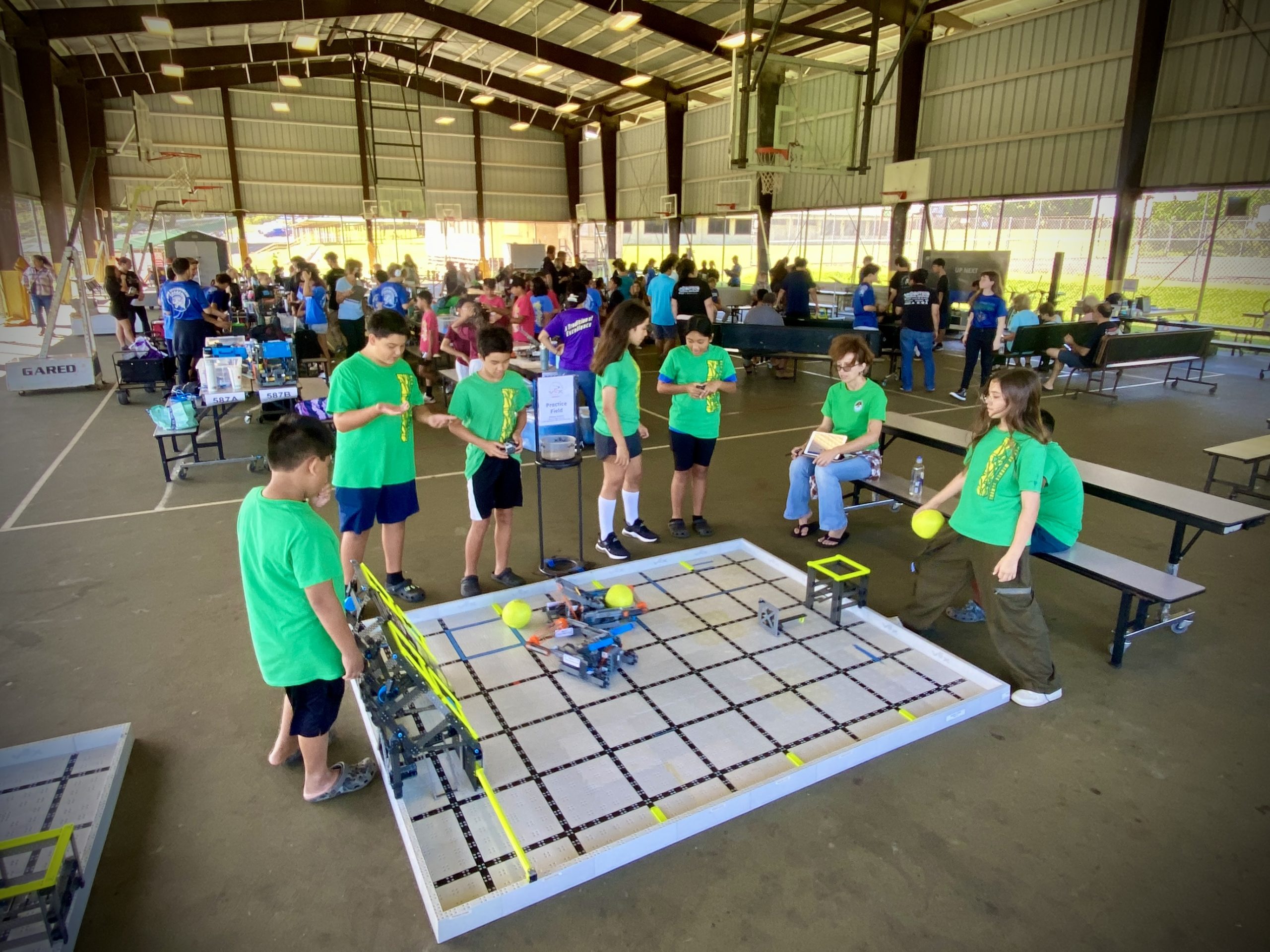
The STARBASE Hawai‘i/Kea’au Robotics Team practices before the first event at the robotics competition at Waiākea Middle School. (Ken Smith photo)
In 2020, Community Programs broadened its reach by supporting statewide initiatives. It played a role in the Hawai‘i Government Complete Count Committee, the Joint Venture Education Forum, the Hawai‘i Interagency Council on Homelessness, the Workforce Development Council Youth Committee and the Voluntary Organizations Active in Disasters.
Most recently in 2021, the Hawai‘i State Approving Agency which reviews, evaluates and approves educational and training programs for veterans’ benefits was moved under Community Programs from the University of Hawai‘i system.
From its early focus on youth strengthening and disaster resilience, Civilian Military Programs has evolved into a vital bridge between the State of Hawai‘i Department of Defense and local communities. Its initiatives have supported families, empowered youth, aided veterans, and fostered community resilience, ensuring that Hawai‘i’s people benefit from enduring civil-military partnerships in both times of stability and crisis.
Civilian Military Programs Chronological History
Hawaiʻi National Guard Youth Challenge Academy
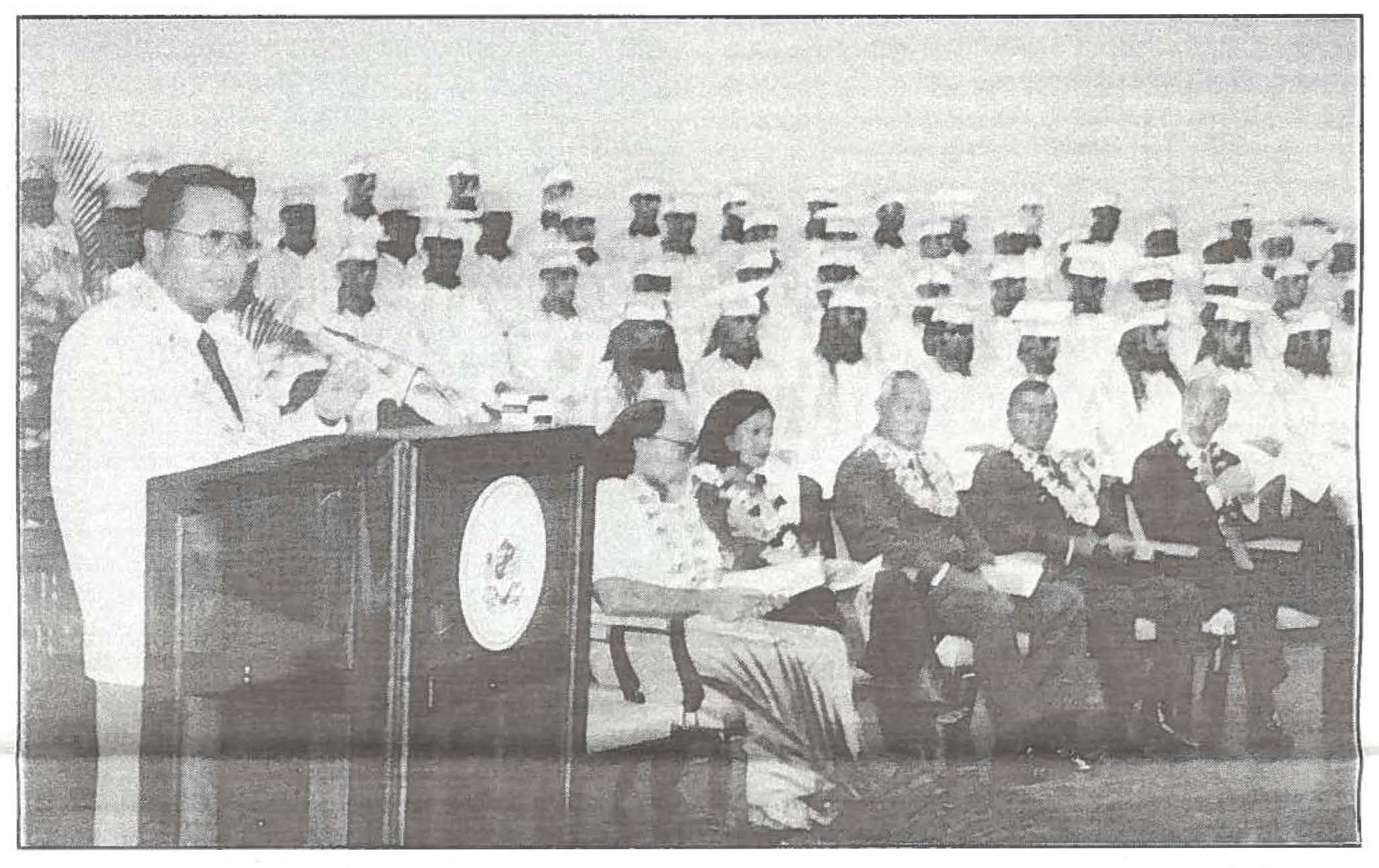
The Hawai‘i National Guard Youth Challenge Academy (YCA), established in 1994, has helped transform the lives of thousands of at-promise youth by combining military discipline, academics, and civic engagement. Designed for 16–18-year-olds facing academic or personal challenges, the program follows a two-phase model: a residential component focused on physical training, education, and character development, followed by a year of mentorship and support. Over the years, YCA has grown from graduating 600 students in its first decade to over 5,000 by its 30th anniversary, earning national awards and expanding with a second campus on the Big Island in 2011. Beyond academics, cadets engage in community service, vocational training, and career development through local partnerships. In the 2020s, YCA continued to thrive, and in 2024, the Hilo campus transitioned into the Hawai‘i Job Challenge Academy, offering graduates extended support, housing, and professional certification opportunities to prepare them for the workforce.
Science and Technology Academies Reinforcing Basic Aviation and Space Exploration
The Science and Technology Academies Reinforcing Basic Aviation and Space Exploration (STARBASE) began in Michigan in 1991 as Project STARS, was created to spark students’ interest in science, technology, engineering, and math (STEM) through hands-on learning with mentorship from Guardsmen. After gaining congressional support in 1993, STARBASE expanded nationwide, with STARBASE Hawai‘i established in 2008 at the Keaʻau Armory on Hawai‘i Island. Serving more than 700 fifth graders annually, the program has grown to include robotics initiatives, after-school partnerships, and advanced curricula. In recent years, STARBASE Hawai‘i has developed a fully equipped Robotics Lab, coached competitive VEX IQ teams that reached the state championships, and engaged the broader community through STEM events and outreach. By 2025, it has served over 10,000 students, establishing itself as a cornerstone of STEM education in East Hawai‘i and continuing its mission to inspire future scientists, engineers, and leaders.
Hawaiʻi State Approving Agency
The Hawai‘i State Approving Agency (SAA), established under Title 38, U.S. Code, Chapter 36 following World War II, plays a key role in safeguarding the quality of educational and training programs available to veterans using GI Bill benefits. Originally part of the University of Hawai‘i system, the agency transitioned to the State of Hawai‘i Department of Defense in 2021 under the Isakson-Roe Act to ensure independence from state universities. The Hawai‘i SAA oversees a wide range of institutions, from degree-granting universities to vocational schools in fields like massage therapy, cybersecurity, and aviation, handling approvals, reapprovals, modifications, and withdrawals of programs. Through inspections, compliance reviews, and close collaboration with the Department of Veterans Affairs, the agency helps veterans and their families access high-quality programs and maximize the value of their earned benefits.