Do you need help in another language? We will get you a free interpreter. Call 808-369-3580 to tell us which language you speak.
您需要其它語言嗎?如有需要,請致電 (808-369-3478), 我們會提供免費翻譯服務
您需要其它语言吗?如有需要,请致电 (808-369-3478), 我们会提供免费翻译服务
En mi niit alilis lon pwal eu kapas? Sipwe angei emon chon chiaku ngonuk ese kamo. Kokori (808-369-3478) omw kopwe ureni kich meni kapas ka ani.
Makemake `oe i kokua i pili kekahi `olelo o na `aina `e? Makemake la maua i ki`i `oe mea unuhi manuahi. E kelepona (808-369-3478)`oe ia la kaua a e ha`ina `oe ia la maua mea `olelo o na `aina `e.
Masapulyo kadi ti tulong iti sabali a pagsasao? Ikkandakayo iti libre nga paraipatarus. Awaganyo ti
(808-369-3478) tapno ibagayo kadakami no ania ti pagsasao nga ar-aramatenyo.
다른언어로 도움이 필요하십니까? 저희가 무료로 통역을 제공합니다. (808-369-3478)로 전화해서 사용하는 언어를 알려주십시요
Kwoj aikuij ke jiban kin juon bar kajin? Kim naj lewaj juon am dri ukok eo ejjelok wonen. Kirtok
(808-369-3478) im kwalok non kim kajin ta eo kwo melele im kenono kake.
E te mana'o mia se fesosoani i se isi gagana? Matou te fesosoani e ave atu fua se faaliliu upu mo oe. Vili mai i le numera lea (808-369-3478) pea e mana'o mia se fesosoani mo se faaliliu upu.
¿Necesita ayuda en otro idioma? Nosotros le ayudaremos a conseguir un intérprete gratuito. Llame al (808-369-3478) y diganos que idioma habla.
Kailangan ba ninyo ng tulong sa ibang lengguwahe? Ikukuha namin kayo ng libreng tagasalin. Tumawag sa (808-369-3478) para sabihin kung anong lengguwahe ang nais ninyong gamitin.
‘Okú ke fie maʻu tokoni ʻi ha lea fakafonua ʻe taha? Temau kumi haʻo taha fakatonulea taʻetotongi. Telefoni ki he (808-369-3478) ke fakahā mai ʻa e lea fakafonua ʻokú ke lea aí.
Bạn có cần giúp đỡ bằng ngôn ngữ khác không ? Chúng tôi se yêu cầu một người thông dịch viên miễn phí cho bạn. Gọi (808-369-3478)nói cho chúng tôi biết bạn dùng ngôn ngữ nào
Gakinahanglan ka ba ug tabang sa imong pinulongan? Amo kang mahatagan ug libre nga maghuhubad. Tawag sa (808-369-3478) aron magpahibalo kung unsa ang imong sinulti-han.
The State Civil Defense took the lead in the initial development of the Pacific Disaster Center on Maui. The state-of-the-art facility will provide emergency managers in the Pacific region the most advanced information products on pending disasters.
Pacific Disaster Center promises bright future for Pacific emergency managers
Funded through a special congressional start-up grant of $2.5 million, the Pacific Disaster Center has gone from concept design to operations planning. By tapping into the power of the Maui supercomputer, the Pacific Disaster Center will harness sophisticated technology applications for emergency management program implementation in Hawaii and the Pacific Insular States. The Center is currently mapping out hardware, software and related communications which will soon link federal, state and local government, and through PEACESAT satellite, pacific island states. The resulting Pacific Region Emergency Management Information System (PREMIS) will share collection, monitoring and distribution functions among all users. The Pacific Disaster Center will process data via the Maui supercomputer and distribute information through the State Civil Defense network. This new database has great potential for improving current methods used to meet the challenges of disaster management. Future plans call for formalizing several user group organizations, as well as product marketing expansion to other Pacific Rim nations.
State Civil Defense continues proactive disaster preparedness
In 1995, the State Civil Defense and the U.S. Department of Defense initiated the development of the Pacific Disaster Center on Maui. The center will use the Maui super computer to bring new information products to emergency managers in the Pacific. The disaster center will help federal, state and local governments prepare for and respond to natural disasters and human-caused environmental problems.
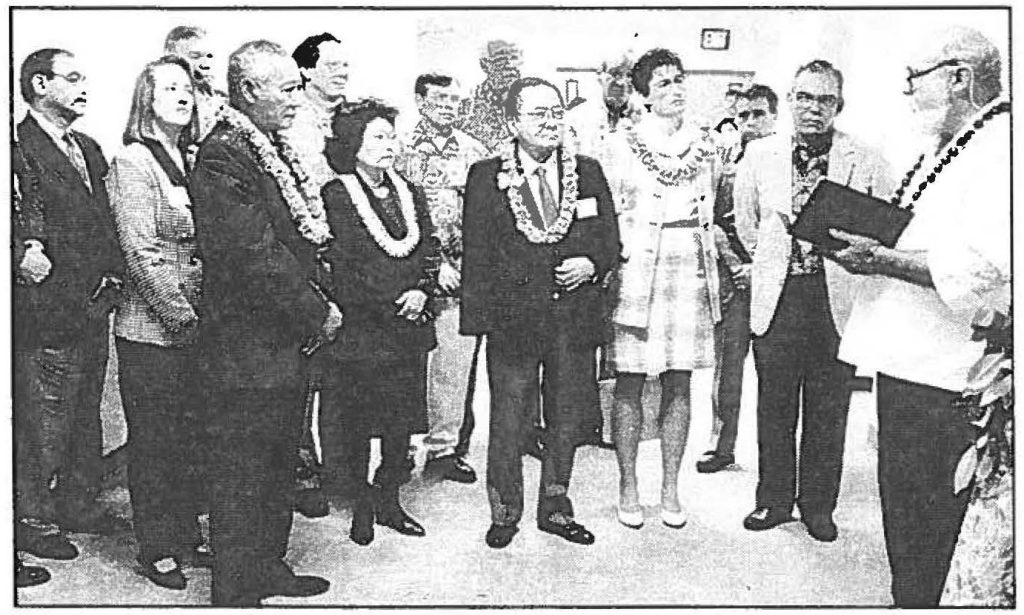
The Rev. Bill Pifer of Keolahou Church, Maalaea, conducts a traditional blessing for the opening of the Pacific Disaster Center. Among the dignitaries attending the ceremony are (L to R) Maj. Gen. EdwardV. Richardson, U.S. Rep. Patsy Mink, U.S. Sen. Daniel Inouye, Maui Mayor Linda Crockett-Lingle, and Roy Price, State Civil Defense vice-director. Photo by Ron Matasumra(Picture from the 1996 Annual Report)
The Pacific Disaster Center on Maui, dedicated in February 1996, is just one of the new initiatives that will help emergency managers better respond to natural disasters in the 21st Century.
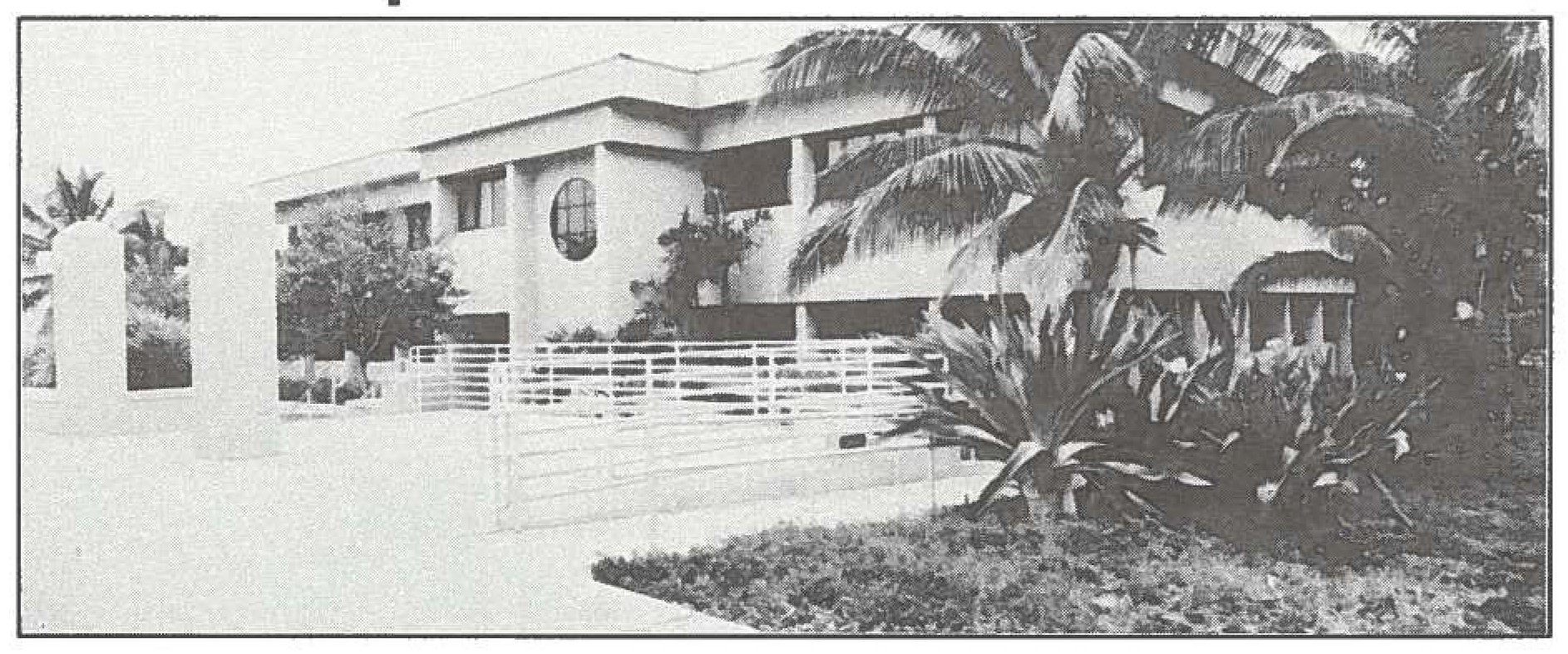
Feb. 21, 1996 marked a milestone for the Pacific Disaster Center, when special dedication ceremonies opened the doors of the Maui Application Center. The site is housed at the Maui Research and High Technology Center at Kihei and taps directly into the Maui supercomputing facility. The supercomputer was originally installed for use in the Strategic Defense Initiative — “Star Wars” — and has since been harnessed for peaceful purposes. Among users is the Pacific Disaster Center, which has been formed to consolidate high technology resources and communications for emergency management applications in Hawaii and the Pacific Rim.
Coinciding with the February dedication was a three-day federal users workshop to assess agency information needs and guide development of products tailored to the emergency management community. Products will then become part of a pacific-wide network offering an array of tools to better respond to disasters from any source.
For nearly a year, the main focus of Pacific Disaster Center operations has been to install and upgrade hardware and communications to link up key federal, state and county agencies involved in the Hawaii civil defense system. A main cornerstone is the Pacific Regional Emergency Management Information System (PREMIS), which serves as the infrastructure for information exchange in Hawaii and the Pacific. This network hub, along with other related resources, is located within the State Civil Defense Emergency Operating Center.
Another central project underway is the installation of satellite ground stations in Pacific Insular States. The PEACESAT GOES satellite will bring direct tie-in to the Pacific Disaster Cent.er, providing important new disaster management seIVices to our Pacific neighbors.
The Pacific Disaster Center has been strongly supported by Senator Daniel K. Inouye, author of congressional funding for the project. The Center is envisioned as a prototype for similar disaster management facilities in the county, and is being closely watched by organizations such as the United Nations for international uses
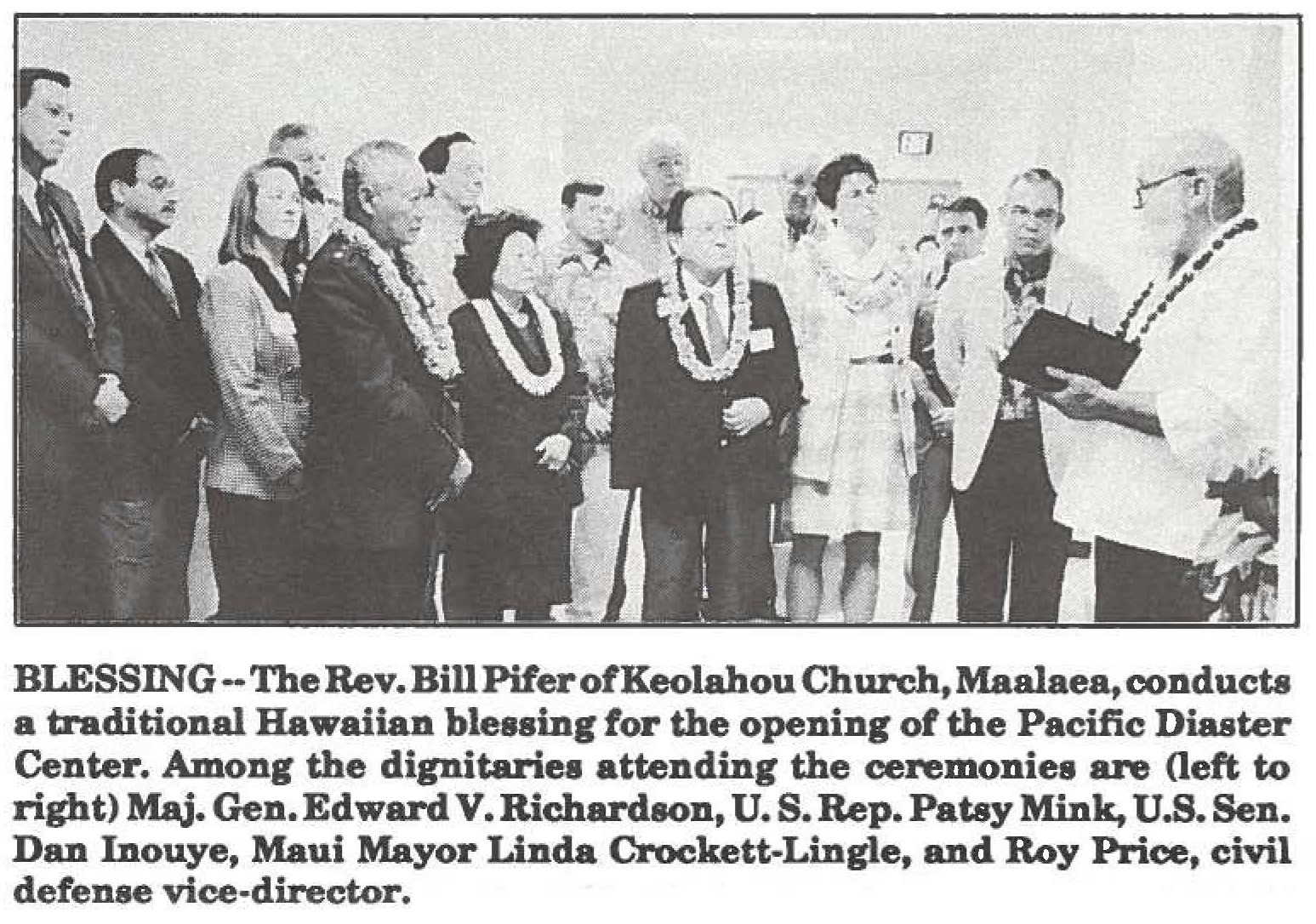
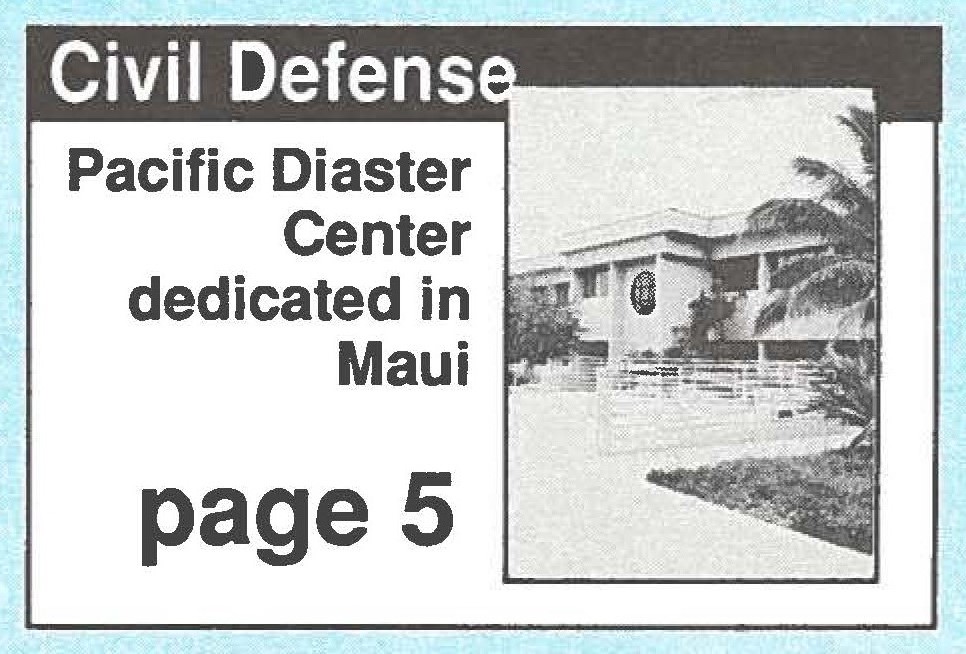
BLESSING-The Rev. Bill Pifer of Keolahou Church, Maalaea, conducts a traditional Hawaiian blessing for the opening of the Pacific Disaster Center. Among the dignitaries attending the ceremonies are (left to right) Maj. Gen. Edward V. Richardson, U.S. Rep. Patsy Mink, U.S. Sen. Dan Inouye, Maui Mayor Linda Crockett-Lingle, and Roy Price, civil defense vice-director. Pacific Diaster Center dedicated in Maui page 5 HIGH TECH – The Pacific Disaster Center is located in the Maui High Technology Park, Kihei, Maui.It is less than a half hour drive from the KahuluiAirport. — Photos by Ron Mataumun (Pictures from the 1996 January – March Pūpūkahi)
After seven months of installing hardware, software, and interconnection systems, the Pacific Disaster Application Center on Kihei, Maui, was dedicated, Feb. 21.
The center, located at the Maui Research & Technology Center, is directly tied to the Maui supercomputer, with itʻs high speed capability to link sky and ground-based resources for disaster management. Resources formerly reserved for military operations are now being put to use for peaceful purposes.
Using the world’s most advanced earth monitoring satellites and computing systems, the Pacific Disaster Center is ready to develop products to help improve disaster management in Hawaii and the Pacific Region. Products like high resolution satellite imagery, an integrated geographic information system, and computer modeling an simulation will help develop new and better methods for emergency management.
User needs for Hawaii and the Pacific are currently being developed to tailor information products. The products will then become available through the Pacific Regional Emergency Management Information System locat.ed at State Civil Defense (SCD). The system is currently being upgraded to accommodate new services and products. While federal. state and local agencies will remain the responsible parties in the disaster business, the disaster center will be a focal point for integrating resources into products which help these agencies better perform disaster related tasks.
The Pacific Disaster Center is a joint project of the U.S. Department of Defense and the State Department of Defense. The Hawaii Air National Guard’s 169th Aircraft Control & Warning Squadron is connected to the POO and SCDvia a Local Area Network. The 169th will be part of a 24•hour disaster alert monitoring system. Funding for the project was authored by U.S. Sen. Daniel K Inouye, who believes that Hawaii is an ideal location for a high-tech disaster center. Serving as a central hub in the Pacific Rim and having leading edge technology make Hawaii uniquely suited for a successful venture.
Other states and countries are watching the progress of the Pacific Disaster Center closely. The Hawaii-based project is a prototype for future disaster centers around the nation and the world.
Pacific Disaster Center continues product, system development.
Since opening the Disaster Application Center at the Maui Research and High Technology Center in February 1996, the Pacific Disaster Center (PDC) continues to develop crisis management products. Accessed through the PDC Internet web site, products include weather data imagery, interactive disaster response reporting and situation displays, remote sensing data, modeling and mapping programs, as well as consumer services and information. The PDC home page is located at: http://www.pdc.org In addition to the Internet site, Emergency Operating Centers and government agencies involved in emergency management are linked together through the Pacific Regional Emergency Management Information System. This communications structure uses fiber optic cable, satellite links, and other data circuits connecting agencies in Hawaii and throughout the Pacific region. The PDC produced dozens of information products to support mitigation studies and recovery issues brought about by heavy rains and flooding on Oahu in November 1996. In the future, the PDC will provide major support to the U.S. Corps of Engineers and the Natural Resource Conservation System in flood plain studies.
Pacific Disaster Center upgrades automated technology support.
By identifying specific information needs for drought, wildfire, weather and tsunami and volcanic hazards, the civil defense system has improved disaster evaluation tools. Since opening the application center in 1996, the PDC has continued to develop products for use by emergency managers in Hawaii and the Pacific. For example, a hurricane checklist is slated for debut, as well as upgrades to the electronic display system which links agencies together under the Federal Response Plan. Online modeling capability provides damage assessment and resource tools to help predetermine response and assistance levels.