Do you need help in another language? We will get you a free interpreter. Call 808-369-3580 to tell us which language you speak.
您需要其它語言嗎?如有需要,請致電 (808-369-3478), 我們會提供免費翻譯服務
您需要其它语言吗?如有需要,请致电 (808-369-3478), 我们会提供免费翻译服务
En mi niit alilis lon pwal eu kapas? Sipwe angei emon chon chiaku ngonuk ese kamo. Kokori (808-369-3478) omw kopwe ureni kich meni kapas ka ani.
Makemake `oe i kokua i pili kekahi `olelo o na `aina `e? Makemake la maua i ki`i `oe mea unuhi manuahi. E kelepona (808-369-3478)`oe ia la kaua a e ha`ina `oe ia la maua mea `olelo o na `aina `e.
Masapulyo kadi ti tulong iti sabali a pagsasao? Ikkandakayo iti libre nga paraipatarus. Awaganyo ti
(808-369-3478) tapno ibagayo kadakami no ania ti pagsasao nga ar-aramatenyo.
다른언어로 도움이 필요하십니까? 저희가 무료로 통역을 제공합니다. (808-369-3478)로 전화해서 사용하는 언어를 알려주십시요
Kwoj aikuij ke jiban kin juon bar kajin? Kim naj lewaj juon am dri ukok eo ejjelok wonen. Kirtok
(808-369-3478) im kwalok non kim kajin ta eo kwo melele im kenono kake.
E te mana'o mia se fesosoani i se isi gagana? Matou te fesosoani e ave atu fua se faaliliu upu mo oe. Vili mai i le numera lea (808-369-3478) pea e mana'o mia se fesosoani mo se faaliliu upu.
¿Necesita ayuda en otro idioma? Nosotros le ayudaremos a conseguir un intérprete gratuito. Llame al (808-369-3478) y diganos que idioma habla.
Kailangan ba ninyo ng tulong sa ibang lengguwahe? Ikukuha namin kayo ng libreng tagasalin. Tumawag sa (808-369-3478) para sabihin kung anong lengguwahe ang nais ninyong gamitin.
‘Okú ke fie maʻu tokoni ʻi ha lea fakafonua ʻe taha? Temau kumi haʻo taha fakatonulea taʻetotongi. Telefoni ki he (808-369-3478) ke fakahā mai ʻa e lea fakafonua ʻokú ke lea aí.
Bạn có cần giúp đỡ bằng ngôn ngữ khác không ? Chúng tôi se yêu cầu một người thông dịch viên miễn phí cho bạn. Gọi (808-369-3478)nói cho chúng tôi biết bạn dùng ngôn ngữ nào
Gakinahanglan ka ba ug tabang sa imong pinulongan? Amo kang mahatagan ug libre nga maghuhubad. Tawag sa (808-369-3478) aron magpahibalo kung unsa ang imong sinulti-han.
Hawaiʻi National Guard’s Airport Security Mission Post 9/11
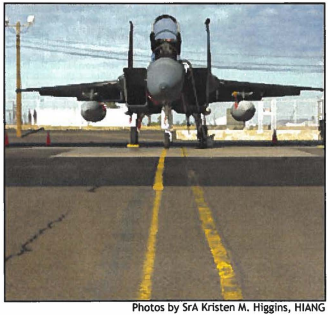
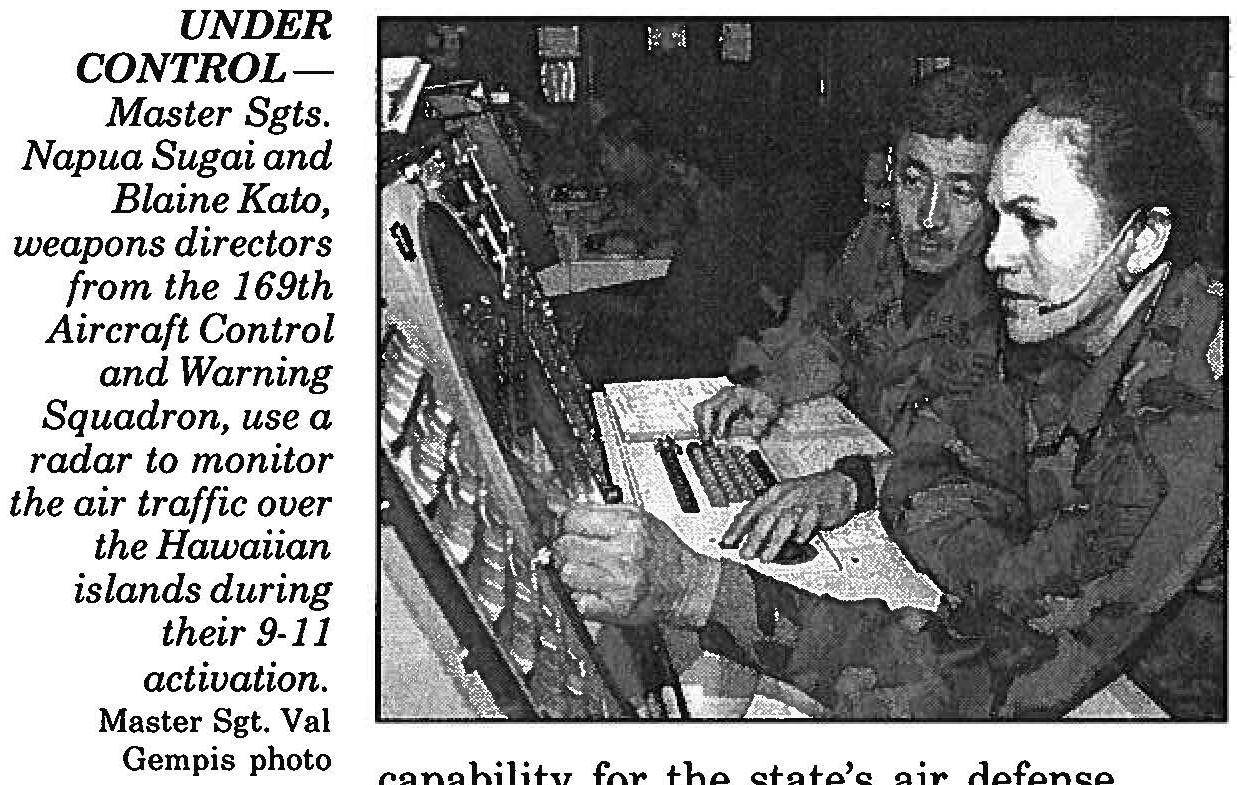
The terrorist attacks of Sept. 11, 2001, forever changed the United States. As commercial aviation across the U.S. came to an abrupt halt, the Hawaiʻi Air National Guard was among the first military organizations to respond. The 199th Fighter Squadron launched F-15 Eagle fighter aircraft to safely escort civilian airliners still airborne into Honolulu and Kona’s International Airports. Meanwhile, the 169th Aircraft Control and Warning Squadron maintained continuous surveillance of Hawaiʻi airspace, ensuring military leaders had real-time awareness of every aircraft operating near the islands.
On the ground, Gov. Benjamin Cayetano ordered the partial activation of the Hawaiʻi National Guard on Sept. 11, making Hawaiʻi the first state in the nation to deploy National Guard personnel to secure an international airport following the attacks. Soldiers established a Quick Reaction Force at Honolulu International Airport, working alongside state and local law enforcement agencies. When the airport reopened on Sept. 13, Guardsmen stood watch throughout the terminals and at curbside locations, providing a visible security presence intended to reassure travelers and deter additional threats.
The mission expanded significantly on Oct. 7, 2001, after President George W. Bush authorized federally-funded National Guard support for airport security nationwide as part of Operation Noble Eagle. Hawaiʻi National Guard soldiers and airmen assumed security duties at airports across Oʻahu, Hawaiʻi Island, Maui, Kauaʻi, Molokaʻi and Lānaʻi. At its peak, more than 200 Guardsmen were assigned to airport security.
The 1st Battalion, 487th Field Artillery became the principal unit responsible for airport security on Oʻahu, while the 2nd Battalion, 299th Infantry provided most of the personnel for airports on the neighbor islands. Guardsmen received specialized training on Federal Aviation Administration security procedures before taking their posts. Armed with M-16 rifles, they stood alongside airport security personnel at screening checkpoints, monitored access points, and remained prepared to assist law enforcement if needed.
While airport security became the most publicly visible mission, it represented only one part of the Guard’s broader homeland defense effort. The 154th Security Forces Squadron strengthened installation security, while the 203rd Air Refueling Squadron remained prepared to launch at a moment’s notice in support of combat air patrols. Hundreds of Guardsmen volunteered for additional duty, balancing civilian careers and family responsibilities while helping defend Hawaiʻi.
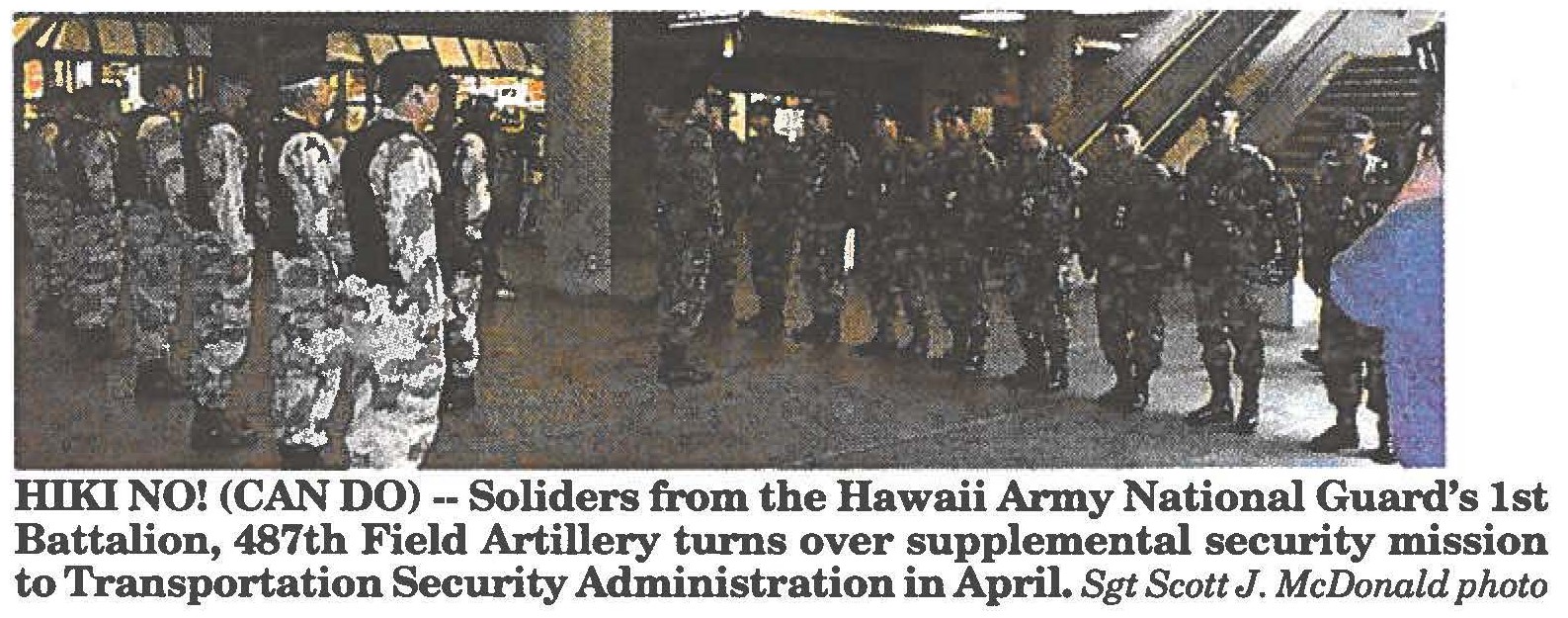
The airport security mission officially concluded in the spring of 2002. On April 15, members of the 1st Battalion, 487th Field Artillery marched away from their checkpoint at Honolulu International Airport as responsibility transitioned to the newly established Transportation Security Administration (TSA). Honolulu became the first major airport in the nation to complete the transfer of supplemental security duties from the National Guard to TSA personnel. Airport security operations on the neighbor islands concluded on May 10, ending seven months of continuous Guard presence at Hawaiʻi’s airports.
Hawaiʻi National Guard’s Airport Security Mission Post 9/11 Chronological History
The Sept. 11, 2001, attack on New York City’s World Trade Center and the Pentagon generated a number of challenging missions in its aftermath for the entire nation.
The 29th Separate Infantry Brigade’s 1st Battalion, 487th Field Artillery, supported the airport security team mission and resumed its military training focus in June 2002
Immediately following the terrorist attacks of Sept. 11th, the Federal Aviation Administration shut down all commercial air traffic across the nation. Hawaii Air National Guard F-15s from the 199th Fighter Squadron were scrambled to safely escort all remaining airliners into Honolulu and Kona’s Keahole International Airports.
With all commercial air traffic grounded for several days after the attacks, the Hawaii Air National Guard was asked to transport blood samples, on Sept. 12th, from the Blood Bank of Hawaii to Washington State for testing. The blood samples were destined for victims of the attacks but the flight was also important because all of Hawaii’s blood supplies are tested at the Washington State facility. Without proper testing, no blood donations could be used in Hawaii for those in need.
In the days after Sept. 11th, the F-15 alert posture was increased and Hawaii Air National Guard KC-135 aircraft were also placed on alert status to provide continuous coverage, protecting Hawaii’s airspace. Around the clock airspace surveillance was provided by the 169th Aircraft Control and Warning Squadron.
By late September 2001, approximately 150 HIANG members, from various units, were on active duty in support of Operation NOBLE EAGLE, the homeland defense mission. On Oct. 1st, the first Hawaii Air National Guard unit was mobilized for Operation NOBLE EAGLE. The 169th Aircraft Control and Warning Squadron at Wheeler Army Airfield was placed on federal active duty, coming under the direct operational control of Pacific Air Forces (PACAF).
On Oct. 7th, National Guard soldiers and airmen began security duty at airports around the nation and Hawaii National Guard soldiers and airmen began federally funded security duty at Honolulu International Airport. Guard soldiers and airmen would be seen at neighbor isle airports that same week. The majority of Guard members at airports were from the Hawaii Army National Guard, but several HIANG members also participated. . .
In total, more than 900 members of the Hawaii Army and Air National Guard personnel were placed on active duty for Operations ENDURING FREEDOM and NOBLE EAGLE. Approximately 600 were from the Air Guard.
Hawaii National Guard protects lives, performs humanitarian missions
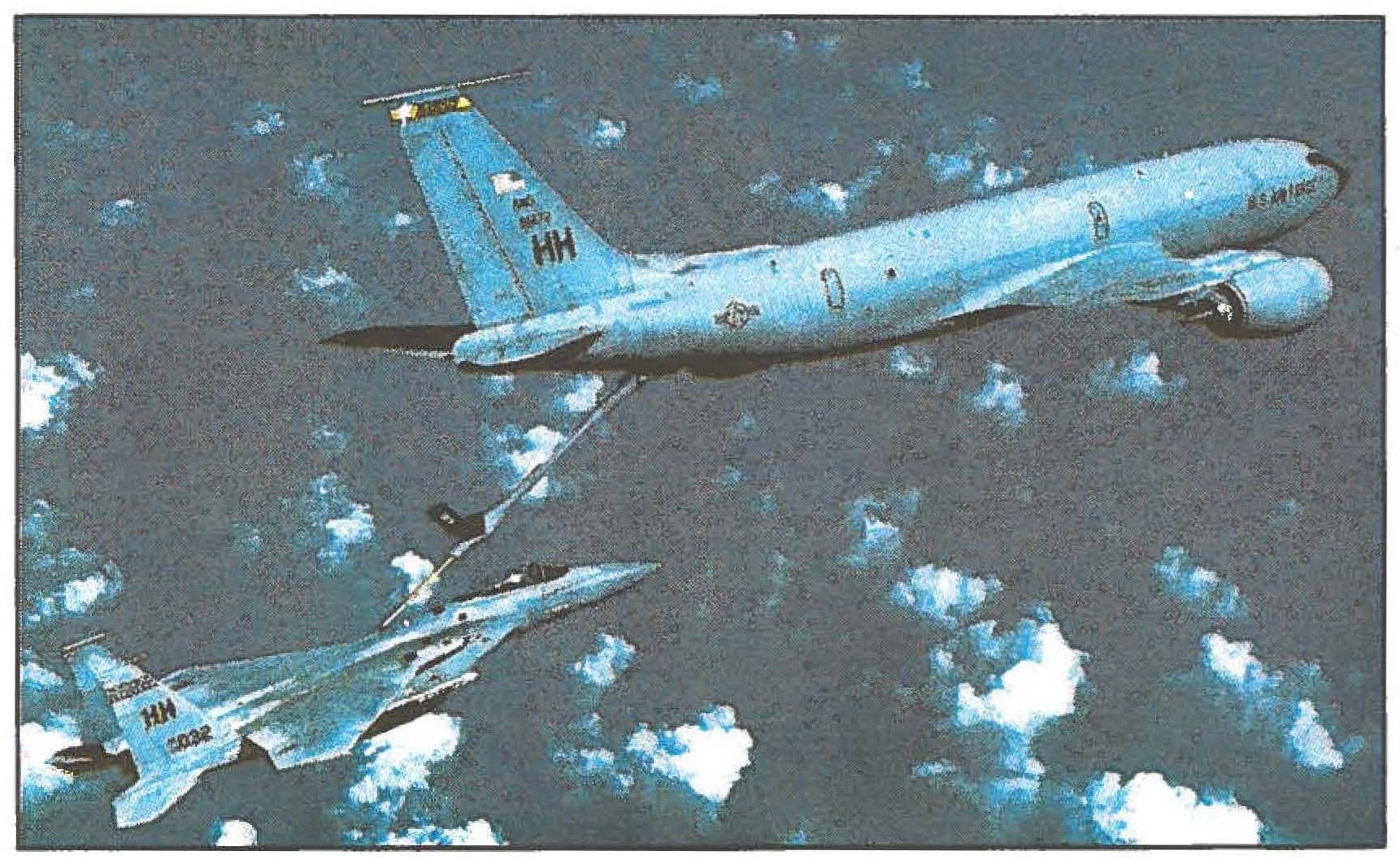
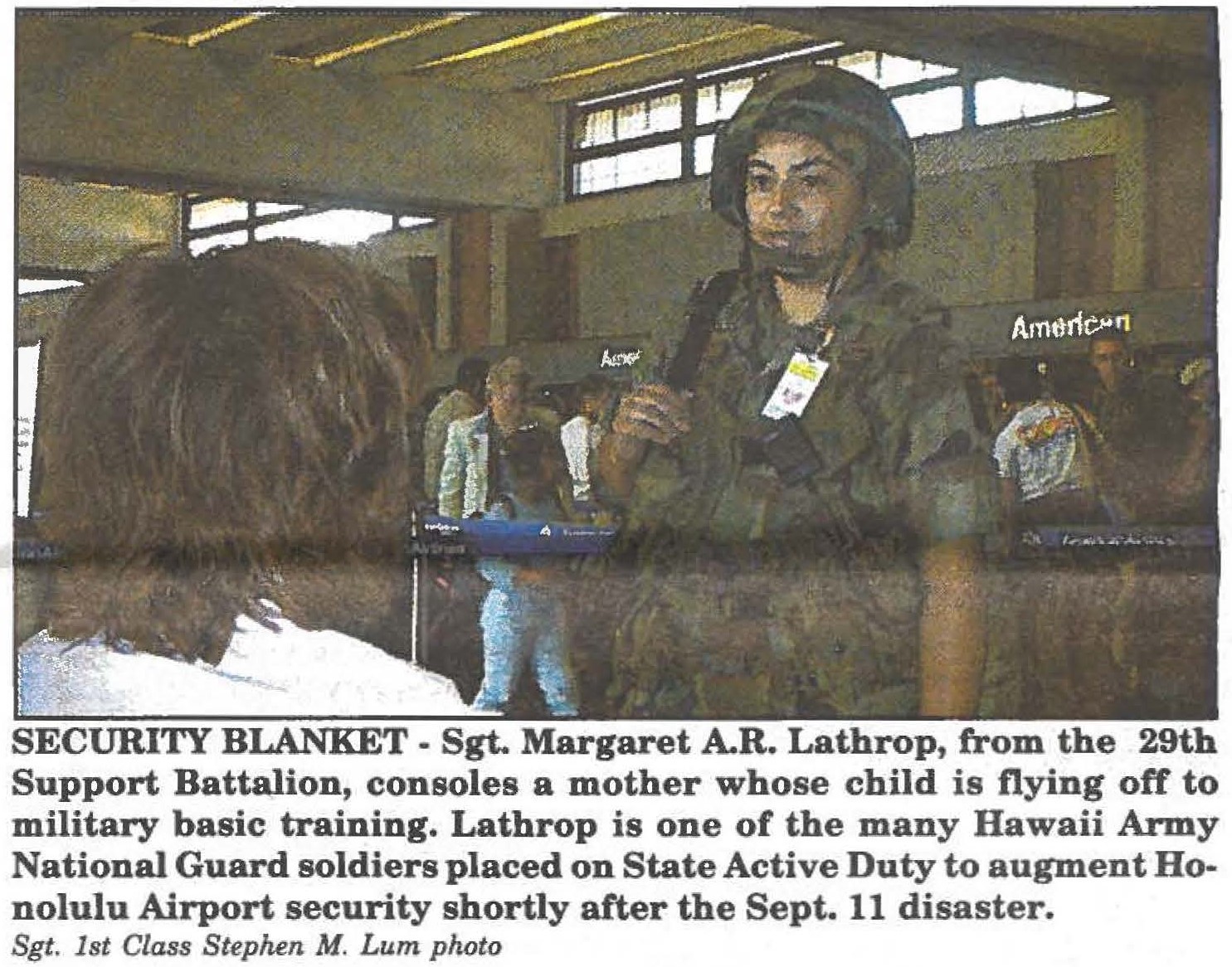
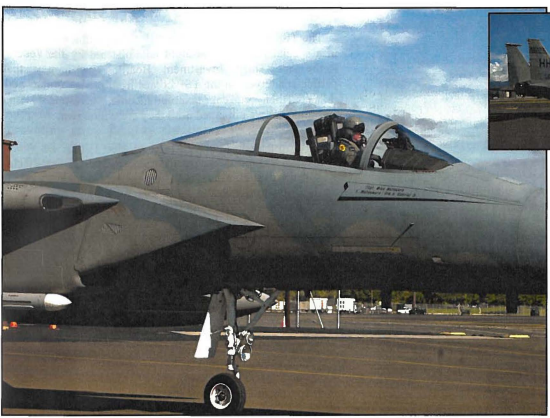
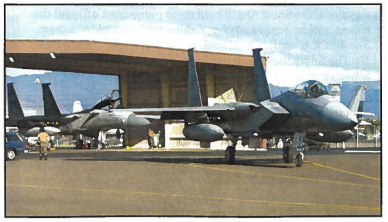
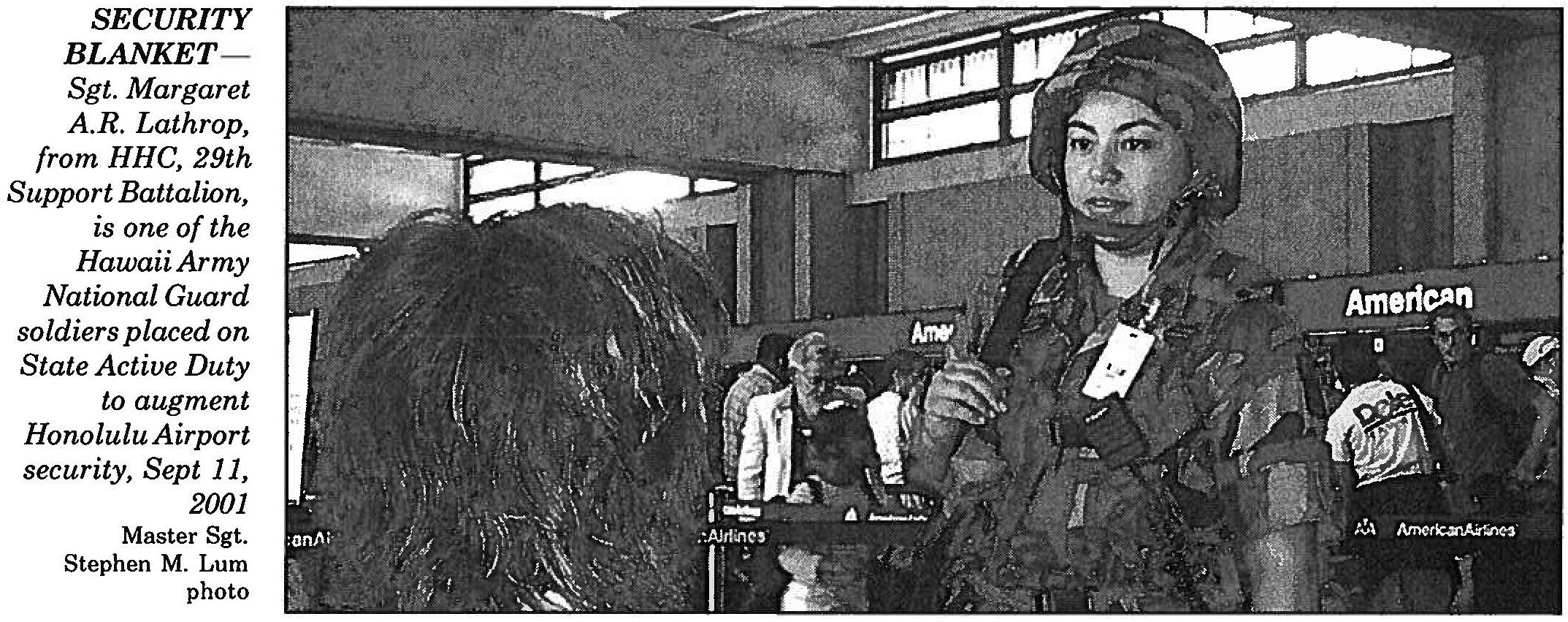
SECURITY BLANKET . Sgt. Margaret A.R. Lathrop, from the 29th Support Battalion, consoles a mother whose child is flying off to military basic training. Lathrop is one of the many Hawaii Army National Guard soldiers placed on State Active Duty to augment Honolulu Airport security shortly after the Sept. 11 disaster. Sgt. 1st Class Step/um M. Lum photoON GOING MISSION Hawaii Air National Guard aircraft train for their air defense mission over the Hawaiian Islands. A KC135R Stratotanker refuels F-15 Eagles. John M. Dibbs photo (Pictures from the 2001 July – September Pūpūkahi)
The Hawaii National Guard became actively involved in supporting missions related to the terrorist attacks at New York’s World Trade Center and the Pentagon almost immediately after the tragic events began to unfold.
Air Guard flies into action
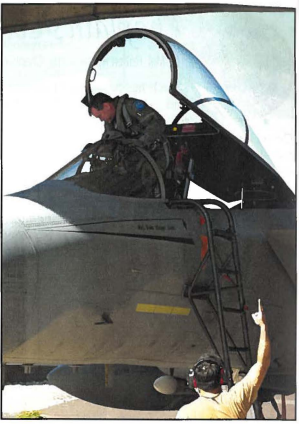
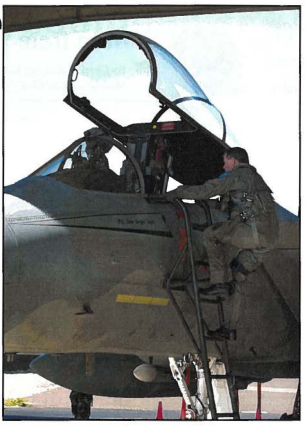
On Tuesday, Sept. 11, shortly after 7:00 a.m., the 199th Fighter Squadron, Hawaii Air National Guard, launched two F-15 Eagle fighter jets, under the direction of Pacific Air Forces (PACAF), to escort civilian airliners still in the air into Honolulu International Airport. Then, about an hour later, two more F-15s and a KC135 Stratotanker from the Hawaii Guard’s 203rd Air Refueling Squadron, were launched in support of the protective mission. The aircraft were scrambled as a precautionary measure to ensure the safety of Hawaii’s residents, and as always, in performance of it’s around the clock air defense mission, Hawaii Guard controllers from the 169th Aircraft Control and Warning Squadron were monitoring the airspace above the Hawaiian Islands.
Guard soldiers augment airport security
That morning, Gov. Benjamin J. Cayetano announced the partial activation of the Hawaii National Guard and a Quick Reaction Force was assembled at Honolulu International Airport to assist civilian law enforcement agencies with supplemental security. After Honolulu International Airport reopened on Thursday, Sept. 13th, Hawaii Army National Guard soldiers were clearly visible at curbside and within the terminal to act as a deterrent against any further attacks.
On Oct. 7, Army Guard returned to the airports on an expanded mission to include beefed-up security at airports on all major islands. The teams will be staffed with many soldiers who have volunteered. The activation is project to last at least six months.
Stratotanker flies blood samples to Washington state
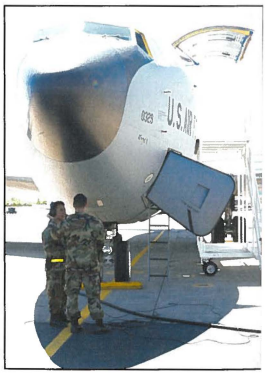
On Sept. 12th, a KC-135 Stratotanker from the 203rd Air Refueling Squadron, flew a mission to McChord Air Force Base in Washington state. On board the aircraft were boxes of blood samples destined for a testing facility in Puget Sound, Wash., where nearly all donated blood must be tested before it can be used. The blood had been collected by the Blood Bank of Hawaii in response to the terrorist attacks. Hawaii Air Guard personnel and aircraft have been at the ready to fly humanitarian or protective missions on a moment’s notice since the time of the terrorist attacks. “We’re more than happy to go and do our part,” said the 203rd’s Lt. Col. Steve Su’a-Filo.
We have all been shocked and saddened by the terrorist attacks of September 11th, now we must do all we can in our nation’s fight against terrorism. On the front page of this issue, we highlight some of the ways in which the Hawaii National Guard has already assisted in that effort. No doubt, we will be doing even more in the weeks and months ahead. America faces a well-organized and sophisticated enemy. We owe it to ourselves – and as President Bush has said – to all future generations, to stop it, eliminate it and destroy it at its core. We in the Hawaii National Guard are part of that plan -from patrolling the airport, to flying protective missions, to helping control Hawaii’s airspace. I want to thank all of our soldiers and airmen who are working very diligently to help protect our State and nation.
Within an hour of the September 11, 2001 terrorist attacks on the World Trade Center and Pentagon, units of the 154th Wing were in action. The 169th Air Control and Warning Squadron (ACWS) was first up providing the Commander of the Pacific Air Forces, General William Begert, and his Director of Operations, Major General Thomas Waskow, with continuous information on aircraft in Hawaiian airspace. General Begert through General Waskow was in charge of the air defense response to ensure the safety of the Hawaiian Islands. The 199th Fighter Squadron (FS) was the next tasked to respond. The 169th ACWS scrambled our F-15s to escort all airliners to Honolulu International Airport. Meanwhile, the 203rd Air Refueling Squadron (ARS) launched to provide air refueling for our F-15s allowing them to maintain their coverage of the skies.
Back on the ground, all of our units responded to provide Wing security by manning entry control points and unit control centers. The 154 Security Forces Squadron augmented the 15th Air Base Wing Security Police providing security for access control points along with their active duty counterparts.
In the days and weeks following the disaster our long-term mission has emerged. The 169th continues to provide 24/7 information on all aircraft in the skies over Hawaii. The 199th FS provides F-15 aircraft on rapid response alert launch status. If the 169th is unable to make positive identification of any aircraft or if an aircraft declares an in-flight emergency, our FI 5s are scrambled to intercept the aircraft, determine its identity and escort it to a safe landing. The 203 ARS is ready to launch a tanker to provide for sustained F-15 air defense missions should the need arise.
Our men and women are also volunteering to help support PACAF and 15th Air Base Wing long-term requirements. Our people are serving on the PACAF staff, at the 15th ABW Dining Hall and out on patrol with the I 5th Security Forces Squadron.
To make these missions successful requires the work of our technician force plus over 230 extra people on any given day. These are traditional Guard men and women who have voluntarily stepped forward to serve. We could not be successful without their volunteerism and we thank them for their service. We expect the fight against terrorism to be a continuing effort. It requires our support now and will continue to call for our service in the future. Be proud of the exceptional work we are doing. Together we are ensuring the safety of Hawaii and providing for the future of our great state and nation
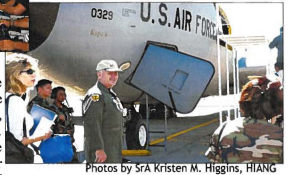
All of us in the 154th Wing express our deepest sympathies and humble prayers to our fellow comrades in arms, public servants, citizens, and their families. We need every member of this wing because we are now engaged in our Nation’s battle against global terrorism. Since September 11th, the HIANG has been flying combat air patrol (CAP) and support missions over Hawaiian airspace protecting Hawaii’s residents and property. I am very proud of the wing personnel who have “rolled up their sleeves” and unselfishly support these m1ss1ons. We are still continuing with our training missions in order to be ready for our federal mission: provide personnel and aircraft in the event of war, national emergency or operational contingency. As we lean forward in our efforts to support our State, PACAF and PACOM, I want to impress upon each of you to “be safe.” It cannot be stressed enough, the importance of OPSEC, COMSEC, and COMPUSEC. We are all responsible for Force Protection. The smallest piece of “harmless” information can be the precursor to a very large security threat. In that vane, if you are asked questions by the news media, direct them to our Public Affairs Office. It is important that we heighten the awareness of our local community, our employers, neighbors, families, and friends to give them a better understanding of what we do. On Tuesday, 25 Sep, we invited the local news media to fly aboard our KC-I 35 tankers from the 203rd ARS to observe air-refueling of our F-15s from the 199th FS.
hoomakaukau we are skilled and readyhoomakaukau we are skilled and readyhoomakaukau we are skilled and ready(Pictures from the 2001 October Kūkāʻilimoku)
ANSWERING THE CALL – VOLUNTEERS
Photos and Text by Capt Wayne Acosta 154th SFS Commander
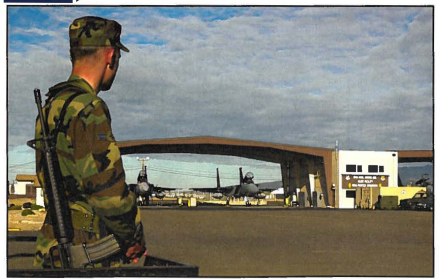
On the 12 of September, the 154th Wing Security Forces Squadron immediately recalled 24 volunteers to support the 15th ABW. Most of the volunteers are providing ramp security for our F-15 Parking Ramp. They are armed with an M-16 weapon, live ammunition, and a radio. They are working 14 hour days which begins with formation, open rank inspections, weapon & munitions issuance, and guard post.
Because of the increase security requirements, beginning 15 Oct, the squadron will increase the amount of volunteers to 47. The volunteers will be assigned to PACAF, Bellows AFB, 15 ABW, and 154 WG/SFS Headquarters.
When the 154 Wing is asked to answer the call, the men and women of the 154th Security Forces Squadron volunteered. They are displaying professionalism, dedication, and commitment to duty.
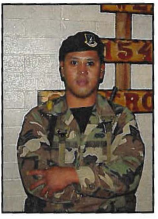
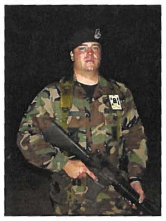
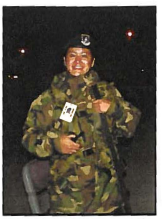
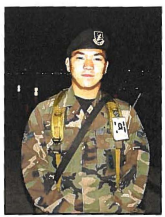
Pictured clockwise are Al C Robert Kim, A1C Kristenlee Kapoana, SSgt Jason Morris and SrA Martin
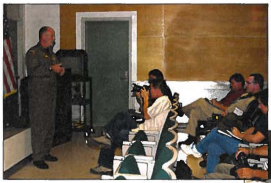
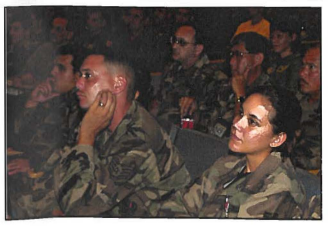
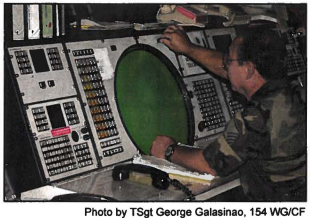
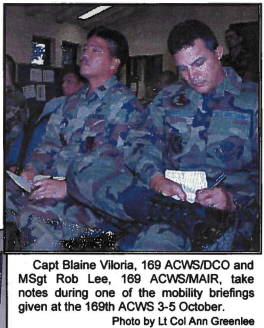
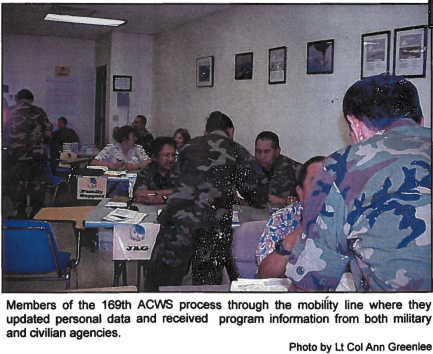
Photo by TSgt George Galasinao, 154 WG/CF Capt Blaine Viloria, 169 ACWS/DCO and MSgt Rob Lee, 169 ACWS/MAIR, take notes during one of the mobility briefings given at the 169th ACWS 3-5 October. Photo by Lt Col Ann Greenlee Members of the 169th ACWS process through the mobility line where they updated personal data and received program information from both military and civilian agencies. Photo by Lt Col Ann Greenlee (Pictures from 2001 November Kūkāʻilimoku)
It’s official, on 1 October the 169th ACWS mobilized with 176 people coming on active duty. They are now on a 1-year Title 10 tour working for PACAF. They provide air defense identification of all incoming and outgoing aircraft in the Hawaiian Islands airspace. The 169th works in conjunction with 5 other air defense mainland units that have also been activated. Together these squadrons provide a composite air defense picture for North America and Hawaii. At the 169th, three mission crews each work a 12-hour shift with 24 hours off. Then it’s back at it again. They’ve been on this type of schedule ever since September 11th. The 169th Commander, LtCol Dewey Arakawa, reports that the first few days after the September tragedy were really intense. New procedures had to be developed to handle new threats. Working with the Army, Navy and Joint command forces became a new daily routine. The members of the 169th are positive, dedicated and professional about their current mission according to First Sergeant, MSgt Russell lshizuka. “Everyone is working hard and appreciates being here close to home and family while working for the greatest organization.”
This mobilization would not have been possible without the superb efforts of Chief Iris Kabazawa who planned and lead the mobility processing effort. While it was a huge task to pull it together in the short period available, the Chief ‘s job was made easier by the willingness of our Guard members to come out, prepare needed documents and just make it happen. LtCol Arakawa summed up the feelings of many of us saying, “I’m so proud of folks, the traditional Guardsman and technicians. People volunteered to come in and many just showed up and asked how can I help.” That story has been repeated hundreds of times over throughout the Wing since September 11th. It’s a story we can all be proud of.
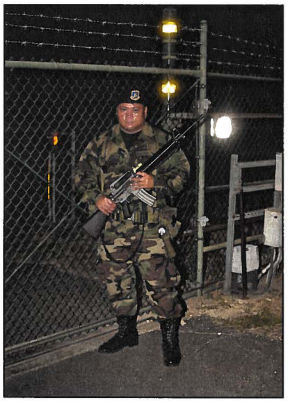
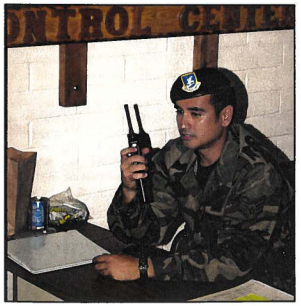
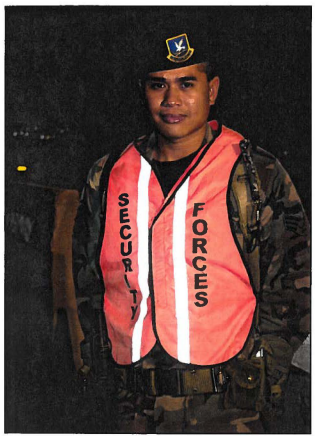
The 154 Wing Security Forces have been working around the clock ever since the tragic events on September 11. Shown here are some of our members pulling night duty around the Wing and Base. Above left SrA Ricardo Namoca stands duty out on the flight line. SrA Hans Tandal, pictured above, brandishes his M-16 while working duty at a perimeter fence. Pictured to the left, SSgt Keoni Abreu checks-in while working desk duty outside the wee.
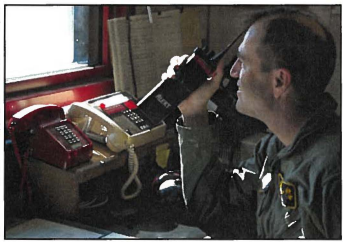
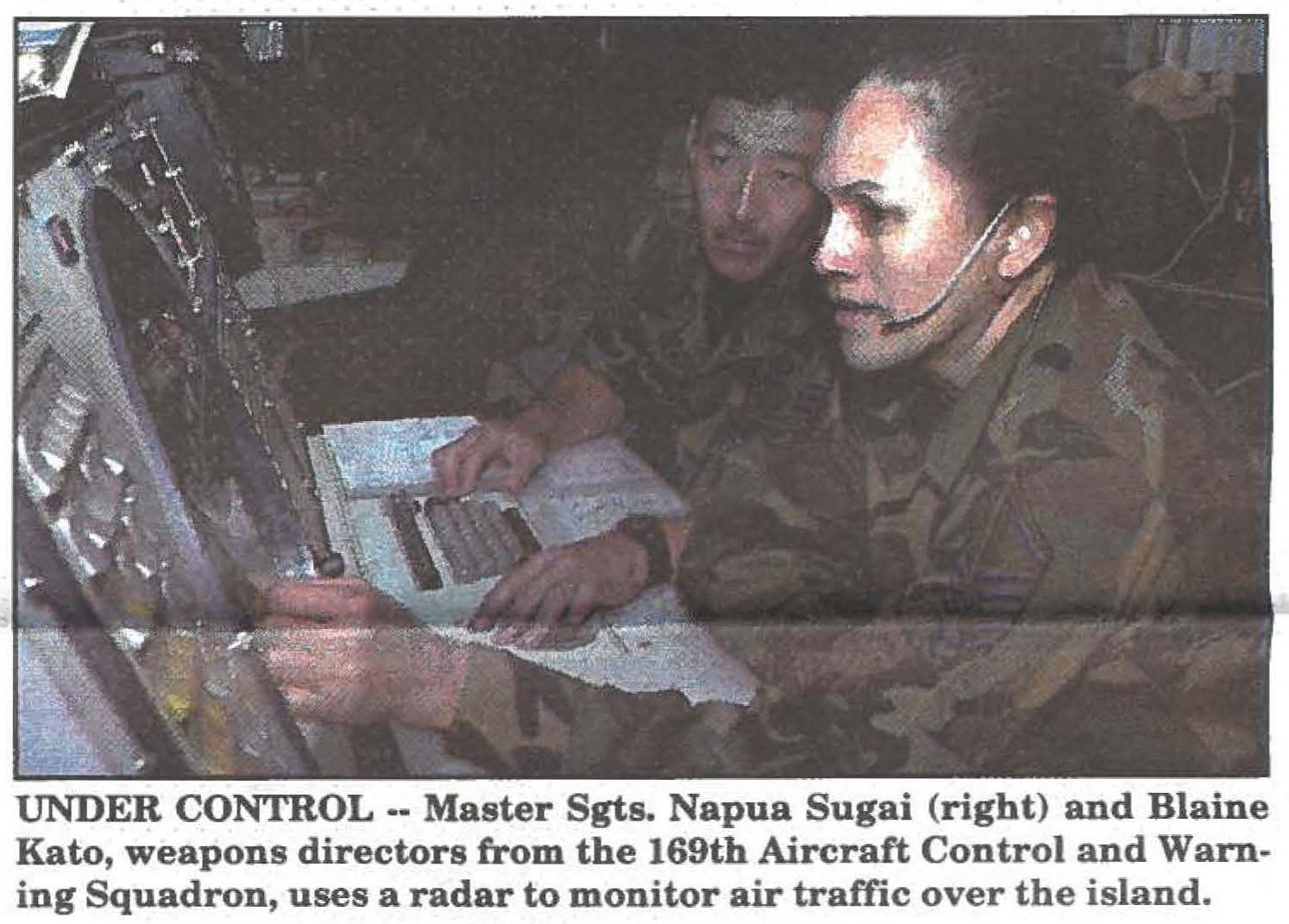
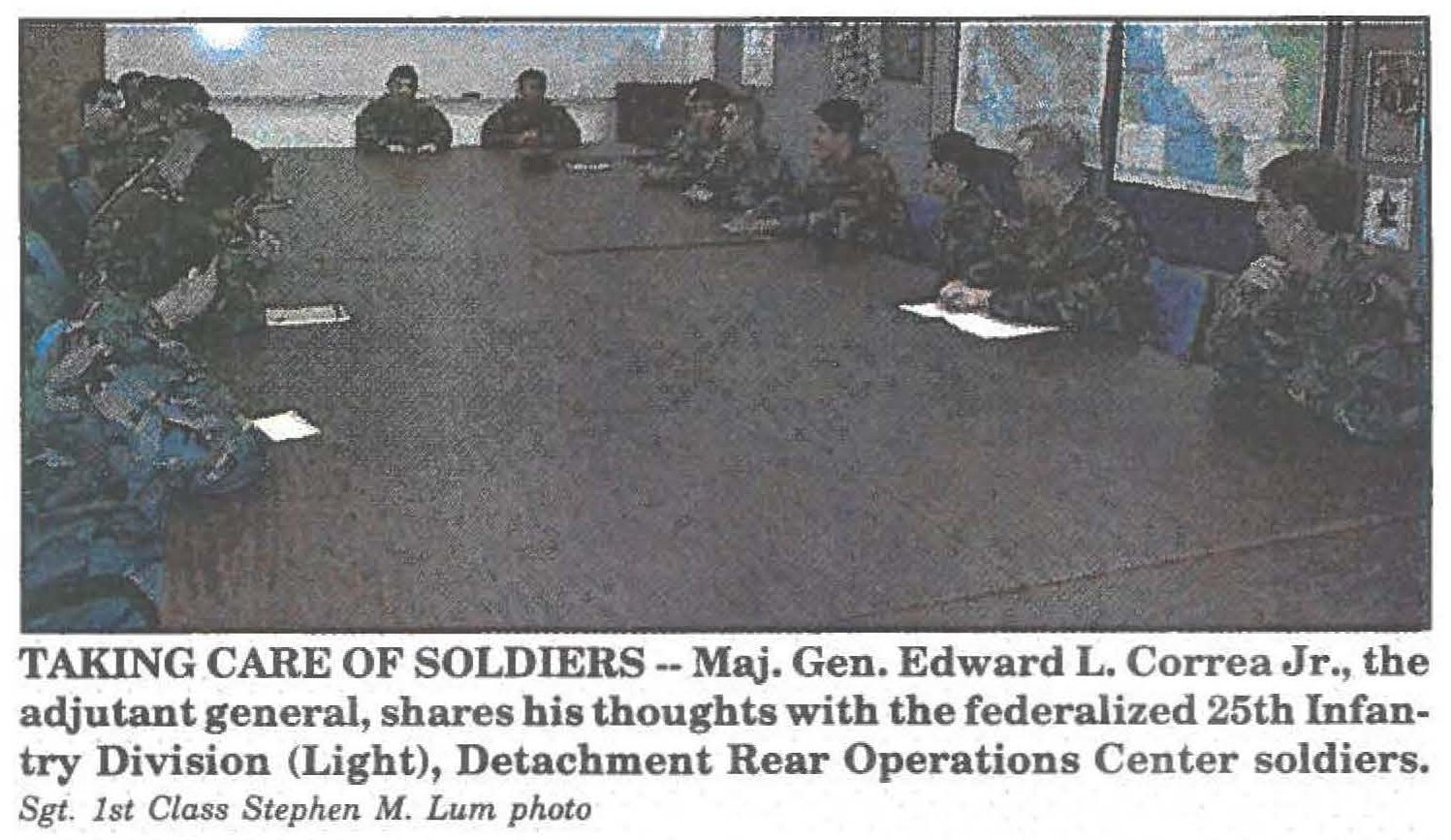
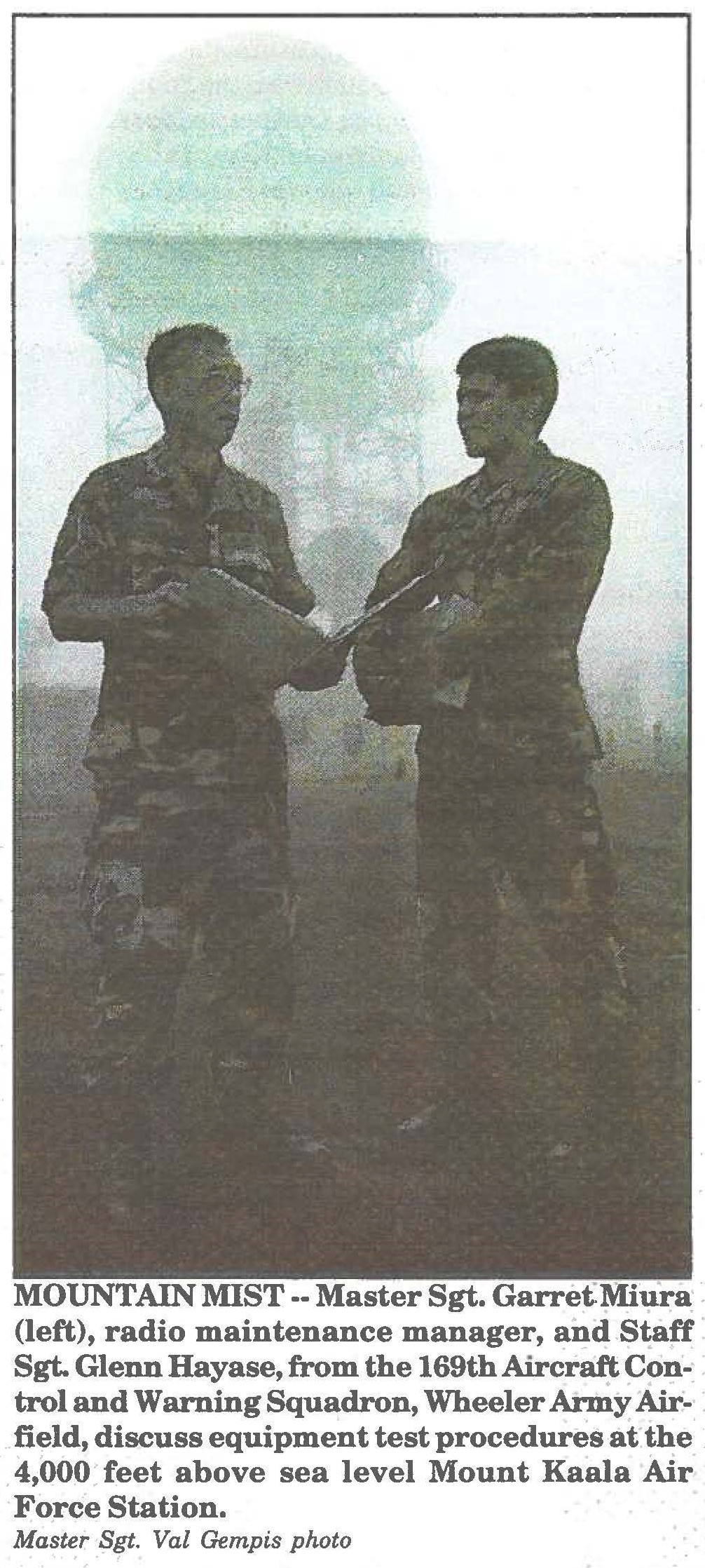
UNDER CONTROL .. Master Sgts. Napua Sugai (right) and Blaine Kato, weapons directors from the 169th Aircraft Control and Warning Squadron, uses a radar to monitor air traffic over the island. TAKING CARE OF SOLDIERS – Maj. Gen. Edward L. Correa Jr., the adjutant general, shares his thoughts with the federalized 25th Infantry Division (Light), Detachment Rear Operations Center soldiers. Sgt. 1st Class Stephen M. Lum photoMOUNTAIN MIST– Master Sgt. Garret Miura (left), radio maintenance manager, and Staff Sgt. Glenn Hayase, from the 169th Aircraft Control and Warning Squadron, Wheeler Army Airfield, discuss equipment test procedures at the 4,000 feet above sea level Mount Kaala Air Force Station. Master Sgt. Val Gempis photo (Pictures from the 2001 October – December Pūpūkahi)
Increased operation tempo to meet any air defense requirements, faster pace upgrade training and a lot more appreciation from the public, are some of the benefits of the placement to active duty status of the Hawaii Air National Guard’s 169th Aircraft Control and Warning Squadron in October. Squadron members said they are glad and ready to meet the challenge.
“We’re very enthusiastic and very proud that we are making an important contribution to the defense of our nation,” said Lt. Col. Dewey Arakawa, who assumed command of the Wheeler Army Airfield based unit in July. The 169th is responsible for the air defense of the Hawaiian Air Defense Region. Its mission is to detect and identify aircraft entering the Hawaiian airspace and to provide intercept information to fighters scrambled for identification of unknown aircraft. Within a few hours after the attacks, the controllers at the command center, known as the Hawaii Region Air Operations Center, were in contact and directing F-15 fighter aircraft from the Hawaii Air Guard’s 199th Fighter Squadron providing air defense over the island.
Arakawa said that his unit, whose mission has always been air defense 24 hours a day, seven days a week, since 1958, has been busy even before the terrorist attacks. After Sept. 11, they underwent a dramatic shift in their work schedule. He said that the activation of his unit, which meant that they can utilize their full staff now, enabled them to have a more flexible, stable and better-balanced operation to accomplish their tasks. Before some of his troops were limited to a 40-hour work- week. Others, like the traditional Guardmembers, only reported twice a week annually. With the activation, they have now more resources and appropriate manning needed to support any air defense, including force protection requirements. “Every individual here has stepped forward and is doing a great job,” said Arakawa.
With the increased manning they’ve also now been able to speed up their upgrade training program. “This has been a win-win situation for us,” according to Master Sgt. Garret Miura, radio maintenance manager at Mount Kaala Air Force Station, located about 4,000 feet above sea level on the northern part of the island. Miura, who has been with the Hawaii Guard for over 38 years, said that more people means that he can now have trainees and trainers working together consistently. Normally, it takes about eight months for a technician and up to three years for a traditional guardsmembers to fulfill their initial upgrade training. “This activation can cut that training time in half. It’s been great,” said Miura.
Staff Sgt. Glenn Hayase, a radio maintenance technician, said that it’s real gratifying to know that they are needed and essential in the defense of the nation and the state. It’s really great how much more received from the public since they were tapped to be on active duty. Before when people find out that he is in the Guard, often the reaction was a somber ‘Oh!’ implying that’s it’s “just the Guard”.
Now when they hear about him being a “Guardsman” it’s more like’Wow!’followed by inquisitive questions about his unit’s vital role in protecting the island against “The Hawaii National terrorist threats. “Before people assumed that the active-duty military folks did all of the work. But now they are beginning to realize and appreciate more what we do,” he added. This has given them a new sense of worth. He said that his family is very proud of him. “It’s almost self-fulfilling”.
Master Sgt. Russell Ishizuka, the squadron’s first sergeant and a traditional Guardsman works for the state housing department. On the morning of Sept. 11th he was watching the news for the traffic reports before going to work he saw that the World Trade Center was under attack. He said that what happened was horrible and totally unbelievable. He normally takes the kids to school and then goes to work, but that day would be different. His sense of came to him after he dropped off his kids. He turned around, went home, put on his uniform and drove straight to his duty station. Like many others in his outfit, Ishizuka reported to work that day without being recalled and hasn’t been back to his civilian job since. He said that being on active duty is a lot of sacrifice for him and his family but being there motivates him gives him a sense of belonging. “There’s no other greater feeling than being able to serve your country,” he added.
Rear operations center activation supports homeland security mission
By Maj. Charles J. Anthony
On October 19th, 18 members of the 25th Infantry Division (Light) Detachment Rear Operations Center (251D DROC), Hawaii Army National Guard, were called to active duty to support Hawaii’s homeland security mission. The unit has been mobilized to assist 25th Infantry Division staff and facilitate the planning and execution of new force protection missions. The unit has been assigned to support new Joint Rear Area Coordinator-Hawaii (JRAC-HI) mission requirements to operationally employ joint rear area operational forces to protect base/in stallation clusters, critical civilian infrastructure, support DoD assets and quick reaction forces to reinforce first responder operations.
Unit personnel include a combat engineer, a tactical intelligence officer, a chemical officer, an NBC (nuclear, biological and chemical) NCO, a fire support sergeant, an intelligence analyst and other operations and support personnel.
The 251D DROC routinely trains with the 25th Infantry Division (Light) and was established to maintain continuity for division rear operations. The unit was federally recognized in 1992 and is headquartered at Pearl City, Oahu. The unit’s stated mission is to plan, coordinate and direct execution of rear security, terrain management, movement control and area damage-control in Support of division operations.
It looks as though we’re going to be ending this year and beginning the next on a high note-in contrast to the dark days of just a few months ago. Al Qaeda forces and the Taliban have been routed out of Afghanistan and the military operations known as ENDURING FREEDOM and NOBLE EAGLE have been very successful. We have a lot to be proud of since the events of September 11th. Everyone in the State of Hawaii, Department of Defense has worked very hard and has greatly contributed to the defense of our state and nation. Our State Civil Defense division and our Army and Air National Guard divisions have established very close working relationships with federal, State and county agencies in order to form one of the strongest anti-terrorism alliances in the nation. We have interagency plans and procedures in place that are now the model for other states to emulate. This total team approach is helping to ensure Hawaii’s safety and economic wellbeing. Our State Civil Defense and the HIARNG’s Plans and Operations Military Support Office have worked very hard on plans to protect Hawaii’s critical infrastructure. The number of soldiers and airmen who have been, or are on active duty, since September 11th in support of homeland defense is too numerous to list, but I would like to thank the members of the Hawaii National Guard Quick Reaction Force and the following units: the 1st Battalion, 487th Field Artillery, which is the principal unit for airport security on Oahu; the 2nd Battalion, 299th Infantry, which is contributing the bulk of neighbor island airport security forces; the 199th Fighter Squadron, 203rd Air Refueling Squadron, 204th Airlift Squadron, 169th Aircraft Control and Warning Squadron, 154th Aircraft Generation Squadron, 154th Security Forces Squadron and the 25th Infantry Division (Light) Detachment Rear Operations Center. As the article on page one states, the 169th was mobilized to handle the increased requirements for protecting Hawaii’s airspace since September 11th and their data links to the fighter squadron’s F-15s help keep Hawaii safe from the air.
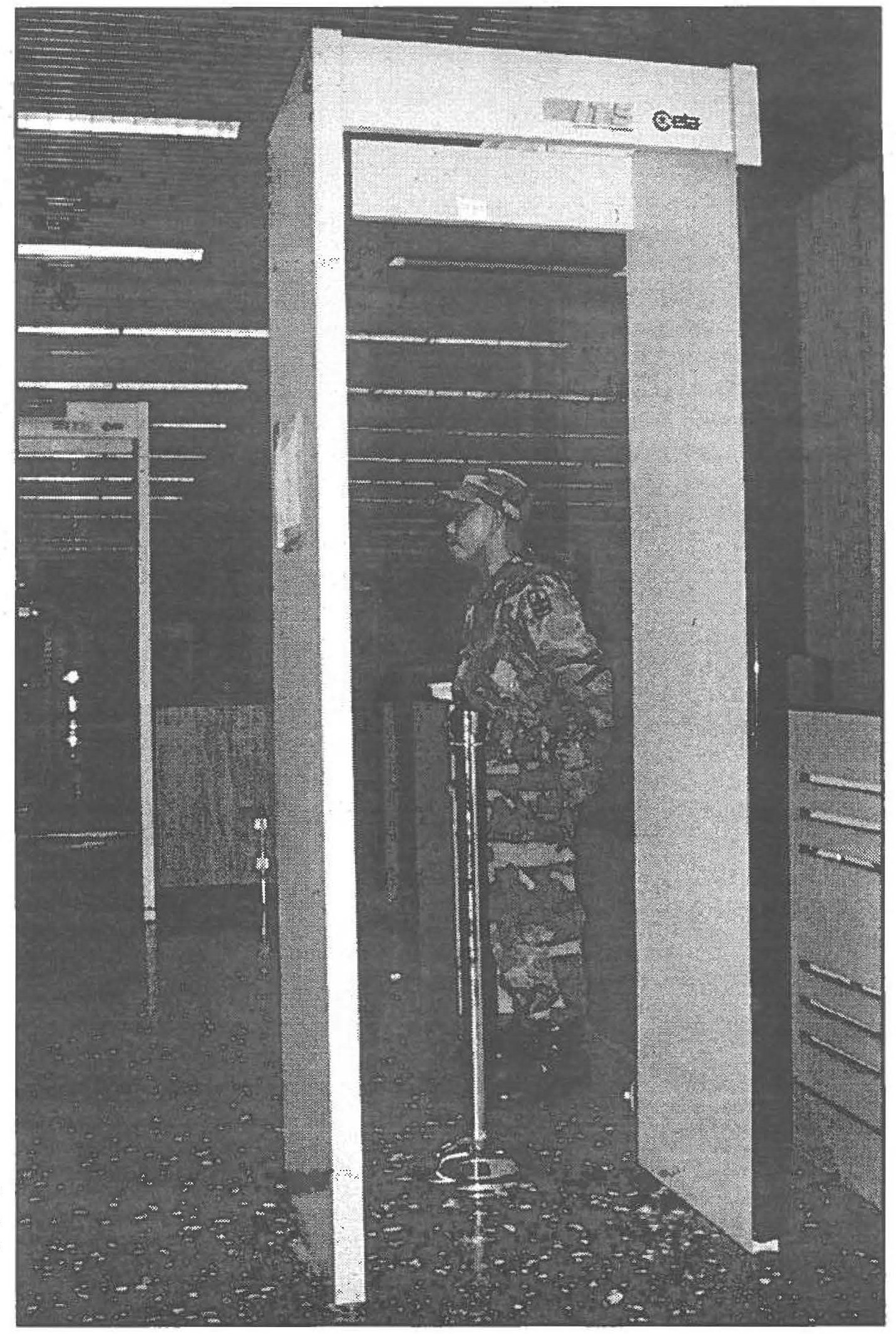
HOMELAND DEFENDER–A 1st Battalion, 487th Field Artillery soldier stands guard at the Honolulu International Airport passenger security sensor.(Picture from the 2001 October – December Pūpūkahi)
The long line of people await their turn to be scanned with metal detector wands and their bags screened through the x-ray machine in what seems to be just another routine check to enter the Honolulu International Airport.
But at this location at the commuter terminal, six Hawaii National Guard soldiers stand post behind the security-screening checkpoint with M-16 rifles slung on to their shoulder. A “Welcome to Hawaii” banner hangs in the background.
Throughout the airport, other soldiers are in place to serve as a visible, heavily armed deterrent to those who seek to attack our country and its people~ The tour of duty that began in early October has been relatively quiet one so far.
The soldiers are also here to assist airport law enforcement officers if any incidents should arise and ensure that the Federal Aviation Administration updated procedures are properly executed by the screeners, said Cpl. R. Huerbana, gunner with the 1st Battalion, 487th Field Artillery. The soldiers received training in the F AA’s policies and procedures prior to being placed at these posts.
America was attacked on Sept. 11. Our homeland has become a battleground. The soldiers of the HING have been called into action to protect and preserve our country and its people. Nineteen year-old, Pfc. S. Yim has been in the HING for two years and was ready to serve his country. “I was mad about the incident that happened on Sept. 11 and I want to help out in any way that I can.”
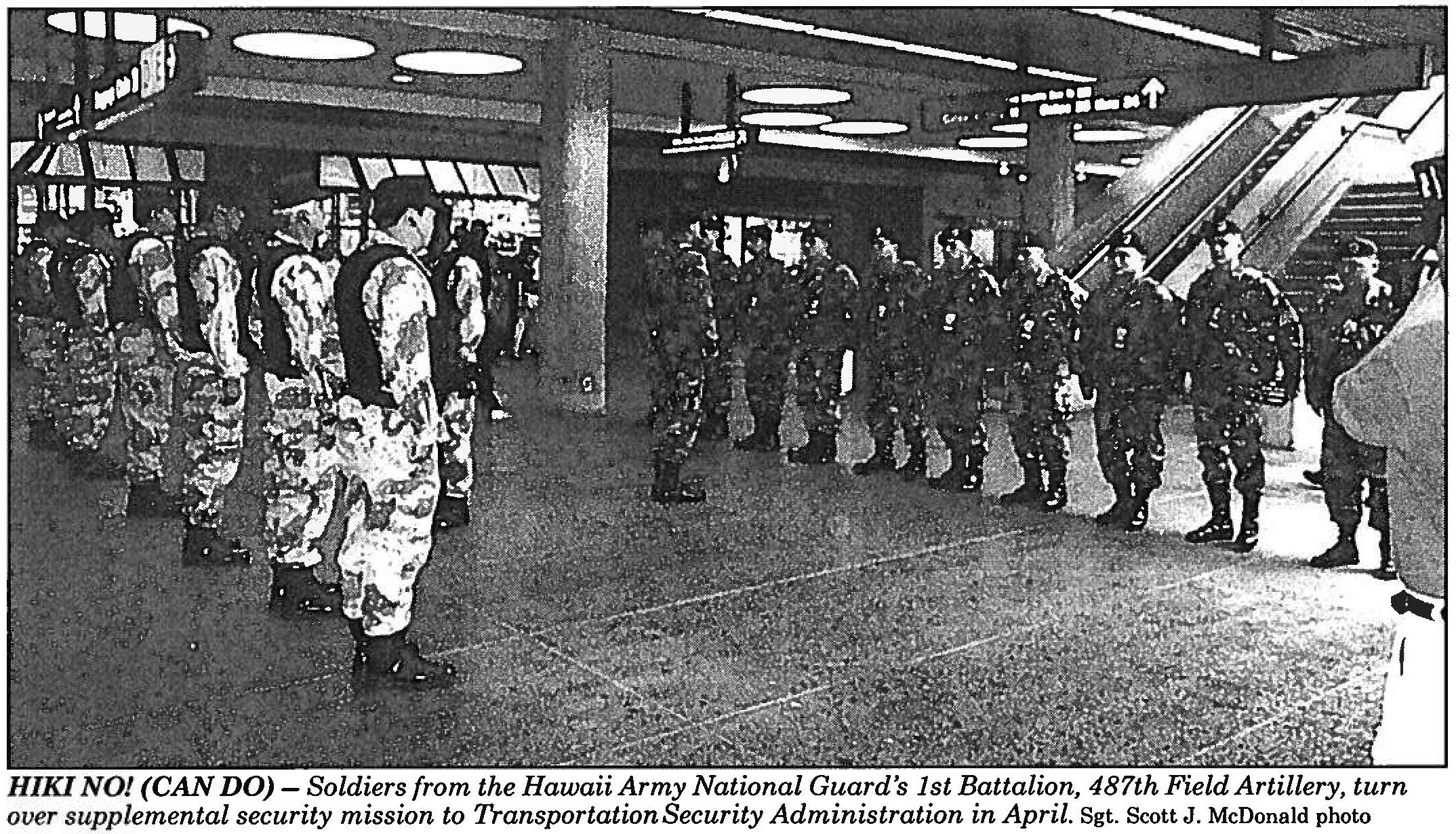
With the click of highly polished boots and a resounding Hiki No!. members of the Hawaii Army National Guard’s 1st Battalion, 487th Field Artillery marched away from check-point #2 at Honolulu International Airport on April 15, bringing to a close one of the most visible missions in the war on terrorism. On that day, Honolulu International became the first major airport in the country to turn over supplemental security duties from the National Guard to Transportation Security Administration trained personnel. The Hawaii National Guard stood down its presence at airports on the neighbor islands on May 10.
“The Hawaii National Guard played an essential role in protecting our State at a crucial time and performed their duties admirably,” said Gov. Benjamin J. Cayetano. “The Guard’s presence provided a strong sense of security and safety for our people and our visitors, who all rely on air travel to get around our island state.”
On Sept. 11, 2001, Cayetano became the first state chief executive in the nation to order National Guard troops on State Active Duty to help secure an international airport in the wake of the terrorist attacks. Then, on Oct. 7, 2001, Pres. George W. Bush authorized the use of the National Guard to assist civil authorities with airport security, using federal funds.
“When the history of the war on terrorism is written, the National Guard presence at U.S. airports will be seen as a major symbol of America’s resolve to protect her people and our way of life,” said Maj. Gen. Edward L. Correa Jr., state adjutant general and commander of the Hawaii National Guard. “I am very proud of all of Hawaii’s citizen soldiers and airmen who were willing to take a stand against terrorism and ensure that our air transportation, the life-blood of our economy, was safe.”
At its peak, more than 200 Hawaii National Guard soldiers and airmen were placed on federal active duty to help secure seven major airports across the state. “The majority of passengers, when they’d pass us, they’d say ‘thanks for being here. We appreciate you being here. Keep up the good work”, said Staff Sgt. Charles McDowell, one of the HIARNG soldiers who stood post at Honolulu lntemational Airport.