Do you need help in another language? We will get you a free interpreter. Call 808-369-3580 to tell us which language you speak.
您需要其它語言嗎?如有需要,請致電 (808-369-3478), 我們會提供免費翻譯服務
您需要其它语言吗?如有需要,请致电 (808-369-3478), 我们会提供免费翻译服务
En mi niit alilis lon pwal eu kapas? Sipwe angei emon chon chiaku ngonuk ese kamo. Kokori (808-369-3478) omw kopwe ureni kich meni kapas ka ani.
Makemake `oe i kokua i pili kekahi `olelo o na `aina `e? Makemake la maua i ki`i `oe mea unuhi manuahi. E kelepona (808-369-3478)`oe ia la kaua a e ha`ina `oe ia la maua mea `olelo o na `aina `e.
Masapulyo kadi ti tulong iti sabali a pagsasao? Ikkandakayo iti libre nga paraipatarus. Awaganyo ti
(808-369-3478) tapno ibagayo kadakami no ania ti pagsasao nga ar-aramatenyo.
다른언어로 도움이 필요하십니까? 저희가 무료로 통역을 제공합니다. (808-369-3478)로 전화해서 사용하는 언어를 알려주십시요
Kwoj aikuij ke jiban kin juon bar kajin? Kim naj lewaj juon am dri ukok eo ejjelok wonen. Kirtok
(808-369-3478) im kwalok non kim kajin ta eo kwo melele im kenono kake.
E te mana'o mia se fesosoani i se isi gagana? Matou te fesosoani e ave atu fua se faaliliu upu mo oe. Vili mai i le numera lea (808-369-3478) pea e mana'o mia se fesosoani mo se faaliliu upu.
¿Necesita ayuda en otro idioma? Nosotros le ayudaremos a conseguir un intérprete gratuito. Llame al (808-369-3478) y diganos que idioma habla.
Kailangan ba ninyo ng tulong sa ibang lengguwahe? Ikukuha namin kayo ng libreng tagasalin. Tumawag sa (808-369-3478) para sabihin kung anong lengguwahe ang nais ninyong gamitin.
‘Okú ke fie maʻu tokoni ʻi ha lea fakafonua ʻe taha? Temau kumi haʻo taha fakatonulea taʻetotongi. Telefoni ki he (808-369-3478) ke fakahā mai ʻa e lea fakafonua ʻokú ke lea aí.
Bạn có cần giúp đỡ bằng ngôn ngữ khác không ? Chúng tôi se yêu cầu một người thông dịch viên miễn phí cho bạn. Gọi (808-369-3478)nói cho chúng tôi biết bạn dùng ngôn ngữ nào
Gakinahanglan ka ba ug tabang sa imong pinulongan? Amo kang mahatagan ug libre nga maghuhubad. Tawag sa (808-369-3478) aron magpahibalo kung unsa ang imong sinulti-han.
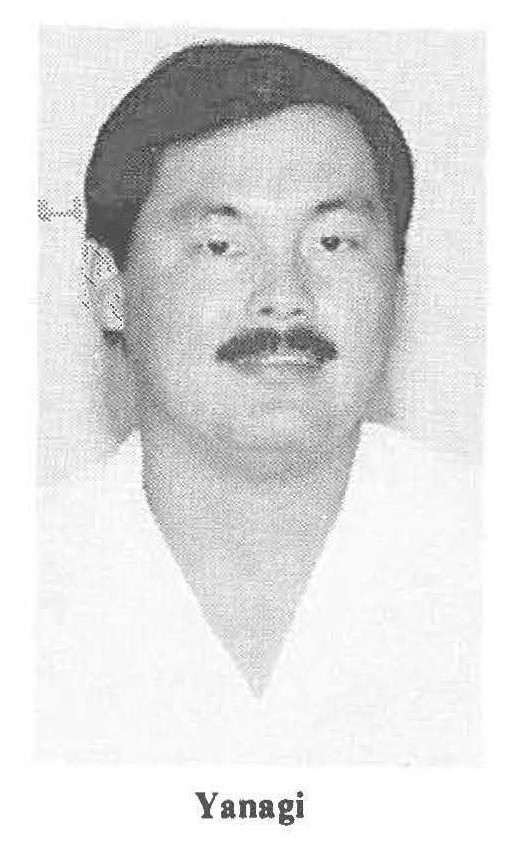
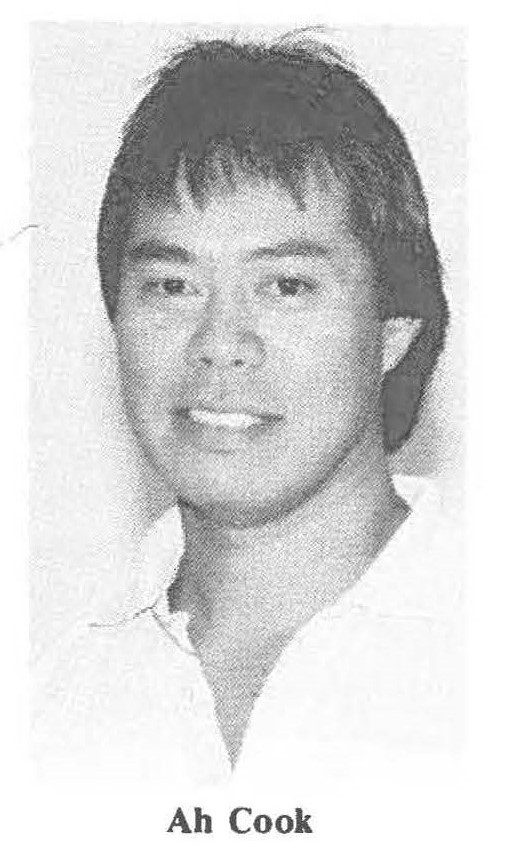
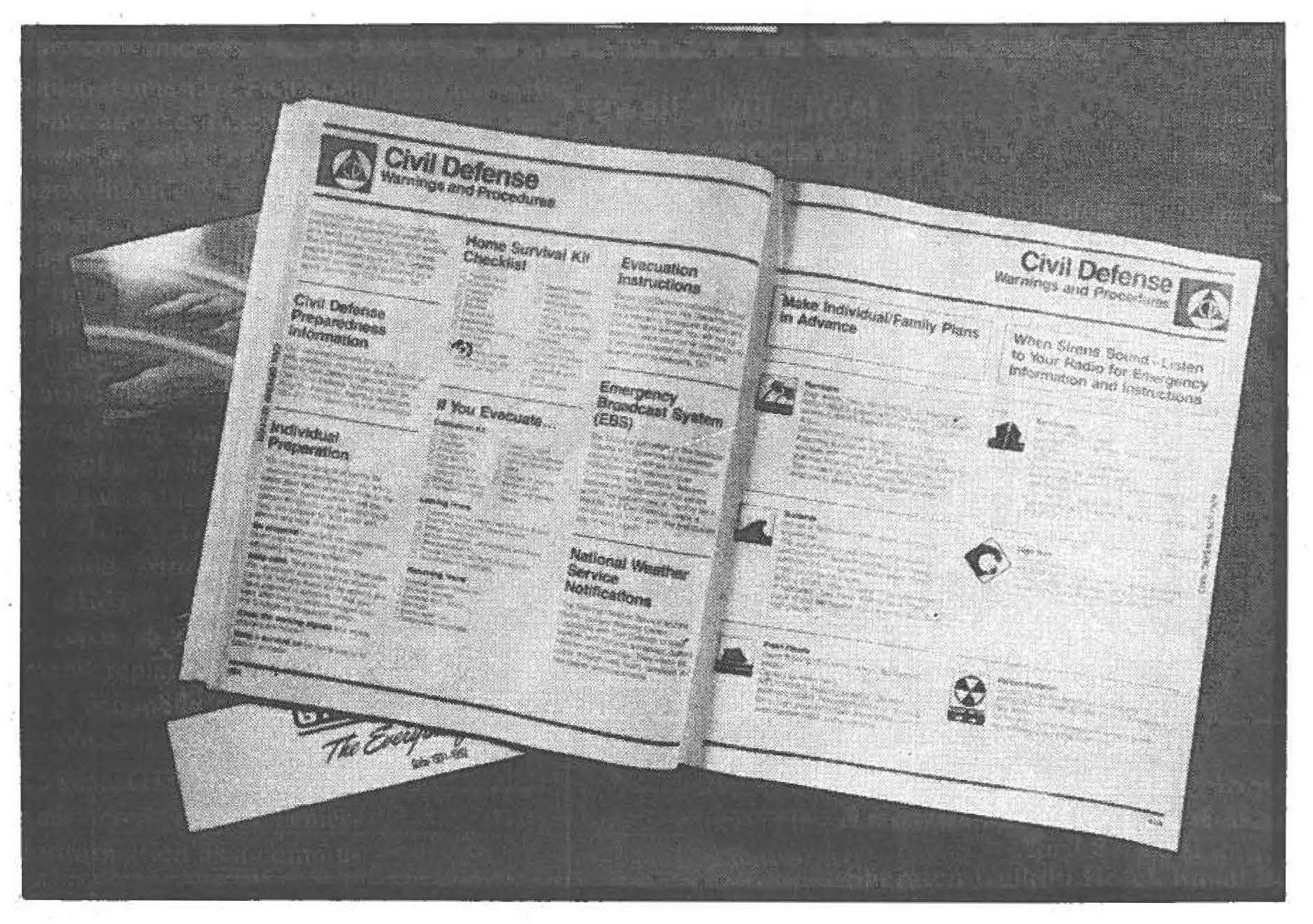
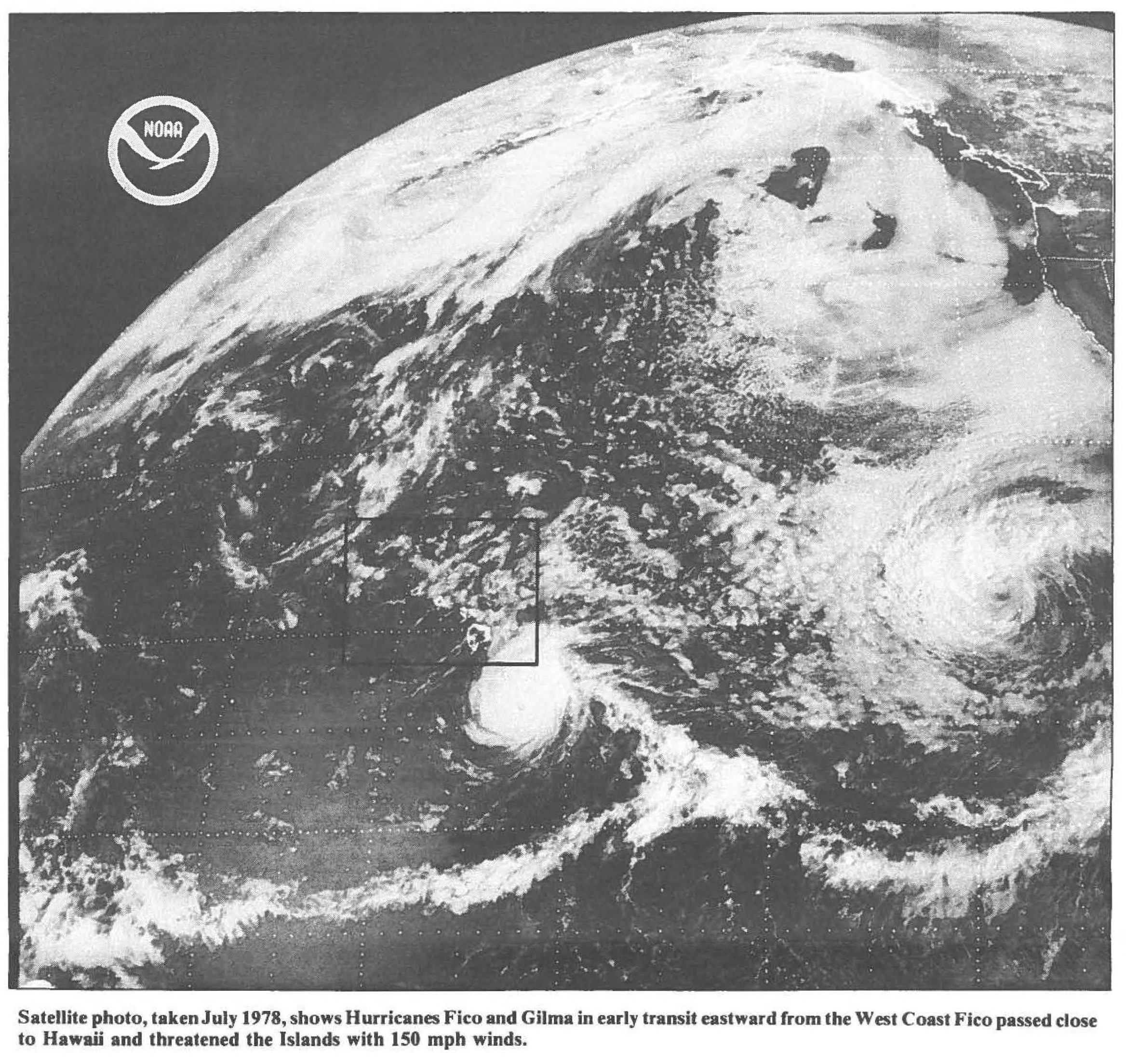
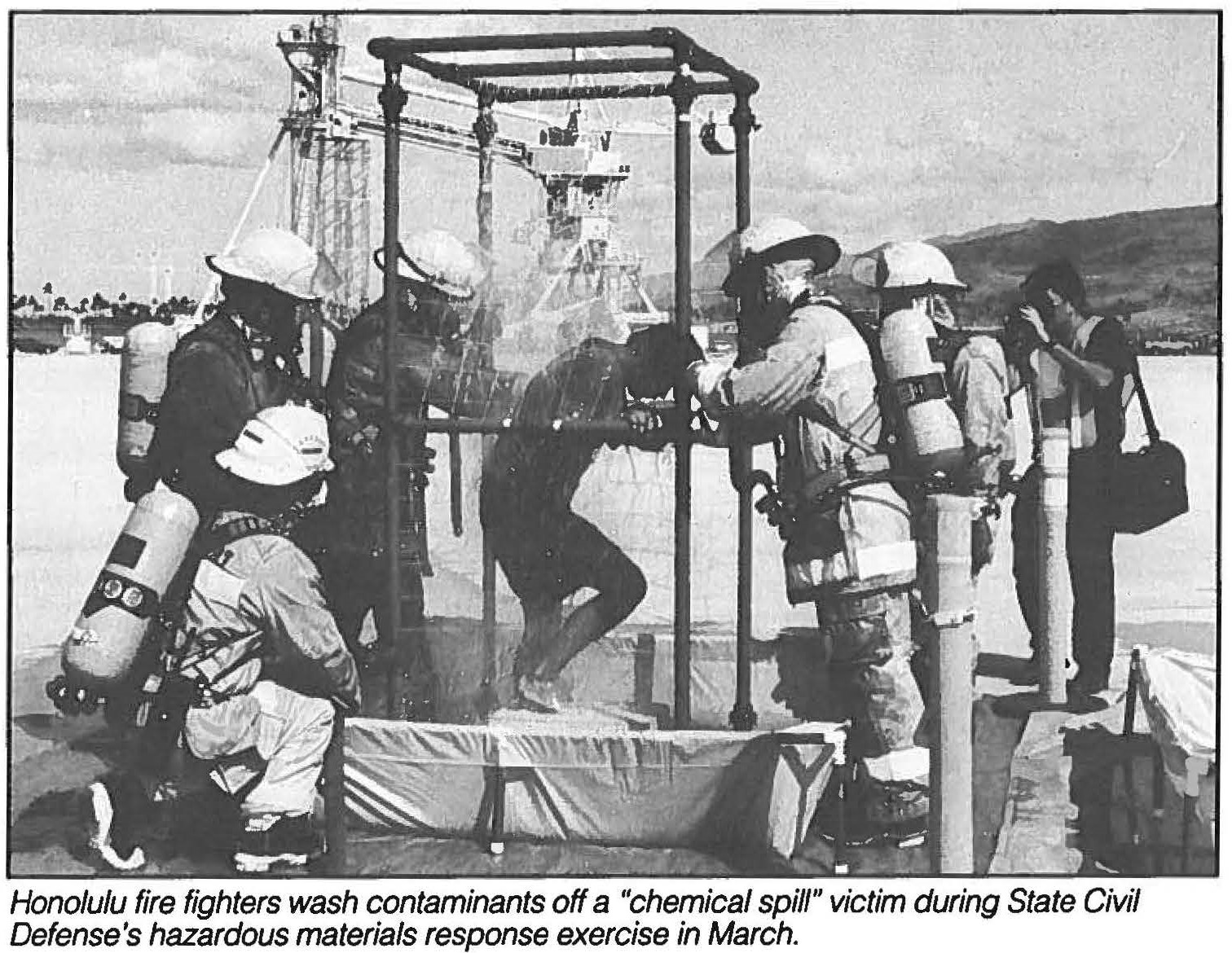
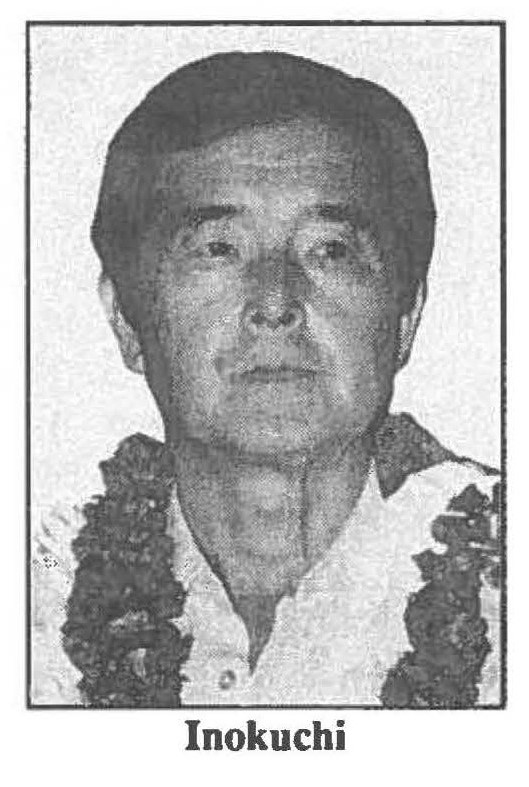
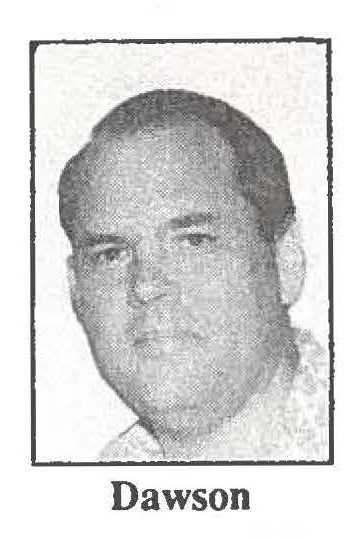
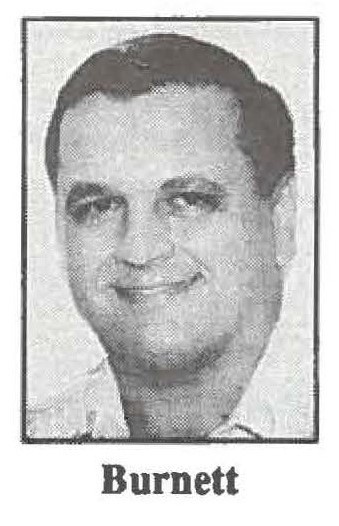
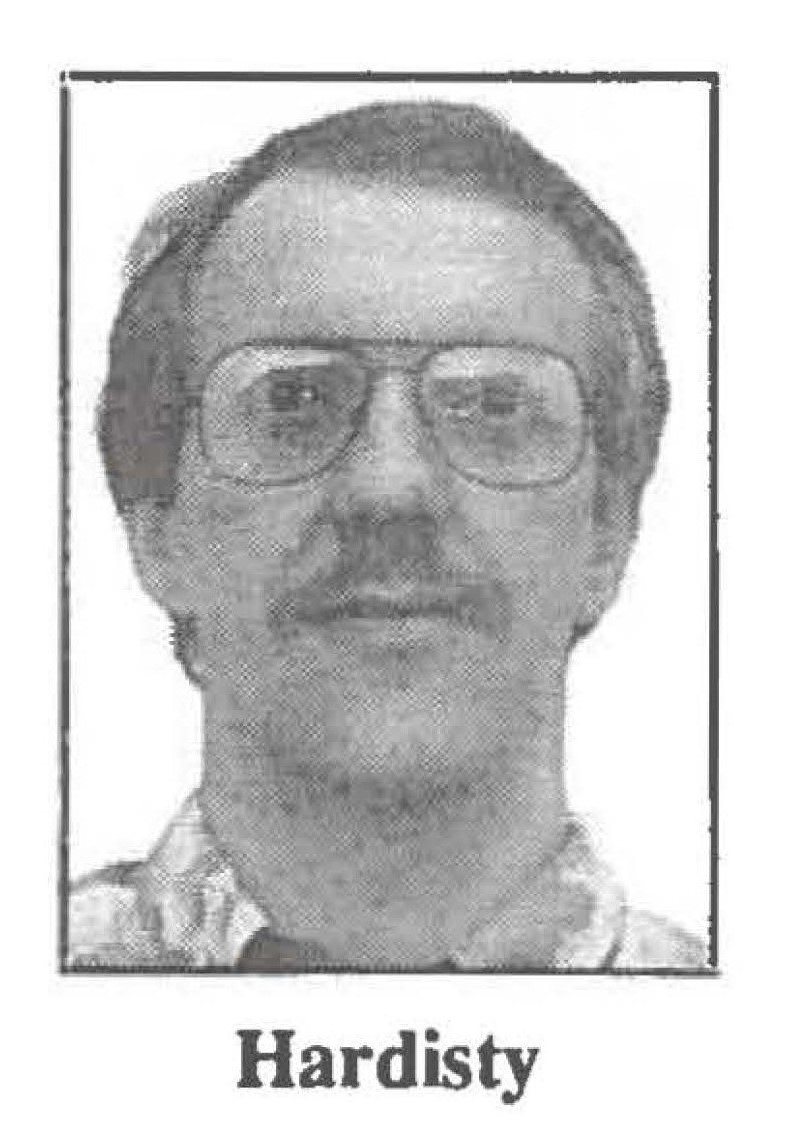
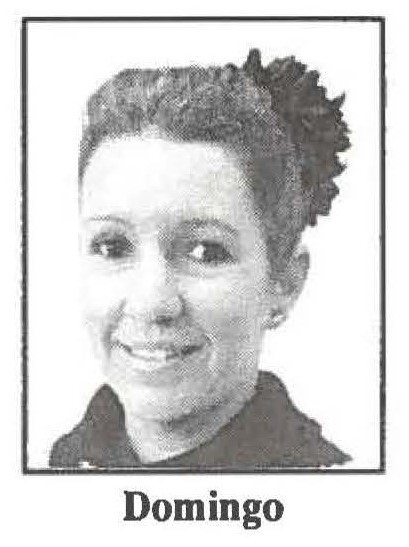
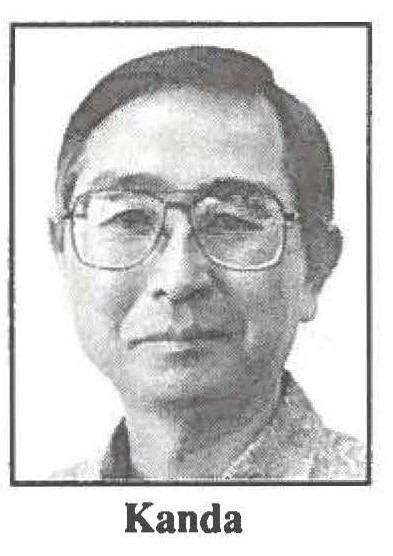
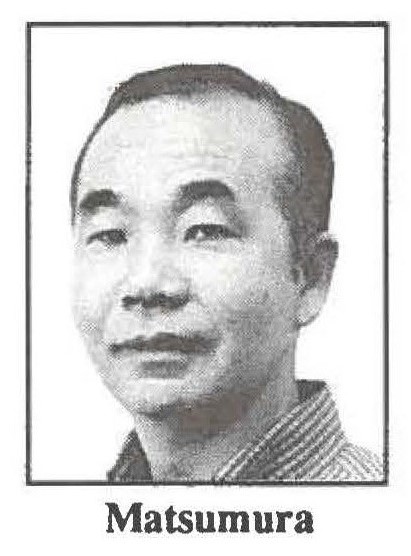
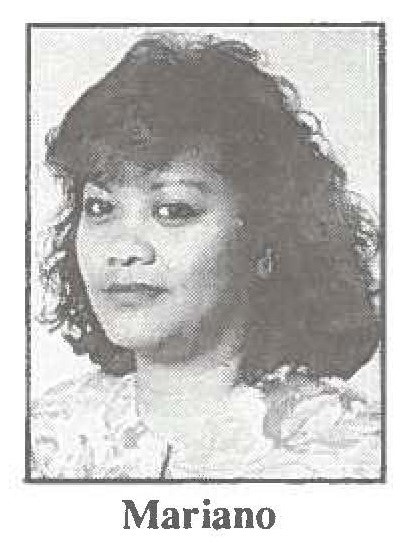
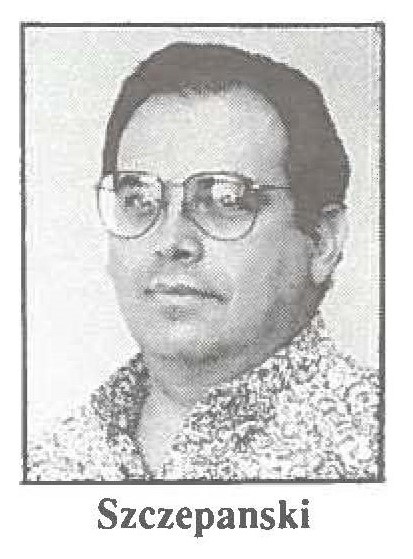
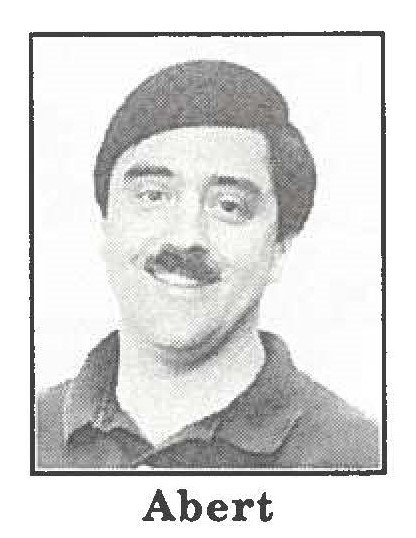
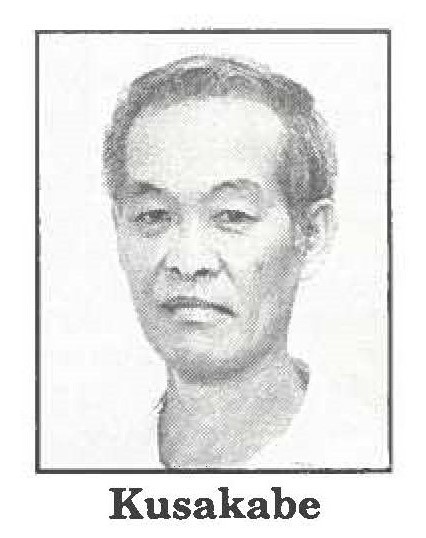
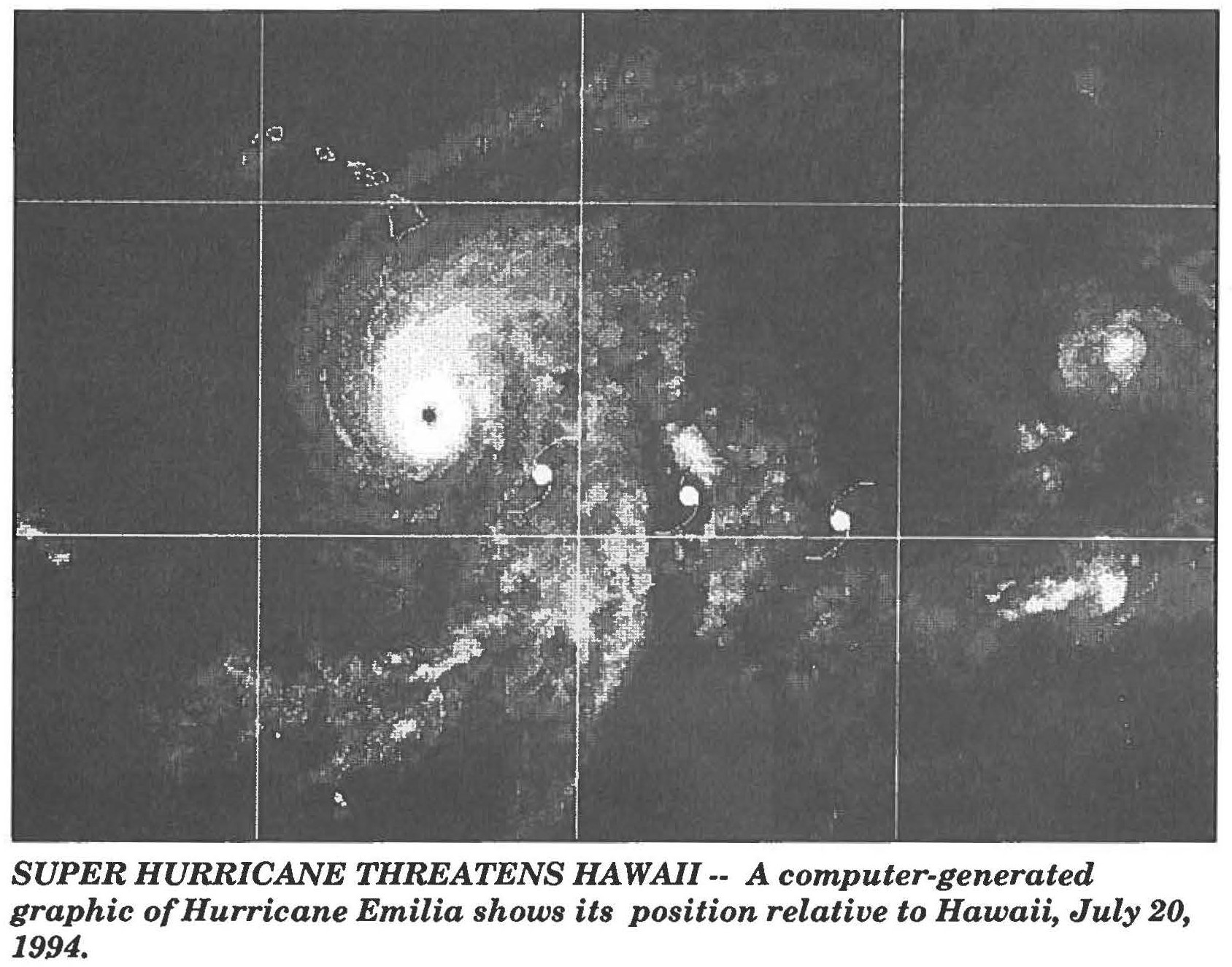
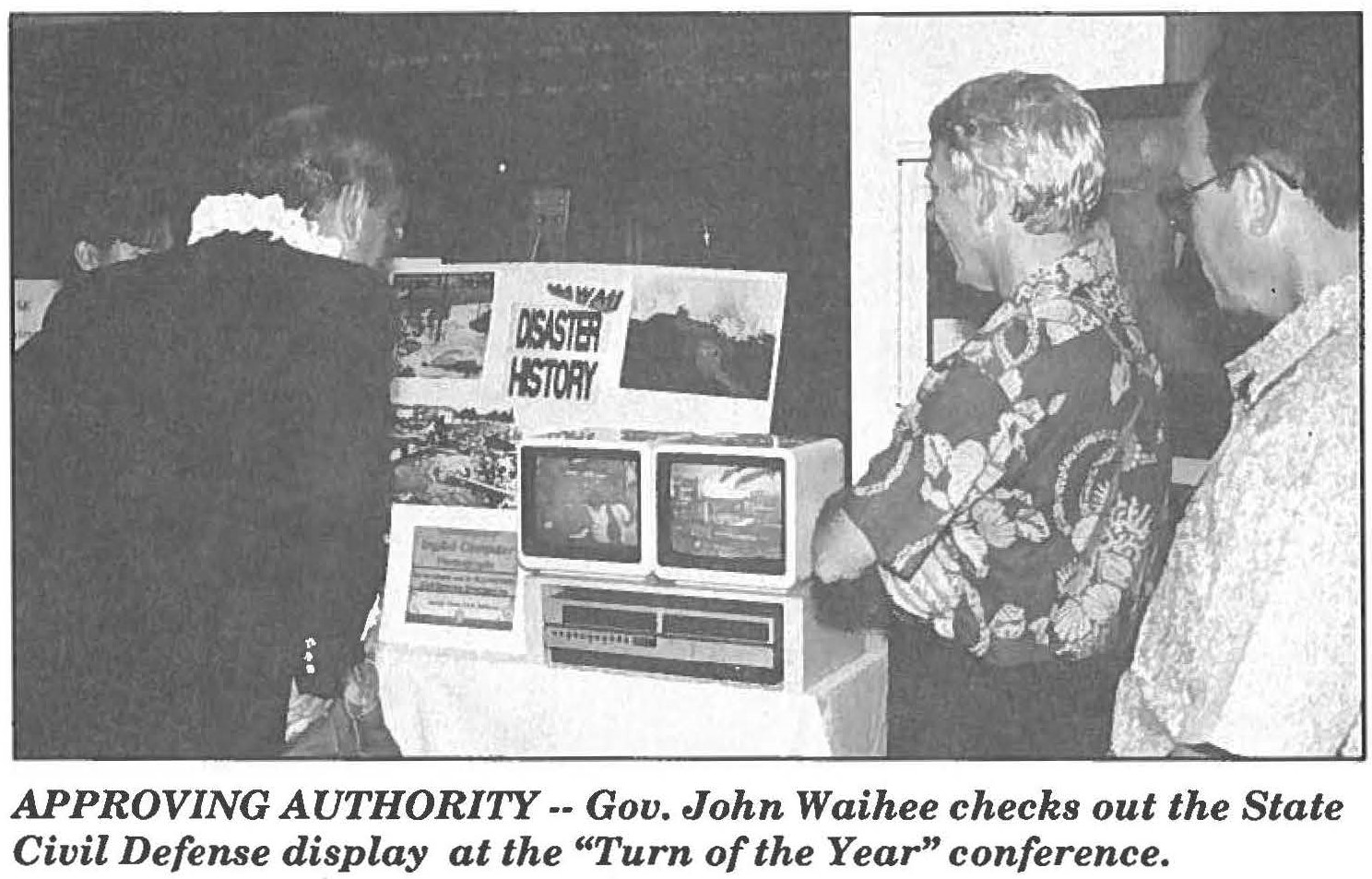
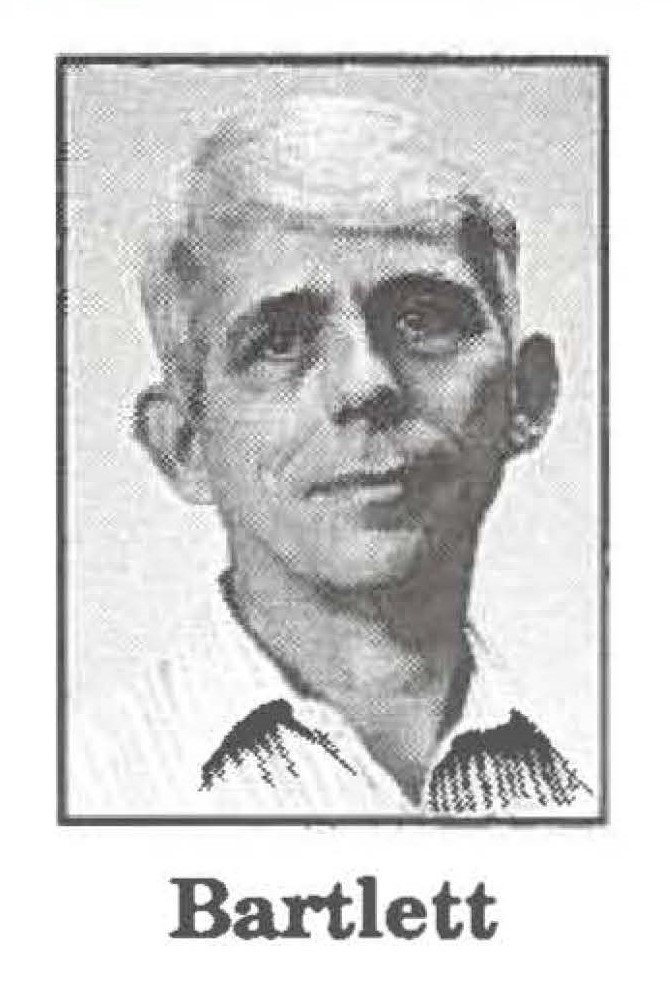
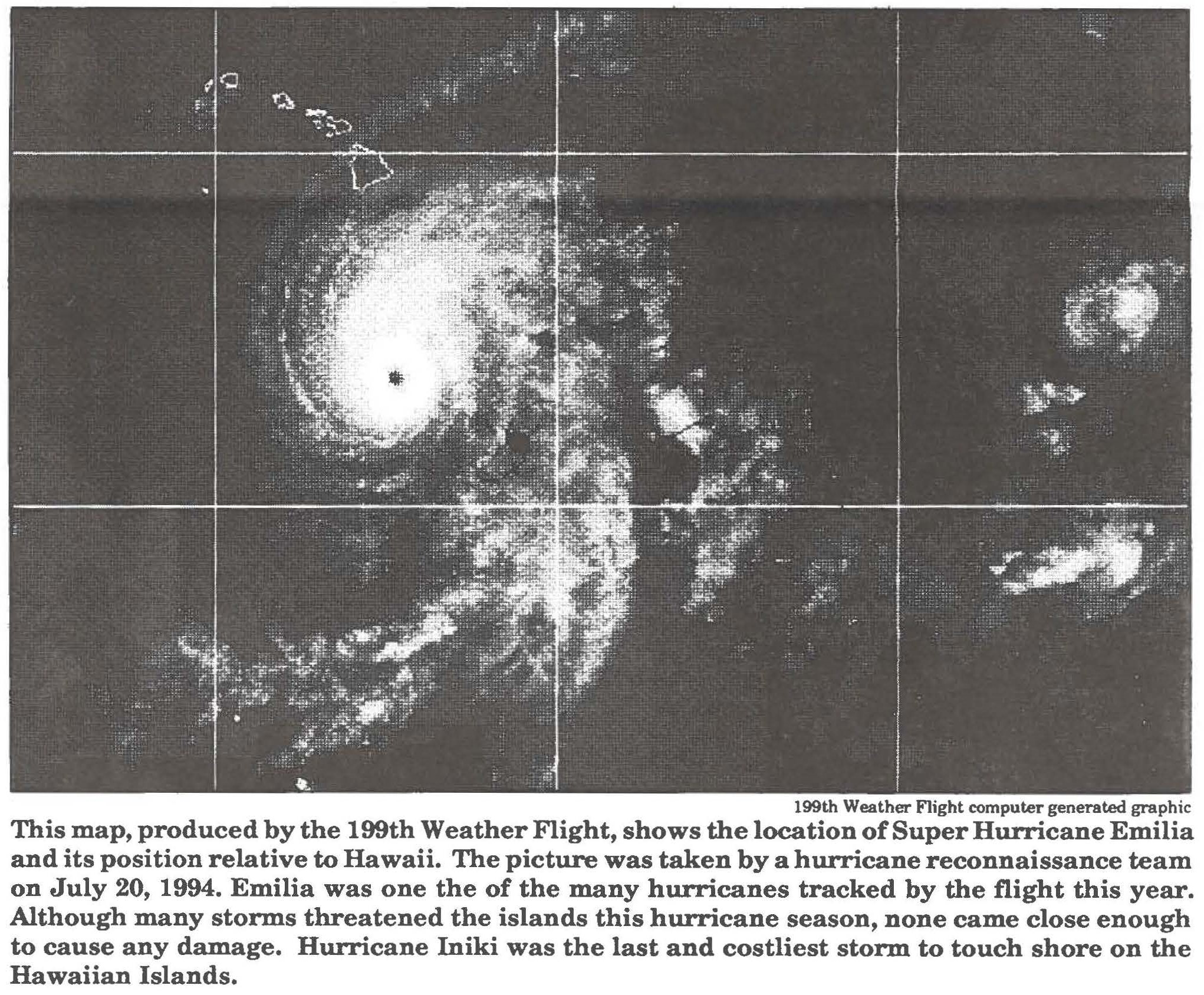
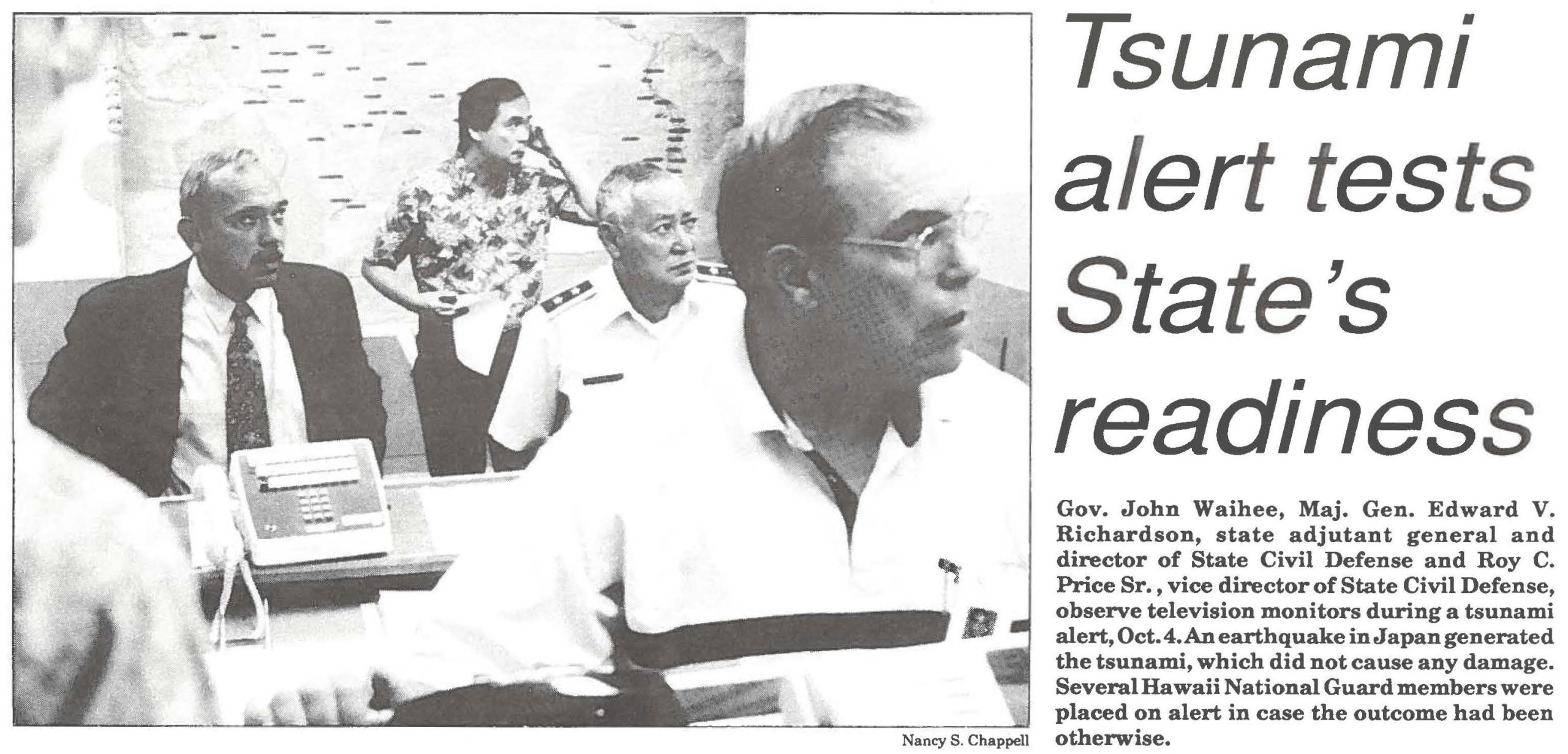
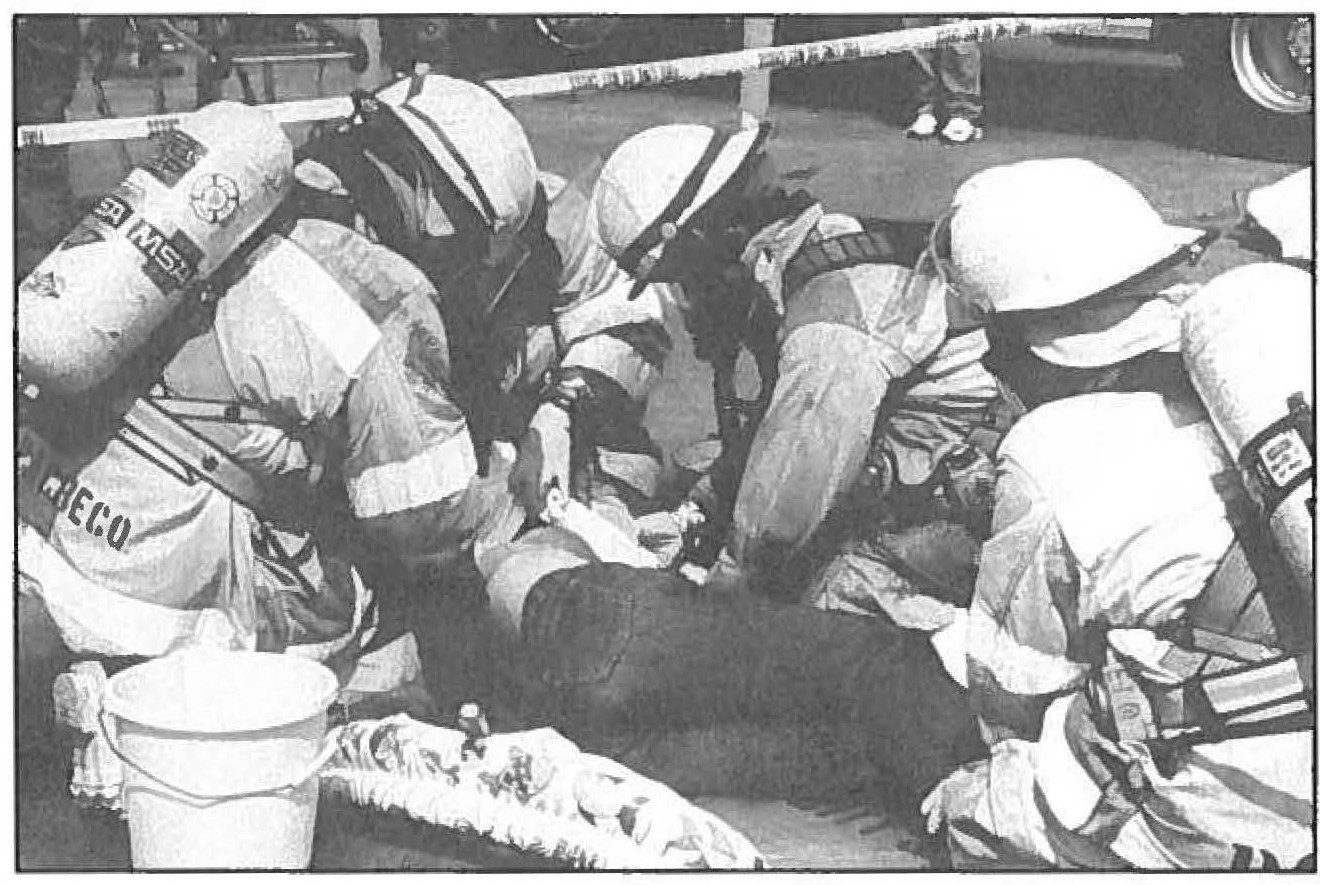
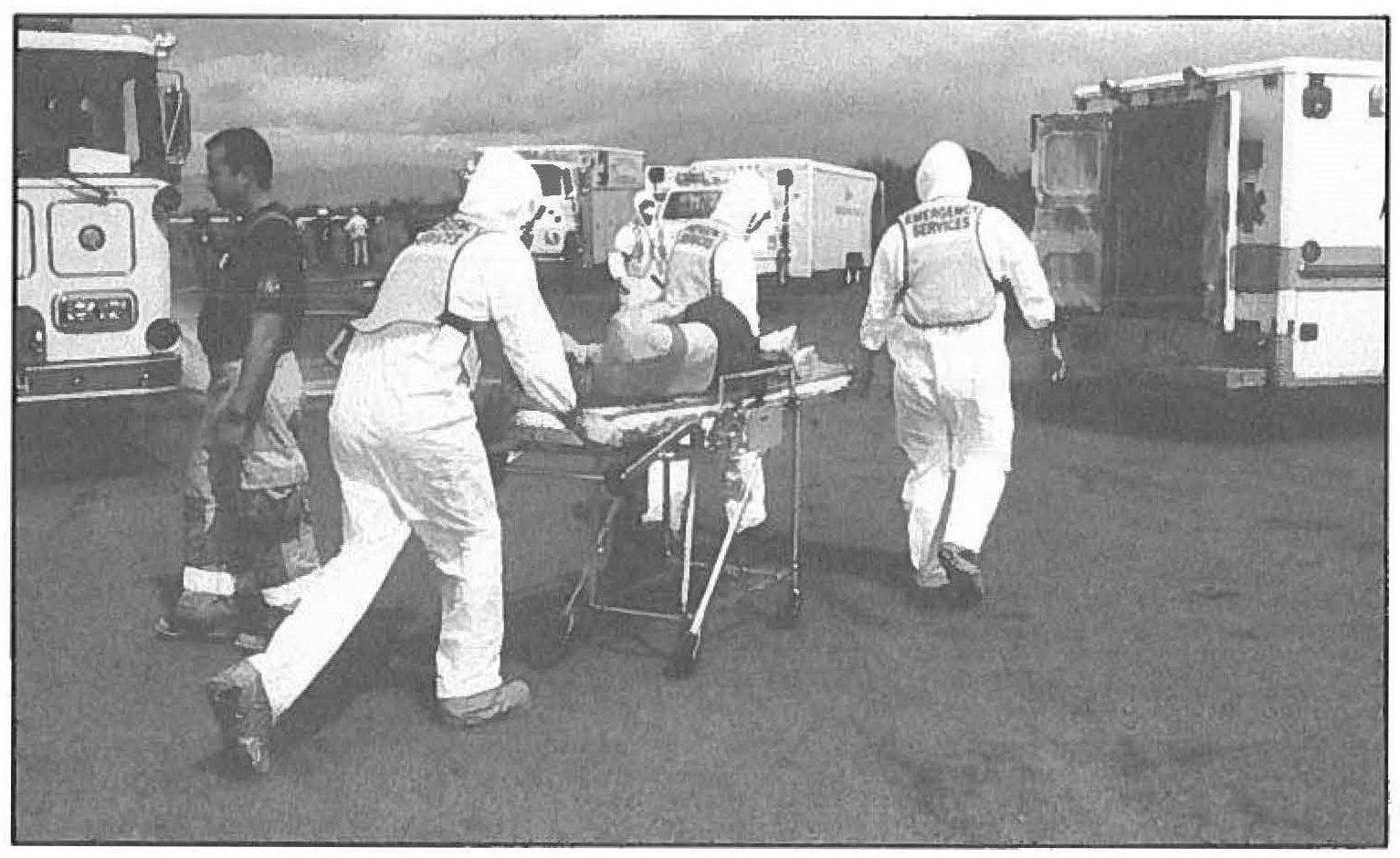
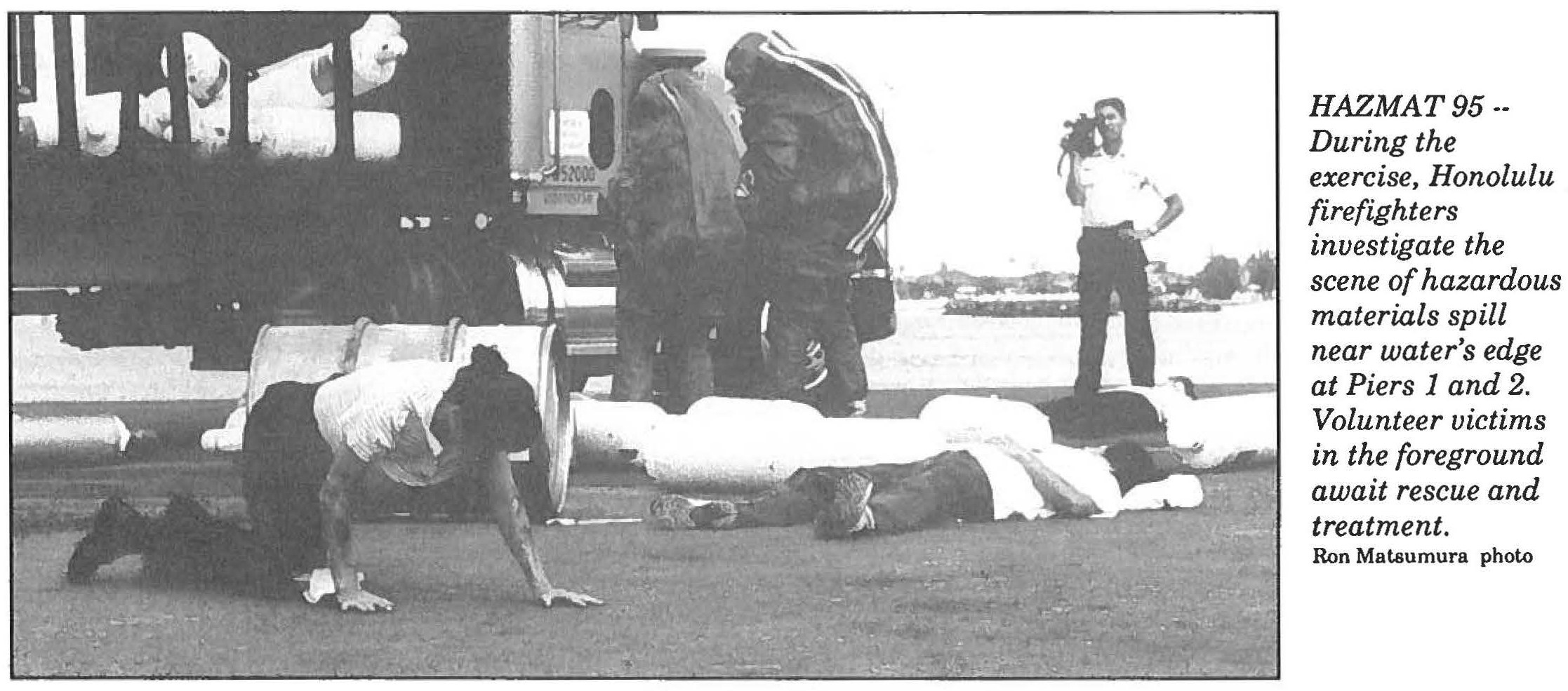
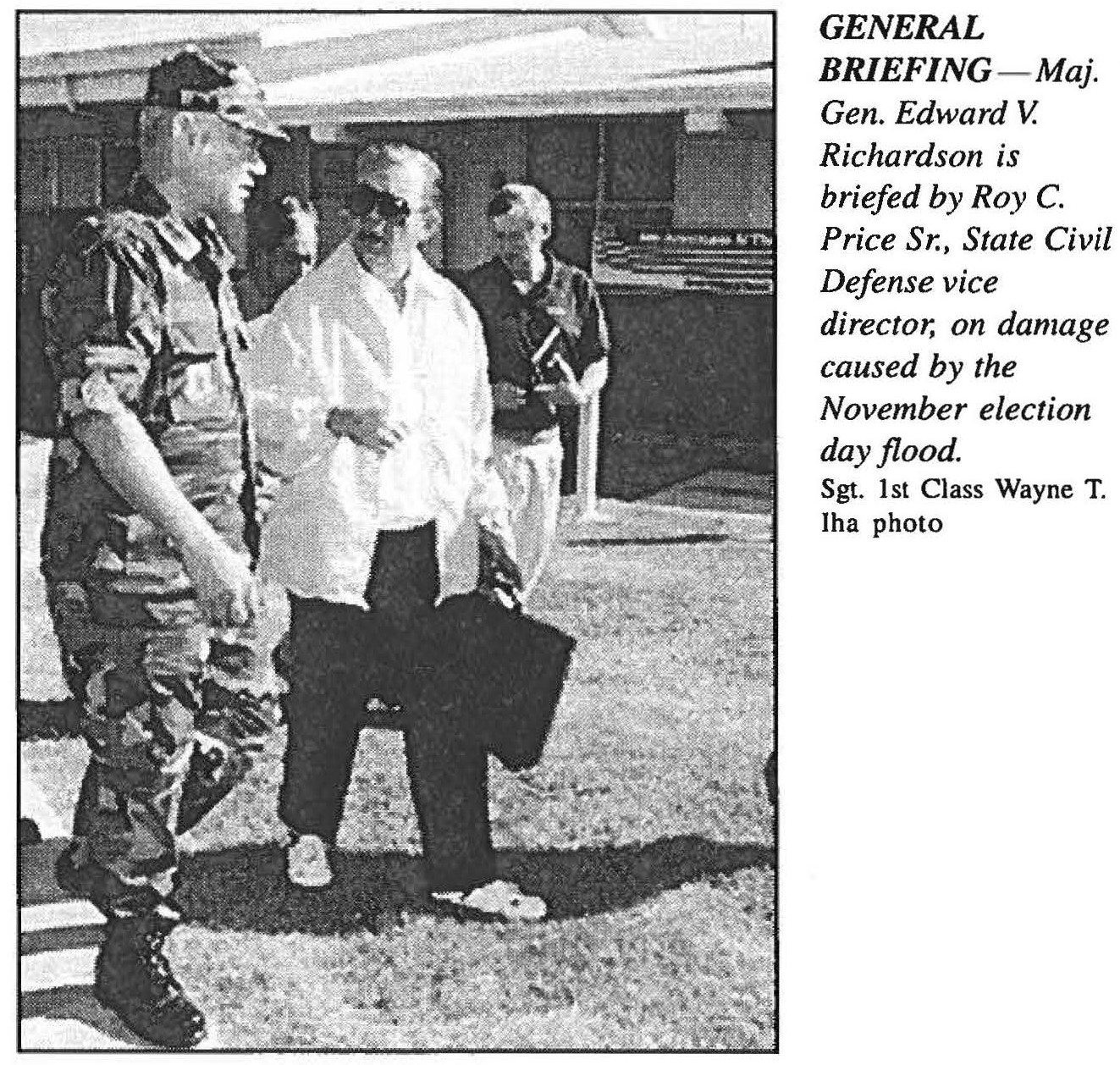
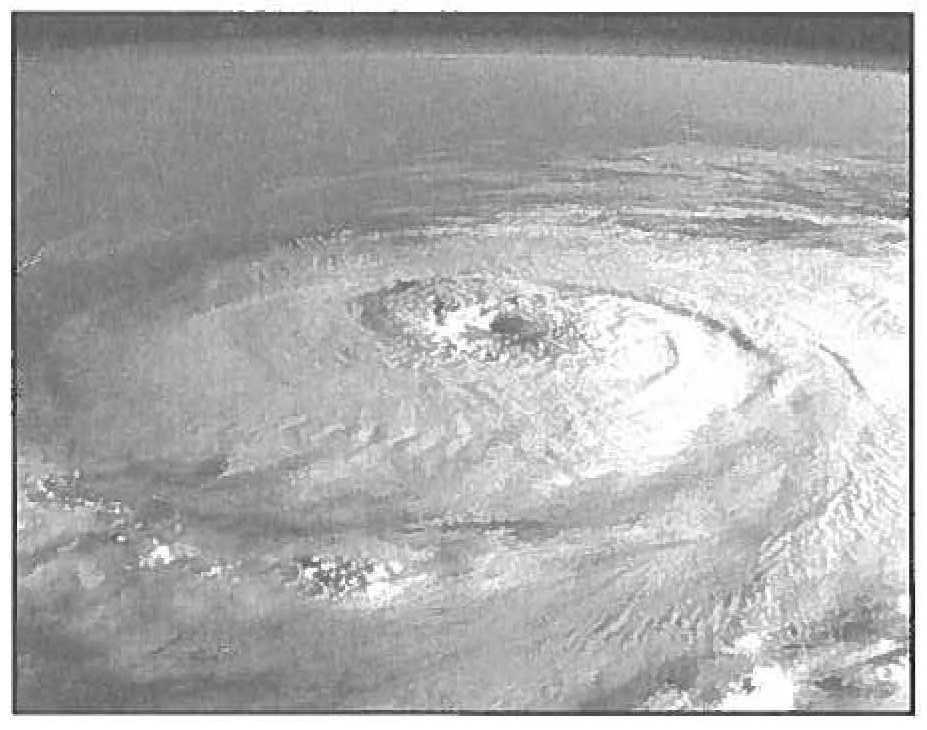
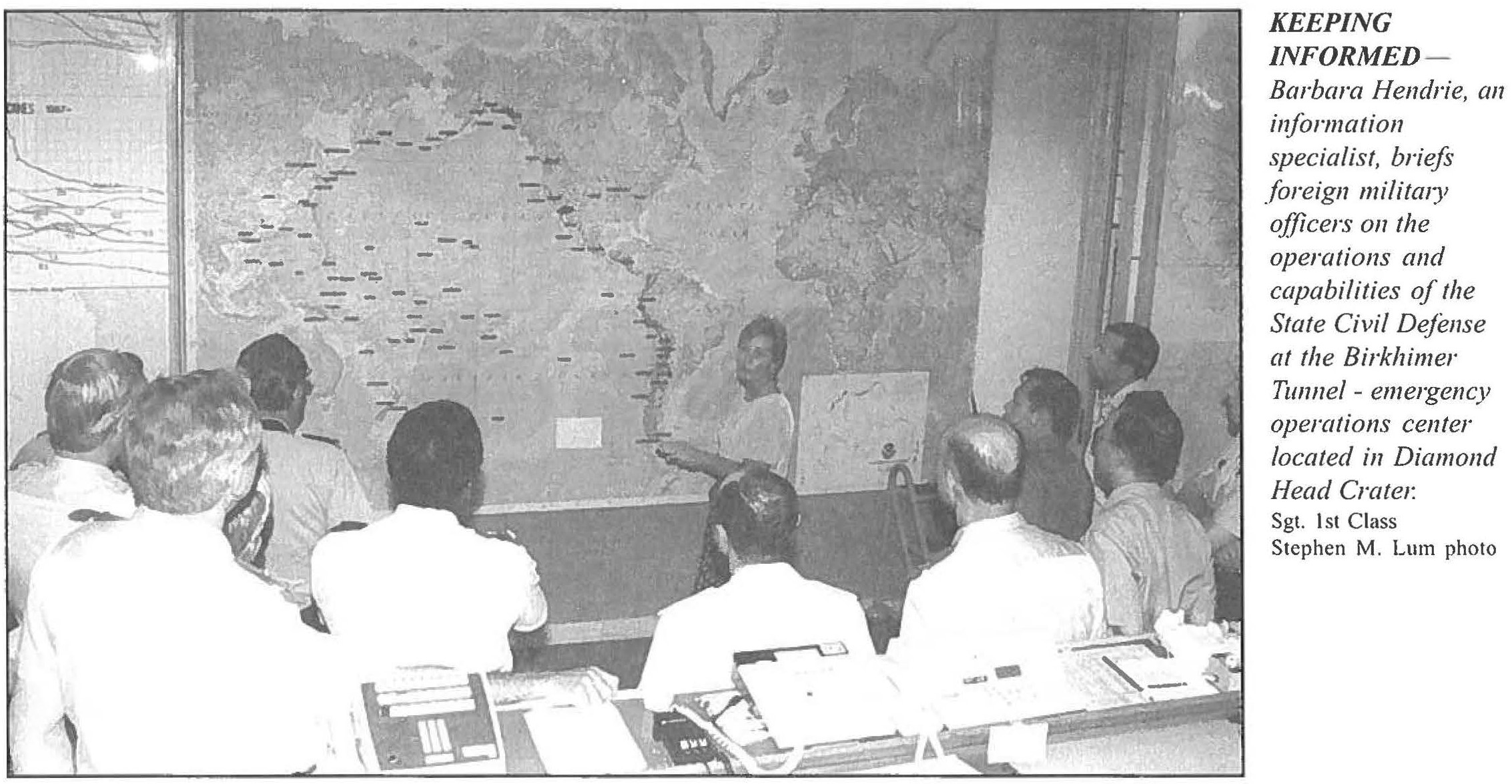
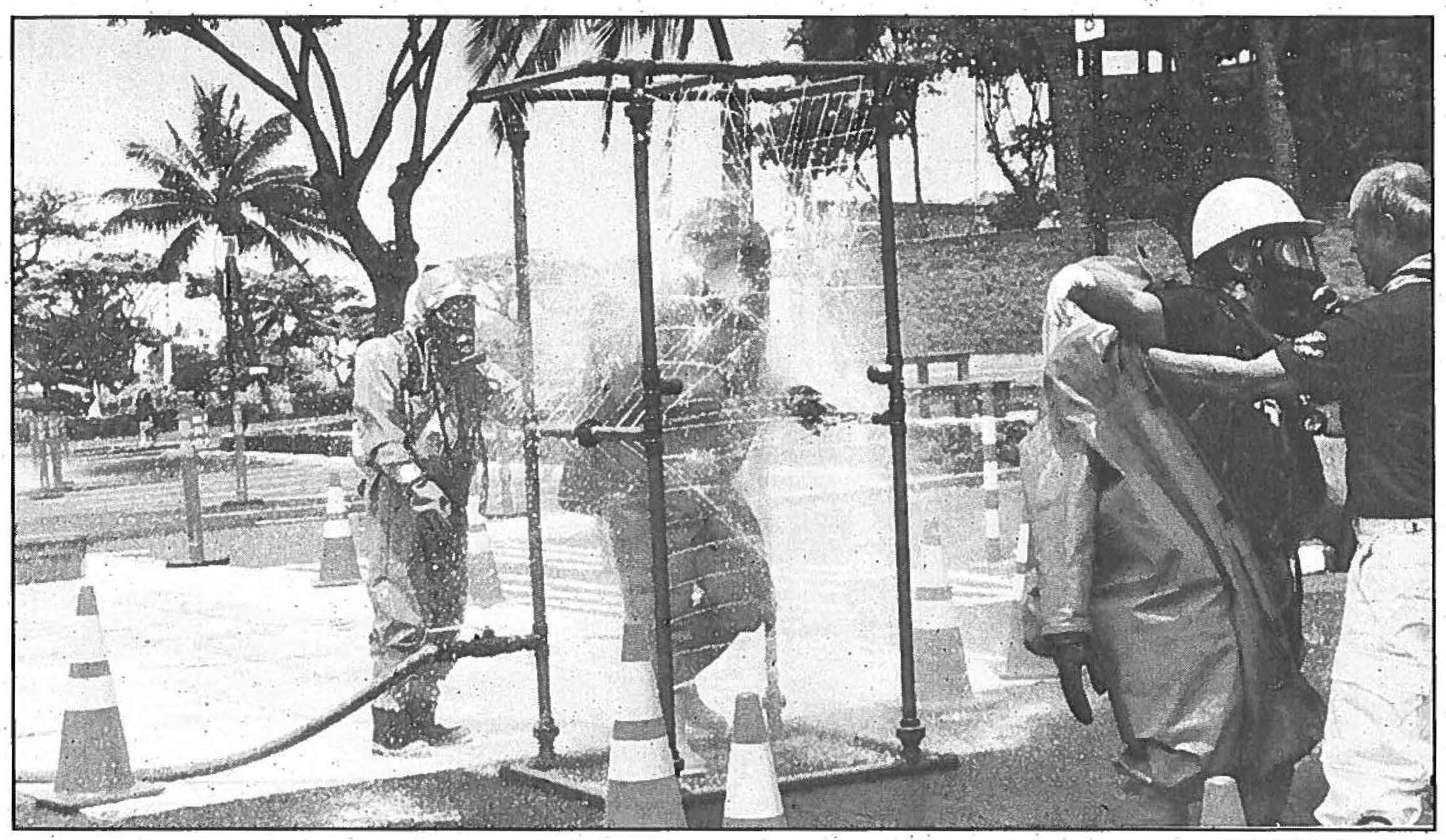
Brian S. Yanagi Leighton Ah Cook(Pictures from the 1990 April – June Pūpūkahi)Maj. Gen. Alexis T. Lum, director, Hawaii State Civil Defense (SCD), signs the updated Hawaii State Emergency Broadcast System Operational Plan, Dec. 11. Sitting (left) are co-signers Don Metzger (KHAI-TV general manager), Broadcast Services Committee, Hawaii State Emergency Communications Committee (SECC) and Lawrence S. Berger (KHVH president), chairman, Hawaii SECC. Standing (left) are Roy C. Price Sr., vice director Hawaii SCD; Richard H. Hagemeyer, director, Pacific Region, National Weather Service (NWS); and Ben Hablutzel, acting lead forecaster, NWS, Honolulu District Office. (Picture from the 1990 October – December Pūpūkahi)Hawaii Earthquake Advisory Board (left to right): Dr. Glen Miyasato, structural engineer; Dr. N. Norby Nielsen, professor of civil engineering, University of Hawaii at Manoa (UHM); Damon Runyan, geological engineer; Dr. Cart Johnson, professor of geology, University of Hawaii at Hilo (UH Hilo); Don Gransback, executive assistant State Civil Defense (SCD); Gary Chock, structural engineer, advisory board chair; Dr. Paul Okubo, seismologist, Hawaii Volcano Observatory (HVO); Brian Yanagi, executive assistant, SCD; Dr. Arthur Chiu, professor of civil engineering, UHM; Dr. John Harrison, environmental center coordinator, UHM; Dr. Robert Koyanagi, seismologist, HVO; Dr. Doak Cox, geophysicist emeritus, UHM, advisory board assistant chair,· and Dr. Augustine Furumoto, professor and seismologist, UHM. State Civil Defense Advisory Council (left to right): Sherman Thompson, chair; Ruben Yoshida; Gabe Kilakalua Jr. ; Richard Yonezake; Frank T.S. Kim; and Alfred 0. Souza Sr. (Not pictured: Tadao Okimoto); at the Kalapana lava flow, September 1990. (Pictures from the 1991 Annual Report)Updated Civil Defense warnings published in 1991 telephone directories (Picture from the 1991 January – March Pūpūkahi)Satellite photo, taken July 1978, shows Hurricanes Fico and Gilma in early transit eastward from the West Coast Fico passed close to Hawaii and threatened the Islands with 150 mph winds. (Picture from the 1991 April – June Pūpūkahi)Honolulu fire fighters wash contaminants off a “chemical spill” victim during State Civil Defense’s hazardous materials response exercise in March. Civilian and military government agencies work together with private and volunteer organizations to treat and evacuate “trauma victims” portrayed by Army soldiers at exercise Tsunami ’92 in June.Roy Price Sr., vice director of State Civil Defense, briefs Maj. Gen. Edward V. Richardson, director of State Civil Defense, at the emergency operating center in Diamond Head Crater. (Pictures from the 1992 Annual Report)Takeo InokuchiWilliam J. Dawson(Pictures from the 1992 January – February Pūpūkahi)William F. Norris, State Civil Defense Assistant population protection planner, is this year’s recipient or the Adjutant General’s Award.Norris receives Generals award page3(Pictures from the 1992 July – August Pūpūkahi)George F. Burnett(Picture from the 1992 October – November Pūpūkahi)Robert M. Hardisty(Picture from the 1993 January – February Pūpūkahi)Colleen A. DomingoLarry M. KandaRonald T. Matsumura(Picture from the 1993 February – March Pūpūkahi)Leslie Ann L. MarianoStanley B. Szcrepanski Jr.(Pictures from the 1993 April – May Pūpūkahi)Glenn Soma (left), radiological defense officer, and Barbara Hendrie (center), information specialist, of State Civil Defense (SCD), explain an emergency support function assignment matrix to Diane Sumida of the Department of Personnel Services during “Exercise Kamakani,” a hurricane response exercise directed by SCD, June 3. (Picture from the 1993 June – July Pūpūkahi)George W. AbertTameichi Kusakabe(Pictures from the 1993 July – August Pūpūkahi)SUPER HURRICANE THREATENS HAWAII — A computer-generated graphic of Hurricane Emilia shows its position relative to Hawaii July 20, 1994. JOINT TRAINING — Hawaii Air and Army National Guard aviators plot possible airlift scenarios during a hurricane preparedness exercise at the Hawaii National Guard emergency operating center located at Battery 407 in Diamond Head Crater in May 1994.APPROVING AUTHORITY — Gov. John Waihee checks out the State Civil Defense display at the “Turn of the Year” conference. OPERATION CENTRAL •· State Civil Defense (SCD) staffers, and federal, state and county representatives practice hurricane preparedness at the SCD emergency operating center located at Birkhimer Tunnel in Diamond Head Crater. WARNING SIGNS — A State Civil Defense staffer shares information on the statewide siren warning system during the annual “Turn of the Year” conference held at the University of Hawaii at Manoa in August. (Pictures from the 1994 Annual Report)John B. Bartlett(Picture from the 1994 February – March Pūpūkahi)OPERATIONS CENTRAL — State Civil Defense staffers; and federal, state and county representatives practice hurricane preparedness at the SCD emergency operating center located at Birkhimer Tunnel in Diamond Head Crater. AIRLIFT COORDINATION — (Left to right) Lt. Col. Roy K. Sakata, 199th Fighter Squadron, and Sgt. 1st Class Edna Nazareno and Lt. Col Orlan L. Peterson Jr., 1st Battalion, 193rd Aviation, plot possible airlift scenarios during hurricane preparedness exercises at the Hawaii National Guard emergency operating center located in Battery 407 in Diamond Head Crater, May 26. (Pictures from the 1994 June – July Pūpūkahi)This map, produced by the 199th Weather Flight, shows the location of Super Hurricane Emilia and its position relative to Hawaii. The picture was taken by a hurricane reconnaissance team on July 20, 1994. Emilia was one the of the many hurricanes tracked by the flight this year. Although many storms threatened the islands this hurricane season, none came close enough to cause any damage. Hurricane lniki was the last and costliest storm to touch shore on the Hawaiian Islands.Gov. John Waihee, Maj. Gen. Edward V. Richardson, state adjutant general and director of State Civil Defense and Roy C. Price Sr., vice director of State Civil Defense, observe television monitors during a tsunami alert, Oct.4.An earthquake in Japan generated the tsunami, which did not cause any damage. Several Hawaii National Guard members were placed on alert in case the outcome had been otherwise. (Pictures from the 1994 September – October Pūpūkahi)1ST CLASS TREATMENT — Local firefighters tend to person who has succumb to an unknown hazardous agent at HAZMAT Exercise ’95. -Ron Matsumura photoCHECKING FOR SIGNS — A local firefighter checks for signs of heat stress during HAZMAT Exercise ’95, Operation Diamond Head. Ron Matsumura photoAMBULANCE TO THE RESCUE — During a hazardous materials exercise an ambulance crew prepares to transport a victim to a hospital emergency room, after a chemical accident in Honolulu Harbor. Ron Matsumura photoJOINT TRAINING — Hawaii Air and Army National Guard personnel specialists, communications experts, logisticians, aviators, and other personnel plot possible scenarios during a hurricane preparedness exercise at the Hawaii National Guard emergency operating center located at Battery 407 in Diamond Head Crater. State Civil Defense’s Makani Pahili is held annually during the start of hurricane season in Hawaii. Stephen M. Lum photoHAZMAT95– During the exercise, Honolulu firefighters investigate the scene of hazardous materials spill near water’s edge at Piers 1 and 2. Volunteer victims in the foreground await rescue and treatment. Ron Matsumura photo(Pictures from the 1995 Annual Report) Diagram depicts how the “EARTH ALERT system will work to improve the communications of Hawaii residents. (Picture from the 1995 July – September Pūpūkahi)The Rev. Bill Pifer of Keolahou Church, Maalaea, conducts a traditional blessing for the opening of the Pacific Disaster Center. Among the dignitaries attending the ceremony are (L to R) Maj. Gen. EdwardV. Richardson, U.S. Rep. Patsy Mink, U.S. Sen. Daniel Inouye, Maui Mayor Linda Crockett-Lingle, and Roy Price, State Civil Defense vice-director. Photo by Ron MatasumraMASS CASUALTY DRILL—The Hospital Association of Hawaii held its annual accreditation exercise by staging a mass casualty drill in conjunction with Makani Pahili ’96. Here a woman pretending to be pregnant gets assistance from active duty medics participating in the drill. Photo by Deborah M.S. MurrayHIGH TECH– The Pacific Disaster Center is located in the Maui High Technology Park, Kihei, Maui. It is less than a half hour drive from the Kahului Airport. Photo by Ron MatsumuraMAKANI PAHILI-A mock Disaster Assistance Center was set up at the Hawaii Army National Guard’s armory at Diamond Head and 22nd Avenue for a Civil Defense preparedness drill, May 3-9. State Civil Defense photo Local insurance companies were a vital part of the Makani Pahili ’96 exercises. During this phase of the exercise, a Disaster Assistance Center was set up to assist homeowners with low interest loans for repairs to homes and businesses. State Civil Defense photo (Pictures from the 1996 Annual Report)A mock Disaster Assistance Center was set up at the 22nd avenue armory for a Civil Defense preparedness drill, May 3-9.(Picture from the 1996 April – May Pūpūkahi)TENDER LOVING CARE – A volunteer “victim” is given first aid by a City and County of Honolulu medical technician during Makani Pahili ’97, the statewide hurricane exercise held in May. Deborah M.S. Murray photoGENERAL BRIEFING – Maj. Gen. Edward V. Richardson is briefed by Roy C. Price Sr., State Civil Defense vice director; on damage caused by the November election day flood. Sgt. 1st Class Wayne T. Iha photoCOOPERATION AND COORDINATION – Lt. Col. Blaine Izuka, Staff Sgt. Patrick Bailon, and Capt. Mike Doolin review situation reports during statewide hurricane exercise Makani Pahili in May. Capt. Charles J. Anthony photoDISASTER ASSISTANCE – Disaster Assistance Center (Hawaii Army National Guard’s Diamond Head gym) personnel from the public and private sector assist “victims” during Makani Pahili ’97, the statewide hurricane exercise held in May. State Civil Defense photo EXECUTIVE DECISION – Maj. Gen. Edward V. Richardson, the adjutant general, confers with Col. Jerald K. Aoki, Hawaii Air National Guard chief of staff, during the statewide hurricane Exercise MAKANI PAHILI ’97 held in May. Capt. Charles J. Anthony photo(Pictures from the 1997 Annual Report)Statewide hurricane exercise held page 5Hawaii Air National Guard C-130H cargo aircraft simulated mass casualty evacuation procedures with ambulances during hurricane Exercise MAKANI PAHlLI, May 1998. KEEPING INFORMED – Barbara Hendrie, a public information specialist, briefs foreign military officers on the operations and capabilities of State Civil Defense at the Birkhimer Tunnel emergency operating center located in Diamond Head Crater. (Pictures from the 1998 April – August Pūpūkahi)EYE OF THE HURRICANE – An ariel view of a hurricane/typhoon, which is a severe tropical cyclone with a rotating pattern and sustaining wind speed of at least 75 mph (64 knots) and higher: The eye is the center of the hurricane which is relatively calm. The most violent activity takes place in the area immediately around the eye, called the eyewall. Pacific Disaster Center photoKEEPING INFORMED – Barbara Hendrie, an information specialist, briefs foreign military officers on the operations and capabilities of the State Civil Defense at the Birkhimer Tunnel – emergency operations center located in Diamond Head Crater: Sgt. 1st Class Stephen M. Lum photoSIMULATED EMERGENCY ASSISTANCE- A C-130 Hercules cargo aircraft simulates mass casualty evacuation procedures with ambulances during hurricane Exercise MAKANJ PAHILl MAY 1998. Tech. Sgt. Wayne G. Pontes photo(Pictures from the 1998 Annual Report)MOBILE COM – Thomas C. Simon, a radio technician with State Civil Defense, shows the mobile satellite phone system from their mobile communications van. Max· W. Starr photoWHAT’S THE PLAN? – Roy C. Price Sr.; state Civil Defense vice director; briefs the Exercise MAKANI PAHILI 99 participants at the mock disaster Assistance Center, HIARNG, Waiawa facility in May. Max W, Starr photoCLEANING HOUSE – Fire fighters practice decontamination procedures at the weapons of mass destruction chemical field exercise held at Aloha Stadium in May. The exercise, sponsored by the U.S. Department of Defense’s Soldier Biological Command and Oahu Civil Defense, included federal, state, county, and private emergency organizations Sgt. 1st Class Stephen M. Lum photoONE STOP “SHOPPING” FOR DISASTER ASSISTANCE – Jean Simon and other Disaster Assistance Center personnel -help “victims” during Exercise Makani Pahili ’99 at the Hawaii National Guard’s Waiawa facility. Max W. Starr photo KEEPING UP TO DATE – Maj. Gen. Edward V. Richardson, the adjutant general and director of State Civil Defense, is briefed by Edward T. Teixeira during Exercise MAKANI PAHILI ’99 Max W. Starr photo REST ASSURED YOU’U_GET HELP- USAA insurance personnel help “victims” during Exercise Makani Pahili ’99 at the Disaster Assistance Center. Max W. Starr photo (Pictures from the 1999 Annual Report)Larry M. Kanda TEAM WORKERS – Tameichi Kusakabe, Leonard M. Nagashima, Howard T. Ishida, George F. Burnett, Norman M. Ogasawara, Roy C. Price Sr. (retiring State Civil Defense vice director), Thomas C. Simon, and Maj. Gen. Edward V. Richardson, the adjutant general, celebrate the Emergency Satellite System Project Equipment Installation Team’s award. (Pictures from the 1999 Summer – Fall Pūpūkahi)