
1916-1919 Federal Service
During World War I, the military forces of the Territory of Hawaiʻi underwent significant transformation as they adapted to federal control, internal economic pressures and evolving strategic priorities.
The Hawaiʻi National Guard (HING) entered this period following the National Defense Act of 1916, which placed all National Guard units under direct federal authority. At the time, Hawaiʻi recruited a large and diverse force exceeding 5,000 personnel, organized into multiple infantry regiments and supporting units. However, the rapid expansion strained resources, leaving the HING under-equipped and dependent on federal funding and local plantation support for facilities, transportation and morale.
A major challenge regarding the legal status of Filipino soldiers who comprised nearly half the force by late 1916. Conflicting rulings on their eligibility for U.S. citizenship created uncertainty until Congress amended the law in April 1917, allowing their continued service.
Following the U.S. declaration of war on April 6, 1917, federal authorities initially chose not to mobilize the HING. This decision was driven primarily by concerns that mobilization would cripple the Islands’ critical sugar industry, which relied heavily on Guardsmen for labor. Instead, the HING was reorganized into two infantry regiments and maintained for territorial defense. During this period, it conducted training and security missions (such as guarding the Nuuanu Reservoir) and participated in large-scale encampments to improve readiness.
Shifting manpower needs led to the HING being mobilized on June 1, 1918, forming the 1st and 2nd Hawaiian Infantry Regiments. After screening, over 2,000 men were accepted for service, supplemented by more than 4,400 draftees through the Selective Service system. These units assumed garrison duties in Hawaiʻi, allowing regular Army forces to deploy overseas.
In October 1918, the regiments were consolidated into the Hawaiian Brigade. Although they did not deploy to combat before the Armistice, their role was strategically significant: maintaining security in the Pacific and enabling the broader U.S. war effort in Europe. Following the end of hostilities, demobilization began in early 1919, with all units returned to civilian status by July.
Parallel to Army developments, the Hawaiʻi Naval Militia was federalized early in the war. however, strict physical standards meant only seven officers and 43 enlisted men, were accepted for active service, serving aboard the USS St. Louis in the Atlantic. The remaining members were discharged by 1918, and without sufficient manpower or resources, the Hawaiʻi Naval Militia was effectively dissolved.
Overall, Hawaiʻi’s World War I experience illustrates the balancing of local economic imperatives with national military needs, the integration of a multi-ethnic force under evolving federal law and the strategic importance of the Islands as a defensive and logistical hub rather than a direct combat contributor.
1916-1919 Federal Service chronological History
On June 3, 1916, the Congress of the United States federalized the National Guard and placed it directly under the control of the War Department. Formerly the National Guard had been under the command of the Governor of the State or Territory in which it was stationed. It had, however, received certain aid from the Federal Government and had been subject to a small amount of control on that account. Now, in view of the approaching war, Washington wished to have exclusive command of all military organizations in the United States so that it might bring them up to a higher state of efficiency.
This National Defense Act of June 3, 1916, found the National Guard of Hawaii with this organization:
- Commanding General of the 1st Brigade, N.G.H., and Staff.
- Adjutant General’s Department.
- Inspector General’s Department.
- Judge Advocate General’s Department.
- Quartermaster Department.
- Ordnance Department.
- 1st Brigade, National Guard of Hawaii
- 1st Infantry, N.G.H.
- 2nd Infantry, N.G.H.
- 3rd Infantry, N.G.H.
- 4th Infantry, N .G.H.
- Coast Artillery Corps (two companies).
- Cavalry Corps (one troop).
- Engineer Corps (one company).
- Signal Corps (one company).
- Medical Corps (one company).
- Dental Corps (one detachment).
By July. 1916, the strength of the National Guard of Hawaii had exceeded five thousand, the strength that the governor considered the maximum that the Territory could sustain, so he gave orders to stop further enIistment and to bend all future efforts towards improving the existing organization. This proved rather difficult as there were a number of obstacles that had to be overcome. The most important of these was the lack of uniforms and equipment. The Territorial Legislature had appropriated $57,566.09 for the fiscal year 1915-1916, but due to the large unexpected increase in the National Guard of Hawaii and the increased running expenses, very little of this money was available for the purchase of new equipment. This naturally tended to dampen the enthusiasm that the men had shown in volunteering for military service.
Fortunately the Army Appropriation Bill for 1916 included a substantial sum for the use of the National Guard and $329,555.23 was allotted to
the National Guard of Hawaii for the procurement of arms and equipment. This sum was exclusive of the money provided for the pay of the men while in camp. Arms, uniforms and equipment were ordered in sufficient quantities to outfit the entire National Guard, but the United States was conducting an expedition into Mexico at the time and it was not until the end of the year that the equipment began to arrive.It is doubtful if the National Guard of Hawaii could have continued in operation during this period without the help of the plantations. The plantations encouraged their workers to enlist and gave them transportation to and from their company rendezvous. The plantations loaned the National Guard land and buildings to be used as armories, storehouses, drill fields and target ranges. They also contributed large sums of money to be used by the National I Guard as it saw fit. This did a great deal to revive the spirits of the newly enlisted men who had been further disheartened by the uncertainty as to their pay from the Federal Government.
Another difficulty confronting the National Guard was the uncertainty of the legal status of the Filipinos that had enlisted.” By the end of 1916 nearly fifty per cent of the National Guard was composed of Filipinos. The National Defense Act of June 3, 1916, provided that enlistment in the National Guard was limited to citizens of the United States or those with declared intention of becoming citizens of the United States. Under this provision the War Department refused to recognize the Filipino portion of the National Guard of Hawaii. Fortunately at this time the Supreme Court of Hawaii decided that Filipinos were eligible for citizenship in the United States and after much controversy with Governor Pinkham the War Department finally agreed to recognize them.
Unfortunately, however, the Supreme Court of Hawaii reversed its previous decision on December 30, 1916, and withdrew the right of citizenship from the Filipinos. Upon being informed of this decision, the War Department again refused to recognize the Filipino members of the National Guard of Hawaii. This meant that the entire National Guard organization in the Territory of Hawaii would have to be greatly reorganized. Governor Pinkham made several appeals to the War Department and the matter was finally settled when Secretary of War Newton D. Baker himself requested Congress to amend the National Defense Act so that Filipinos could legally serve in the National Guard of Hawaii. Congress passed this amendment April 3, 1917, to the great relief of the Territory of Hawaii.
In 1913 the War Department had allotted the National Guard of Hawaii one regular army commissioned officer in addition to the noncommissioned officer it already had. In 1916 the War Department gave it three more officers and seven more sergeants to instruct the new men in their military duties. These regular instructors divided their time among the various organizations, taught the men how to drill and fire, and conducted schools for the officers in the evening. The companies met several times each week to drill and hold meetings, but due to the various obstacles that confronted them, not so much headway was made as might have been desired. Several overnight encampments were held, but only a part of the National Guard participated in real intensive training. On November 12, 1916, the 1st Infantry went into a week’s camp at Red Hill along with the 1st Separate Company of Engineers, the Medical Detachment and a battalion of the 20th Infantry. This camp was especially successful as the men showed an intense desire to learn.
As 1917 wore on and it became apparent that the United States would soon be at war with Germany, the people of the Territory became alarmed at the status of the National Guard. The National Guard had been organized with the idea that it would be used only for the defense of the Islands and would never be sent overseas. A large portion of its ranks was composed of men who were indispensable to the sugar industry of the Islands, which I had been greatly expanded during the war in Europe. If the National Guard of Hawaii were mobilized when the United States went to war it would seriously cripple the sugar industry.” The sugar planters informed Washington of the situation and requested that the National Guard of Hawaii not be called to active duty for the present, as had various National Guard organizations on the mainland. They could get no direct answer, however, and made frantic attempts to import more Filipino laborers.
On April 6, 1917, the United States declared war on Germany and the War Department immediately ordered all National Guard organizations to recruit themselves to war-time strength to prepare for mobilization. The National. Guard of Hawaii was far below its maximum strength and would require some four thousand more men to bring it to war-time strength. In addition to this, the War Department on April 9th had issued an order calling for the discharge of all men in the National Guard who had dependents. By May 15th the National Guard of Hawaii had discharged 1,324 men under this provision. This meant that over five thousand new men would have to be enlisted. With this prospect in view the sugar planters really became alarmed, as it would take practically all their workers from the cane fields. They again protested to Washington and even had the governor speak for them.
Nevertheless the National Guard of Hawaii proceeded with a new enlistment campaign and on April 27th was successful in having the legislature grant it $1,000 for advertising. As recruiting took place it became more and more apparent that if the National Guard were called to active duty it would mean the ruin of the sugar industry. The sugar planters had tried to secure additional labor from the Philippine Islands, but could find no available transportation. Washington finally decided that Hawaii was more important as a sugar-producing area than as a source of soldiers and informed the sugar planters that the National Guard of Hawaii would not be called out on active duty at that time.
Governor Pinkham and Adjutant General Johnson were deeply anxious that at least a part of the National Guard of Hawaii be mobilized and requested authority from Washington. This could have been done without disturbing the sugar situation at all. Washington, however, was now greatly afraid of a sugar shortage and refused the request. In May it even went so far as to instruct the National Guard to reduce its existing organization to two regiments of infantry.
The governor readily admitted that he had tried to recruit a larger force than the Territory could sustain and agreed that a reduction to two war-time strength regiments was advisable. However, he felt that with this reduction the two new regiments should be called out on active duty to give them the necessary military experience. Brigadier General Frederick S. Strong in command of the Hawaiian Department was of the same opinion and pointed out to Washington the necessity of maintaining a strong National Guard organization in the Islands. Hawaii was an important naval base, over two thousand miles away from the mainland, and would require a strong military force in case of attack. He also pointed out that if the two I National Guard regiments were called out on active duty several regiments of regular troops could be withdrawn from the Islands and sent to Europe. The War Department replied, however, that it did not intend mobilizing the National Guard of Hawaii at that time, and there the matter stood. The reorganization of the four infantry regiments commenced immediately. The 2nd Infantry, the 3rd Infantry and the 4th Infantry were consolidated into the 2nd Infantry effective July 1, 1917. Headquarters and 1st Battalion were stationed on Hawaii. The 2nd Battalion was stationed on Maui and the 3rd Battalion was stationed on KauaL Each battalion consisted of four companies. On the Island of Hawaii, however, a Band, a Headquarters Company and a Machine Gun Company were also established. Complete reorganization and recognition of the 2nd Infantry was announced July 1, 1917.
The reorganization of the 1st Infantry at Honolulu was somewhat different. The 1st Infantry, National Guard of Hawaii, had originally been assigned to the Island of Oahu. Nevertheless, all the companies had been stationed at Honolulu. Under the plan of reorganization of the 1st Infantry it was decided to allow some of the small settlements in the country to participate in the National Guard. The 1st Battalion and the 2nd Battalion were reorganized from the old 1st Infantry and were stationed at Honolulu.
The 3rd Battalion, however, was entirely recruited from the rural sections of Oahu. The four new companies were as follows:
- Company I, 1st Infantry, Aiea, Oahu.
- Company K, 1st Infantry, Ewa, Oahu.
- Company L, 1st Infantry, Waialua, Oahu.
- Company M, 1st Infantry, Waipahu, Oahu.
During this reorganization there was an attempt to organize the companies according to nationalities. Formerly men of all races would be found in one company. Now there were separate companies composed of Hawaiians, Filipinos, Portuguese, Caucasians and finally Japanese. Up to this time the Japanese had not taken an active part in the National Guard of Hawaii, nor had they been encouraged to participate. At the time of the reorganization of the 1st Infantry, however, a number of Japanese had volunteered their services and had been allowed to form their own company. The recruiting campaign was continued so that by the end of the year the two regiments had been brought to a combined strength of 3,273 officers and men. This number was just a few men short of the authorized war-time strength at that time.
Although the National Guard of Hawaii was not mobilized during 1917, a number of the companies did see active duty. In the first part of October, 1 1917, typhoid germs were found in the Nuuanu Valley Reservoir. It was assumed that the germs had been placed there by someone unfriendly to the United States. The Board of Supervisors of Honolulu requested the National Guard to establish a guard around the reservoir and on the afternoon of October 13th a detachment of sixty men from the Japanese company under the command of 2nd Lieutenant D. L. Mackaye proceeded up the Pali road and established camp at the reservoir. A guard was placed completely around the reservoir and was maintained both day and night. The weather I was rainy and disagreeable but the men did not complain. After ten days the Japanese company was relieved and another company placed in charge, it also being replaced after ten days. The guard was maintained until January 31, 1918, when the Honolulu Police took over the patrol.
By far the most important activity of the National Guard during 1917, however, was the annual encampment held at Camp Liliuokalani, Kawailoa, Oahu, from November 9th to 27th. All of the National Guard troops participated, including Brigade Headquarters, the General Staff, the 1st Infantry, the 2nd Infantry, the 1st Separate Troop of Hawaiian Cavalry, Field Company B, Signal Corps and the Medical Detachment.
The Quartermaster Detachment and twenty-four men from Company B, 1st Infantry, proceeded to Kawailoa on the 7th of November to prepare
the camp and to establish a railhead for the distribution of supplies. The 1st Infantry arrived November 9th and found the camp in readiness. With the cooperation of the Inter-Island Steam Navigation Company, the entire 2nd Infantry was in camp by the 13th, and the military activities commenced. By the following day there were liS officers and 3,213 enlisted men of the National Guard present at Camp Liliuokalani.A large number of regular army officers and enlisted men were assigned to this camp as instructors, and it was intended to give the Guardsmen a taste of war-time difficulties. Although considerable experience was gained by the men, the camp did not prove quite so successful as had been anticipated. General Johnson, the Brigade Commander, was compelled to be away from camp a great deal of the time, as he was attending the Reserve Officers’ Training Camp at Schofield Barracks. A large amount of valuable time was wasted in preparing for a parade in honor of several visiting congressmen. Many of the men were new and without any previous military training, due to the recent reorganization of the National Guard. Discipline was rather lax around the camp.
However, the camp did have its bright side. Sanitation was kept perfect and very few cases of sickness were reported. Meals were served regularly and were well cooked. The companies were given considerable instruction by the regular officers and gained much practical experience. This was the largest annual camp that has ever been held by the National Guard of Hawaii.
As the war progressed requests for the mobilization of the National Guard of Hawaii became more and more frequent. After the reorganization of the military forces of Hawaii had been effected in 1917, local opposition to mobilization had died out and those who had been opposed to mobilization were now strongly in favor of having the National Guard of Hawaii carry its share of the burden of the war. In January, 1918, the governor sent word to the War Department requesting that the National Guard of Hawaii be called to active duty. Washington replied that plans for the disposition of the regular troops were being made and that as soon as they were finished plans for the use of the National Guard of Hawaii would be drawn up. In May the Federal Government started mobilizing certain Filipino organizations. Hawaii felt that she was being discriminated against I and the governor again made an appeal to Washington. On May 25, 1918, he received the following reply: “Arrangements are being made to call out shortly National Guard and drafted men of Hawaii.”
These were the words that the National Guard had been waiting for, and it was immediately galvanized into action. All available officers were called to headquarters to discuss plans for mobilization, and the enlisted men were ·ordered to report to the Armory to receive field equipment. Colonel Will Wayne was now in command of the National Guard, having succeeded General Johnson, who had resigned his position to accept a commission in the regular army.
– History of the Hawaii National Guard pp. 70-75
October 13, 1917 to January 31, 1918, a Detachment composed of members of the 1st Infantry, H. N. G., maintained a guard of the Honolulu Water Works, reservoirs, and water sheds in the Nuuanu Valley during an impending epidemic threatening contamination of the City’s water supply.
– 1923-1924 Annual Report pp. 17
On October 13, 1917, this department, at the request of the Territorial Board of Health, through the Governor of Hawaii, furnished a military guard for the Nuuanu Valley Water-shed, and under General Orders No. 16, dated this office October 13, 1917, the Commanding Officer of the First Infantry was instructed to carry out this duty. The guard was maintained from that date until January 31, 1918, on which last mentioned date it was discontinued and the troops withdrawn under executive order of that date. The nature of the work at the time of the year it occurred was a hard test of the officers and enlisted men. Heavy rains which fell during nearly all the time they were on duty made guard duty very uncomfortable, men being wet through for days at a time; it being impracticable to make changes of clothing and shoes, resulting in a financial loss to the individuals and to the Federal Government in shoes and clothing and other property. However, this duty was cheerfully performed, and it is believed to the satisfaction of the Territorial Board.
– 1917-1918 Annual Report pp. 8
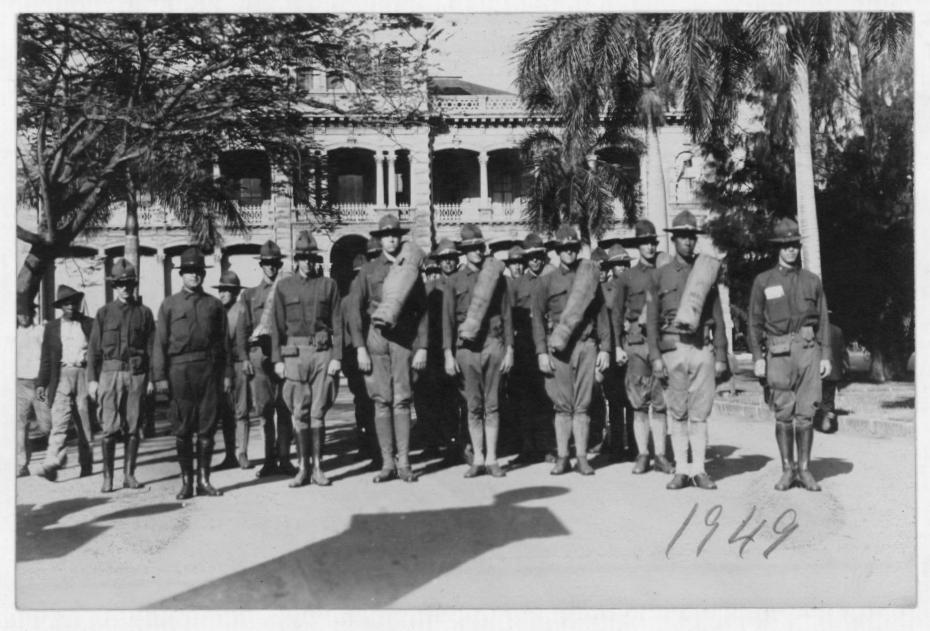
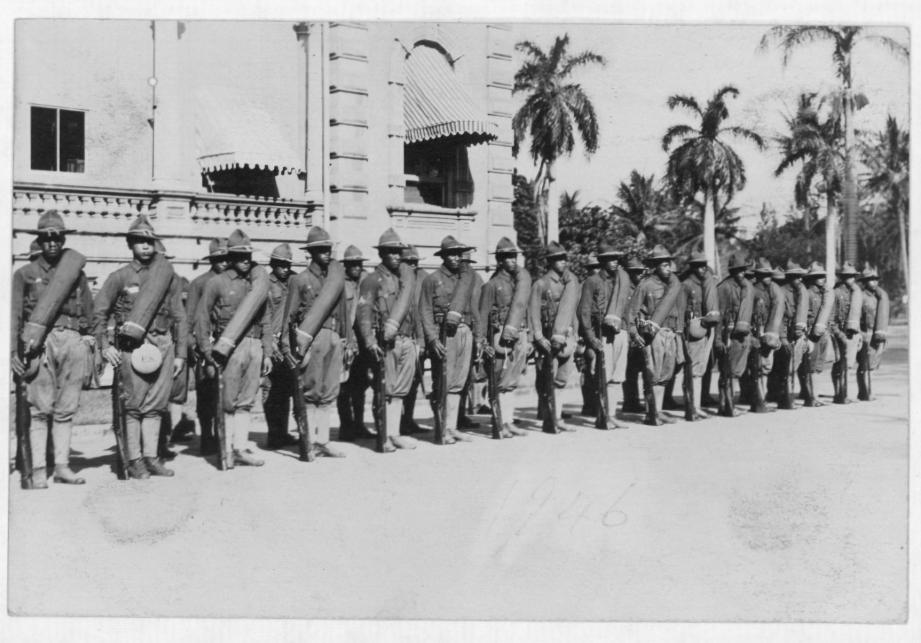


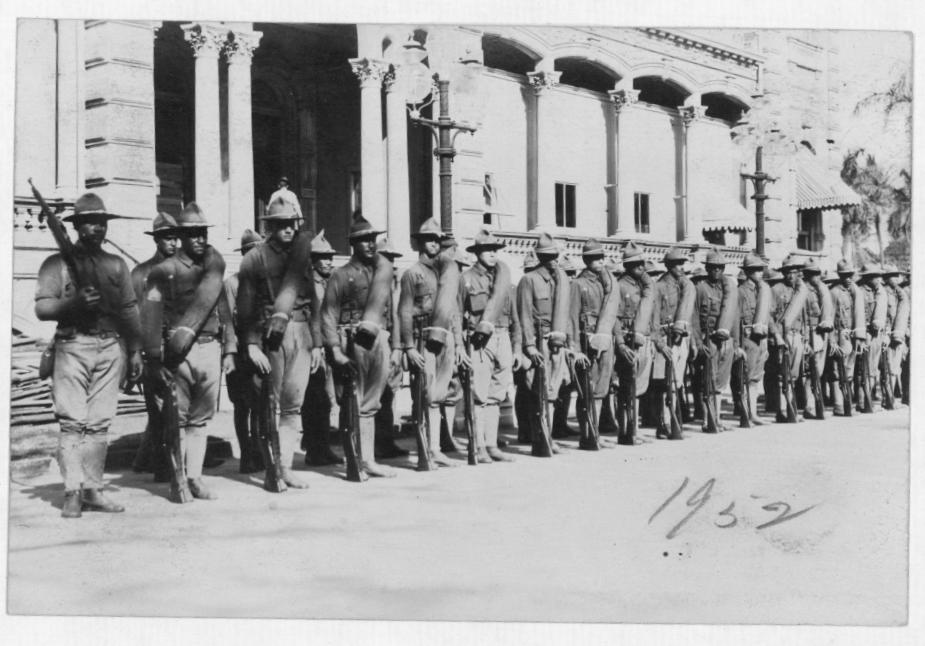


Mobilization for Federal Service
On June 1, 1918, pursuant to instructions from the War Department, the First and Second Regiments of Infantry, and the commissioned and enlisted personnel of the Medical Corps attached, were drafted into Federal service, and the following table shows the number of officers and enlisted men drafted, including Medical Corps:
Officers Enlisted Men Reported Rejected Accepted Reported Rejected Accepted 1st Infantry 52 0 52 1,384 377 1,047 2nd Infantry 53 4 49 1,741 288 1,453 Totals 105 4 101 3,125 665 2,500 The total of officers and enlisted men rejected is 20.07 percent of the number reporting. This, however, in the case of enlisted men, does not mean that rejections were all given for physical disability, a large proportion of these rejections being clue to other causes.
In the mobilization of the Guard, credit must be given to the Territorial Quartermaster and his corps for the dispatch with which the schedule was prepared and the manner in which it was carried out in the transportation of troops and equipment from stations outside of Honolulu.
Mention must also be made of the excellent co-operation by the management of the Inter-Island Steamship Navigation Company, Ltd., in the carrying out of the schedule of transportation, all of which was accomplished without any accident to life or property.
Officers and Enlisted Men Called Into Federal Service
During 1917 and 1918, prior to the induction of the First and Second Regiments into the Federal Service, there were 25 officers and 102 enlisted men authorized to attend three Reserve Officers’ Training Camps held at Schofield Barracks, Oahu. Of these there were 21 officers and 75 enlisted men discharged from the Guard and accepted in the Military services of the United States. In addition to the above, one officer (General Samuel I. Johnson) was called from the National Guard into Federal service with the rank of Major, and six others with the rank held by them in the Guard at the time they were called. In this connection, it may be said that the showing made and results obtained by the officers and enlisted men at the Reserve Officers’ Training Camps; the number of officers called into Federal service with the rank then held by them, and the fact that nearly all of the officers and non-commissioned officers drafted June 1, 1918, retained their former, and in many cases a higher rank, is cause for gratification and shows to great advantage the result of the military training as conducted in the National Guard. Credit for this success must be given to the untiring zeal of Major Edward F. Witsell, U.S.A., the Senior Inspector-Instructor, who during the short time at his disposal, including the time put in at the annual encampment of 1917, did everything within his power to correct errors and bring the organization to as near a state of efficiency for active duty as possible.
– 1917-1918 Annual Report pp. 4-5

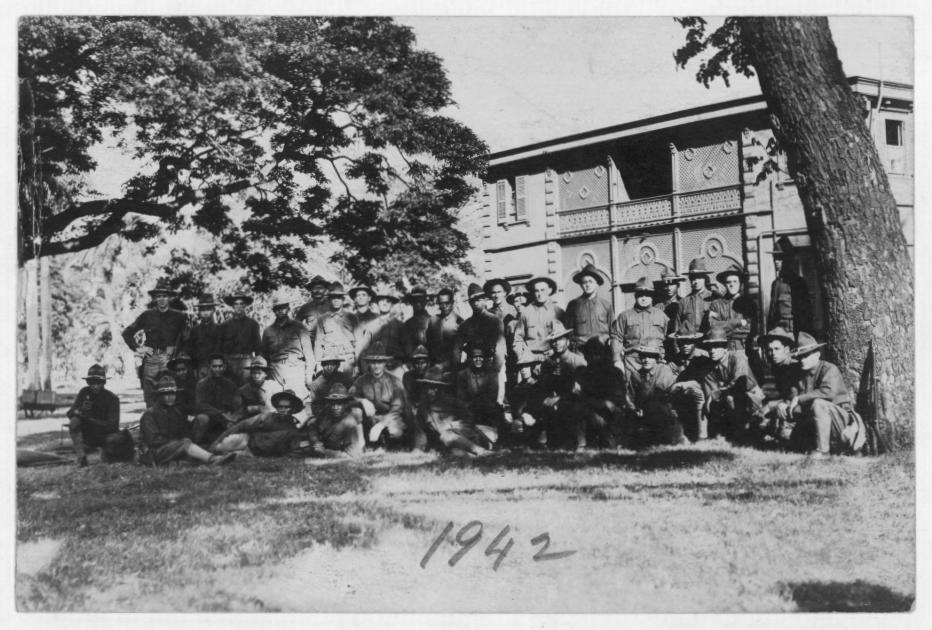
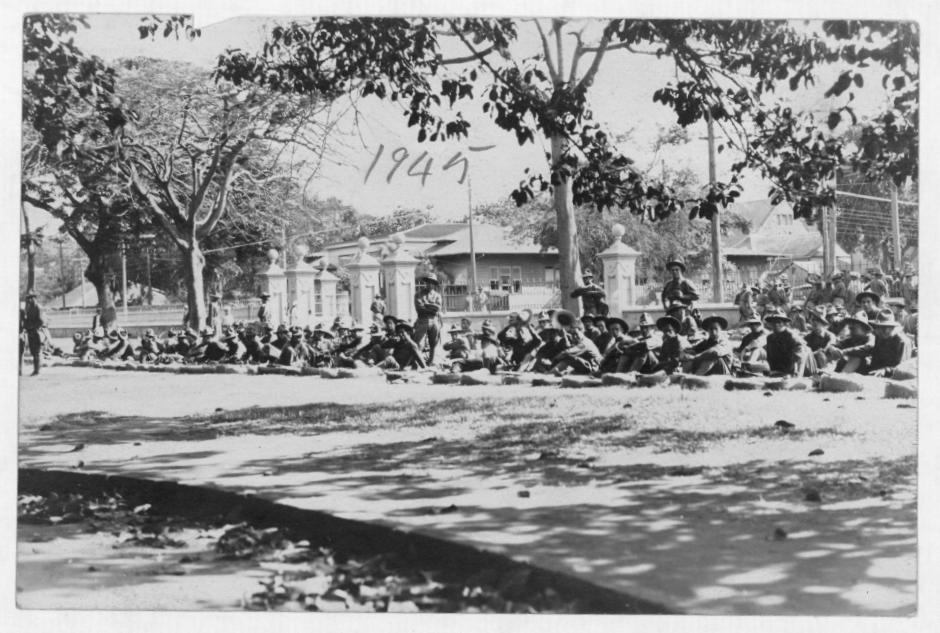
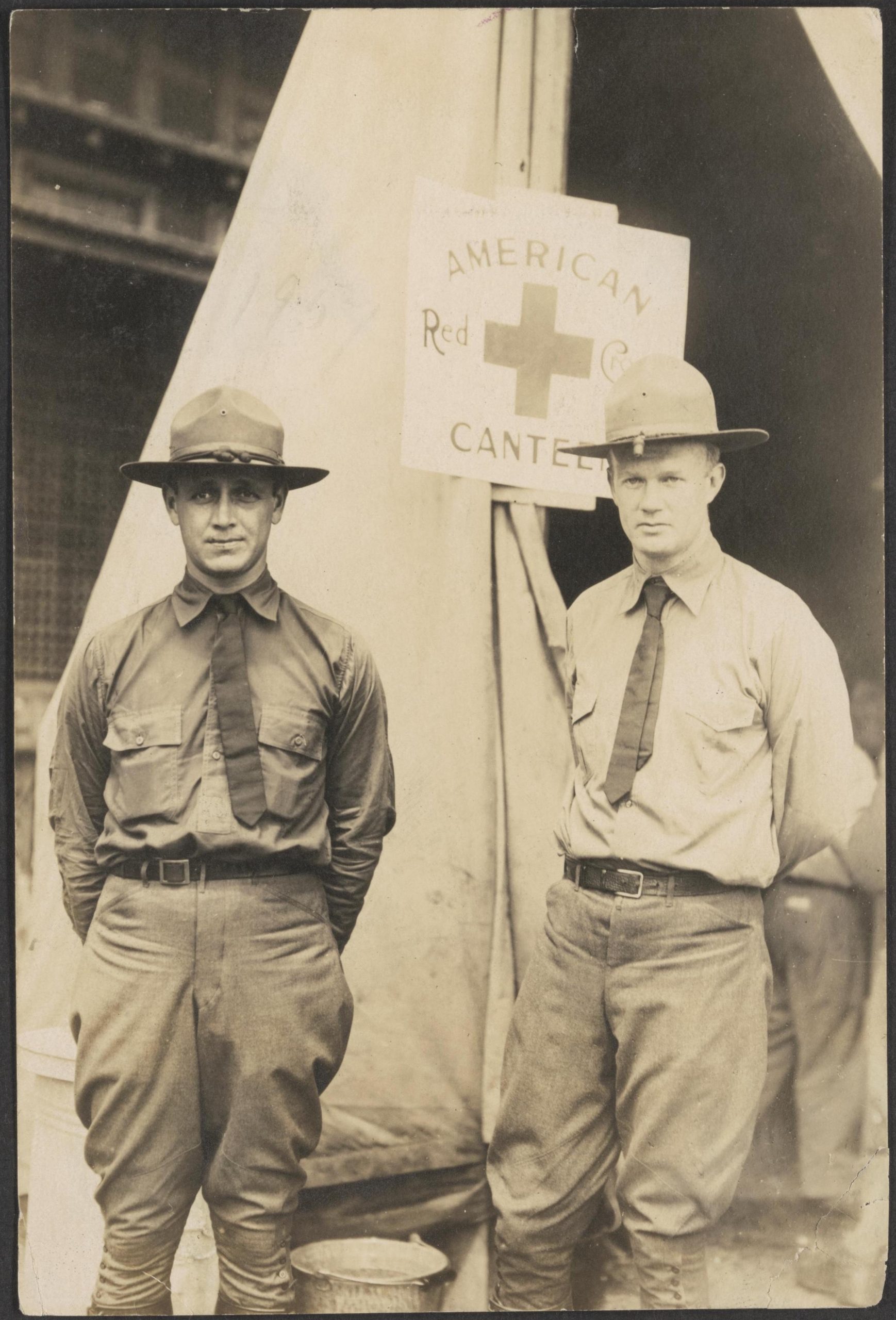
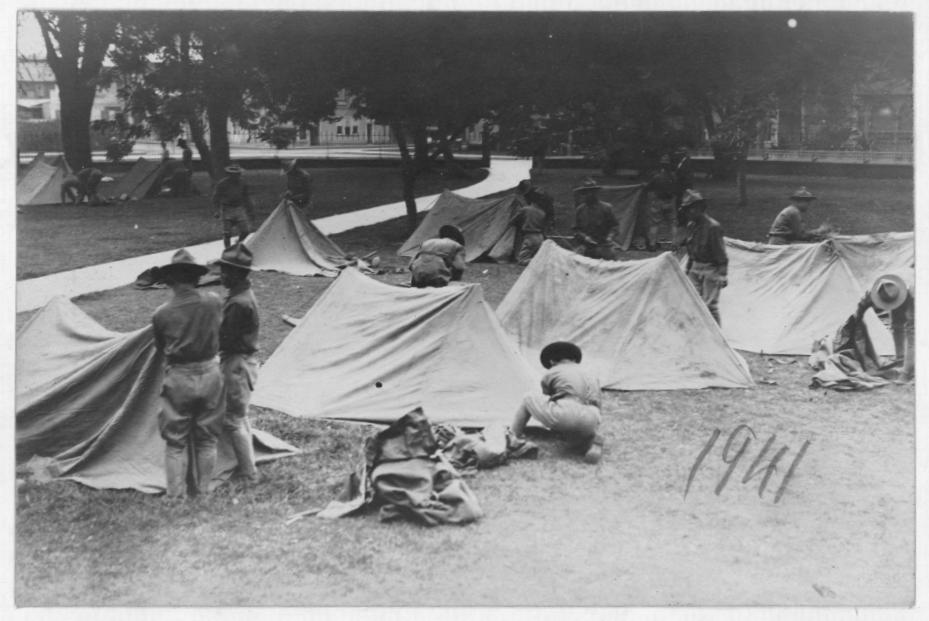
On June 1, 1918, orders were received through the office of the Commanding General of the Hawaiian Department drafting into the service of the United States, on and from that date, the 1st and 2nd Infantries, National Guard of Hawaii, and all members of the Medical Corps, National Guard of Hawaii. Colonel Wayne ordered the 1st Infantry to report to the mobilization camp to be established at Fort Armstrong as soon as possible. The 2nd Infantry was ordered to proceed to Honolulu by the first available transportation. The Engineer and Signal Corps Companies were disbanded and the men transferred to the 1st Infantry so that they might participate in the mobilization.
The establishment of the mobilization camp at Fort Armstrong was commenced on June 1st. Within four days the entire camp had been set up under canvas and mess halls and kitchens installed in several buildings at the Immigration Station. By the time that the men started arriving on June 5th a hospital, a canteen and a Red Cross station were in operation. The officers detailed from the regular army in charge of the camp were Colonel William C. Bennett, Camp Commander; 1st Lieutenant James L. Ballard, Camp Adjutant; Major James D. Dougherty, Quartermaster; Major Charles B. Cooper, Medical Officer; and Captain Edward F. Witsell, Senior Mustering Officer.
On June 1st, upon receiving his orders, Colonel W. R. Riley, Commanding Officer of the 1st Infantry, ordered the 1st and 2nd Battalions to report to the Honolulu Armory prepared to establish camp. That afternoon the two battalions established a temporary camp under shelter tents in the Capitol Grounds and named their camp Camp McCarthy. The 3rd Battalion was instructed to go into camp at its home rendezvous and prepare itself for transfer to Honolulu. The four companies from rural Oahu were brought into Honolulu on June 4th and also went into camp at Camp McCarthy. As there were no facilities for feeding the men in Camp McCarthy, arrangements had to be made with local restaurants. The 1st Infantry was at Camp McCarthy only a few days but spent this short time in intensive drilling and conditioning. Arrangements were made with the Inter-Island Steam Navigation Company to transport the 2nd Infantry to Honolulu as soon as the 1st Infantry reported to the mobilization camp.
On the morning of the 5th the 1st Infantry broke camp and marched to the mobilization camp. It quickly established itself in the large pyramidal tents that had been put up and prepared for a physical examination, which the personnel would have to pass before being mustered into the regular army. The U.S. Army Medical Corps had established a dispensary in a series of tents along one side of the camp and formed the men into a long line for examination. The officers were first examined and all passed. Company H, 1st Infantry, was next to be examined and all but twenty-eight were mustered into the regular service.
Company H was immediately sent to Schofield Barracks and placed on active duty. The examination was somewhat retarded by the lack of sufficient doctors, but fortunately little confusion resulted. As soon as the companies were examined they were mustered in and sent out to Schofield Barracks. In the meantime the 2nd Infantry had arrived from the other islands and had established itself at Camp McCarthy. As the companies of the 1st Infantry moved out of the mobilization camp, the companies of the 2nd Infantry moved in so that a steady flow of men was maintained at the camp at all times.
By the middle of June the 1st Infantry finished the examination and had been sent to Schofield Barracks. Out of the 1,384 enlisted men examined, 1,007 had been accepted for federal service. By the 22nd of June the 2nd Infantry had likewise left the mobilization camp. Four of its officers had been refused, but out of 1,741 enlisted men only 288 had been declared unfit for military service. Upon being mustered into federal service the designations of the regiments were changed to the 1st Hawaiian Infantry, U.S. Army, and the 2nd Hawaiian Infantry, U.S. Army.
It had been the intention of the War Department that these two regiments should relieve the regular forces on the Islands and allow them to be transferred to the mainland. During July three regiments of regulars at Schofield Barracks and Fort Shafter were relieved of their command and sent overseas. The 1st and 2nd Regiments immediately took over their garrison duties. One battalion from the 1st Regiment was transferred to Fort Shafter, but the remainder of the National Guard troops remained at Schofield Barracks. In October the two regiments were consolidated into the Hawaiian Brigade under the command of Brigadier General J. W. Herd, U.S.A. They performed the regular garrison duties, stood guard, policed the camps, and also spent a considerable amount of time in drilling and training.
At first the regiments were somewhat below their war-time strength, due to the many rejections for physical disability, but they were soon enlarged by men taken in the Selective Draft. The Selective Draft had been put into operation on the mainland some time earlier, but had not been necessary in Hawaii because the Islands had already contributed more than their share of men by volunteer enlistment. Now, however, the War Department decided to include the Hawaiian Islands in the Selective Draft.
All the men in the Territory between the ages of twenty-one and thirty had been required to register with the government by July 31, 1917. This had been enlarged by October 26, 1917, to include all male residents of the Territory between the ages of nineteen and forty. The total enrollment was about 27,000 on July 31st and about 41,000 on October 26th. These men were given a serial number and required to answer a number of questions and take a physical examination, from which they were classified into five groups according to their military availability.
On July 1, 1918, just one month after the National Guard of Hawaii had been mobilized, orders were received in Hawaii for the mobilization of 4,336 registrants to increase the two National Guard regiments up to war time strength. The priority in which these registrants would be called into active service had already been determined by lot, so it was necessary only to inform the men to report for physical examinations. Upon reporting, the men were sent to the mobilization camp at Fort Armstrong. The 2nd Hawaiian Infantry had not left the camp by the time that the first of the draftees began to arrive. However, the latter were sent in small groups so that there were never more than six or seven hundred men in camp at the same time.
The method of handling the draftees was similar to the method used in mobilizing the National Guard. The men were given a physical examination and the unfit rejected. Those accepted were given a short period of training and conditioning and then sent to either the 1st or 2nd Hawaiian Infantry for duty. Up to December 15, 1918, some 4,443 men had been drafted, accepted and assigned to duty. The Selective Draft was discontinued soon after the Armistice and the men returned to civilian life.
As soon as the Armistice was signed steps were taken to commence the demobilization of the National Guard of Hawaii. All the men were questioned and those who wished to be discharged as soon as possible were transferred to the 2nd Infantry. Demobilization of this regiment was commenced on January 27, 1919, and was completed in about two weeks. The 1st Hawaiian Infantry remained on active duty until July 3, 1919, when it was also returned to civilian life. There was, of course, some difficulty encountered in the process of assimilating these men back into private life, but with the help of several social organizations the task was successfully accomplished.
The 1st and 2nd Regiments, Hawaiian Infantry, had performed very valuable service to their country while on active duty. Their job had not been an easy one, and they were for the most part inexperienced. Had the Armistice not intervened there is no doubt but that they would have become very efficient military organizations. As it was, they did their task splendidly but simply did not have sufficient time to acquire the experience or polish necessary for finished military organizations.
– History of the Hawaii National Guard pp. 75-79

Guardsmen encamp at Fort Armstrong June 1918
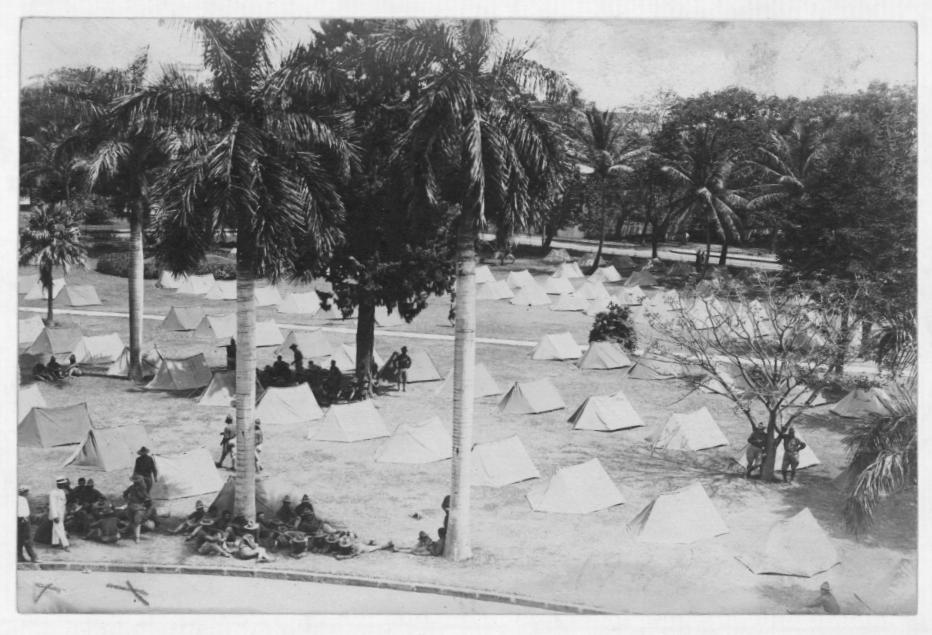
Mobilization of Hawaii Guardsmen
June 1918 Iolani Palace Grounds

June I, 1918, the National Guard of Hawaii was ordered into active federal duty and was designated as the 1st Hawaiian Infantry. The 1st Hawaiian Infantry saw service in Hawaii from June 1918 to July 1919 at which time it reverted back to Hawaiian control as the National Guard of Hawaii.
– 1960 October The Hawaii Guardsman pp. 21
75 YEARS OF HISTORY
by SGT Ronald Fellows
While civil disturbances and disasters have brought units of the Guard into active duty for short durations, World War I brought about mobilization of the entire Guard on June 1, 1918.
Earlier plans for mobilization had been temporarily discarded by the War Department when it was feared that activation of so many men, many of whom were plantation workers, would ruin the sugar industry here. Local opposition to mobilization eventually dissolved when it appears that Hawaii was not fully contributing to the war effort.
The two Hawaii National Guard regirrenrs were integrated into the regular Army as the 1st and 2nd Hawaiian Infantry and assigned ducy at Schofield Puracks and Fort Shafter.
With the two regiments activated into the regular Army. it was decided to form another regiment of non-active duty men to perform the regular peace-time functions of the Guard. Later a second peace time regiment was organized and the two became known as the 298th and 299th Infantry regiments, respectively. Former Governor Lawrence Judd was among the: members of the original 298th Infantry.
– 1968 Spring The Hawaii Guardsman pp. 17
News Articles
