
Governor
Walter F. Frear
Oct. 29, 1863 – Jan. 22, 1948
Hawaiʻi’s third governor
Aug. 15, 1907 – Nov. 30, 1913
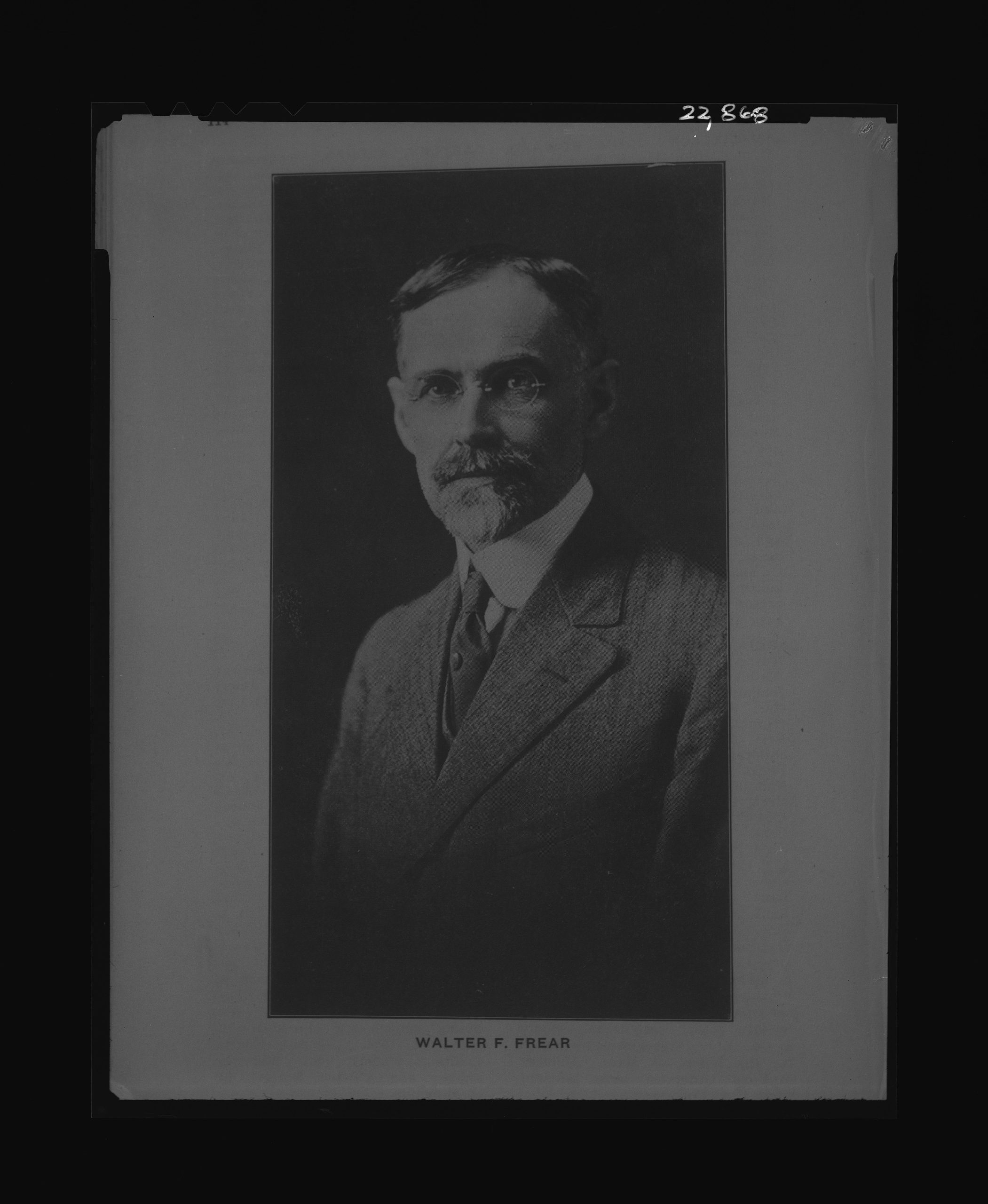
Frear, came to Hawaiʻi at age seven in 1870 with his missionary family from California. The Mayflower descendant attended Oahu College (Punahou) and went to Yale, where he earned his bachelors’ of arts and juris doctorate. He returned to the Oahu and married Mary Emma Dillingham, daughter of Benjamin F. Dillingham, Hawaiʻi’s pioneer railroad builder.
Three years after Frear returned home to practice law, he was appointed second judge of the First Circuit, Kingdom of Hawaiʻi, Jan. 1, 1893 by Queen Liliuokalani and later second associate justice Supreme Court of the Provisional Government of Hawaiʻi, in Mar. 7, 1893. He became the first associate justice Supreme Court, Republic of Hawaiʻi, Jan. 6, 1896. He was a member of the Hawaiian commission to recommend to Congress legislation concerning Hawaiʻi in August 1898; Chief Justice Supreme Court, Territory of Hawaiʻi, Jun. 14, 1900 – Aug. 15, 1907 and Jul. 5, 1900 he became Chief Justice of the Supreme Court of the Territory of Hawaiʻi.
His military service included being a private in the Queen’s Own Volunteer Battalion and later a member of the National Guard of Hawaiʻi from Jun. 1, 1918 to Jul. 16, 1919. He was commissioned a second lieutenant of infantry Sept. 13, 1918.
Frear helped clarify the legal status of the Islands, working on a commission appointed by President McKinley to recommend legislation concerning Hawaiʻi, including pushing for territorial status and was instrumental in drafting the Organic Act which established Hawaiʻi as a United States territory. As the Code Commission chairman, from 1903 to 1905 Frear oversaw the compilation, revision and annotation of the complete Laws of Hawaiʻi. During 1923 to 1925, another commission updated the Laws with Frear’s participation.
Appointed governor of Hawaiʻi by President Theodore Roosevelt, Frear served from Aug. 15, 1907 until his resignation Nov. 30, 1913. He was at the head of an administration noted for its efficiency and progressive measures.
He resumed his private law practice and served on numerous boards, commissions and committees, some paid and many volunteer. From 1925 to 1934 he was president of Bishop Trust Company, continuing as vice president and director until his death in in 1948.
The gifted and frequent writer of many articles on varied subjects, including “Mark Twain and Hawaii” (which was published in 1947, after his death). The Frears founded the Mary and Walter F. Frear Eleemosynary Trust to sponsor educational projects including the Chaminade University of Hawaiʻi.
Frear Hall, a dormitory building built in the 1950s on the University of Hawaiʻi at Manoa campus, was named after the Governor’s wife Mary Dillingham Frear, a member of the University’s Board of Regents and author composer of “The Cocoa Palm and Other Songs,” “My Islands.” The structure was demolished in 2006, but a new dorm facility named Frear Hall was completed in 2008.
The Frear Center, located on Bishop Street, was named after Walter and Mary Frear. It is a Hawaiʻi Pacific University building housing information systems and computer science classrooms. The governor and his wife’s home, called Arcadia home, was left to Punahou Schools. The residence named after an area in Greece, known for its rural simplicity and peacefulness, was to convert the three acres into a retirement residence, in 1964.
Charles J. McCarthy
Aug. 4, 1861 – Nov. 26, 1929
Hawaiʻi’s fifth governor
Jun. 22, 1918 to Jul. 5, 1921

Charles James McCarthy, born in Boston moved with his family to San Francisco where he completed elementary and high school. He came to Hawaiʻi in 1881 in his twenties as an associate with a wholesale fruit company and stayed. McCarthy opened his own saloon and for a time bottled his own alcoholic beverages. He joined Honolulu Rifles in 1888 and attained the rank of captain. McCarthy continued his military service with the National Guard of Hawaiʻi, attaining the rank of lieutenant colonel before resigning in October 1902.
McCarthy was a member of 1890 House of Nobles, Kingdom of Hawaiʻi and the Legislative secretary in 1892. He was elected and served in the Territorial Senate from 1907 to 1912. More government service included an appointment as treasurer of the City and County of Honolulu from 1912 to 1914 then moved to treasurer of the Territory of Hawaiʻi from 1915 to 1918.
As the co-founder of the Democratic Party of Hawaiʻi McCarthy was appointed Hawaiʻi’s fifth governor by President Woodrow Wilson from Jun. 22, 1918 to Jul. 5, 1921. His anti-Asian policies were tied to giving Hawaiians preferences in land ownership and federal jobs via the Hawaiian Rehabilitation Act and Hawaiians Homes Commission Act. McCarthy was the first governor to advocate statehood for Hawaiʻi.
McCarthy’s post government activities included being the Honolulu Chamber of Commerce’s representative for two years in Washington D.C. and Dillingham’s Hawaiian Dredging Co. general manager.
An area on the Iolani Palace grounds where the State Capitol is today, was called Camp McCarthy during the World War I mobilization of Hawaiʻi National Guard soldiers from 1917 to 1919. McCarthy Mall, at the University of Hawaiʻi at Manoa campus is also named after McCarthy. It was built on the former McCarthy Road and named the “McCarthy Pedestrian Mall” in 1961.
Lawrence M. Judd
March 20, 1887 – Oct. 4, 1968
Hawaiʻi’s seventh governor
July 5, 1929 – March 1, 1934
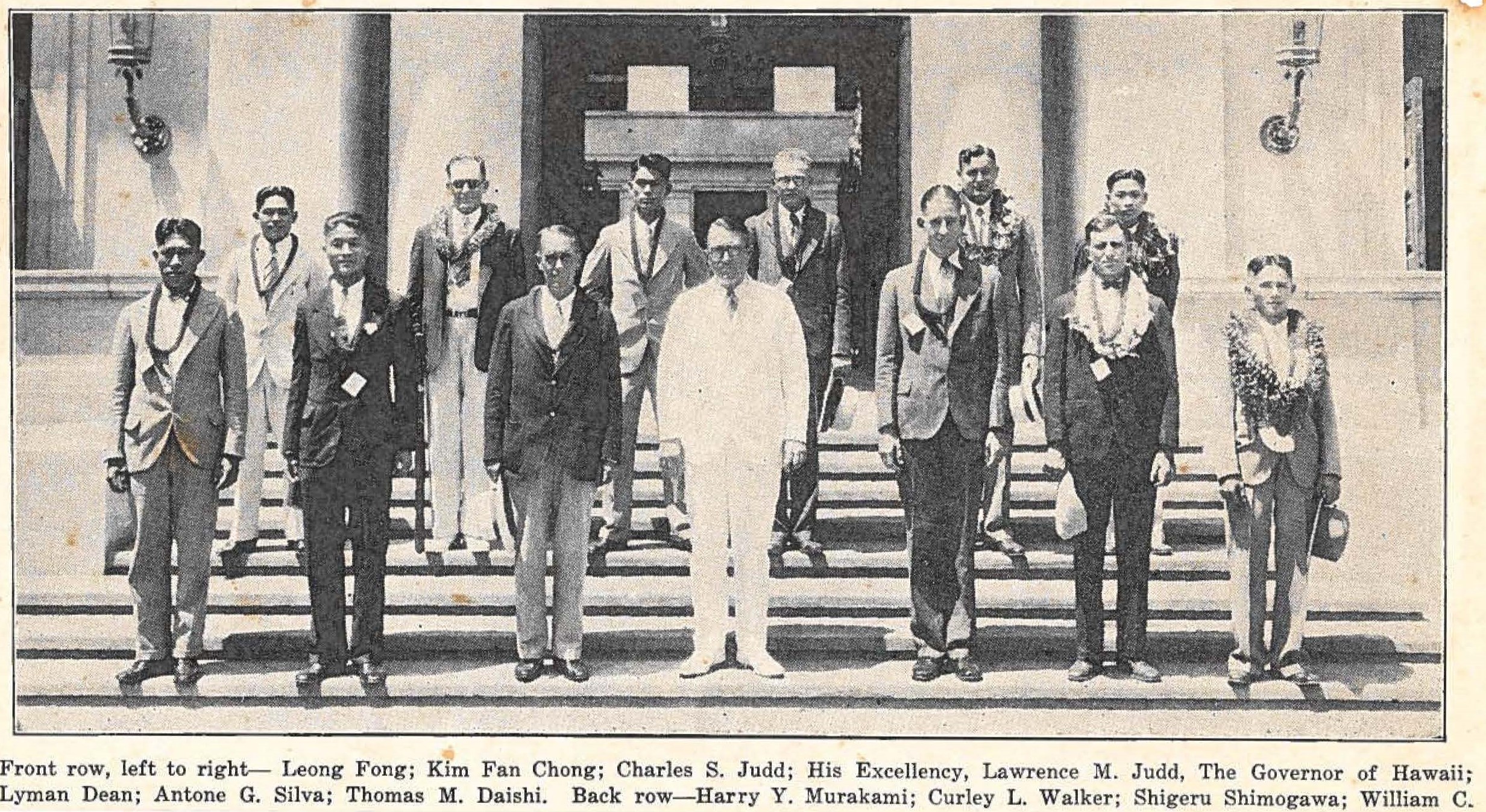
Lawrence McCully Judd, born in Honolulu is descendant of the Massachusetts Bay Colonist who came from England, in 1624. He is a grandson of Dr. Gerrit P. Judd, an American missionary who was a cabinet minister to Kamehameha III, and co-founder of Punahou School. His father, Albert F. Judd, was chief justice of the Hawaiian Kingdom, Republic and Territory Supreme Court for 19 years. Lawrence was named after First Associate Judge Lawrence McCully, a colleague of Albert.
Judd graduated from Punahou Preparatory School, and attended the University of Pennsylvania. He married and had four children. After working on the mainland for a few years, Judd returned to Hawaiʻi and worked at Alexander & Baldwin and Theo H. Davis & Co., Ltd.
His military career began in 1915, when he enlisted in the National Guard of Hawaiʻi as a private with Co. C, 1st Hawaiian Infantry, at the start of World War I. Juddʻs Guard service included tours as second lieutenant (battalion quartermaster), first lieutenant and captain (machine gun company executive officer and commander), major (2nd Bn.,1st Hawaiian Infantry commander), lieutenant colonel/aide-de-camp to the Brig. Gen. Samuel I. Johnson, 1st Brigade commander/adjutant general and colonel (298th Infantry commander).
His government service included Territorial Senator (1920-1928, a year as senate president), governor of Hawaiʻi (1929-1934, Pres. Herbert Hoover appointment) and temporary governor of American Samoa (1953, Pres. Dwight D. Eisenhower appointment).
Significant events during Judd’s governor tenure were the adjusting of Hawaiʻi government expenses due to the 1929 stock market crash, overhaul of the Hansen’s disease colony system of governance in Kalaupapa, Molokai, and commuting sentences of persons convicted in Hawaiʻi courts of manslaughter during the Massie Affair. He also served as a trustee for the Palama Settlement and the Liholiho Estate. In 1942, he directed Hawaiʻi’s Civil Defense program and was instrumental in the Natatorium World War I Memorial’s construction.
His Judd family relatives include cousin and Hawaiʻi’s second governor George Robert Carter; and Hawaiʻi Guard members Col. Walter Foulke Judd and Col. Francis Andrew Imaikalani “Miki” Bowers Jr.
Ingram M. Stainback
May 12, 1883 – April 12, 1961
Hawaiʻi’s ninth governor
Aug. 24, 1942 – May 8, 1951
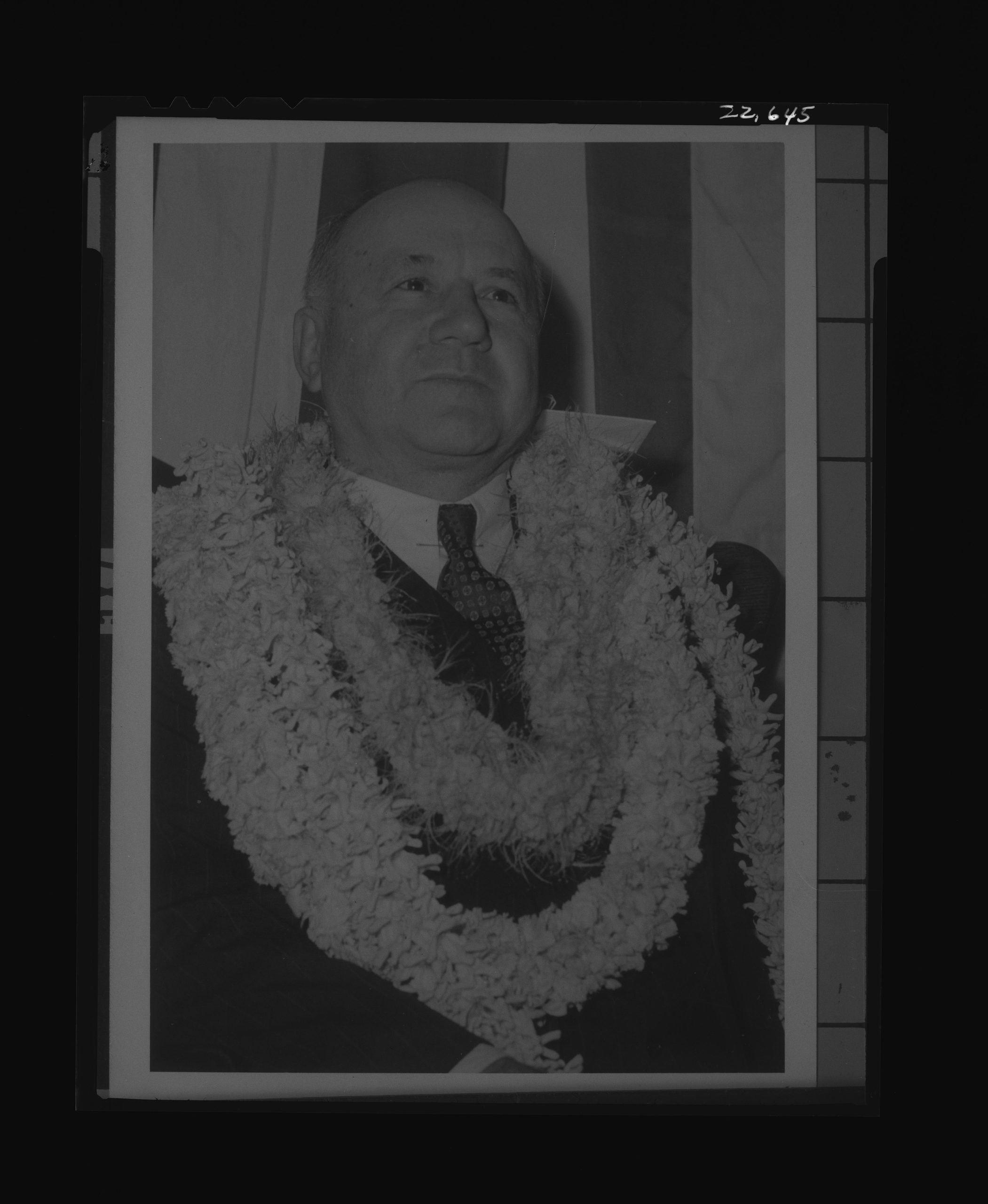
Somerville, Tennessee-born Ingram Macklin Stainback, was educated in public and private schools. He went on to Princeton University, graduating cum laude with special honors in politics and economics, and then earning his juris doctorate, cum laude, from the University of Chicago Law School. While at law school Stainback met and married his wife. He became a lawyer and politician like his father. In 1912, after graduation, Stainback came to Hawaiʻi to practice law with law firm of Holmes, Stanley & Olson until 1914 when he started his appointment as the Territory’s attorney general.
In 1913, he began his military service by joining the National Guard of Hawaiʻi. Stainback resigned his government position and join the active Army in 1917 for World War I. He served a year and was discharged as major at end of war. Stainback returned to the National Guard of Hawaiʻi and served as the judge advocate general until 1918.
Prior to the Second World War, he served appointments as U.S. District Attorney (1934 to 1940) and U.S. District Court judge (1940). Stainback was appointed by Pres. Franklin D. Roosevelt for his first term in Aug. 24, 1942 and by Pres. Harry S. Truman for a second term, serving until May 8, 1951.
Stainback was essentially a figurehead for the first two years of his term since Gov. Joseph B. Poindexter had allowed the military to take over the government on Dec. 7, 1941. During that time, Hawaiʻi was governed by Army generals. The governor’s full powers were restored on Apr. 13, 1944 and wartime Hawaiʻi’s martial law was lifted. He provided a genesis for Hawaiʻi’s Democratic Revolution of 1954 by decrying the land monopolies in Hawaiʻi and calling for land reform.
Stainback was again on the bench when in 1951, Pres. Truman appointed him as an associate judge to the Hawaiʻi Supreme Court. He served on the court until 1959. He is memorialized on the Island of Hawaiʻi by the Stainback Highway, an 18-mile road that leads from the Hawaiʻi Belt Road near Hilo at Kulani Correctional Facility.
Congressional Territorial Delegate
Jonah K. Kalanianaole
March 26, 1871 – Jan. 7, 1922
Hawaiʻi’s second delegate
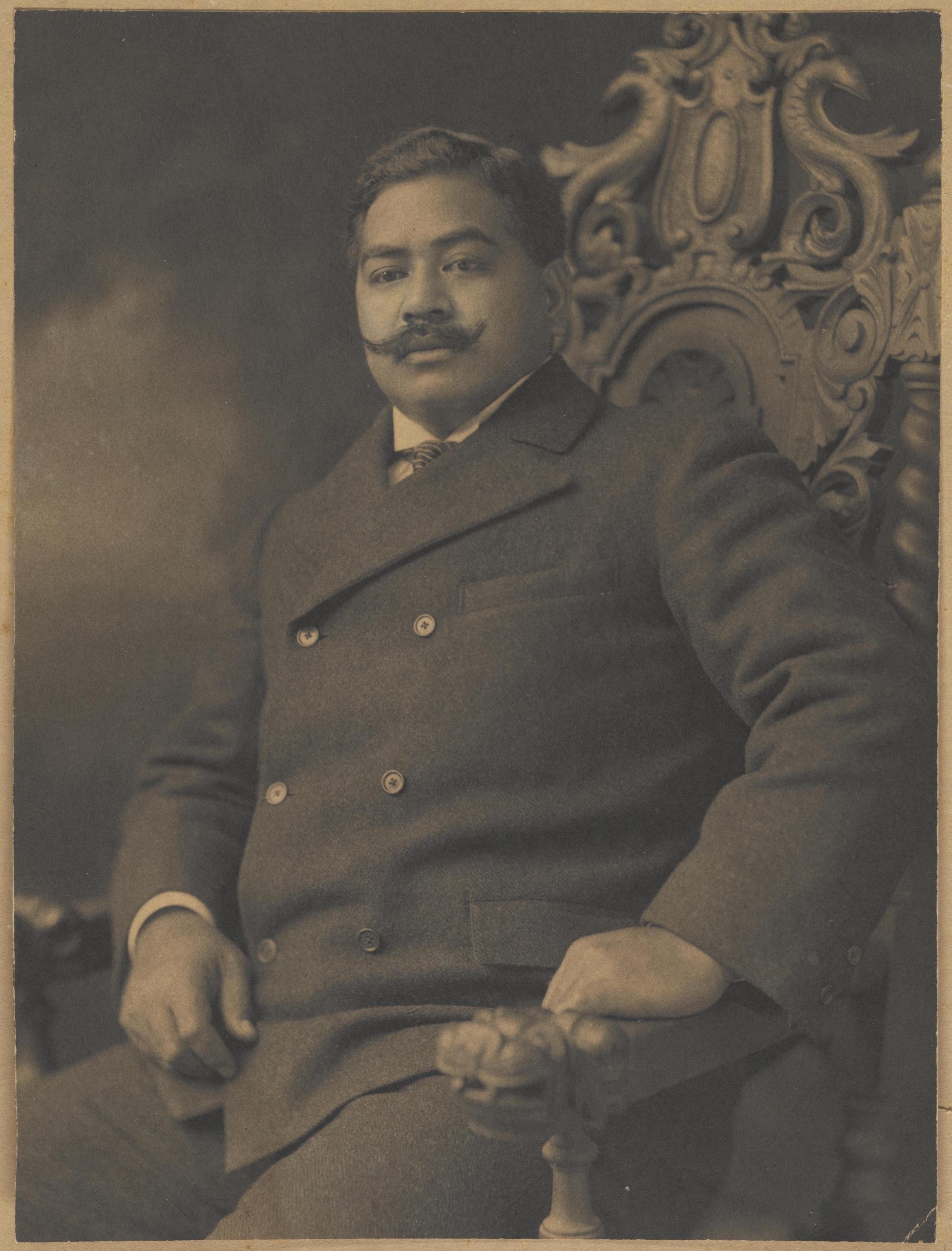
Jonah Kuhio Kalanianaole, born in Koloa, Kauai, was heir to the Kingdom of Hawaiʻi throne as prince of the House of Kalakaua prior to the overthrow of the Hawaiian monarchy in 1893. He was educated at Royal School, St. Alban’s (Iolani), Punahou and eventually went to England, graduating with a business degree. Kuhio participated in a rebellion against the Republic of Hawaiʻi in 1895 and served a full year in prison for his involvement. Upon his release, he traveled in the Pacific, Europe and Africa from 1899 to 1902 where he joined the British Army to fight in the Second Boer War.
Kuhio eventually returned from his self-imposed exile to take part in politics in post-annexation Hawaiʻi, being active in representing native Hawaiians and continued to fight for Hawaiian independence. Kuhio moved from the Home-Rule to Republican Party and was elected to replace Robert W. Wilcox as the non-voting delegate to the U.S. House of Representatives. He served from 1903 till his death in 1922 (10 terms).
While in Congress, Kuhio also served another stint in the military as member of the of Hawaiʻi National Guard from 1908 to 1912.
Kuhio’s accomplishments included instituting local government at the county level, creating the county system still used today in Hawaiʻi, reorganizing the Royal Order of Kamehameha I, creating the first Hawaiian Civic Club, introducing in Congress the first-ever Hawaiʻi Statehood Act, and serving on the first Hawaiian Homes Commission.
He is memorialized in numerous ways, including Kalanianaole Highway in East Oahu, Kuhio Streets in Waikiki and Hilo, Hilo’s Kuhio Plaza Shopping Center, Kauai’s Kuhio Shopping Center, Oahu’s Kuhio Federal Building, and public schools Prince Jonah Kuhio Elementary School in Honolulu and Prince Jonah Kuhio Kalanianaole Elementary and Intermediate School in Papaikou, Hawaiʻi. Kuhio Day on March 26 is a state holiday honoring his birth.
U.S. Senator & U.S. Representative
Spark “Sparky” M. Matsunaga
Oct. 8, 1916 – April 15, 1990
U.S. Representative (1962-1976)
U.S. Senator (1976-1990)
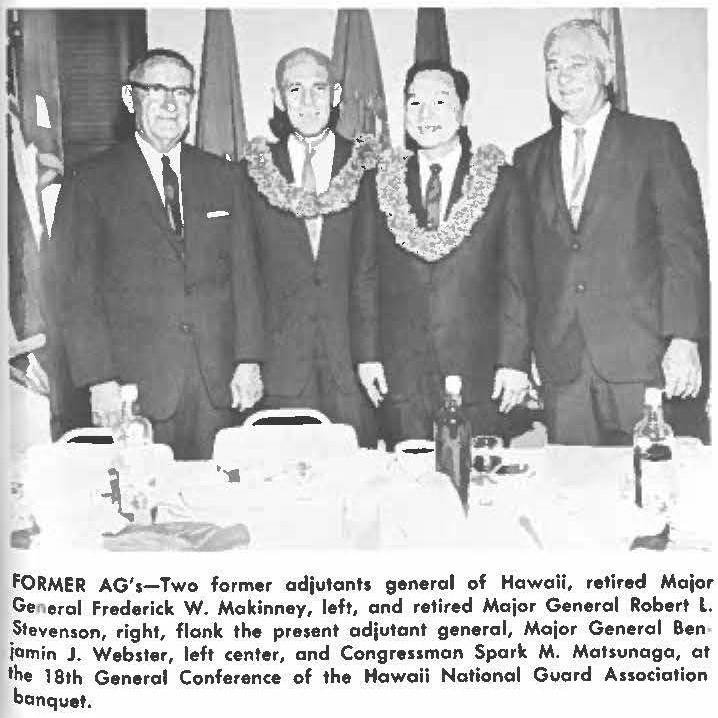
Spark “Sparky” Masayuki Matsunaga, born in Hanapepe, Kauai, was the son of Japanese immigrant sugar plantation workers. He received his military officer commission through the University of Hawaiʻi’s Reserve Officer Training Corps. Prior to World War II, Matsunaga was assigned to the Hawaiʻi National Guard’s Co. K, 299th Infantry, Molokai unit’s acting commander. He went on to serve with the 100th Battalion in Europe.
Along the way to earning a law degree from Harvard, the twice wounded Soldier was active with the Disabled American Veterans and in lobbying for statehood. After law school Matsunaga returned to Hawaiʻi and served as a Honolulu assistant public prosecutor (along with Daniel Inouye) eventually entering private law practice.
He was part of the 1954 influx of WWII veterans/ Democrats who were voted into the Hawaiʻi Territorial Legislature. He served in the House from 1954 to 1959. Matsunaga led the Capital Punishment bill abolished the death penalty in Hawaiʻi and became law July 5, 1957. His run for Lieutenant Governor of the newest state, resulted in his only elective office loss.
Matsunaga went on to serve in the U.S. House (1962-1976) and the Senate (1976-1990). As described by his biographer, Richard Halloran, he worked tirelessly with his colleagues to effectively pass legislation: Rather than confront an issue in public, Sparky preferred what the Japanese call nemawashi, which loosely translated means “tending the garden” or “thorough preparation,” he would go around to colleagues behind the scenes to explain what he wanted and to seek their support. When Matsunaga was ready, he would make public his proposal with its support already lined up.
His 22-year Congressional legacy includes the creation of the Institute for Peace on the University of Hawaiʻi at Manoa campus (later named after him), position of U.S. Poet Laureate, and Commission on Wartime Relocation and Internment of Civilians Act ($20k in redress to surviving Japanese Americans incarcerated during WWII). Matsunaga was memorialized with the naming of Matsunaga Veterans Administration Medical Center (a wing of Tripler Army Medical Center), Matsunaga Elementary School, Germantown, Maryland; Spark M. Matsunaga International Children’s Garden for Peace at the Storybook Theatre of Hawaiʻi in his hometown of Hanapepe, Kauai (also featuring a bronze statue of him); and Matsunaga’s portrait was on US Series I Bonds in the $10,000 denomination.
U.S. Representative & Lt. Governor
Tom P. Gill
April 21, 1922 – June 3, 2009
U.S. Representative (1963-1965)
Lt. Governor (1966-1970)

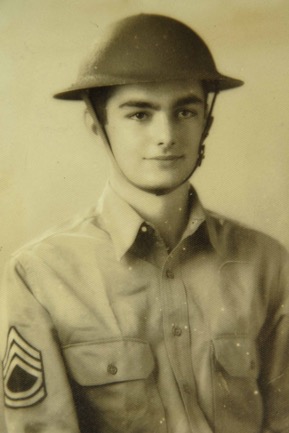
Thomas Ponce Gill, born in Honolulu, was educated in the Hawaiʻi public school system, going to Lincoln Elementary and graduating from Roosevelt High School. He attended the University of Hawaiʻi until World War II, when he served in the Hawaiʻi Territorial Guard (1941-1942). The Army (1942-1945) called and sent him to New Guinea and the Philippines with the 24th Infantry. Sgt. 1st Class Gill’s awards earned included a Bronze Star and a Purple Heart.
Gill returned to civilian life and completed undergraduate school at University of California at Berkley, followed by earning a degree from UC Berkley’s Boalt Hall School of Law. He returned to Hawaiʻi primarily to practice labor law, representing the Teamsters Union and Hotel Workers Union Local 5.
Gill also became part of the mid-1950s Democratic Party revolution, elected to the Territorial, then State House, serving for four years from 1958 to 1962. He was instrument in drafting social (equal opportunity), economic and environmental legislation.
His elective career continued with a two-year term in the U.S. House from 1963 to 1965, where he played a key role in the 1964 Civil Rights Act, Anti-Poverty Act, Medicare, Voting Rights Act and funding the East-West Center on the University of Hawaiʻi at Manoa campus. Gov. John A. Burns appointed Gill to head up the newly established Office of Economic Opportunity in Hawaiʻi, which he stayed at until he ran and won the lieutenant governor’s position. Elective office concluded with the four years as the second of Burns’ three lieutenant governors (1966 to 1970). Squeezed in between were runs at U.S. Sen. Hiram Fong’s seat and two tries for governor.
U.S. Representative
Kyle M. “K. Mark” Takai
July 1, 1967 – July 20, 2016
U.S. Representative (2015-2016)
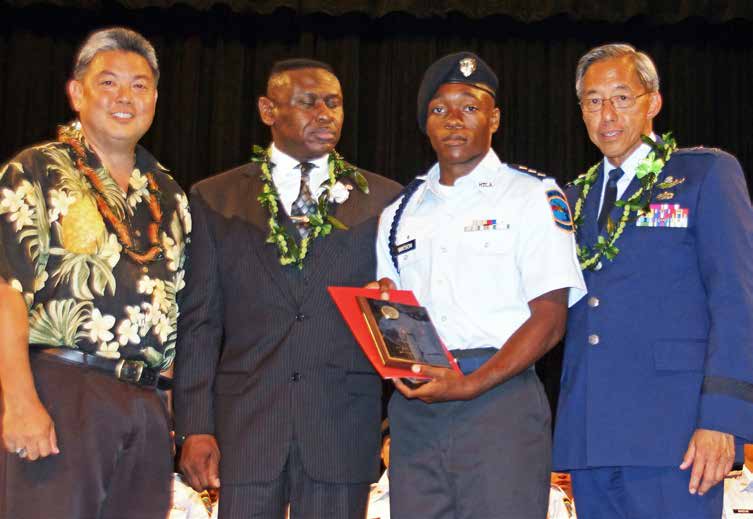
Kyle Mark “K. Mark” Takai, born in Honolulu graduated from Pearl City High School in 1985, where he was a four-time high school swimming champion and a high school All-American swimmer. He continued his education at the University of Hawaiʻi at Manoa, where he earned a Bachelor of Arts degree in Political Science and Master of Public Health. Like in high school, Takai was a champion swimmer, student president and editor-in-chief of campus newspaper.
Hawaiʻi’s U.S. Representative Takai took the oath of office in 2015 and served until his death July 20, 2016. He served on the U.S. House Committee on Armed Services and the Committee on Small Business.
He had nearly 20 years of elective service as the State Representative from the State House’s 33rd and 34th districts (from Pearl City to Aiea). He served from 1994 to 2014. Takai was the chairman of the House Committee on Veterans, Military, the Committee on International Affairs, and the Committee on Culture and the Arts. He was a member of the Committee on Education and the Committee on Higher Education. During the 2005 and 2006 sessions, Takai served as Vice Speaker of the House. He served as chairman of the House Committee on Higher Education (2003 to 2004 sessions) and as Vice Chairman (1995 to 2002 sessions). Additionally, he was chairman of the House Committee on Culture and the Arts (1997 to 2000 sessions).
While in the State House, Takai worked to alleviate homelessness among returning vets, and helped to create the Veterans Court, which combines the efforts of the state courts with the federal Veterans Affairs social services. He also created the Hawaiʻi Medal of Honor to recognize fallen Hawaiʻi soldiers and their families.
His 17 years of military service began in 1999 when he joined the Hawaiʻi Army National Guard as a preventive medical officer. He served as the Company Commander of Charlie Company (Medical), 29th Brigade Support Battalion from November 2006 to May 2008. The Guard lieutenant colonel deployed to the Mid-East, serving in support of Operation Iraqi Freedom in 2009.
Kaialiʻi “Kai” Kahele
March 28, 1974 – Present
U.S. Representative (2021-2023)

Kaialiʻi “Kai” Kahele is of Native Hawaiian ancestry, and his family comes from the small Hawaiian fishing village of Miloli‘i in South Kona. A product of Hawai‘i’s public school system, he graduated from Hilo high school, attended Hawai‘i Community College, the University of Hawai‘i at Hilo and earned his Bachelor of Science in education from the University of Hawai‘i at Mānoa in 1998.
His military education includes the U.S. Academy of Military Science, U.S. Air Force Squadron Officer School, U.S. Air Force Air Command and Staff College, and U.S. Army War College.
From 2016 to 2020, he served in the Hawaiʻi Senate from the 1st district representing Hilo, Hawaiʻi. Kahele is a member of the Democratic party and is the son of the late Hawaiʻi State Senator and former U.S. Marine Gilbert Kahele.
In 2019, Kahele announced he would run for Hawaiʻi’s 2nd congressional district, and he won the congressional nomination on Aug. 8, 2020. He would go on to win the general election and became the second Native Hawaiian to serve as a member of Congress representing Hawaiʻi from 2021 to 2023. One year later he won an open seat on the Office of Hawaiian Affairs Board of Trustees outright in the primary election.
Kahele was commissioned officer in the Hawai‘i Air National Guard where he served as a lieutenant colonel with the 201st Air Mobility Operations Squadron at Hickam Air Force Base. He is a decorated combat veteran with multiple deployments to both Iraq and Afghanistan. He flew 108 combat sorties, logged 3,075 hours of military flight time and commanded C-17 combat missions. Along with his combat missions, Kahele was the Future Operations Chief for Air and Land for the Hawaiʻi National Guard’s Joint Task Force during COVID-19 support operations in 2020.
Kai is an affiliate faculty member at the University of Hawaiʻi at Hilo, where he teaches commercial aviation in the Aeronautical Sciences program.
Last updated 2026
Tulsi Gabbard
April 12, 1981 – Present
U.S. Representative (2013-2021)
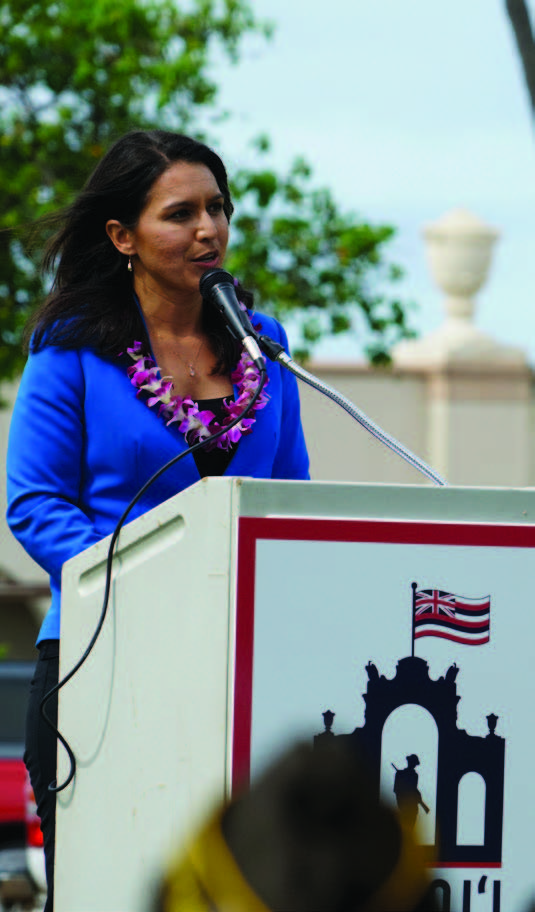
Tulsi Gabbard was born in American Samoa and is the fourth of five children. Her parents are Hawai‘i State Senator Michael Gabbard and Carol Porter. The family moved to Hawaiʻi in 1983 when she was two. The Hindi-raised and home-schooled politician earned her Business Administration degree in international business from Hawaiʻi Pacific University in 2009.
Gabbard has been civically active before she could vote. Her parents have also served, her mother was on Hawaiʻi’s Board of Education from 2000 to 2004 and her father a State Senator since being elected in 2007. He also served on the Honolulu City Council for a term from 2002.
Gabbard ran for and became, at age 21, the youngest legislator ever elected in the history of Hawaiʻi and the youngest woman elected to state office in the nation in 2002. The freshman representative joined the Hawaiʻi Army National Guard in April 2003. The following year, she was mobilized along with the 29th Infantry Brigade Combat Team for Operation Iraqi Freedom. While preparing for reelection, Gabbard learned that she would not be able to serve with her unit and perform her duties as a legislator and thus chose not to campaign for a second term in office. The field medical specialist served a 12-month tour at Logistical Support Area Anaconda in Iraq.
In 2006, Gabbard returned to public service, serving as a legislative aide to U.S. Senator Daniel K. Akaka in Washington, D.C. She completed Accelerated Officer Candidate School and was commissioned a second lieutenant in 2007. The 29th Infantry Brigade Combat Team was again activated in 2008 and Gabbard deployed another 12 months as a Military Police platoon leader in Kuwait.
She returned to elective office in 2011, winning a seat on the Honolulu City Council. Gabbard was elected to the U.S. House in 2012 and sworn into office in 2013. She served as vice chair of the Democratic National Committee from 2013-2016. In February 2019, she announced her candidacy for the Democratic nomination for president of the U.S., the first female combat veteran to run for president, but suspended her campaign in March 2020. Tulsi Gabbard is currently the director of national intelligence.
She served with the Hawai‘i Army National Guard until 2020, then joined the U.S. Army Reserve. She currently serves as Battalion Commander of the 1-354 Regiment, in Tulsa, Okla., leading soldiers in Oklahoma, Missouri and Arkansas.
Last updated 2026
Mayor
Stephen K. Yamashiro
July 15, 1941 – May 24, 2011
Hawaiʻi County’s Mayor (1992 – 2000)

Stephen Kei Yamashiro, born in Honolulu, began school at the University of Hawaiʻi Lab School and went on to graduate from Punahou Preparatory School, in 1959. He earned a bachelor’s degree from the College of Arts and Science at the University of Hawaiʻi at Manoa in 1965, and a law degree from Willamette University College of Law in 1969.
In 1962, while attending the University of Hawaiʻi, Yamashiro joined the Hawaiʻi Army National Guard. The Headquarters and Headquarters Battery, 1st Missile Battalion, 298th Artillery sergeant joined the Reserve Officer Training Corps at University of Hawaiʻi and completed artillery school in 1964. The newly commissioned second lieutenant rejoined the 298th Artillery’s Battery B, stationed in Kahuku. By 1968, the 1st Battalion, 487th Field Artillery first lieutenant was transferred to a unit in Oregon to coincide with his law school studies.
He returned to the islands for a lifetime of public service. He served as a State deputy attorney general, a County of Hawaiʻi deputy corporation counsel and a Hawaiʻi Public Employment Relations Board hearings officer. In 1976, Yamashiro was elected to the Hawaiʻi County Council and served until 1990, 11 of the last years as council chair. He ran for Hawaiʻi County mayor and was sworn in Dec. 7, 1992 and served for two terms until December 2000. The county had a budget surplus when he left office.
Yamashiro is credited with getting Japan Airlines to fly directly to and from Narita to Kona International Airport and getting customs and immigration to open an office at the airport as well. A supporter of agriculture, the arts and the visitor industry, Yamashiro introduced the 100 percent Kona Coffee Seal and invited the film industry to “invest” on the Big Island. He served two, four-year appointed terms with the Hawaiʻi Tourism Authority.