Do you need help in another language? We will get you a free interpreter. Call 808-369-3580 to tell us which language you speak.
您需要其它語言嗎?如有需要,請致電 (808-369-3478), 我們會提供免費翻譯服務
您需要其它语言吗?如有需要,请致电 (808-369-3478), 我们会提供免费翻译服务
En mi niit alilis lon pwal eu kapas? Sipwe angei emon chon chiaku ngonuk ese kamo. Kokori (808-369-3478) omw kopwe ureni kich meni kapas ka ani.
Makemake `oe i kokua i pili kekahi `olelo o na `aina `e? Makemake la maua i ki`i `oe mea unuhi manuahi. E kelepona (808-369-3478)`oe ia la kaua a e ha`ina `oe ia la maua mea `olelo o na `aina `e.
Masapulyo kadi ti tulong iti sabali a pagsasao? Ikkandakayo iti libre nga paraipatarus. Awaganyo ti
(808-369-3478) tapno ibagayo kadakami no ania ti pagsasao nga ar-aramatenyo.
다른언어로 도움이 필요하십니까? 저희가 무료로 통역을 제공합니다. (808-369-3478)로 전화해서 사용하는 언어를 알려주십시요
Kwoj aikuij ke jiban kin juon bar kajin? Kim naj lewaj juon am dri ukok eo ejjelok wonen. Kirtok
(808-369-3478) im kwalok non kim kajin ta eo kwo melele im kenono kake.
E te mana'o mia se fesosoani i se isi gagana? Matou te fesosoani e ave atu fua se faaliliu upu mo oe. Vili mai i le numera lea (808-369-3478) pea e mana'o mia se fesosoani mo se faaliliu upu.
¿Necesita ayuda en otro idioma? Nosotros le ayudaremos a conseguir un intérprete gratuito. Llame al (808-369-3478) y diganos que idioma habla.
Kailangan ba ninyo ng tulong sa ibang lengguwahe? Ikukuha namin kayo ng libreng tagasalin. Tumawag sa (808-369-3478) para sabihin kung anong lengguwahe ang nais ninyong gamitin.
‘Okú ke fie maʻu tokoni ʻi ha lea fakafonua ʻe taha? Temau kumi haʻo taha fakatonulea taʻetotongi. Telefoni ki he (808-369-3478) ke fakahā mai ʻa e lea fakafonua ʻokú ke lea aí.
Bạn có cần giúp đỡ bằng ngôn ngữ khác không ? Chúng tôi se yêu cầu một người thông dịch viên miễn phí cho bạn. Gọi (808-369-3478)nói cho chúng tôi biết bạn dùng ngôn ngữ nào
Gakinahanglan ka ba ug tabang sa imong pinulongan? Amo kang mahatagan ug libre nga maghuhubad. Tawag sa (808-369-3478) aron magpahibalo kung unsa ang imong sinulti-han.
ORGANIZATION. a. A most significant reorganization was planned for FY 1956. This calls for the conversion of the 483rd Field Artillery Battalion, a component unit of the 298th Regimental Combat Team, to be reorganized as the 158th Anti-Aircraft Artillery Battalion. Upon completion of the reorganization, Anti-aircraft Batteries will occupy various on-site positions located to provide permanent anti-aircraft protection for principal military and civil installations on Oahu.
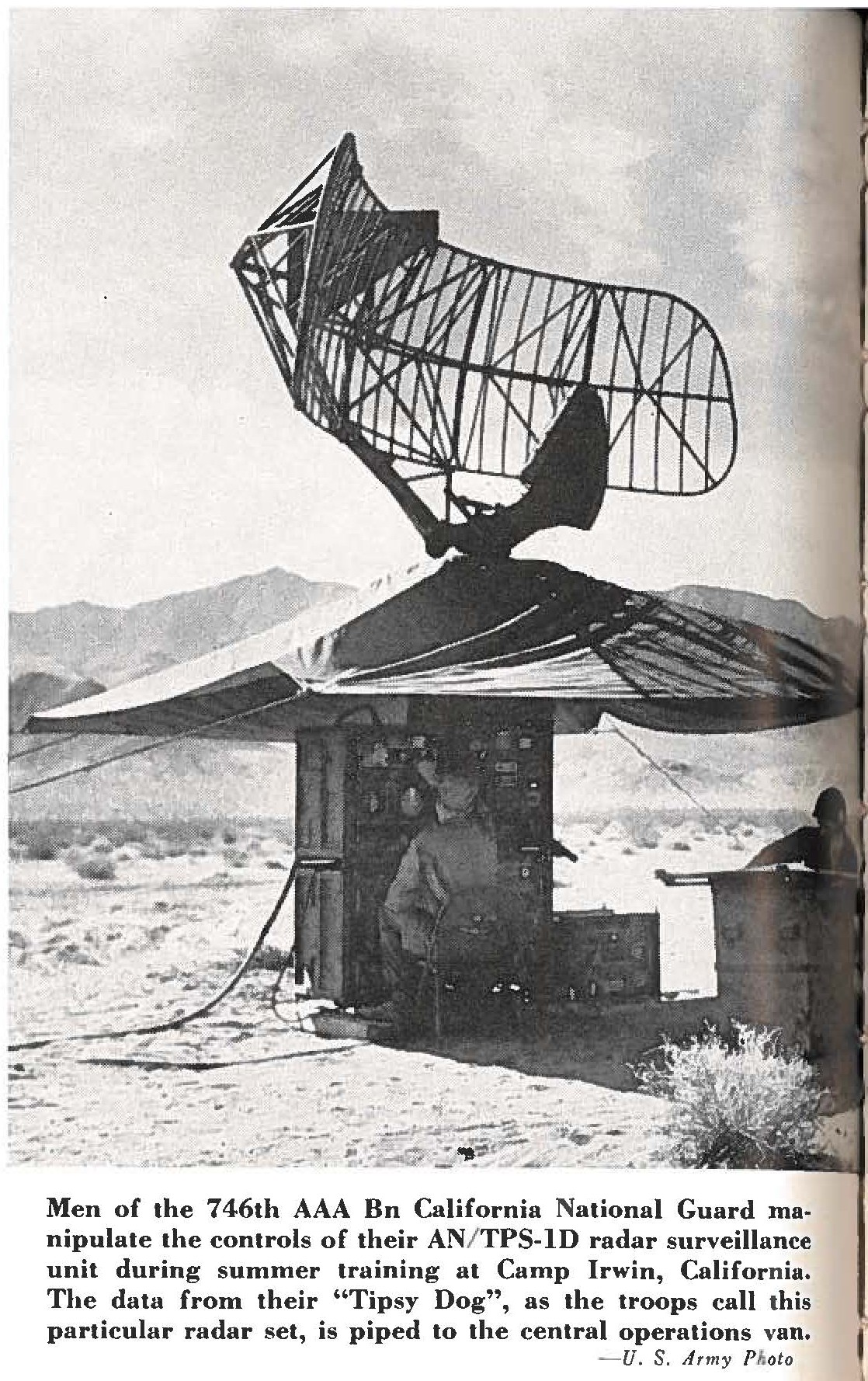
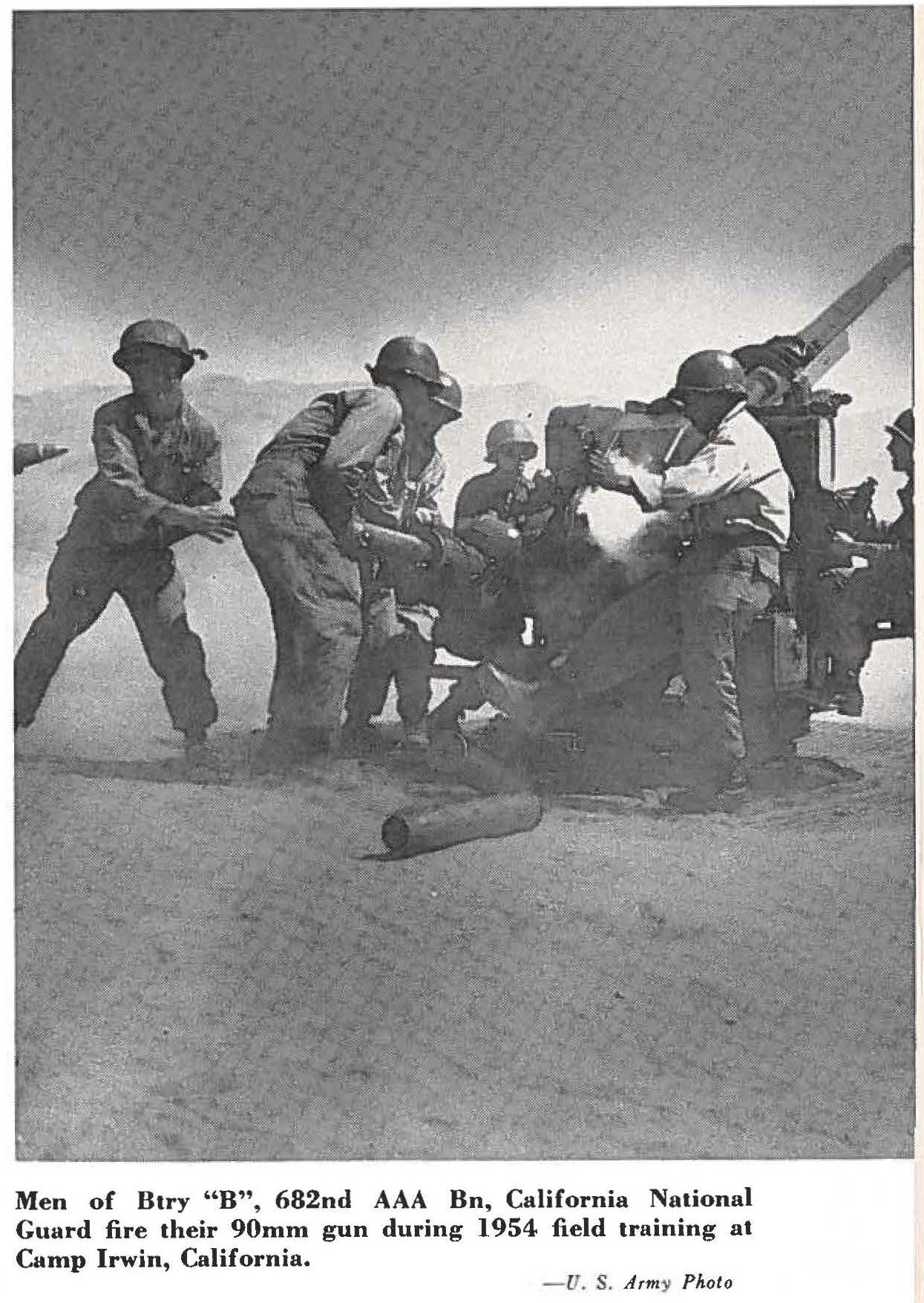
Men of the 746th AAA Bn California National Guard manipulate the controls of their AN/ TPS-ID radar surveillance unit during summer training at Camp Irwin, California. The data from their “Tipsy Dog”, as the troops call this particular radar set, is piped to the central operations van. Men of Btry “B”, 682nd AAA Bn, California National Guard fire their 90mm gun during 1954 field training at Camp Irwin, California.483 = 158!(Pictures from the 1955 August The Hawaii Guardsmen)
That may not be the way the arithmetic books have it, but in the Hawaii National Guard it’s so! On 1 September, the 483rd Field Artillery Battalion of Ft Ruger will be converted to the 158th Anti-Aircraft Battalion (Gun-90mm) . The decision to go ahead with this conversion was made by General Makinney late in July, and quick approval was forthcoming from both Governor King and the Chief of the National Guard Bureau.
Interest in the possible organization of an anti-aircraft outfit in the Hawaii National Guard first arose well over a year ago when certain members of the AG’s staff advanced the idea. There was considerable discussion of the idea at the time, but no concrete developments followed. The principal reason for advocating the organization of AAA was the need, in the opinion of those staff officers urging the idea, to diversify the troop allotment of the Hawaii National Guard. They felt that we were restricted to much as to choice of branch of service, inasmuch as the great bulk of our army units were either infantry or field artillery. They felt that our recruiting would be more successful if we had a wider range of other type units to attract men who were not interested in the infantry units. Their reason for recommending AAA was the fact that there existed a tactical need for such units in the Honolulu area. The only anti-aircraft defense existing in the islands is that on naval vessels which happen to be in port, and the 21st AAA Bn of the 25th Division, which is, however, limited to 40mm guns. In February of this year the AAA idea received a big boost when Lt General Clarke, CG USARPAC, wrote General Makinney a letter asking that the Hawaii National Guard consider the conversion of the 483rd to AAA. In his letter General Clarke said, “As a means of alleviating the deficiencies in anti-aircraft defense of this area, it has been considered that a significant contribution could be made by the Hawaii National Guard.” That letter kicked off a new series of discussions which culminated in the AG’s decision to convert the 483rd.
The question then arises, “Why convert? Why not just set up a AAA battalion?” In studying the desirability of the AAA proposal, there were many factors to be considered, and one of the foremost was that of personnel. A survey was made among Oahu army units of the Guard, and also of the USAR, to find out how many officers and men would actually be interested in getting into a AAA battalion. Questionnaires indicating interest were received from nearly 400 individuals. Of those 123 were in the 483rd, 150 were in other 298th RCT units, and 110 were from the USAR. That figure represented in the neighborhood of 32% of the 483rd strength. 17 of the 33 officers and warrant officers in the battalion indicated interest. In order to satisfy USARPAC’s desire for a AAA battalion in being in as short a time as possible, a guaranteed source of manpower to insure a high percentage of authorized strength was necessary. Our disappointing recruiting results for the past year or so rendered it doubtful that a completely new battalion organized with a small cadre could achieve an effective strength in the foreseeable future. If we attempted to organize using large battery cadres, the 483rd would undoubtedly be hard hit to supply the cadres and would probably never rrcover an effective strength of its own. So it followed that if we organized a new battalion, and preserved the 483rd, we should not raid the latter too heavily for personnel, with the result that many men interested in AAA would be denied the opportunity to transfer. It was felt that a morale problem would then arise with those individuals. Another point considered was that loss of the 483rd as part of the 298th RCT would have no particular effect on the existence or training of the remaining elements of the combat team. The level of training to which we are restricted by circumstances does not require field artillery units training actively with infantry units. Another consideration in favor of conversion was the fact that among the officers indicating interest, there were very few outside of the 483rd who had any artillery experience. Again in the interests of quickly developing an effective AAA battalion, it was felt that the majority of the officers of the new battalion should be basically qualified in artillery.
Careful consideration of all of these factors led to the conclusion that conversion was the most practical means of accomplishing the purpose- i.e. organization of a AAA battalion capable of contributing in the near future to the defense of the Honolulu area. This conclusion was reinforced when it became known to the General and his staff that NGB favored conversion of the 483rd. And so, the decision was made to convert
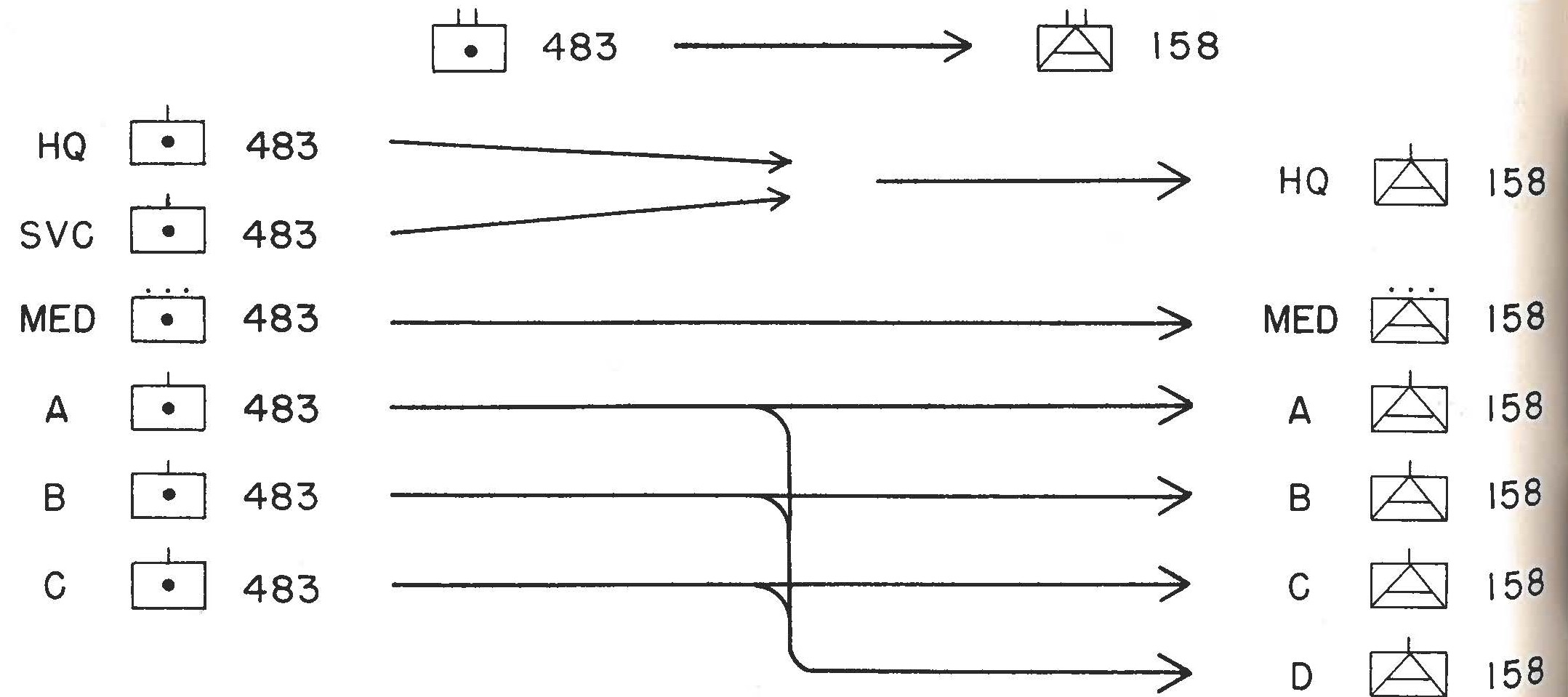
By letter dated 27 June 1955, Chief NGB had allotted the 158th AAA Bn to Hawaii. Organized under T / O&E 44-ISA, the proposed battalion will consist of Hq Btry, a medical detachment, and four gun batteries with an authorized (i.e. NG reduced) strength of 29 officers, 12 warrant officers, and 510 enlisted men which is somewhat more than the present authorized strength of the 483rd. A comparison of the organization of the two battalions revealed that the AAA organization was essentially the same as that of the 483rd, and that conversion could be acomplished readily with most of the 483rd personnel going into vacancies similar, if not exactly, like those they were trained in. See chart at the bottom of page 12. Another comparison of actual 483rd strength by grade with the AAA authorized strength by grade (tabulated below) showed that no grades would be lost in the conversion.
Grade
483rd Now
AAA Auth
Lt Col
1
1
Maj
0
2
Capt
7
13
Lt
21*
13
WO
4
12
M/Sgt
12
17
Sfc
29
46
Sgt
53
95
Cpl
105
185
Pfc
77
209
Pvt
57
88
* Can be absorbed into Maj and Capt positions
Based on the 1 July strength of the 483rd, the 158th on the date of conversion would have percentages of authorized strength as follows:
Off
100%
WO
33%
EM
65%
Furthermore, 245 men of the SAR and other Guard units are interested and if only 75% of them are enlisted in the 158th, then the battalion would have 100% of its enlisted strength.
One of the most attractive features of this deal, which has not been mentioned so far, is the fact that the battalion will be classified as an “on-site battalion” and as such will be part of the National Guard’s AAA Special Security Force. By that we mean that the battalion will have its gun batteries permanently located in firing positions where they will be manned 24 hours a day by a full time detachment. The guns will be fully equipped and prepared to go into action within seconds after an alert. The full time detachments will consist of 15 members of each battery employed under the field civilian personnel program supported by Federal funds. The positions to be filled in each battery will be as follows:
Fire Control Officer
NGM 24
Radar Chief
NGM 18
Radar Operator
NGM 15
Fire Control Chief
NGM 17
Radar Repairman
NGM 18
Motor Mechanic
NGM 15
Artillery Mechanic
NGM 16
Radio Repairman
NGM 15
AAA Fire Control System Mechanic
NGM 11
Power Generator Operator
NGM 11
5 Utility Men
NGM 5
In addition to the above, each battery will have the usual full time ASMT, and battalion headquarters will have a Battalion Fire Control Officer (NGM-26) and two WO Administrative Assistants, one NGC-7 and one NGC-5. The usual service center, and additional CFMS, employees authorized as a result of the new battalion will bring to 74 the total of the full time positions which will be authorized.
As this is written, it appears that USARPAC will provide the sites for the gun batteries, which will probably be located on the Ft DeRussy parade ground, Sand Island near the 109th AC&W Sq, Ft Shafter near the skeet range on Nimitiz Hwy, and Ft Kamehameha near the old replacement depot. Initially the battalion will remain at Ft Ruger in its present facilities, and battalion headquarters will probably remain there permanently. As the battery sites are prepared, the gun batteries will occupy them.
The conversion will be effective 1 September, and that will be the signal for intensifying a multitude of activities. One of the most important of these will be the selection of men for the full time positions. This must be done promptly in order to permit most of them to leave immediately for service schools on the mainland where they will attend courses to qualify them for their jobs. Some of these courses will be as long as 10 months. At the same time, all existing personnel of the 483rd will have to be reassigned, and men from other units will have to be transferred in or enlisted. A great deal of effort will be devoted to turning in of excess equipment and drawing of items not now on hand. The training schedules and all that goes into implementing them will have to be re-oriented on the AAA ATP’s. Unit libraries will have to be re-stocked with applicable publications. Providing that funds are immediately available, USARPAC hopes to have gun sites ready in 10 to 12 months. The batteries can then start moving into the sites, and it is expected that the important items of equipment, i.e. guns, radar, etc. will be received at about the time the key personnel begin returning from the service schools. Field training plans have not been discussed, but it appears that the 158th will go to camp somewhat later next summer than has been our practice in the past. Their 90s will probably be fired locally for the first time during that camp, but not from their home sites, and by this time next year we should have a going outfit.