Do you need help in another language? We will get you a free interpreter. Call 808-369-3580 to tell us which language you speak.
您需要其它語言嗎?如有需要,請致電 (808-369-3478), 我們會提供免費翻譯服務
您需要其它语言吗?如有需要,请致电 (808-369-3478), 我们会提供免费翻译服务
En mi niit alilis lon pwal eu kapas? Sipwe angei emon chon chiaku ngonuk ese kamo. Kokori (808-369-3478) omw kopwe ureni kich meni kapas ka ani.
Makemake `oe i kokua i pili kekahi `olelo o na `aina `e? Makemake la maua i ki`i `oe mea unuhi manuahi. E kelepona (808-369-3478)`oe ia la kaua a e ha`ina `oe ia la maua mea `olelo o na `aina `e.
Masapulyo kadi ti tulong iti sabali a pagsasao? Ikkandakayo iti libre nga paraipatarus. Awaganyo ti
(808-369-3478) tapno ibagayo kadakami no ania ti pagsasao nga ar-aramatenyo.
다른언어로 도움이 필요하십니까? 저희가 무료로 통역을 제공합니다. (808-369-3478)로 전화해서 사용하는 언어를 알려주십시요
Kwoj aikuij ke jiban kin juon bar kajin? Kim naj lewaj juon am dri ukok eo ejjelok wonen. Kirtok
(808-369-3478) im kwalok non kim kajin ta eo kwo melele im kenono kake.
E te mana'o mia se fesosoani i se isi gagana? Matou te fesosoani e ave atu fua se faaliliu upu mo oe. Vili mai i le numera lea (808-369-3478) pea e mana'o mia se fesosoani mo se faaliliu upu.
¿Necesita ayuda en otro idioma? Nosotros le ayudaremos a conseguir un intérprete gratuito. Llame al (808-369-3478) y diganos que idioma habla.
Kailangan ba ninyo ng tulong sa ibang lengguwahe? Ikukuha namin kayo ng libreng tagasalin. Tumawag sa (808-369-3478) para sabihin kung anong lengguwahe ang nais ninyong gamitin.
‘Okú ke fie maʻu tokoni ʻi ha lea fakafonua ʻe taha? Temau kumi haʻo taha fakatonulea taʻetotongi. Telefoni ki he (808-369-3478) ke fakahā mai ʻa e lea fakafonua ʻokú ke lea aí.
Bạn có cần giúp đỡ bằng ngôn ngữ khác không ? Chúng tôi se yêu cầu một người thông dịch viên miễn phí cho bạn. Gọi (808-369-3478)nói cho chúng tôi biết bạn dùng ngôn ngữ nào
Gakinahanglan ka ba ug tabang sa imong pinulongan? Amo kang mahatagan ug libre nga maghuhubad. Tawag sa (808-369-3478) aron magpahibalo kung unsa ang imong sinulti-han.
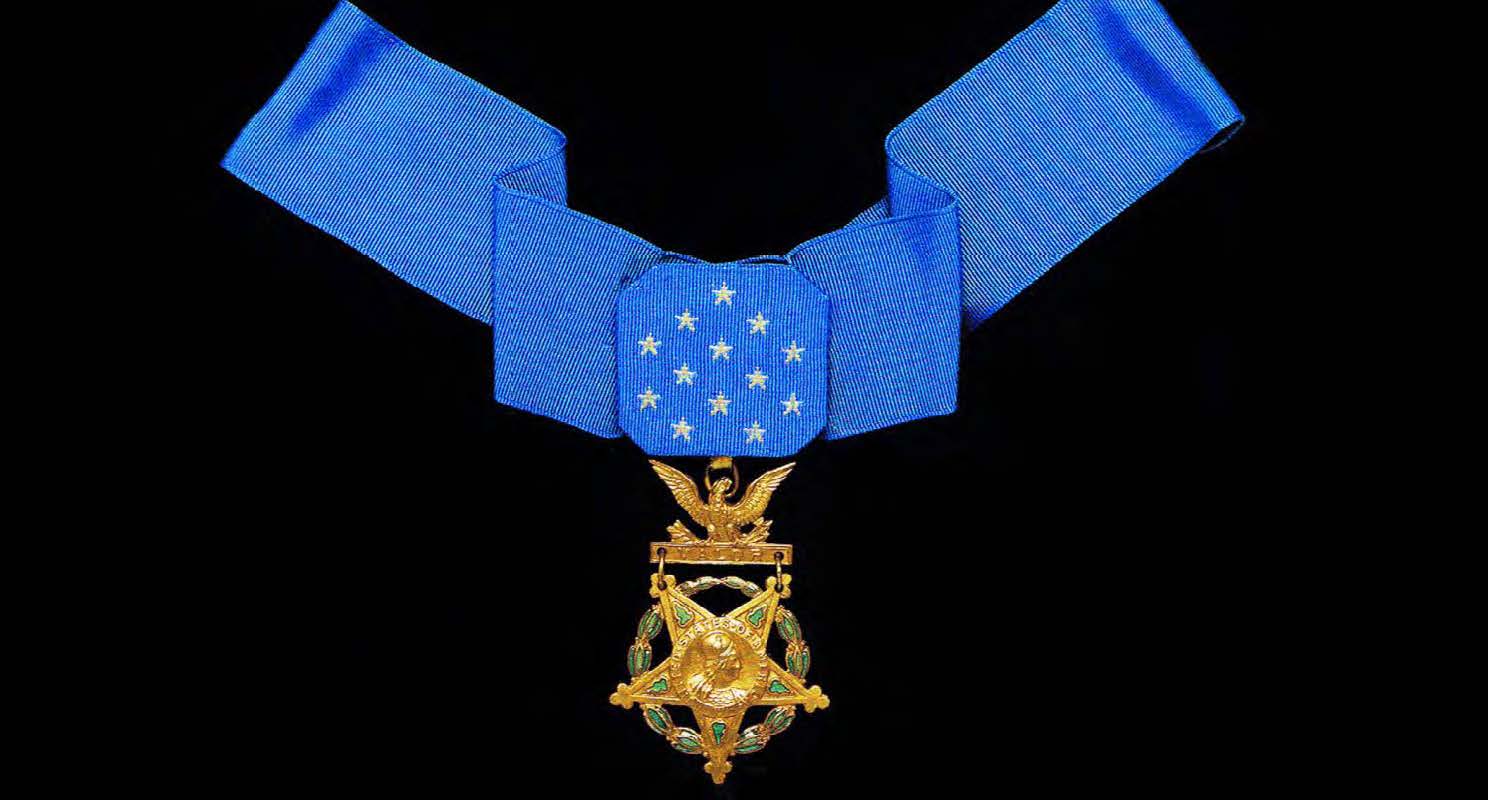
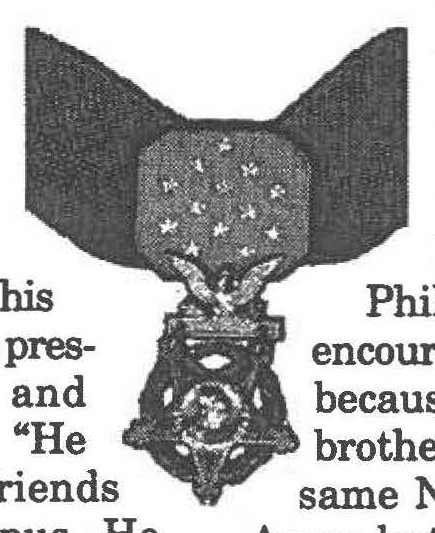
The Medal of Honor is the highest military decoration that may be awarded by the United States government.
It is presented by the President of the United States, in the name of Congress, and is conferred only upon members of the United States Armed Forces who distinguish themselves through conspicuous gallantry and intrepidity at the risk of life above and beyond the call of duty:
While engaged in action against an enemy of the United States;
While engaged in military operations involving conflict with an opposing foreign force; or
While serving with friendly foreign forces engaged in an armed conflict against an opposing armed force in which the United States is not a belligerent party.
Over 3,400 Medals of Honor have been awarded to members of the Armed Forces and the Coast Guard since 1861 when it was first authorized.
Hawai‘i National Guardsmen Remembered for Displaying Extraordinary Heroism
National Medal of Honor Day is celebrated annually on March 25th to honor the heroism and sacrifice of Medal of Honor recipients. – State of Hawai‘i, Department of Defense Public Affairs Office | Story by Rachel Blaire | Tuesday, March 25, 2025
The Medal of Honor is the highest U.S. military award for valor in combat. Over 3,400 Medals of Honor have been awarded to members of the Armed Forces and the Coast Guard. The medal is given only for exceptional bravery, supported by thorough documentation.
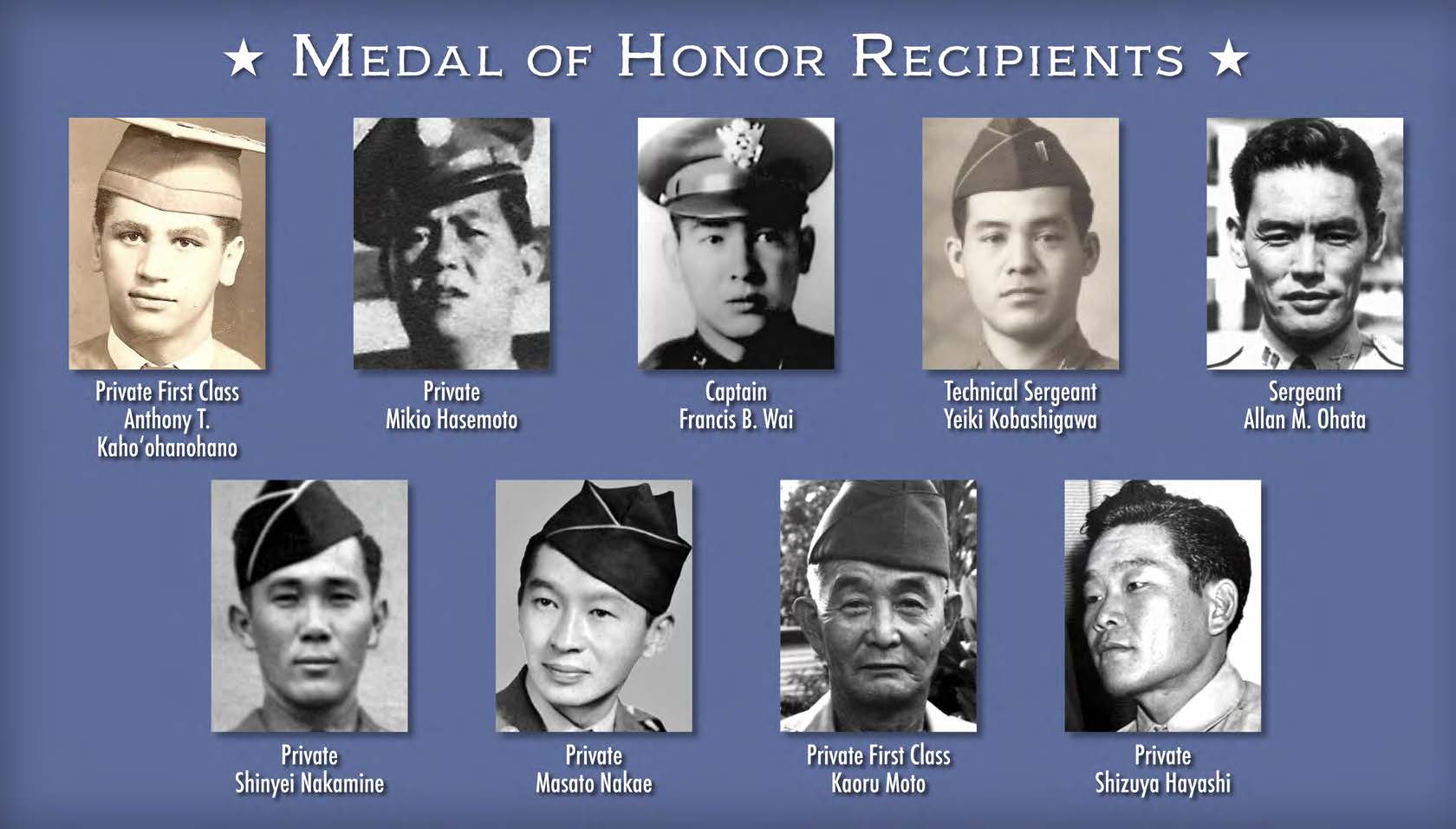
Nine Hawaii Guardsmen have been awarded the Medal of Honor throughout the history of the Hawaii National Guard.
These men, were originally awarded the Distinguished Service Cross, had their awards upgraded to the Medal of Honor due to their extraordinary actions during World War II and the Korean War. Eight of the men were recognized for their bravery in World War II and were awarded the Medal of Honor in 2000. Another Hawaii Guardsman received his in April 2011 for his actions during the Korean War.
The nine men are: Pvt. Mikio Hasemoto, Pvt. Shizuya Hayashi, Tech. Sgt. Yeiki Kobashigawa, Pfc. Kaoru Moto, Pfc. Anthony T. Kaho’ohanohano, Pvt. Masato Nakae, Pvt. Shinyei Nakamine, Sgt. Allan Ohata, and Capt. Francis Wai.
Korean War
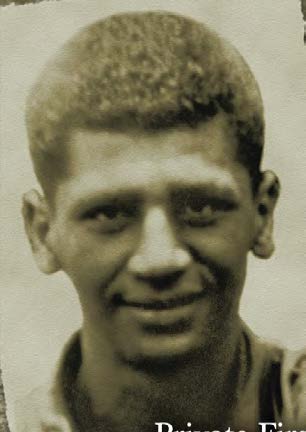
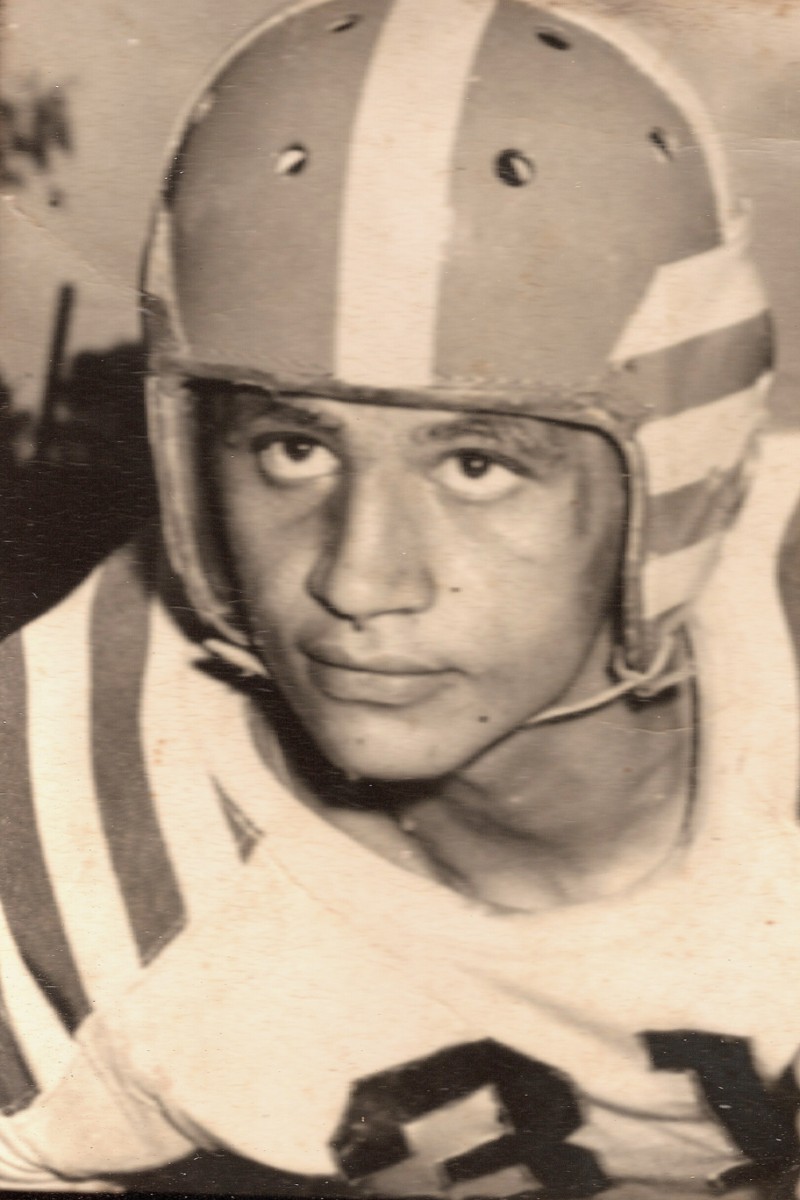
Private First Class Anthony Kaho’ohanohano
Private First Class Anthony Kaho’ohanohano, born on July 22, 1930, in Maui, Hawaii, joined the Hawaii National Guard after high school, following in the footsteps of his military family. On Feb. 5, 1951, he joined the regular Army and was assigned to Company H, 17th Infantry Regiment, 7th Infantry Division.
On 1 September 1951 during an enemy attack in Korea, Kaho’ohanohano displayed extraordinary heroism. He provided covering fire for his unit’s withdrawal, then returned to his position to fight alone despite being wounded. When his ammunition ran out, he fought hand-to-hand until he was killed. Eleven enemy soldiers were killed, including two in close combat and his actions inspired a counterattack that repelled the enemy.
Kaho’ohanohano’s legacy lives on in Hawaii, where a National Guard armory is named in his honor.
World War II
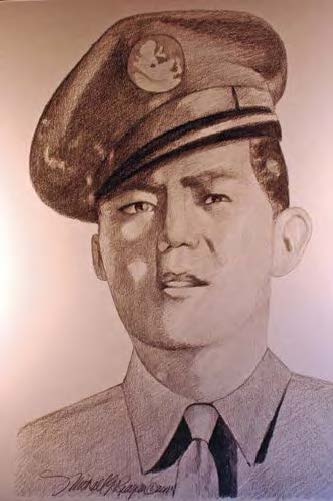
Private Mikio Hasemoto
Private Mikio Hasemoto, a second-generation Japanese American was born in Honolulu, Hawaii, in 1916. Just months before the U.S. entered the war in June 1941, Hasemoto joined the Hawaii National guard as a 298th Infantry Soldier assigned to the Hawaiian Provisional Infantry Battalion. In 1942, he volunteered for the 100th Infantry Battalion, a newly formed unit composed of Japanese Americans.
Hasemoto displayed extraordinary heroism on 29 November 1943 in Cerasuolo, Italy, when he fought off an enemy attack. Despite his rifle being damaged, he repeatedly ran through enemy fire to retrieve new weapons and continue fighting. With his squad leader, he killed 20 enemy soldiers and captured one. Hasemoto continued to repel attacks until he was killed the next day.
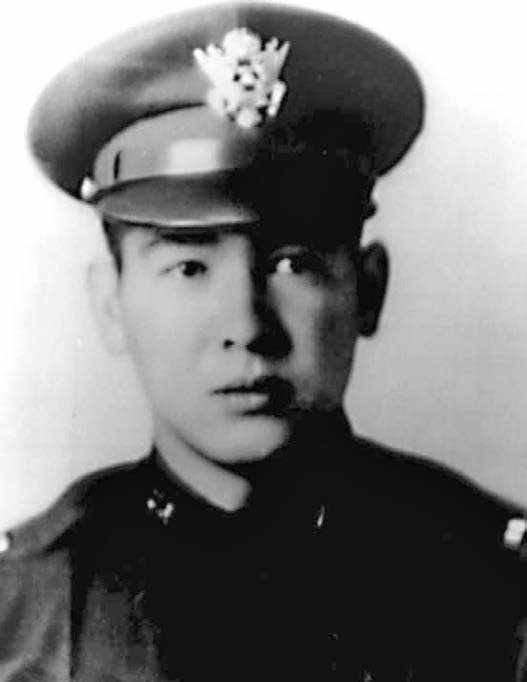
Captain Francis Wai
Born on April 14, 1917, in Honolulu, Hawaii, Captain Francis Wai was the son of a Chinese immigrant father and a native Hawaiian mother. He was commissioned as a second lieutenant in 1941 in the Hawaiian National Guard, which later became the 34th Infantry Regiment. When Japan attacked Pearl Harbor on December 7, 1941, the 34th Infantry Regiment was among the first to engage in combat.
During the landing at Red Beach, Leyte, Philippine Islands on 20 October 1944 Wai displayed extraordinary heroism. Upon finding the first four waves of soldiers disorganized and pinned down, he assumed command and led them through heavy enemy fire. Exposing himself to locate enemy strongholds, he inspired his men to follow him. During an assault on a Japanese pillbox, he was killed. Wai’s leadership played a key role in securing the beachhead.
Technical Sergeant Yeiki Kobashigawa
Technical Sergeant Yeiki Kobashigawa was born on September 28, 1917, in Hilo, Hawaii, to Japanese immigrant parents, and grew up working on a plantation. November 1941, the 298th Infantry Soldier was assigned to the Hawaiian Provisional Infantry Battalion. Kobashigawa’s military service was impacted by the Pearl Harbor attack, leading to Japanese Americans being separated into the 100th Infantry Battalion.
Kobashigawa displayed extraordinary heroism on 2 June 1944 near Lanuvio, Italy. During an attack, he identified and neutralized multiple enemy machine gun nests. He crawled forward to destroy the first nest, killing one enemy and capturing two prisoners. After being fired upon by another machine gun, Kobashigawa directed his squad to advance and, with his comrade, incapacitated the second nest, capturing four prisoners. He then led his squad to neutralize two additional machine gun positions.
After the war, Kobashigawa returned to Hawaii working for Hawaiian Cement and became a respected mentor. He passed away on March 31, 2005, and is buried in the National Memorial Cemetery of the Pacific.
Sergeant Allan Ohata
Born on September 13, 1918, in Honolulu, Sergeant Allan Ohata was one of the 40 original Japanese members of the Hawaii National Guard Soldiers from the 298th Infantry who were mobilized on October 15, 1940. After the Pearl Harbor attack, he volunteered for the 100th Infantry Battalion and sailed to Europe in 1943.
Near Cerasuolo, Italy, on 29 and 30 November 1943 while defending his platoon’s left flank against an enemy force of 40 soldiers Ohata displayed extraordinary heroism. Despite heavy machine gun fire, he advanced 15 yards to assist a fellow soldier whose weapon had been damaged. Ohata killed 10 enemy soldiers and successfully covered his comrade’s withdrawal. Alongside the automatic rifleman, he killed 37 more enemy soldiers and captured three. The next day, Ohata helped stop another attack, killing four and wounding three.
After the war, he returned home to earn an engineering degree and worked for Northrop Aircraft and Lockheed. Ohata lived a quiet life, rarely speaking about his war experience. He died of colon cancer on October 17, 1977, at the age of 59.
Private Shinyei Nakamine
Private Shinyei Nakamine was born on January 21, 1929, in Waianae, Oahu. Nakamine served as a soldier in the 298th Infantry and was assigned to the Hawaiian Provisional Infantry Battalion.
Nakamine displayed extraordinary heroism on 2 June 1944 near La Torreto, Italy. When his platoon was pinned down by intense enemy machine gun fire, he crawled toward the enemy position and charged, killing three soldiers and capturing two. Later, Nakamine killed an enemy soldier on his platoon’s right flank and led an automatic rifle team toward a machine gun nest, capturing four soldiers. He then attempted to neutralize another machine gun nest but was killed by enemy fire.
Private Masato Nakae
Born in Haena (Lihue), Kauai on December 20, 1917 was Private Masato Nakae a soldier in the 298th Infantry, assigned to the Hawaiian Provisional Infantry Battalion.
On 19 August 1944 near Pisa, Italy Nakae displayed extraordinary heroism. After his submachine gun was damaged, he used a wounded comrade’s M-1 rifle to fire grenades at the advancing enemy. Despite being seriously wounded by a mortar shell, Nakae refused to abandon his position, continued to fire, and threw six grenades, forcing the enemy to withdraw. His actions inflicted heavy casualties and helped break up the enemy attack.
After the war Nakae lived in Honolulu until he passed away on September 4, 1998, at the age of 80, and was buried at the National Memorial Cemetery of the Pacific.
Private First Class Karou Moto
Private First Class Karou Moto was born on April 25, 1917, in Spreckelsville, Maui. A soldier in the 298th Infantry, he was assigned to the Hawaiian Provisional Infantry Battalion.
Moto displayed extraordinary heroism on 7 July 1944 near Castellina, Italy. After identifying a machine gun nest hindering his platoon, he killed the gunner and captured the assistant gunner. While guarding a house, Moto repelled an enemy machine gun team and was wounded by an enemy sniper. Despite his injury, he continued to engage the enemy, wounding two soldiers at a machine gun nest. Moto then crawled forward to force their surrender.
Before his passing at the age of 75 on August 26, 1992, in Makawao, Maui, Moto donated all of his medals to the Fort DeRussy Army Museum. In 2004, the Pacific Army Reserve honored his legacy by naming the 32-year-old Maui Army Reserve Center in Wailuku after him.
Private Shizuya Hayashi
On November 28, 1917, in Waiakea (Waialua), Oahu, where his parents worked at the Sugar Plantation Private Shizuya Hayashi was born. He was raised on the plantation and worked there after high school. Hayashi served as a soldier in the 298th Infantry, assigned to the Hawaiian Provisional Infantry Battalion.
On 29 November 1943 near Cerasuolo, Italy Hayashi displayed extraordinary heroism. During a flank assault, he charged an enemy machine gun position, killing seven soldiers and two more as they fled. After his platoon advanced, an enemy antiaircraft gun opened fire, and Hayashi responded by killing nine enemy soldiers, capturing four prisoners, and forcing the rest to withdraw.
He passed away on March 12, 2008, at the age of 90 and is buried at the National Memorial Cemetery of the Pacific.
The Medal of Honor is awarded only on rare occasions and is given to those who demonstrate exceptional courage and valor. In the last 165 years, since the medal was first authorized less then 3,500 have been awarded.
Pvt. Mikio “Kio” Hasemoto was born July 13, 1916 in Honolulu. He was killed in action at age 27 and is interred at Punchbowl: Sec. D, Grave 338. The 298th Infantry Soldier was assigned to the Hawaiian Provisional Infantry Battalion.
Citation The President of the U.S. of America, in the name of Congress, takes pride in presenting the Medal of Honor (Posthumously) to Private Mikio Hasemoto, U.S. Army, for conspicuous gallantry and intrepidity in action above and beyond the call of duty while serving with Company B, 100th Infantry Battalion (Separate), attached to the 34th Infantry Division, in action against the enemy on Nov. 29, 1943, in the vicinity of Cerasuolo, Italy.
Private Mikio Hasemoto distinguished himself by extraordinary heroism in action on 29 November 1943, in the vicinity of Cerasuolo, Italy. A force of approximately 40 enemy soldiers, armed with machine guns, machine pistols, rifles, and grenades, attacked the left flank of his platoon. Two enemy soldiers with machine guns advanced forward, firing their weapons. Private Hasemoto, an automatic rifleman, challenged these two machine gunners. After firing four magazines at the approaching enemy, his weapon was shot and damaged. Unhesitatingly, he ran 10 yards to the rear, secured another automatic rifle and continued to fire until his weapon jammed. At this point, Private Hasemoto and his squad leader had killed approximately 20 enemy soldiers. Again, Private Hasemoto ran through a barrage of enemy machine gun fire to pick up an M-1 rifle. Continuing their fire, Private Hasemoto and his squad leader killed 10 more enemy soldiers. With only three enemy soldiers left, he and his squad leader charged courageously forward, killing one, wounding one, and capturing another. The following day, Private Hasemoto continued to repel enemy attacks until he was killed by enemy fire. Private Hasemoto’s extraordinary heroism and devotion to duty are in keeping with the highest traditions of military service and reflect great credit on him, his unit, and the United States Army.
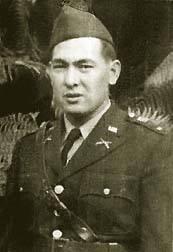
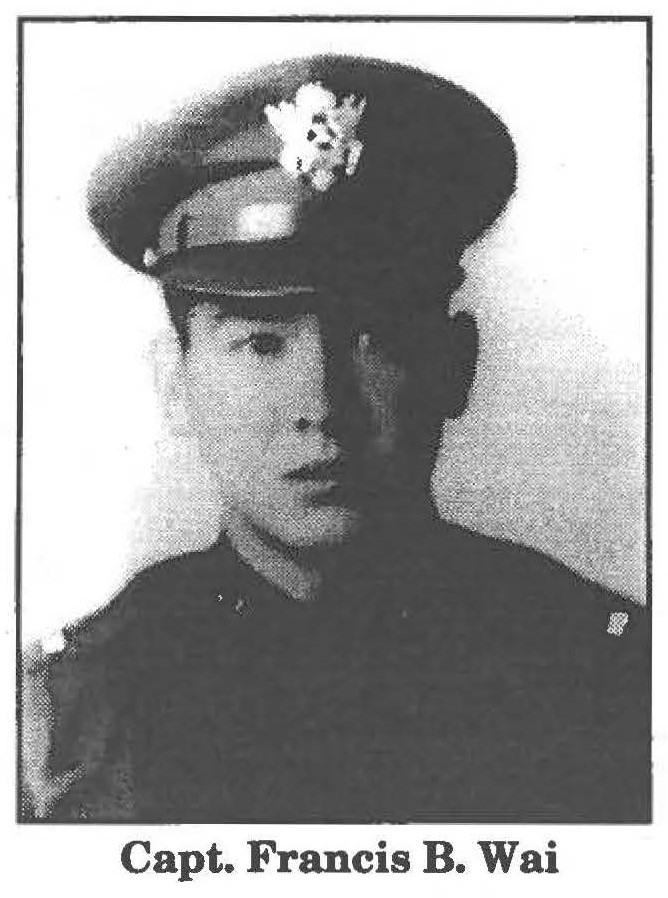
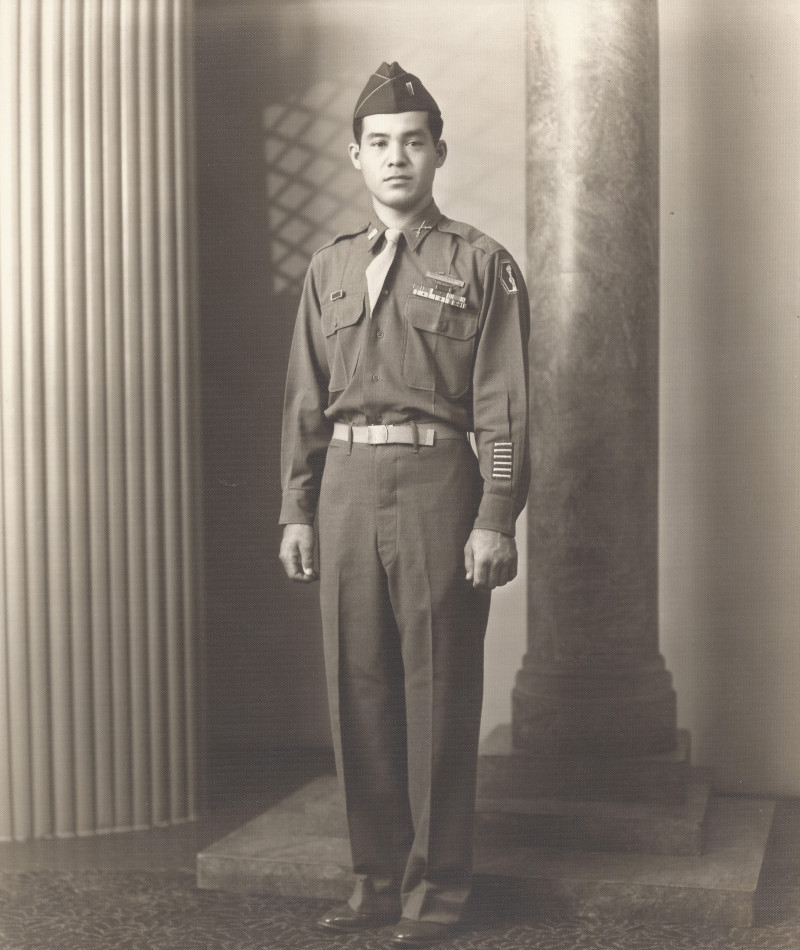
Capt. Francis B. Wai was born April 14, 1917 in Honolulu and was killed in action Oct. 20, 1944 at age 27 in Leyte, Philippines. After graduating college Wai joined the 298th Infantry prior to it’s Oct. 15, 1940 mobilization and was one of the officers pulled from the 298th to augment the active duty’s 34th Infantry Regiment, 24th Infantry Division. He is the only Medal of Honor recipient of Chinese ancestry. His is buried at Punchbowl: Section Q, Grave 1194
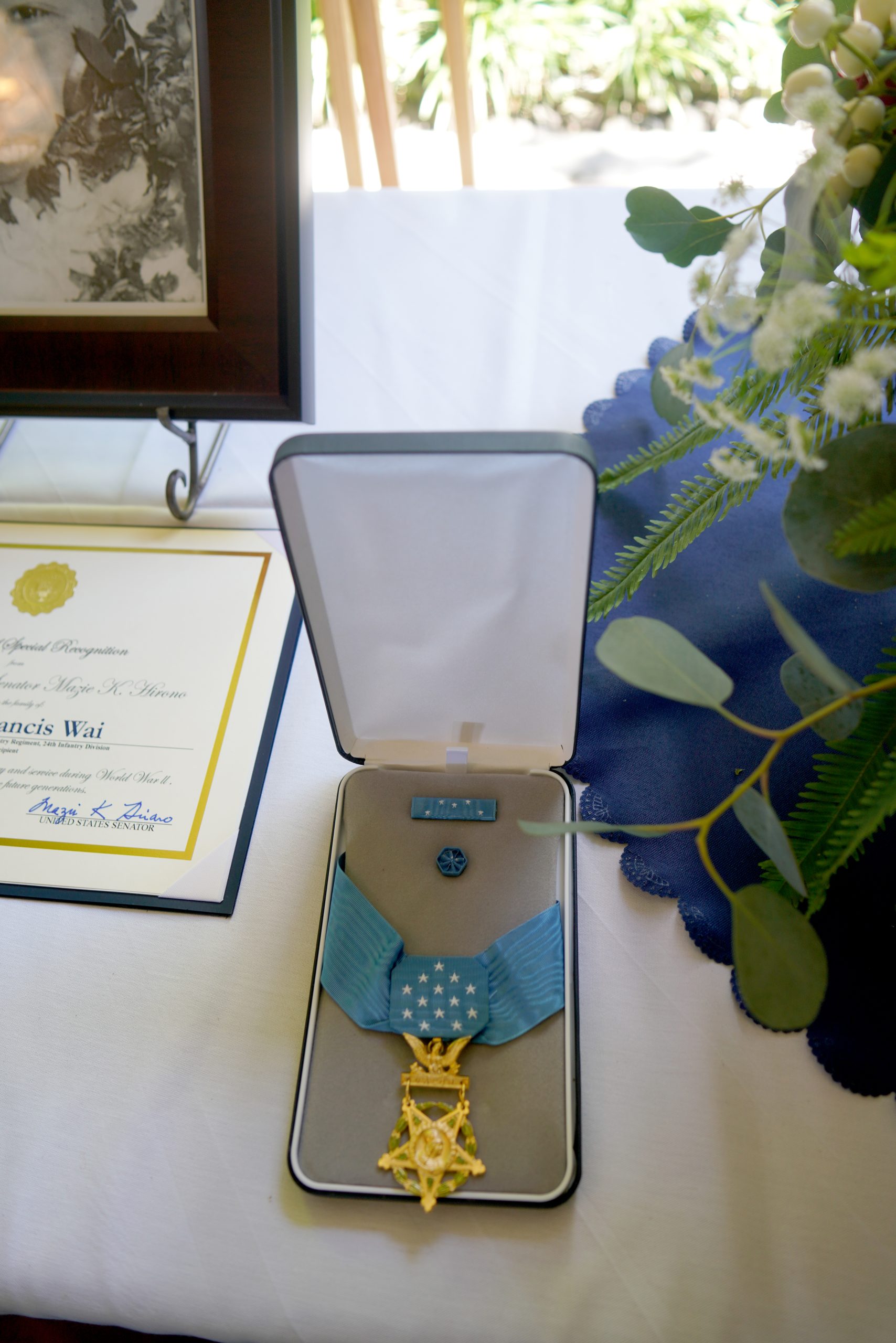
Citation The President of the U.S. of America, in the name of Congress, takes pride in presenting the Medal of Honor (Posthumously) to Captain (Infantry) Francis B. Wai, U.S. Army, for conspicuous gallantry and intrepidity in action above and beyond the call of duty while serving with Headquarters, 34th Infantry Regiment, 24th Infantry Division, in action against the enemy on Oct. 20, 1944, at Leyte, Philippine Islands.
Captain Francis B. Wai distinguished himself by extraordinary heroism in action, on 20 October 1944, in Leyte, Philippine Islands. Captain Wai landed at Red Beach, Leyte, in the face of accurate, concentrated enemy fire from gun positions advantageously located in a palm grove bounded by submerged rice paddies. Finding the first four waves of American soldiers leaderless, disorganized, and pinned down on the open beach, he immediately assumed command. Issuing clear and concise orders, and disregarding heavy enemy machine gun and rifle fire, he began to move inland through the rice paddies without cover. The men, inspired by his cool demeanor and heroic example, rose from their positions and followed him. During the advance, Captain Wai repeatedly determined the locations of enemy strong points by deliberately exposing himself to draw their fire. In leading an assault upon the last remaining Japanese pillbox in the area, he was killed by its occupants. Captain Wai’s courageous, aggressive leadership inspired the men, even after his death, to advance and destroy the enemy. His intrepid and determined efforts were largely responsible for the rapidity with which the initial beachhead was secured. Captain Wai’s extraordinary heroism and devotion to duty are in keeping with the highest traditions of military service and reflect great credit on him, his unit, and the United States Army.
Wai leaves 298th Infantry to fight in South Pacific
By Sgt. Scott J. McDonald
Francis Wai remembered for heroism, leadership page 3 Wai leaves 298th Infantry to fight in South Pacific Capt. Francis B. Wai (Pictures from the 2003 January – March Pūpūkahi)
For more than 50 years, Capt. Francis Brown Wai was only a name in the U.S. Army history books, only known as a Captain in the 34th Regiment, 25th Infantry Division, and a soldier who died during a beach assault at Leyte, Philippines, on Oct. 20, 1944. But for those who knew Francis Brown Wai, his family, friends, fellow officers, and his troops, he was a born leader.
“He was well-respected, well liked, and he always led by example, he never asked anyone to do what he wouldn’t have done himself,” added his brother, Robert Wai.
But all that changed on June 21, 2000, in a White House ceremony where then Pres. Bill Clinton presented 22 Asian American (most posthumously) the prestigious Medal of Honor, the highest award given to airmen, sailors, Marines and soldiers for bravery in combat.
Wal family grew up in Hawaii
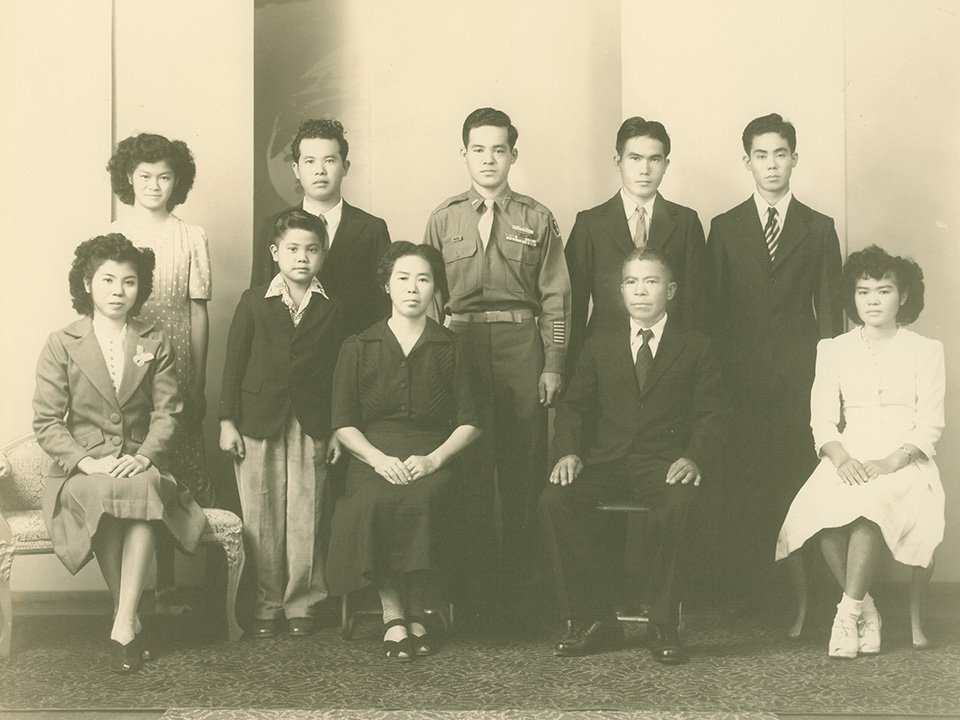
Born in 1916 and raised in Hawaii, Francis was the second of five Wai children, who were ChineseHawaiian, with a touch of Scottish. Siblings included his brothers, Robert, Lambert, and Conkling, and sister, Rosina. He was named after his godfather, Francis H.I. Brown, a local golfer, legislator and philanthropist.
While growing up in Honolulu, Francis became somewhat of a sports legend in his community and on Oahu. At Punahou School, he earned letters in football, baseball, and track. Besides high school sports, he surfed the waves ofW ailtiki Beach during his spare time.
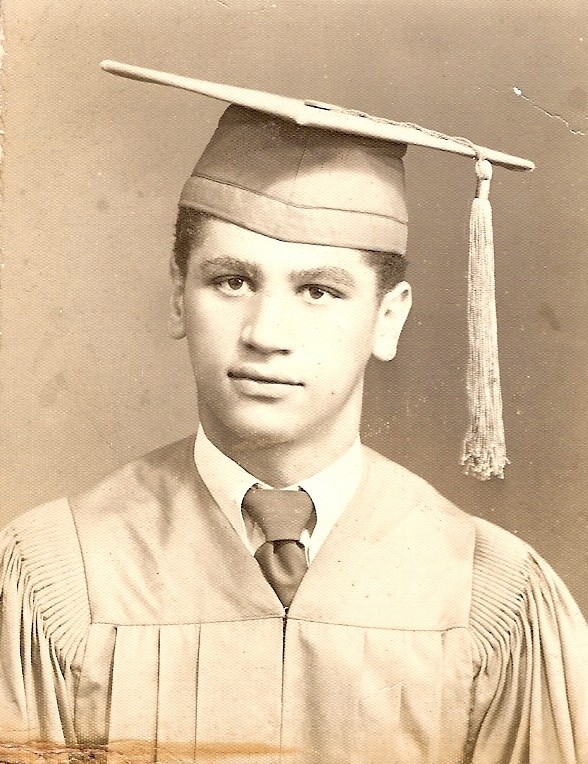
After high school, he went to the mainland to attend college. At UCLA, he continued to play sports, which included football, track, basketball, and rugby. Sports did not distract Francis from earning a degree in finance with honors in 1939.
“In college, Francis always showed his leadership abilities by staying home and making sure he finished his studies when his friends pressured him to go out and party,” said Lambert. “He made sure that his friends made it back to campus. He would go out to town, find his friends and bring them back home. That was Francis, always responsible for others … always looking out for the welfare of others.”
“Francis was always a leader; he was born to lead,” said Lambert, who named his daughter Francine, after his brother.
Hawaii National Guard soldiers activated
Francis returned home and joined his father as a banker and also enlisted in the Hawaii National Guard.
His service with the Hawaii Guard’s Company G, 298th Regimental Combat Team, was interrupted by the pending war. In 1940, Cpl. Wai was called into active duty. His college degree made him a prime officer candidate. After officer basic at Fort Benning, he reported for duty with the 34th Regiment, 25th Infantry Division, which was assigned to Gen. Douglas MacArthur. During the attack on Pearl Harbor by the Japanese, the 34th Regiment was guarding Oahu’s north shore beaches.
After the attack on Pearl Harbor, the United States declared war on Japan, thrusting Francis and his unit into World War II.
Older brother, Robert, who was on the mainland when the war broke out, was drafted in 1942 and served with the 24th Infantry Division.
Robert and Francis crossed paths while they were assigned to units at Schofield Barracks, but they did not deploy to the Philippines at the same time. Military policy encouraged units not to assign siblings together, because of what happened to the five Sullivan brothers who were killed while serving on the same Navy ship. Lambert also enlisted in the Army, but served after the war.
Heroic service ends in the Phillipines
For more than two years, Francis was involved in many battles throughout the Pacific theater. Then, during the landing assault of Red Beach on Leyte, Francis Wai was killed in battle by Japanese defenders. He was killed leading an assault on the last remaining pillbox in the area. Robert arrived in the Philippines shortly after Francis’ death.
“First of all, he shouldn’t have been there. He was supposed to go home, but he volunteered to do one more beach assault with his men,” Robert added. “During the attack, he would never ask a sergeant or a private to take out the pillbox; he would always lead and never asked others to do it for him. That was just his personality.”
For more than 50 years, his bravery was forgotten in the U.S. Army record books, at the sands of Red Beach, Leyte, Philippines, and at the National Memorial Cemetery of the Pacific at Punchbowl, where he lies today. Like all heroes, Francis Brown Wai was finally awarded what he deserved, but even if he wasn’t rewarded the Medal of Honor, he would always be a hero to his fellow soldiers and officers, friends, and his family.
Editor’s note: Capt. Francis B. Wai is presently the first and only Chinese-American and Hawaii National Guard soldier to receive the Medal of Honor.
Medal of Honor re-presented to the family of Capt. Francis Brown Wai
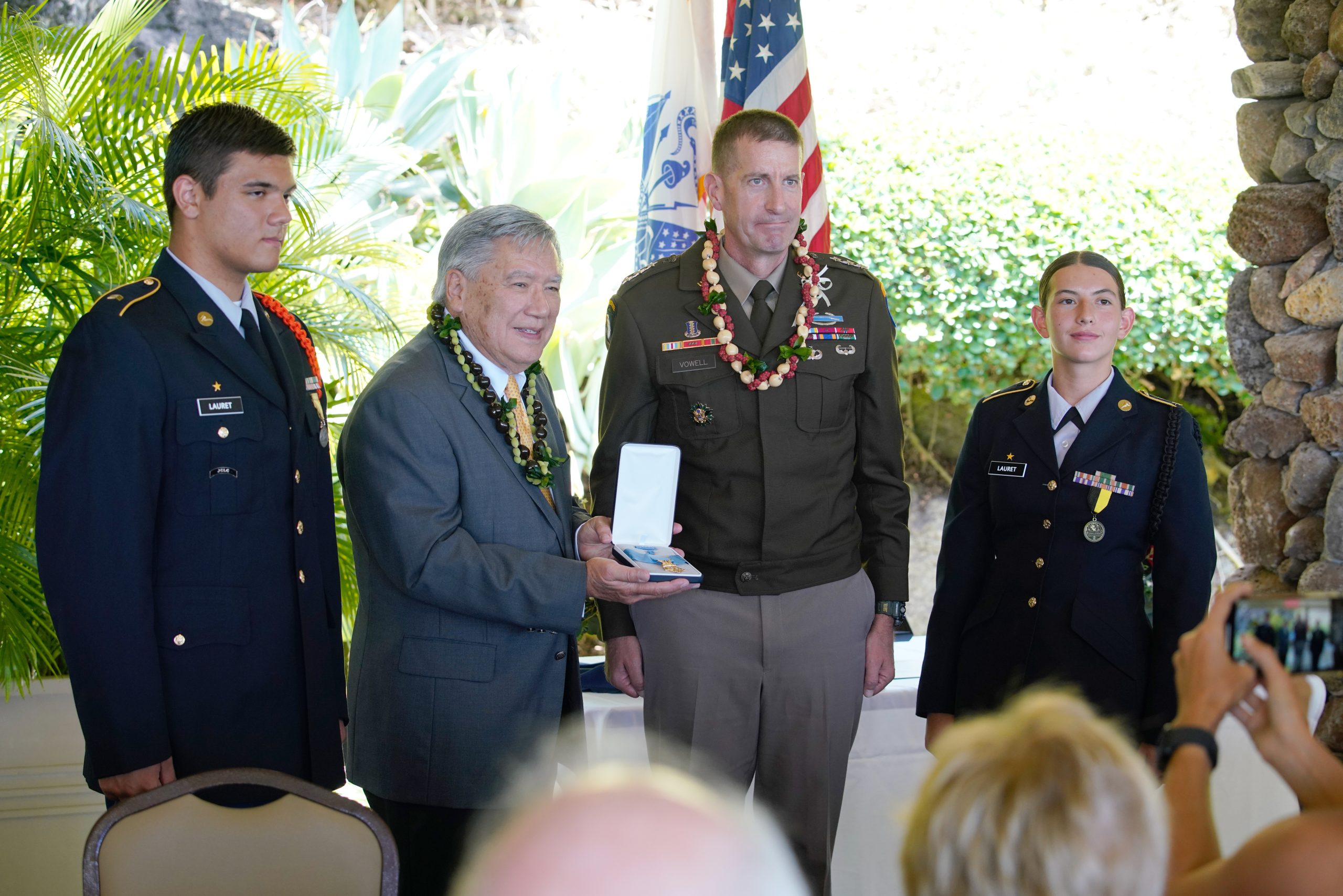
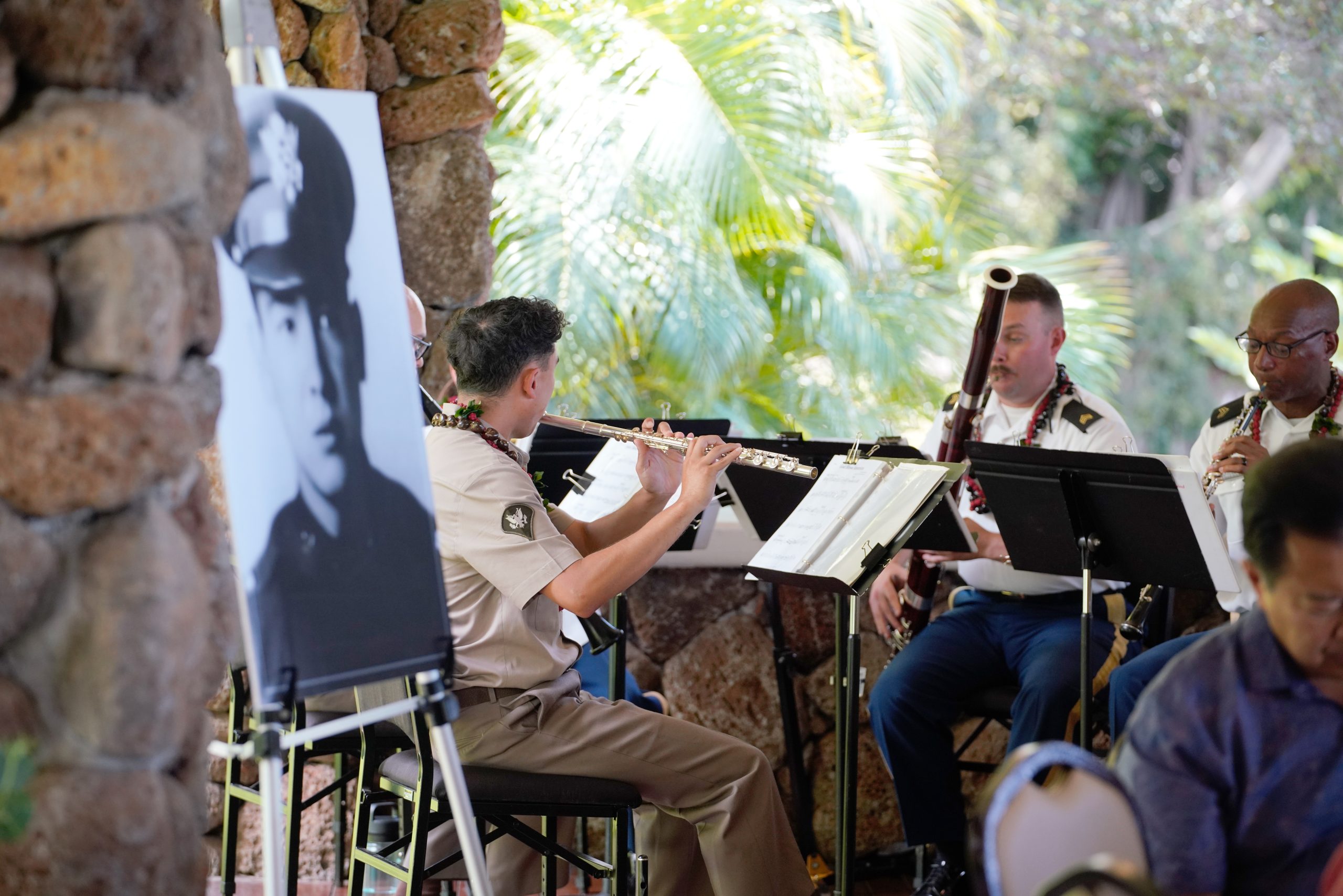
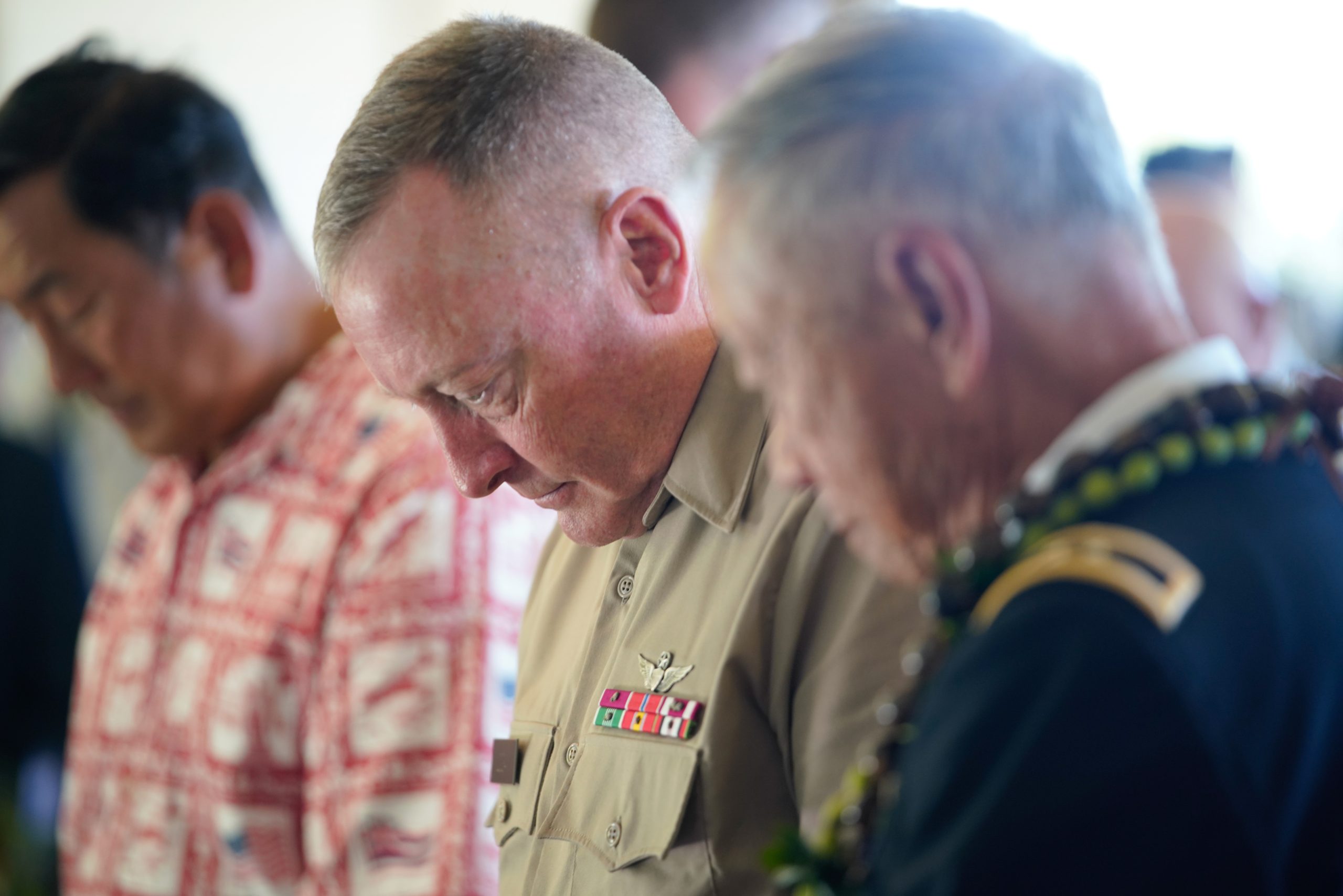
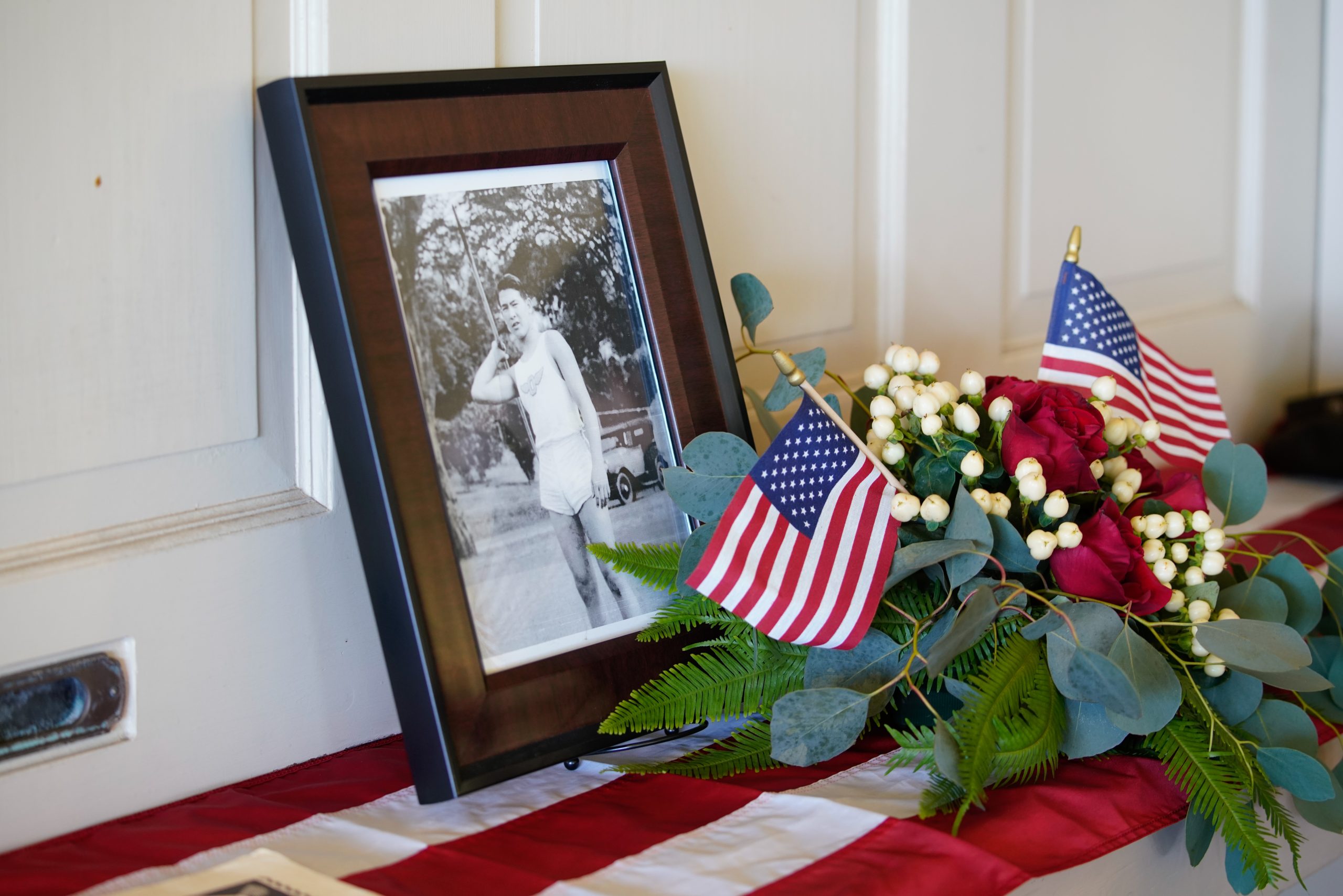
A heartfelt ceremony was held April 14 at Punahou School where the family of Hawai‘i Army National Guard Capt. Francis Brown Wai was re-presented with his Medal of Honor by Lt. Gen. Joel Vowell, deputy commanding general of U.S. Army Pacific.
Wai, a Punahou graduate, was killed in action in 1944 during the U.S. amphibious assault to liberate the Philippine Islands from Japanese occupation. In the chaos of battle, Wai’s fearless leadership and selfless actions helped restore order among pinned-down troops. For his bravery, he was initially awarded the Distinguished Service Cross. In 2000, after a congressionally mandated review of military service during WWII, his award was rightfully upgraded to the Medal of Honor.
On June 21, 2000, President Bill Clinton presented that medal posthumously to Wai’s brother, Robert Wai Sr., during a ceremony at the White House. Capt. Wai’s legacy goes far beyond the medal. He is the only Chinese American and one of just two non-Japanese Asian American officers ever to receive the Medal of Honor. His story is one of honor, leadership, and a profound sense of duty.
“First of all, he shouldn’t have been there,” Robert recalled in a 2003 interview. “He was supposed to go home, but he volunteered to do one more beach assault with his men. He would never ask a sergeant or a private to take out a pillbox; he would always lead. That was just his personality.”
From battlefield courage to lasting legacy, Wai’s story reminds us of the true meaning of service and sacrifice. Hero. Leader. American.
– Photos by Master Sgt. (Ret) Andrew Jackson, State of Hawai‘i Department of Defense Public Affairs
Tech. Sgt. Yeiki Kobashigawa, born Sept. 28, 1917 in Waiakea (Hilo), Hawaiʻi lived in Honolulu until his death Mar. 31, 2005 at age 87. His ashes are at Punchbowl: Court 8, Wall E, Row 500, Niche 536. The 298th Infantry Soldier was assigned to the Hawaiian Provisional Infantry Battalion. Kobashigawa, who received a battlefield commission, was one of only a handful still alive in 2000 to receive the Medal during a White House ceremony. After the war, Kobashigawa worked as a maintenance mechanic.
Yeiki Kobashigawa with his family. Courtesy of the Family of Yeiki Kobashigawa.(Pictures from the National WWII Museum)
Citation The President of the U.S. of America, in the name of Congress, takes pleasure in presenting the Medal of Honor to Technical Sergeant Yeiki Kobashigawa, United States Army, for conspicuous gallantry and intrepidity in action above and beyond the call of duty while serving with Company B, 100th Infantry Battalion (Separate), attached to the 34th Infantry Division, in action against the enemy on Jun. 2, 1944, in the vicinity of Lanuvio, Italy.
Technical Sergeant Yeiki Kobashigawa distinguished himself by extraordinary heroism in action on 2 June 1944, in the vicinity of Lanuvio, Italy. During an attack, Technical Sergeant Kobashigawa’s platoon encountered strong enemy resistance from a series of machine guns providing supporting fire. Observing a machine gun nest 50 yards from his position, Technical Sergeant Kobashigawa crawled forward with one of his men, threw a grenade and then charged the enemy with his submachine gun while a fellow soldier provided covering fire. He killed one enemy soldier and captured two prisoners. Meanwhile, Technical Sergeant Kobashigawa and his comrade were fired upon by another machine gun 50 yards ahead. Directing a squad to advance to his first position, Technical Sergeant Kobashigawa again moved forward with a fellow soldier to subdue the second machine gun nest. After throwing grenades into the position, Technical Sergeant Kobashigawa provided close supporting fire while a fellow soldier charged, capturing four prisoners. On the alert for other machine gun nests, Technical Sergeant Kobashigawa discovered four more, and skillfully led a squad in neutralizing two of them. Technical Sergeant Kobashigawa’s extraordinary heroism and devotion to duty are in keeping with the highest traditions of military service and reflect great credit on him, his unit, and the United States Army.
Staff Sgt. Allan M. Ohata, born Sept. 13, 1918 in Honolulu, was one of the 40 original Japanese members of the Hawaiʻi National Guard Soldiers from the 298th Infantry to be mobilized Oct. 15, 1940. He received a battlefield commission, eventually was promoted to captain and became one of the Co. B, 100th Bn. (Sep) commanders. Ohata was unable to personally receive his upgraded award; he had died 23 years earlier. He lived in Aiea until his death Oct. 17, 1977 at age 59 and is buried at Punchbowl: Section 3, Grave 474.
Citation The President of the U.S. of America in the name of Congress, takes pleasure in presenting the Medal of Honor to Staff Sergeant Allan M. Ohata, U.S. Army, for conspicuous gallantry and intrepidity in action above and beyond the call of duty while serving with Company B, 100th Infantry Battalion (Separate), attached to the 34th Infantry Division, in action against the enemy on Nov. 29 and 30, 1943, near Cerasuolo, Italy.
Sergeant Allan M. Ohata distinguished himself by extraordinary heroism in action on 29 and 30 November 1943, near Cerasuolo, Italy. Sergeant Ohata, his squad leader, and three men were ordered to protect his platoon’s left flank against an attacking enemy force of 40 men, armed with machine guns, machine pistols, and rifles. He posted one of his men, an automatic rifleman, on the extreme left, 15 yards from his own position. Taking his position, Sergeant Ohata delivered effective fire against the advancing enemy. The man to his left called for assistance when his automatic rifle was shot and damaged. With utter disregard for his personal safety, Sergeant Ohata left his position and advanced 15 yards through heavy machine gun fire. Reaching his comrade’s position, he immediately fired upon the enemy, killing 10 enemy soldiers and successfully covering his comrade’s withdrawal to replace his damaged weapon. Sergeant Ohata and the automatic rifleman held their position and killed 37 enemy soldiers. Both men then charged the three remaining soldiers and captured them. Later, Sergeant Ohata and the automatic rifleman stopped another attacking force of 14, killing four and wounding three while the others fled. The following day he and the automatic rifleman held their flank with grim determination and staved off all attacks. Staff Sergeant Ohata’s extraordinary heroism and devotion to duty are in keeping with the highest traditions of military service and reflect great credit on him, his unit, and the United States Army.
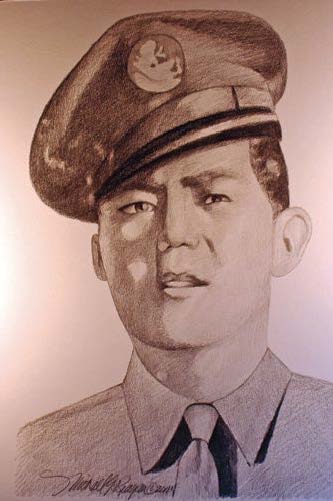
Private Shinyei Nakamine was born Jan. 21, 1929 in Waianae, Oahu and was killed in action at age 24, He is buried at Punchbowl: Section D, Grave 402. The 298th Infantry Soldier was assigned to the Hawaiian Provisional Infantry Battalion.
Citation The President of the U.S. of America, in the name of Congress, takes pride in presenting the Medal of Honor to Private Shinyei Nakamine (Posthumously), U.S. Army, for conspicuous gallantry and intrepidity in action above and beyond the call of duty while serving with Company B, 100th Infantry Battalion (Separate), attached to the 34th Infantry Division, in action against the enemy on Jun. 2, 1944, near La Torreto, Italy.
Private Shinyei Nakamine distinguished himself by extraordinary heroism in action on 2 June 1944, near La Torreto, Italy. During an attack, Private Nakamine’s platoon became pinned down by intense machine gun crossfire from a small knoll 200 yards to the front. On his own initiative, Private Nakamine crawled toward one of the hostile weapons. Reaching a point 25 yards from the enemy, he charged the machine gun nest, firing his submachine gun, and killed three enemy soldiers and captured two. Later that afternoon, Private Nakamine discovered an enemy soldier on the right flank of his platoon’s position. Crawling 25 yards from his position, Private Nakamine opened fire and killed the soldier. Then, seeing a machine gun nest to his front approximately 75 yards away, he returned to his platoon and led an automatic rifle team toward the enemy. Under covering fire from his team, Private Nakamine crawled to a point 25 yards from the nest and threw hand grenades at the enemy soldiers, wounding one and capturing four. Spotting another machine gun nest 100 yards to his right flank, he led the automatic rifle team toward the hostile position but was killed by a burst of machine gun fire. Private Nakamine’s extraordinary heroism and devotion to duty are in keeping with the highest traditions of military service and reflect great credit on him, his unit, and the United States Army
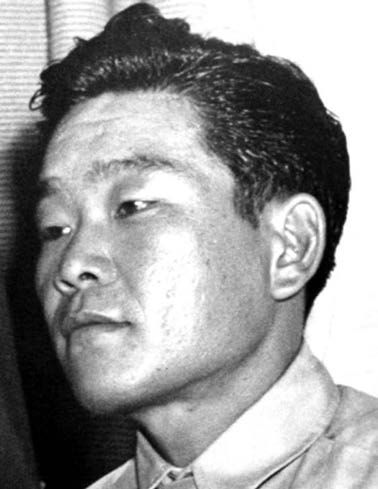
Private Masato “Curly” Nakae was born Dec. 20, 1917 in Haena (Lihue), Kauai, He was unable to personally receive his upgraded award, he had died two years earlier. He lived in Honolulu until his death Sept. 4, 1998 at age 80, and is buried at Punchbowl: Section U. Grave 1446. The 298th Infantry Soldier was assigned to the Hawaiian Provisional Infantry Battalion.
Citation The President of the U.S. of America, in the name of Congress, takes pleasure in presenting the Medal of Honor to Private Masato Nakae (deceased), U.S. Army, for conspicuous gallantry and intrepidity in action above and beyond the call of duty while serving with Company A, 100th Infantry Battalion, 442d Regimental Combat Team, attached to the 36th Infantry Division, in action against the enemy on Aug. 19, 1944, near Pisa, Italy.
Private Masato Nakae distinguished himself by extraordinary heroism in action on 19 August 1944, near Pisa, Italy. When his submachine gun was damaged by a shell fragment during a fierce attack by a superior enemy force, Private Nakae quickly picked up his wounded comrade’s M-1 rifle and fired rifle grenades at the steadily advancing enemy. As the hostile force continued to close in on his position, Private Nakae threw six grenades and forced them to withdraw. During a concentrated enemy mortar barrage that preceded the next assault by the enemy force, a mortar shell fragment seriously wounded Private Nakae. Despite his injury, he refused to surrender his position and continued firing at the advancing enemy. By inflicting heavy casualties on the enemy force, he finally succeeded in breaking up the attack and caused the enemy to withdraw. Private Nakae’s extraordinary heroism and devotion to duty are in keeping with the highest traditions of military service and reflect great credit on him, his unit, and the United States Army.
PFC Karou Moto, born Apr. 25, 1917 in Spreckeksville, Maui. The 298th Infantry Soldier was assigned to the Hawaiian Provisional Infantry Battalion. Moto donated all of his medals to the Fort DeRussy Army Museum before he died at age 75 in Makawao, Maui on Aug. 26, 1992. In 2004, the Pacific Army Reserve named the 32-year old Maui Army Reserve Center in Wailuku after Moto. He is interred at Punchbowl: Court 2, Wall F, Row 400, Niche 422
Citation The President of the U.S. of America, in the name of Congress, takes pride in presenting the Medal of Honor (deceased) to Private First Class Kaoru Moto, United States Army, for conspicuous gallantry and intrepidity in action above and beyond the call of duty while serving with Company C, 100th Infantry Battalion (Separate), attached to the 34th Infantry Division, in action against the enemy on July 7, 1944, near Castellina, Italy.
Private First Class Kaoru Moto distinguished himself by extraordinary heroism in action on 7 July 1944, near Castellina, Italy. While serving as first scout, Private First Class Moto observed a machine gun nest that was hindering his platoon’s progress. On his own initiative, he made his way to a point ten paces from the hostile position, and killed the enemy machine gunner. Immediately, the enemy assistant gunner opened fire in the direction of Private First Class Moto. Crawling to the rear of the position, Private First Class Moto surprised the enemy soldier, who quickly surrendered. Taking his prisoner with him, Private First Class Moto took a position a few yards from a house to prevent the enemy from using the building as an observation post. While guarding the house and his prisoner, he observed an enemy machine gun team moving into position. He engaged them, and with deadly fire forced the enemy to withdraw. An enemy sniper located in another house fired at Private First Class Moto, severely wounding him. Applying first aid to his wound, he changed position to elude the sniper fire and to advance. Finally relieved of his position, he made his way to the rear for treatment. Crossing a road, he spotted an enemy machine gun nest. Opening fire, he wounded two of the three soldiers occupying the position. Not satisfied with this accomplishment, he then crawled forward to a better position and ordered the enemy soldier to surrender. Receiving no answer, Private First Class Moto fired at the position, and the soldiers surrendered. Private First Class Moto’s extraordinary heroism and devotion to duty are in keeping with the highest traditions of military service and reflect great credit on him, his unit, and the United States Army.
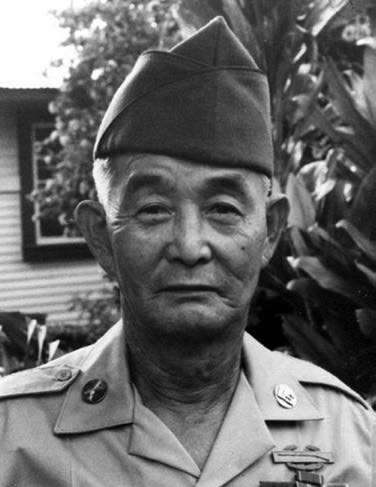
Private Shizuya “Ceasar” Hayashi was born Nov. 28, 1917 in Waiakea (Waialua), Oahu, He died Mar. 12, 2008, at age 90 and is buried at Punchbowl: Sec. 5, Grave 464. The 298th Infantry Soldier was assigned to the Hawaiian Provisional Infantry Battalion. He was the only Distinguished Service Cross recipient of the battle at Cerasuolo to survive to wear his upgraded Medal of Honor. As President Clinton hung our Nation’s highest award around his neck, he called to remembrance the heroism of his comrades, accepting his award on behalf of those who didn’t survive to see the historic White House ceremony.
Citation The President of the U.S. of America, in the name of Congress, takes pleasure in presenting the Medal of Honor to Private Shizuya Hayashi, U.S. Army, for conspicuous gallantry and intrepidity in action above and beyond the call of duty while serving with Company A, 100th Infantry Battalion (Separate), attached to the 34th Infantry Division, in action against the enemy on Nov. 29, 1943, near Cerasuolo, Italy.
Private Shizuya Hayashi distinguished himself by extraordinary heroism in action on 29 November 1943, near Cerasuolo, Italy. During a flank assault on high ground held by the enemy, Private Hayashi rose alone in the face of grenade, rifle, and machine gun fire. Firing his automatic rifle from the hip, he charged and overtook an enemy machine gun position, killing seven men in the nest and two more as they fled. After his platoon advanced 200 yards from this point, an enemy antiaircraft gun opened fire on the men. Private Hayashi returned fire at the hostile position, killing nine of the enemy, taking four prisoners, and forcing the remainder of the force to withdraw from the hill. Private Hayashi’s extraordinary heroism and devotion to duty are in keeping with the highest traditions of military service and reflect great credit on him, his unit, and the United States Army.
Pfc. Anthony T. Kaho’ohanohano was born July 22, 1930 in Wailuku, Maui and was killed in action September 1, 1951 at age 21 in Chupa-ri, Korea. Camp Paukukaloa, Maui’ pistol and machine gun range is named Kahoohanohano Range after the former Heavy Mortar Company, 299th Infantry Soldier, who is buried at the Maui Veterans Cemetery.
Years of Service: 3 years, 3 months, prior service with Hawaiʻi National Guard. Enlisted with the U.S. Army Feb. 5, 1951
Awards: Purple Heart (posthumously), Army Good Conduct Medal (posthumously), National Defense Service Medal, Korean Service Medal with one Bronze Service Star, United Nations Service Medal, Republic of Korean-Korean War Service Medal, The Republic of Korea’s Wharang Distinguished Military Service Medal with Silver Star (posthumously), Combat Infantryman Badge, Republic of Korea-Presidential Unit Citation
Citation The President of the U.S. of America in the name of Congress, takes pleasure in presenting the Medal of Honor to (Posthumously) to Private First Class Anthony T. Kahoohanohano, U.S. Army, for extraordinary heroism in connection with military operations against an armed enemy of the United Nations while serving with Company H, 2nd Battalion, 17th Infantry Regiment, 7th Infantry Division.
Private First Class Anthony T. Kaho’ohanohano, Company H, 17th Infantry Regiment, 7th Infantry Division, distinguished himself by extraordinary heroism in action against the enemy in the vicinity of Chupa-ri, Korea, on 1 September 1951. On that date, Private First Class Kaho’ohanohano was in charge of a machine-gun squad supporting the defensive positioning of Company F when a numerically superior enemy force launched a fierce attack. Because of the enemy’s overwhelming numbers, friendly troops were forced to execute a limited withdrawal. As the men fell back, Private First Class Kaho’ohanohano ordered his squad to take up more defensible positions and provide covering fire for the withdrawing friendly force. Although having been wounded in the shoulder during the initial enemy assault, Private First Class Kaho’ohanohano gathered a supply of grenades and ammunition and returned to his original position to face the enemy alone. As the hostile troops concentrated their strength against his emplacement in an effort to overrun it, Private First Class Kaho’ohanohano fought fiercely and courageously, delivering deadly accurate fire into the ranks of the onrushing enemy. When his ammunition was depleted, he engaged the enemy in hand-to-hand combat until he was killed. Private First Class Kaho’ohanohano’s heroic stand so inspired his comrades that they launched a counterattack that completely repulsed the enemy. Upon reaching Private First Class Kaho’ohanohano’s emplacement, friendly troops discovered 11 enemy soldiers lying dead in front of the emplacement and two inside it, killed in hand-to-hand combat. Private First Class Kaho’ohanohano’s extraordinary heroism and selfless devotion to duty are in keeping with the finest traditions of military service and reflect great credit upon himself, the 7th Infantry Division, and the United States Army.