Wildfire
Note: To report a wildfire, call 911 immediately.
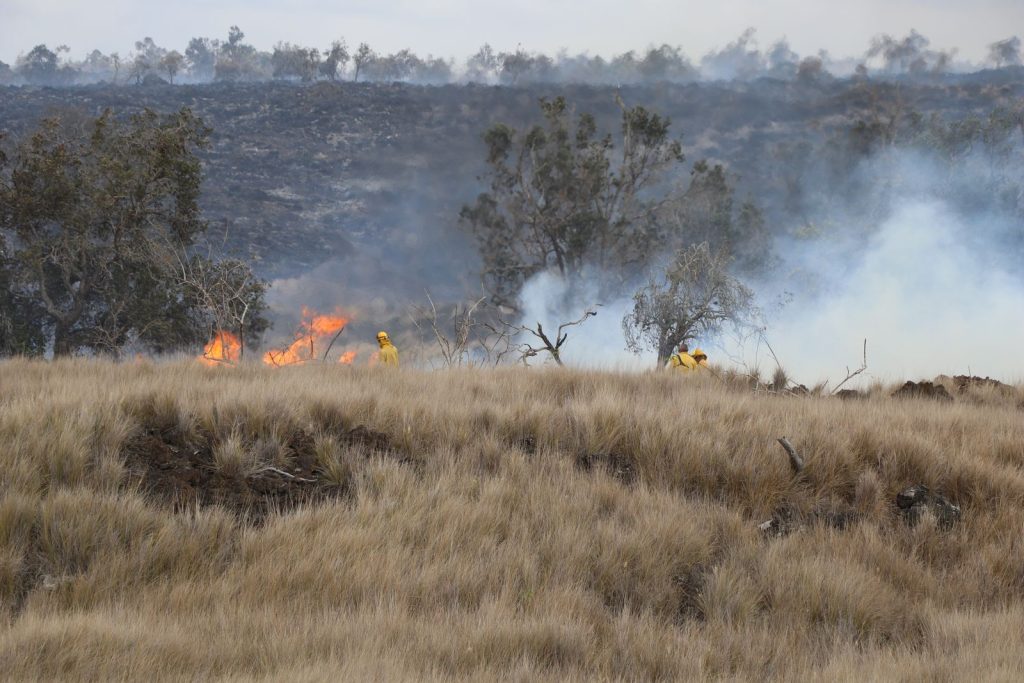
Photo courtesy of Hawai’i Department of Land & Natural Resources.
Preventing Wildfires
Almost 99% of wildfires in Hawaiʻi are caused by humans, according to research by the Hawaiʻi Wildfire Management Organization.
That means that wildfires are preventable. Follow the tips below to help reduce wildfires, save lives and protect property.
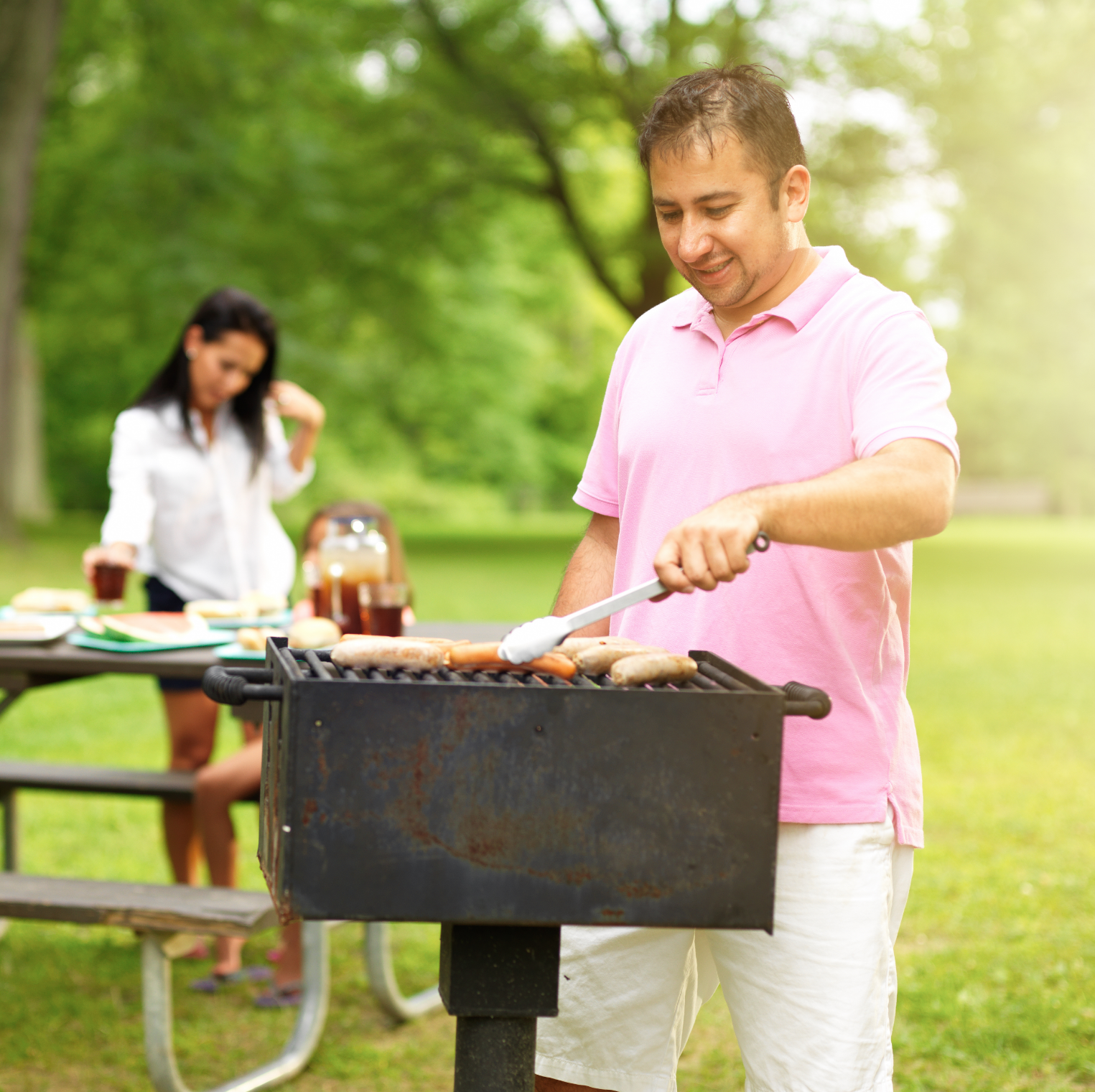
Be smart when you are grilling or cooking outdoors:
- Don’t grill when it’s windy or dry.
- Keep clear of dry grasses or vegetation.
- Use a propane or electric grill instead of charcoal, which throws off embers.
- Have a hose or bucket of water nearby.
- Drown coals in water, wrap them in foil when they’re cool, and dispose in your own metal container or a public coal disposal area.

Campfires are another common source of wildfires. Before you make a campfire, make sure you address the following points:
- Check for fire restrictions, including Red Flag Warnings or drought conditions.
- Don’t start a campfire when it’s windy or very dry.
- Have a bucket of water and shovel ready.
- Use an existing fire pit or a metal fire ring to contain the fire.
Many wildfires have started after people mistakenly thought they had put out their campfires. Follow these steps to make sure your campfire does not reignite and cause a wildfire:
- Pour lots of water on the fire until the hissing sound stops – drown all of the embers.
- Use your shovel to mix the water into embers, dirt and sand.
- Use your shovel to scrape embers off of logs and sticks.
- Add more water, dirt and sand.
- Hold the back of your hand near the ashes to make sure it feels cool. If it’s hot, embers are still burning.
Fireworks are a dangerous ignition threat for wildfires in Hawaiʻi. Aerial fireworks such as rockets, satellites, Roman candles and sky lanterns require a permit, and can only be set on New Year’s Eve, Chinese New Year and Fourth of July.
If you are legally using fireworks on these days, or using common fireworks like sparklers, fountains and wheels that don’t need a permit, remember to:
- Never use fireworks near dry grass or other flammable materials.
- Have a bucket of water and a hose nearby.
Choose to see a professional fireworks show in a controlled, safe environment.
Vehicles can spark fires in a number of ways, from tires and brakes to towing and parking. Incorporate these points in your regular car maintenance:
- Don’t let towing chains drag. Tie them up or use a chain guard to prevent sparking.
- Keep your tires inflated and maintained. Driving on an exposed rim can cause fires.
- Replace brake pads regularly. Metal-on-metal contact from pads and rotors can spark.
- Don’t park on dry grass or tall weeds. The heat from your car’s undercarriage and exhaust can ignite dry vegetation.
Lawn mowers and power tools can easily spark fires. Be careful working around your yard and property:
- Mow in the morning before the sun dries out your lawn.
- Avoid rocks when mowing – this causes sparks. Only mow green grass.
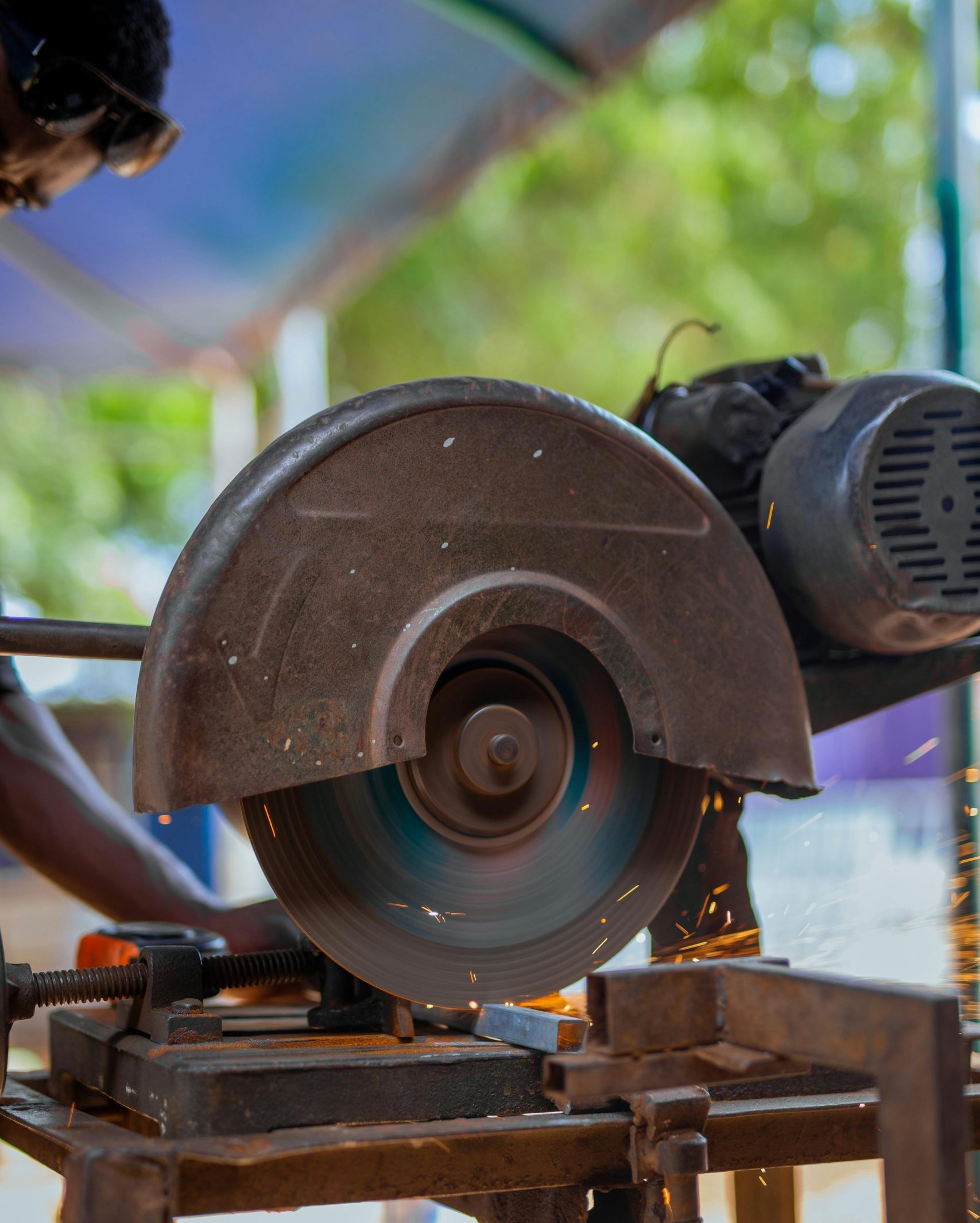
- Use welding or grinding equipment in a safe environment, with a fire extinguisher nearby.
If you smoke, take care to put cigarettes and cigars out. Extinguish them in a cup of water. Don’t flick them. Never toss a cigarette out the window of a car.
Protecting Your Home & Property
Creating “defensible space” by reducing fuel sources and creating fire breaks on your property has shown to be the most effective method for protecting your home from wildfires. This is based on investigations of recent destructive fires including Lahaina and Los Angeles. Unmanaged vegetation between and around homes increases the risk of fire spreading through a community. Experts in Hawaiʻi endorsing this research include Hawaiʻi Wildfire Management Organization, the Fire Safety Research Institute, the Hawaiʻi State Fire Marshal and Hawaiʻi fire departments.

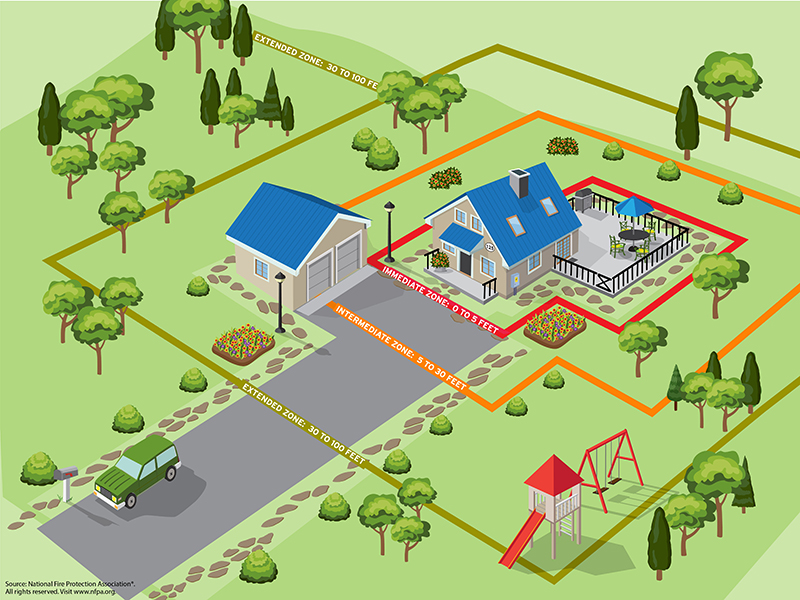
As seen here, dividing your property into zones is a helpful way to view maintenance and protection from fire.
Zone 0/Immediate Zone (0-5 feet):
The first five feet outside your home should be completely free of flammable materials and vegetation. To maintain Zone 0:
- Clear leaves and pine needles from roofs and gutters.
- Put mesh screening over vents and openings to prevent embers from entering. Repair missing shingles or broken windows.
- Screen in the areas below your house, decks and porches. Don’t store wood piles or other combustible materials there.
- Keep your home’s walls clear of combustibles like firewood, leaves, dry plants or dry mulch.
Zone 1/Intermediate Zone (5-30 feet):
Smart landscaping and hardscaping (like patios and walkways) will make this area safer from spreading fires. In Zone 1:
- Keep your lawn “lean, clean and green” — mow grass to four inches or less. Use tree canopies to shade grass and retain moisture. Keep ten feet between canopy and structures.
- Break up vegetation like trees and bushes into small clusters to prevent fire spread.
- Reduce ladder fuels by pruning tree branches to six feet off the ground.
Zone 2/Extended Zone (30-100 feet):
The goal in Zone 2 is to reduce dense vegetation that may be significant fire fuel. In Zone 2:
- Clear out dead or downed trees and branches, leaf piles or large amounts of pine needles.
- Keep 12 feet of space between tree canopies.
- Clear dry brush or other vegetation that might allow a fire to spread from tree to tree.
- Protect outbuildings like sheds and storage buildings by keeping them clear of vegetation and combustible materials like wood piles.
Fire-resistant building materials can help protect your home from fire. For example, having a metal or tile roof is safer than shingle or shake. Similarly, a metal fence is safer than a wood fence. Walls made of stone, plaster, cement or stucco are more fire-resistant than wood siding.
Click here for more information on building a fire-resistant home – from Hawaii Wildfire Management Organization.
Large landowners have additional issues to consider, including livestock, grazing lands, crops and property structures. Click here for more information on large land management.
Protecting Your Neighborhood: Firewise communities
Around the state of Hawaiʻi are a number of communities – 37 and counting – that have come together to expand defensible space to include entire neighborhoods, thus enhancing protection from wildfires and reducing wildfire spread.
HIEMA endorses Firewise USA, a program that facilitates community wildfire resilience by guiding groups of neighbors through risk assessments, planning and work days.
Participants in Hawaiʻi have noted that becoming a Firewise community has benefits beyond strengthening wildfire resilience – including neighborhood cohesion, healthy dialogue, regular exercise and a greater sense of unity.
You can get started with Firewise by clicking here or emailing [email protected].
Evacuations
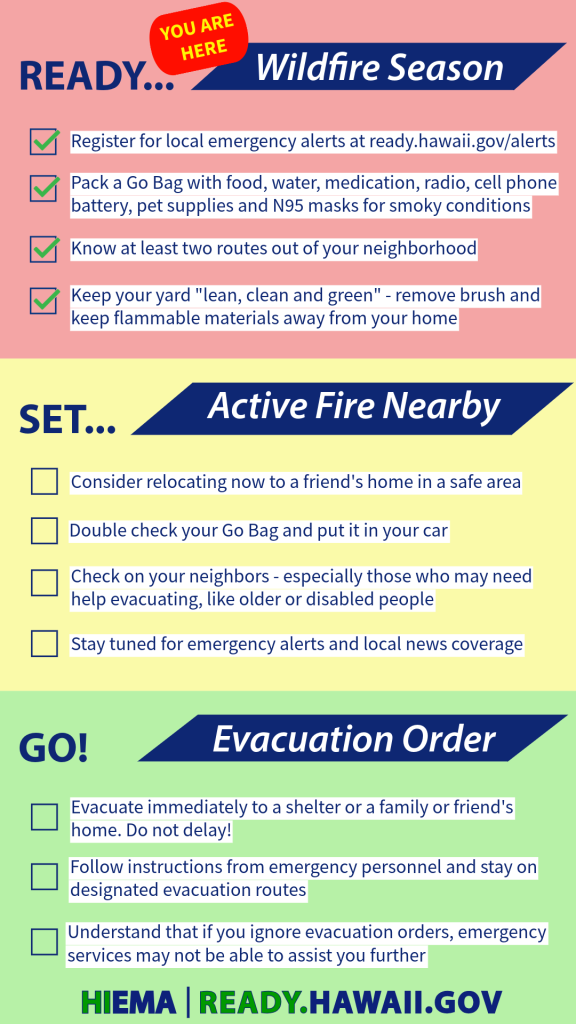
Evacuations due to wildfires are not uncommon during Hawaiʻi’s dry season from June to November. It is important to stay informed and prepared during wildfire season. Make sure you have completed these fundamental steps before a wildfire approaches your home:
- Sign up for your county’s emergency alerts at ready.hawaii.gov/alerts.
- Pack a Go Bag with food, water, medication, a radio, a cell phone battery, pet supplies and N95 masks.
- Know at least two routes out of your neighborhood.
- If you have a child or dependent in school, find out what the school’s emergency plan is. Schools take care of evacuating students. Don’t go to the school during an evacuation.
If you are ordered to evacuate, leave immediately. Follow instructions from emergency personnel and stay on designated evacuation routes. It’s important to understand that if you ignore evacuation orders, emergency services may not be able to reach you or assist you further.
For a more detailed guide on preparing for wildfire evacuations, click here to download the “Ready, Set, Go!” brochure by Hawaiʻi Wildfire Management Organization.
Wildfire Maps, Tools & Warnings
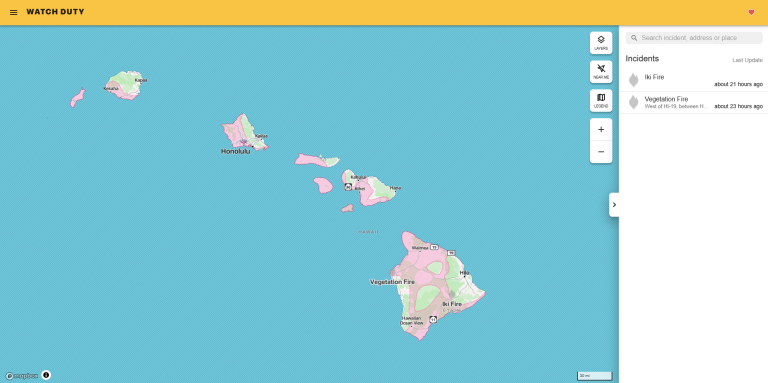
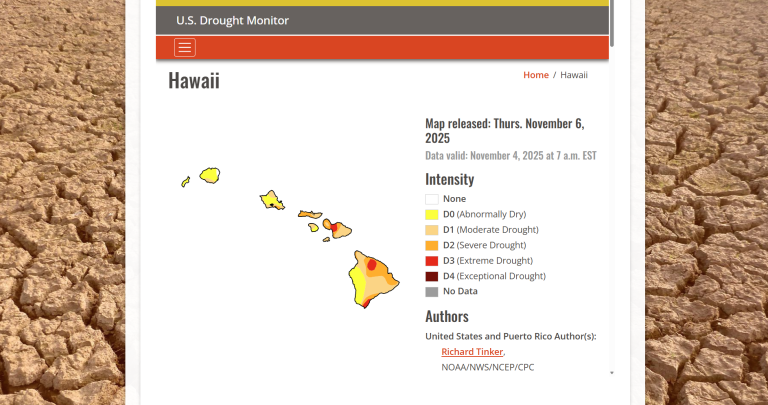
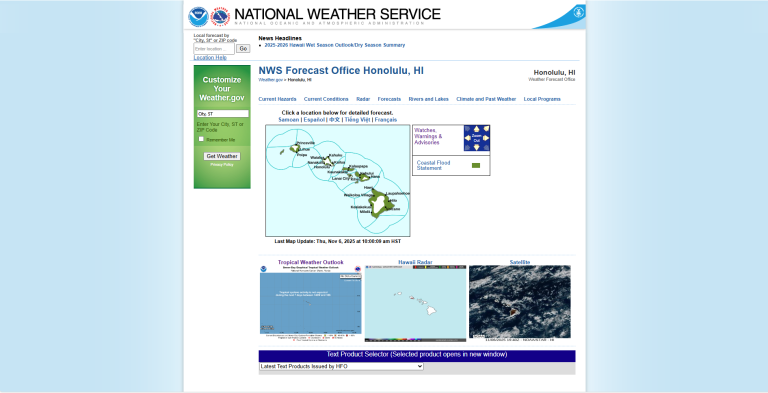
Information, early warning and awareness are key to protecting yourself and your community from wildfire. Along with signing up for local emergency alerts at ready.hawaii.gov/alerts, the maps and tools below offer useful information including fire monitoring and weather conditions. It is also helpful to visit the National Weather Service’s Honolulu Forecast Office website, which issues warnings and statements including fire weather information for the entire state of Hawaiʻi.