

Flash Flooding
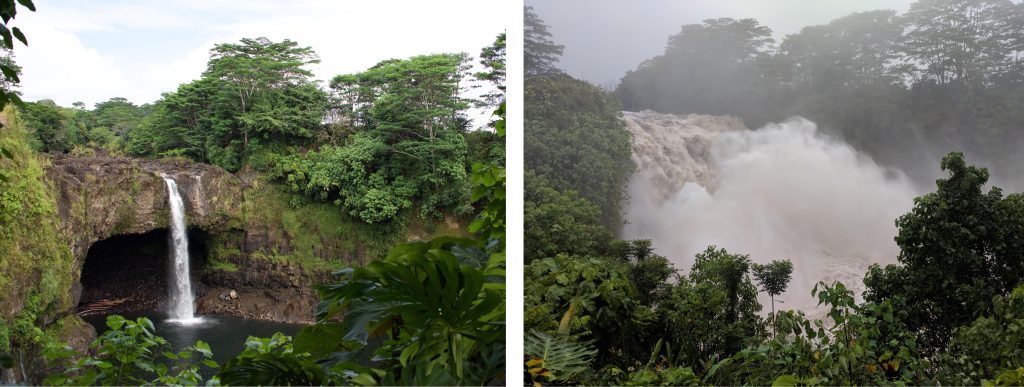
Flash Flooding in Hawaiʻi
Flash flooding is a dangerous natural disaster that is common in Hawaiʻi. Flash floods have killed 19 people in Hawaiʻi in the last 23 years, destroyed hundreds of homes and caused property damage upwards of $250 million.
Flash floods are powerful rushes of water through streams, valleys and streets, usually caused by heavy or excessive rainfall during rainstorms, tropical storms and hurricanes. As this water travels and gathers volume, it can carry dangerous debris like rocks, mud, branches and trees.
Flash floods can also be caused by dam failures, though this is rare. The Ka Loko Dam failure on the north shore of Kauaʻi in 2006 killed seven people.
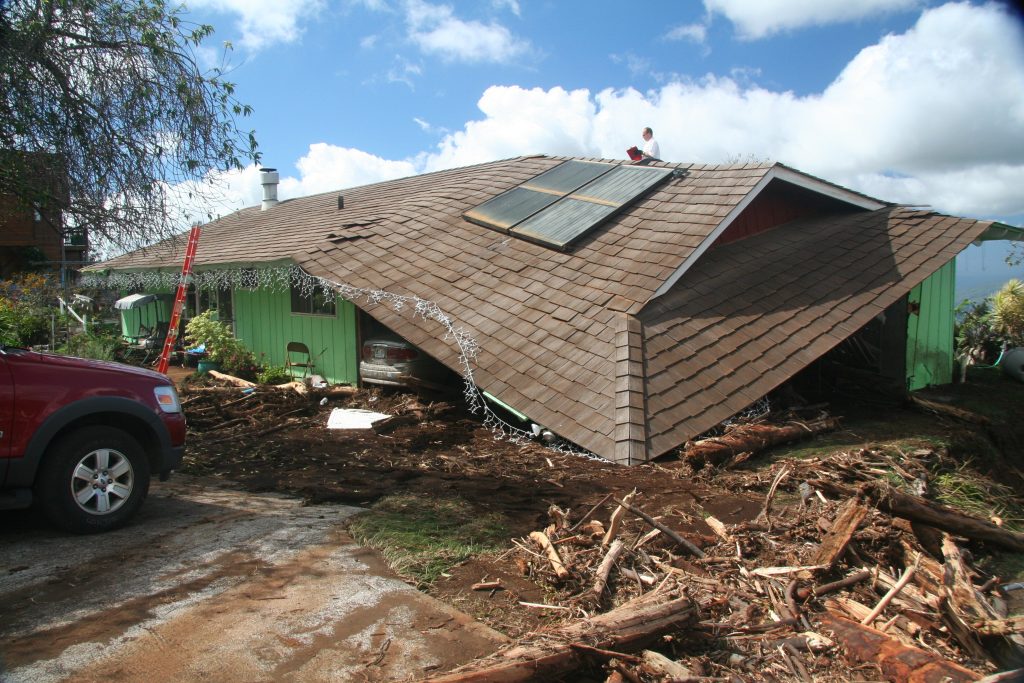

Hawaiʻi’s natural environment is conducive to flash flooding. Storm fronts and trade winds come in contact with Hawaiʻi’s tall mountains, pushing the air upward, where it cools and forms clouds and rain. This precipitation gathers in streams and rivulets as it falls down the mountains, causing flash flooding when storms drop a lot of rain.
It’s important to be in tune and respectful of the weather around you. If you observe rain clouds, take care to avoid streams and low-lying areas where flash flooding may occur. Play it safe and stay on high ground.
Sign up for local emergency alerts at ready.hawaii.gov/alerts. The National Weather Service will notify you by text message if they detect the possibility of flash flooding in your area.
Take note of the types of areas that are more prone to flash flooding:
- Streams: Established streams can quickly overflow and carry dangerous debris when rainfall is heavy.
- Valleys: Valleys can become conduits for flash flood waters and debris, even if they don’t typically have water flowing. Excessive rain will discharge into these low points.
- Streets and urban neighborhoods: In areas with paved surfaces – like cities, villages, campuses and parking lots – water cannot soak into the ground. These solid surfaces will hold and transport stormwater and debris.
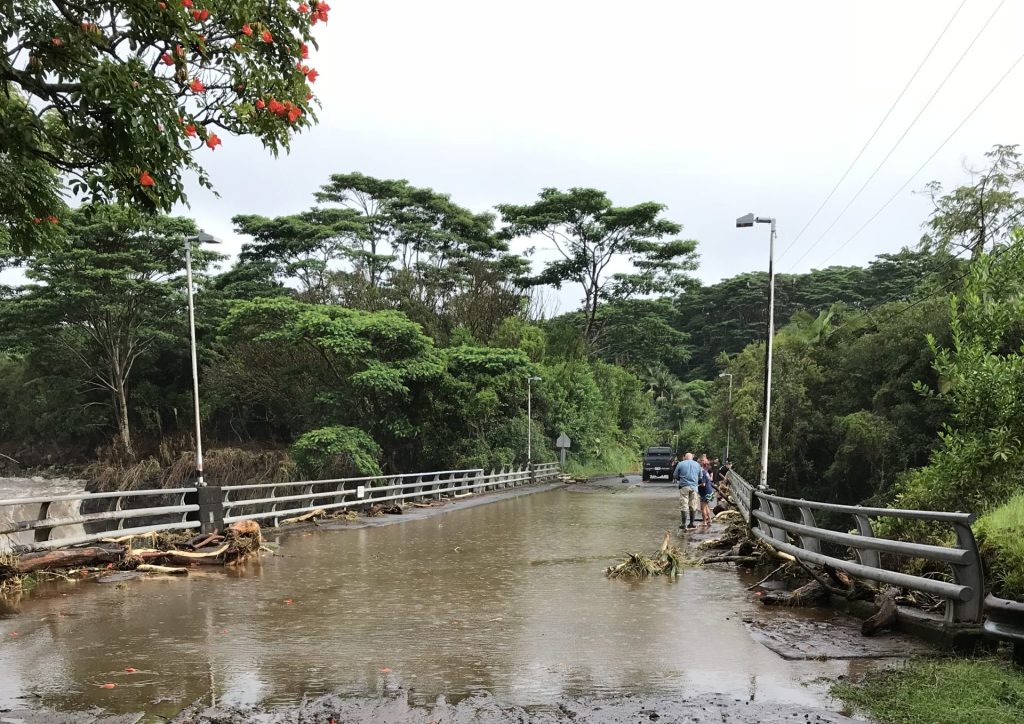

Prepare Your Family and Home Before Flooding
- Sign up for emergency alerts at ready.hawaii.gov/alerts: The National Weather Service and local government officials will send the latest information, including Flash Flood Warnings, to your cell phone.
- Know your risk: Use the tools in the next section to evaluate flood risks where you live.
- Purchase flood insurance: Standard insurance doesn’t cover flooding. Visit floodsmart.gov for information on the National Flood Insurance Program.
- Have emergency supplies ready: Make sure you have enough food, water, communication backups and power backups to last you several days.
- Prepare your property: Clear drains and gutters to improve drainage. Install a battery-operated sump pump. Move valuable items to higher levels.
- Document your household inventory: Take photos or videos of belongings in your home. These can be useful for insurance claims.
- Keep important documents safe and backed up: Create digital copies of important documents like identification and insurance policies. Keep physical copies in a safe, dry place, like a waterproof container.
Protecting Yourself During Flash Floods
- Evacuate immediately when ordered: Flash flooding happens very quickly. If you are ordered to evacuate, do it immediately.
- Move to higher ground, or the highest level of a building: Avoid attics or basements, where you can become trapped. Get to the highest floor with windows. As a last resort, go onto your roof if you can get there safely and keep your footing.
- Do not enter, cross or drive through floodwaters: Floodwaters are powerful, full of debris and contain hazards that cannot be seen. Entering floodwater has a high risk of drowning and injury. Even vehicles are easily washed away by moving water.
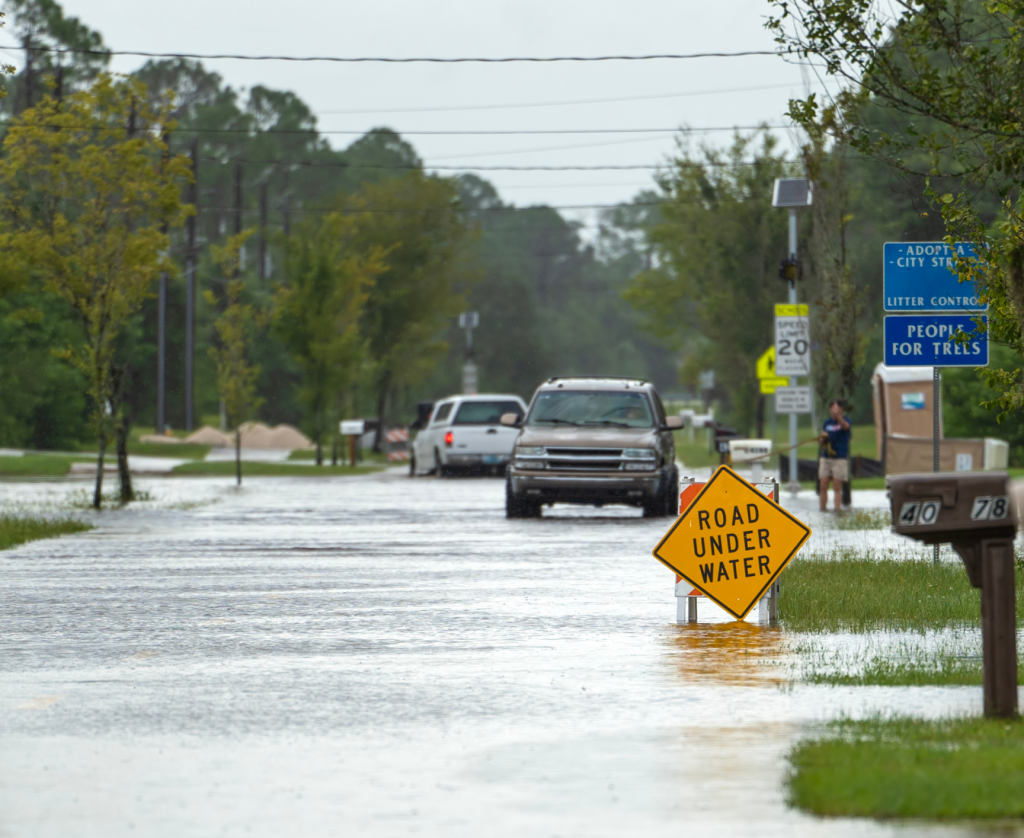
Staying Safe After a Flash Flood
- Follow official instructions: Wait until officials say it is safe to return home or to use drinking water.
- Stay away from floodwater: Floodwater may contain dangerous debris, be contaminated with sewage, or be electrically charged.
- Avoid flood damage: Stay away from downed power lines, damaged structures, and dangerous debris like broken glass and sharp objects.
- Don’t swim, surf or snorkel: After heavy rains, contaminated brown water can run off into the ocean or swimming pools.
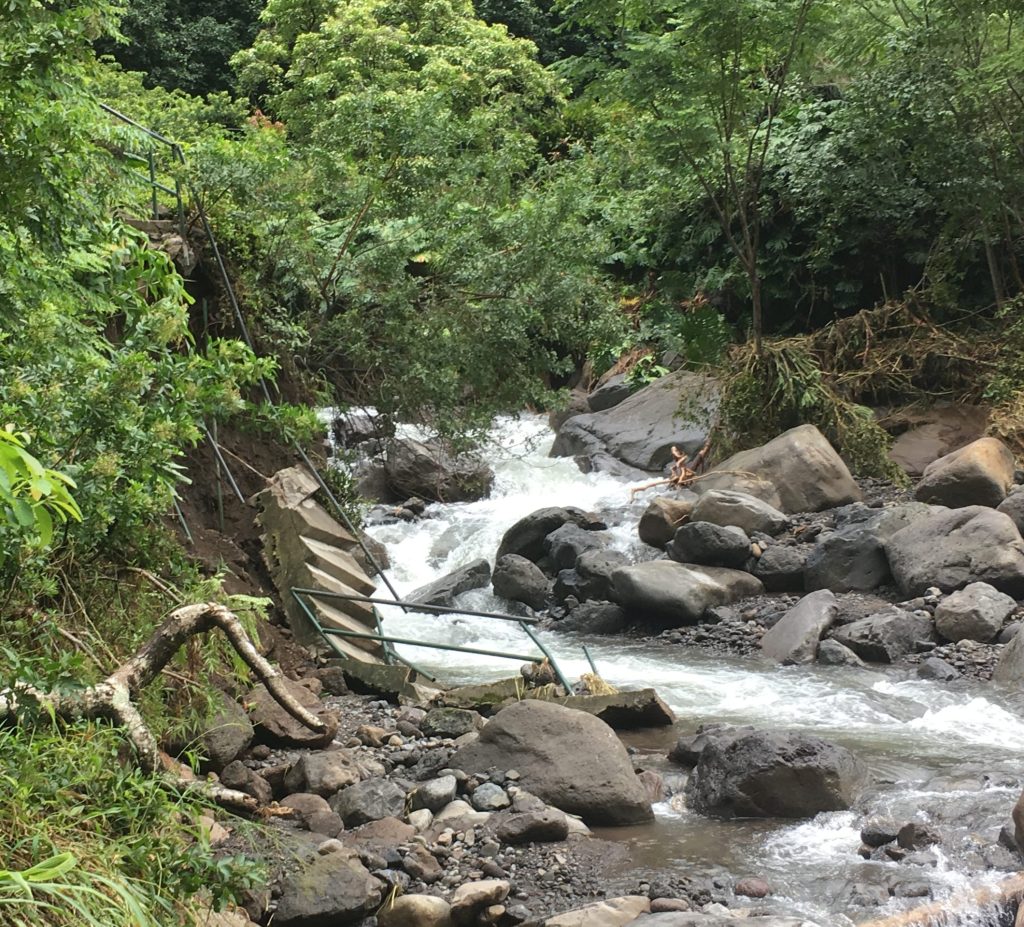
- Don’t hike: Mountain trails are dangerous after a heavy rain. Terrain can be muddy, unstable and prone to landslides.
Flash Flooding Maps & Tools
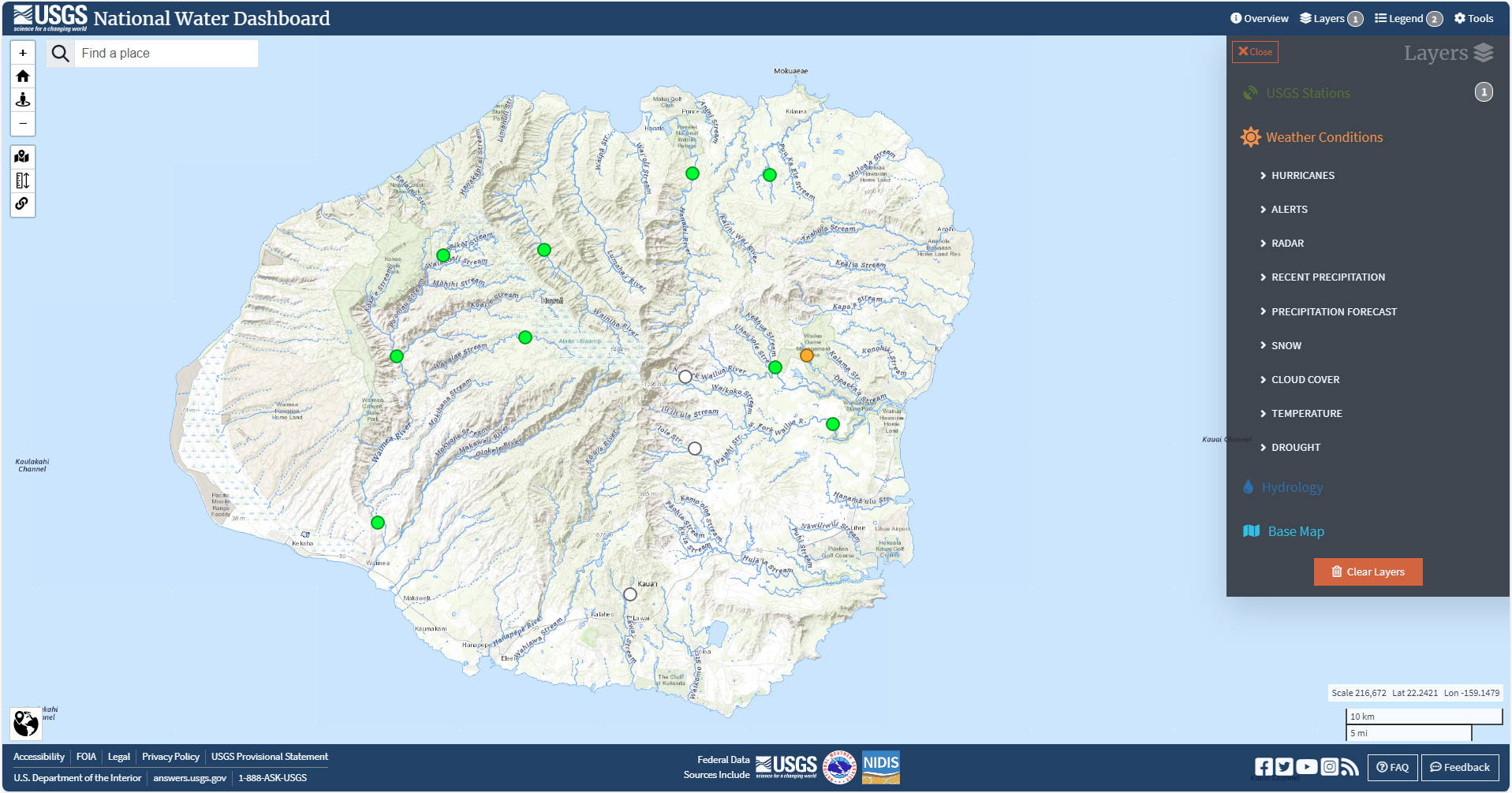
National Water Dashboard
USGS map of streams, rivers and other waterbodies. Tools include stream flow monitors, water levels, and water quality; weather conditions including precipitation and radar; and base maps including satellite imagery, streets and topography.

Flood Hazard Assessment Tool
Enter your address or move around this map provided by Hawaiʻi Dept. of Land & Natural Resources (DLNR). Once you’ve found your flood hazard zone, head to floodsmart.gov for a description of the hazard levels.
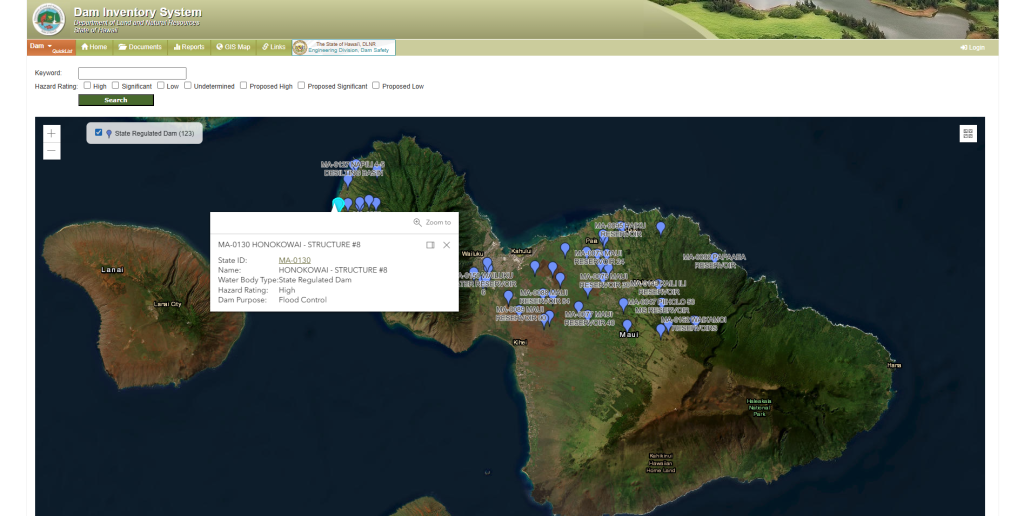
Hawaiʻi Dam Inventory System
Information on state-regulated dams, including hazard level, condition, evacuation maps, inspection status and dam characteristics. For a description of hazard and condition classifications, you must also navigate here.