

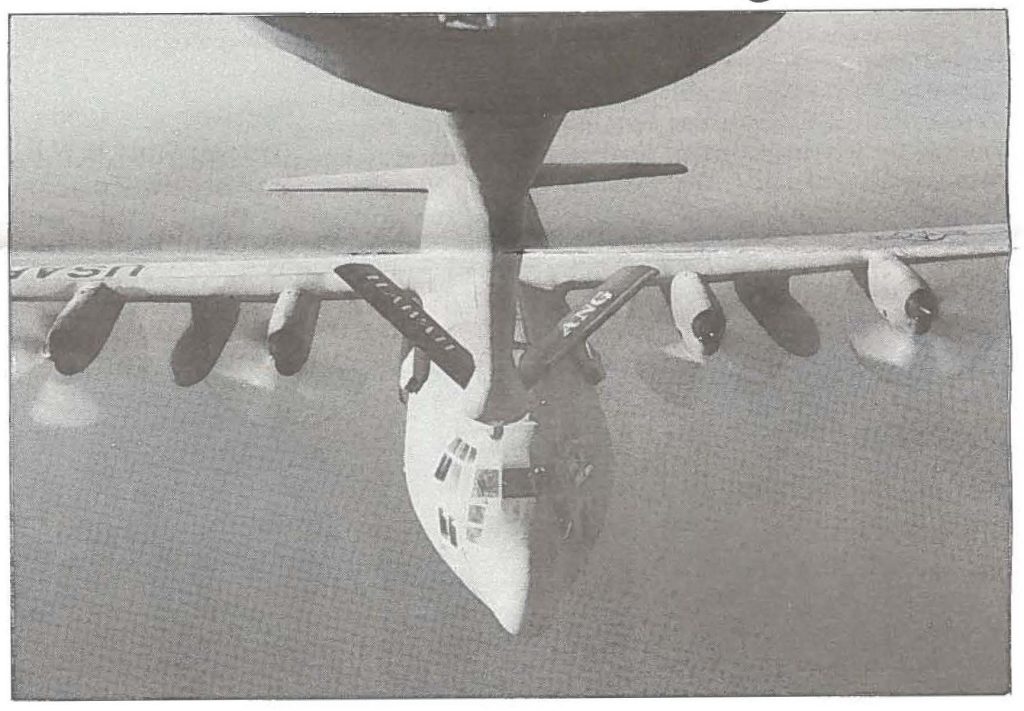
The Hawaiʻiʻ National Guard played an important role in NATO operations during the Yugoslav Wars (1991–2001), providing both combat support and peacekeeping contributions across Europe. The Hawaiʻi Air National Guard’s 203rd Air Refueling Squadron (203rd ARS) was at the forefront of these missions. In October 1995, the 203rd deployed KC-135R Stratotankers and support personnel to Pisa, Italy, in support of Operation Deny Flight. Over the course of five weeks, the unit carried out daily aerial refueling missions that enabled NATO fighters to enforce the no-fly zone over Bosnia-Herzegovina. Ninety-four personnel from the 154th Maintenance Squadron were mobilized as well and the Hawaiʻi crews worked alongside other U.S. and NATO forces, providing fuel to aircraft.
The 203rd ARS returned to the region in early 1999, this time deploying four KC-135Rs and more than 200 personnel to Istres, France. Their mission supported Operation Deliberate Force and later Operation Allied Force, NATO’s air campaigns over Bosnia and Kosovo. During this deployment, the unit flew 70 combat sorties with zero mishaps, logged more than 400 flight hours, and offloaded over 3.9 million pounds of fuel to allied aircraft. Their 100 percent sorties effectiveness rate made them a critical enabler of NATO’s combat air operations. Around the same time, the Hawaiʻi Air National Guard’s 199th Fighter Squadron deployed four F-15s, two pilots and 58 support personnel to Keflavik, Iceland, to reinforce NATO air alert missions.
The Hawaiʻi Army National Guard made contributions in June 1996, with four soldiers from the 117th Public Affairs Team deployed to Croatia and Bosnia-Herzegovina to cover NATO peacekeeping operations under the Implementation Force. Their mission was to document peacekeeping activities, producing media and imagery.
Around the same time, the Hawaiʻi Air National Guard’s 297th Air Traffic Control Flight sent controllers and technicians to Taszar, Hungary, where they managed radar operations and directed a variety of NATO aircraft. Integrated into the 406th Expeditionary Airbase Group, the Guardsmen earned high praise for their adaptability and professionalism, with some placed in charge of active-duty counterparts.
Other Hawaiʻi Guardsmen deployed in support roles throughout the late 1990s. At least seven Hawaiʻi Army Guard soldiers completed lengthy peacekeeping tours in Bosnia, serving as journalists, radar operators, and intelligence staff. In 1997, Hawaiʻi refueling, and logistics personnel went to Geilenkirchen, Germany, to support NATO operations.
Together, these deployments highlighted the Guard’s growing global role in the post – Cold War era. The Hawaiʻi National Guard demonstrated its ability to integrate with active-duty and allied forces in both combat and peacekeeping operations, earning recognition as one of the fine contributors to NATO’s success in the Balkans.
The State of Hawaii, Department of Defense (HIDOD)’ Retiree News does not endorse any of the external hyperlinks listed or posted on this site. This includes linked websites, information, products, or services contained therein. We are a government run website for which transparency and accountability are paramount. HIDOD cannot have the appearance of endorsement and are bound by the HIDOD Social Media Policy concerning political posts being respectful, honest, and accurate. Operational Security will additionally be adhered to. Retiree News does not exercise any editorial control over the information you may find at linked sites. Some of the sites linked to may limit the number of stories you can access without a paid subscription. All links were provided with the intent of meeting the mission of the HIDOD’s version of Retiree News.